Walking is often presented as the simplest possible fitness habit. Yet for an older adult already struggling with mobility, the speed of that walk may change the result. A September 2026 randomized trial compared faster, supervised walking with a comfortable pace in retirement-community residents who were frail or at risk of frailty. More participants in the faster-walking group improved their frailty classification, and they also gained ground on walking-speed and endurance tests.
The headline needs context. This was not a trial of sprinting, and it did not prove that everyone should push harder. Participants were mostly in their late seventies, many used mobility aids, and the study lost a substantial number of enrollees before follow-up. Here is what the experiment actually tested, why its missing-data sensitivity analyses matter, and how to use its lessons without treating a clinical walking protocol as a universal workout.
Some equipment links may be affiliate links, supporting our independent work at no additional cost to you.
Frailty is about function, not just age
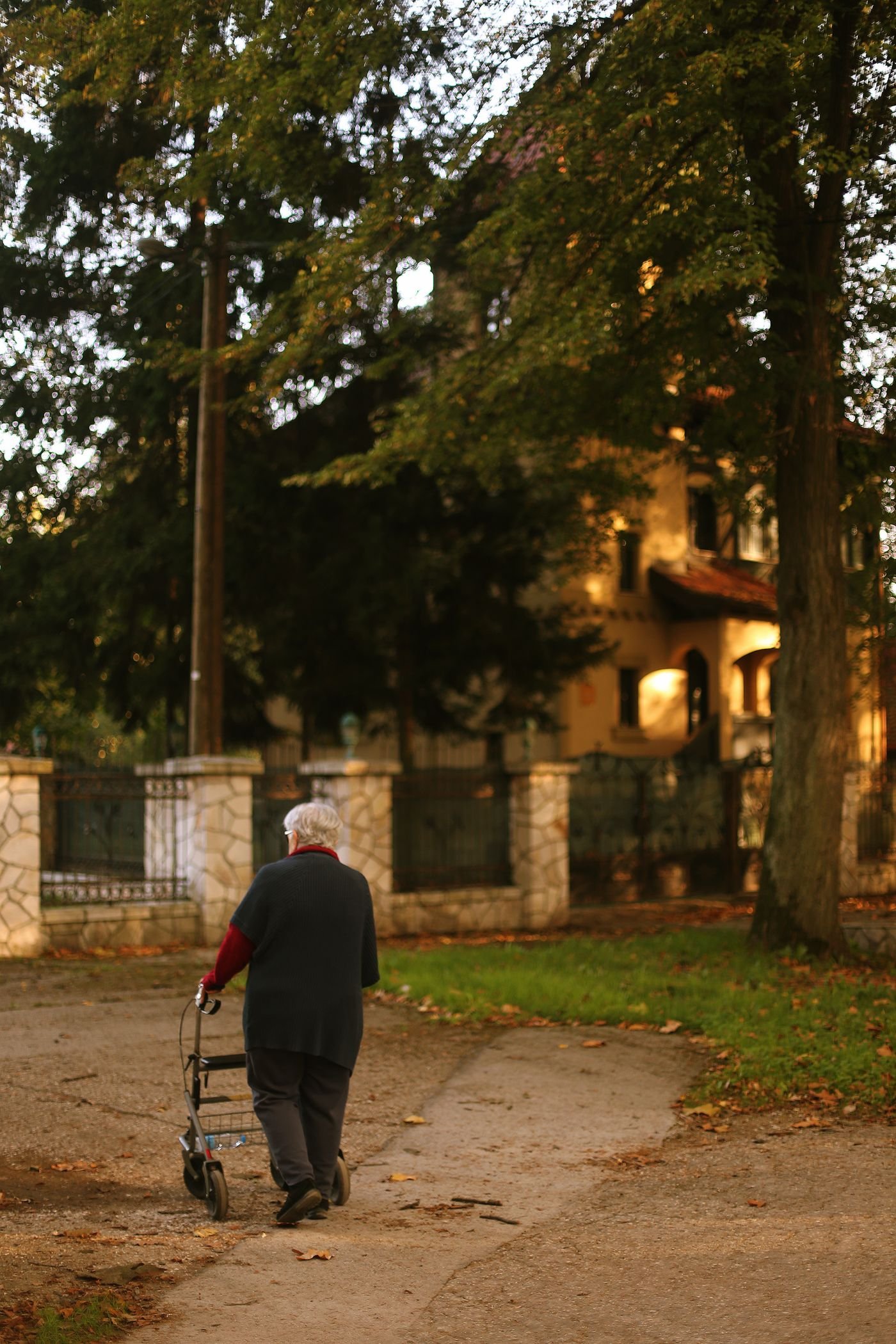
Two people of the same age can have very different physical capacities. One may walk several kilometers comfortably, while the other struggles to rise from a chair, climb steps or cross a room without support. Frailty describes vulnerability that develops when reserves of strength, endurance and other functions decline. It is not simply a synonym for being older, and a person can move between classifications over time.
The trial used a frailty assessment that combines measured handgrip strength with questions about fatigue, appetite, mobility and physical activity. Participants were classified as frail, pre-frail or non-frail. An improvement meant moving up at least one category. This is a useful outcome because it looks beyond a stopwatch, but it is also sensitive to which questions and thresholds the assessment uses. An improved category is not the same as a documented reduction in future falls, hospital admissions or deaths.
Walking matters because it simultaneously demands lower-body strength, balance, coordination and cardiovascular capacity. Faster comfortable gait speed often accompanies better physical function, but that does not make speed the only useful target. Someone who feels unsteady may need support and balance work before attempting faster intervals. Someone who already walks briskly might gain more from progressive strength work or longer endurance sessions.
For readers who lift weights, this is an important distinction: a strong squat does not automatically guarantee confident walking, and a high daily step count does not replace all the benefits of resistance training. Functional independence depends on several overlapping abilities. The most useful program improves the limiting one without neglecting the others.
How the 16-week walking trial worked
Researchers randomized 14 retirement communities, rather than assigning individual residents within each community, to faster or casual-speed walking. This cluster design helped keep the groups separate. They enrolled 165 older adults with pre-frailty or frailty, and 105 formed the follow-up analytic cohort. Their average age was about 79, roughly four in five were women, and about two-thirds used a walking aid. Those details are crucial when deciding who the findings apply to.
Both groups were scheduled for three supervised 45-minute sessions per week over 16 weeks. The first week introduced the activity; the next three weeks gradually increased the workload; the remaining 12 weeks were the main training period. The faster group targeted approximately 70% of estimated maximum heart rate or a perceived-exertion rating above 15 on the traditional 6-to-20 scale. The casual group walked at a self-selected easier pace, generally below about 60% of estimated maximum heart rate.
The actual average heart-rate intensities were about 71% versus 59% of estimated maximum. Researchers used both heart rate and perceived exertion because many participants took medications, including beta blockers, that can change heart-rate responses. This is a good reminder that a watch-generated zone is not a perfect prescription for an individual, especially someone with cardiovascular conditions or medications.
These were guided sessions in familiar residential spaces, not unsupervised maximal efforts. The groups completed a similar median number of sessions, 35 versus 36. The meaningful experimental difference was walking intensity, although differences in individual tolerance and adherence still matter. The trial did not directly compare a short high-intensity walk with a longer easy walk of equal total energy expenditure.

Equipment Worth Exploring
Explore equipment, accessories and gear from our carefully selected range.

Apple Watch Ultra 3
Rugged 49 mm smartwatch with cellular connectivity, GPS and fitness tracking.

Powerbeats Fit
Secure-fit wireless workout earbuds with active noise cancellation and a charging case.


FID Bench MAX
Adjustable bench offering flat, incline, and decline positions + adjustable headrest.

Power Tower
Freestanding pull-up and dip station with adjustable handles for bodyweight training.

What improved, and what the numbers do not prove
Among the 102 participants with complete frailty-category data, 32 of 46 in the faster group improved by at least one category, compared with 26 of 56 in the casual group. That is 69.6% versus 46.4%, a difference of 23.2 percentage points. The adjusted odds ratio was 2.91, with a 95% confidence interval from 1.19 to 7.13. It is an odds ratio, not a claim that the chance of improvement was literally tripled for every participant.
The faster-walking group also improved usual gait speed more, by an estimated 0.08 meters per second relative to the casual group, and covered approximately 49 additional meters on the six-minute walk test. Those changes suggest better walking capacity, not merely a more favorable survey response. For a person who struggles with everyday distances, a modest improvement in speed and endurance may matter in practical terms.
There is an important limitation: many randomized participants did not contribute complete follow-up data. A conservative analysis that assumed poor outcomes for everyone missing follow-up weakened the estimated benefit and no longer showed a statistically clear between-group difference. Multiple-imputation analyses were also not statistically conclusive. The positive main result is worth attention, but the missing-data sensitivity makes an absolute claim that faster walking reverses frailty unjustified.
There was no no-exercise control group. Both arms received supervised walking, attention and opportunities to practice. We therefore cannot use this trial alone to calculate how much better either group did than remaining sedentary. Nor did it measure long-term injury rates, falls or independence after years of follow-up. Its strongest contribution is evidence that walking intensity may matter for short-term frailty classification and walking performance in this specific population.

Cardio Shirts & Workout Gear
Cardio and conditioning gym gear for runners, endurance athletes and anyone who earns the sweat.

Anti Walking Walking Club Shirt Gymbro Meme Lifting T-Shirt
Bring “Anti Walking Walking Club” humor to your next gym day.

Cardio Heartbeat for Runners, Cyclists and Endurance Fa Tank Top
Bring “Cardio Heartbeat” humor to your next lifting session.

Cardio Is Calling Decline Sweater Meme T-Shirt
Bring “Cardio Is Calling” humor to your everyday gym style.

Cardio Is Hardio – Workout Meme Decal for Water Bottles Sticker
Put “Cardio Is Hardio” gym humor on your laptop, bottle, or gym gear.

Van Halen Jump Rope Cardio Gym Muscle Shirt Athletic fo Tank Top
Train hard, laugh a little, and rep “Van Halen Jump Rope Cardio”.


Anti Running Club Tee
Heavy lifts, good laughs, and a little “Anti Running Running Club” energy.

Funny Uncle Sam Gym – I Want You To Do Cardio Patriotic T-Shirt
Keep things casual with a little “Uncle Sam” attitude.

Cardio Speed Superhero Treadmill Running Decal Workout Sticker
A fun “Cardio Speed Superhero” touch for bottles, laptops, and lockers.
Faster does not mean reckless: choosing the right effort
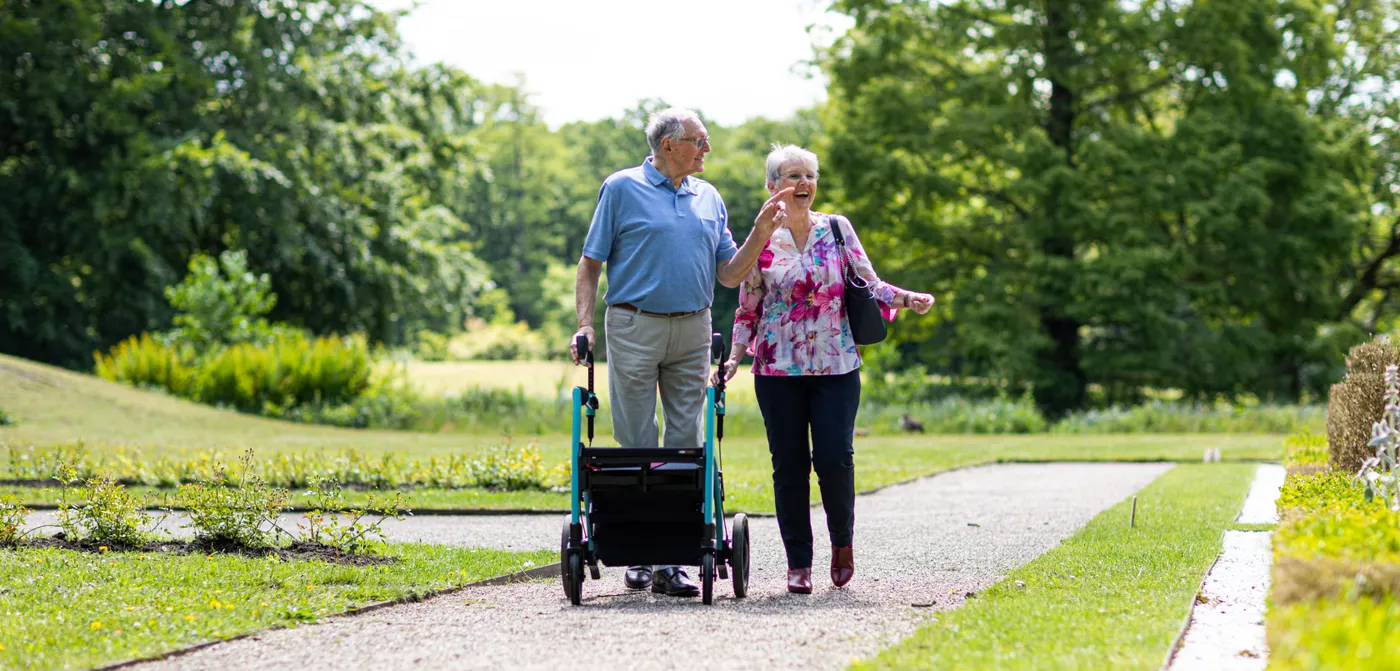
The word intensity can sound intimidating, but it simply describes how demanding an activity feels relative to capacity. For one person, a brisk pace on level ground is easy. For another, a short supported corridor walk is vigorous. Relative intensity is why a fixed speed, incline or step-count target is a poor substitute for individual assessment.
A practical talk test helps many healthy adults distinguish effort levels. At a moderate pace, breathing is faster but conversation remains possible. At vigorous effort, speaking more than a few words without pausing becomes difficult. A simple 0-to-10 effort scale is another option: roughly 5-6 represents moderate activity, while 7-8 is vigorous. These are general guides, not instructions for a frail person to force a particular breathing response.
People with known heart disease, unstable symptoms, recent falls, significant balance impairment or medication-related heart-rate changes should have an appropriate clinical exercise plan. The trial’s participants were supervised and screened; duplicating its target heart rate alone would miss those safeguards. Chest discomfort, faintness, severe breathlessness or new neurological symptoms are reasons to stop and seek medical assessment, not signals to push through.
Even among healthy exercisers, a higher-intensity day should be earned through gradual progression. Increase one variable at a time: perhaps the length of the brisk interval before adding more intervals, or the walking frequency before raising speed. Keep the path predictable and well lit. Use a handrail or mobility aid when needed. If form becomes rushed or foot clearance deteriorates, reduce the pace. Consistency across weeks is more useful than a single heroic session.
Walking and strength training solve different problems
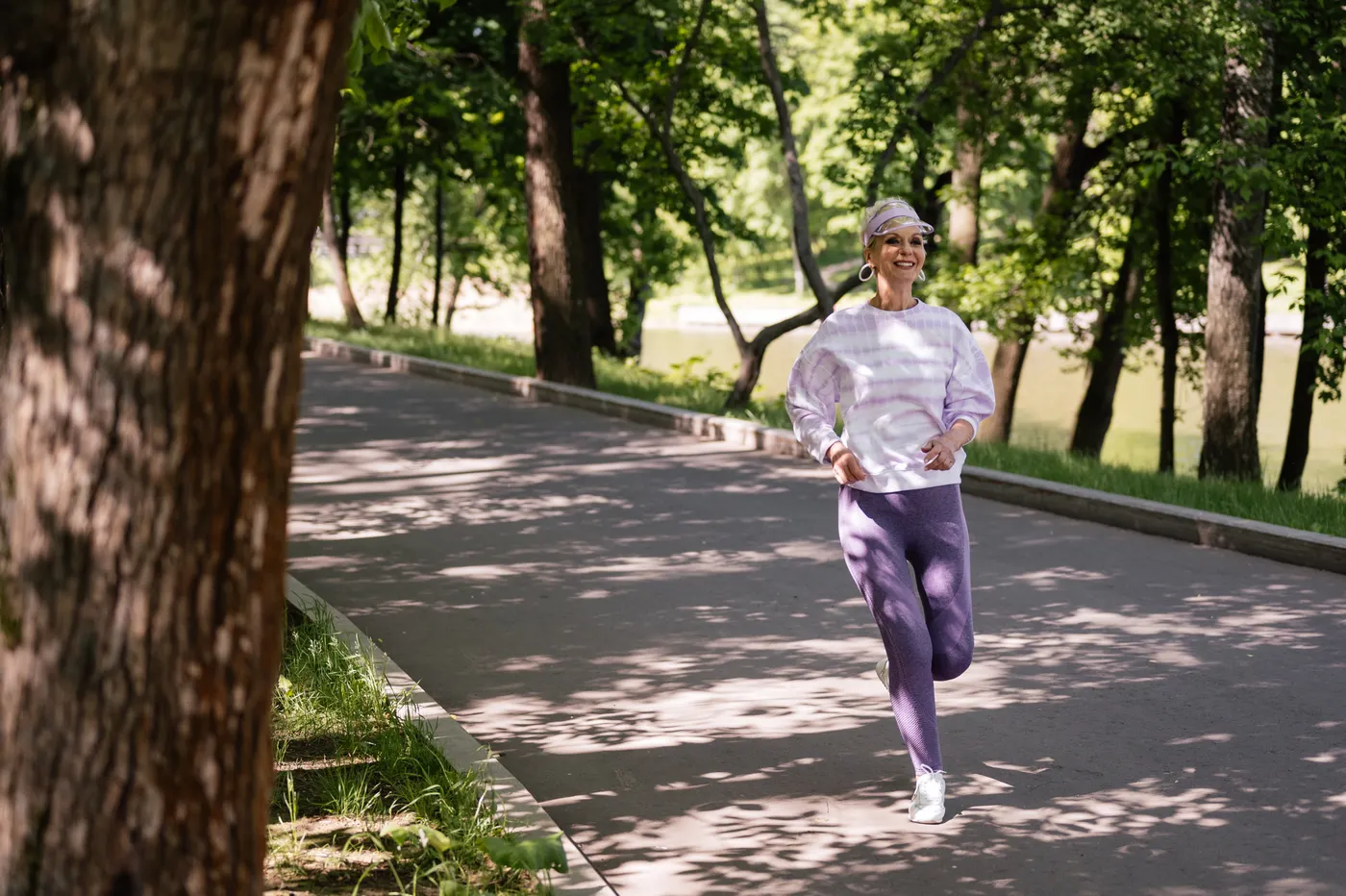
Walking is excellent practice for walking. It challenges aerobic capacity and repeated lower-body movement, but it may not provide enough progressive loading to preserve every muscle group or improve the ability to lift, carry and rise from low seats. Resistance training can fill those gaps, while balance exercises address control in positions that ordinary walking may not sufficiently challenge.
Broader exercise evidence supports programs combining functional movement, strength and balance for older adults. Public-health guidance generally recommends at least 150 minutes of moderate aerobic activity weekly, or an equivalent vigorous dose, plus muscle-strengthening work on at least two days. Older adults also benefit from multicomponent balance and functional activity. Those are population-level goals; a person starting from low capacity can benefit from much smaller, safe steps toward them.
A basic strength complement might include supported sit-to-stands, a controlled hip hinge, a horizontal row with a light band, a gentle step-up and a loaded carry when appropriate. The load should be manageable enough to preserve technique, then gradually increase as confidence and capacity improve. For someone already lifting regularly, maintaining a squat or leg-press pattern and a pulling pattern while adding walking intervals may be sufficient.
Do not interpret the walking trial as evidence that weighted vests, maximal sled pushes or heavy kettlebells are necessary for frailty improvement. They were not tested. Equipment can be useful for suitable, capable users, but the most important variable is an appropriate progression that someone can repeat. A supportive bench, a light adjustable weight or a stable exercise surface can be more useful than complicated gear.
Equipment Worth Exploring
Explore equipment, accessories and gear from our carefully selected range.
VOLTRA
Compact digital cable trainer with smooth, adjustable resistance.

Go-Tone Pro
Portable digital cable trainer with up to 66 lb (30 kg) of adjustable resistance.


A cautious four-week progression for capable walkers
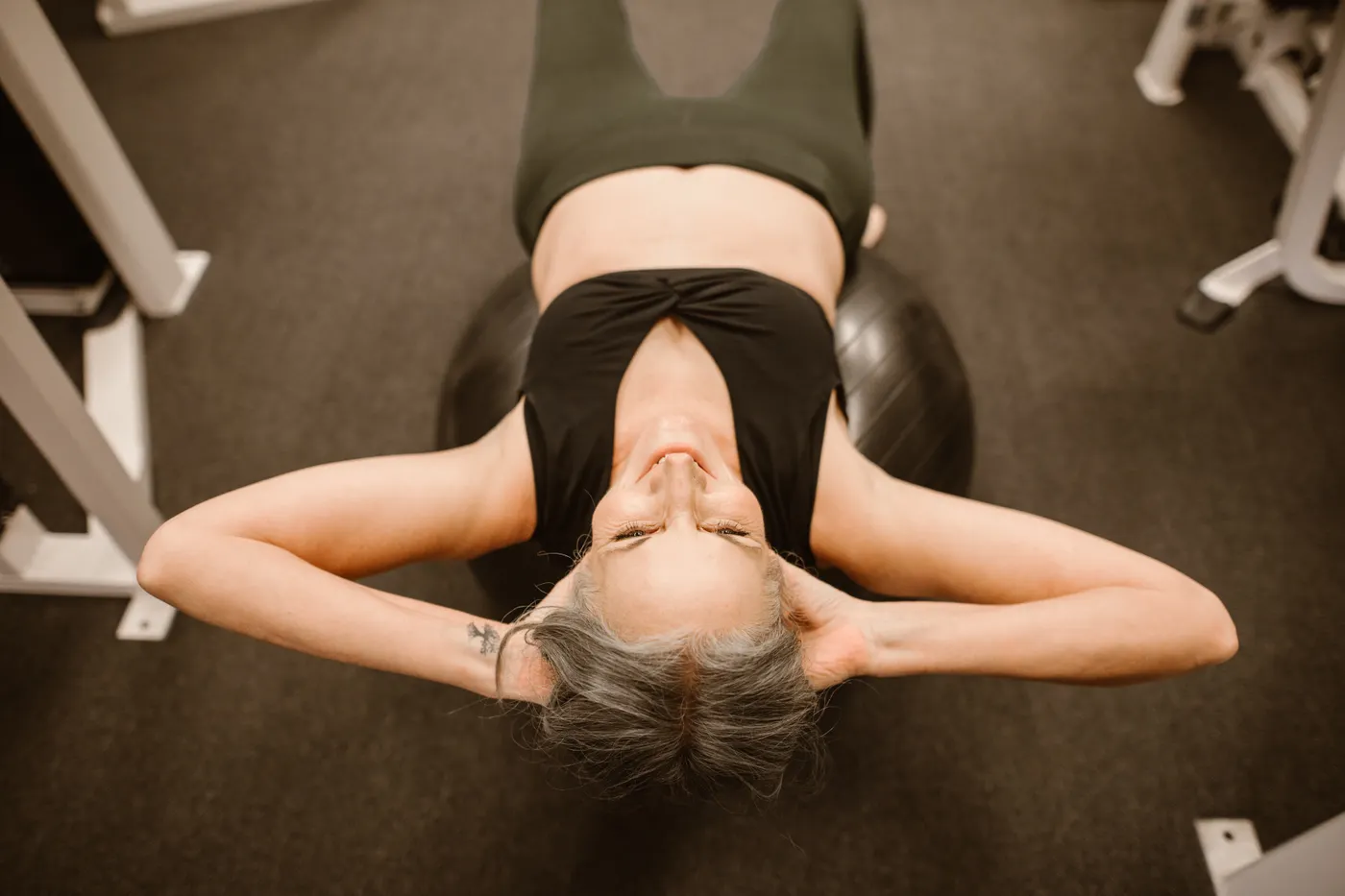
The following is an illustrative progression for generally healthy adults who can already walk independently and want to explore brisker pacing. It is not a reproduction of the supervised frailty trial and is not a prescription for someone with significant mobility disability. Anyone in the latter group should use an individualized plan from a qualified clinician or rehabilitation professional.
Week 1: Walk comfortably for 15-20 minutes on three or four days. During one or two sessions, add three 30-second slightly brisker segments separated by at least two minutes of easy walking. Notice posture, foot clearance and recovery. The goal is to learn a controllable change of pace, not to chase a heart-rate number.
Week 2: If week one felt steady, extend to four brisk segments of 45 seconds. Keep the rest easy. On two other days, practice a few controlled sit-to-stands and supported balance holds. Record how the effort felt and whether any symptoms appeared later that day.
Week 3: Try four to six one-minute brisk segments in a 20-25-minute walk. Choose a pace that feels purposeful without making coordination deteriorate. If fatigue accumulates, repeat week two rather than advancing automatically. A shorter, well-executed walk beats a longer session performed with poor control.
Week 4: Maintain the same total walking time while making some brisk intervals 90 seconds, or add one additional easy walking day. Do not increase both duration and intensity aggressively. Evaluate a consistent, comfortable walking route, how quickly breathing settles and whether routine tasks feel easier. Keep strength and balance work in the schedule. Progress is the ability to do useful work reliably, not merely a faster watch reading.
Functional Fitness Shirts & Workout Gear
Functional-fitness shirts, tanks and workout gear for athletes who train strength, conditioning and everything in between.

Vive La Resistance Bands – Resistance Bands Warmup Mobi T-Shirt
Add a playful “Vive La Resistance Bands” touch to your casual rotation.

Handstand Walk Tee
Bring “: The Handstand Walk Beatles Graphic” humor to your next gym day.

Hybrid Athlete Strength & Endurance Tank
Add some lifting attitude to training with “Hybrid Athlete”.


Kettlebell Heartbeat Decal for Water Bottles Laptops Wo Sticker
Put “Kettlebell Heartbeat” gym humor on your laptop, bottle, or gym gear.

Happy Kettlebell Emoji Smiley Kettlebell Meme T-Shirt
Show some gym-day personality with “Happy Kettlebell Emoji”.

Atlas Kettlebell Earth Meme Greek God Top T-Shirt
Make gym days more fun with “Atlas Kettlebell Earth Lifter” style.

Kettlebell Heart X-Ray – Valentine's Workout Hooded Hoodie
Bring “Kettlebell Heart X-Ray” gym humor to lazy days and post-workout plans.

Break the Stereotype Tee
Show some gym-girl attitude with a playful “Break The Stereotype Gym Girl” tee.

Hybrid Athlete – Built Different Crewneck for HYROX, Cr T-Shirt
Show some gym-day personality with “Hybrid Athlete”.
How to interpret the result in your own training

The clearest lesson is that walking speed is a training variable, not a personality trait. In a supervised 16-week trial, more participants assigned to a faster pace improved their frailty classification, and their walking tests improved more than those assigned to casual walking. That is encouraging evidence for considering intensity as well as duration when designing activity for older adults.
But the conclusion must stay proportional to the data. The analytic cohort was much smaller than the number enrolled, conservative missing-data analyses were less persuasive, and the study involved people with pre-existing frailty in retirement communities. We cannot generalize its exact percentages to healthy young runners, powerlifters or every older adult. Nor does it prove that hard walking is safer, better for muscle growth or more effective than a properly designed multicomponent program.
If you are fit and simply want more cardiovascular capacity, you can use controlled brisk intervals alongside your lifting. If you are returning after inactivity, start with a pace you can repeat and build volume gradually. If walking itself is difficult or unsafe, professional assessment and supported progression take priority. In all cases, track function: comfortable pace, walking distance, chair-rise confidence, balance and recovery tell a richer story than daily steps alone.
It is tempting to search for one perfect workout intensity. This study instead argues for a more useful question: what level of challenge improves the ability you care about while remaining safe enough to practice consistently? For some people, that is a faster walk. For others, it is their first stable five-minute walk, a stronger chair rise or a combination of walking and resistance training.