Battle ropes look like pure conditioning: fast waves, burning shoulders and a heart rate that climbs in seconds. But can repeatedly moving a heavy rope also improve measurable strength and power? A 2026 synthesis of 21 controlled studies involving 590 participants suggests the answer is more interesting than a simple cardio-versus-strength label. Upper-body explosive performance, grip strength and muscular endurance improved on average, while the evidence for better jumping was less convincing. The important caveat is who was studied, how the ropes were used and how much uncertainty surrounds the pooled numbers.
1. What the 21 Battle-Rope Studies Actually Tested
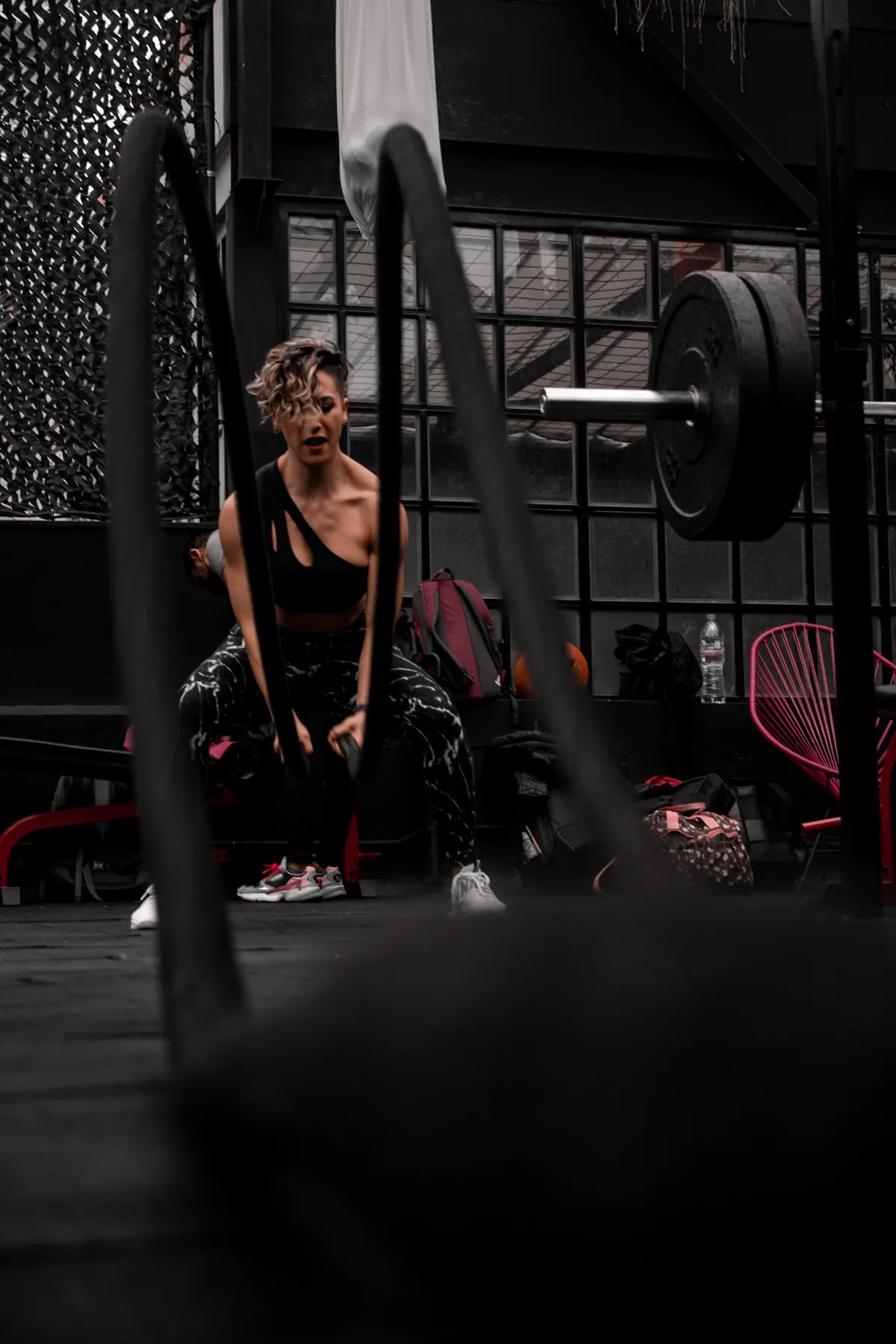
The review included controlled training interventions rather than just single hard workouts. Participants were 11 to 25 years old, including students, young adults and athletes from several sports. There were 590 people across 21 studies; sex was reported for 553, of whom 433 were male and 120 female. That imbalance matters when someone tries to apply the findings to older adults or a broad gym population.
Programs lasted four to twelve weeks, commonly using two to five sessions per week. Exercises included alternating waves, double-arm waves, slams, spirals and hip-driven patterns. Some protocols mixed rope work with jumps, lunges or other conditioning, and control groups ranged from no added training to regular sport practice or conventional exercise. In other words, the comparison was not a single standardized rope workout against a single standardized gym program.
Researchers grouped outcomes into upper-body explosive power, lower-body explosive power, handgrip strength, upper-body muscular endurance and core endurance. Those are practical categories, but the tests varied: throws and throwing speed for power, push-ups or hangs for upper-body endurance, and planks or bridges for trunk endurance. A stronger score on one test is not automatically proof of improved performance in every sport.
For a lifter, the useful question is not whether ropes are universally superior. It is whether their specific combination of repeated force production, gripping and conditioning fills a gap in an existing plan.
2. Power, Grip and Endurance: Where the Results Were Strongest
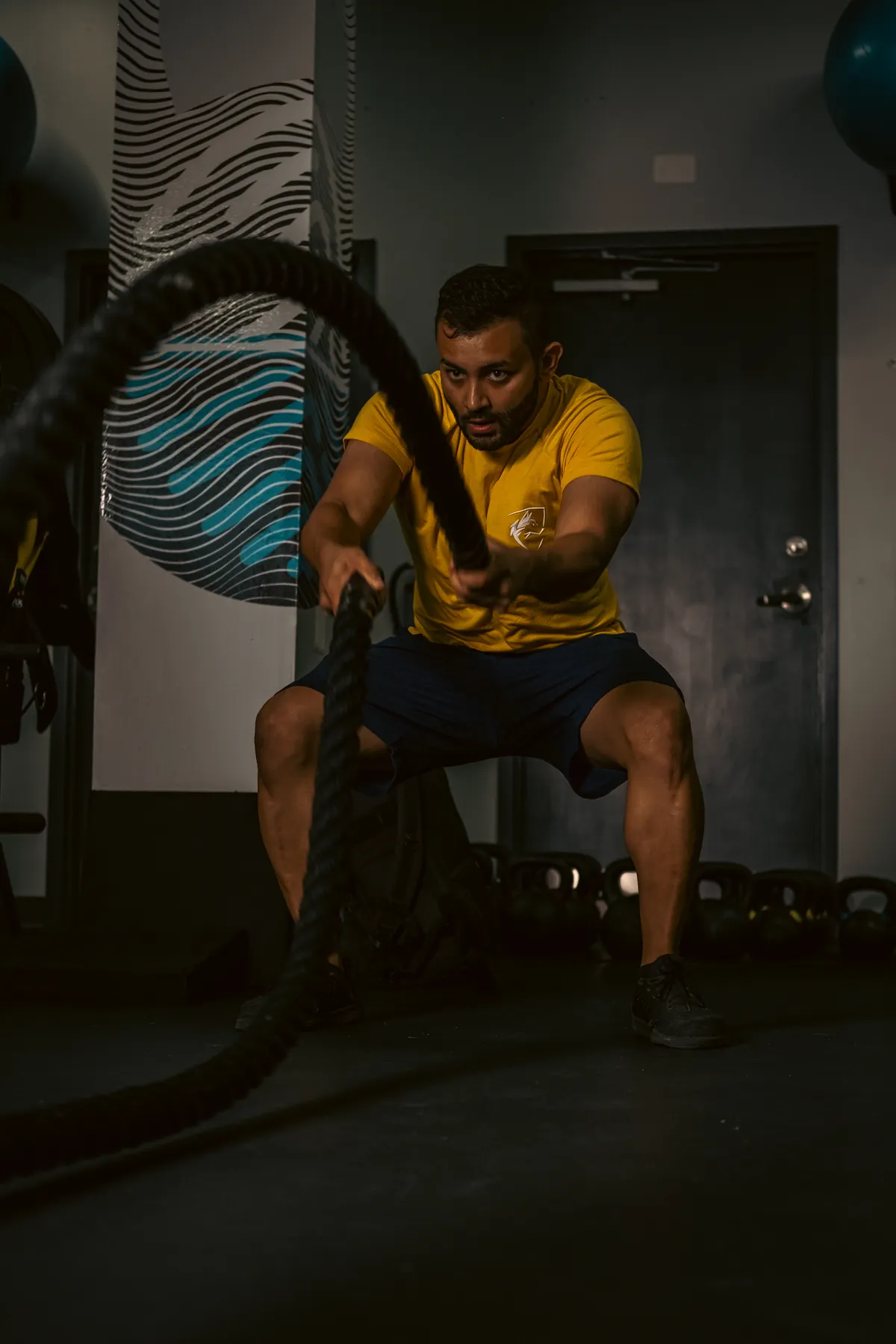
Compared with the control conditions, the pooled effect for upper-limb explosive power was large: Hedges’ g was 1.59, with a 95% confidence interval from 0.77 to 2.42. Grip strength also favored rope training, with g = 0.99 and a confidence interval from 0.30 to 1.67. Upper-body muscular endurance improved on average (g = 1.17), as did core endurance (g = 1.67). These are standardized differences across studies, not percentages of extra muscle or guarantees that your own results will be that large.
The lower-body explosive-power estimate did not reach statistical significance: g = 1.17, but the confidence interval stretched from -0.21 to 2.55. That range includes little or no benefit. Rope slams may involve the hips and legs, yet they do not automatically provide the same progressive lower-body stimulus as squats, jumps or sprints.
There is a second reason to resist dramatic headlines. Heterogeneity was substantial for several outcomes: for upper-body power it was about 86%, and for upper-body endurance about 82%. Prediction intervals often crossed zero, meaning future comparable programs might produce much smaller effects than the pooled average. The positive signal is real enough to take seriously, but its precision and generalizability are limited.
For most trainees, the strongest case for battle ropes is as a complementary tool for repeatable upper-body effort and conditioning. They should not replace the main strength lifts or sport-specific power work simply because the average effect sizes look impressive.

Equipment Worth Exploring
Explore equipment, accessories and gear from our carefully selected range.


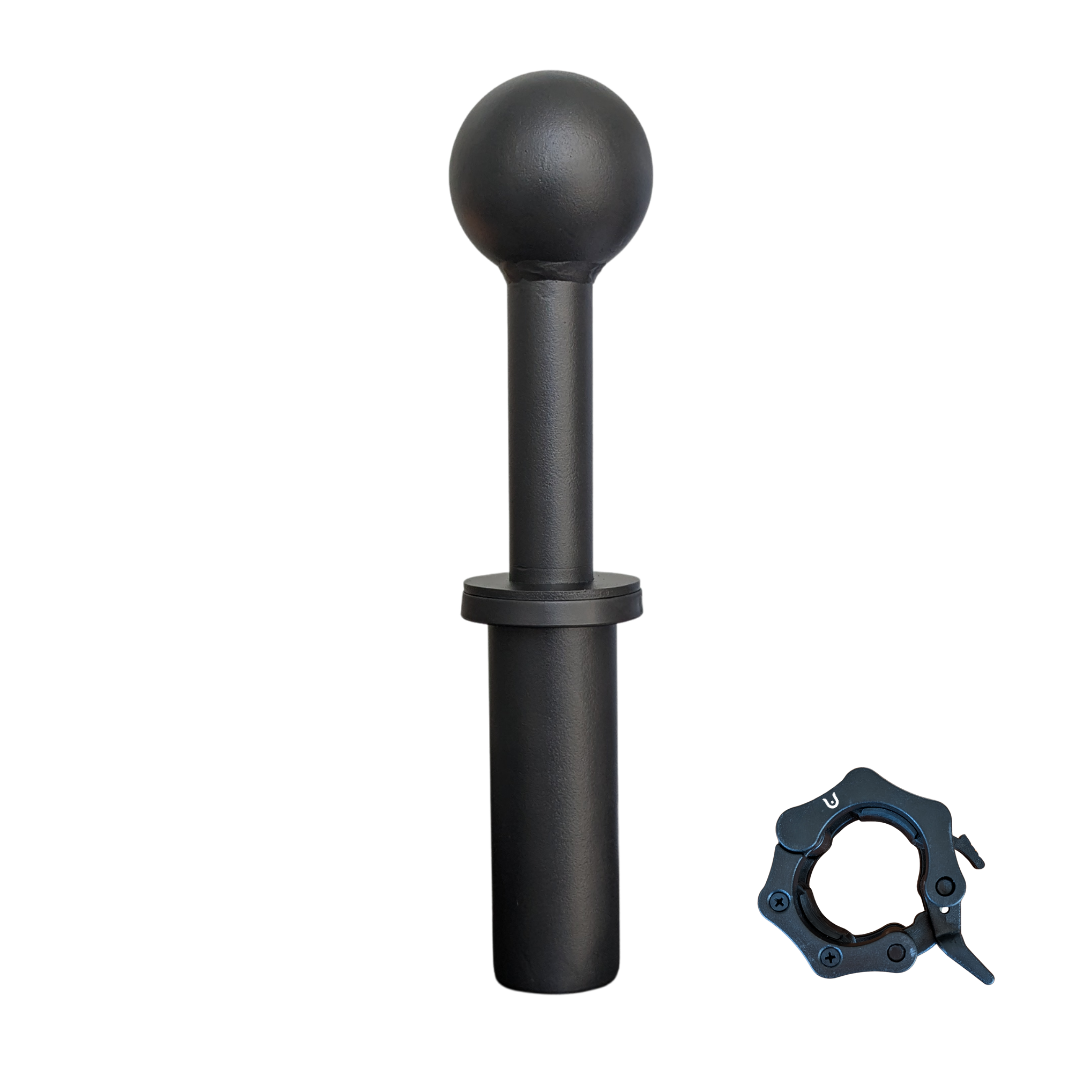

Leather Wrist Grips
Padded leather lifting grips help support the hands and wrists on heavy pulling exercises.


3. Why Fast Rope Waves Challenge More Than Your Shoulders
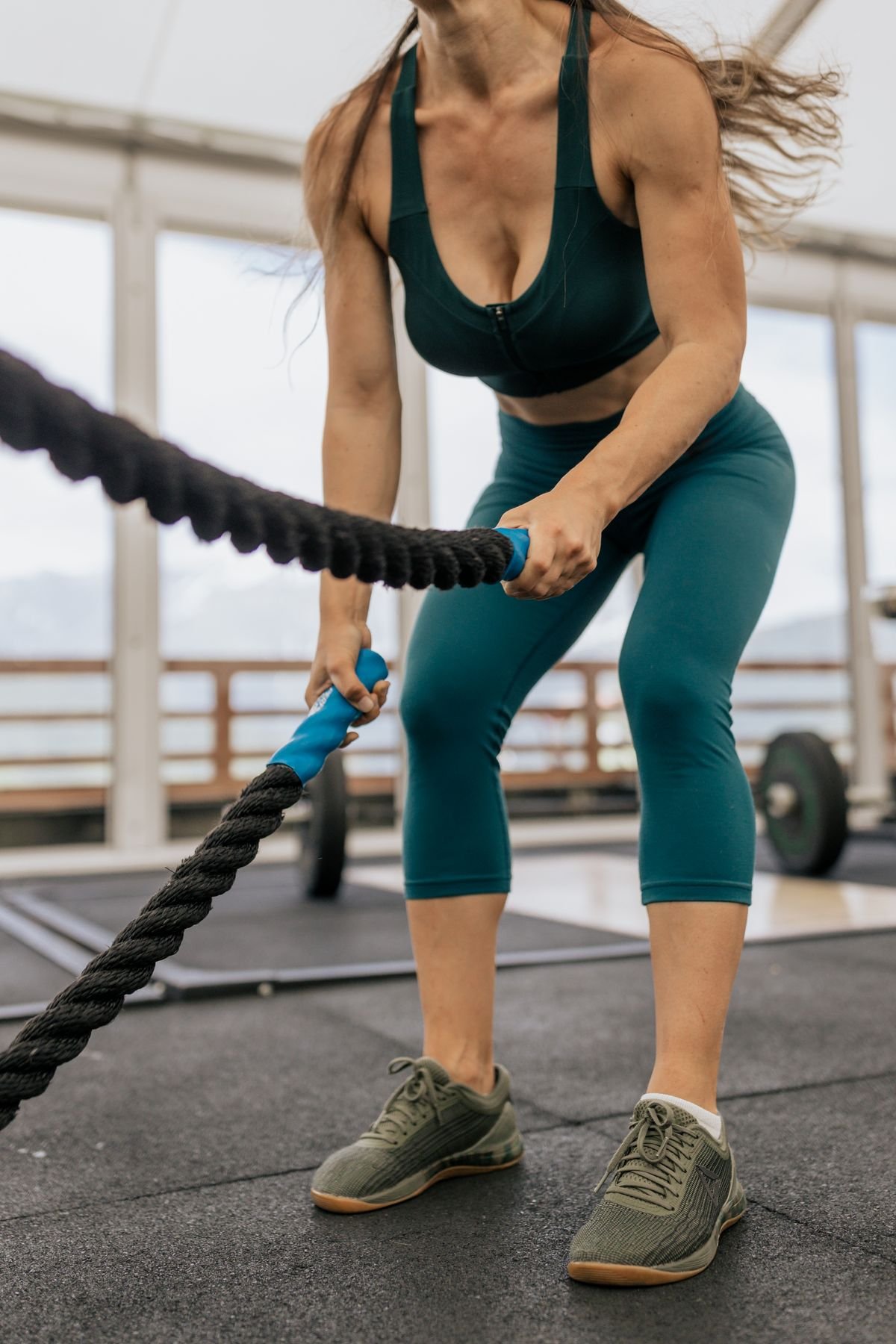
Each wave requires the hands to accelerate a flexible load, reverse direction and repeat while the rope’s mass and friction resist motion. The forearms must maintain the grip, the shoulders and upper back repeatedly guide the arms, and the trunk keeps the body from being pulled out of position. Faster waves can increase the challenge, but bigger waves are not necessarily better if posture collapses.
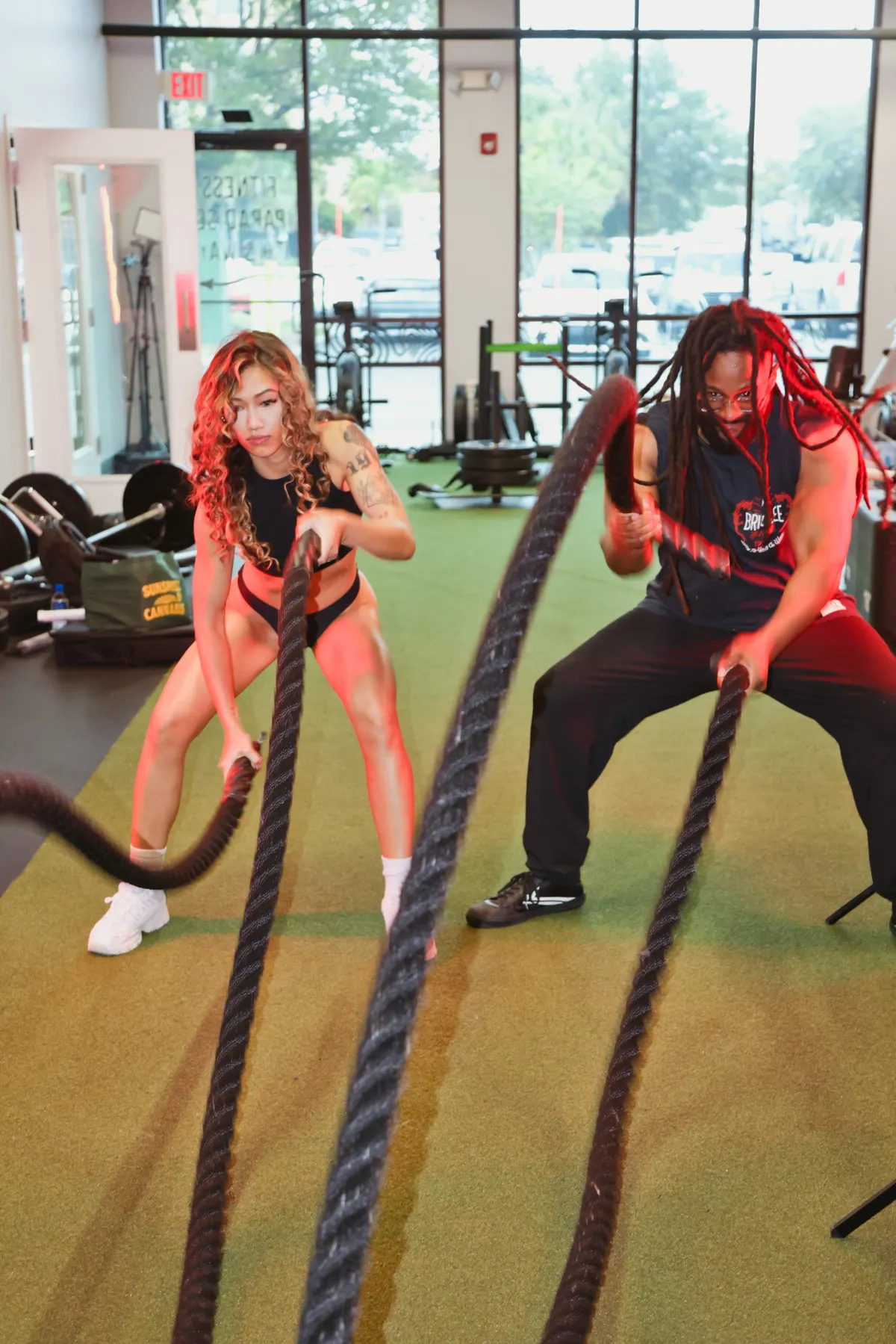
Alternating waves create an asymmetrical rhythm: one hand rises as the other falls. That pattern demands coordination and anti-rotation control. Double-arm waves let both arms work together and may make it easier to emphasize a powerful, repeatable movement. Slams use a more deliberate overhead-to-floor action and can involve a stronger hip contribution. None of these is a magical way to isolate one muscle; each changes the mix of speed, range, coordination and fatigue.
Do not confuse the sensation of a shoulder burn with a proven hypertrophy advantage. The 21-study review focused on performance tests, not direct measurements of long-term muscle size. Rope work can coexist with presses, rows, pull-ups and curls, but progressive resistance exercises remain the more direct way to load a specific muscle through a controlled range.
That distinction is especially helpful in a compact gym. If you already have a cable machine or adjustable dumbbells, battle ropes add a different movement and energy-system challenge rather than replacing the equipment you use for progressive strength.

Functional Fitness Shirts & Workout Gear
Functional-fitness shirts, tanks and workout gear for athletes who train strength, conditioning and everything in between.

Battle Ropes HIIT Tee
Show some superhero attitude with a playful “Wonder Woman Battle Ropes” tee.

Hybrid Athlete Strength Tee
Show some lifting attitude with a playful “Hybrid Athlete” tee.


Dumb And Dumber Gymbro Meme Top Cardio & Lifting T-Shirt
Bring “Gym T” humor to your next gym day.

Forged in the Gym Tee
Show some lifting attitude with a playful “Forged in the Gym: Hephaestus God of Fire” tee.

Meme – You May Delay Time Will Not Next Cult Brand T-Shirt
Heavy lifts, good laughs, and a little “You May Delay Time Will Not” energy.

Lift Together Grow Stronger Buddies Friendship Workout T-Shirt
Make gym days more fun with “Lift Together Grow Stronger” style.


Handstand Walk Tee
Bring “: The Handstand Walk Beatles Graphic” humor to your next gym day.
4. How to Set Up Alternating Waves, Double Waves and Slams
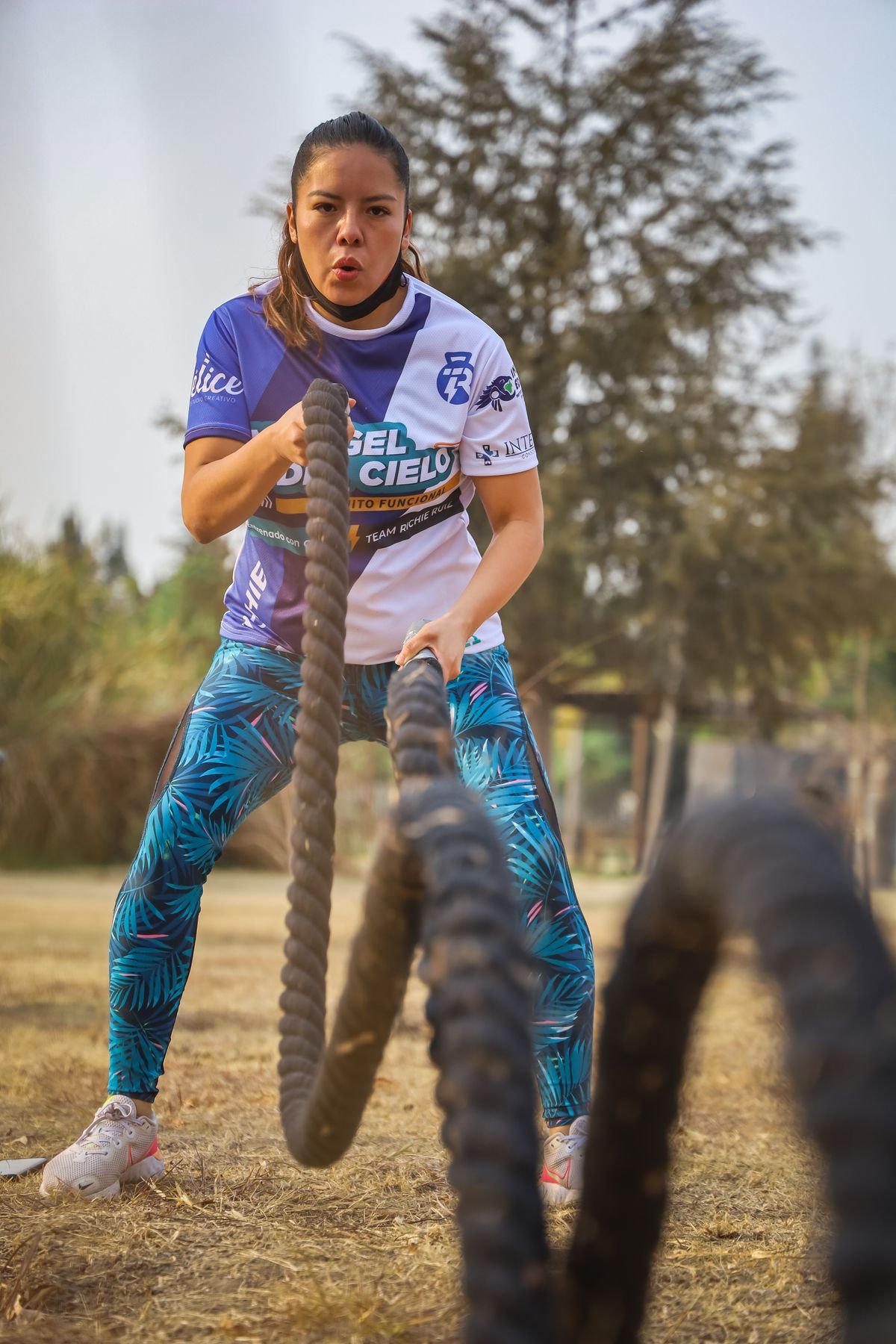
Start with the anchor. Use a stable, purpose-built anchor point and check that the rope is not frayed. Leave enough clear floor space for the full rope length, away from people, furniture and sharp edges. Hold one end in each hand, stand with feet about hip- to shoulder-width apart, soften the knees and keep the ribs stacked over the pelvis. Do not lean back to fight a rope that is too heavy or too taut.
Alternating waves: move one hand up as the other goes down, creating continuous ripples toward the anchor. Begin with small, consistent waves for 10 to 15 seconds. Keep the wrists reasonably neutral, avoid shrugging toward the ears and breathe instead of holding a prolonged brace. If the waves disappear halfway down the rope, reduce speed or shorten the effort before resorting to whole-body swinging.
Double-arm waves: raise and lower both hands together while maintaining a quiet torso. Think smooth acceleration rather than slamming the handles into the thighs. Try two to four short efforts, each separated by enough rest to restore coordination.
Power slams: extend the arms upward within a comfortable shoulder range, then drive the rope toward the floor using a coordinated hip and arm action. Stop if the shoulders, elbows or back become painful. Beginners can use a smaller arc and lighter rope rather than chasing a dramatic overhead movement.
Film a side-view set if technique is uncertain. The useful markers are stable feet, a controlled trunk and waves that stay rhythmic without excessive shoulder elevation.
5. A Six-Week Battle-Rope Progression That Fits Around Lifting
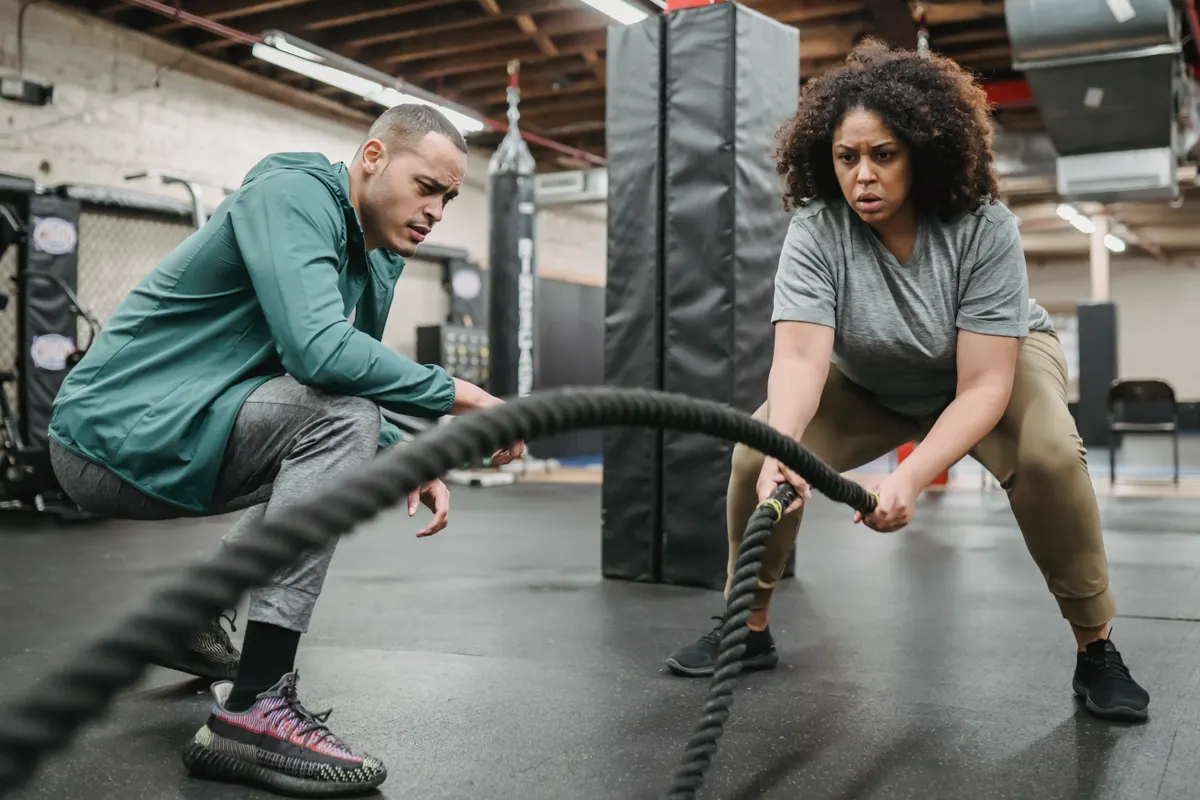
Use the following as an illustrative starting plan, not a protocol proven optimal for every lifter. Train ropes twice weekly after a warm-up, ideally on days when they will not compromise heavy upper-body work. Keep the main workout separate if your priority is maximal strength. A short rope block can be demanding enough without turning the session into an endurance contest.
Weeks 1-2: learn rhythm. Perform four rounds of 15 seconds of alternating waves, resting 60 to 90 seconds between efforts. Add two rounds of 10-second double-arm waves if technique stays clean. Keep effort around 6 to 7 out of 10 and stop while the waves are still consistent. Record the rope, anchor distance and number of rounds.
Weeks 3-4: add repeatable work. Build to six rounds of 20 seconds, with 60 to 75 seconds of rest. Alternate wave styles across rounds rather than stacking several unfamiliar movements. Increase work time only if you can maintain roughly the same wave quality from the first round to the last.
Weeks 5-6: choose a goal. For conditioning, try six to eight rounds of 20 to 30 seconds with 45 to 75 seconds of recovery. For power emphasis, use five or six crisp 10-second slams or powerful double waves with longer rests of 90 to 120 seconds. Do not combine maximal speed, heavier rope and shorter rests in the same progression step.
Track consistency, wave quality and recovery, not just exhaustion. A stronger athlete should finish more repeatable high-quality work at the same rope setup, or complete the same work with less perceived strain.
Equipment Worth Exploring
Explore equipment, accessories and gear from our carefully selected range.
VOLTRA
Compact digital cable trainer with smooth, adjustable resistance.

Go-Tone Pro
Portable digital cable trainer with up to 66 lb (30 kg) of adjustable resistance.

GymPin D Cuffs
Adjustable wrist cuffs with textured grips for supported cable-machine exercises.


GymPin Ergo Handles
Pair of ergonomic cable handles shaped for comfortable triceps and pulling exercises.

Long Tricep ERGO Ropes
Extended triceps ropes with ergonomic grips for cable pressdowns and overhead extensions.


Power Tower
Freestanding pull-up and dip station with adjustable handles for bodyweight training.


FID Bench MAX
Adjustable bench offering flat, incline, and decline positions + adjustable headrest.
6. What Rope Intervals Can and Cannot Replace
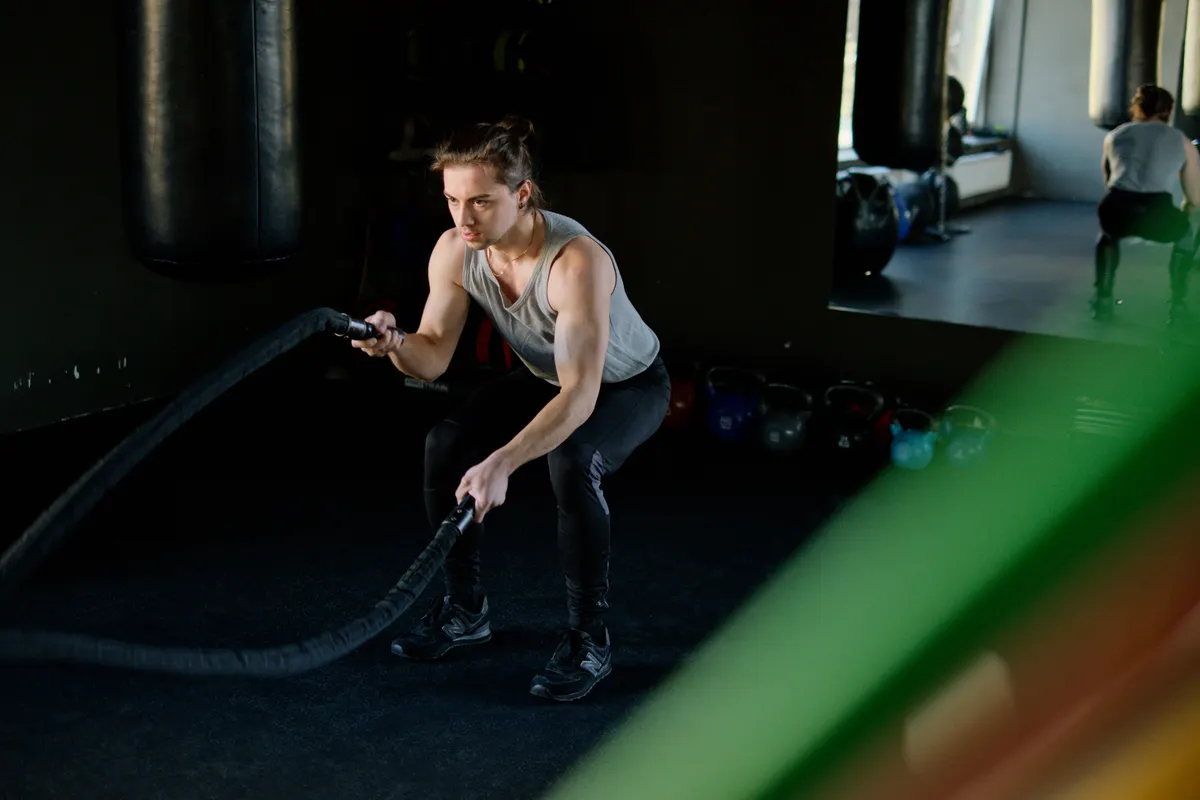
Battle ropes can create a substantial cardiovascular demand. In one acute experiment with 22 young adults, eight 30-second rope efforts produced higher average oxygen consumption and energy expenditure when the rest periods were one minute rather than two. The lesson is straightforward: rest structure changes the metabolic cost. It does not mean shorter rests are automatically superior for power development, where preserving output can be more important.
A separate six-week intervention involving 33 recreationally active young adults used ten 30-second efforts with one minute of rest, three times per week. Participants improved several measures of upper-body aerobic and muscular performance. That supports the idea that repeated rope intervals can be a training stimulus, but it does not establish that they outperform a matched cycling, running or resistance program for everyone.
Rope intervals also are not a direct substitute for heavy pulling, pressing or lower-body strength work. A battle-rope wave challenges speed and repeated effort, while a loaded row or press offers a more easily measured progression in external resistance. If the goal is grip, ropes provide prolonged holding under movement, but carries, hangs and dedicated grip work remain useful alternatives.
Choose the tool based on the limitation you are trying to address. For short conditioning in a small space, ropes can be excellent. For a stronger one-rep-max squat or a specific muscle-growth target, keep progressive resistance training as the foundation. For jump performance, use jumping and lower-body strength work rather than assuming rope slams will transfer automatically.
Cardio Shirts & Workout Gear
Cardio and conditioning gym gear for runners, endurance athletes and anyone who earns the sweat.

Skip Cardio – Exit Cardio Meme , , Top T-Shirt
Bring “Skip Cardio” humor to your next gym day.

Shirt – Cardio Is Hardio – & Gymbros T-Shirt
Show some cardio attitude with a playful “Cardio is Hardio” tee.

Jump Rope Cardio Tee
Rep “Jump Rope Cardio Van Halen Rock Music” humor in and out of the gym.

Fit And Fitter : Dumb And Dumber Gymbro Cardio & T-Shirt
Show some cardio attitude with a playful “Fit and Fitter” tee.


Shirt – Human Torch Burn Calories Superhero Comic T-Shirt
Rep “Human Torch Burn Calories” humor in and out of the gym.

Hero Jump Rope – Cardio Speed Flash Superhero T-Shirt
Show some superhero attitude with a playful “Gym Hero Jump Rope” tee.

Cardio Sucks Shirt Meme & Gymbros Top T-Shirt
Make gym days more fun with “Cardio Sucks” style.

Death By Cardio Shirt Meme & Top T-Shirt
Bring “Death By Cardio” humor to your next gym day.

7. Safety, Study Limits and the Practical Bottom Line
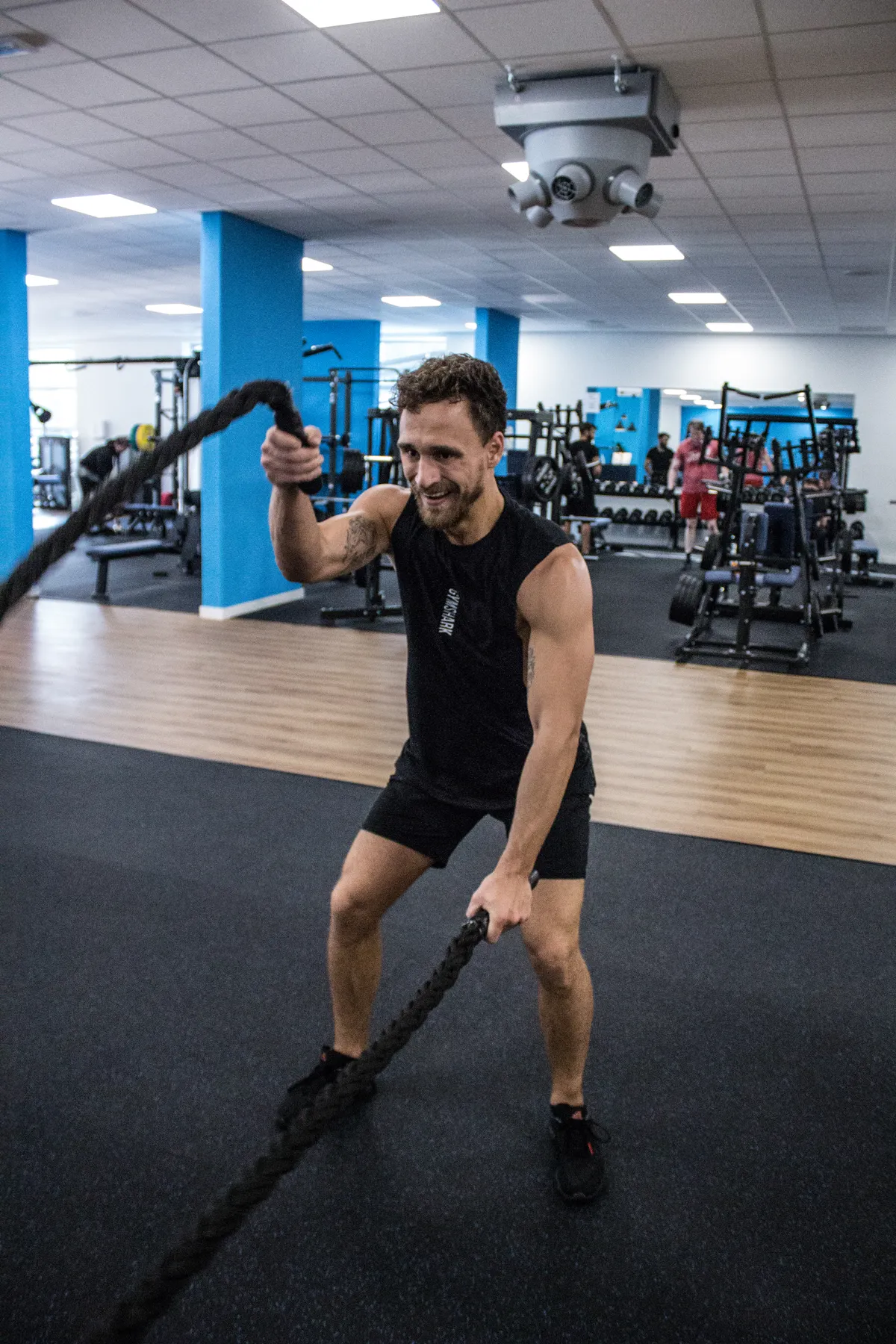
The evidence is encouraging but not definitive. The 2026 synthesis combined small studies with different rope sizes, movement patterns, training durations and comparison groups. Most participants were young, and several risk-of-bias assessments raised concerns about randomization details or selective reporting. Large average effects accompanied by wide confidence and prediction intervals should invite better research, not exaggerated certainty.
Start conservatively if you have limited conditioning, shoulder symptoms or a history of elbow irritation. Check the anchor before every session, clear the floor, use a rope you can control and avoid gripping so hard that the wrists collapse. Build work time gradually and leave a day or more between demanding rope sessions when recovering from upper-body lifting. Persistent pain, dizziness or unusual breathlessness are reasons to stop and seek appropriate professional advice.
Home-gym space matters, too. A battle rope requires a genuinely secure anchor and a long clear lane; a cramped office-gym corner may not be suitable. If you cannot use it safely, short intervals on a bike, rower, jump rope or cable system can still deliver useful conditioning without pretending they are identical movements.
Bottom line: across 21 controlled studies, battle ropes showed promising average gains in upper-body power, grip and muscular endurance, with less convincing evidence for lower-body explosive performance. Use them as a focused conditioning and repeated-effort accessory. Keep strength, hypertrophy and sport-specific work in the program, progress one variable at a time and judge success by measurable performance rather than how destroyed your shoulders feel afterward.