Advertising disclosure: This page includes affiliate product links that may earn us a commission, as well as products from our own store.
A steel mace can make a modest weight feel surprisingly demanding. Most of its mass sits at the far end of a long handle, so controlling it involves more than recognising the number printed on the head. Move your hands, change the angle or start the head travelling and the task changes again. That is part of its appeal, but it also explains why an experienced lifter can feel like a beginner during a first 360.
The 360 sends the mace around the head and back to a controlled position in front. Before treating it as conditioning, approach it as a skill. Learn the implement, establish clearance and practise a repeatable return. A smooth demonstration is the result of control; copying its speed is a poor starting point.
Read the long handle before choosing the weight
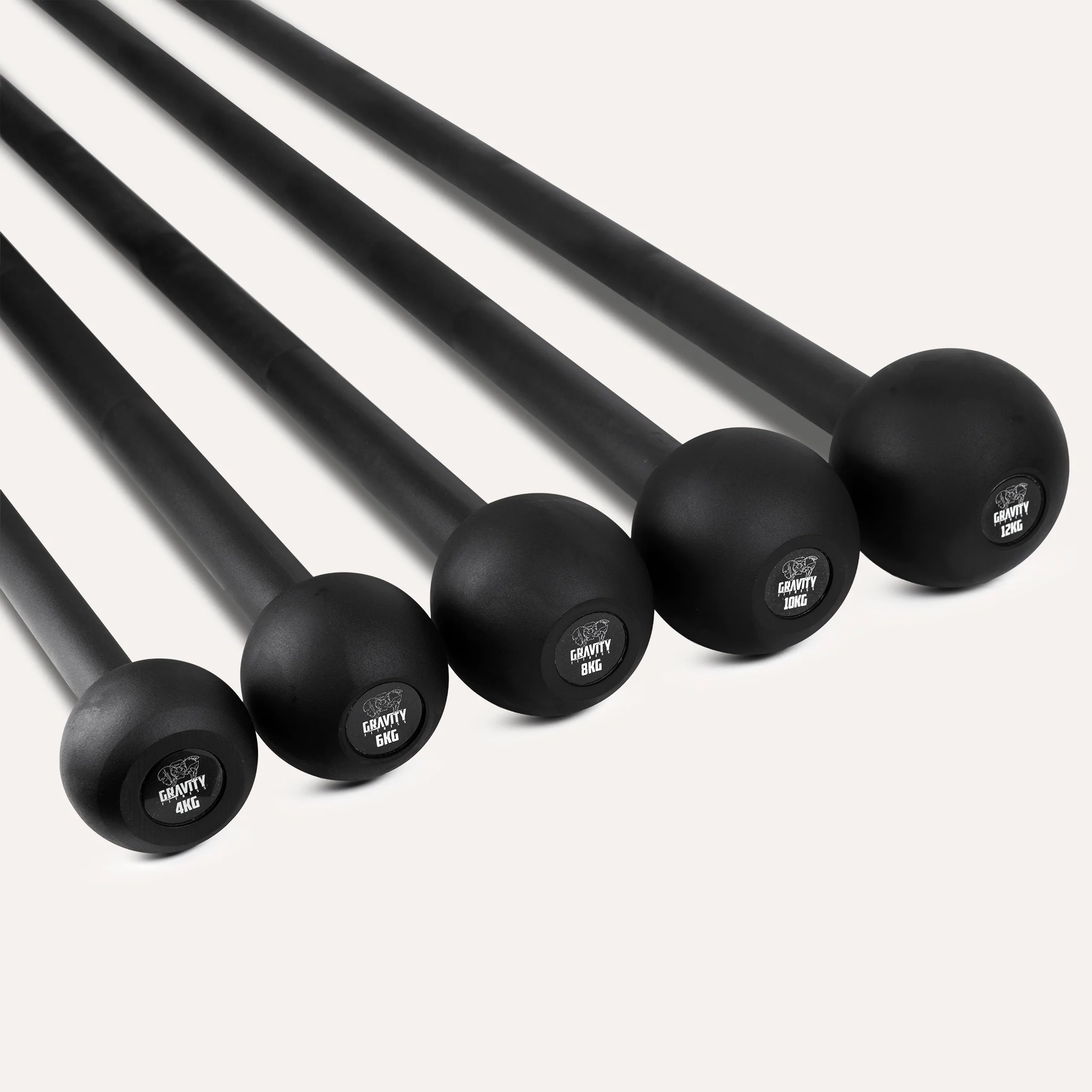
A mace is an unevenly loaded lever. The head’s distance from your hands matters, so a weight you can easily curl as a dumbbell may still be difficult to manage at the end of a mace handle. Comparing the two only by kilograms leaves out the feature that makes mace training distinctive.
Moving your grip towards the head shortens that lever. Moving towards the handle’s end lengthens it. Neither changes the mace’s mass, but both change how demanding a position can feel. The angle also matters: holding the head above the hands is different from controlling it as it travels away from that line.
Choose a light implement that allows deliberate practice rather than buying according to your heaviest familiar lift. There is no single beginner weight that suits every person’s reach, experience and movement options. If you cannot establish the starting position and return without a hurried correction, a heavier mace is not the next useful step.
Check the particular model’s handle, grip surface and construction before using it. The photographs illustrate real steel maces, not a claim that every model has identical dimensions. A longer handle can change the task even when two heads carry the same weight label. Record the implement and your hand position if you want a meaningful comparison between sessions.
Make your grip and starting position repeatable
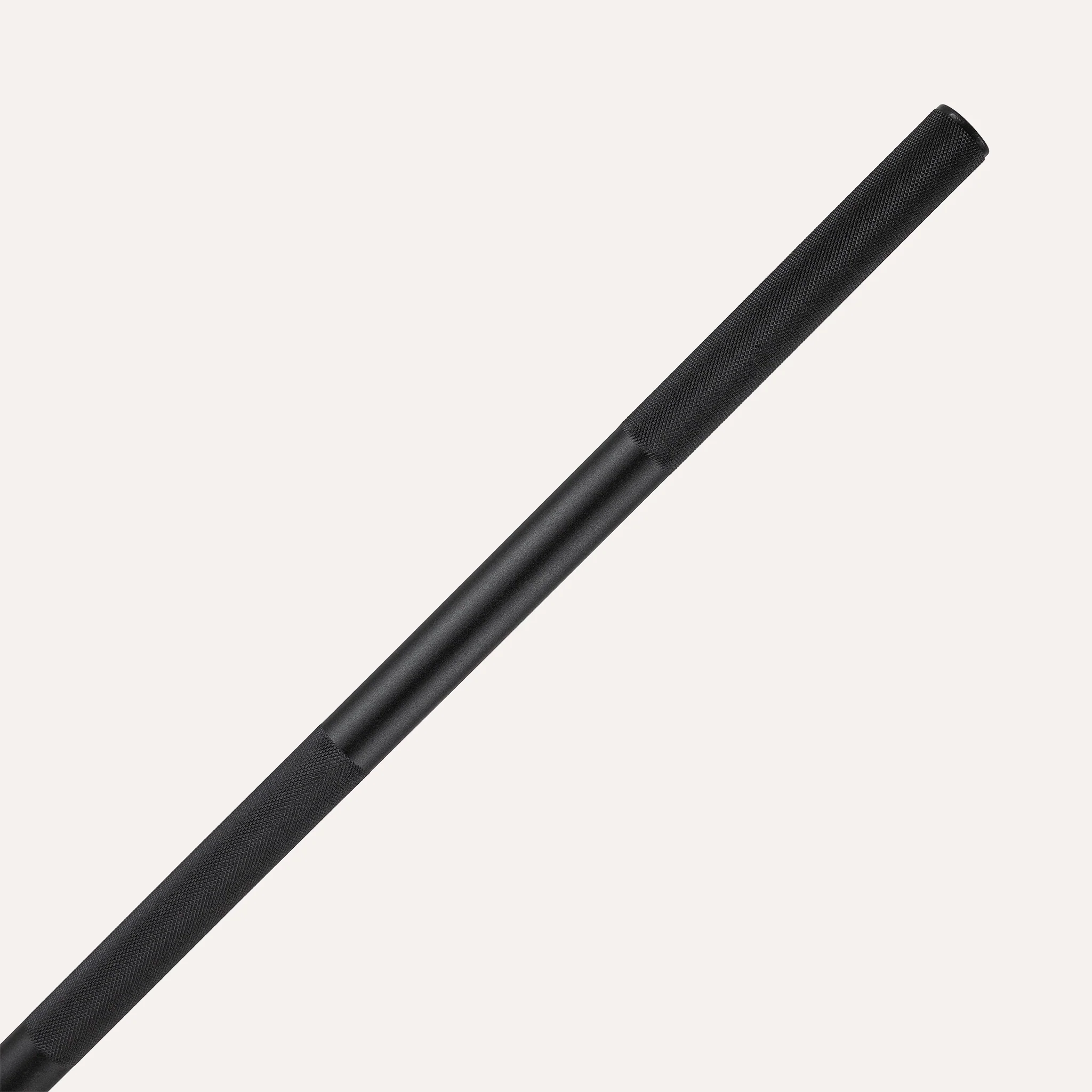
Begin by learning to hold and reposition the mace under control in front of your body. Know where both hands are, which hand is uppermost and how you will finish the attempt. Do not let an unstable setup become the first movement of a fast swing.
The handle gives you more than one difficulty setting. A shortened lever can be a useful regression while you learn the path, but it changes the movement’s feel as well as its demand. Treat a change of grip as a deliberate adjustment, not an accidental slide towards a more difficult position.
Maintain possession of the handle throughout. Coaching descriptions sometimes discuss allowing the grip to adapt as the mace travels. That should not be interpreted as opening your hands or letting the handle escape. A qualified instructor can distinguish excessive tension from inadequate control while watching you move.
For the first practices, check your start before each repetition. If the mace has drifted sideways, your stance has changed or you are already bracing for an unpredictable return, reset. Repeatedly recovering from a poor start teaches a different task from reproducing a controlled swing.
There is a related lesson in how changing the hold changes a sandbag carry. The load’s position can alter what limits you. With a mace, the long lever makes hand position an especially important part of describing the exercise.
Set up a space that allows the entire path
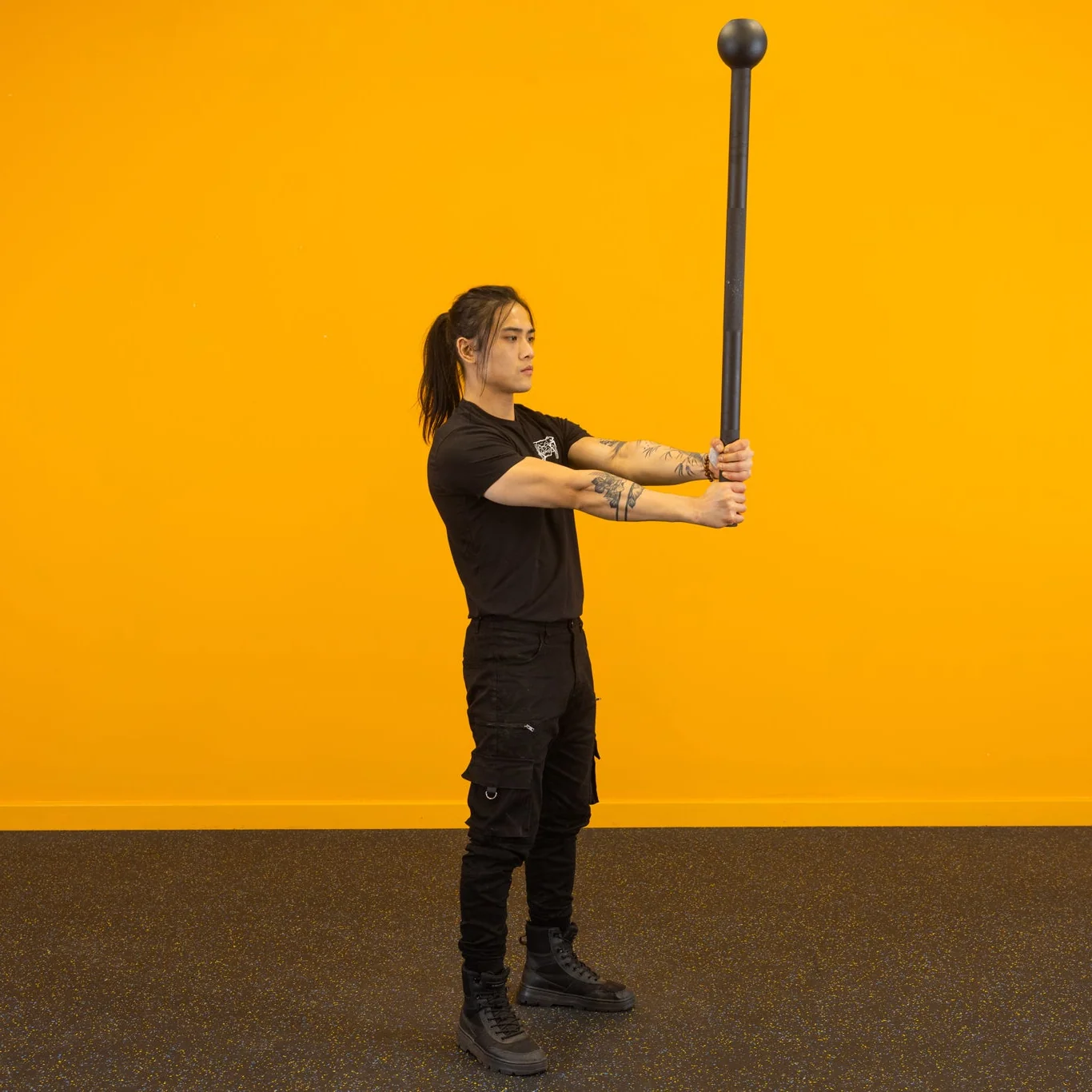
The visible space in front of you is only part of a 360’s working area. The head travels behind you as well. Check the full path against walls, racks, mirrors, hanging lights, ceiling fans and anything that could be struck. Keep other people and pets outside that area.
A clear patch between machines is not automatically a suitable practice station. Consider how you will pick up the mace, begin the movement, stop it and put it down. Settle those transitions before introducing continuous repetitions. Suitable flooring and a stable stance are part of the setup, rather than details to address after the mace is moving.
Use instruction to establish a path appropriate to your body and implement. The point is not to force your shoulders into the shape seen in a photograph. Reaching the head’s intended route by leaning back or making an uncontrolled trunk movement changes the exercise and deserves attention.
A light, controlled kettlebell halo is another example of moving an implement around the head, but it is not an interchangeable test or a guarantee that you are ready for a mace 360. Different handles and load positions create different demands. Treat each movement on its own terms, and stop an attempt that produces pain or an uncontrolled path.
Practise the components before linking repeated swings
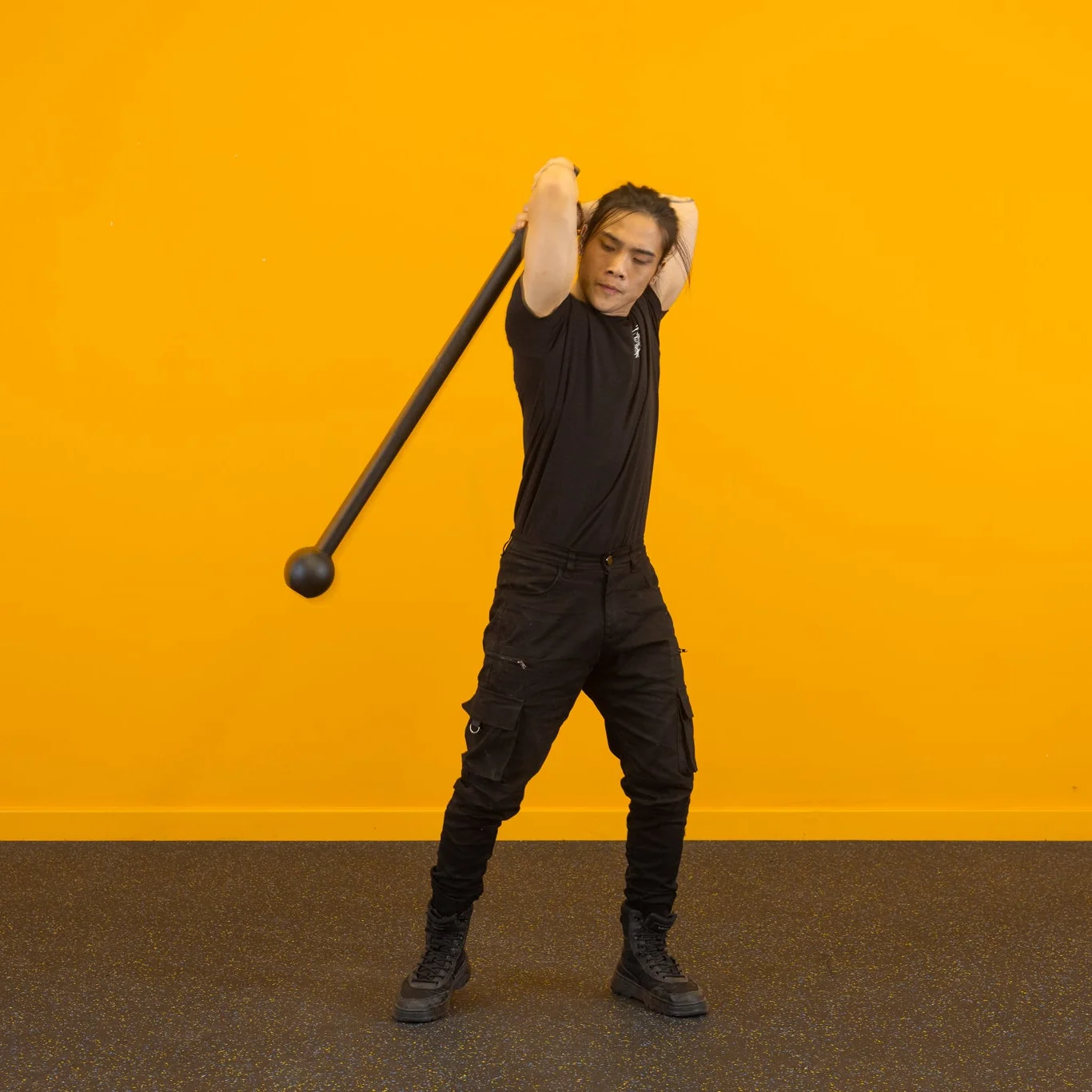
A complete 360 can feel confusing because the head moves out of sight and then has to return smoothly. Preparatory drills break that problem into smaller pieces. Mace coaching commonly uses a controlled front-side movement, a behind-the-body pendulum and a return to the front before joining the parts.
The pendulum is not an invitation to throw the head behind you and hope momentum brings it home. Learn its route with a manageable implement and instruction. The return needs enough control to bring you back to an organised starting position, rather than leaving you chasing the head with your arms and torso.
A brief pause in front makes the result easier to assess. Are you standing where you started? Can you recognise the same hand position? Did you regain control before beginning again? These observations give you more useful feedback than a fast sequence in which every repetition is rescued by the next.
Work on both directions as separate skills. A movement that feels organised one way may feel unfamiliar the other way. Do not use extra speed or a bigger swing to hide that difference. Revisit the easier component and let a coach identify where the sequence changes.
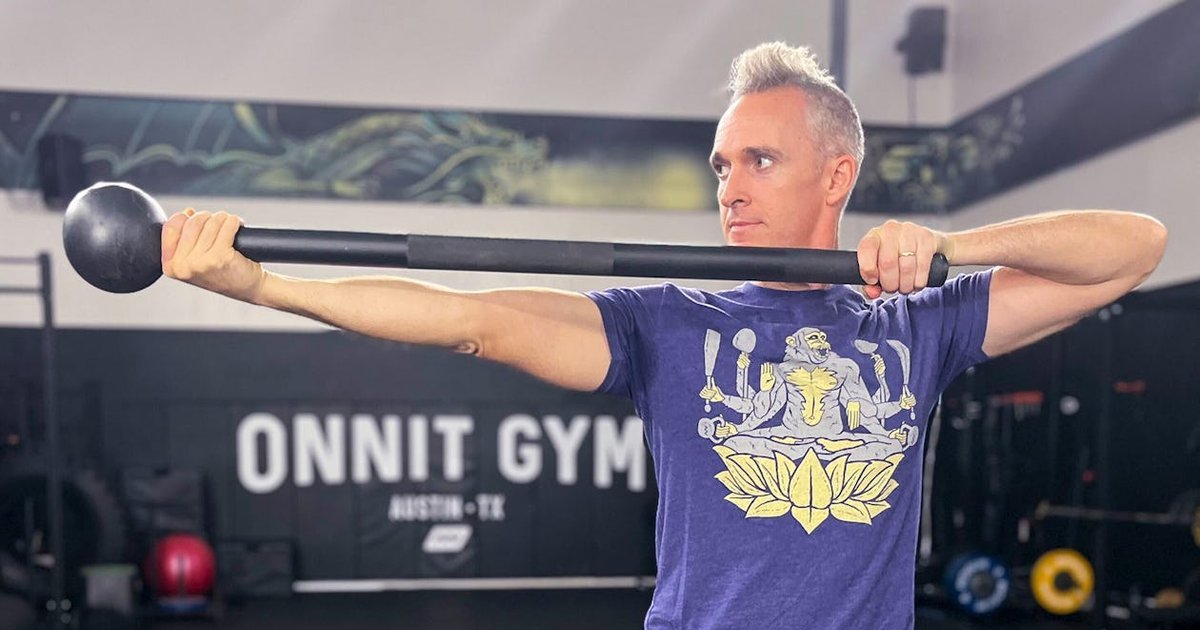
The photographs are illustrations of equipment and positions, not a complete frame-by-frame tutorial. Use them to understand the discussion, rather than attempting to reconstruct the unseen part of a swing from a single still image.
Keep early practice short enough to learn from it
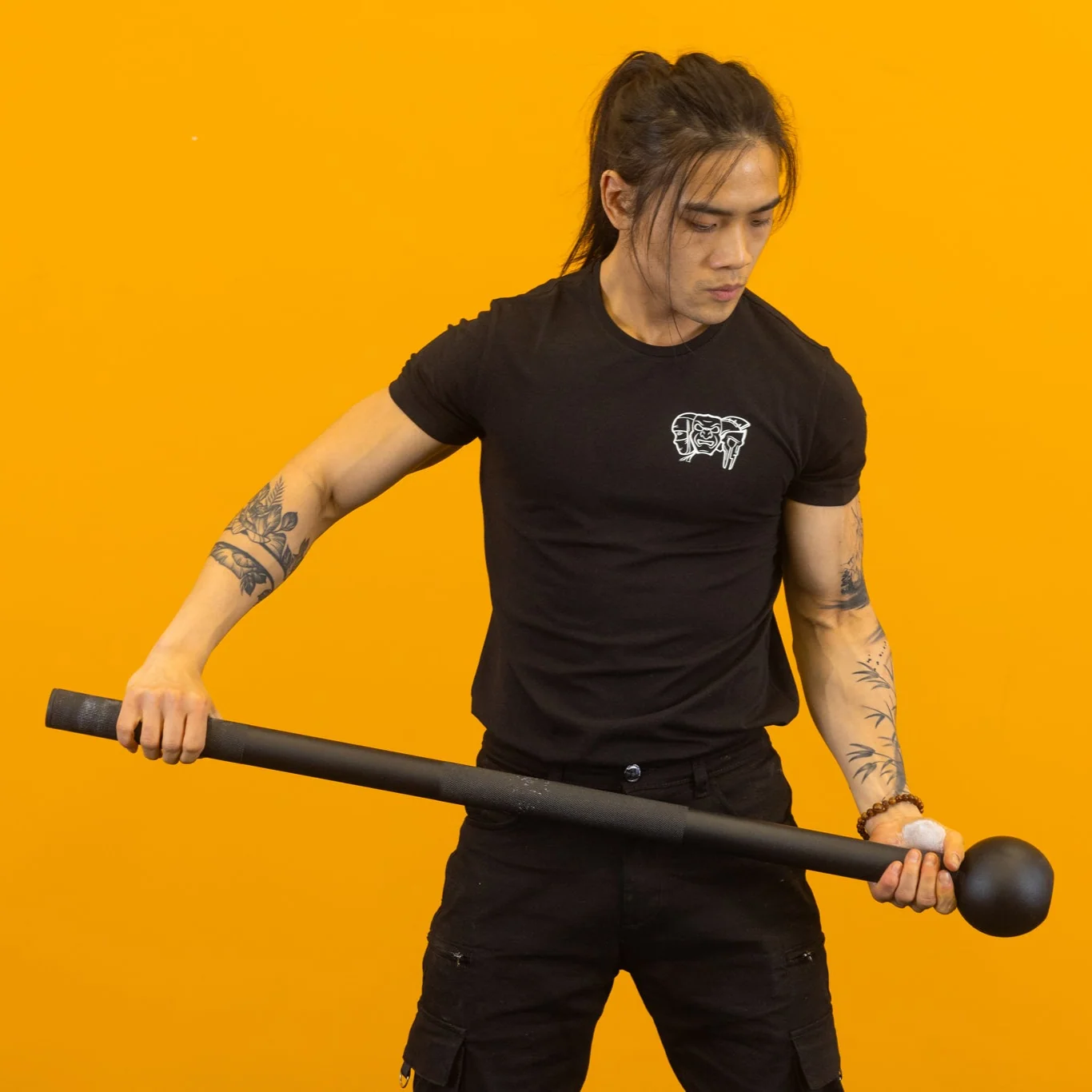
A published steel-mace mobility circuit includes timed 360s, halos and other movements. That demonstrates one way the tool can be programmed; it does not establish that a novice should copy the circuit before learning each exercise. Continuous work and minimal rest can make it harder to notice exactly where control starts to deteriorate.
A simpler editorial adaptation is to practise a small number of deliberate repetitions, put the mace down under control and review one detail. Rest until you can pay attention again. This is a way to organise learning, not a promise of a particular shoulder, muscle-growth or rehabilitation result.
Keep a short note of the mace used, hand position, direction and the detail you practised. For example, “same light mace, shortened lever, controlled return” is more informative than “ten minutes of mace work.” If you later lengthen the lever, add repetitions or reduce rest, change one element at a time so you can interpret the result.
Patience and consistency have a practical role here. Repeat a manageable task often enough to recognise it. If fatigue makes you rush the start, lose your grip position or lean to manufacture clearance, end the set rather than turning the mistake into a target to beat. A technically quieter session can still be a productive one.
The mace can sit alongside conventional strength training without replacing it. It offers a different coordination challenge, and enjoying that challenge is a valid reason to practise. The first objective is straightforward: finish each attempt with the implement under control and enough understanding to make the next repetition more deliberate.

Greek Gods Gym Shirts & Workout Gear
Greek mythology-inspired gym shirts and workout gear for lifters chasing godlike strength and physiques.

Resilience Stoic Tee
Make gym days more fun with “Resilience Redefined: Stoic Sigma Greek God” style.

Consistency King Tee
Make gym days more fun with “Consistency King Stoic Greek God Marble” style.

Discipline Stoic Tee
Show some lifting attitude with a playful “Discipline Stoic Sigma Bodybuilder” tee.

Perseverance Stoic Sigma Bodybuilder Greek God T-Shirt
Bring “Perseverance Stoic Sigma Bodybuilder Greek” humor to your next gym day.


Strength Stoic Bodybuilder Greek God Marble T-Shirt
Bring “Strength Stoic Bodybuilder Greek God Marble” humor to your next gym day.

Perseverance Stoic Sigma Marble Statue – Meme Shirt & T-Shirt
Heavy lifts, good laughs, and a little “Perseverance Stoic Sigma Marble Statue” energy.

Willpower Stoic Lifting Sigma – Greek God Marble T-Shirt
Rep “Willpower Stoic Lifting Sigma Graphic” humor in and out of the gym.

Fortitude Stoic Sigma Bodybuilder : Meme Shirt & T-Shirt
Rep “Fortitude Stoic Sigma Bodybuilder” humor in and out of the gym.

Resilience Stoic Sigma Greek God Statue Meme T-Shirt
Show some bodybuilding attitude with a playful “Resilience Stoic Sigma Greek God Statue” tee.