Advertising disclosure: This page includes affiliate product links that may earn us a commission, as well as products from our own store.
Can a strong lifter run, push, lift, carry and crawl without running out of time? The U.S. Army’s Combat Field Test (CFT), introduced in April 2026, asks that question in a specific seven-event format. It is not a regular weightlifting workout, and it is not the separate Army Fitness Test. Instead, designated combat-specialty soldiers must finish an entire sequence inside one 30-minute clock.
For fitness enthusiasts, the interesting story is the combination: two one-mile runs surround dead-stop push-ups, a sprint, sandbag lifts, a loaded carry and a low-ground movement drill. Here is what the official standards actually require, why some stations are surprisingly difficult, and how to adapt the useful training ideas without claiming that an improvised home circuit is a military qualification.
The seven events are continuous, not seven individual races
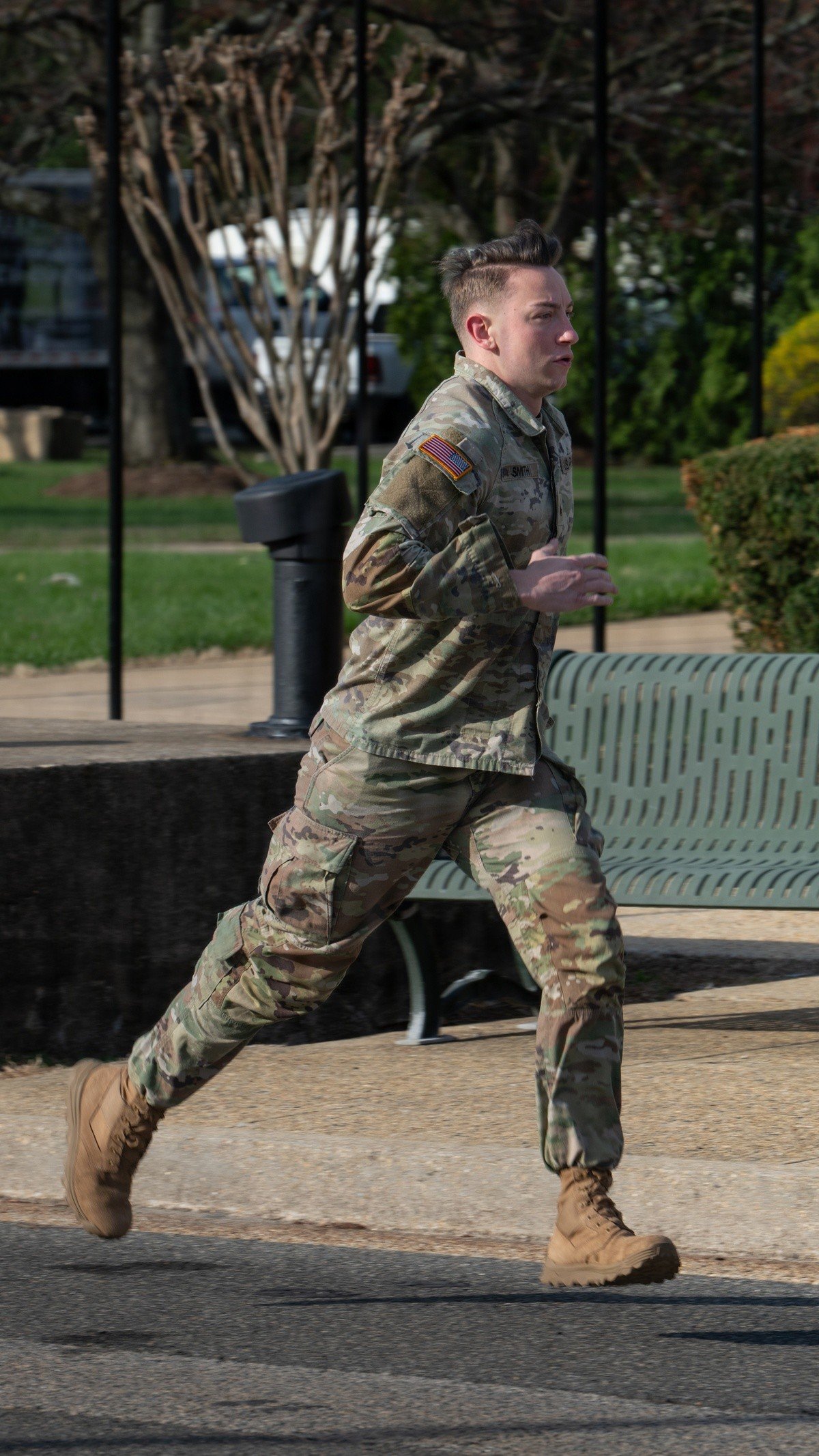
The order matters. First comes a one-mile run, followed by 30 dead-stop push-ups and a 100-meter sprint. Next are 16 lifts of a 40-pound sandbag onto a 65-inch platform, then a 50-meter carry holding two five-gallon water cans weighing 40 pounds each. A 50-meter movement drill follows, combining 25 meters of high crawl with 25 meters of three-to-five-second rushes. Another one-mile run finishes the test. The cumulative time must be 30 minutes or less; completion is scored pass or fail rather than by points for each event.
The test is also performed wearing the Army Combat Uniform and combat boots with a brown T-shirt, not optimized running kit. Forty pounds is roughly 18.1 kilograms, and the two loaded water cans add up to approximately 80 pounds, or 36.3 kilograms. These details help explain why simply assembling seven familiar gym exercises does not reproduce the exact physical or technical demands.
The first mile should be paced with the following stations in mind. Running near a fresh one-mile personal best may create breathing debt before the push-ups even begin, while moving too conservatively leaves less time for the final mile. Practice teaches you whether your primary limitation is aerobic endurance, repeated pushing, grip or movement coordination. An athlete who moves efficiently through all seven stations may outperform someone with a larger deadlift but poorer transitions.
The CFT was established for 24 designated combat military occupational specialties. It supplements rather than replaces the Army Fitness Test. Its transition began with diagnostic testing in April 2026; full record implementation is scheduled for April 17, 2027. The rule is not a general requirement for every soldier or a civilian fitness certification.
A 40-pound sandbag lifted 16 times can defeat a strong athlete
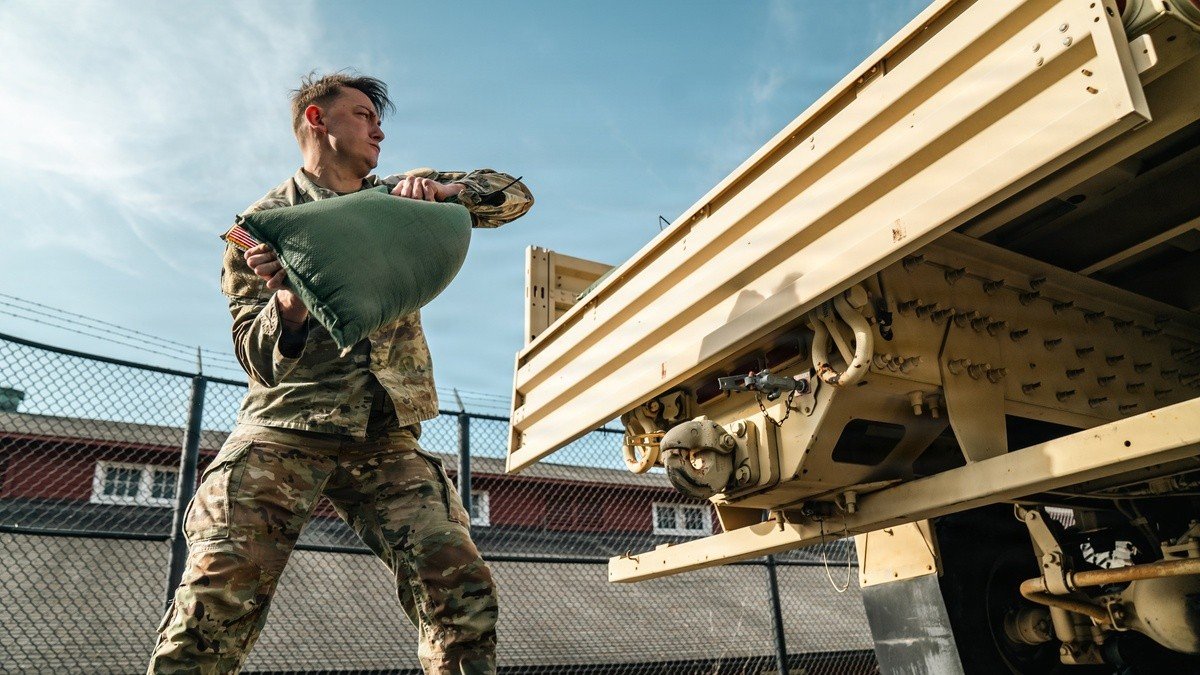
A 40-pound bag may look light to someone who trains heavy squats or deadlifts. But the fourth station asks for sixteen controlled placements onto a platform 65 inches high after a run, push-ups and a sprint. There are no convenient dumbbell handles, the load shifts as it moves, and the platform creates a reach and positioning challenge. A large one-repetition maximum does not guarantee economical repeated lifts of a soft, bulky object.
In practice, use a secure bag, a stable target and enough clear space for an accidental drop. Rehearse a simple sequence: approach close, brace, lift with a controlled hip-and-knee contribution, guide the bag upward and place it securely. A bag that slips or falls can cost more time than a slightly slower clean repetition. Differences in arm length, height and bag shape change which movement pattern feels efficient, so there is no universal perfect technique.
Build volume progressively. Start with four-to-six neat placements at a lower target height before increasing toward the formal distance and the full sixteen repetitions. Pair this with basic leg and back training, but do not confuse a barbell exercise with exact task rehearsal. Soft sandbags demand stabilization and grip timing that predictable machines do not reproduce. An informative companion is our guide to sandbag carry positions and grip choices, which explains how handling changes fatigue during loaded work.

Equipment Worth Exploring
Explore equipment, accessories and gear from our carefully selected range.


Pro Sled System
Heavy-duty push-pull training sled for loaded conditioning, speed, and strength work.
If you have a shoulder limitation, begin with shorter reaches rather than forcing a high lift while tired. Keep the priority on controlled repetitions and safe placement. Regular exposure to the task should make it smoother; training to the point of losing the bag is not a useful shortcut.
The two water cans test grip, posture and recovery
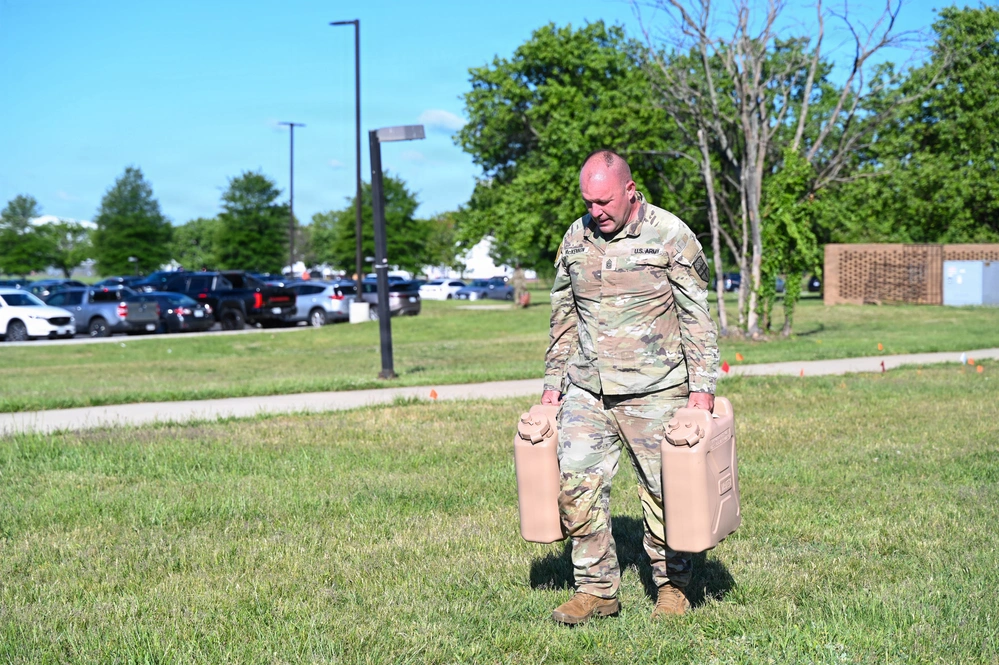
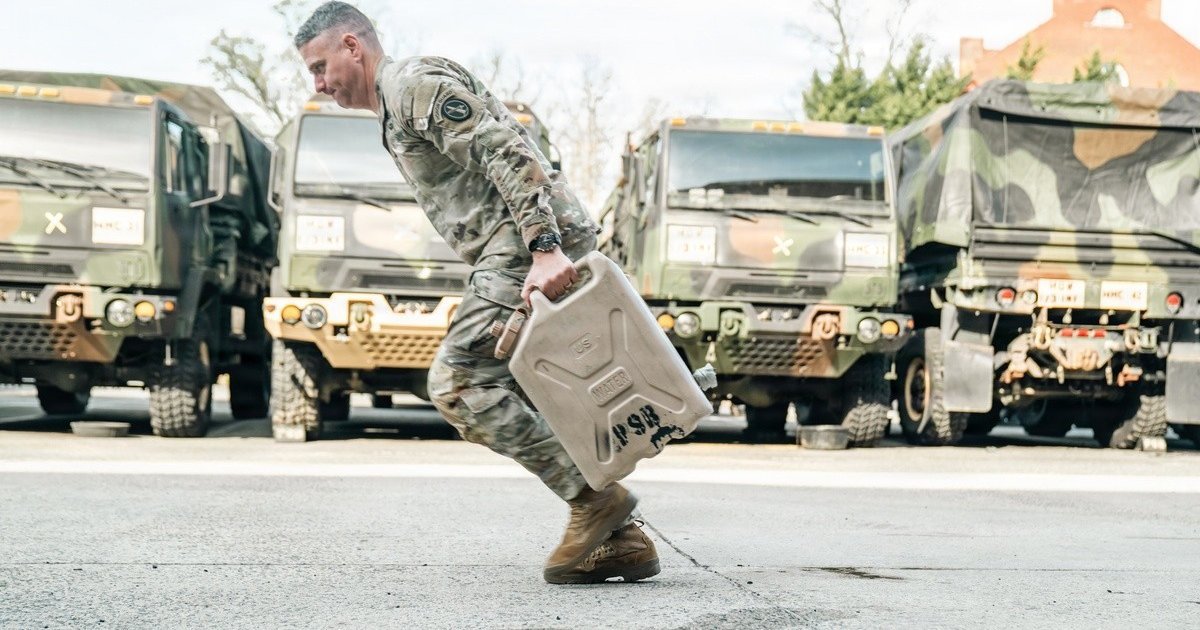
Immediately after sandbag lifting, the soldier carries two 40-pound water cans for 50 meters. The combined external load is about 36 kilograms, but it is not simply a 36-kilogram deadlift. The cans hang from the hands, can bump against the legs and force the trunk to resist side-bending with every step. Exhausted forearms, hurried breathing or an uneven gait can cost time even when leg strength is more than adequate.
Farmer’s carries with dumbbells, kettlebells or dedicated handles are accessible training alternatives. Begin with loads you can carry for 20–40 meters while keeping your steps controlled and torso upright. Avoid exaggerated shoulder shrugging and do not sprint until you can maintain a secure grip at normal walking speed. Short heavy carries and longer moderate carries build different tolerances; both have value, but actual can shape and handle thickness still matter.
Try two or three sets after a normal strength session, then occasionally add a carry after a brief cardio interval. The goal is to practice holding posture while your heart rate is already elevated, not to repeatedly reach total failure. If a heavy container starts sliding, set it down deliberately and reduce the load on the next attempt. Lifting straps may help certain barbell workouts but are not an appropriate substitute for practicing your own grip.
The broader lesson is that relative strength, grip endurance and aerobic fitness interact. A runner may find the carry surprisingly awkward. A strong lifter may move slowly after the sprint. Preparing both qualities separately before blending them makes training safer and makes improvements easier to measure.
The low crawl and final mile expose pacing mistakes
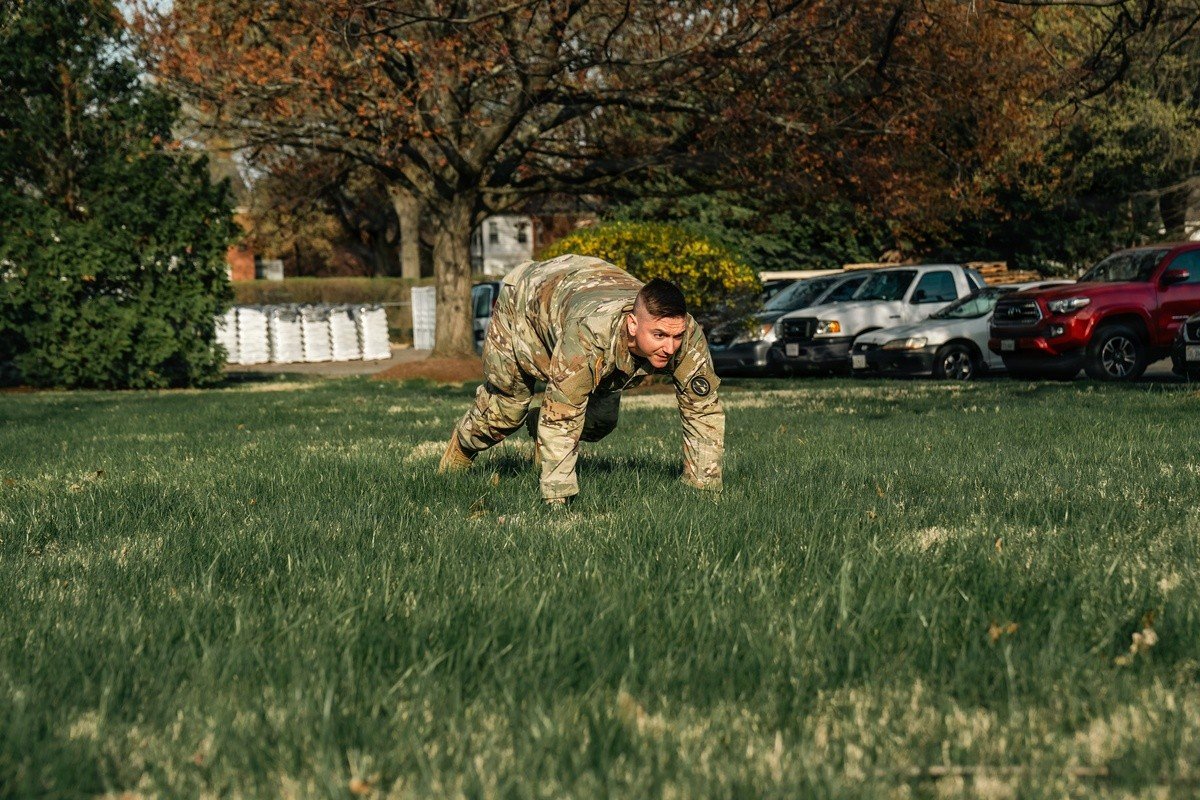
The sixth station is a 50-meter movement drill: 25 meters of high crawl followed by 25 meters of short three-to-five-second rushes with prone transitions. The official body positions are specific. An everyday bear crawl or playful floor circuit cannot automatically be counted as passing the military standard. For a civilian workout, a clean mat or obstacle-free grass is the place to develop the shoulder, hip and trunk coordination involved.
Begin with short distances and controlled movement rather than chasing speed immediately. The wrists, shoulders, knees and hips may not be accustomed to working near the ground, especially after a loaded carry. Warm up, avoid sharp objects or uneven terrain and stop if your movement becomes unstable. Anyone with joint problems should use modified movements or skip this station entirely. The point of training is capacity, not pretending an injury risk makes a session more authentic.
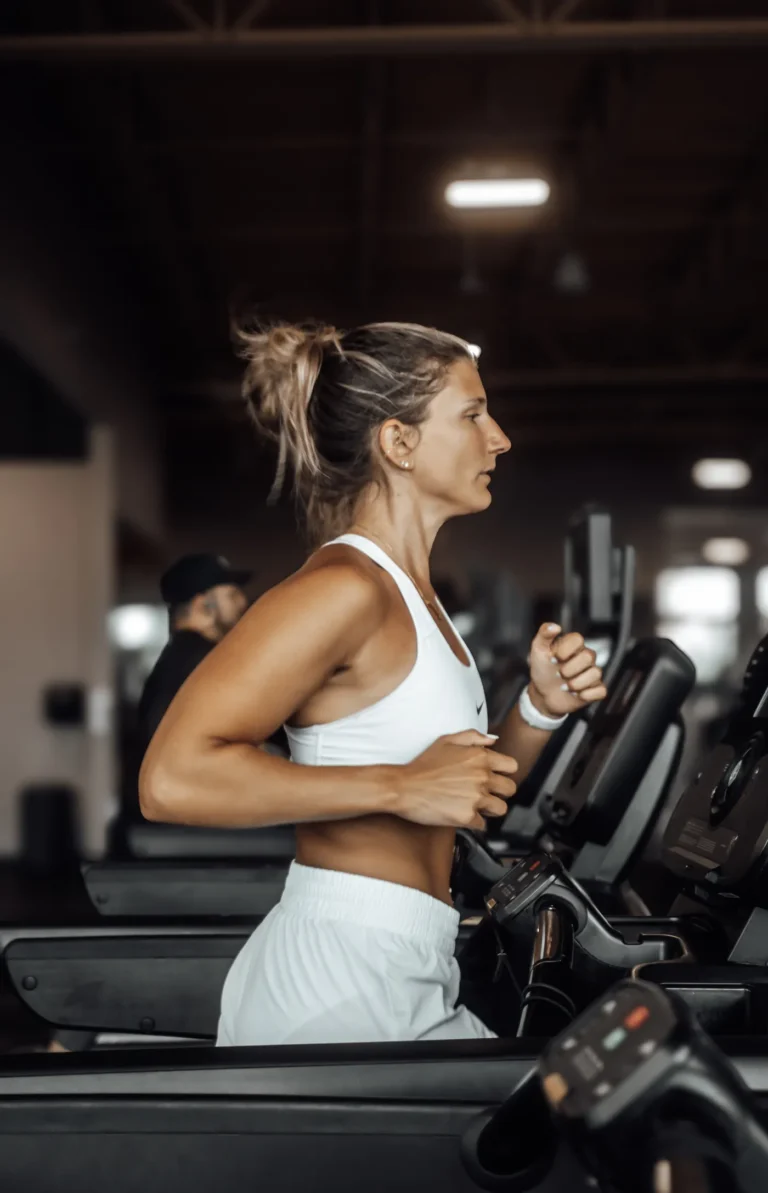
The last one-mile run is likely to feel quite different from the first. The arms and upper back may be fatigued, the grip may be tight and the legs may be heavy. Preserve breathing rhythm and let the first stretch of the final mile establish a sustainable pace rather than insisting on the same speed as the fresh opening mile. Training only fast standalone runs misses the key demand: settling back into running after strength and movement tasks.
To train this transition, pair a moderate farmer’s carry with an easy run, or combine a few low-crawl intervals with a relaxed jog. Progress slowly across weeks. You do not need to attempt the entire test flat-out every session to discover whether your aerobic base and loaded-movement efficiency are improving.
Equipment Worth Exploring
Explore equipment, accessories and gear from our carefully selected range.


Open Hex Bar
Open-frame trap bar with multiple handles for deadlifts, carries, and lower-body training.

Rubber Hex Dumbbells
Rubber-coated hex dumbbell pairs with a stable shape for home and commercial strength training.


Cast Iron Kettlebells
Textured cast-iron kettlebells for swings, squats, carries, and full-body training.


Leather Lifting Straps
Padded leather straps support grip during heavy rows, deadlifts and pulling exercises.

Competition Plates
Competition-style bumper plates for Olympic lifts and loaded strength training.

A four-week CFT-inspired plan for a home gym
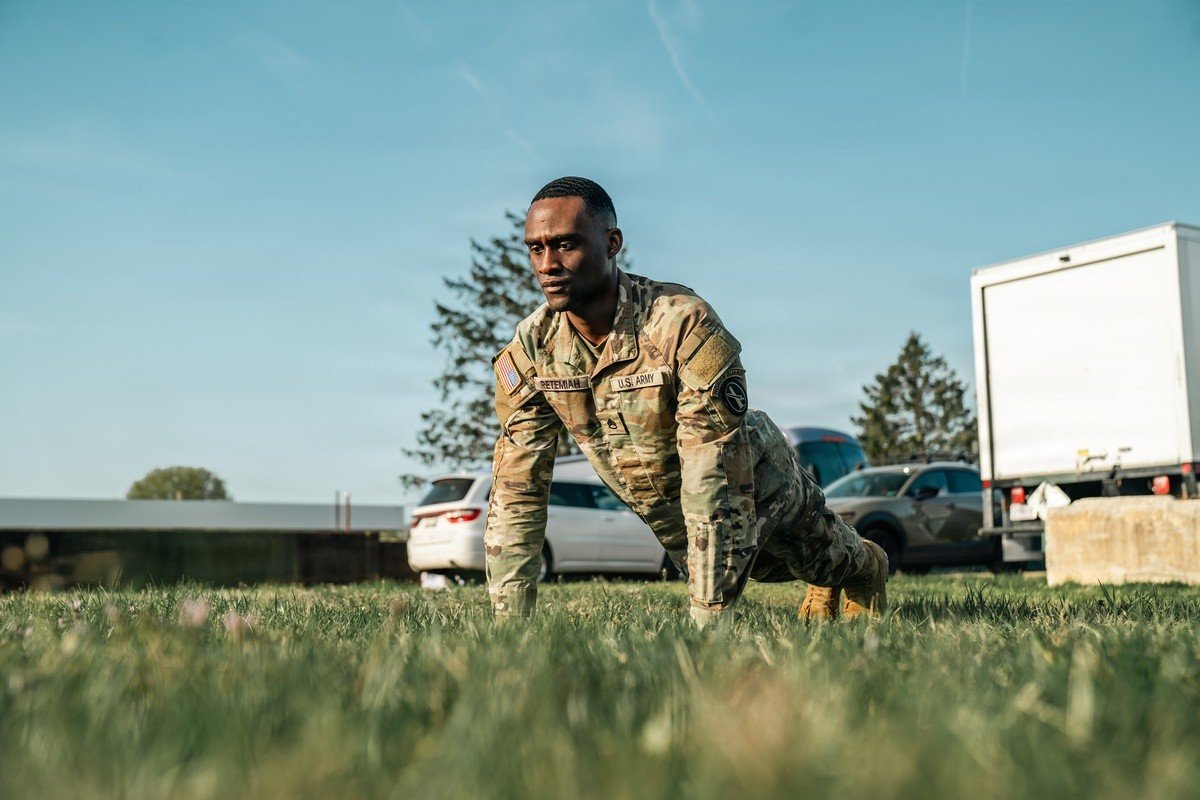
Three sessions each week provide a useful starting structure: an aerobic day, a strength-and-carry day, and a mixed day. This is a civilian training example, not official Army programming or proof that you can pass the CFT. Use lighter loads, shorter running intervals and modified push-ups whenever necessary. If you are returning from injury, recover fully and follow appropriate professional guidance before adding intensity.
Week 1: Establish a comfortable baseline. Perform 20–30 minutes of easy run-walk intervals on the aerobic day. On the strength day, complete several clean sets of dead-stop push-ups, rows, hip hinges, four sandbag placements and two short carries. On the mixed day, try an easy jog, five push-ups, four bag lifts, a 20-meter carry and another jog. Note which station becomes uncomfortable first, but leave energy in reserve.
Week 2: Extend easy running modestly and increase one dimension of the loaded work, not every dimension simultaneously. A carry might grow toward 30–40 meters while sandbag repetitions progress toward six or eight controlled placements. Introduce a handful of relaxed accelerations and very short crawl practice. Technique should remain steady. Fatigue that makes you drop objects is a reason to simplify the session.
Week 3: Rehearse a longer connected sequence at moderate effort. Jog, perform a manageable push-up set, accelerate briefly, lift the bag, carry and practice a short safe movement drill before jogging again. Measure the time and observe which transitions become slow. The same idea applies to indoor hybrid workouts; our Concept2 ergathlon pacing guide addresses the cost of moving between very different exercise stations.

Functional Fitness Shirts & Workout Gear
Functional-fitness shirts, tanks and workout gear for athletes who train strength, conditioning and everything in between.

Hybrid Athlete Strength Tee
Show some lifting attitude with a playful “Hybrid Athlete” tee.


Gym Dost Thou Even Pedal Medieval Air Bike Humor for Cr Tank Top
Bring “Dost Thou Even Pedal Medieval Air Bike” humor to your next lifting session.

Burpees Bad Breaking Bad Shirt – Meme & Cardio Haters T-Shirt
Show some cardio attitude with a playful “Burpees Bad Breaking Bad” tee.


Vive Le Resistance Bands – Resistance Bands Warmup Reha T-Shirt
Add a playful “Vive Le Resistance Bands” touch to your casual rotation.

HYROX High Rocks Functional & CrossFit Tank Top
Your gym-day look, with a playful “HYROX High Rocks” twist.

Battle Ropes HIIT Tee
Show some superhero attitude with a playful “Wonder Woman Battle Ropes” tee.


Vive La Resistance Bands Painting Meme – Resistance Ban Hoodie
Stay casual and show some lifting attitude with “Vive La Resistance Bands”.
Week 4: Keep the training volume slightly lower and complete one controlled rehearsal using your own safe equipment and distances. Compare it with week one. If the carry remains the bottleneck, train grip and trunk endurance; if the last run collapses, improve aerobic pacing and recovery. Do not declare a military pass from a home course without the official equipment, grading and prescribed movement standards.
Cardio Shirts & Workout Gear
Cardio and conditioning gym gear for runners, endurance athletes and anyone who earns the sweat.

Iron Man Triathlon Crewneck Pullover Sweater for Swim B T-Shirt
Add a playful “Iron Man Triathlon” touch to your casual rotation.

Cardio Heartbeat Hoodie
Show off your cardio humor in a laid-back “Cardio Heartbeat” hoodie.


Track Panther Crewneck Pullover for Running Workout Fan T-Shirt
Keep things casual with a little “Track Panther” attitude.

Cardio Is Hardio – Workout Meme Vest Muscle Shirt For S Tank Top
Add some cardio attitude to training with “Cardio Is Hardio”.

Negative Cardio Review Cardio Sucks Running , Meme T-Shirt
Heavy lifts, good laughs, and a little “Negative Cardio Review” energy.

Funny Uncle Sam Gym – I Want You To Do Cardio Patriotic T-Shirt
Keep things casual with a little “Uncle Sam” attitude.

Hybrid Athlete – HYROX Training Crewneck for Strength & T-Shirt
Show some gym-day personality with “Hybrid Athlete”.

Shirt: Does Running Out Of F*Cks Count As Cardio? & T-Shirt
Heavy lifts, good laughs, and a little “: Does Running Out Of F*cks Count As” energy.

Freedom To Skip Cardio Patriotic Gym – Funny Statue of Sticker
Put “Freedom To Skip Cardio Patriotic” gym humor on your laptop, bottle, or gym gear.
The lasting takeaway is useful beyond the Army: strength, running, push-up endurance, grip, low-ground movement and transitions deserve their own practice. Combine them thoughtfully, progress workloads gradually, and assess whether your total performance improves rather than chasing a single gym record.