Advertising disclosure: This page includes affiliate product links that may earn us a commission, as well as products from our own store.
Some product links may be affiliate links. If you shop through them, Mind Muscle Perfection may earn a commission at no extra cost to you.
Where should your hands go when you shoulder-press a barbell? Some lifters go narrow to keep their elbows in. Others move their hands wide, hoping to hit the side delts. But a change of only a few inches alters how the load travels, how far your joints move, and how hard different parts of the lift feel. A controlled comparison involving 11 experienced male lifters offers a useful reality check: the widest grip did not produce the heaviest eight-repetition press, and each width redistributed mechanical demands in a different way.
The practical lesson is not that every shoulder needs one perfect grip. It is that grip width is an adjustable training variable, not a magic muscle-growth shortcut. Here is how to use the evidence while keeping your pressing repeatable, progressive, and comfortable.
1. What 11 trained men actually lifted
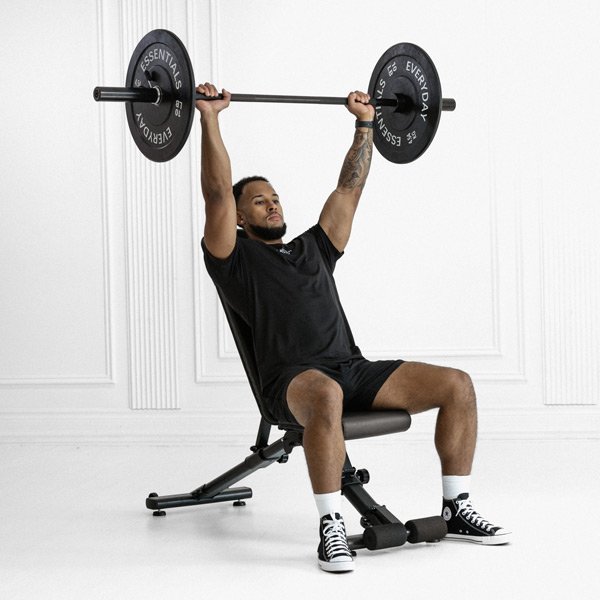
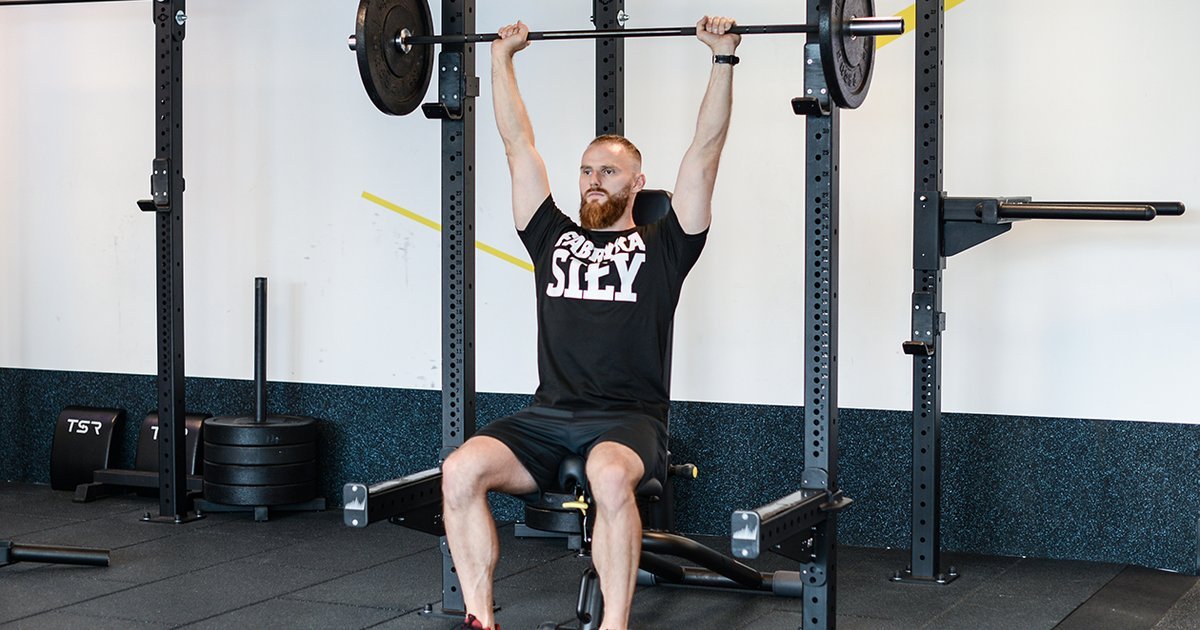
In the seated barbell shoulder press comparison, 11 resistance-trained men tested a narrow, medium, and wide overhand grip. Each condition used an eight-repetition-maximum load: the weight that could be completed for eight demanding repetitions under that setup. The men averaged about 26 years of age and had multiple years of resistance-training experience. This was not a beginner coaching class or a long muscle-building intervention; it was a biomechanics experiment looking at what happened within the movement itself.
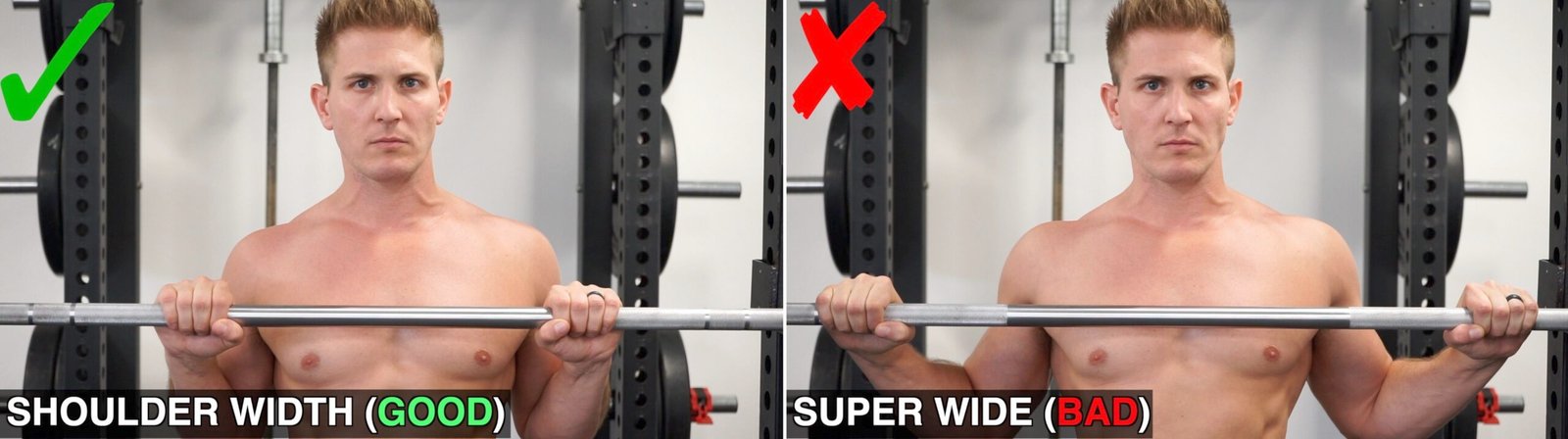
The grip widths were scaled to each person’s shoulder breadth rather than chosen as arbitrary distances on the knurling. Narrow was about 1.0 times biacromial width, medium 1.4 times, and wide 1.7 times. Biacromial width is the distance between the bony points on top of the shoulders. Two men with different shoulder frames could therefore have different hand spacings in centimeters while still using the same relative category.
The average eight-rep loads were 51.6 kg for narrow, 53.4 kg for medium, and 48.2 kg for wide. Both narrow and medium permitted significantly more weight than wide in this particular group. Medium averaged about 11% more than wide, but that group difference should not be read as an expected improvement for every individual. It is especially important not to confuse a higher eight-rep load with greater muscle growth: no months-long hypertrophy measurements were made here.
The researchers tracked the last lifting phase of the eight-rep effort, not the full lowering-and-lifting cycle across every repetition. That matters because positions and forces change as an athlete tires. A useful coaching interpretation begins with the observed pattern, while leaving room for differences among body types, comfort levels, and training goals.
2. Why changing hand spacing changes the lift
A barbell does not move upward merely because you push vertically. Your hands also produce horizontal forces against a rigid bar, and the shoulders and elbows must generate rotational effects to manage the load. Change where the hands contact the bar and you change the leverage of those joints. A wider hand placement generally shortens the distance the bar travels through some portions of the press but can change the joint moments required to move it.
The narrow grip in this experiment produced larger shoulder and elbow ranges of motion. The wide grip produced more laterally directed horizontal forces: the hands tended to push outward against the bar. The narrower grip produced comparatively more medially directed forces, or a tendency toward the bar’s center. Those lateral and medial forces do not mean the bar moved dramatically from side to side; they describe the force applied through the hands during a mostly upward lift.
Joint moment is another concept worth understanding. A net joint moment combines how much force acts around a joint and the length of its effective lever arm. In the early part of the press, the narrow grip was associated with lower total shoulder net joint moments, while the wider grip showed lower elbow moments across portions of the movement. The result was not a blanket ranking of one style as safer. It showed different demands, concentrated at different phases of the same repetition.
For lifters, these mechanics explain why two grips can feel entirely different at the same weight. One may feel harder near the forehead, another may feel awkward at the bottom, and one may require a longer distance to lockout. Pick the position that lets you repeat a controlled range of motion instead of treating bar width as an aesthetic choice.

Equipment Worth Exploring
Explore equipment, accessories and gear from our carefully selected range.


FID Bench MAX
Adjustable bench offering flat, incline, and decline positions + adjustable headrest.



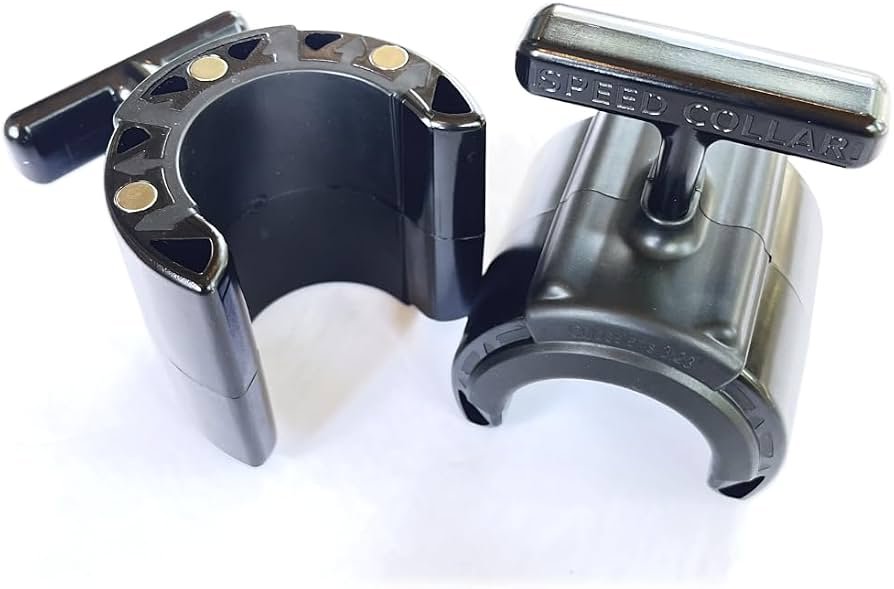
Speed Collar
Quick-release collars designed to secure weight plates on standard two-inch Olympic bars.
3. Narrow, medium, and wide grips in the real gym
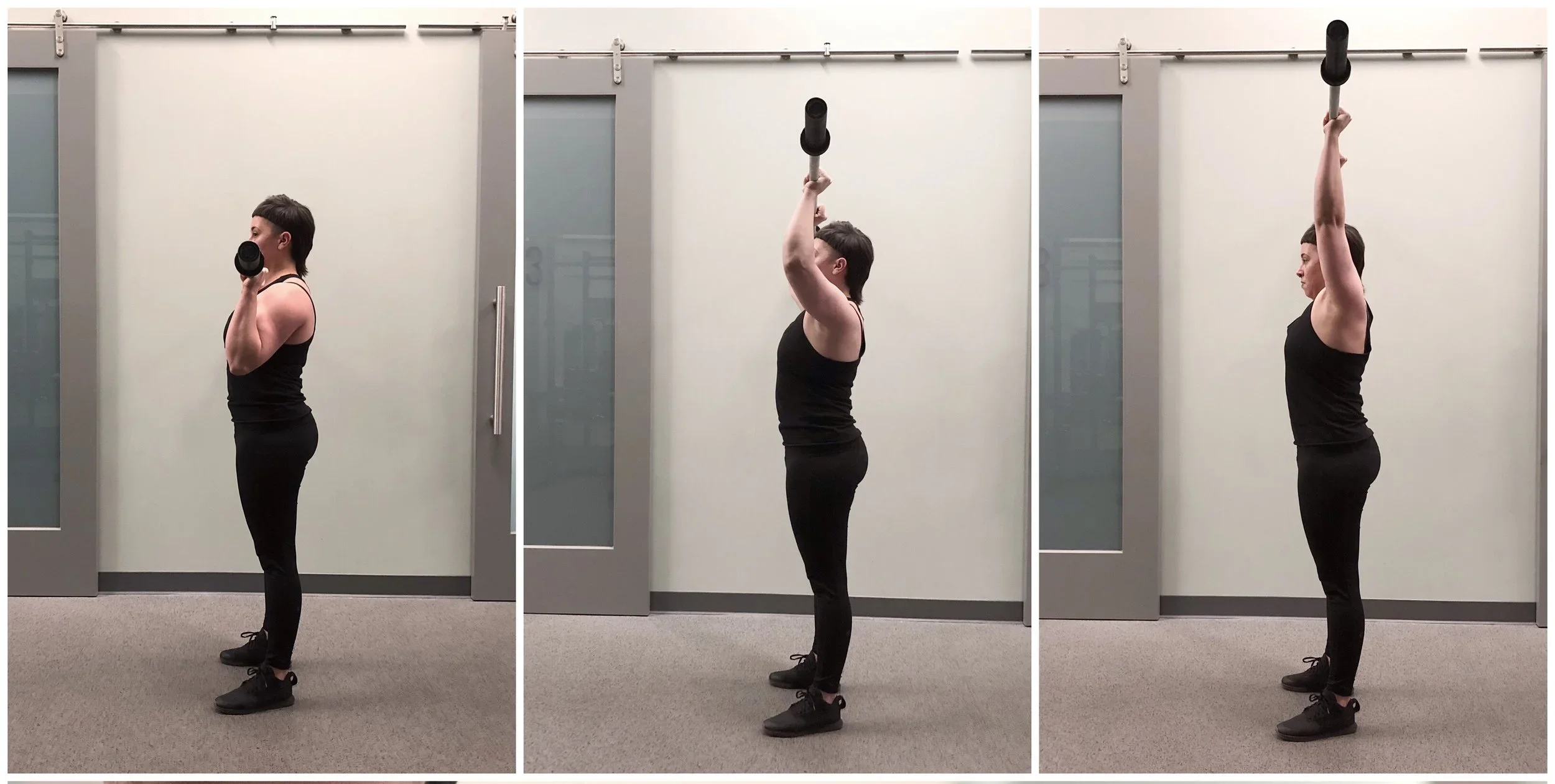
A practical starting point is a grip just outside shoulder width, with the forearms reasonably close to vertical when viewed from the front in the lower portion of the press. That is a starting point, not a requirement to make every skeleton look identical. Your shoulder breadth, upper-arm length, wrist mobility, and the angle of the elbows all influence what feels natural under a loaded bar. If your wrists bend sharply backward, you may need to move the hands or adjust how the bar sits across the palm.
With a narrower grip, the elbows usually flex more at the bottom and must travel through a greater extension range to reach lockout. That can make the movement feel more demanding for the triceps even though the laboratory experiment did not directly measure long-term triceps growth. It can also create a clearer front-of-body bar path for some lifters. If the hands are so close that the wrists collapse inward or the bar cannot clear the face cleanly, narrow has become too narrow for the task.
A medium grip often makes a sensible baseline for progressing the exercise because it balances the bar’s path and the available range of motion. In the 11-man comparison it also supported the highest average eight-rep load, although the small sample makes it a poor universal rule. A wide grip may shorten the pressing movement and change shoulder leverage, but the lower eight-rep load seen in the experiment is a reminder that shorter travel does not guarantee a stronger press.
Instead of adopting someone else’s ring-finger position on the bar, mark your own medium grip first. Compare one slightly narrower and one slightly wider placement with an empty bar, then a light warm-up. Look for stacked forearms, a stable wrist, a controlled descent, and a path that stays close to the head without forcing a painful shoulder position.

Bodybuilding Shirts & Workout Gear
Bodybuilding shirts, tanks and gym gear for lifters chasing muscle, size, symmetry and the pump.


Swole Jesus Lateral Raises – Easter Bodybuilding Meme G Hoodie
Show off your Easter humor in a laid-back “Swole Jesus Lateral Raises” hoodie.


Mind Muscle Perfection Brain and Biceps Gym for Science Tank Top
Bring “Mind Muscle Perfection Brain and Biceps” humor to your next lifting session.

Physical Mass Albert Einstein Science Based Lifting Bro Hoodie
Keep it laid-back with a little “Physical Mass” attitude.

Defy Gravity Isaac Newton Deadlift Meme Science T-Shirt
Heavy lifts, good laughs, and a little “Defy Gravity” energy.

I’m Strong Barbell Heartbeat Hooded Pullover for Streng Hoodie
Make your off-duty look more fun with “I’m Strong Barbell Heartbeat”.

Ultimate Bench Press Tee
Heavy lifts, good laughs, and a little “Ultimate Bench Press” energy.


Bro Science Albert Einstein Science Based Lifting Worko T-Shirt
Show some powerlifting attitude with a playful “Bro Science” tee.
4. Strength and bigger delts are not the same outcome

Being able to lift more kilograms for eight repetitions is useful when your goal is becoming stronger at that exact variation. It does not prove that the same grip maximizes shoulder hypertrophy. Muscle growth depends on repeated challenging training, adequate volume, recovery, and progressive exposure over time. The comparison measured movement mechanics and force, not changes in muscle size after weeks of training. Claims that wide-grip pressing automatically grows the side delts faster, or narrow-grip pressing automatically makes the triceps bigger, exceed what these measurements can establish.
The shoulder press works through the shoulder and elbow, with the deltoids and triceps contributing substantially. Changing grip width can shift angles and leverage, but it does not cleanly turn one compound exercise into an isolated side-delt movement. If your side delts need more work, a well-executed lateral-raise variation often offers a more direct way to accumulate targeted sets than forcing your hands farther apart on a heavy overhead press.
Equipment changes the comparison, too. A dumbbell press allows the hands to rotate and move separately, whereas a straight bar fixes their relationship. Seated pressing offers support that differs from standing, and a neutral-grip landmine press follows a diagonal path. These variations can be valuable, but their loading and stabilization demands are not interchangeable. A separate shoulder-press experiment comparing dumbbells and barbells found that higher muscle electrical activity could coexist with lower maximal loading in the more demanding stability conditions. Neither number alone establishes which variation will grow the most muscle.
For a bodybuilding block, prioritize a repeatable, comfortable overhead-press setup and progress it gradually. Complement it with lateral raises and rear-delt work where appropriate. For a strength block, standardize the grip, bench angle, range, and rep quality so that adding weight actually means the lift improved rather than the movement quietly becoming shorter.
5. Set up the press before testing a new grip
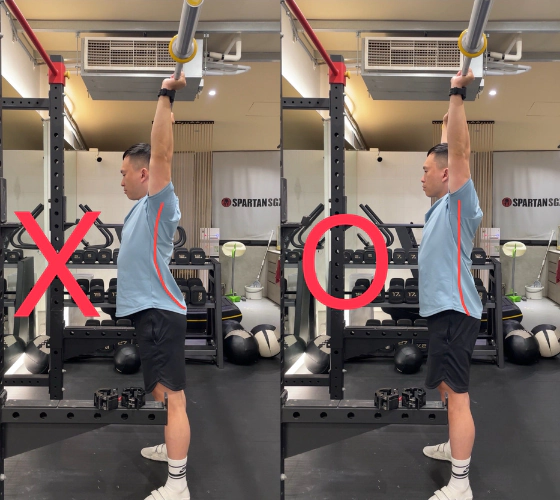
Set an upright bench securely inside a suitable rack with the bar reachable at about upper-chest or shoulder height. Check that you can unrack and rerack without an awkward reach, and use appropriate safeties or a competent spotter when the setup requires one. Keep feet planted and your torso supported. Grip the bar firmly with thumbs around it, then arrange the wrists so the bar’s weight sits above the forearms rather than pulling the hands far backward.
Begin with the bar close to the front of the shoulders, elbows under or slightly ahead of the hands as your anatomy permits. Brace your trunk, press while making a small amount of room for the bar to pass the face, and finish with the weight balanced overhead instead of stranded out in front. Lower smoothly to a repeatable depth you can control. Do not chase extra range by forcing the elbows behind the body or exaggerating an arch in the lower back.
Shoulder comfort is individual. A slight grip-width adjustment may alter which joint or muscle feels most loaded; that does not make the change a medical treatment. The laboratory measurement of a lower net shoulder moment in part of a narrow-grip repetition is not evidence that narrow pressing prevents injury. Pain can depend on many factors outside grip width, including training history, total workload, existing symptoms, and the available active range of motion.
If one width pinches or produces a persistent sharp sensation, stop the painful variation and assess the load, path, range, and equipment rather than forcing another heavy set. A slightly different grip or a dumbbell/landmine alternative might be easier to control. Recurrent or worsening pain deserves qualified assessment. Technique should make strength training measurable and sustainable, not turn every set into a mobility test.
Equipment Worth Exploring
Explore equipment, accessories and gear from our carefully selected range.


VOLTRA
Compact digital cable trainer with smooth, adjustable resistance.

Go-Tone Pro
Portable digital cable trainer with up to 66 lb (30 kg) of adjustable resistance.


6. A four-week grip-width experiment you can actually track
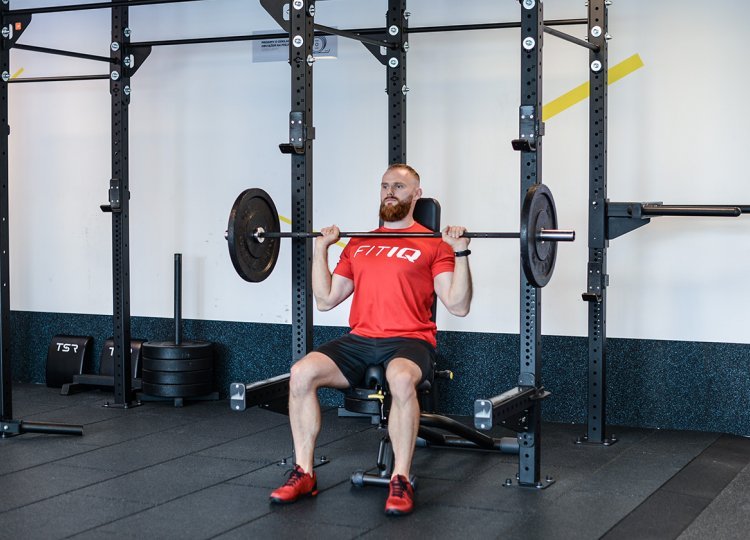
You do not need maximum-effort attempts with three different grips to learn which one works for you. Use a conservative four-week comparison on the seated barbell press, ideally after choosing a load that allows roughly six to ten smooth repetitions. Keep the same bench angle, warm-up, training order, and rest periods. Film a light set from the front and side if that helps you compare wrist alignment, torso position, and bar path without relying entirely on how a repetition feels.
In week one, establish a medium-grip baseline. After warm-ups, complete three working sets of six to ten reps with around two to three minutes of rest. Record load, reps, perceived effort, and whether the final reps still reached a consistent comfortable bottom position. Avoid all-out failure merely to test a grip. The goal is dependable information that will not disrupt the rest of your training week.
In week two, move the hands modestly inward while preserving the same working-set format. Start lighter if the new position lengthens the motion or changes your control. In week three, try a modestly wider grip. Again, treat it as a fresh variation rather than demanding the week-one load from an unfamiliar movement. Keep total hard sets and other shoulder exercises approximately stable so that changes in fatigue do not overwhelm the comparison.
During week four, return to the best-tolerated grip and attempt a small progression, such as one additional clean rep on the first working set or a minimal weight increase if every set is controlled. Review four features rather than only the heaviest number: bar path, joint comfort, repeatable range, and progress potential. This is a useful personal technique audit, not a scientific muscle-growth experiment. Four weeks cannot reliably reveal tiny differences in deltoid size between grips.
If your shoulders perform better with two variations, you could keep one for a heavier pressing day and another for a controlled accessory day. But there is no need to rotate grips every session. Constant changes make progressive overload harder to interpret, especially if your main aim is simply to build a stronger, bigger upper body.
Funny Gym Shirts & Workout Gear
Funny gym shirts, tanks, hoodies and workout gear for lifters who like training hard.

Get A Grip Grip Strength Vest Tank Top
Bring “Get a Grip” humor to your next lifting session.

Grip Strength Fanatic Meme Hoodie
Show off your lifting humor in a laid-back “Grip Strength Fanatic” hoodie.

Strength Stoic Sigma Greek God Marble Sculpture – T-Shirt
Rep “Strength Stoic Sigma Greek God Marble” humor in and out of the gym.

Bench Press and Chill Funny Gym T
Make gym days more fun with “Bench Press and Chill” style.

Shirt – I Want You To Bench Press Uncle Sam T-Shirt
Heavy lifts, good laughs, and a little “I Want You To Bench Press Uncle Sam” energy.

I Love Bench Press Shirt | Red Heart Weight Plate Graph T-Shirt
Show some gym-girl attitude with a playful “I Love Bench Press” tee.

Heavy Metal – Gymbro , & Meme Shirt T-Shirt
Make gym days more fun with “Heavy Metal” style.

The Brickhouse Meme – & Gymbros – Hit The Bricks Get T-Shirt
Make gym days more fun with “The Brickhouse Gym Meme” style.

Pressure Meme Stoic Bodybuilder With Greek God T-Shirt
Rep “Pressure Gym Meme” humor in and out of the gym.

Dadlift Meme Dads, & Dad Strength Gains Lifting T-Shirt
Show some powerlifting attitude with a playful “Dadlift” tee.
7. The verdict: choose a job for your grip, not a slogan
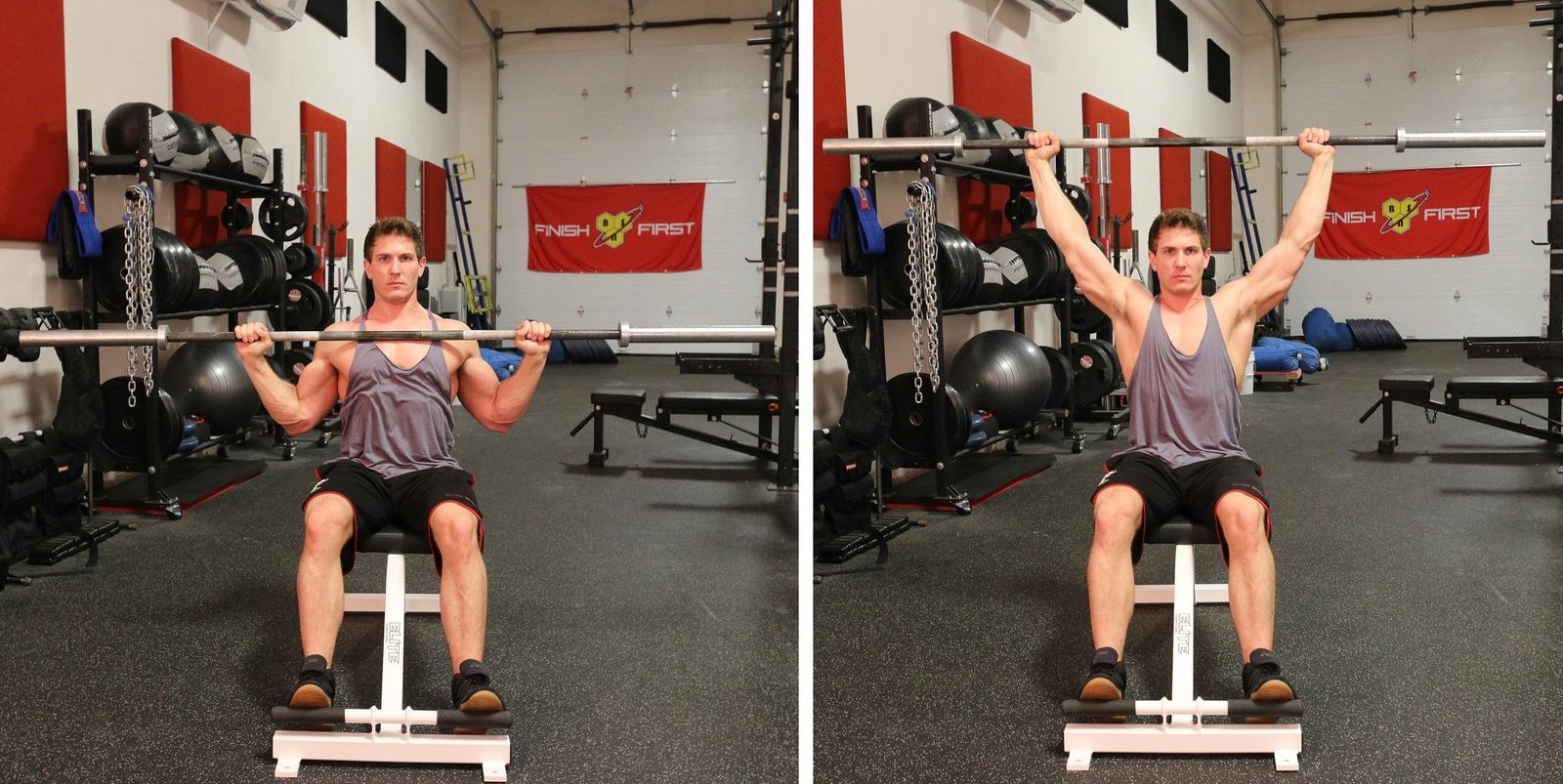
The clearest result from the 11-man comparison is that hand spacing changes the pressing task. Wide produced the lowest average eight-rep load, narrow and medium allowed more, and the widths altered joint movement and horizontal hand forces. Those findings are practical for refining technique, but the experiment was small, tested only trained men, and evaluated the lifting phase of an eight-rep effort. It did not compare injury rates or long-term muscle gain.
Start around a comfortable medium grip, with wrists supported and a predictable bar path. Move slightly narrower if you can maintain control through the extra range and that setup suits your training. Move slightly wider only if the position remains comfortable and the tradeoff in loading is worthwhile. A change that sacrifices depth, bracing, or repeatability is not an upgrade simply because it targets a different angle on paper.
Keep most of your attention on the fundamentals: adequate hard sets, sensible exercise selection, progressive performance, and enough recovery to repeat it. Use the grip that helps you train consistently. The best bar position is the one you can own from the first rep to the final lockout, not the one that looks most extreme in a photograph.