Big calves are not built by bouncing through a few rushed repetitions after squats. The calf muscles respond to load, range of motion, consistency and enough hard sets to make progression measurable. But the details matter: bending the knee changes the position of one major calf muscle, while cutting a repetition short at the top is not the same thing as deliberately training the stretched bottom range.
A controlled 2025 experiment with 23 resistance-trained adults adds an interesting piece to the puzzle. It compared two ways of using partial repetitions on standing calf raises and found both could build the medial calf. The apparent advantage of one method was small and statistically uncertain. That is a more useful message than a viral claim that every full repetition is obsolete. Here is how to interpret the evidence and build a repeatable calf program.
1. Know which calf muscle you are actually training
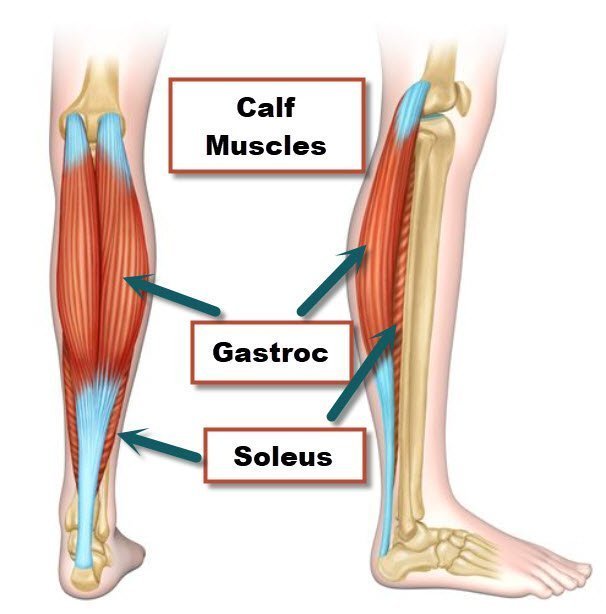
The visible upper calf is largely formed by the medial and lateral heads of the gastrocnemius. This muscle crosses both the knee and ankle. The deeper soleus crosses the ankle but not the knee, and contributes to plantarflexion whether the knee is straight or bent. Both feed force into the Achilles tendon, but they do not experience identical changes in length when you alter knee angle.
With the knee extended, the gastrocnemius begins a calf raise in a relatively lengthened position. Bend the knee to roughly a right angle and it becomes shorter across the knee, even if the ankle moves through the same range. That distinction is central to the standing-versus-seated debate. It does not mean seated raises switch the gastrocnemius off or standing raises stop using the soleus.
Also separate appearance from function. A larger calf may help with force capacity, but running economy, jumping, ankle stiffness and tendon behavior are not interchangeable measures of muscle size. If your goal is hypertrophy, track training performance and calf measurements over months rather than treating a single high jump or a burning sensation as proof of growth.
2. What 23 trained lifters revealed about stretch partials
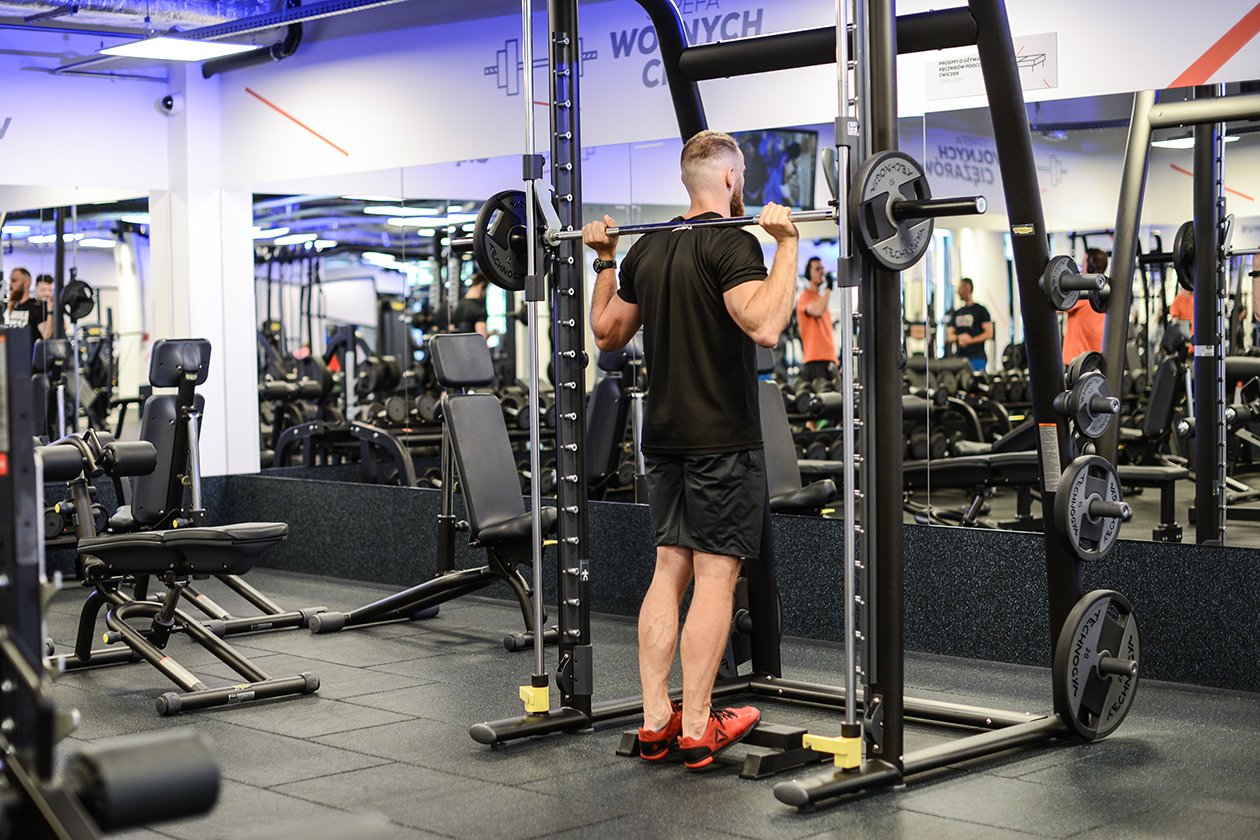
In the 2025 eight-week experiment, 23 resistance-trained participants performed unilateral Smith-machine calf raises twice per week. One leg used repetitions confined to the lengthened, bottom portion of the movement. The other leg completed full-range repetitions to failure and then continued with extra partials after full repetitions were no longer possible. Both protocols used four sets per session, and calf muscle thickness was measured with ultrasound.
Both approaches increased medial gastrocnemius thickness. The estimated difference favored the initial, lengthened-partial condition by about 0.40 mm, but its 95% credible interval ranged from approximately -0.06 to 0.85 mm. The evidence for a true difference between the methods was weak. A single small trial cannot establish that abandoning full repetitions is optimal for trained bodybuilders, especially when the comparison also changes how sets end.
Two practical points survive that uncertainty. First, a meaningful stimulus can be delivered while the calf works in its stretched range. Second, full-range training followed by extra controlled partials can also grow muscle. You do not need to pick a permanent winner. You can use full repetitions for consistent technique and add a limited amount of lengthened work when you can control the ankle and load.
The study did not compare the same total number of repetitions or identical time under tension in every condition, and it did not measure long-term strength or injury outcomes. Do not translate a millimeter-scale ultrasound estimate into promises of dramatic visual changes after a month. It is a useful training clue, not a replacement for progression.

Equipment Worth Exploring
Explore equipment, accessories and gear from our carefully selected range.


FID Bench MAX
Adjustable bench offering flat, incline, and decline positions + adjustable headrest.

3. Standing versus seated: why knee position changes the result
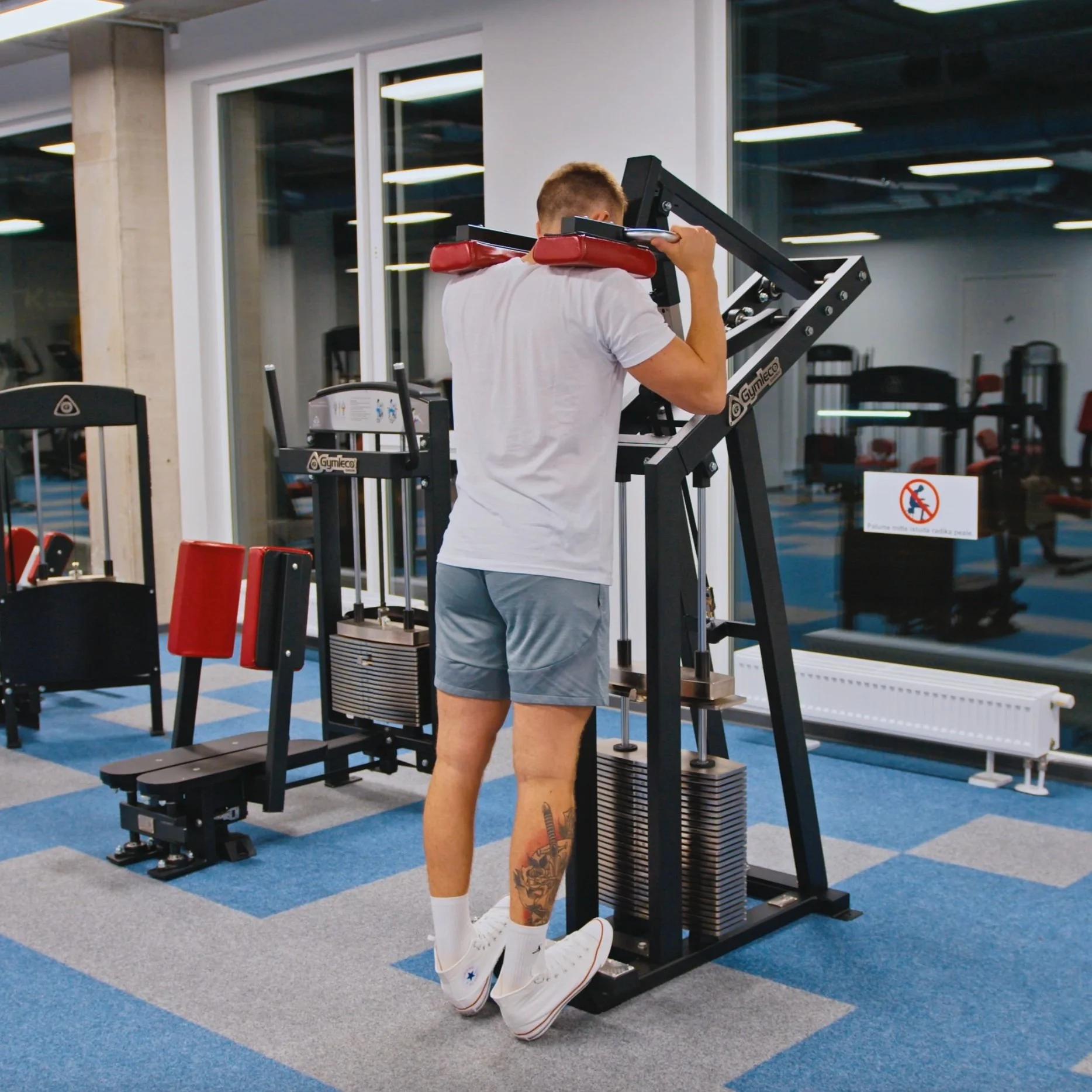
A separate 12-week within-person experiment trained 14 previously untrained adults, with one leg performing knee-extended standing calf raises and the other performing seated raises with the knee bent to about 90 degrees. Training was matched at five sets of ten repetitions, twice per week, using approximately 70% of the relevant one-repetition maximum. MRI scans assessed muscle volume before and after.
The standing condition produced larger increases in the lateral gastrocnemius (12.4% versus 1.7%) and medial gastrocnemius (9.2% versus 0.6%). Whole triceps-surae volume increased 5.6% versus 2.1%. By contrast, the soleus grew by similar amounts in the two conditions, about 2.1% and 2.9%, with no statistically clear difference. These were group averages from a small sample of beginners, not guaranteed results for experienced lifters.
That pattern makes mechanical sense: extending the knee places the two-joint gastrocnemius at a longer working length. It does not prove that seated raises are useless. They provide a stable way to load ankle plantarflexion with a bent knee and can add training volume when standing work is uncomfortable or already plentiful. But if visible gastrocnemius size is the priority and you can tolerate it, a straight-knee variation deserves first place.
A practical order is standing or leg-press calf raises first, followed by optional seated work. If you only have time for one exercise, start with a straight-knee version and progress it. If you use both, avoid counting every warm-up or effortless bounce as a hard growth set.

Bodybuilding Shirts & Workout Gear
Bodybuilding shirts, tanks and gym gear for lifters chasing muscle, size, symmetry and the pump.

Patriotic Uncle Sam – I Want You To Train Legs Meme Cre T-Shirt
Bring “Patriotic Uncle Sam” humor to your everyday gym style.

I Want You To Stop Skipping Leg Day Patriotic Gym – Unc Hoodie
Show off your leg-day humor in a laid-back “I Want You To Stop Skipping Leg Day” hoodie.

Ivar The Boneless Skip Leg Day | Viking Workout Sweater T-Shirt
Bring “Ivar The Boneless Skip Leg Day” humor to your everyday gym style.

Yesterday I Skipped Leg Day – Beatles Music Meme Vest M Tank Top
Bring “Yesterday I Skipped Leg Day” humor to your next lifting session.

Leg Day Metallica Tee
Rep “Leg Day The Day That Never Comes Metallica” humor in and out of the gym.

Patriotic Eagle Stars Stripes and Squats Pullover for L Hoodie
Show off your leg-day humor in a laid-back “Patriotic Eagle” hoodie.

Leg Press Dost Thou Even Press Medieval Knight Muscle S Tank Top
Bring “Leg Press” humor to your next lifting session.

Squatbucks & Coffee Meme Leg Day, & Gains Top T-Shirt
Show some leg-day attitude with a playful “Squatbucks Gym & Coffee” tee.

Shirt – Legendary Leg Day Meme Gymbros, & Fans T-Shirt
Make gym days more fun with “Legendary Leg Day Meme” style.

4. Full range, bottom-half reps and the stretch position
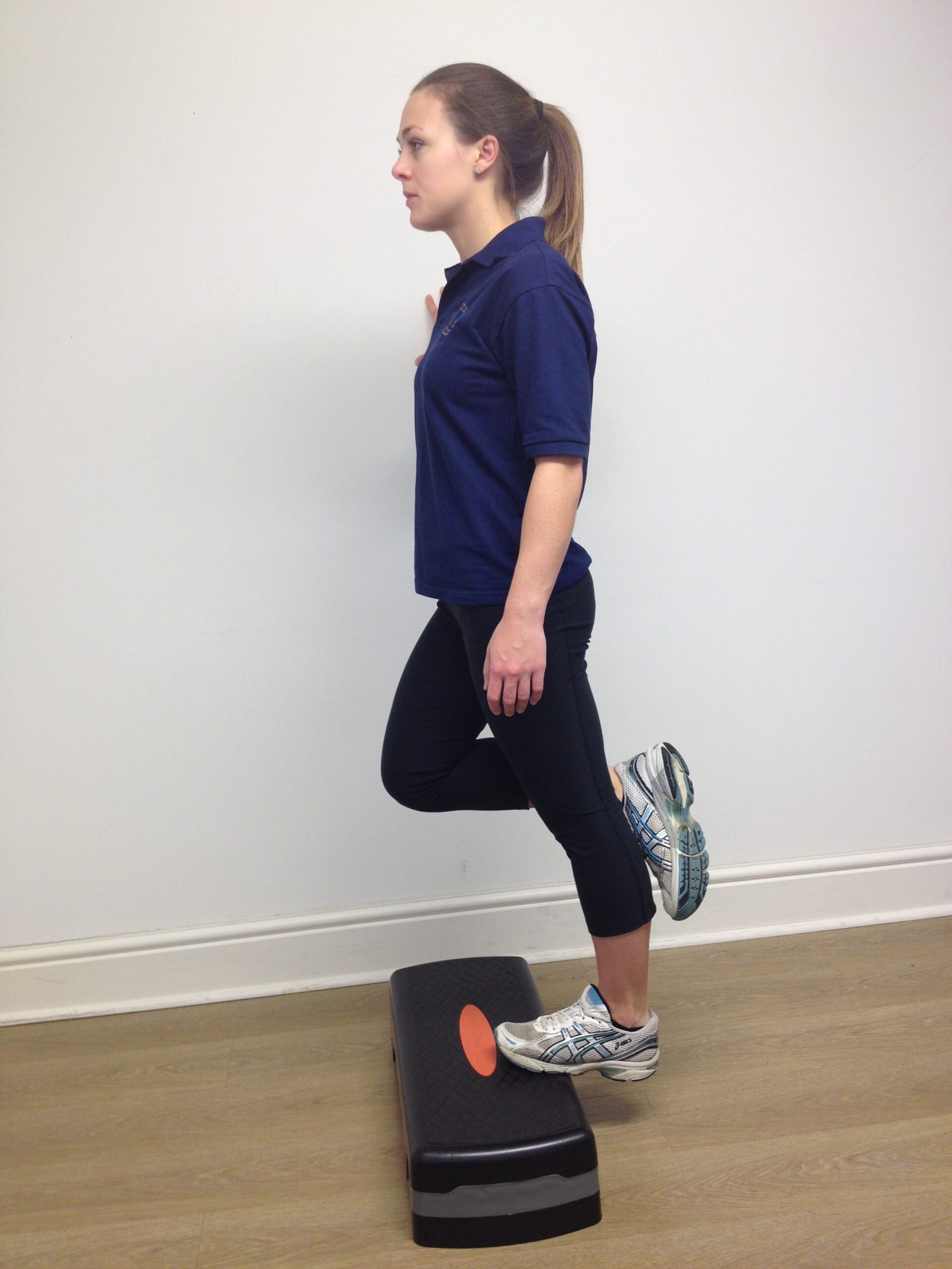
A lengthened partial on a calf raise means moving through the lower portion of the ankle range: the heel descends below the forefoot when the setup permits, then rises toward a roughly neutral ankle position. A shortened partial stays near the high, toes-pointed position. Those two abbreviated movements are not equivalent just because neither reaches the full top and bottom.
In an eight-week comparison involving 42 young women, the bottom-range group increased medial gastrocnemius thickness by about 15.2%, compared with 6.7% for full-range training and 3.4% for top-range partials. The lateral head also favored bottom-range over top-range training, although its difference from full-range training was not statistically clear. The participants, loading and exercise setup were specific; this is not a universal ranking of all calf routines.
Another ten-week experiment involving 16 untrained men found similar average calf growth when full-range work was compared with a lower set count followed by extra bottom-range partials under matched total volume-load. That result is a useful counterweight to claims that a special rep style always wins. Set count, actual work completed and the point of failure influence comparisons.
For most lifters, establish a repeatable full range first: descend under control, allow a comfortable stretch, rise without bouncing and pause briefly when needed to eliminate momentum. If adding bottom-half partials, use a load you can still stabilize and stop when ankle movement becomes uncontrolled. The Achilles tendon and foot need time to adapt to high-tension work at the bottom; more stretch is not automatically better.
5. Pick the setup that lets you load the calf, not your balance
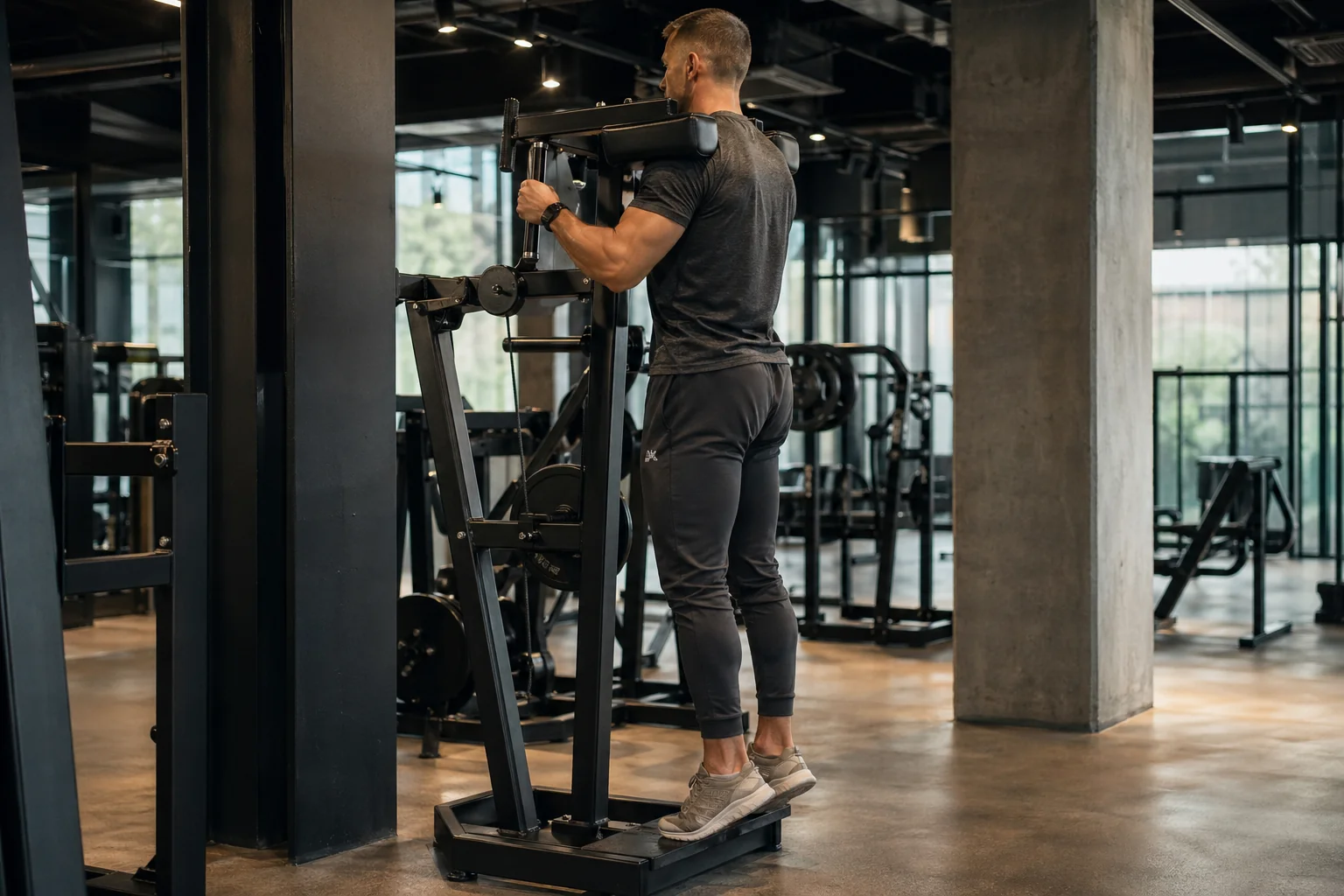
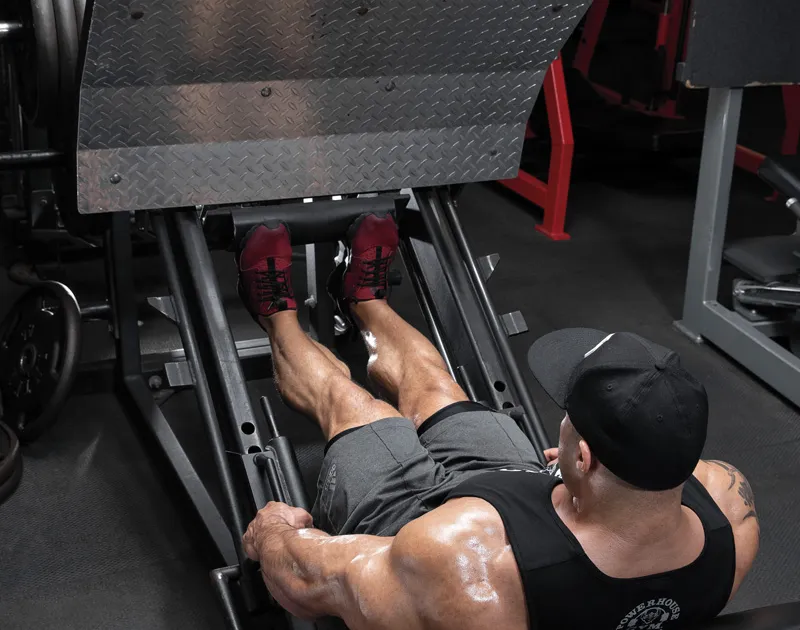
A dedicated standing calf machine offers stability and direct resistance. A Smith machine can work well with a secure, non-slip foot platform, safety stops and a bar position that does not force you to lean. A leg press can also train straight-knee plantarflexion, provided the sled is controlled and the forefoot remains securely on the platform. Never allow the foot to slide toward the edge of a moving press or lock the knee into a painful position.
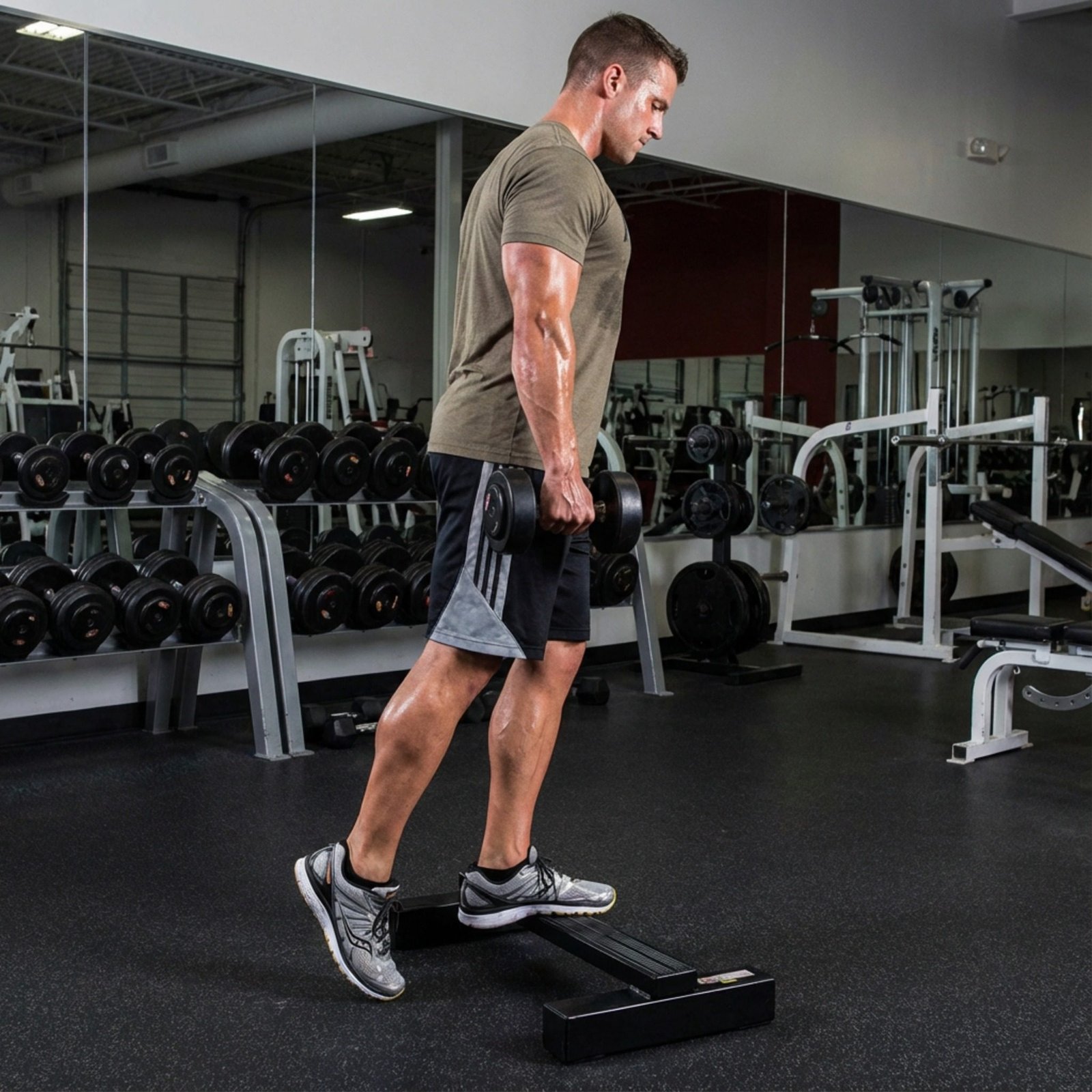
Dumbbell single-leg raises are a practical alternative when machines are unavailable. Hold a fixed support with one hand and the dumbbell with the other. Start on level ground, then use a stable low step if ankle range and balance allow. This option is limited by the load you can hold and your ability to stay upright, so record it separately from machine work. A loaded vest can reduce grip demands, but stability remains important.
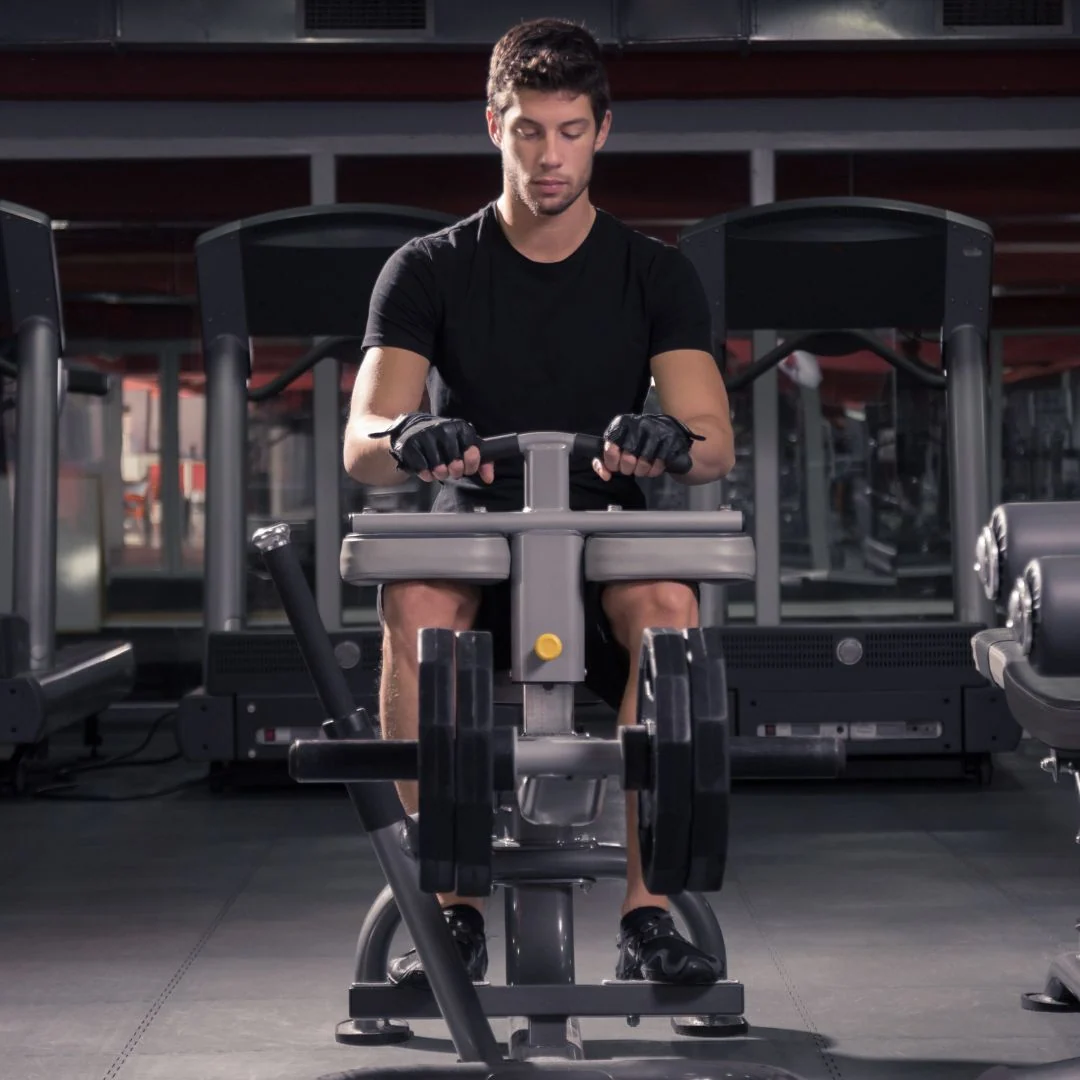
Seated calf raises are easiest to load with a proper thigh-pad machine. A dumbbell or plate on the thigh can work at lower loads, but pad the contact area and keep the weight secure; balancing heavy plates over the knees is not a contest. The movement should come from the ankle rather than bouncing the thighs. A bench, stable platform and modest resistance are enough to begin.
Choose a setup where you can repeat the same foot placement, knee angle, tempo and range. If one session uses a Smith machine and the next uses a different leg press, the weight numbers are not directly comparable. Equipment is a tool for consistent tension, not the central reason muscles grow.
Equipment Worth Exploring
Explore equipment, accessories and gear from our carefully selected range.
VOLTRA
Compact digital cable trainer with smooth, adjustable resistance.

Go-Tone Pro
Portable digital cable trainer with up to 66 lb (30 kg) of adjustable resistance.


GymPin Squat Wedges
Non-slip 15-degree squat wedges help elevate the heels for deeper quad-focused squats.


6. An eight-week calf-building plan for regular lifters
Train calves on two nonconsecutive days per week at first, preferably after the heaviest lower-body lifts so fatigue does not interfere with squats or deadlifts. If calves are a major priority and recovery is good, move the first calf exercise earlier in one session. Start with about eight challenging weekly sets across the two sessions, then add work only when technique and recovery justify it.
Day A — straight-knee emphasis: standing or Smith-machine calf raises for four sets of eight to twelve controlled repetitions. Descend for roughly two seconds, pause briefly in a tolerable stretch and rise without using the knees to bounce. Rest about 90–150 seconds or long enough to reproduce the same range. Finish with one or two light practice sets if your technique still needs work, but do not count these as hard sets.
Day B — volume and variation: leg-press or single-leg standing raises for three sets of twelve to fifteen, followed by seated raises for two sets of twelve to twenty if the equipment is available. If you have no seated machine, replace it with a second controlled straight-knee set or a carefully loaded bent-knee variation. The aim is a different loading experience, not collecting exercise names.
Weeks 1–2: learn the movement and leave roughly two repetitions in reserve. Weeks 3–4: increase repetitions within the target ranges while keeping heel depth consistent. Weeks 5–6: add the smallest sensible load when all sets reach the upper end with good control; optionally use one short bottom-range partial sequence after the last set of Day A. Weeks 7–8: maintain quality, review progress and reduce volume for several days if soreness or tendon irritation accumulates.
Record load, repetitions, knee angle and whether partials were added. If your calf training already includes substantial running, jumping or sport practice, begin with fewer sets and account for that background workload. Muscle growth does not require turning every calf session into an Achilles endurance test.
Funny Gym Shirts & Workout Gear
Funny gym shirts, tanks, hoodies and workout gear for lifters who like training hard.


Don'T Fart Squats Sweater & Leg Day Meme T-Shirt
Show some gym-day personality with “Don't Fart Squats”.

OnlyGains Hooded Leg Day & Booty Gains Meme Top Hoodie
Bring “OnlyGains” gym humor to lazy days and post-workout plans.

Anti Leg Day Leg Day Club Meme Sweater T-Shirt
Show some gym-day personality with “Anti Leg Day Leg Day Club”.

Squat You Must Star Wars Leg Day Meme Sweater T-Shirt
Show some gym-day personality with “Squat You Must”.

Leg Day No Thanks Skip Leg Day Meme Sweater Squats T-Shirt
Show some gym-day personality with “Leg Day No Thanks”.

Viking Squats – Norse Workout Meme Hooded Pullover Hoodie
Make your off-duty look more fun with “Viking Squats”.

I Love Squats – Valentine's Day Leg Day Meme Jumper T-Shirt
For laid-back days and leg-day humor: “I Love Squats”.

Heavy Metal Skeleton Squat for Powerlifters, Bodybuilde Sticker
Give your everyday gear a playful “Heavy Metal Skeleton Squat” twist.

Leg Day Thou Shalt Not Skip Leg Day Medieval Knight Pul Hoodie
Show off your medieval humor in a laid-back “Leg Day” hoodie.
7. Troubleshoot stubborn calves without chasing pain
If the load rises but the calf never grows: film a few sets from the side. Many lifters progressively shorten the bottom range as weight increases. Compare repetitions at the same depth, not just the same plate count. A slightly lighter load through a consistent range may be a more useful benchmark than a heavy half-rep.
If the arches or toes cramp: check footwear, forefoot pressure and the amount of toe gripping. Spread pressure across the ball of the foot rather than clawing at the platform. Reduce the load and use a stable support. Persistent symptoms deserve individual assessment instead of an ever more aggressive stretch.
If the Achilles becomes irritable: avoid forcing deep loaded dorsiflexion or adding failure partials while symptoms are worsening. Scale range, sets and frequency, and consider professional guidance for ongoing tendon pain. Research on hypertrophy in healthy participants does not establish a rehabilitation prescription for painful tendons.
If the calves recover easily but progress stalls: add one or two quality weekly sets, improve effort consistency or try a second rep range before abandoning the exercise. A separate six-week trial in untrained women suggested twelve weekly calf sets could outperform six for some muscle regions, but it does not imply every advanced lifter needs twelve or more.
Take calf measurements at the same location, time of day and hydration state every few weeks, and compare photos under similar lighting. Expect slow, uneven progress. The practical takeaway is simple: prioritize stable straight-knee loading, respect the stretched range, use seated work when it fits, and treat lengthened partials as an option rather than a magic technique.