Advertising disclosure: This page includes affiliate product links that may earn us a commission, as well as products from our own store.
Most lifters treat the minutes between heavy bench press sets as a recovery window. But could a carefully selected pulling movement make that time useful for learning the lift itself? A small 2026 experiment investigated whether putting seal rows between bench sets could improve technical execution rather than simply pack more work into a session. The distinction matters: a better bench is not necessarily the same thing as a more exhausting chest and back workout.
If your shoulders shift when you unrack the bar, your touch point wanders or your setup feels different on every set, there is a practical idea worth testing here. It involves deliberately changing the order of work, not replacing your bench press with more back exercises.
What 15 powerlifters did for six weeks
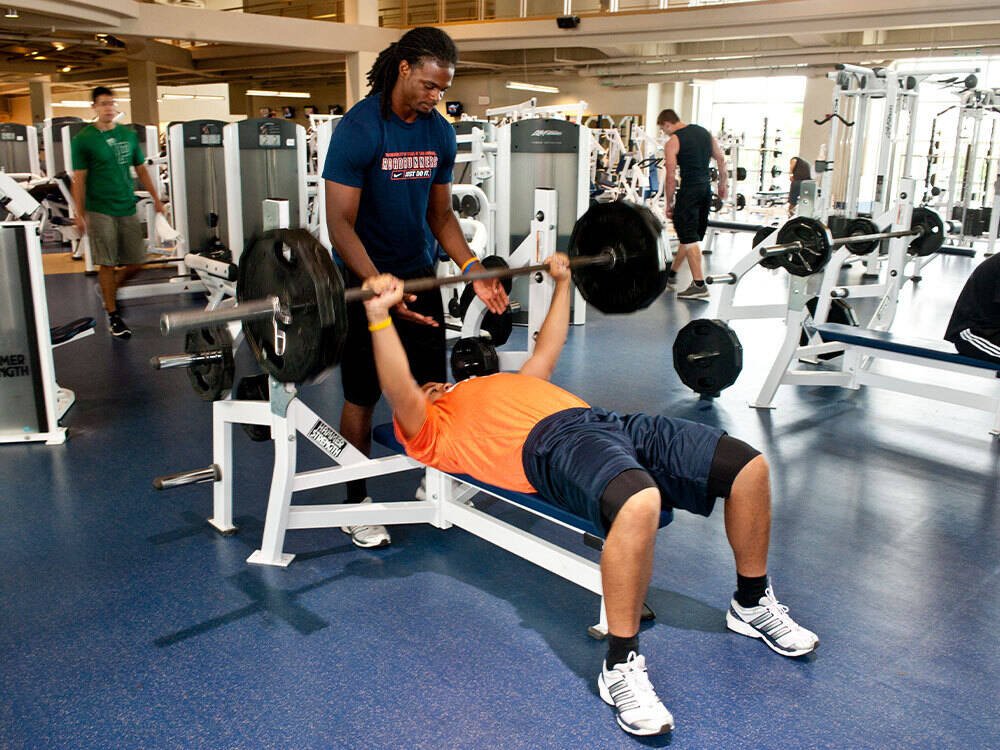
The six-week pilot enrolled 15 recreational powerlifters, including ten men and five women. Both groups followed comparable bench and rowing prescriptions. The difference was placement: one group did seal rows inside the three-minute bench rest intervals on two training days, while the other did the rows after all bench sets. A slower-tempo bench session on the third day did not include the row intervention. The normal bench prescription reached 83% of maximum, and rows were kept at least three repetitions away from failure.
Think about a typical Monday workout. In a conventional session, you might complete your bench work, clear the bench, and then walk over to a row station. You practice pressing several times in a row. In the experimental arrangement, you have to switch between the two tasks and then return to pressing. The barbell load is not the only thing your brain has to organize: you also need to find your grip, place your feet, establish a stable contact position, and get ready to press again.
That makes exercise order a training variable in its own right. The idea is not to claim that rowing gives the chest extra recovery compared with sitting quietly. It is to ask whether alternating two related tasks can make the lifter better at rebuilding a reliable position. If that is the goal, the quality of the transition deserves just as much attention as the number of repetitions you record.
Why a chest-supported row might change your bench setup
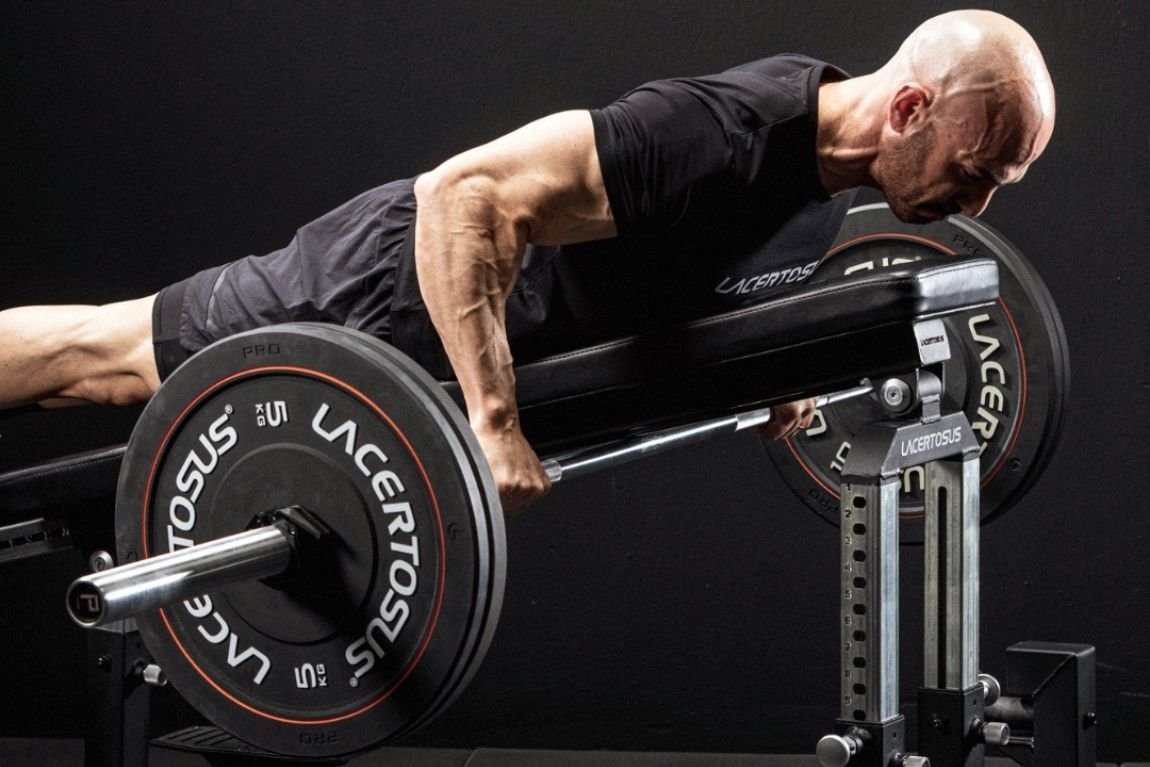
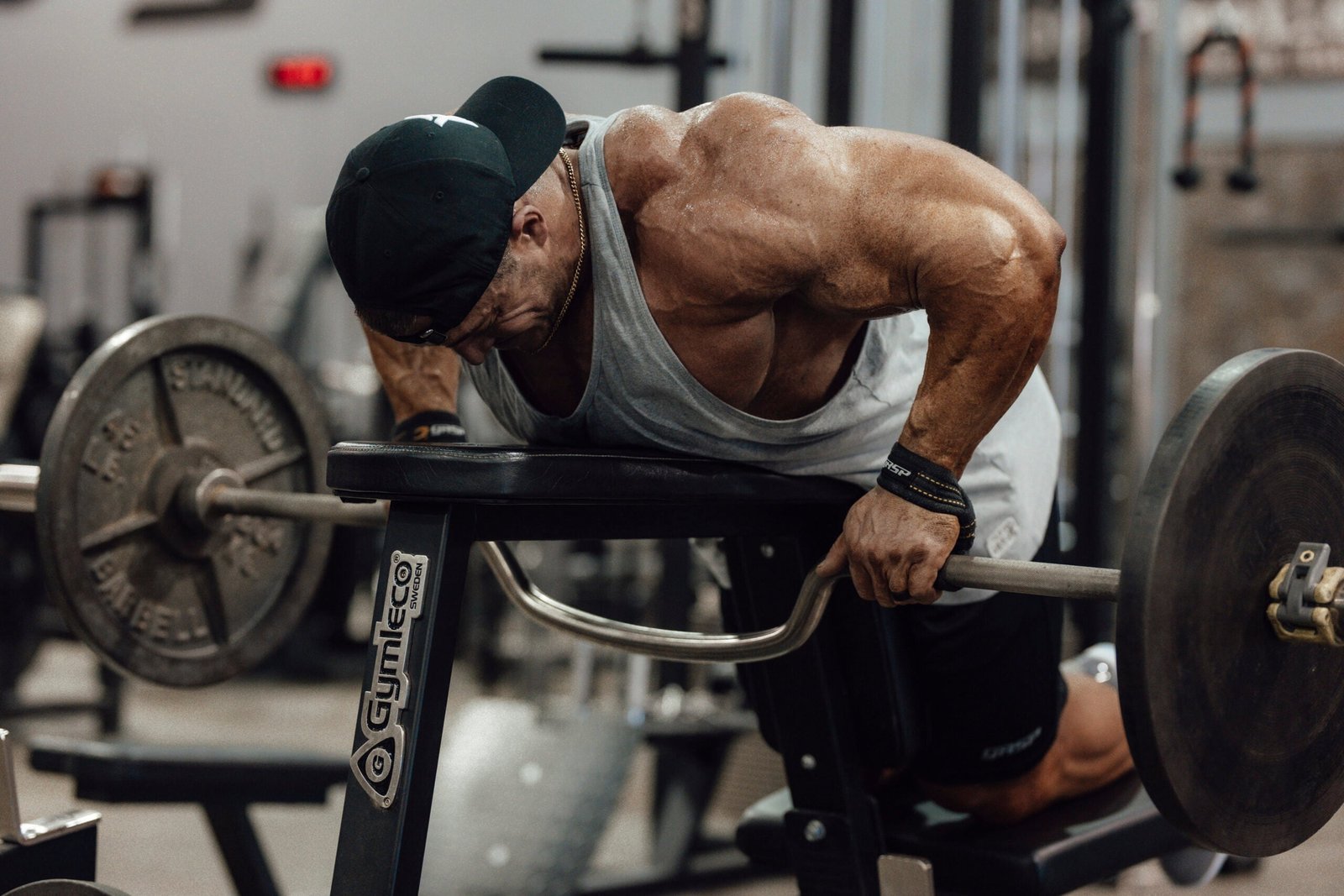
On a seal row, your chest rests on an elevated bench while your arms hang below it. You pull the weight toward the bench and lower it again. Unlike a standing barbell row, you cannot easily generate momentum by extending the hips. This makes a supported row an appealing choice when you want to focus on upper-back movement without loading your lower back immediately before a press.
The bench press and the row demand different jobs from the shoulder girdle. In the row you can practice drawing the shoulder blades toward each other as part of the pull. When you set up for a competition-style bench, you want a stable upper-back contact position that you can reproduce under load. The row gives you a chance to feel the muscles involved before you return to the pressing station. That is a plausible explanation for a transfer effect, not evidence that every row variation will produce one.
Do not confuse stability with a contest to see how tightly you can pinch your shoulder blades. You still need a position that suits your proportions and lets you lower the bar under control. A lifter with a long torso and long arms may look quite different from a compact lifter even when both have good bar control. Use the row to develop awareness of your back, not to force the same arch or shoulder angle on everyone.
A useful practice cue is to make the last inch of the row deliberate instead of throwing the elbows upward. Lower the weight smoothly, finish the set with some capacity left, and take enough time to reset before pressing. If you cannot control the row without moving your torso around, it may be too heavy for this particular role.
What the results actually say about strength and technique
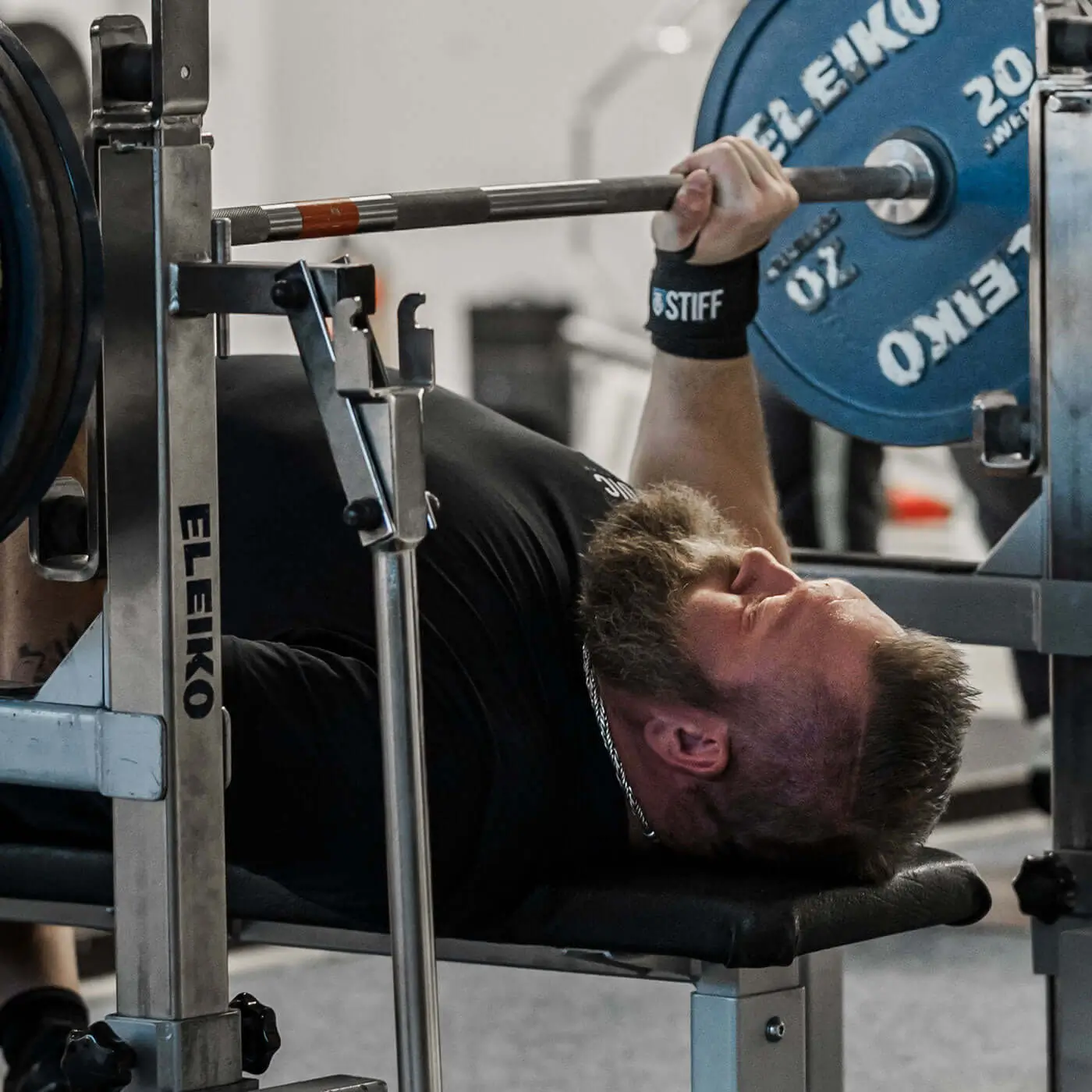
Both groups improved maximal strength, and the trial did not detect a difference in the pattern of strength gains. The interleaved group improved overall technical execution more, with shoulder-blade retraction showing the clearest individual difference among thirteen scored components. Those observations came from video-based research assessments, not from a panel awarding competition white lights. The protocol also included a later assessment without the alternating task.
There are two separate questions here. Did the lifters get stronger? And did they get better at performing the movement in the assessed manner? A person could increase their maximum by getting stronger in the triceps or chest while continuing to make the same setup mistakes. Conversely, a cleaner setup might reduce inconsistent attempts before it produces a measurable increase in a maximum lift.
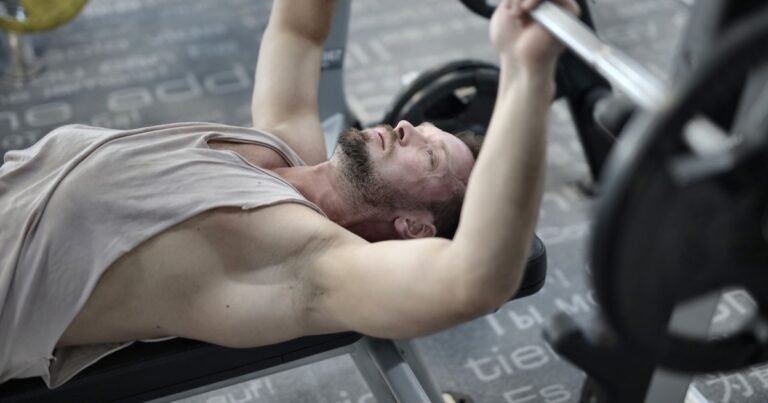
Consider a lifter who can press 100 kg on a good day but occasionally misses 95 kg because the handoff changes the position of their upper back. Their useful short-term target might be five consistent sets at 75 kg, rather than another attempt at a personal record. Improved consistency creates opportunities to accumulate productive practice without constantly testing the limit of the lifter’s current ability.
It is also important not to overstate the evidence. With only 15 participants, the study cannot establish that the alternating strategy is universally better. A nonsignificant strength difference does not prove identical outcomes. The sample is too small to establish separate effects for men and women, and the experiment did not demonstrate a reduction in injuries. Treat it as an interesting technique-training option, not a guarantee of more kilos on your next attempt.

Equipment Worth Exploring
Explore equipment, accessories and gear from our carefully selected range.



Competition Plates
Competition-style bumper plates for Olympic lifts and loaded strength training.

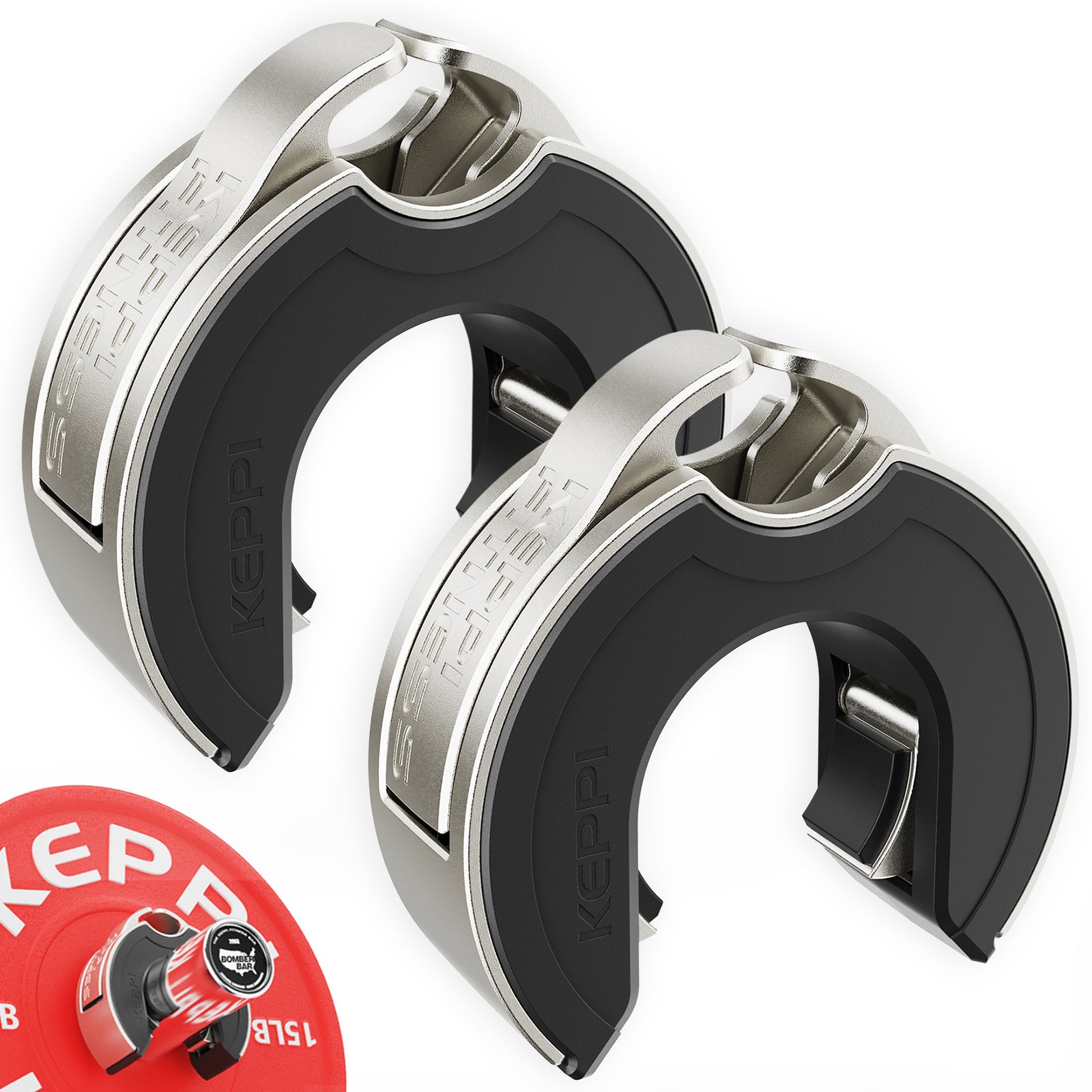
Keppi Open Collars
C-shaped magnetic Olympic barbell collars with a quick-lock mechanism and grippy lining.


Linear Row LRX-750
Dual-sided rowing machine for supported rows, bent-over rows and varied pulling movements.

GymPin Barbell Row Handle
Heavy-duty handle attachment for barbell, landmine and T-bar rows.

How to pair the exercises without sacrificing recovery
There is a risk in interpreting any bench-and-row pairing as permission to double your workload. A 2025 acute experiment in 14 resistance-trained men compared bench sets with different amounts of intervening rowing. Increasing the row repetitions made the pulling work slower and raised metabolic demand, even though bench repetition velocity did not differ significantly between conditions. An earlier study comparing paired pressing and pulling sets also found a time-efficiency advantage over traditional sequencing. Across a broader collection of superset research, similar long-term adaptations have generally been possible despite greater short-term physiological and perceived demands.
For technique work, that suggests a clear hierarchy. The bench sets come first in importance. The rows should be challenging enough to practice a controlled pull, but light enough that you do not approach your next press feeling breathless or unable to establish a stable grip. The goal is not to maximize the pump in both muscle groups. Read our comparison of supersets versus cluster sets for a different example of how rest arrangement can change the demands of a session.
Set up both stations in advance if the gym allows it. Use a stable, appropriately rated bench for chest-supported rowing, and make sure you have room for the bar to move without striking the bench supports. At home, an adjustable bench and dumbbells may be easier to arrange than a dedicated seal row bench. That is a practical substitute to experiment with, not the exact movement tested in the trial.
Keep a stopwatch nearby. If your normal bench rest is three minutes, do not accidentally reduce it to ninety seconds just because you are moving between stations. If the row set and transitions take too long, extend the interval or skip the row. Do not monopolize two stations in a busy commercial gym. A conventional bench session followed by rows is still a completely reasonable way to train.
Finally, avoid introducing the experiment on a maximal-effort bench day. Heavy singles demand attention and reliable recovery. Put the variation in a moderate-load session where you can watch how the next press responds. Use rack safeties and a competent spotter whenever the load or setup calls for them.
A six-week bench technique experiment you can run yourself
Here is an original, conservative training example for someone who already benches regularly. It is not a reproduction of the trial’s complete program. Keep your existing weekly pressing volume roughly unchanged, and move a small portion of the rows you would normally do at the end of the session into the rest periods. Start with one interleaved day before adding another.
- Weeks 1–2: Perform four sets of five bench repetitions at about 65–70% of your estimated maximum. Between the first three bench sets, complete six controlled chest-supported rows, leaving at least four repetitions in reserve. Take three to four minutes between bench sets, including the row and transitions.
- Weeks 3–4: If the presses stay controlled, use four sets of four at roughly 70–75%. Keep the rows easy to moderate and add a second interleaved session only if your shoulders, elbows and overall recovery are tolerating the arrangement.
- Weeks 5–6: Work toward four sets of three at about 75–80% on the technique day. Maintain the same rowing effort rather than increasing everything at once. Reduce the row volume if pressing quality deteriorates.
Keep one separate bench session per week without the interleaved rows. A few sets of paused bench presses at a manageable load can act as a check on whether the setup is improving even when you are not doing a pull immediately beforehand. Use the same bench, grip spacing and general camera angle to reduce unnecessary changes in the comparison.
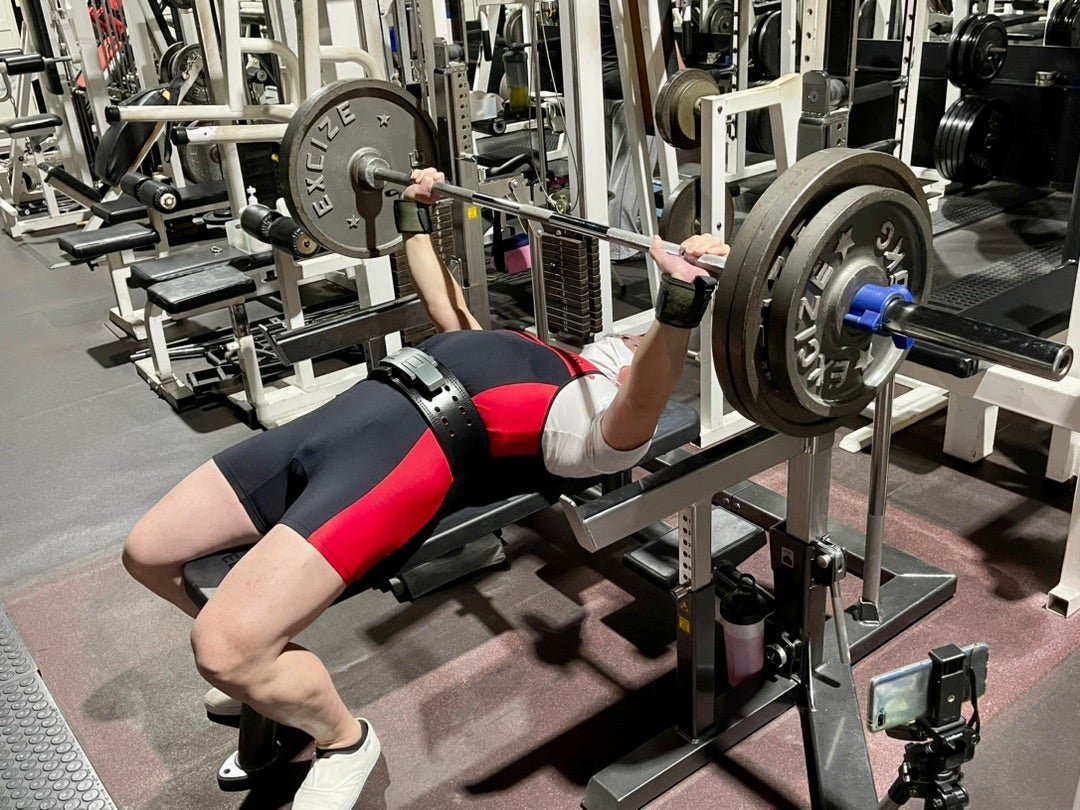
Record a short video of your first and last work sets in week one and repeat that check in week six. Look for the same foot position, a repeatable touch point, symmetrical extension and a stable upper-back setup. You will not be able to measure every shoulder-blade movement from an ordinary phone video, so do not assign yourself a clinical or research technique score. Instead, choose one or two visible features that you can assess consistently.
Log your pressing load, repetitions, perceived effort and any unusual discomfort. If your later bench sets become progressively more difficult at the same load, the extra activity may be costing more recovery than it is worth. Return to straight sets, reduce the pulling load or extend your rest. Do not train through sharp or persistent pain.
At the end of six weeks, compare a familiar submaximal bench session performed without intervening rows against your baseline. More repeatable repetitions, a calmer unrack and less variability in the touch point are worthwhile progress even if your estimated maximum stays unchanged. If none of those improve, keep the rows as ordinary back work and try a different approach to bench practice.

Powerlifting Shirts & Lifting Gear
Powerlifting shirts and gym gear for squat, bench and deadlift lifters who live for heavy numbers.

7 Plates Bench Club Shirt & Meme T-Shirt
Rep “7 Plates Bench Club” humor in and out of the gym.

Chest Day Sweater Bench Press & Meme T-Shirt
Add a playful “Chest Day” touch to your casual rotation.

Ultimate Bench Press Tee
Heavy lifts, good laughs, and a little “Ultimate Bench Press” energy.

Gym Sir Swole of Benchalot Medieval Knight Chest Day Mu Tank Top
Bring “Sir Swole of Benchalot Medieval Knight” humor to your next lifting session.

Squat Bench Deadlift Pet Dogs – Meme Shirt T-Shirt
Rep “Squat Bench Deadlift Pet Dogs” humor in and out of the gym.

My Bench Press Is Stuck Horror Scary Movie Meme Hoodie
Show off your Halloween humor in a laid-back “My Bench Press Is Stuck Horror” hoodie.

I Love Bench Press Gym Decal | Heart Weight Plate Funny Sticker
Put “I Love Bench Press” gym humor on your laptop, bottle, or gym gear.

Bending Bars Meme – Barbell Squat Bench Deadlift, & T-Shirt
Heavy lifts, good laughs, and a little “Bending Bars Gym Meme” energy.

1 Plate Bench Club Meme – Top T-Shirt
Heavy lifts, good laughs, and a little “1 Plate Bench Club” energy.

The takeaway: The seal row is already a useful upper-back exercise. Moving some of that work between bench press sets may help certain lifters refine their setup, without necessarily increasing strength beyond conventional training. Protect pressing quality, measure a specific technique problem and let your results determine whether the change earns a place in your program.