Advertising disclosure: This page includes affiliate product links that may earn us a commission, as well as products from our own store.
Training Volume Isn’t Just Tonnage: What a Six-Study Review Can Tell Lifters
A training log can show more weight moved without proving that a muscle received a better growth stimulus. Add several rushed repetitions, shorten the movement, or switch to a machine with different leverage, and the total climbs while the comparison becomes less useful. That is the problem with treating tonnage as a universal muscle-building score.
An October 2026 review offers a reason to take training volume seriously, but not to chase the largest possible number. Its narrow evidence base matters as much as its headline conclusion. The useful application is to track comparable work, understand what changed, and adjust a programme deliberately rather than automatically adding sets.
1. Six studies are useful evidence, not a universal prescription

The review examined resistance-training variables and muscle hypertrophy in people with previous resistance-training experience. Searches covered evidence available through April 2025. Although the screening process identified 297 records and assessed 52 full texts, only six studies entered the qualitative synthesis. Those are very different numbers: 297 search results do not mean 297 experiments supported the conclusion.
Across the included evidence, volume load was the variable most consistently associated with hypertrophy. Differences attributed to other training variables were smaller when volume and effort were comparable. However, this was a qualitative review, not a new training trial or a pooled estimate proving one optimal weekly dose.
That distinction changes what a lifter should do next. A broad relationship between training work and growth does not identify your personal ceiling, establish that every extra set helps, or show that a lighter exercise is inferior because its tonnage is smaller. The sensible interpretation is that the amount of training deserves attention alongside how that training is performed.
Start by asking whether the evidence actually resembles your training. A result from one muscle, exercise or short programme is information about that setting. Applying it elsewhere is a practical judgment, not a guarantee. A notebook helps make that judgment visible: the goal is to document a stable task well enough that the next session can be compared with it.
2. Use volume load to compare the same task
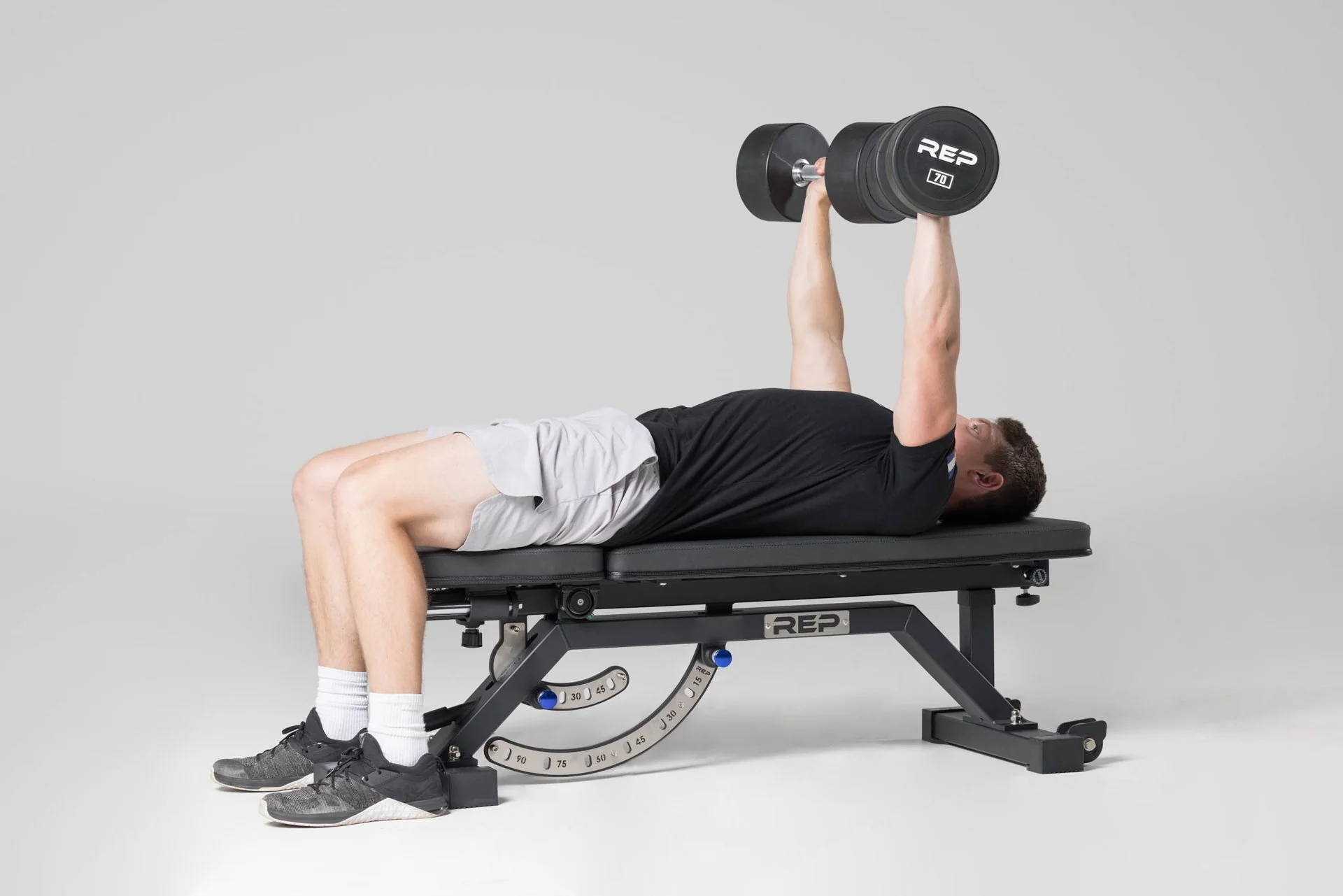
Volume load usually means adding the weight multiplied by repetitions across the sets being counted. Three sets of ten repetitions with a 30-kilogram external load produce 900 kilogram-repetitions. That is bookkeeping, not a measurement of muscle tension or growth. It leaves out leverage, movement distance, assistance from other muscles and how close the sets came to your limit.
Dumbbells introduce an easy logging mistake. If each hand holds 30 kilograms, write either “30 per hand” throughout the log or consistently count the pair as 60. Under the second convention, three sets of ten total 1,800 kilogram-repetitions. Neither convention makes the workout better; switching between them creates a false jump in workload.
Keep warm-up work separate from the working sets used for your comparison. Also record the exercise and setup. A dumbbell bench press, a plate-loaded chest press and a leg press cannot be ranked for muscle-building value by placing their totals in one league table. Even two machines with the same plate load may apply resistance differently.
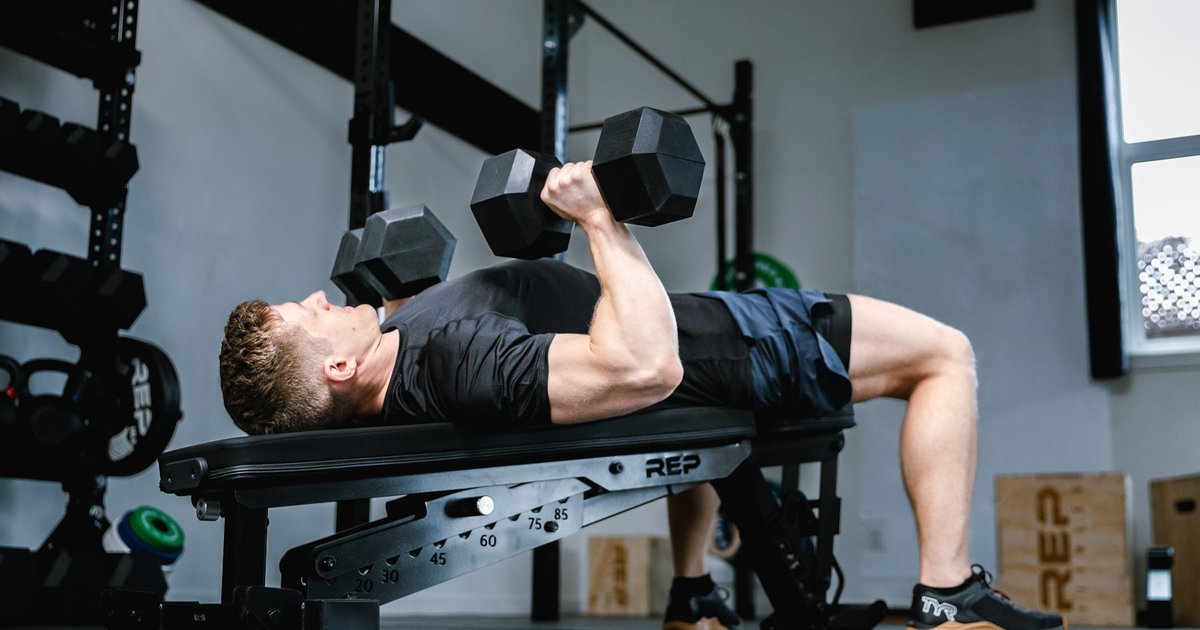
A useful log entry might read: flat dumbbell press, three working sets of ten, 30 kilograms per hand, the same bench position, similar rest and approximately two repetitions left at the end. If the next comparable session adds a clean repetition, the change is easier to interpret than a larger total assembled from several different exercises.
Equipment should make those comparisons easier. Fixed or adjustable dumbbells, a stable bench and appropriately sized plate increments are tools for repeatable loading. A leg press can also be logged consistently within its own setup. None creates a need to replace equipment that already lets you train and record the movement well.

Equipment Worth Exploring
Explore equipment, accessories and gear from our carefully selected range.


Rubber Hex Dumbbells
Rubber-coated hex dumbbell pairs with a stable shape for home and commercial strength training.




Multi Bench MBX-650 2.0
Adjustable multi-bench with roller adjustment, 15 backrest positions and accessory mounts.

Leg Press/Hack Squat BPR-790
Convertible 45-degree leg press and hack squat machine with a broad footplate and band pegs.

Compact Leg Press CLP-700
Compact reverse-style leg press with a moving seat carriage and an adjustable footplate.

3. Rest and load still matter when the goal is comparable work
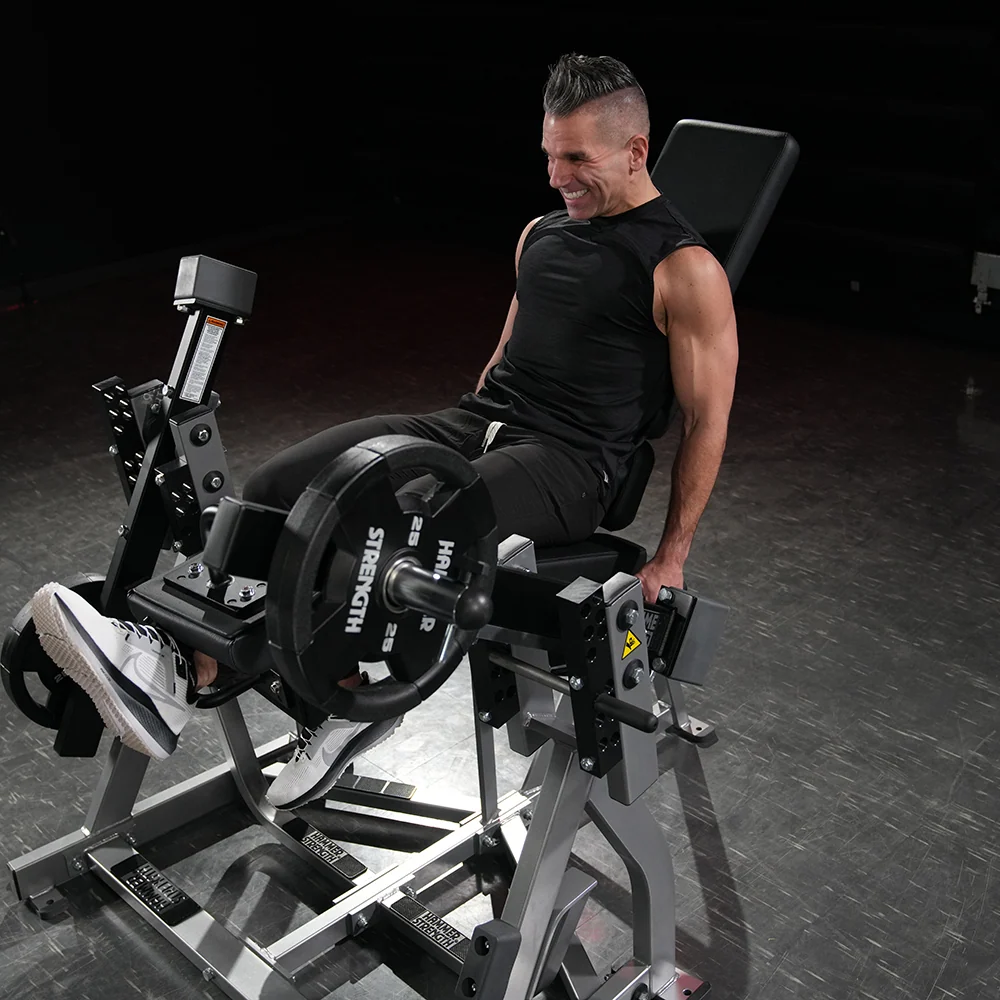
A ten-week experiment involving 28 participants helps explain why rest cannot be considered in isolation. Participants trained unilateral knee extensions using protocols involving one-minute or three-minute rest periods and different volume-load matching conditions. The higher-volume conditions produced larger increases in quadriceps cross-sectional area, while strength improved across the protocols without a significant difference between them.
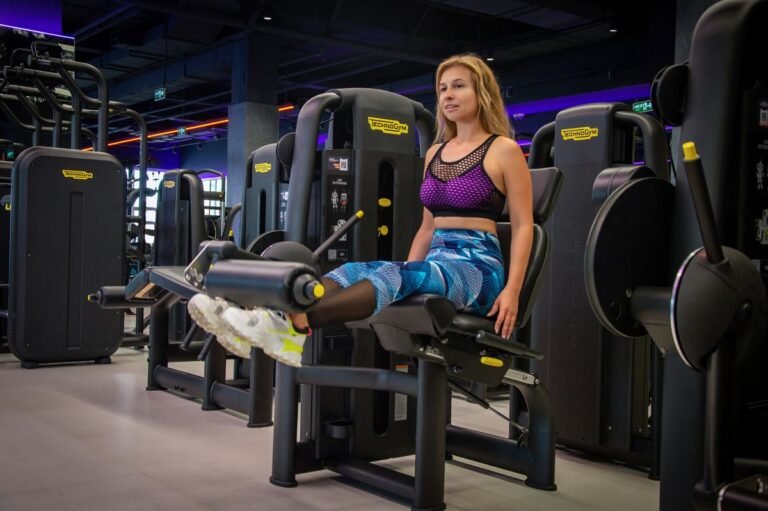
The practical lesson is not that one or three minutes is a magic interval. Rest can affect the work you complete, so a comparison of rest periods may also become a comparison of training volume. The exercise shown here illustrates knee-extension training; it is not a photograph of the experiment or its participants.
Load selection raises another distinction. A separate synthesis of 28 studies involving 747 healthy adults found similar hypertrophy outcomes across the examined loading ranges when sets were performed to voluntary failure, while heavier loading generally supported greater strength gains. The evidence largely concerned untrained or recreationally trained people. It does not establish identical results for advanced athletes or require every set in an ordinary programme to reach failure.
For your own comparisons, keep the intended movement and effort reasonably consistent. Do not turn a controlled press into short, hurried repetitions merely to improve the total. If you deliberately change rest, range or load, mark that change in the log. A new setup can be worthwhile, but it starts a different comparison rather than automatically extending the old progression.
4. More sets need a reason, not an automatic weekly increase
Evidence about volume should not become a rule that next week must always contain more sets. In an eight-week lower-body study, trained men either maintained their previous weekly set volume or increased it by 30% or 60%. Fifty-five were randomized, but 29 completed the programme. All groups increased muscle size, with no significant between-group difference in that outcome.
This does not prove extra sets never help. It shows why an automatic percentage increase is not guaranteed to outperform a familiar workload in a particular short study. The number of completers, the previous training dose and the measured outcomes all limit what can be generalized. A null difference is not proof that every possible dose is equivalent.
Before adding work, identify the problem you are trying to solve. Are comparable sets progressing? Has the exercise changed? Are later sets deteriorating because rest is rushed? Did a demanding week outside training make the last session unusually difficult? These questions help distinguish a programming decision from a reaction to one disappointing workout.
Compare several sessions rather than rewarding the hardest-looking day. More work is not a useful achievement if it repeatedly displaces the work you wanted to perform well. Conversely, a stable set count is not evidence of laziness when repetitions, control or load are improving under the same conditions. Consistency creates the comparison that makes a sensible adjustment possible.
5. Build a log that tells you what to change

For each working exercise, record sets, repetitions, load convention, rest and a simple effort estimate. Note the bench or machine setting and any deliberate range change. You do not need an elaborate dashboard: enough detail to recognize the same task is more valuable than a precise-looking total assembled from incompatible entries.
Suppose a three-set exercise has been progressing at the current workload. Keep collecting comparable sessions rather than adding a fourth set simply because a new week has begun. If progress stalls across repeated sessions, first check setup, rest and recovery. Then consider a modest change, such as one additional working set, while keeping the other conditions stable. That is a practical trial, not a scientifically established optimal increase.
Review what happens to the whole exercise, not just the new set. Did the added work remain controlled? Did the earlier sets retain their performance? Can you repeat the session? If the change obscures the comparison, simplify again. The aim is an informative training process rather than a permanent obligation to beat last week’s tonnage.
The same distinction applies to training slogans: “one more rep” can be motivation without being a command to add work regardless of context. Science-themed designs and reminders about consistency fit the habit of thinking through a programme; apparel itself has no effect on the evidence or your response to a particular workload.

Bodybuilding Shirts & Workout Gear
Bodybuilding shirts, tanks and gym gear for lifters chasing muscle, size, symmetry and the pump.

– Installing Muscles Downloading Gains Meme T-Shirt
Add a playful “Installing Muscles Downloading Gains Meme” touch to your casual rotation.

Lift Eat Sleep Repeat Hoodie
Make your off-duty look more fun with “Lift Eat Sleep Repeat”.

Gymenomics Bro Science Muscle Graph Meme Top T-Shirt
Make gym days more fun with “Gymenomics” style.


Lifting Is In My DNA Shirt – & Gains T-Shirt
Make gym days more fun with “Lifting Is In My DNA” style.

Consistency Is Key Stoic Greek God Marble Sculpture T-Shirt
Make gym days more fun with “Consistency is Key Stoic Greek God Marble” style.

The Only Difference Between Good And Great Is One T-Shirt
Bring “The Only Difference Between Good And Great” humor to your next gym day.

Installing Muscles Meme – Motivation Decal Bros & Sticker
A fun “Installing Muscles” touch for bottles, laptops, and lockers.


Bro Science Periodic Table Tee
Heavy lifts, good laughs, and a little “Bro Science Periodic Table Graphic” energy.
Use the review as a prompt to audit the log, not to rebuild a working routine overnight. Track comparable work, preserve the details that make repetitions meaningful, and change one thing for a clear reason. Volume matters most practically when you can explain what the number represents.