Advertising disclosure: This page includes affiliate product links that may earn us a commission, as well as products from our own store.
Build your triceps with cleaner cable rope pushdowns. Learn the setup, choose an attachment without falling for grip hype, fix seven mistakes and follow a practical six-week arm plan.
What Rope Pushdowns Actually Work in Your Arms
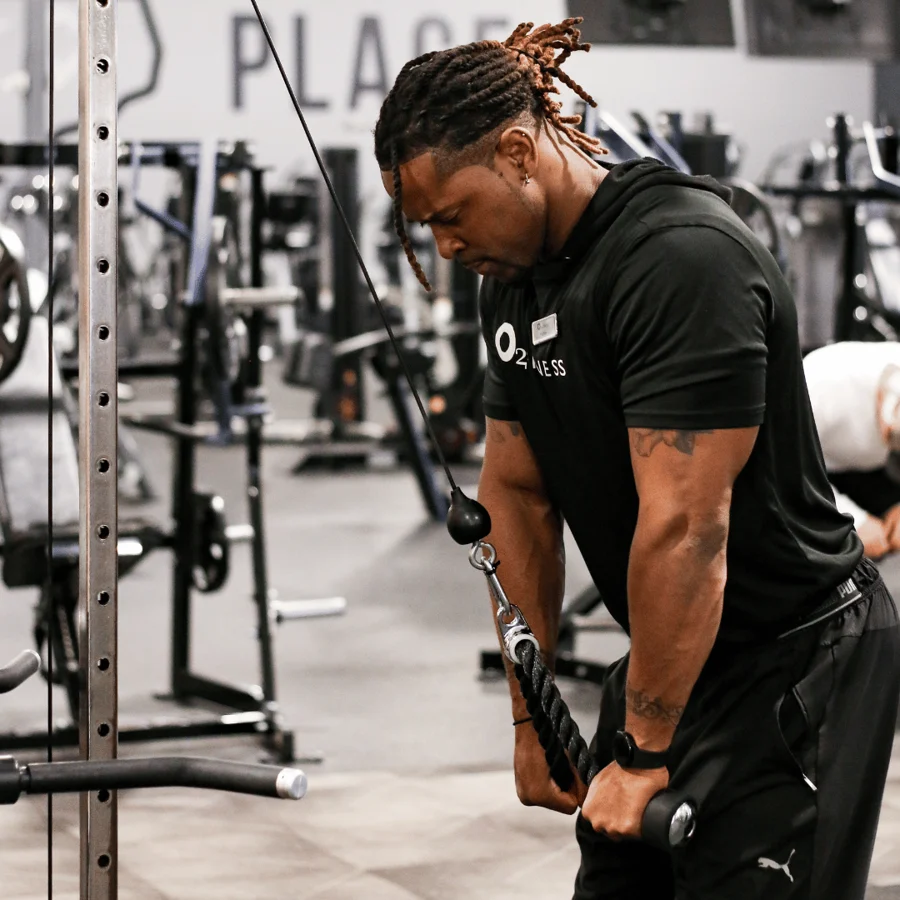
The triceps brachii has three heads: lateral, medial and long. Every one of them helps straighten the elbow. The rope pushdown trains this simple movement while your upper arm stays near your ribs. The forearms and hands help grip and stabilize the attachment, but the back of the upper arm is the principal target. A cable provides a repeatable line of resistance, useful for progression when your basic technique stays consistent.
The long head crosses the shoulder joint as well as the elbow. Moving the upper arm overhead changes the muscle’s starting length, so pushdowns and overhead extensions give you complementary positions. No particular rope angle turns two of the three heads off. It’s better to think about useful mechanics than attempting to isolate a single region with an elaborate wrist twist.
A small experiment with 22 adults tested single-arm pushdowns with a handle or padded strap, using different forearm positions. Some electrical activation readings changed. This was not a two-hand rope-versus-straight-bar hypertrophy trial and did not track muscle growth over weeks. Acute muscle activity is interesting, but it does not establish that one attachment is universally superior for building bigger triceps.
The practical indicators are stable elbows, a comfortable hand position, controlled repetitions and gradual progression. A strong squeeze at the bottom may improve your awareness of the movement, but sensation alone is not proof of better hypertrophy. Choose a setup you can reproduce and train hard without needing to throw your body into every rep.
Set Up the Cable, Rope and Your Stance
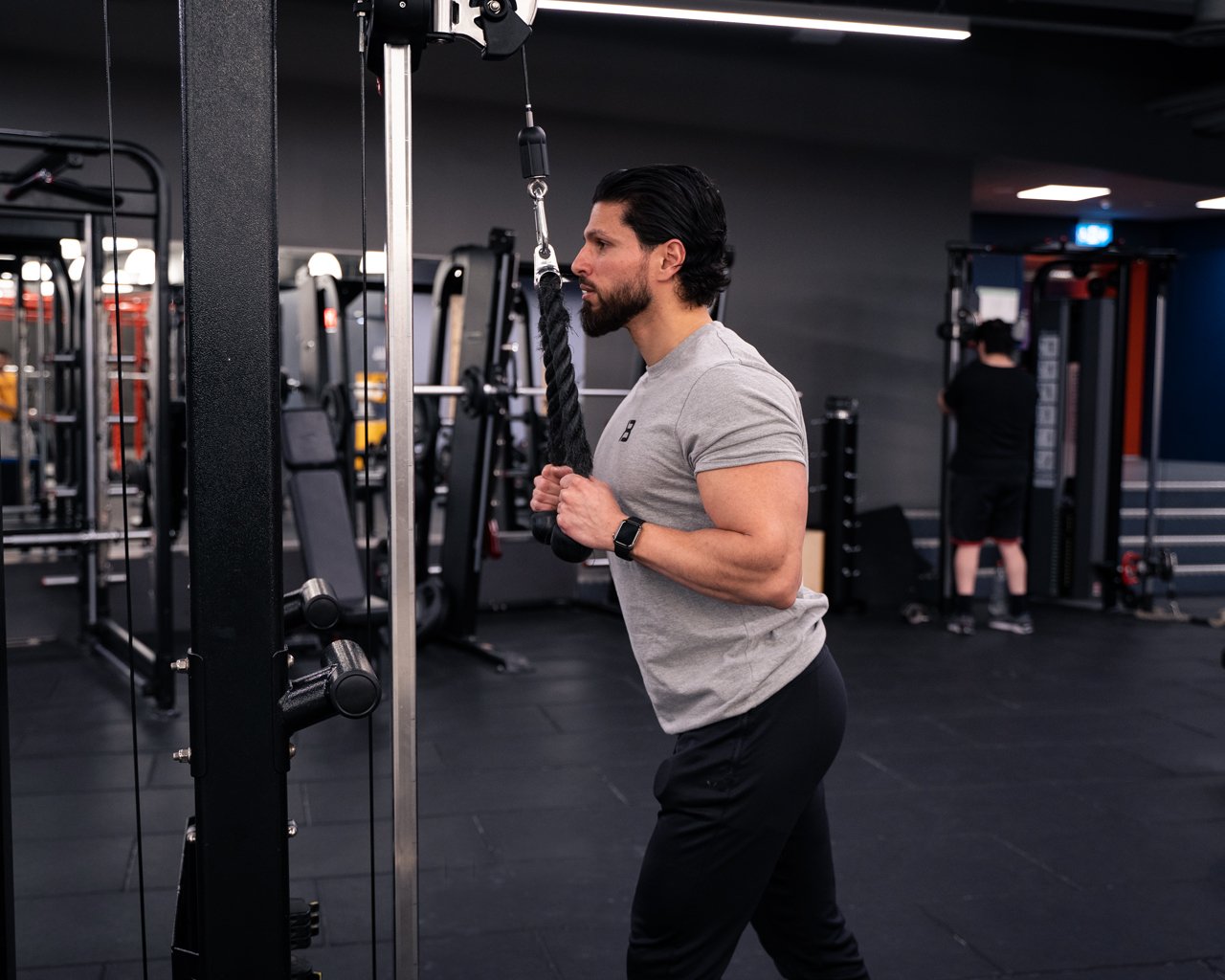
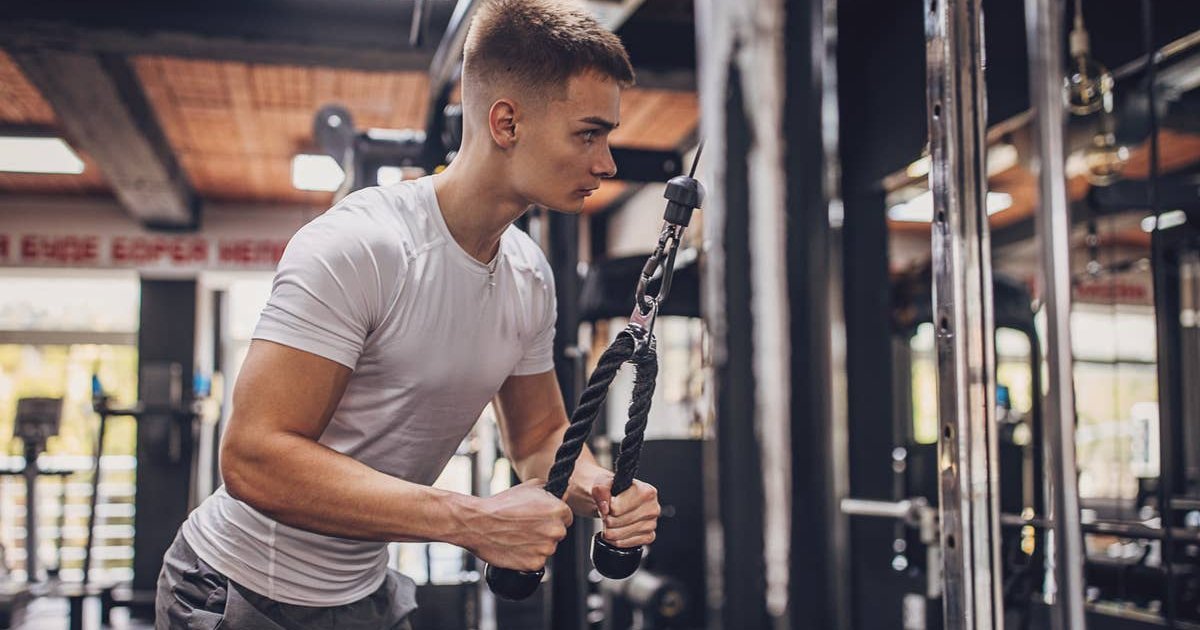
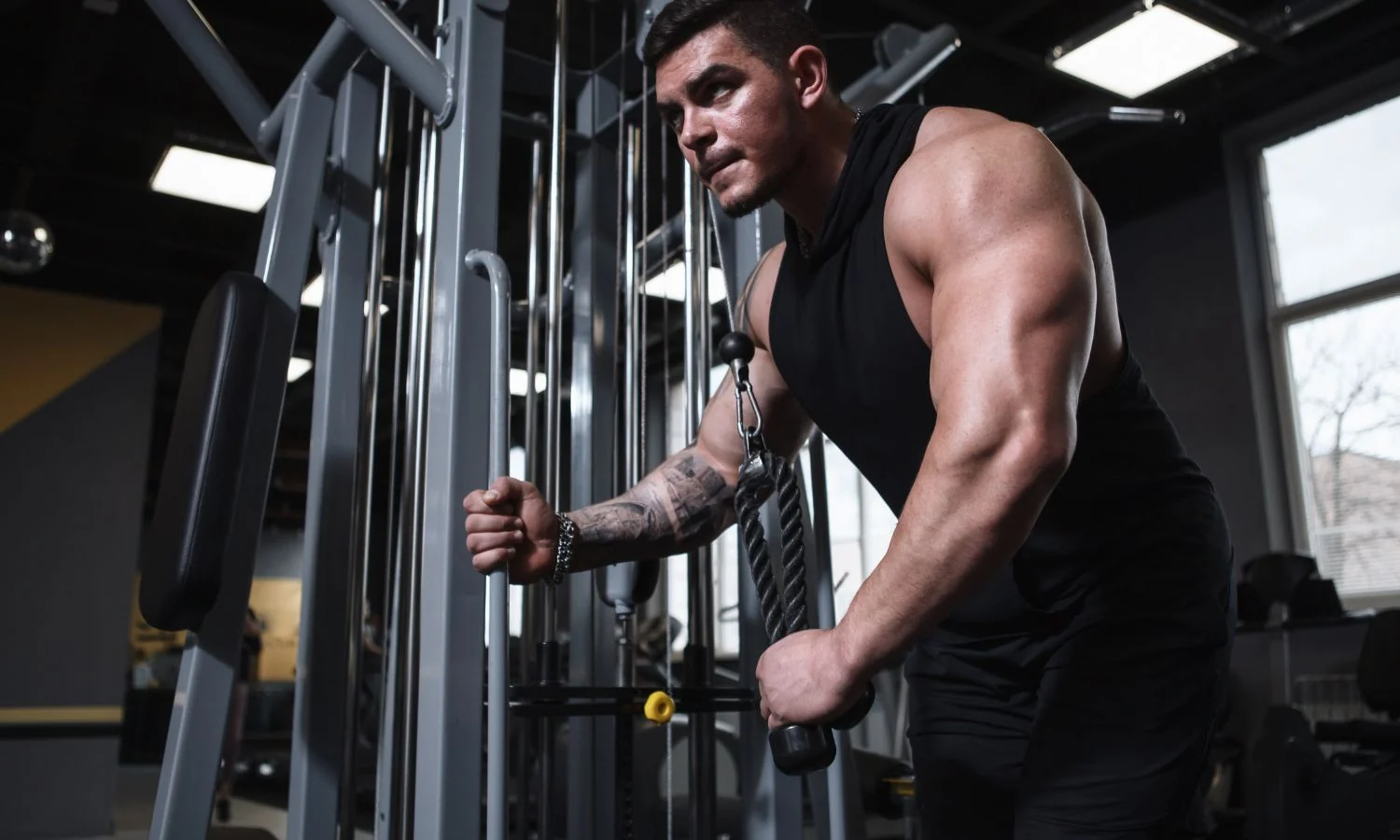
Clip the rope to a high pulley and check that the carabiner is closed. Stand facing the weight stack with feet about hip-width apart, or one foot forward for balance. Slightly bend your knees, brace the abdomen and take the rope ends with palms facing one another. You can lean forward a little, but should not need to bend over the attachment to begin moving it.
Keep the upper arms close to your sides, with elbows just in front of the ribs if that feels comfortable. Don’t force the shoulders far behind the body. Your wrists should stay reasonably neutral. At the top, the rope should allow a meaningful amount of elbow bend without pulling your shoulders upward or making the rope strike the pulley.
To test the load, pause halfway through a light repetition. If the stack drags your torso forward or you have to rotate your shoulders to hold it, reduce resistance or move slightly closer to the tower. The stack number on its own is not the goal. A secure stance and controlled starting point matter more.
On a small functional trainer, first check cable clearance through the whole motion. The weight should not bottom out at full extension, nor should the rope hit the attachment point at the top. Different machines use different pulley ratios, so the same printed weight may not produce the same tension at the hands. Use one consistent setup when measuring progress from week to week.

Equipment Worth Exploring
Explore equipment, accessories and gear from our carefully selected range.

Long Tricep ERGO Ropes
Extended triceps ropes with ergonomic grips for cable pressdowns and overhead extensions.
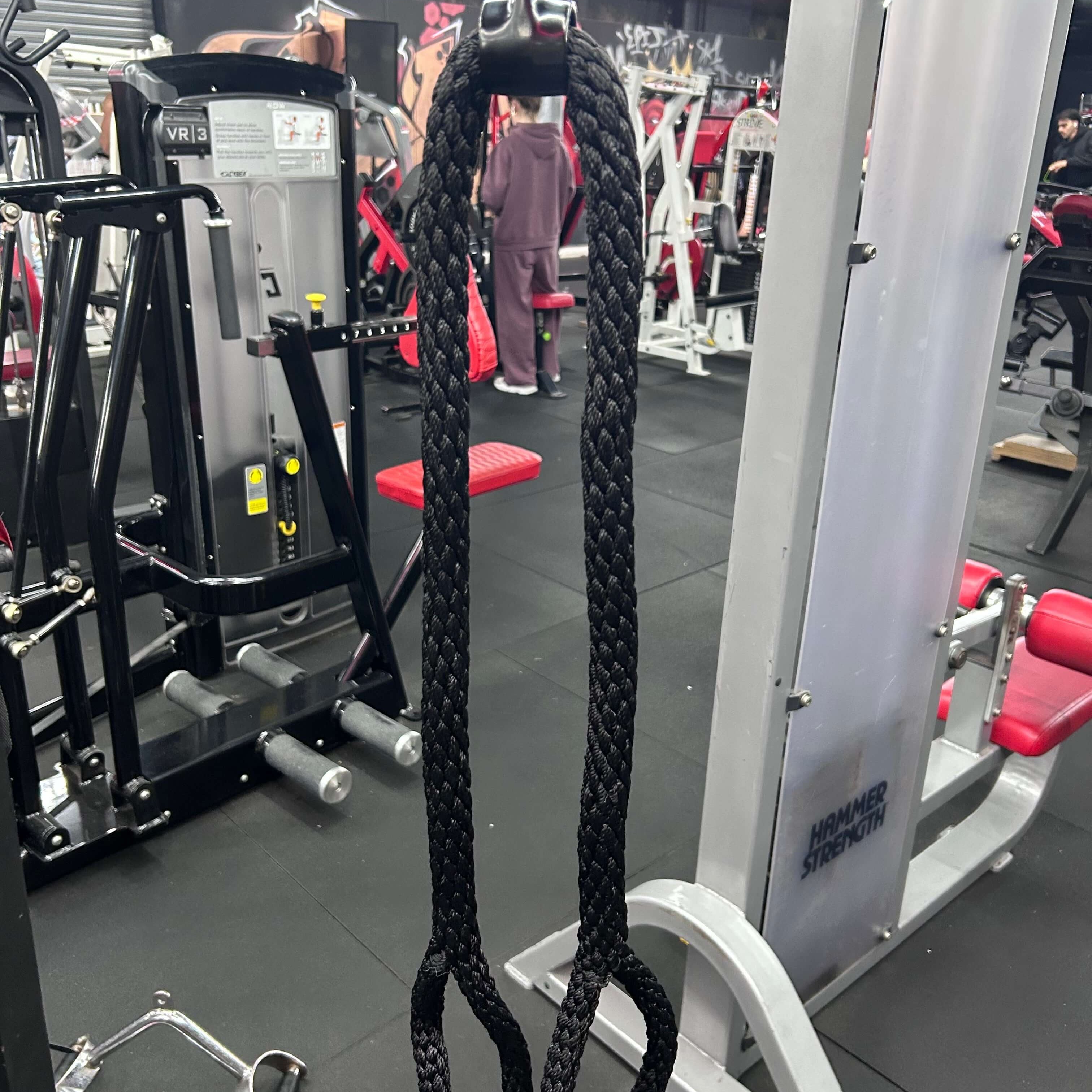
Super Long Tricep Rope
Extra-long looped cable rope for triceps pressdowns and overhead extensions.
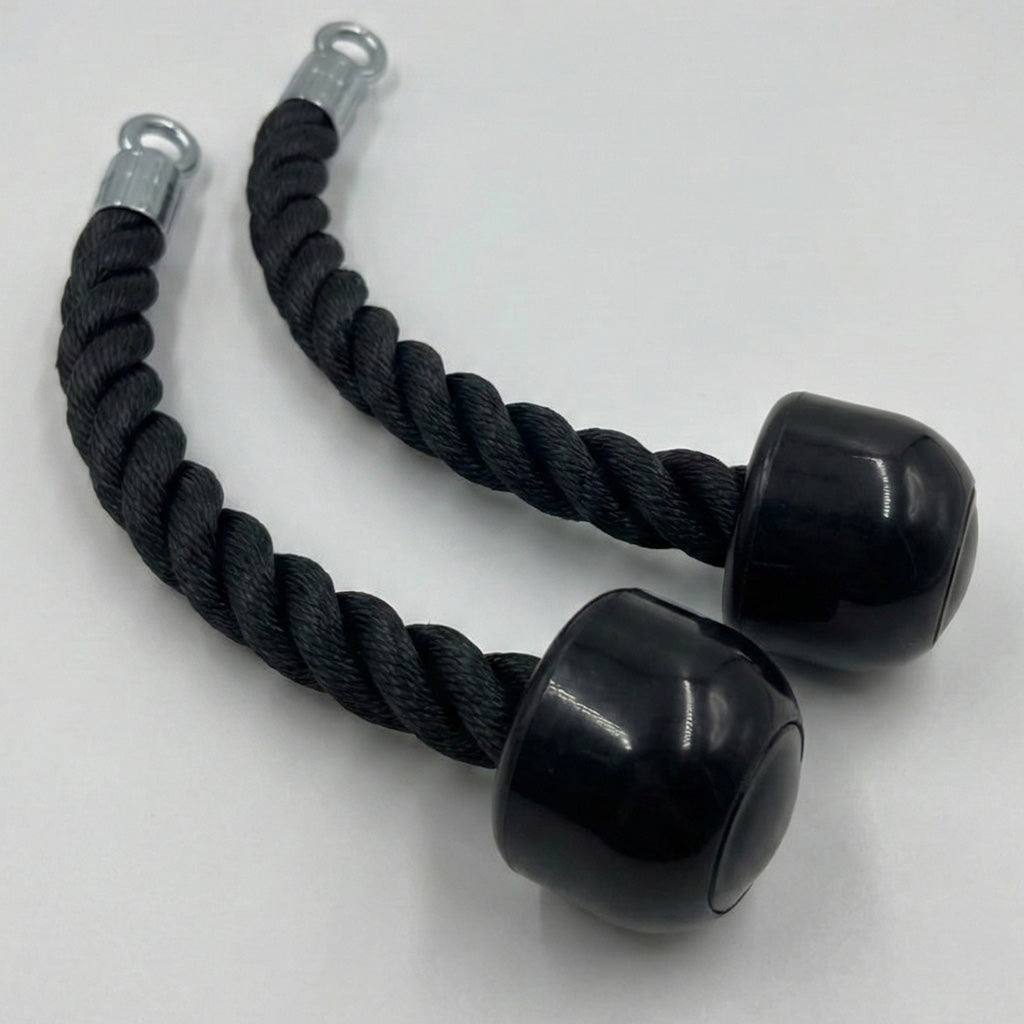
Individual Tricep Ropes
Pair of individual cable ropes for triceps pressdowns and cable hammer curls.
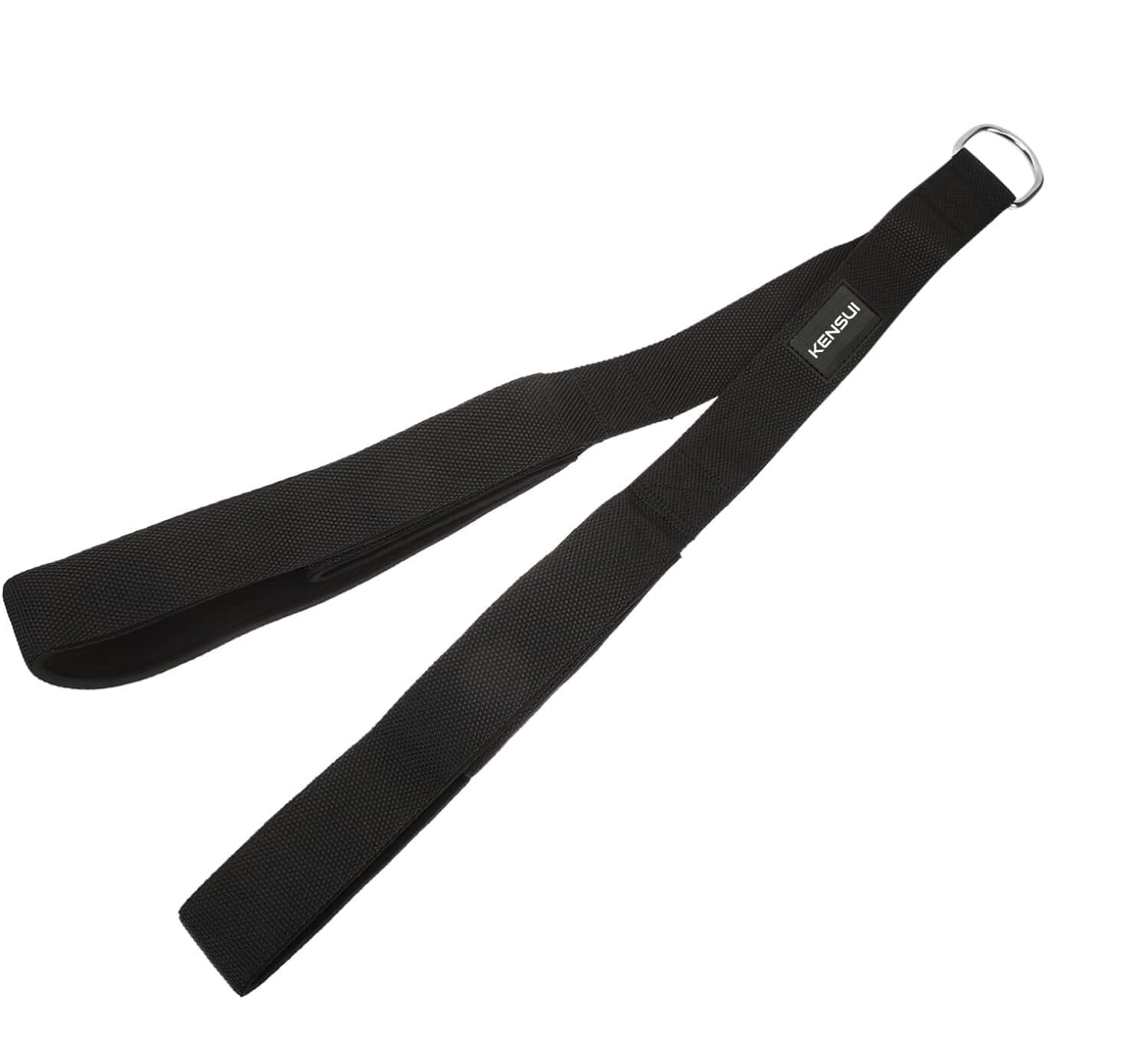
Multi-Length Tricep Strap
Adjustable-length cable strap for triceps, biceps and upper-body cable exercises.
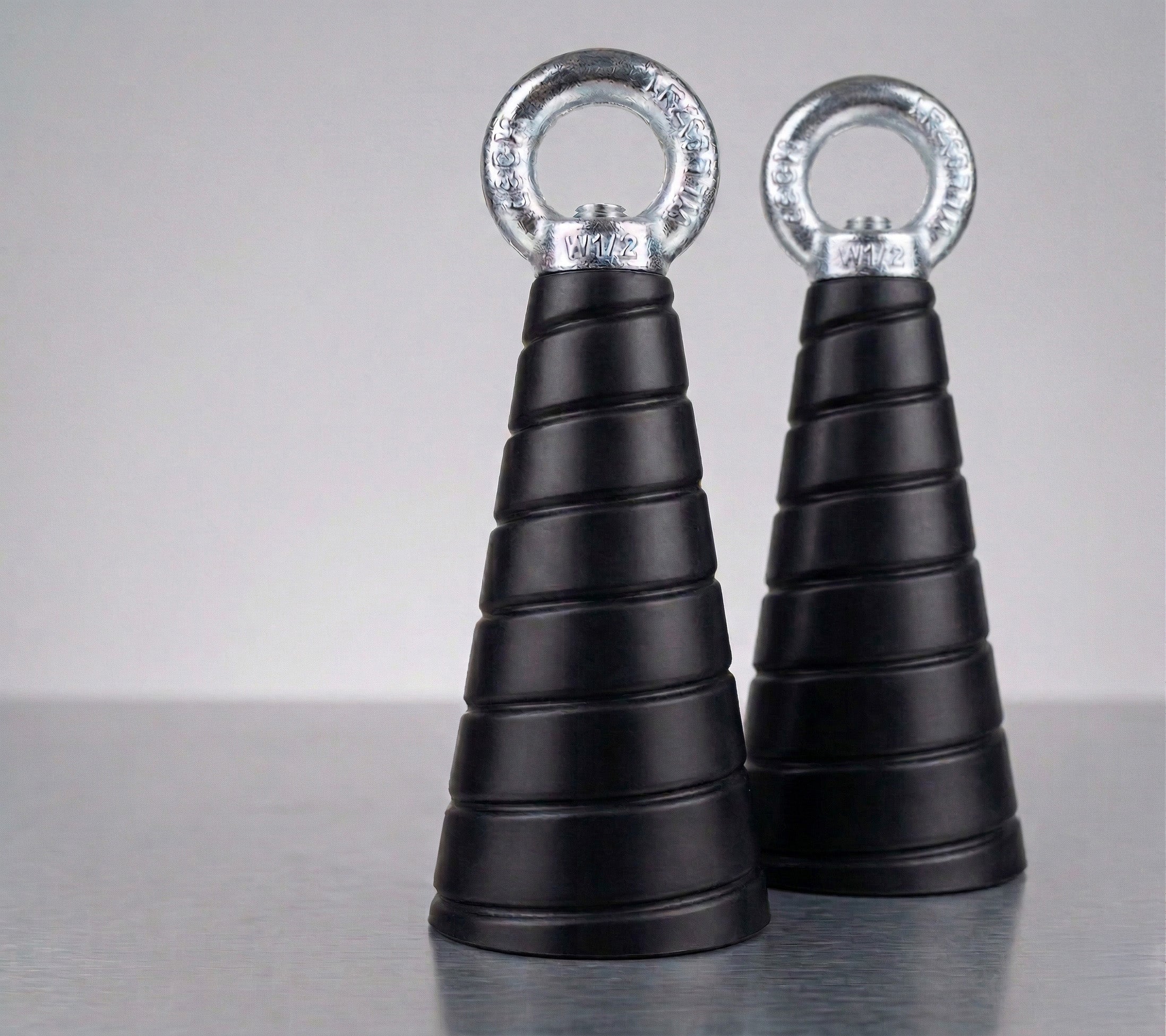
Tapered Tricep Cone
Tapered rubber cable grip for triceps extensions, face pulls and hammer curls.

GymPin Ergo Handles
Pair of ergonomic cable handles shaped for comfortable triceps and pulling exercises.

GymPin D Cuffs
Adjustable wrist cuffs with textured grips for supported cable-machine exercises.

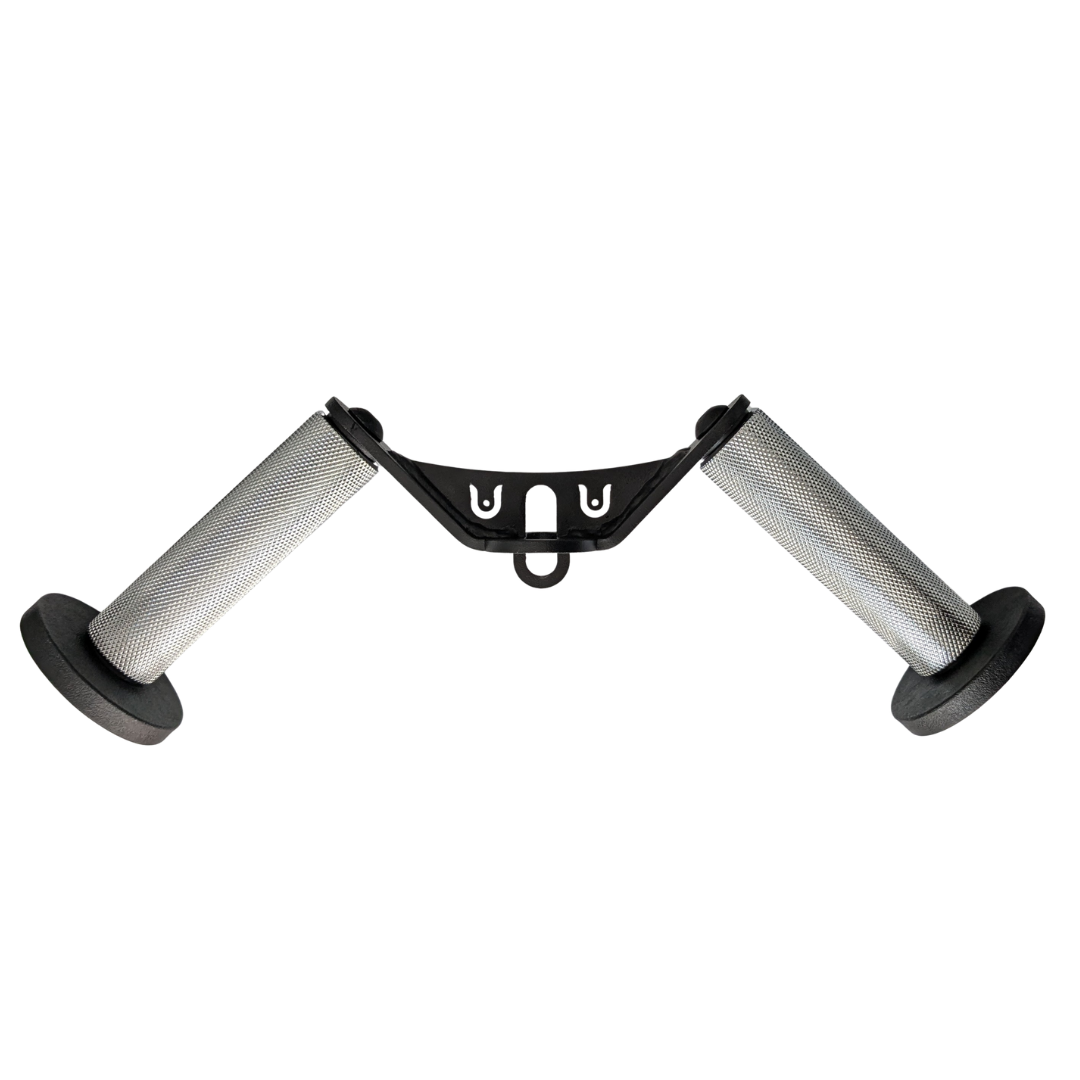
W Grip
Angled cable grip for comfortable rows, pushdowns, and curls.
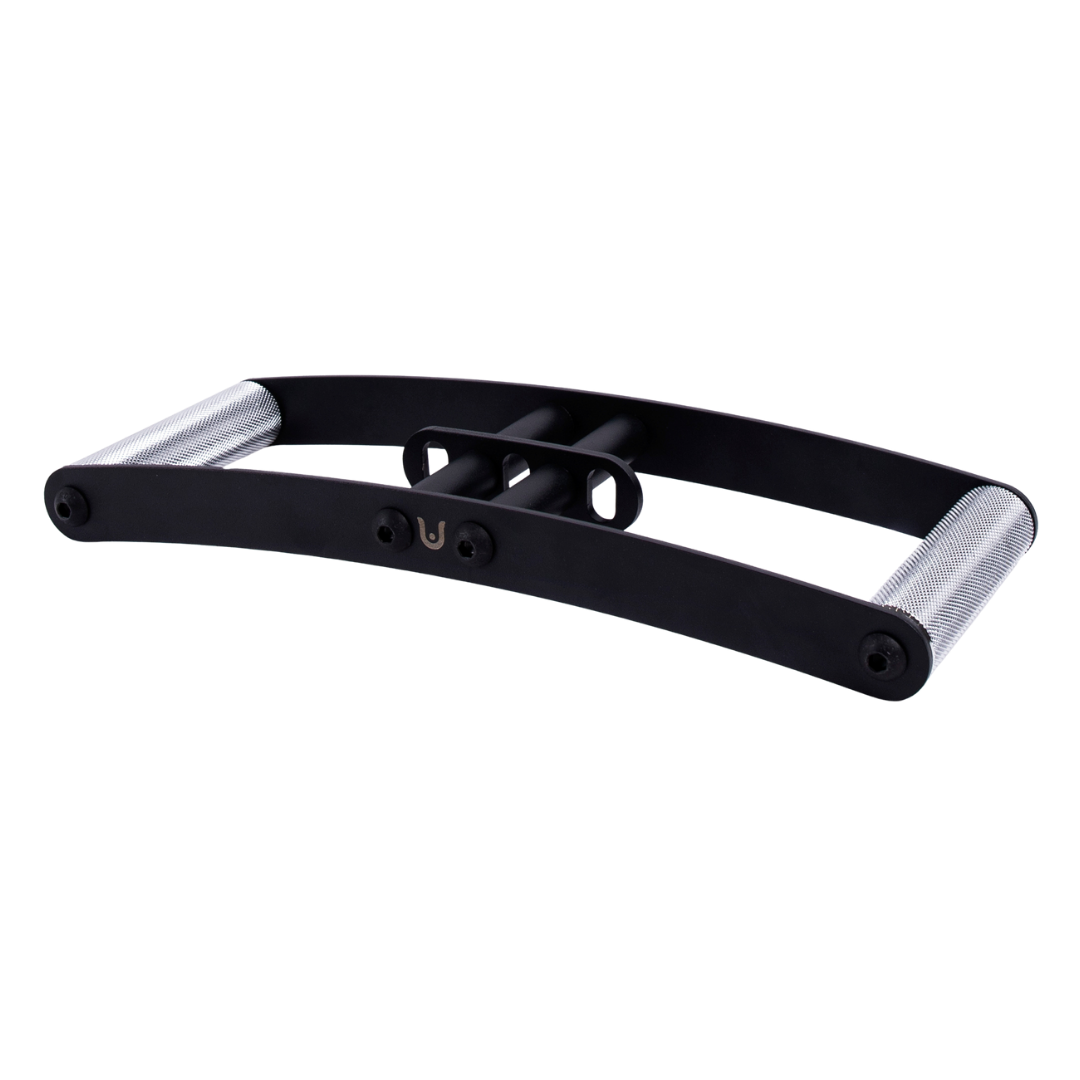
Horizon Grip
Ergonomic V-style cable grip for rows and back training.
A Controlled Rope Pushdown Rep, Step by Step
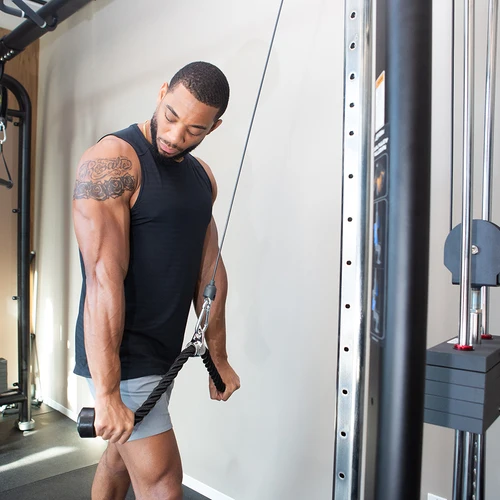
Begin with your hands around the lower chest or upper abdomen and elbows comfortably bent. Push the rope down by straightening the elbows. Imagine sending the hands toward your trouser pockets while the upper arms remain roughly still. Avoid dropping your chest or using your back to start the repetition.
Near the bottom, let the rope ends travel slightly apart if this gives you room to straighten your arms beside the thighs. This is a modest separation, not an aggressive outward sweep of both shoulders. Reach a comfortable, active lockout without slamming the joints. Hold briefly so you know the load is under control rather than bouncing off your legs.
Let the cable pull your hands upward again, resisting the return for approximately two seconds if a count helps. Stop at a consistent elbow bend without allowing the stack to crash or your shoulders to shrug. Different body proportions will produce different rope paths; the goal is controlled elbow extension, not copying an exact silhouette.
Start with two or three sets of roughly eight to fifteen repetitions. Most sets can finish with one to three good repetitions in reserve. Rest sufficiently that the next set is limited by triceps effort, not panting or loss of balance. Add controlled reps before increasing the load. If an increase turns every repetition into a chest-and-shoulder swing, it has not improved the quality of your training.

Bodybuilding Shirts & Workout Gear
Bodybuilding shirts, tanks and gym gear for lifters chasing muscle, size, symmetry and the pump.


Every Day Is Arm Day
Make gym days more fun with “Every Day is Arm Day Octopus Gym Meme” style.

Gym If You're Reading This It's Arm Day Drake Parody & Tank Top
Train hard, laugh a little, and rep “If You're Reading This It's Arm Day Drake”.

Welcome To The Gun Show Bro Meme Huge Arms Tank Top
Train hard, laugh a little, and rep “Welcome to the Gun Show”.


Gym Dost Thou Even Curl Medieval Knight Arm Day Crewnec T-Shirt
Show some gym-day personality with “Dost Thou Even Curl Medieval Knight Arm Day”.

Muscle Mommy Lifting Club for Gym Girls, Lifting, Fitne Tank Top
Show some personality between sets with “Muscle Mommy Lifting Club”.

Girls Just Wanna Have Guns Shirt Huge Arms & Gains T-Shirt
Show some lifting attitude with a playful “Girls Just Wanna Have Guns” tee.

Rope vs Straight Bar vs Individual Cable Handles
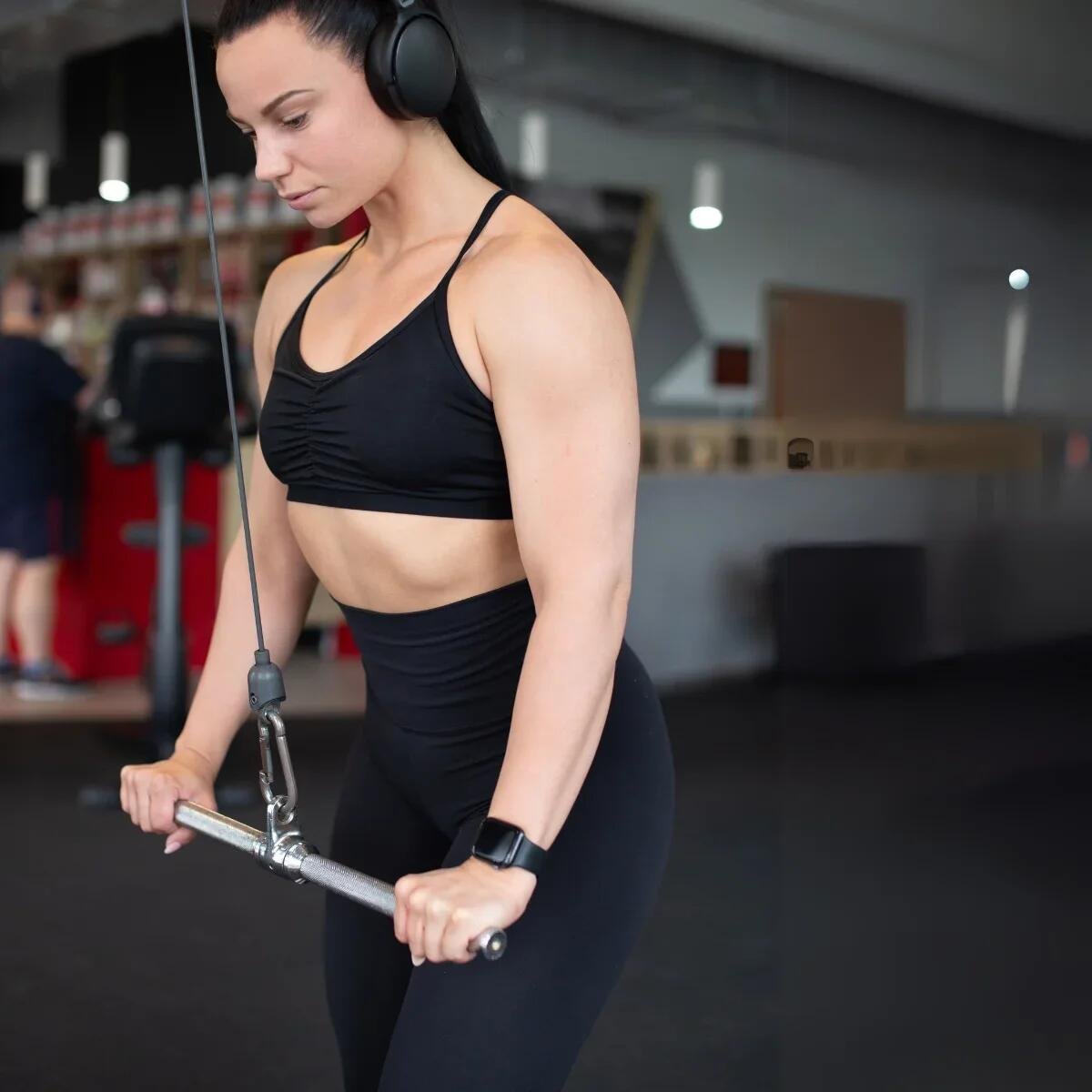
Rope. The starting neutral grip leaves room for minor wrist rotation, and the two ends can pass beside your thighs at lockout. That freedom is comfortable for some lifters. The rope may feel less steady than a solid bar when loads get heavy, so a lower stack setting is not necessarily a sign of a weaker exercise.
Straight bar. A rigid attachment fixes the distance and orientation between the hands. It can provide a stable position for heavy controlled reps, but may feel awkward on the wrists for others. A slightly cambered bar or another grip width can be a reasonable compromise if the basic straight bar irritates your joints.
Single handles or cuffs. Independent handles let each arm follow a natural path and can expose strength differences. A cuff may reduce grip demands but still needs secure hardware and a manageable cable path. Unilateral sets are useful when you want control on each side, though not essential for everyone.
Do not turn an isolated electrical activation finding into a claim that one handle makes substantially more muscle grow. No grip removes the need for appropriate effort, recovery and progressive overload. Try two light sets of each attachment at comparable perceived effort, note any wrist or elbow discomfort and choose the setup you can repeat reliably for several weeks.
Home-gym owners should also consider the attachment’s physical length. A long rope may shorten the available cable travel on a compact machine. A shorter bar may allow more clearance but limit hand separation. Practical fit is a valid reason to choose a tool.
Seven Common Mistakes and Simple Corrections
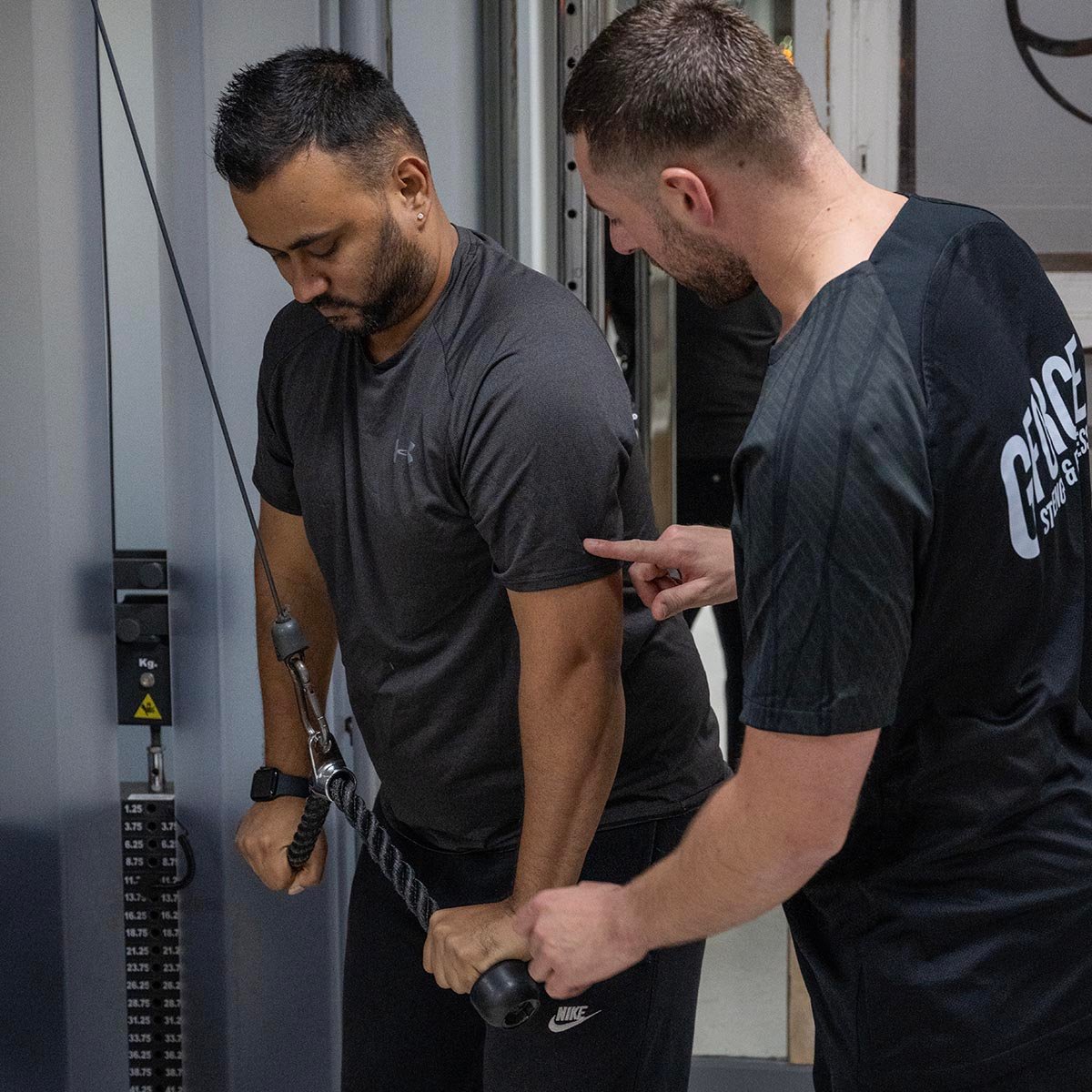
1. Elbows drift with every rep. When your upper arms swing forward and backward, the shoulders help move the weight. Keep them roughly in one place near your sides and reduce the load if necessary.
2. Leaning your entire body onto the rope. A small forward lean is fine; pushing downward with body weight replaces elbow extension. Pause halfway through a rep to see whether you truly control the resistance.
3. Wrists fold forward. Try a firmer neutral grip or different attachment. Painful wrist flexion is not an essential part of triceps training.
4. The lockout gets rushed. Bounce-and-release reps skip controlled time near the bottom. Straighten comfortably, pause briefly and return without letting the rope whip upward.
5. The rope ends fly excessively outward. Separate the ends just enough for a comfortable path around the thighs. A giant outward swing usually moves the shoulders too.
6. The stack settles or slams. Check the position and range before increasing weight. Keep a controlled cable pull through the rep rather than dropping the plates.
7. Every set ends in body-swing failure. Stop most sets when only one to three clean reps remain. Technical breakdown adds fatigue without necessarily adding productive triceps work.
If you feel sharp or lasting elbow pain, reduce resistance, change the grip or seek an appropriate professional assessment. Stable form is about repeatable mechanics, not making every lifter’s joints look identical.
Equipment Worth Exploring
Explore equipment, accessories and gear from our carefully selected range.
VOLTRA
Compact digital cable trainer with smooth, adjustable resistance.

Go-Tone Pro
Portable digital cable trainer with up to 66 lb (30 kg) of adjustable resistance.

VForce Wall Trainer
Space-saving wall-mounted functional trainer with pivoting cable arms and variable resistance ratios.

VForce 2IN1
Half rack and pivot-arm functional trainer with switchable 1:1 and 2:1 pulley ratios.

VForce Lat Tower
Wall-mounted cable tower with pivot arms and adjustable 1:1 or 2:1 pulley ratios.

Original GymPin
Adds Olympic plates to compatible cable-machine weight stacks for extra resistance.

GymPin MiniPin
Compact Olympic-plate loading pin for compatible cable stacks with limited clearance.
Premium Carabiner
Durable carabiner for connecting cable attachments and training accessories.

Lat Pulldown Set
Multi-grip cable attachment set for pulldowns, rows, and varied upper-body training.

44in Dual Hook Bar
44-inch aluminum dual-hook straight bar for cable rows, pulldowns, and curls.
Why Overhead Extensions Complement the Pushdown
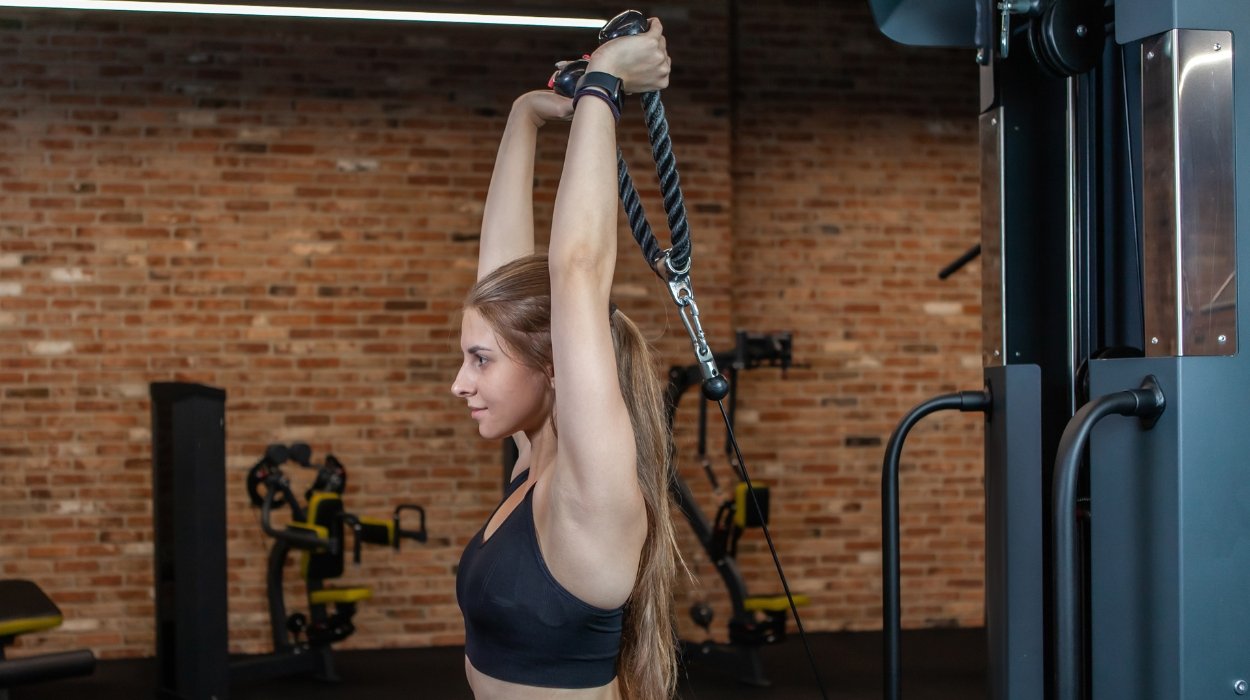
During a regular pushdown, your elbows are near the torso. Raising the arms overhead changes the long head’s shoulder position and the lengths at which it works. Adding an overhead cable extension supplies a different training position without needing an entirely new machine.
Attach the rope to a suitable pulley and move into a position that gives you a clear cable path with the upper arms raised comfortably. Brace the torso and straighten the elbows while keeping shoulder motion fairly quiet. Start with a lighter load than your pushdowns and build control before adding weight. The stretched position may feel unfamiliar and should not be forced through discomfort.
You do not need every possible triceps isolation variation in one workout. A simple session might combine a compound press, two pushdown sets and two overhead extension sets. If you already have a large volume of hard bench or overhead pressing, keep extra isolation volume moderate and add sets only when recovery and progress support it.
Different shoulder positions give a practical rationale for variety, but they do not justify promises of injury prevention or precise percentages of muscle growth. Comfortable range, training effort and total recoverable work remain important.
A Repeatable Six-Week Triceps Pushdown Plan
This progression fits an upper-body routine with two nonconsecutive sessions per week. Put the pushdown after main presses or pulls. Use the same attachment and machine ratio when comparing sessions; record the load and the clean reps rather than relying on memory or a single big pump.
| Weeks | Session A | Session B | Focus |
|---|---|---|---|
| 1–2 | 2 × 12–15 | 2 × 10–12 | Learn stable elbows and leave about 3 reps in reserve |
| 3–4 | 3 × 10–15 | 2 × 8–12 | Increase clean reps, then resistance |
| 5 | 3 × 10–15 | 3 × 8–12 | Work closer to 1–2 clean reps in reserve |
| 6 | 2 × 10–12 | 2 × 10–12 | Reduce fatigue and review progress |
Rest around 60–120 seconds between sets or longer if your breathing limits the next one. Once every set reaches the upper end of its range at the desired effort with the same technique, increase the stack by one small step. When the smallest jump is too large, keep the setting steady until it becomes manageable.
Record sets, reps, effort, attachment, pulley position and the actual machine. A printed 25 kg on one setup is not automatically equivalent to 25 kg on another because cable ratios differ. If you switch equipment, start a new baseline rather than claiming a strength jump that was caused by the pulley.
Consider one or two moderate overhead-extension sets on a single session if your elbows and pressing workload tolerate them. Watch for a gradual improvement in repeatable reps and control. Hypertrophy takes time: the six-week log tells you whether you trained progressively, not exactly how much muscle tissue you gained.
Takeaway: strong triceps training is a matter of controlled elbow extension, comfortable handles and patient overload. Keep the upper arms steady, resist the return, and let the training log guide the weight selection.
Funny Gym Shirts & Workout Gear
Funny gym shirts, tanks, hoodies and workout gear for lifters who like training hard.

I Love Gym Bicep Heart | Valentine's Day Gymbro Hooded Hoodie
Bring “I Love Gym Bicep Heart” gym humor to lazy days and post-workout plans.

Gym Is My Therapy Muscle Shirt Athletic Vest Workout Fa Tank Top
Show some personality between sets with “Gym Is My Therapy”.

Rat Cheese Barbell | Workout Sweater & Bodybuilding Mem T-Shirt
For laid-back days and lifting humor: “Gym Rat Cheese Barbell”.

Do You Even Lift Bro? Meme – Essential T-Shirt
Rep “Do You Even Lift Bro?” humor in and out of the gym.

Lift Heavy Be Happy Meme Bros & Gains Top T-Shirt
Show some powerlifting attitude with a playful “Lift Heavy Be Happy” tee.

Guns N Poses – Rock Music Arm Day Meme Decal for Gym Ge Sticker
Put “Guns N Poses” gym humor on your laptop, bottle, or gym gear.

Funny Uncle Sam Gym | I Want You To Lift Heavy Patrioti T-Shirt
Add a playful “Uncle Sam” touch to your casual rotation.

Anti Gym Garage Gym Club Hooded Pullover for Home Gym L Hoodie
Show off your lifting humor in a laid-back “Anti Gym Garage Gym Club” hoodie.

Guns Gains Glory Patriotic Eagle Decal Water Bottles Sticker
Stick a little “Guns Gains Glory” humor on your favorite gear.

– Flex Armstrong Astronaut Moon Huge Arms Workout Decal Sticker
Give your everyday gear a playful “Flex Armstrong Astronaut Moon Huge Arms” twist.