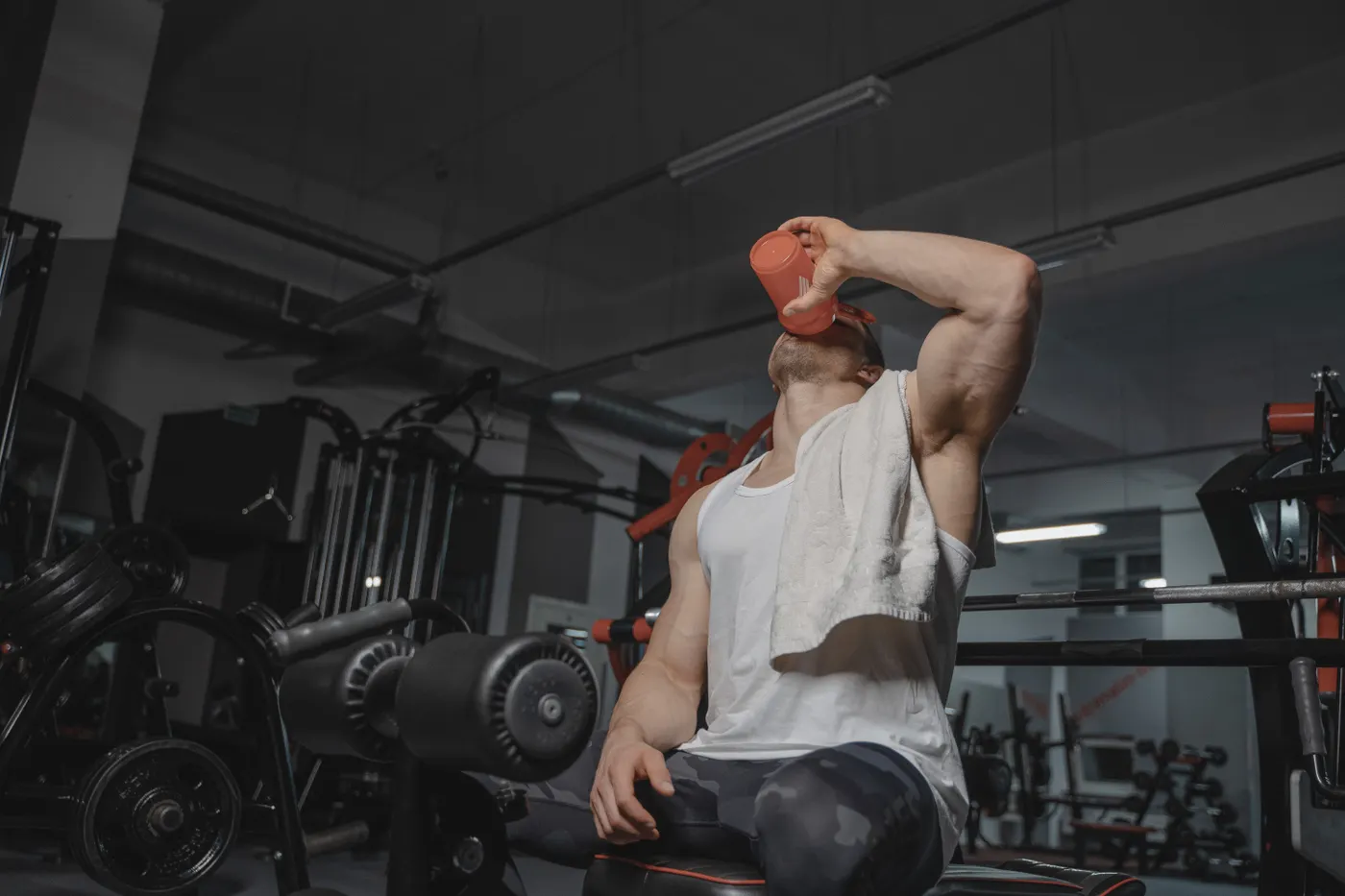
A shaker bottle beside the squat rack can make it feel as though muscle growth depends on drinking protein between sets. But does adding protein during an already well-fueled lifting session actually produce more muscle than taking in the same calories as carbohydrate? A controlled eight-week experiment published in July 2026 offers a useful, if deliberately narrow, test of that claim.
The distinction matters. A drink may be convenient, enjoyable or helpful when meals are difficult to schedule without being an extra hypertrophy stimulus. This guide explains what the trial compared, what changed inside muscle fibers, why a null result is not proof of no possible benefit, and how to make sensible protein and carbohydrate decisions for ordinary lifting sessions.
Some equipment links may be affiliate links, supporting our independent work at no additional cost to you.
What the eight-week experiment actually tested
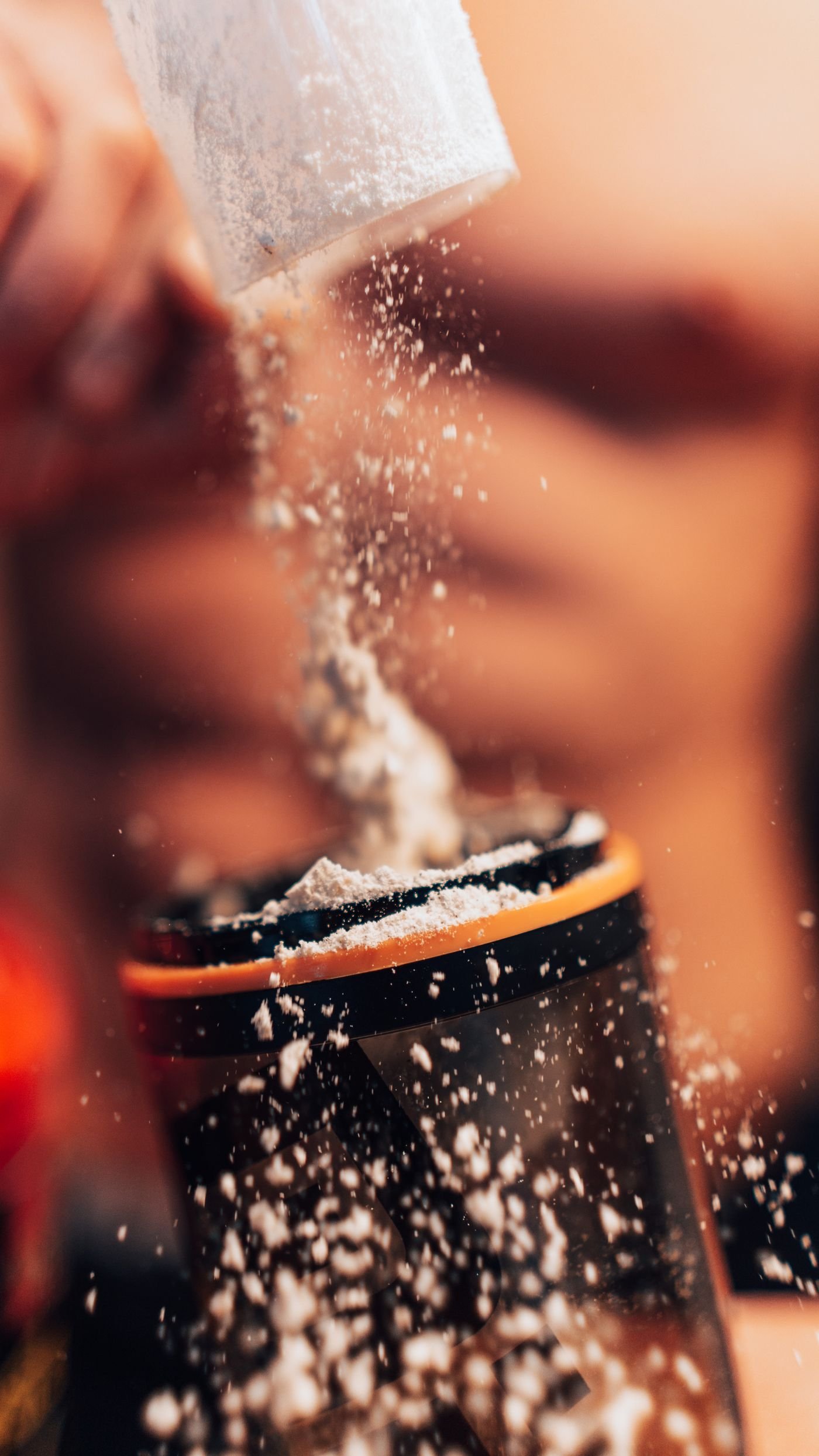
Seventeen physically active young men completed supervised resistance training for eight weeks. Eight consumed a carbohydrate-and-protein drink during training; nine consumed an energy-matched carbohydrate drink. The protein-containing beverage supplied roughly 12–15 grams of protein during exercise. The comparison was designed to isolate whether adding that protein inside the session improved outcomes relative to an equal-calorie carbohydrate drink, rather than asking whether protein matters at all.
Crucially, this was not a fasted-training experiment. Participants were instructed to eat a light meal approximately 90–120 minutes before lifting. Both groups also received a standardized recovery beverage about 25 minutes after exercise, providing approximately 0.25 grams of milk protein and 0.50 grams of carbohydrate per kilogram of body mass. Their broader diets supplied substantial protein. That context makes the findings especially relevant to lifters who already eat before and after training.
Researchers measured body composition, strength, aerobic variables, blood markers and muscle biopsies before and after the intervention. Biopsies allowed analysis of muscle-fiber cross-sectional area, including different fiber types and the distribution of smaller and larger fibers. The study was small and explicitly exploratory, so it was better suited to detecting obvious patterns than ruling out modest differences. It also studied young men rather than women, older adults or people training in an energy deficit.
What changed: muscle grew, but the drink groups did not separate
Across the training period, participants improved lean mass, measured strength, maximal oxygen uptake and fat-oxidation capacity. Muscle-fiber size also increased. Yet the comparison between the two drinks produced no statistically significant advantage for protein plus carbohydrate on the measured outcomes. In plain language, both groups adapted to training; the extra protein consumed during the session did not show a detectable additional benefit under these conditions.
The fiber results are more interesting than a simple before-and-after scale reading. Median type IIA fiber cross-sectional area rose from approximately 5,232 to 5,925 square micrometers in the combined analysis. That is a roughly 13 percent increase in the median, not a claim that every individual fiber or participant grew by that amount. Type IIA fibers showed enlargement across much of the measured size distribution, while type I fibers had smaller and less uniform changes. The proportion of type IIX and hybrid IIA/IIX fibers also fell, consistent with remodeling during regular resistance training.
These changes should not be assigned to the intra-workout drink. The intervention groups did not separate meaningfully on the principal outcomes, and all participants performed the same basic training stimulus. Also, a lack of statistical significance in a sample of seventeen is not evidence that the true difference is exactly zero. The study was not formally powered to detect small or moderate effects; wide uncertainty remains. The responsible conclusion is narrower: an extra 12–15 grams of protein during a fed workout was not shown to improve adaptation beyond an equal-calorie carbohydrate drink.
That is still useful information for a lifter deciding whether a specialized intra-workout formula deserves a place in the budget. The observed gains came in a context of consistent lifting and adequate food, not from a proven advantage of sipping protein during each set.

Equipment Worth Exploring
Explore equipment, accessories and gear from our carefully selected range.


FID Bench MAX
Adjustable bench offering flat, incline, and decline positions + adjustable headrest.


VOLTRA
Compact digital cable trainer with smooth, adjustable resistance.

Go-Tone Pro
Portable digital cable trainer with up to 66 lb (30 kg) of adjustable resistance.
Why protein timing may matter less when meals are already covered
Resistance training stimulates the processes involved in muscle remodeling, while dietary protein supplies essential amino acids needed to build and repair tissue. The two work together, but the body does not treat the first minute after a set as the only opportunity to use amino acids. Digestion and absorption from a pre-workout meal can continue well into a session, and the muscle-building response to training lasts beyond the short period surrounding a workout.
That helps explain why a small extra dose during training may add little when someone eats beforehand, drinks protein soon afterward and meets an adequate daily target. It does not mean an intra-workout drink is wasted. Protein still contributes to the day’s intake; it simply may not offer a special advantage compared with eating it at a more convenient time. The trial compared two drinks with equal calories, not a protein-rich diet against a deficient one.
For a 75-kilogram lifter, a practical daily intake of about 1.6 grams per kilogram works out to 120 grams of protein. Someone can reach that with four meals containing around 30 grams each, or a different distribution that fits appetite and schedule. The exact number is not a universal biological threshold. Broad evidence supports a useful range around 1.4–2.0 grams per kilogram for many exercising adults, with needs varying by goals, age, energy intake and training volume.
If the person already has breakfast with protein, a substantial lunch and a protein-rich dinner, the main opportunity may be improving training consistency rather than purchasing a third drink for the workout itself. If they regularly miss meals, a shaker is a convenient solution—but that is a convenience benefit, not evidence that the act of sipping between sets independently drives hypertrophy.

Bodybuilding Shirts & Workout Gear
Bodybuilding shirts, tanks and gym gear for lifters chasing muscle, size, symmetry and the pump.

Powered By Chicken Broccoli Rice Bro Sweater Meme T-Shirt
Show some gym-day personality with “Powered By Chicken Broccoli Rice”.

I'M A Rice-Ist Bodybuilders & Hooded Hoodie
Show off your lifting humor in a laid-back “I'm A Rice-ist” hoodie.

Work Hard Eat Hard Bulk Tank Top
Your gym-day look, with a playful “Work Hard Eat Hard” twist.

I Love Pizza | Pizza Lifting Valentine's Day Jumper Pul T-Shirt
Add a playful “I Love Pizza” touch to your casual rotation.

Body By Bacon – Bacon Gains Meme Pullover Jumper T-Shirt
Add a playful “Body By Bacon” touch to your casual rotation.

Cheat Day Pizza Weight Plate Gym | Funny Muscle Shirt F Tank Top
Train hard, laugh a little, and rep “Cheat Day Pizza Weight Plate”.

Meat Mountain Shirt – , Steak & Sausage Meme Bros & T-Shirt
Show some lifting attitude with a playful “Meat Mountain” tee.

Bulking Season KFC Chicken Wings Meme Vest Tank Top
Your gym-day look, with a playful “Bulking Season” twist.

Donut Weight Plate Meme Bulking Gains Fast Food T-Shirt
Heavy lifts, good laughs, and a little “Donut Weight Plate” energy.

Cookie Weight Plate – OREO Cookie Meme Jumper Pullover T-Shirt
Keep things casual with a little “Cookie Weight Plate” attitude.
Daily protein, meal quality and total calories come first

Before debating the exact minute of protein intake, estimate whether your normal eating pattern supports your goal. For a lifter seeking muscle gain, adequate energy, sufficient high-quality protein and progressive resistance training are more consequential than perfect supplement timing. A practical starting range is 1.4–2.0 grams of protein per kilogram of body weight each day. For a 90-kilogram adult, that translates to approximately 126–180 grams; many will find the middle of that range sustainable without making every meal a protein challenge.
Think in terms of food that is repeatable. Eggs, yogurt, milk, fish, meat, tofu, beans and appropriately chosen protein supplements can all contribute. Different foods provide different amino-acid profiles, fiber, micronutrients and levels of convenience. People relying mostly on plant proteins may benefit from varied sources and careful attention to total intake, but a rigid rule that every serving must come from one particular powder is unnecessary.
Distribution can help with practicality. Three to five reasonably protein-rich eating occasions can make a daily target easier to achieve than saving nearly everything for dinner. A serving of roughly 20–40 grams of high-quality protein is a useful general reference for many adults, not a strict upper absorption limit. Larger bodies, older adults and substantial meals may warrant different portions. A meal eaten before lifting also counts toward the day’s total, even if no supplement is consumed until hours later.
During a calorie deficit, retaining muscle while losing fat may require greater attention to resistance training and protein adequacy. In a surplus, more calories do not automatically mean more muscle; large surpluses can increase fat gain. These are reasons to assess the whole week of training and eating, not reasons to conclude that an intra-workout shake can rescue an otherwise inconsistent plan.
Where carbohydrates fit into strength training
Carbohydrates are often discussed as though every gym session requires an elaborate sports drink. Their practical value depends on what you have eaten, how long you train, how much work you perform and whether you are returning for another session soon. Resistance exercise uses stored muscle glycogen, but a typical fed workout with moderate volume is not the same fueling problem as a long endurance event or repeated exhaustive sessions.
A broad review of resistance-training studies found that extra carbohydrate did not consistently improve strength performance in fed conditions, especially for sessions with up to roughly ten sets per muscle group. Benefits were more plausible when comparison groups were fasted, volume was unusually high or glycogen had already been depleted. This does not make carbohydrate irrelevant: it means that the circumstances determine whether taking in more during the session is likely to matter.
For an ordinary 45–75 minute lift after a balanced meal, water may be sufficient during training, with normal meals providing carbohydrate before and afterward. A longer high-volume workout, a second training session later the same day, or a session started after inadequate food may justify bringing an easily digested carbohydrate source. Test the amount and concentration in training rather than discovering gastrointestinal discomfort on a demanding day.
It is also important to distinguish an energy-matched comparison from one that simply adds calories. In the eight-week trial, both groups consumed the same energy during exercise. If someone adds a large protein-and-carbohydrate drink to their existing diet without adjusting other intake, any body-weight change may partly reflect the additional calories. The drink’s label alone cannot reveal whether it improved the quality of training or changed energy balance.
Equipment Worth Exploring
Explore equipment, accessories and gear from our carefully selected range.



Squat Harness
Wearable harness for hands-free cable squats, sled work, and lower-body training.

Leather Lifting Straps
Padded leather straps support grip during heavy rows, deadlifts and pulling exercises.

GymPin Mag Pin V2
Magnetic selector pin designed to secure weight selection on compatible pin-loaded machines.

Long Tricep ERGO Ropes
Extended triceps ropes with ergonomic grips for cable pressdowns and overhead extensions.

Power Tower
Freestanding pull-up and dip station with adjustable handles for bodyweight training.
A practical four-week fueling experiment for lifters
You do not need a laboratory biopsy to decide whether an intra-workout drink improves your own training experience. You do need a fair comparison. Keep the program, exercise order, approximate training time and sleep routine as consistent as practical. Track total protein and calories, then change one variable rather than changing your pre-workout meal, caffeine, supplement and workout at the same time.
Week 1 — establish the baseline: Eat a normal protein-containing meal one to three hours before training, if comfortable. Drink water during the session. Record your sets, repetitions, load, session length, perceived effort and any stomach discomfort. Write down your actual daily protein intake for several representative days rather than guessing from the size of a shaker.
Week 2 — improve the basics: Adjust ordinary meals to reach a sustainable protein target. Keep a consistent pre-workout meal and sensible hydration. If your lifting performance improves, do not attribute the change to a particular timing trick; you have altered total intake and perhaps recovery as well.
Week 3 — test convenience: If a session is long or food scheduling is awkward, try a modest drink during training. Choose water, carbohydrate or a protein-containing option based on your needs and tolerance. For a fair calorie comparison, account for what the drink replaces elsewhere in the day. Notice whether it helps you complete planned work, prevents hunger or simply tastes good.
Week 4 — compare and simplify: Look for repeatable changes in completed repetitions, perceived fatigue, appetite and gastrointestinal comfort. One exceptional workout is not proof of a supplement effect. If a drink makes nutrition easier and fits the budget, keep it. If water and ordinary meals work just as well, there is no obligation to add another product.
A useful training template is three full-body sessions each week: squat or leg press, hinge, horizontal press, row, vertical pull and one or two smaller accessories. Perform two or three challenging sets for the main movements and progress gradually. The point is to create a reliable training stimulus while you evaluate the feeding strategy, not to turn the experiment into a maximal-fatigue contest.
Funny Gym Shirts & Workout Gear
Funny gym shirts, tanks, hoodies and workout gear for lifters who like training hard.

I Love Weights – Valentine'S Day Meme & Essential T-Shirt
Bring “I Love Weights” humor to your next gym day.


1000lb Club Meme Stack Of Weights T-Shirt
Heavy lifts, good laughs, and a little “1000lb Club Gym Meme” energy.

Donut Dumbbell Donuts Barbell Bulk Tank Top
Your gym-day look, with a playful “Donut Dumbbell Donuts Barbell” twist.

Pizza Dumbbell Barbell Bulk Hoodie
Make your off-duty look more fun with “Pizza Dumbbell Barbell”.

Gymenomics Bro Science Muscle Graph Meme Top T-Shirt
Make gym days more fun with “Gymenomics” style.

Shirt: Pink Metal Weight Plate 45LBs Girl Power & T-Shirt
Make gym days more fun with “: Pink Metal Weight Plate 45LBs” style.

Shirt – Shredded Cheese Muscle Gymbros & – Cheese T-Shirt
Show some lifting attitude with a playful “Shredded Cheese” tee.

Donut Give Up – Punny Fitness Motivation Jumper Pullove T-Shirt
For laid-back days and donut-loving humor: “Donut Give Up”.

Donut Kettlebell – Bakery Gains Meme Jumper Pullover T-Shirt
Bring “Donut Kettlebell” humor to your everyday gym style.
What this trial cannot settle—and the bottom line
There are several reasons not to generalize too far. Seventeen participants is a small sample. The study involved physically active young men, an eight-week supervised program, specific drinks and a deliberately fed nutrition schedule. It does not establish the ideal strategy for an older lifter with a poor appetite, a woman training through a demanding competition season, an athlete doing multiple daily sessions, or someone lifting after an overnight fast. It also cannot exclude small effects that a larger, longer study might detect.
The muscle-fiber findings are valuable, but they should not become a new supplement sales pitch. A change in the distribution of fiber sizes is not a license to promise that a particular drink will target fast-twitch fibers. Likewise, the exploratory association involving baseline IGF-1 should not be treated as a reason to chase hormone tests or products. Associations in a small sample are hypotheses for further testing, not individual prescriptions.
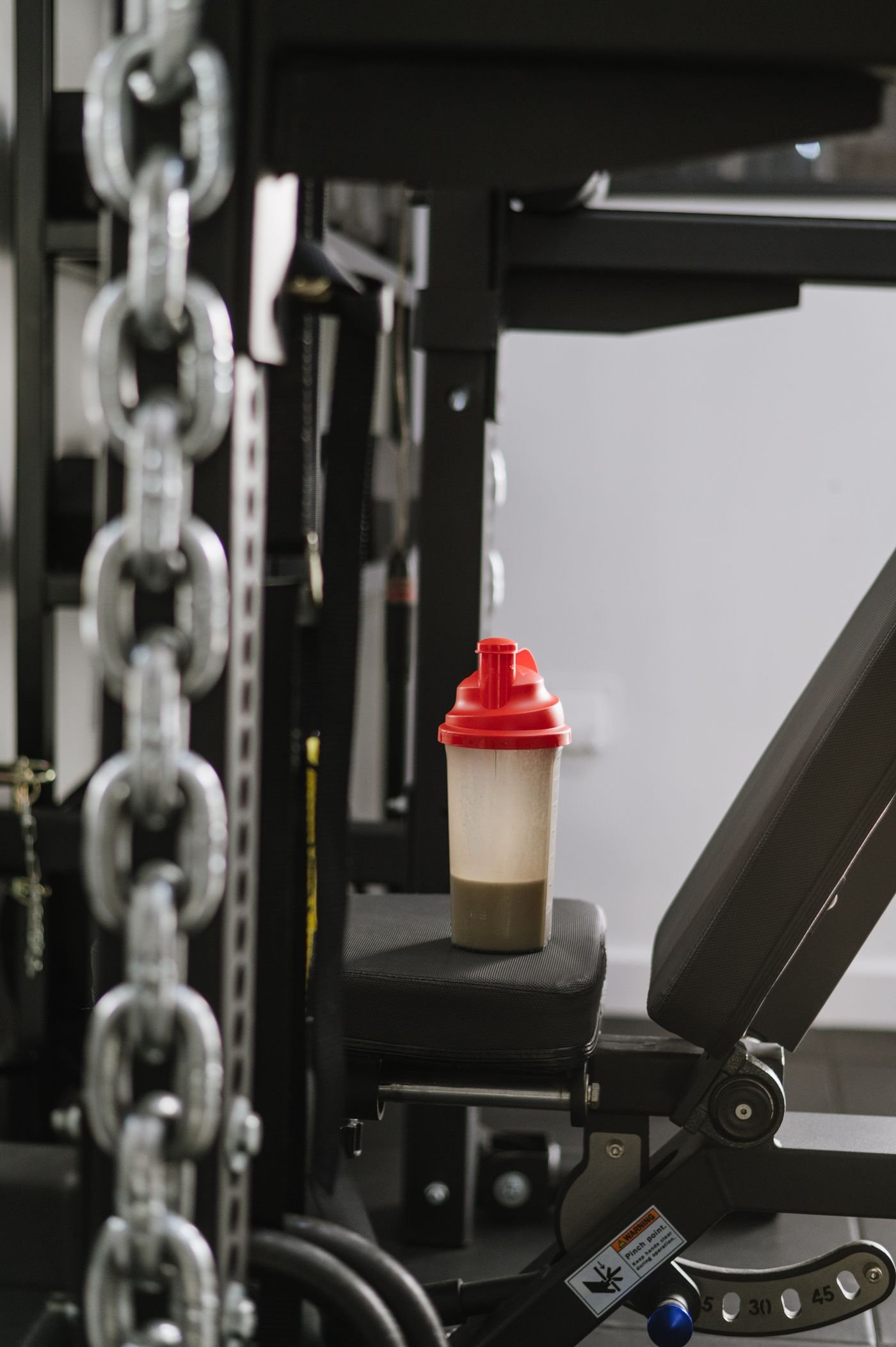
The practical hierarchy is straightforward: train consistently with sufficient effort and progression; eat enough overall to support your goal; cover daily protein; use carbohydrates when session demands justify them; and select timing that you can repeat. Intra-workout protein can be convenient and may help people whose eating schedules make regular meals difficult. What this trial did not demonstrate is that adding 12–15 grams during an already fed workout produces extra muscle growth compared with equal-calorie carbohydrate.
If you enjoy a shaker during training, there is no reason to abandon it solely because a small experiment found no significant difference. If you prefer ordinary food and water, there is also no evidence here that you are missing a proven hypertrophy advantage. Keep the training and nutrition fundamentals measurable, and treat precise supplement timing as a refinement rather than the foundation.