Advertising disclosure: This page includes affiliate product links that may earn us a commission, as well as products from our own store.
A Pallof press may look like an arm extension, but the real task is to keep the torso facing forward while a cable or resistance band tries to turn it. Small changes to your stance, lever length and load can make it either a sharp anti-rotation drill or an exercise you barely feel. Here is how to make the movement repeatable, choose cable versus band resistance and progress it over six weeks.
Why the Pallof Press Trains Control Rather Than Twisting
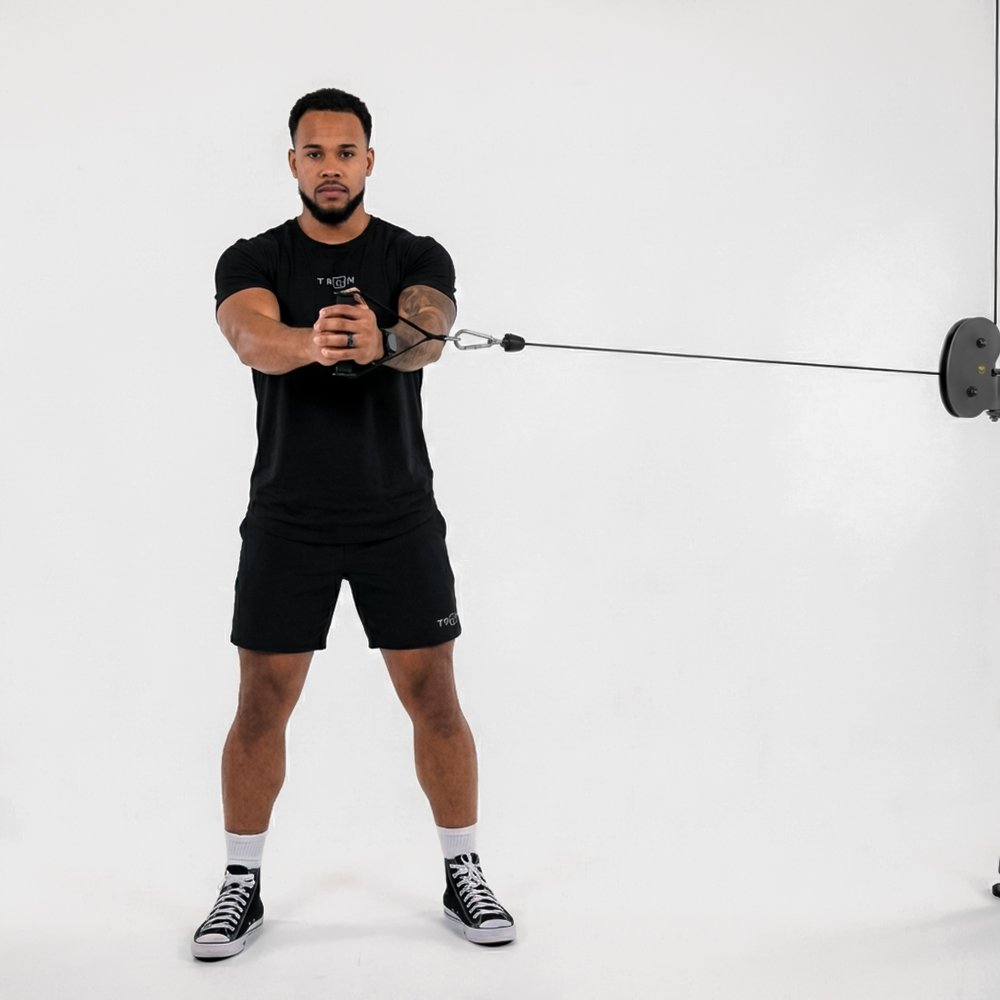
Stand sideways to a cable column, hold its handle in front of your chest and you will feel the pull arriving from one side. A Pallof press challenges you to keep your breastbone, belt buckle and hips pointing straight ahead while that sideways force acts on your hands. Your arms change the distance between the load and the center of your trunk, but your torso should barely change position. This is anti-rotation: resisting an unwanted turn rather than deliberately twisting as in a cable woodchop.
External and internal obliques contribute to managing that turning force. The deeper abdominal wall, rectus abdominis, back muscles and hip stabilizers cooperate to maintain a controlled trunk and pelvis. The front shoulders, arms and upper-back stabilizers help keep the handle on its path, yet this should not feel like a maximal triceps workout. The sensation is often strongest around the sides of the trunk when the arms are extended. Where you feel an exercise is useful feedback, not a precise measurement of which muscle does all the work.
Why is the extended position harder? The same sideways pull has a longer lever arm as your hands move farther from your chest. You have to resist a stronger turning tendency even if the cable stack does not change. This also explains why rushing the arm extension, rotating a little with the weight and finishing in an angled stance can make a heavy-looking rep easier than a light, honest one. Your score is how square your hips and shoulders stay, not how far the stack travels.
Anti-rotation control is one piece of trunk fitness. Squats and deadlifts demand broad bracing, carries challenge side bending, and chops or throws deliberately create rotation. Do not claim Pallof presses automatically add pounds to your squat; think of them as a specific, teachable accessory that helps you practice keeping your midsection organized while a force acts from the side.
Set Up a Standing Pallof Press That You Can Repeat
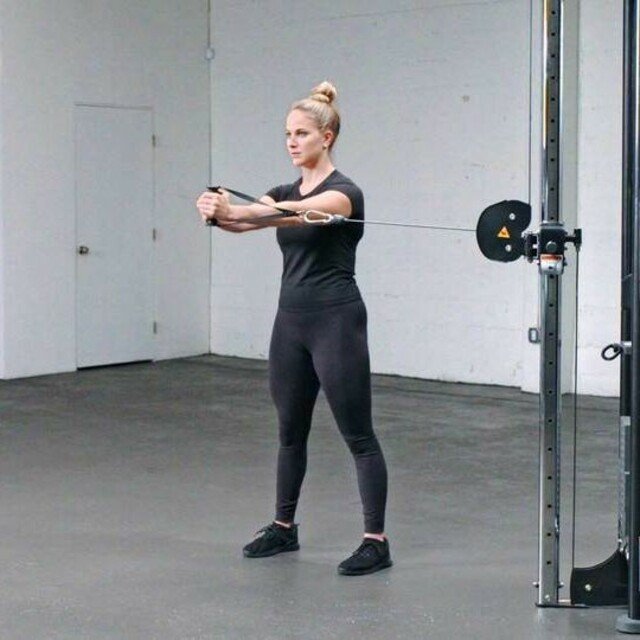
Set a cable pulley to about sternum height and attach a single handle that you can hold securely with both hands. Stand sideways to the stack, not facing it, and step outward until there is noticeable tension while the handle remains centered against the chest. Put your feet roughly hip-to-shoulder width apart with knees comfortably soft. Find a tall position: ribs stacked above pelvis, head upright, hips and shoulders square to the wall directly ahead.
Take a quiet breath, brace without exaggerating a pelvic tuck, and press your hands slowly forward from the center of your chest until the elbows are nearly straight. Stop at a distance where your shoulders remain level and your torso does not turn. Hold for one or two controlled counts, then return the handle along the same path. Both the outgoing and returning portions matter. A wandering hand path often signals that resistance is driving you rather than the other way around.
Try two sets of six slow repetitions per side before adding more. Work each side with the cable coming from a different direction: after finishing one side, turn around and repeat with the same setup and load. If one direction is shakier, allow it to determine the weight and rep quality. It is normal for your stance to adjust slightly at first, but avoid leaning away from the stack to counterbalance the load.
For useful video feedback, place a camera directly in front of you. Can you draw a vertical line through the middle of the chest and pelvis throughout the press? Do your hands move straight along that line, without your hips swiveling toward the cable? If not, step closer to reduce tension, widen your stance slightly or use a lighter stack setting. There is no prize for adding weight before a strict press is under control.

Equipment Worth Exploring
Explore equipment, accessories and gear from our carefully selected range.
VOLTRA
Compact digital cable trainer with smooth, adjustable resistance.

Go-Tone Pro
Portable digital cable trainer with up to 66 lb (30 kg) of adjustable resistance.

VForce Wall Trainer
Space-saving wall-mounted functional trainer with pivoting cable arms and variable resistance ratios.

VForce 2IN1
Half rack and pivot-arm functional trainer with switchable 1:1 and 2:1 pulley ratios.

VForce 3IN1
All-in-one rack combining an adjustable Smith machine, functional trainer, and free-weight station.


GymPin Ergo Handles
Pair of ergonomic cable handles shaped for comfortable triceps and pulling exercises.

GymPin D Handle Bar
Multi-use steel D-handle bar for cable rows, pulldowns and other cable exercises.
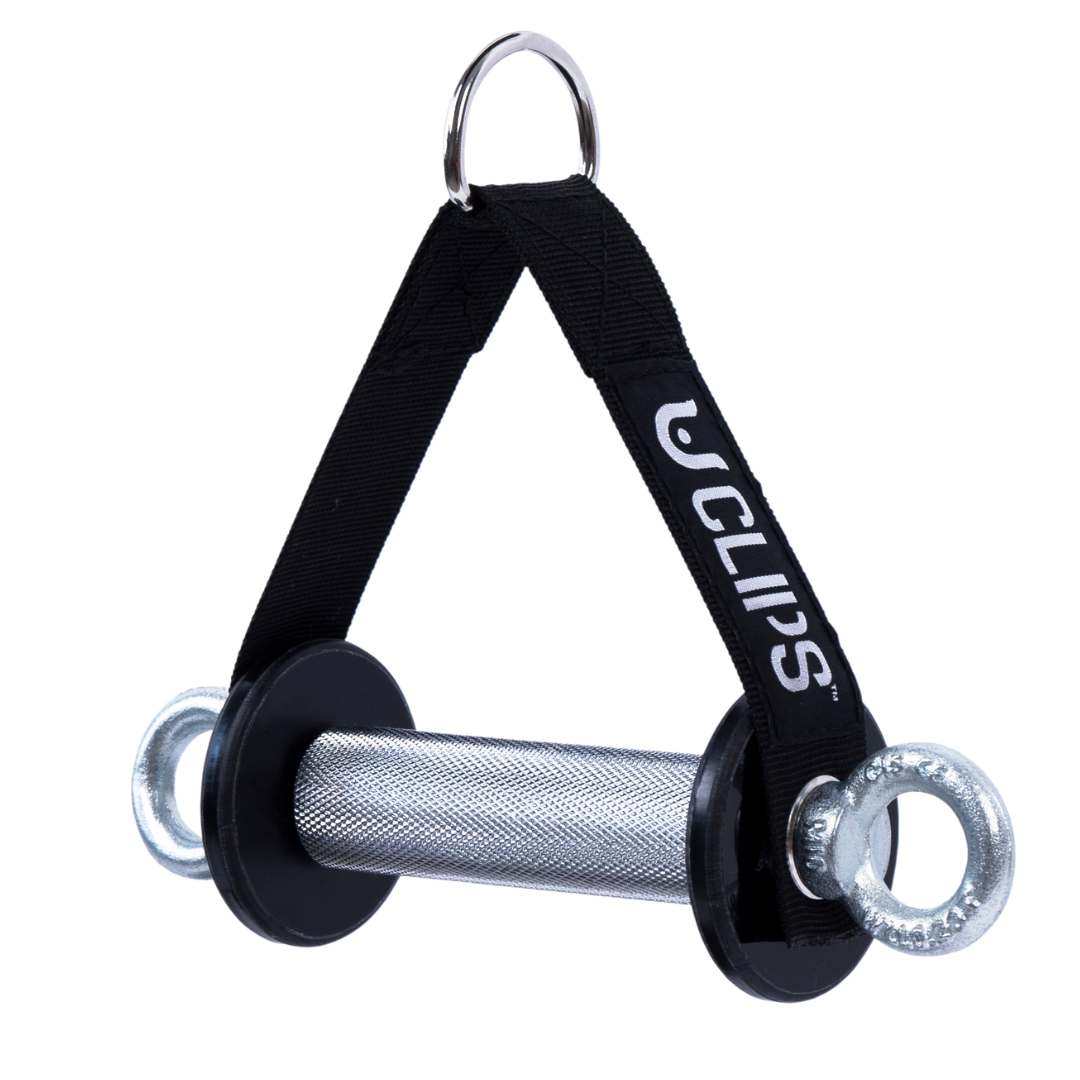
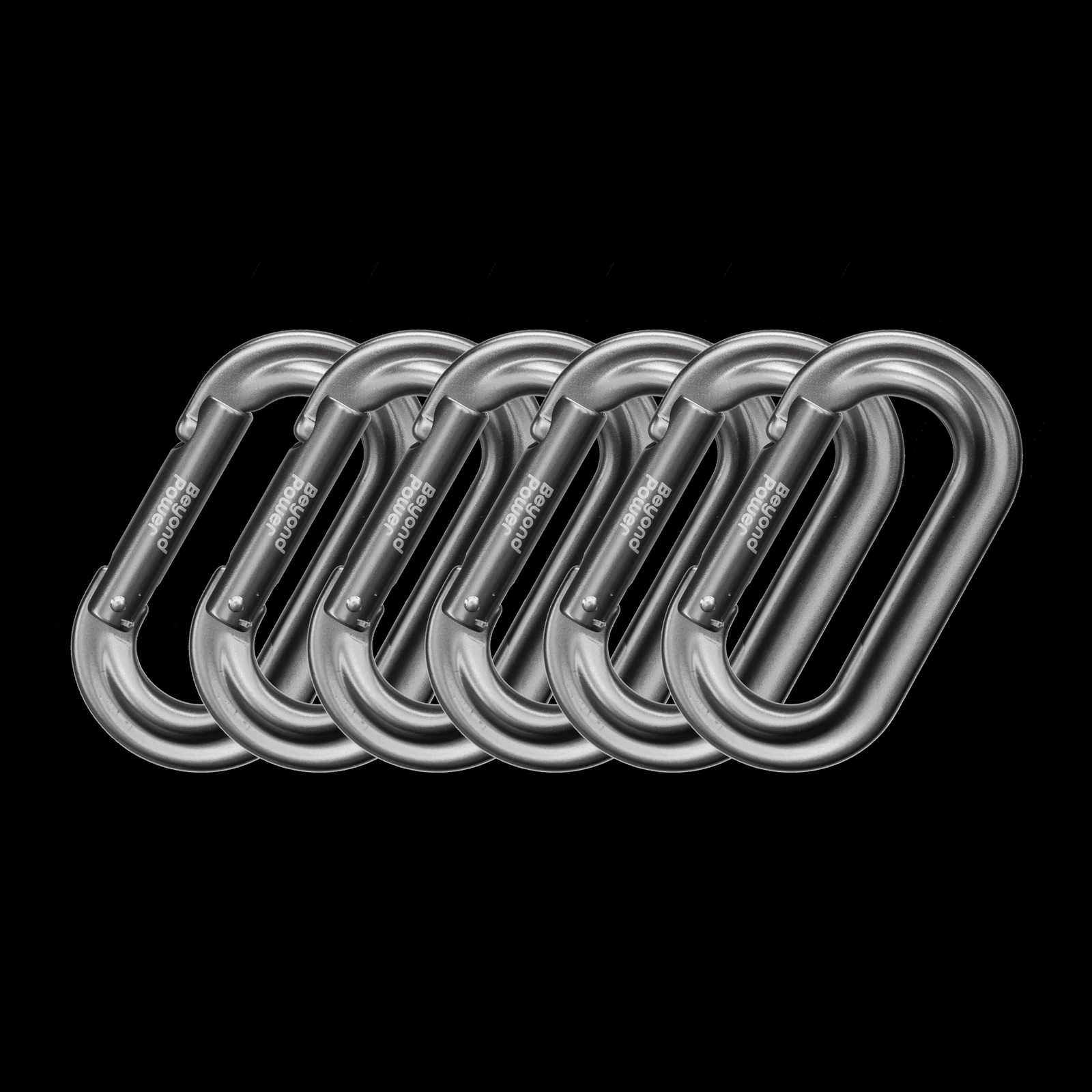
Premium Carabiner
Durable carabiner for connecting cable attachments and training accessories.
Cable vs Resistance Band: What Actually Changes
A cable machine is convenient for repeatable incremental loading. Its weight-stack setting is easy to record, and a properly functioning machine supplies tension through a pulley across the rep. That does not mean every pulley is identical: cable ratios, friction and attachment height can change what your hands experience. If you switch machines, judge difficulty using the position you can actually control rather than assuming equal numbers on two stacks are equivalent.
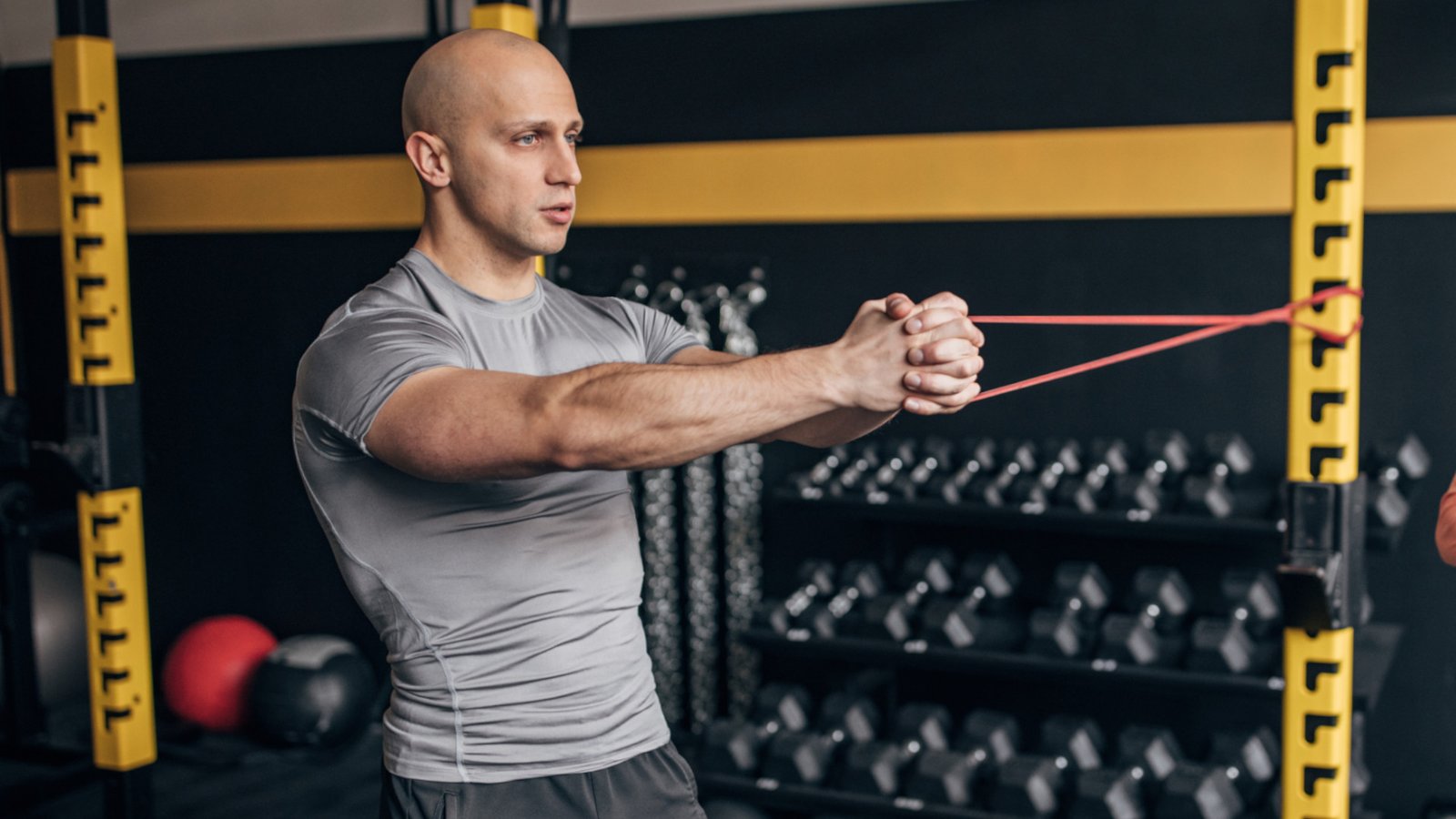
A resistance band solves a different problem. It can anchor to a properly secured rack upright, dedicated anchor or other stable point at about chest height. Unlike a stack, band force generally rises as the elastic material stretches. Walking farther away or choosing a thicker band may increase the pull, and the force can change again as the handle travels. Consequently, band color or a printed resistance range is not a reliable one-to-one substitute for a particular cable setting.
Neither tool is automatically better for building a stable trunk. If your equipment is secure, the load reaches you from the side, and you maintain the desired position, both provide a legitimate anti-rotation challenge. Choose cables when fine weight increments and consistent tracking matter. Choose bands when portability, a quick warm-up or limited equipment matters. With either, aim for the same honest outcome: chest centered, pelvis quiet and extension without sideward drift.
Check anchors before every band set. A loose band or unsecured attachment can recoil suddenly; do not wrap it around a sharp edge, a door that might open or a rack component that can slide off. Inspect for tears and maintain a clear line of pull. Likewise, keep a cable clear of frayed sections, unstable attachments and crowded walkways. Setup safety is part of the exercise, not a detail to ignore after the warm-up.

Funny Gym Shirts & Workout Gear
Funny gym shirts, tanks, hoodies and workout gear for lifters who like training hard.

Vive Le Resistance Bands – Resistance Bands Warmup Reha Tank Top
Your gym-day look, with a playful “Vive Le Resistance Bands” twist.

Stability Stoic Sigma : Meme Bodybuilders & Seeking T-Shirt
Rep “Stability Stoic Sigma” humor in and out of the gym.

Meme I Have Abs-Olutely No Idea What I'M Doing T-Shirt
For laid-back days and bodybuilding humor: “I Have Abs-olutely No Idea What I'm Doing”.

6Pac Shakur Gym | Funny Workout Decal & Six Pack Abs Me Sticker
Stick a little “6Pac Shakur” humor on your favorite gear.

Pumping Love Strong Heart Stronger Soul Valentine’s Day Hoodie
Show off your lifting humor in a laid-back “Pumping Love Strong Heart Stronger Soul” hoodie.

Blood Sweat and Tears Weight Plate 45LB Plate Blood & W T-Shirt
Show some Halloween attitude with a playful “Blood Sweat and Tears Weight Plate” tee.

Strong Inside And Out Shirt Weights And Brains Meme T-Shirt
Rep “Strong Inside And Out” humor in and out of the gym.

Be Stronger Than Your Excuses – Motivational T-Shirt
Rep “Be Stronger Than Your Excuses” humor in and out of the gym.

Listen Heavy Lift Heavy Gym | Heavy Metal Workout Crewn T-Shirt
Keep things casual with a little “Listen Heavy Lift” attitude.

Check Out My Six Pack Tacos – Taco Six Pack Meme Decal Sticker
Stick a little “Check Out My Six Pack Tacos” humor on your favorite gear.
Half-Kneeling, Tall-Kneeling and Split-Stance Options
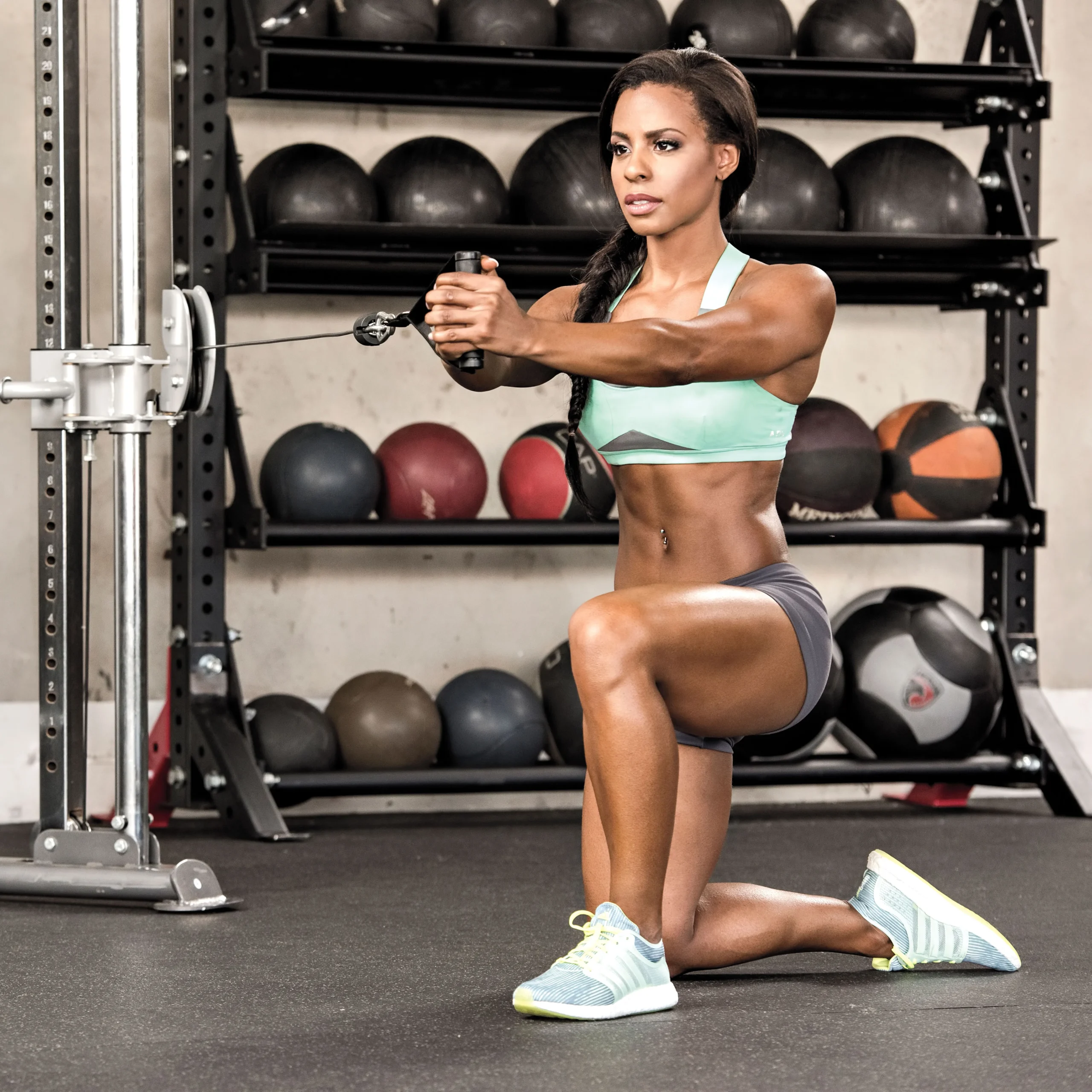
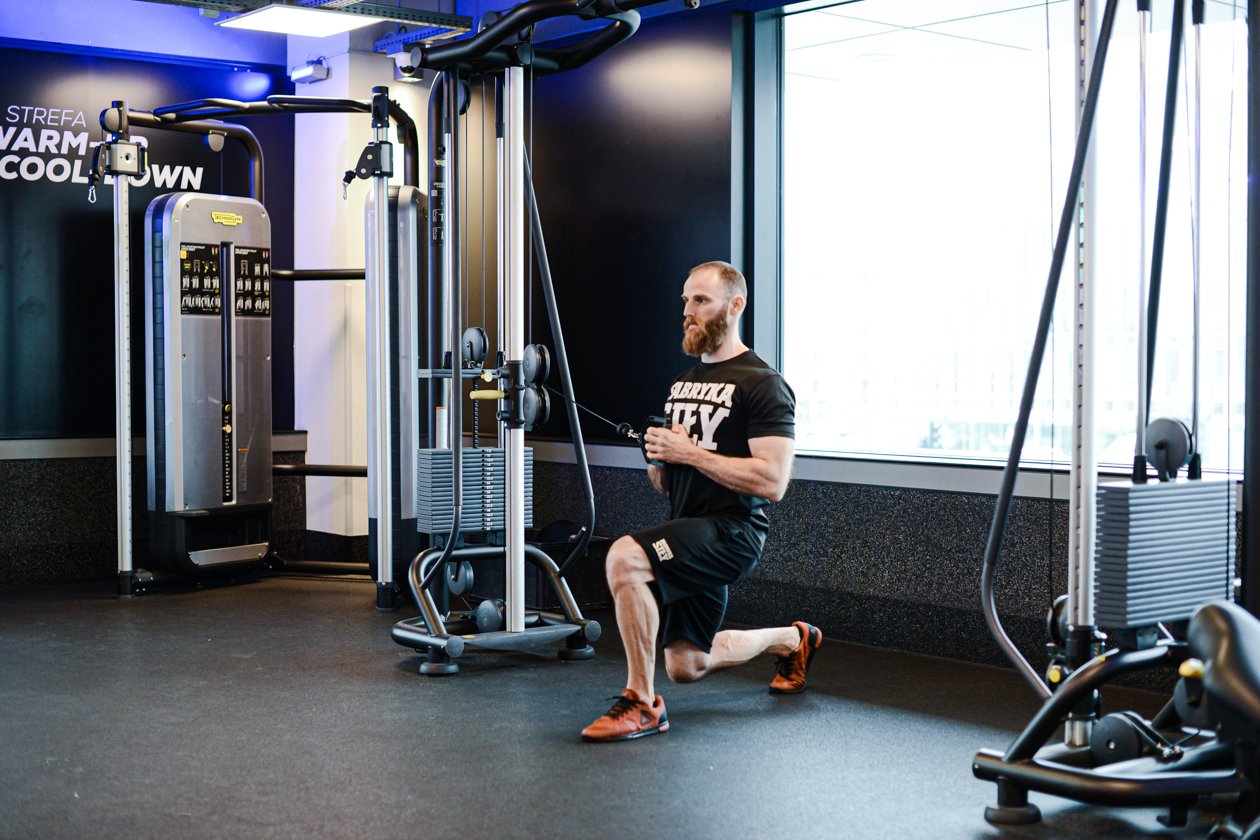
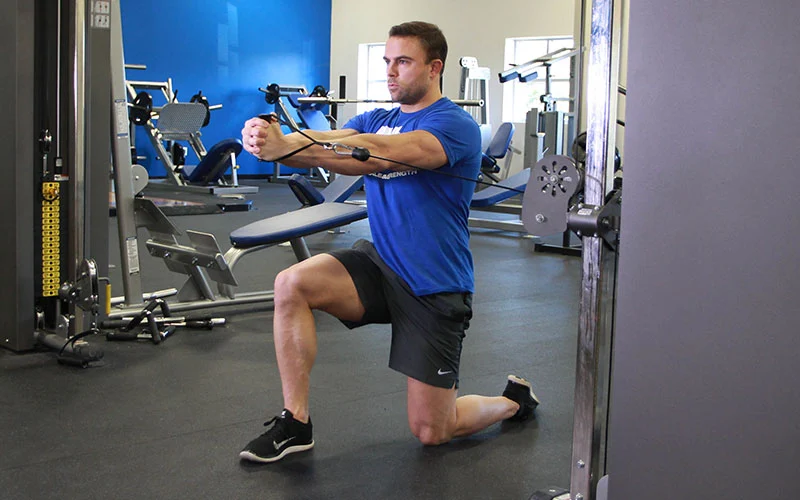
The standing variation is not the only way to learn the movement. With a half-kneeling Pallof press, place one knee on a pad and the opposite foot forward, both roughly under their respective hips. Keep the torso tall and position the cable at chest level relative to the kneeling body. A smaller base of support may make pelvic control more noticeable. Begin with light resistance and avoid turning it into a balance contest you can pass only by twisting your torso.
Which knee should be down? There is no single magic configuration for every goal. Test a setup that lets you keep both hips facing forward, then repeat with the other knee down and turn to train the opposite pulling direction. If you are trying to compare sides, hold foot position, resistance and tempo as consistent as possible. A cushion makes kneeling comfortable; knee pain is a reason to choose a different stance, not a signal to push harder.
Tall kneeling keeps both knees on the floor with the hips extended, removing the wide standing base. Some lifters find it easier to notice when they arch the lower back or flare the ribs. Others need a lower load because the position is less stable. A split stance has one foot ahead of the other while both feet stay grounded, potentially fitting athletes who want to practice trunk control while the legs are staggered as they might be in a stride or a unilateral press.
Do not label these positions as a strict universal ladder from easiest to hardest. Stance stability depends on your body proportions, footwear, floor, band angle and experience. Select the one that lets you deliberately challenge anti-rotation while maintaining steady breathing and pain-free control. Once you can repeat eight to twelve crisp presses on each side, experiment with another stance before raising the resistance substantially.
Five Form Mistakes That Quietly Remove the Core Challenge
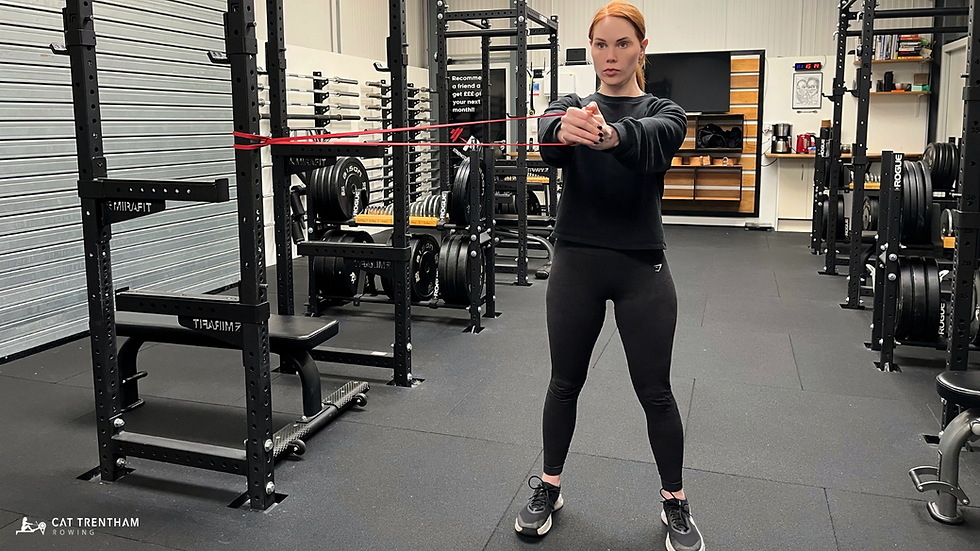
1. Turning the chest or hips toward the anchor
Rotating in the direction of the pull shortens the challenge and changes the drill. Watch your shoulders and pelvis, not just your hands. If they follow the band, reduce tension and stand square again. Start a new rep from a stable position rather than pretending a twisted finish is correct.
2. Leaning sideways to balance the stack
Shifting your body weight away from the cable may let you hold a heavier setting, but it also changes how the force is handled. Stay over a balanced stance with pressure through both feet. A modest change of foot width is preferable to a dramatic counterweight lean.
3. Flaring the ribs and arching the lower back
When the arms extend, some lifters push the hands forward while throwing the chest upward. Keep the lower ribs approximately above the pelvis and the spine comfortable. You do not need to squeeze every muscle maximally or hold your breath until dizzy; brief controlled exhalations can help preserve the position.
4. Letting the handle drift off center
Hands that swing toward the cable or finish closer to one shoulder reveal a shorter effective lever. Press forward from the middle of the sternum and return smoothly. Choose a handle you can hold symmetrically, and do not use an unstable attachment simply because it looks advanced.
5. Using fast reps to hide a load that is too heavy
A two-second pause at full extension can expose the difference between control and momentum. If you cannot stop and hold without shaking into an obvious torso turn, use less weight, shorten the reach temporarily or take a longer rest. A tiny tremor can happen during hard isometric work, but your posture should remain clearly controlled.
Equipment Worth Exploring
Explore equipment, accessories and gear from our carefully selected range.

VForce 3IN1 Max
Six-post all-in-one rack with Smith machine, functional trainer, and variable-force cables.

VForce Lat Tower
Wall-mounted cable tower with pivot arms and adjustable 1:1 or 2:1 pulley ratios.

Foldable Wall Rack
Wall-mounted folding squat rack designed to save floor space between workouts.

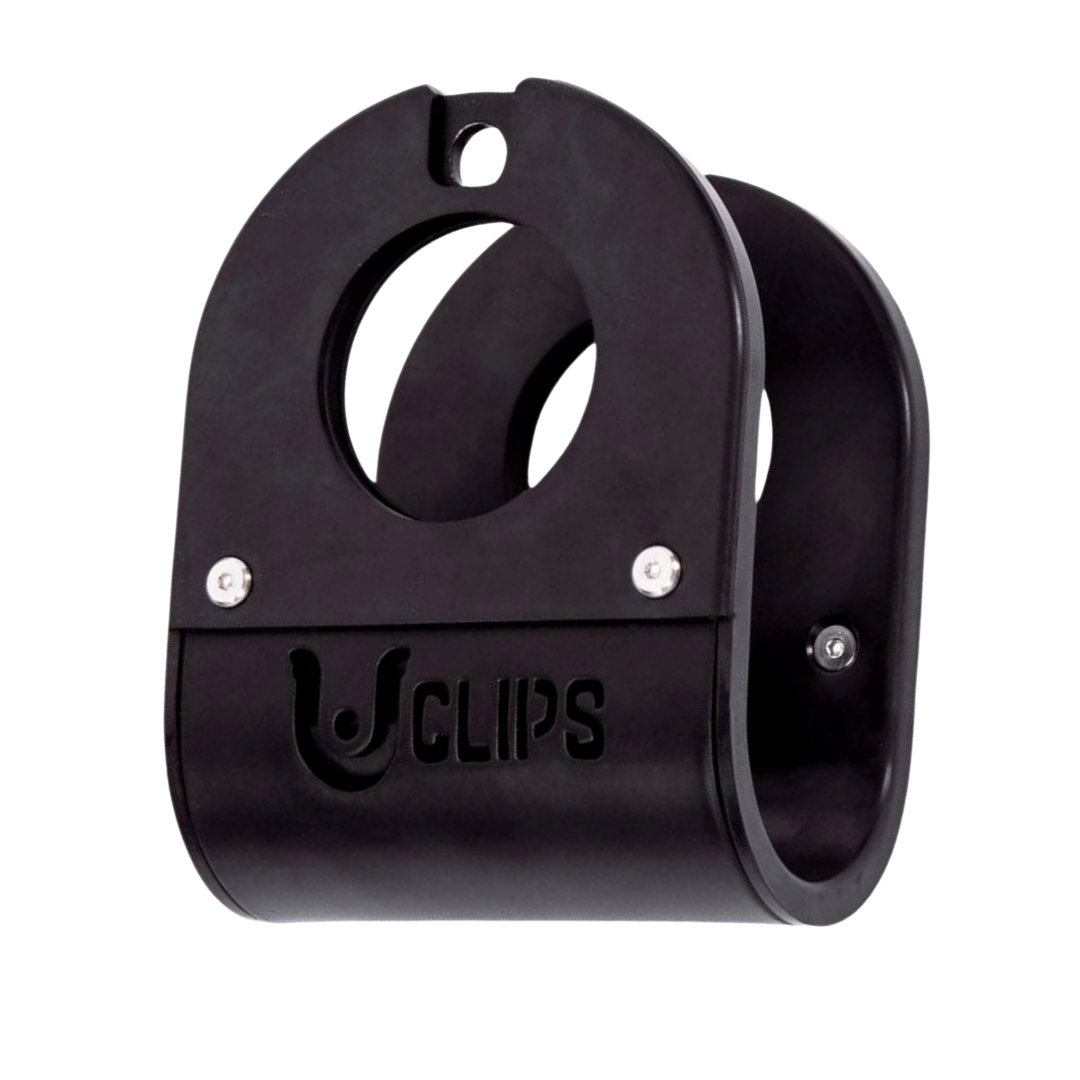
U Clips
Versatile gym clips for barbell, landmine, and attachment setups.
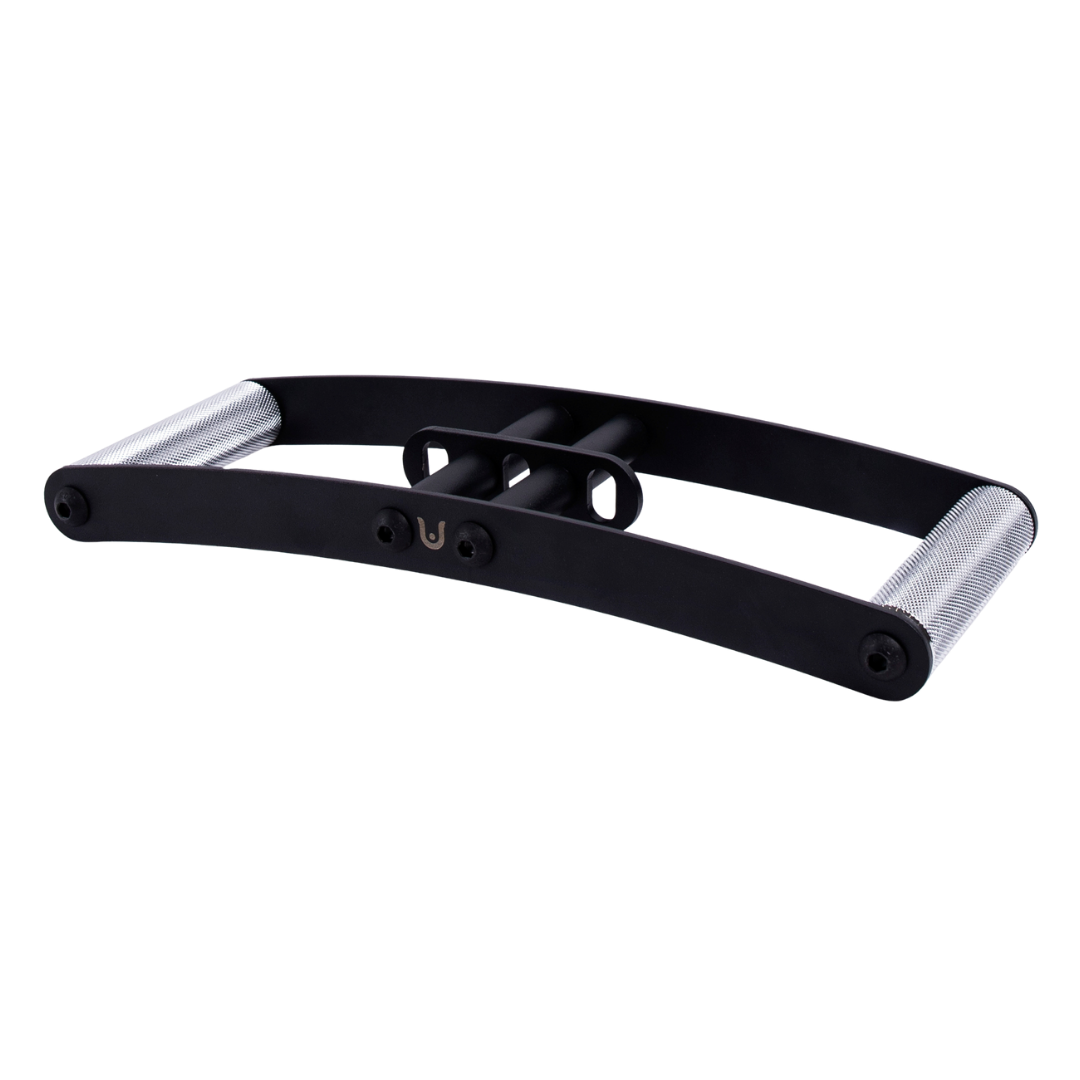
Horizon Grip
Ergonomic V-style cable grip for rows and back training.

Angles 90 Grips
Flexible grip attachments that allow natural wrist movement during pulling exercises.

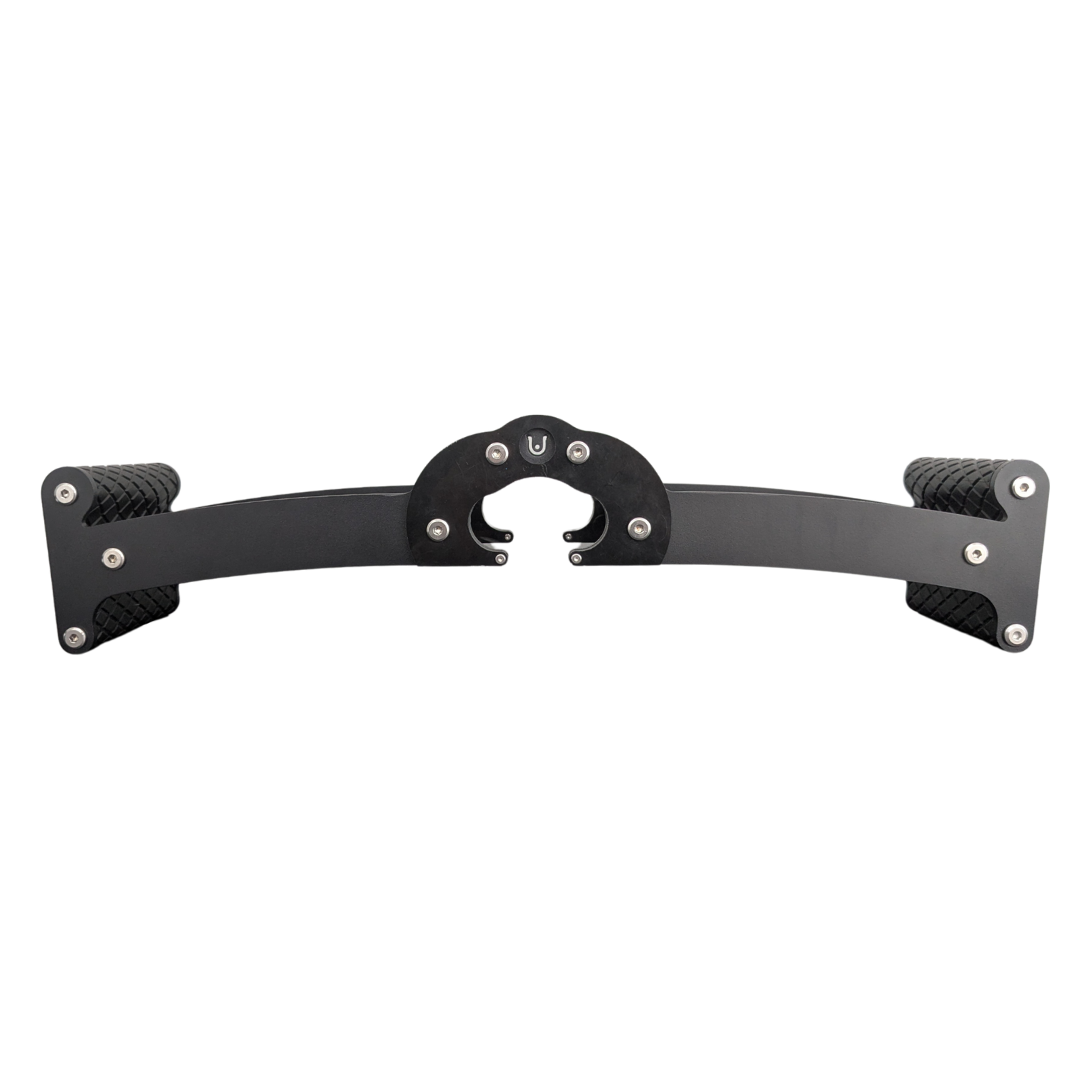
Back Bar
Multi-grip cable and landmine bar with a built-in deadlift jack.
Use Holds, Walkouts and More Challenging Variations
Once standing presses look identical from side to side, a longer hold provides a simple new stimulus. Keep your hands extended for three to five calm seconds before returning, with the same chest and pelvis position. Count only the time that you can control without leaning or losing the handle path. More seconds are not inherently better when the last half of the hold is spent compensating.
An isometric Pallof hold removes the repeated pressing motion entirely: extend the arms, establish the brace and hold for a prescribed interval. It is an easy option when you want a clear measure of trunk steadiness. Walkouts add another variable. Begin close to a cable or band, press and hold, then take a small lateral step away from the anchor while keeping the ribcage and hips square. Step back under control. With bands, remember the extra stretch can substantially increase resistance.
For advanced athletes, marching slowly in place can challenge control when one foot briefly leaves the ground. Reduce the load first, keep the steps small and do not let your pelvis rock side to side. An overhead reach or high-to-low angle may also change the challenge, but those are variations rather than automatic upgrades. If a variation turns the exercise into awkward shoulder work, return to the classic chest-height version.
Pallof presses complement, rather than replace, loaded carries, squats, rows and other resistance training. A well-chosen cable station, sturdy anchor and comfortable grip are more important than collecting attachments. Functional training is most useful when the movement and the resistance match the quality you intend to train: for this one, it is resisting an external twist while remaining organized from feet through trunk to hands.
Functional Fitness Shirts & Workout Gear
Functional-fitness shirts, tanks and workout gear for athletes who train strength, conditioning and everything in between.

Heavy Metal Gym – Funny Kettlebell Rock Music Pullover T-Shirt
For laid-back days and metalhead humor: “Heavy Metal”.

For Whom the Bell Curls Tank
Your gym-day look, with a playful “For Whom The Bell Curls” twist.

Heart Shaped Kettlebell Valentine’s Day Gym for Kettleb Hoodie
Show off your lifting humor in a laid-back “Heart Shaped Kettlebell Valentine’s Day” hoodie.

Watermelon Kettlebell – Fruit Themed Workout Decal for Sticker
Stick a little “Watermelon Kettlebell” humor on your favorite gear.

High Rocks HYROX Decal Water Bottles, Laptops & Sticker
A fun “High Rocks” touch for bottles, laptops, and lockers.


OnlyGains Kettlebell Meme Sweater Meme T-Shirt
Keep things casual with a little “OnlyGains” attitude.

Meme – You May Delay Time Will Not Next Cult Brand T-Shirt
Heavy lifts, good laughs, and a little “You May Delay Time Will Not” energy.

Cheeseburger Kettlebell – Burger Swings Meme Hooded Pul Hoodie
Bring “Cheeseburger Kettlebell” gym humor to lazy days and post-workout plans.

Vitruvian Kettlebell Tee
Heavy lifts, good laughs, and a little “Vitruvian Man With Kettlebells” energy.
A Six-Week Pallof Press Plan for Lifters
Two nonconsecutive sessions a week are enough to practice this movement alongside a regular gym program, although adding a short third easy session may suit some lifters. Place it after primary squats, presses or rows when you want a focused accessory, or use a very light dose before lifting as a rehearsal for bracing. It should not noticeably exhaust the trunk before demanding maximal compound lifts.
Weeks 1–2: Learn the position
Perform two sets of eight presses per side with a one-second pause at full reach. Use light cable resistance or a modest band, rest about 30 to 60 seconds between sides as needed and focus on the same hand path on every rep. Keep your feet in a comfortable stance and make a note of the machine setting, band and distance from its anchor. Do not progress if torso rotation is obvious.
Weeks 3–4: Control the extended lever
Move to three sets of eight to ten reps per side, holding each full extension for two or three seconds. Add a small amount of resistance only if you can hold the position throughout all sets. If adding load causes a visible lean, keep the previous load and aim for quieter hips or a more reliable breath pattern. A half-kneeling set can replace one standing set if it improves your awareness of pelvic control.
Weeks 5–6: Choose one progressive challenge
Perform three sets of ten to twelve per side, or reduce to six to eight reps if you lengthen every hold to four or five seconds. You can instead keep the load and practice a modest split-stance or half-kneeling variation. Change only one factor at a time so you can identify what actually improved. For walkouts, use a lighter load and a small step; stop when the torso begins to drift.
At the end of week six, compare two short videos taken from the same front-facing angle and at the same tension. Look for steadier shoulders, a centered handle and fewer compensating foot or hip movements. The Pallof press can sharpen anti-rotation skill, but it is not a shortcut to visible abs, an injury-proof back or a guaranteed jump in deadlift strength. Those larger goals still require comprehensive training, recovery and sensible progression.