Advertising disclosure: This page includes affiliate product links that may earn us a commission, as well as products from our own store.
Side bends, crunches and side planks train different tasks. Start with a clear movement standard, understand where the resistance comes from and choose a small number of exercises you can repeat. A useful oblique routine needs comparable training records more than a long list of variations.
Start with a controlled side bend and a clear loading choice
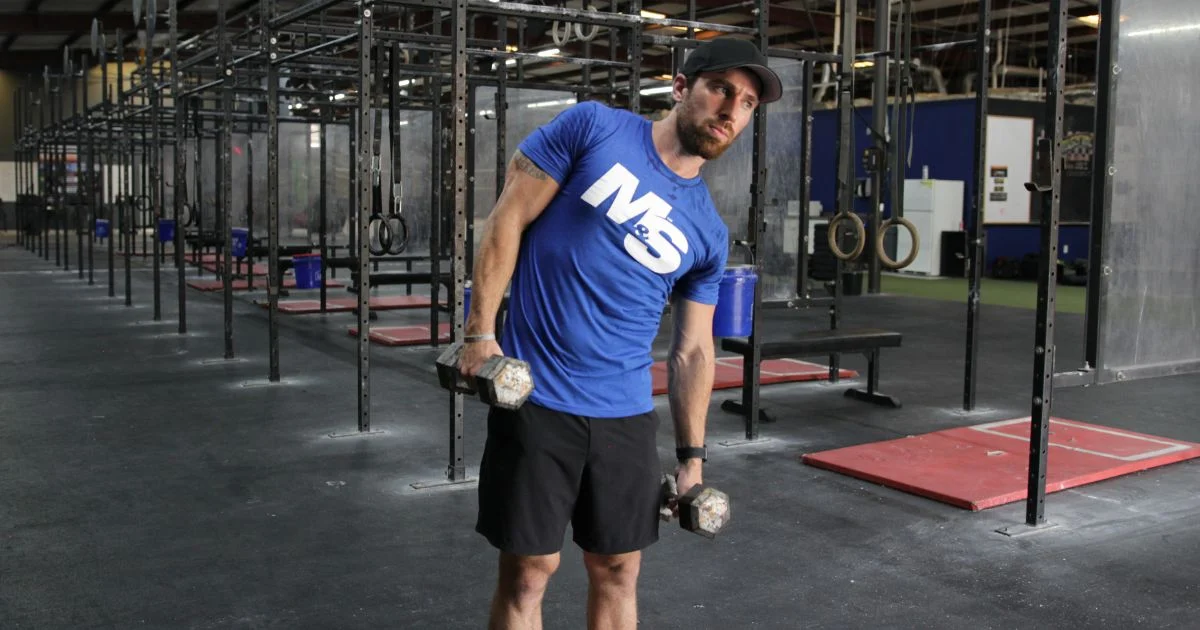
A dumbbell side bend trains lateral flexion: your trunk bends sideways rather than folding forward. Begin standing tall with one dumbbell beside your leg. Keep your feet planted, look ahead and lower the weight along the outside of your thigh through a comfortable range. Return to upright without throwing the shoulder upward. Complete your repetitions, then change hands. The aim is a repeatable movement, not the deepest bend you can force.
The accompanying photograph shows a two-dumbbell variation. That is a different loading choice from the single-dumbbell version described here. With weights hanging on both sides, their opposing turning effects can partly counterbalance each other. Adding the two dumbbell labels together therefore does not tell you how much sideways resistance your trunk is overcoming. If you choose one weight, record one weight; do not compare it directly with a two-weight total.
Keep the hips relatively quiet instead of pushing them sideways to make the dumbbell travel farther. Choose an endpoint you can reach without twisting, leaning forward or bouncing. A controlled lowering and a deliberate return give you a useful standard for the next session. If the grip or bell shape makes the weight catch your leg, change the setup before increasing load. A kettlebell held by its handle is another loading option, but record that change too.
For a first practice exposure, one light set on each side can reveal whether the movement feels manageable. That is a technique check, not a strength test. Stop an uncomfortable repetition rather than using momentum to finish it. Once the movement is familiar, compare both sides using the same stance, load and intended range. A difference in repetitions is a reason to inspect execution before assuming one side needs extra work.
Treat the seated barbell version as a separate exercise
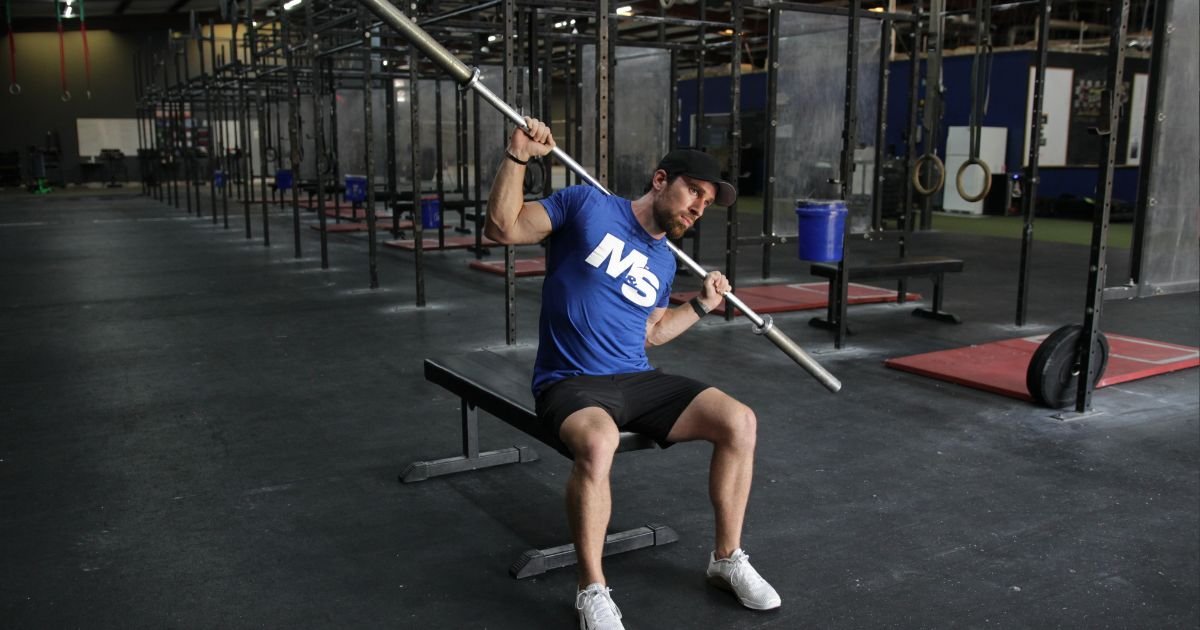
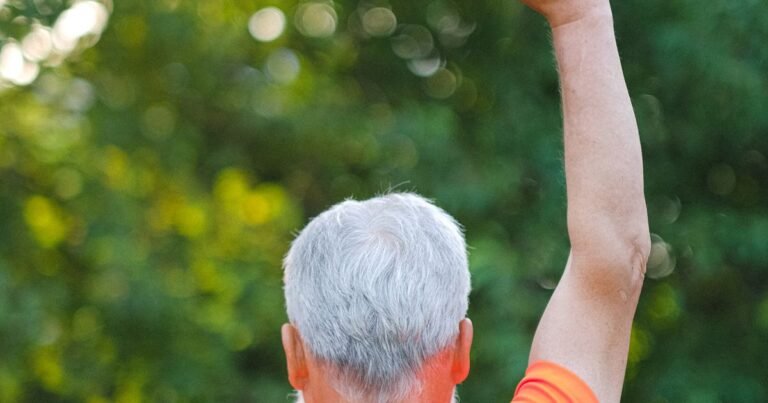
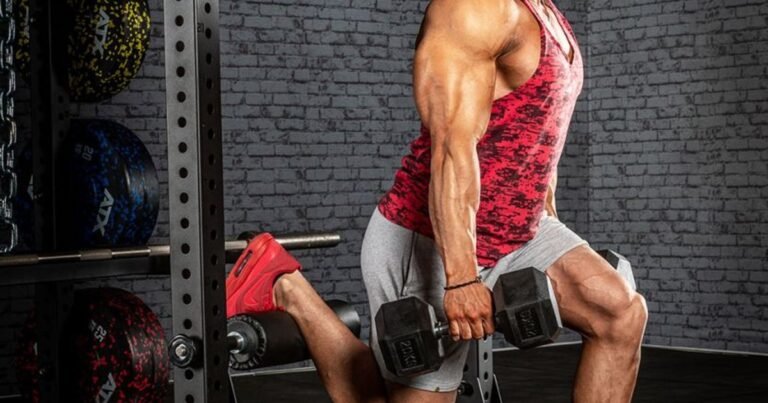
A bar across the shoulders changes the exercise substantially. In the seated variation pictured, the lifter sits on a bench with the feet spread and holds a light bar across the upper back. The bar rests on the muscular shelf, not directly on the neck. Before moving, check that its ends have room to travel and that nearby people, racks and benches are outside that path.
This is not simply the dumbbell exercise with a more impressive implement. The weight sits above the trunk rather than hanging beside a thigh, and the long bar creates a different balance problem. Moving it through a wider arc also needs more clear space. Choose it only if you can position and control the bar comfortably. There is no requirement to graduate to a barbell before a dumbbell side bend counts as useful training.
Keep the first attempts deliberately small and slow. If one end drops while your torso rotates or your hips shift across the seat, reduce the range or use a simpler variation. Do not chase an exaggerated stretch under a load you cannot reverse smoothly. A stable bench supports the seated position, but sitting down does not automatically make every movement controlled. Check what the trunk is doing rather than judging the repetition by the bar ends alone.
In your log, give this variation its own line. Note seated versus standing, the bar used, the load and the repetition standard. Ten repetitions with a light technique bar cannot be compared meaningfully with ten using a different bar and a shorter movement. If setup takes longer than the training benefit warrants, stay with the dumbbell. The practical choice is the one you can repeat and evaluate without turning accessory work into an equipment project.
Make a cable crunch a trunk movement rather than an arm pull
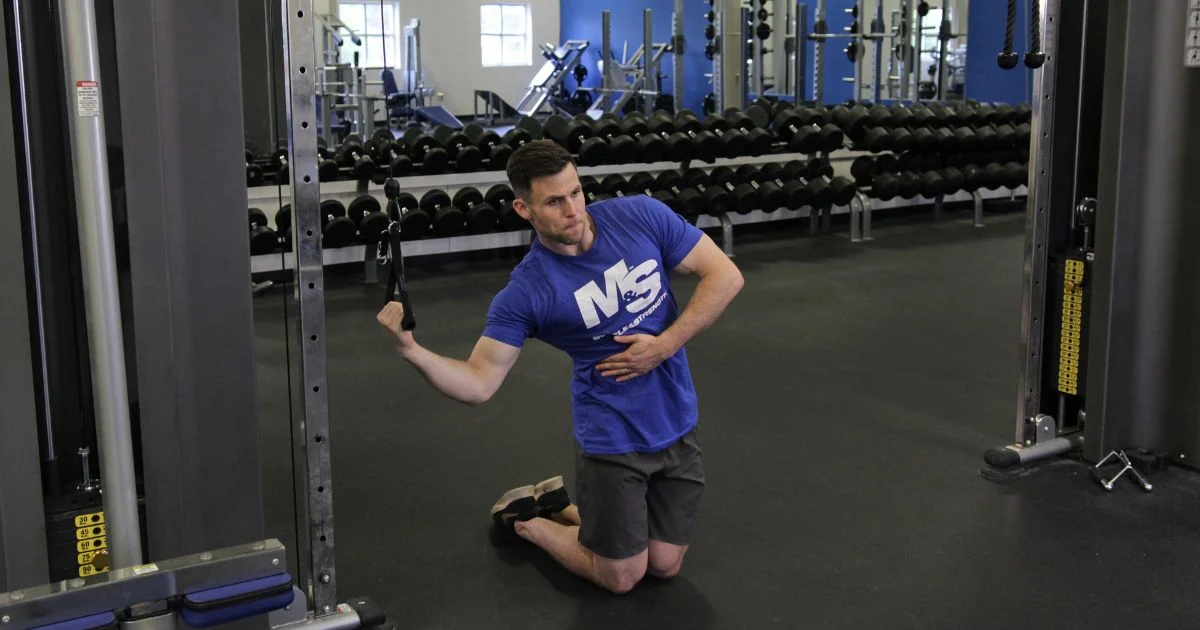
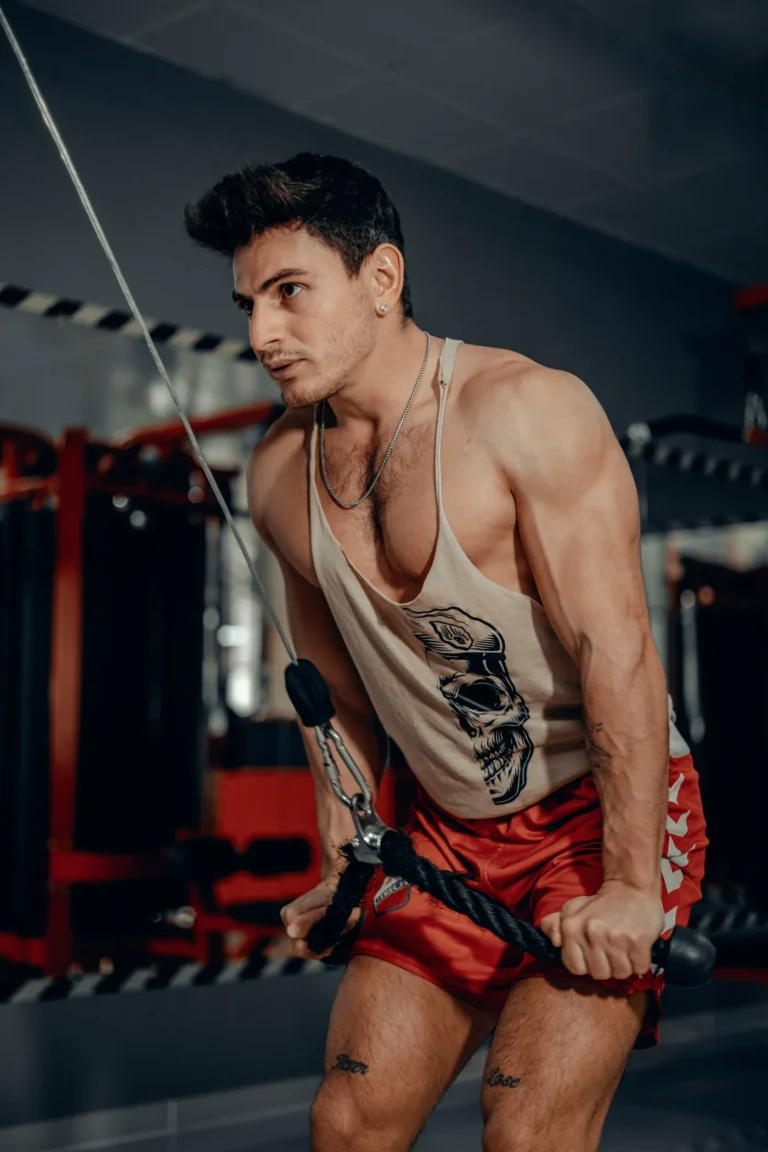
The kneeling oblique cable crunch uses a high pulley and a single handle. Kneel sideways to the machine, hold the handle beside your head and bring the elbow toward the hip by crunching the trunk downward and sideways. Keep the hips reasonably steady. Return under control instead of allowing the stack to pull you abruptly upright. Finish one side before arranging the same setup for the other.
Watch the relationship between the arm and torso. If the hand travels a long way but the rib cage barely moves, you may be turning the exercise into a pull with the arm. Start lighter and establish the trunk action first. The attachment should let you maintain a comfortable grip beside the head. Changing to a different handle or rope may be workable, but it changes the setup and deserves a separate note rather than an automatic load comparison.
Pulley position matters because the cable pulls toward its exit point. Record which station and height you used, as well as your distance from it. A number printed on one machine's stack is not a universal measure of resistance across every cable system. Keep your own comparisons within a repeatable setup. You can still track progress without pretending that a stack label and a dumbbell label describe an identical task.
For example, use a range of eight to twelve controlled repetitions per side as an initial programming experiment. When both sides reach the upper end with the same movement standard across repeated sessions, try the smallest available increase. If that increase makes you yank with the arm or rock at the hips, return to the previous setting. This is an editorial progression template, not a claim that this repetition range is uniquely effective.

Equipment Worth Exploring
Explore equipment, accessories and gear from our carefully selected range.


Rubber Hex Dumbbells
Rubber-coated hex dumbbell pairs with a stable shape for home and commercial strength training.

VOLTRA
Compact digital cable trainer with smooth, adjustable resistance.

Go-Tone Pro
Portable digital cable trainer with up to 66 lb (30 kg) of adjustable resistance.


GymPin Ergo Handles
Pair of ergonomic cable handles shaped for comfortable triceps and pulling exercises.


Use a floor side crunch when you want fewer setup variables
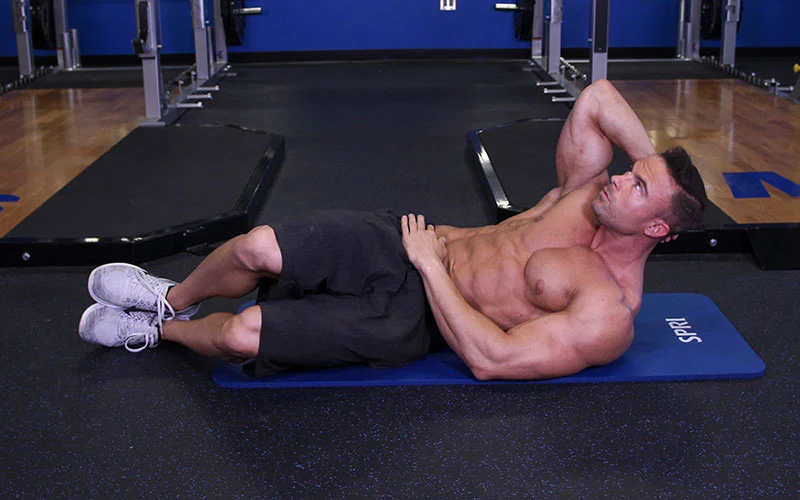
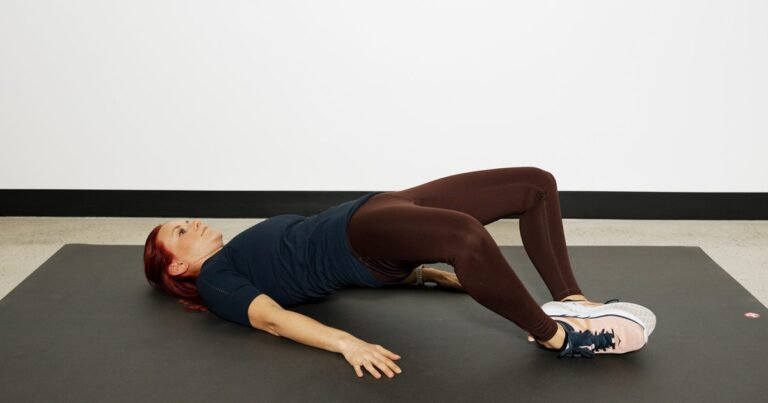
A floor side crunch removes the external weight and cable station. In the variation shown, lie on your back with the bent knees resting together to one side. Raise the upper torso with a small controlled crunch, then lower it. Arrange the opposite position for the other side. Let the abdominal action move the torso rather than pulling the head forward to manufacture a higher finish.
The photograph includes a hand behind the head. If you use that position, treat the hand as light support, not a lever on the neck. You can choose another comfortable hand position if that makes the movement easier to control. Keep the movement modest; the goal is not to force the shoulders and hips through a large twist. A mat can improve comfort, but extra padding is not a substitute for finding a position you can tolerate.
This option is useful when you want to practise a repeatable action without changing machines or collecting equipment. It also makes a clear comparison exercise for your log: count only repetitions that meet the same starting position and endpoint. If your tenth repetition is a quick neck tug after nine controlled crunches, record nine. Counting carefully makes the next session more informative than simply trying to beat a previous total.
Do not mistake a simpler setup for an obligation to do huge sets. Pick a manageable amount of work and see how it fits with your other trunk exercises. You might use this variation instead of the cable crunch on a day when equipment is busy. Record the substitution so you do not interpret a higher floor-crunch repetition count as proof that your cable strength changed. Different exercises can serve similar programming roles without producing interchangeable numbers.
Distinguish a side-plank hold from a hip dip, then programme selectively
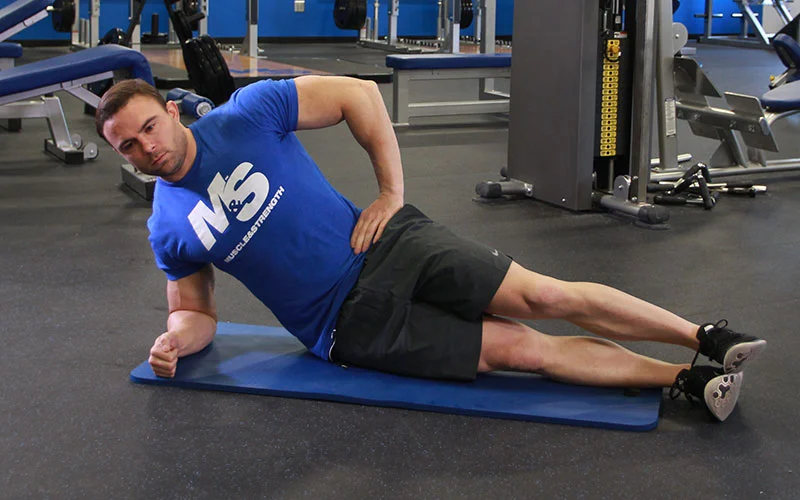
A side-plank hold asks you to maintain your position rather than repeatedly crunch. Place the supporting elbow beneath the shoulder and lift into an aligned position supported by the forearm and feet. Keep the head in line with the trunk. Compare sides using the same leg position and endpoint for ending the hold. If the hips sink or rotate substantially, stop the timed set instead of collecting seconds in a different position.
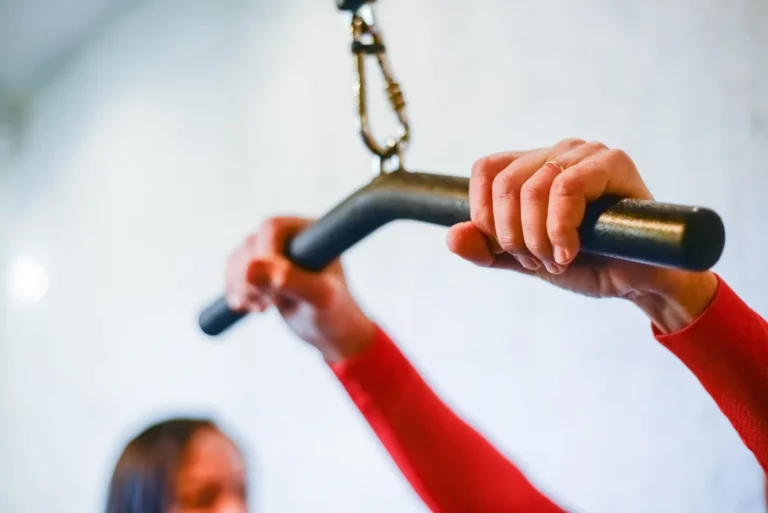
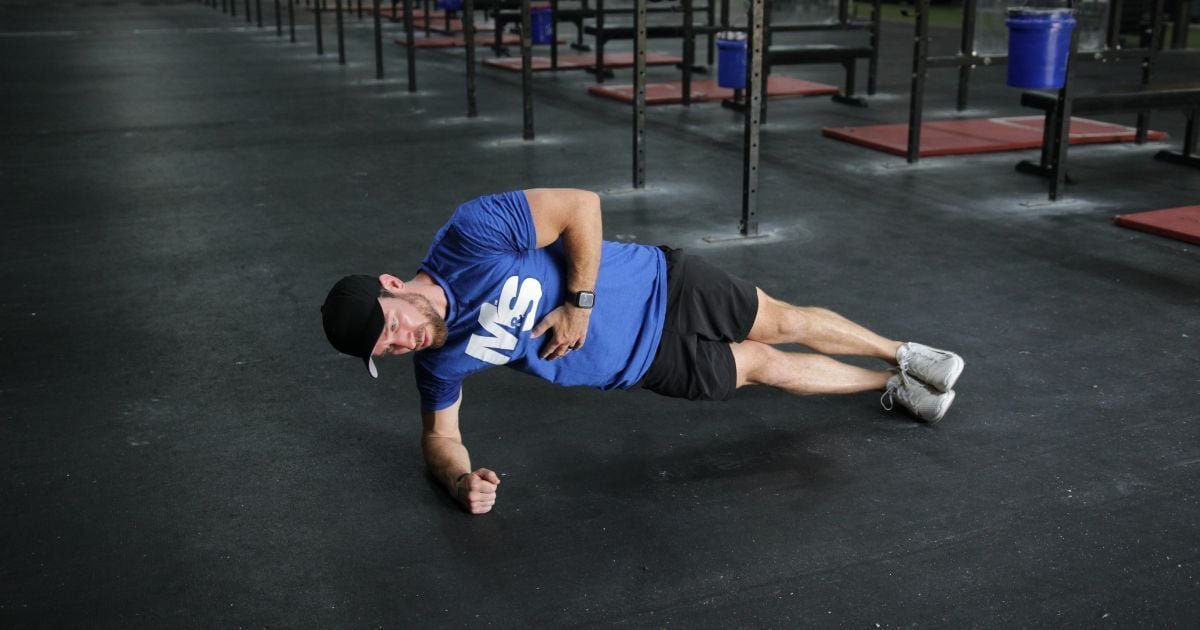
The section photograph shows the lowered position of a side plank with a hip dip. That variation deliberately adds controlled lowering and raising of the hips. It is different from an isometric hold, where you try to keep the position steady. Record hip dips in repetitions and holds in seconds. Neither is automatically the next level of the other; choose the task that matches what you want to practise and can control.
You do not need every exercise in this guide in one session. As a modest starting experiment, choose one moving exercise for two sets per side and a side-plank hold for one or two short sets per side. Place them after the main lifts, allow enough rest to repeat your standard and review the response before adding work. This example is a planning option, not an evidence-based optimum or a requirement for every lifter.
Progress can mean another clean repetition, a steadier hold, a slightly larger comfortable range or a small load increase. Change one variable at a time so your log still means something. Consistency and discipline here mean repeating a clear task, including stopping when it falls apart. Build the routine around movements you can evaluate; keep the alternatives available for an actual reason, rather than adding exercises merely because they all involve the obliques.

Bodybuilding Shirts & Workout Gear
Bodybuilding shirts, tanks and gym gear for lifters chasing muscle, size, symmetry and the pump.

Meme I Have Abs-Olutely No Idea What I'M Doing T-Shirt
For laid-back days and bodybuilding humor: “I Have Abs-olutely No Idea What I'm Doing”.

6Pac Shakur All Eyes On My Gains | Hooded Parody Hoodie
Bring “6Pac Shakur All Eyes On My Gains” gym humor to lazy days and post-workout plans.

Dumbbell Heartbeat Muscle Shirt Athletic Vest Fitness F Tank Top
Your gym-day look, with a playful “Dumbbell Heartbeat” twist.

Habit Stoic Meme : Lifting & Ancient Greek God T-Shirt
Show some bodybuilding attitude with a playful “Habit Stoic Gym Meme” tee.

Feminist Gym For Strong Women | Break The Stereotype Fu Hoodie
Bring “Feminist” gym humor to lazy days and post-workout plans.

Lift Eat Sleep Repeat Meme Sweater & T-Shirt
Bring “Lift Eat Sleep Repeat” humor to your everyday gym style.

Shirt – Liftionaire Golden Dumbbell Gymbros & Gains T-Shirt
Make gym days more fun with “Liftionaire Golden Dumbbell” style.

Dumbbell Meme Shirt – Essential & Gymbros Seeking T-Shirt
Make gym days more fun with “Dumbbell Gym Meme” style.

No Days Off for Daily Workouts, Lifting, and Fitness Di Hoodie
Keep it laid-back with a little “No Days Off” attitude.

Be Stronger Than Your Excuses Motivational Workout for Sticker
A fun “Be Stronger Than Your Excuses” touch for bottles, laptops, and lockers.