Advertising disclosure: This page includes affiliate links that may earn us a commission at no additional cost to you.
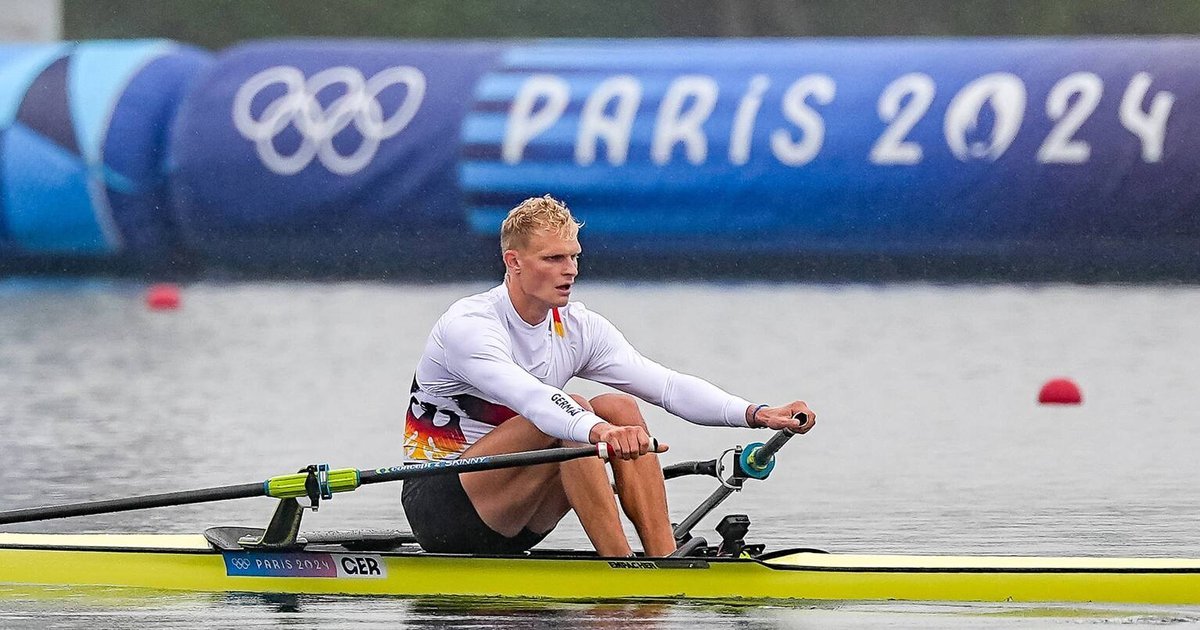
Oliver Zeidler did not arrive at rowing as an untrained beginner. Before making the switch from swimming in 2016, he already knew how to endure long training sessions. Yet moving from a pool to a racing shell still meant learning to apply that capacity in a very different movement. In 2019 he won a world title, and in Paris in 2024 he became Olympic champion in the men’s single sculls.
That trajectory makes him an interesting case for anyone who lifts and wants to improve conditioning. The lesson is not that an accomplished swimmer can simply walk into another sport and dominate. It is that transferable fitness becomes valuable when it is paired with a new skill, enough specific practice and a training schedule that can actually be repeated.
A strong engine still needs a new skill
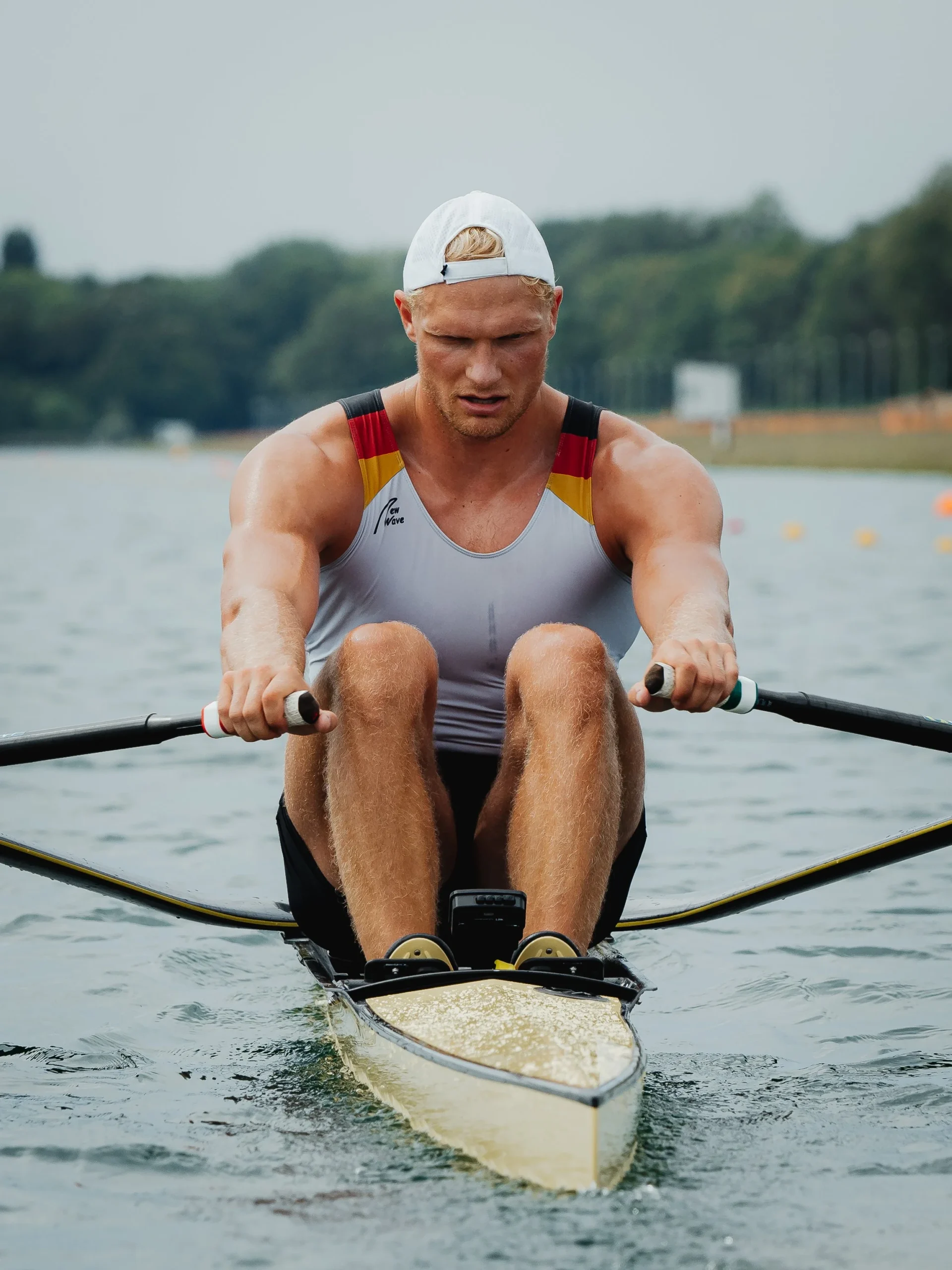
In a January 2019 interview, Zeidler explained that he had already encountered the indoor rowing machine during his swimming years. He used it to warm up and had received technical guidance from his grandfather. That background matters: he was not learning the movement entirely from scratch when he decided to pursue competitive rowing. His father also helped establish his training plan.
Swimming and rowing both demand sustained work from a large amount of muscle, but their mechanics differ substantially. The former requires effective propulsion in water while coordinating breathing with strokes. On an ergometer, the feet are supported and force travels through the legs and trunk into the handle. In a boat, the athlete must also coordinate the oars and balance the shell. A strong cardiovascular system cannot replace those details.
For a recreational lifter, this distinction can be encouraging. You may have strong quads, a well-developed back and the ability to tolerate challenging sessions. None of those qualities guarantees that your first rowing session will look efficient. Equally, a poor initial split does not mean your existing strength was wasted. You are learning how to express it in a new task.
Start with a moderate resistance setting and a smooth, controlled stroke. Push through the footplate before rushing to pull with the arms. Let the trunk open as the legs extend, then finish with the handle toward the lower ribs. Reverse that sequence on the way forward, allowing room for the handle before the knees rise. The goal is a connected movement rather than a sequence of exaggerated poses. If possible, ask an experienced coach to observe your movement from the side.
Build the repeatable endurance session
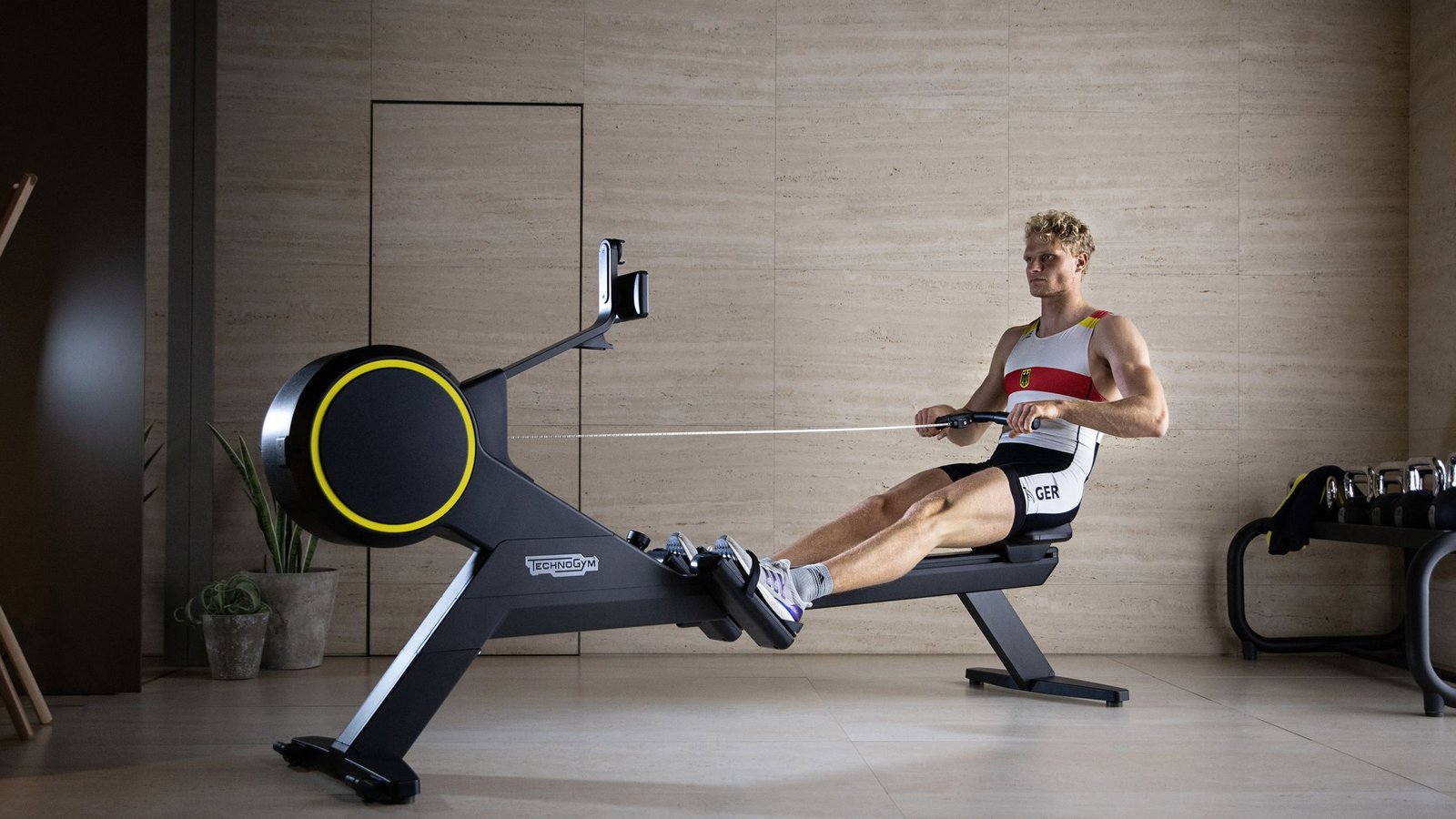
Zeidler’s early rowing preparation included endurance pieces of roughly 12 kilometres and occasional sprint work. By the time of the 2019 interview, he described regular indoor rowing even in summer and substantially more in winter. This was the historical schedule of a developing elite athlete, not a recommended starting volume for a gym member. He also had the advantage of years of swimming preparation.
The useful concept is the repeatable base session. Pick a duration that lets you finish feeling you could continue at the same general effort. For a newcomer, that could be ten to fifteen minutes, broken into smaller pieces with short rests. Someone with more experience might choose twenty to thirty minutes continuously. An easy effort should leave you able to speak in sentences rather than constantly gasping for air.
Track duration, average split, stroke rate and perceived exertion. Do not compare the best five-second reading from one session with the average of another. If your pace improves at the same comfortable effort over several weeks, that is a practical sign that the task is becoming more manageable. You might also find the same speed easier to sustain with less erratic stroke timing.
A heavy gym session can affect how your legs feel on the machine, so it helps to record that context alongside your result. If Monday was a hard leg day and Tuesday’s row felt particularly slow, resist the temptation to treat the slower pace as proof that your cardiovascular fitness declined overnight. The training log should help you recognize patterns, not encourage you to set a record every time you sit down.
Strength that supports the stroke
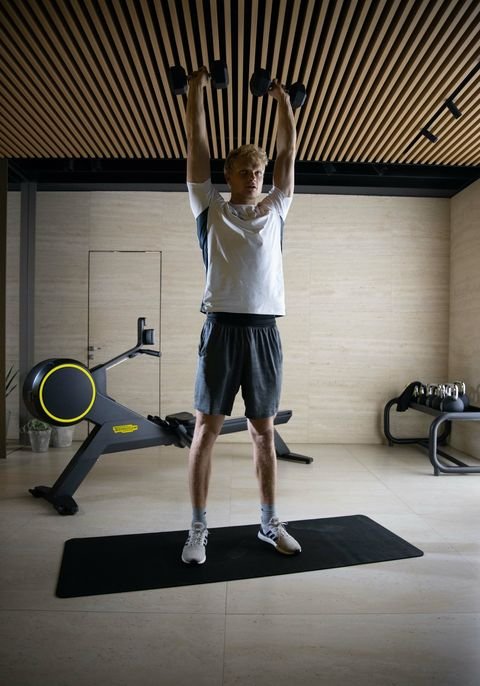
Zeidler has discussed strength work alongside endurance training, but a useful lifting programme for a recreational rower does not need to reproduce his exact schedule. It should address the force demands of the stroke while leaving sufficient energy to practise rowing. The legs provide much of the drive, the trunk transmits force and the upper back helps complete the pull. Those are sensible targets for supporting exercises.
A 2020 research synthesis on strength training in rowers found small improvements in maximal lower-limb strength and rowing-specific performance, although effects were not equally clear for every outcome. The evidence does not support a simple conversion from kilograms added to a squat into seconds removed from a race. For more on this distinction, see our analysis of gym strength and rowing performance.
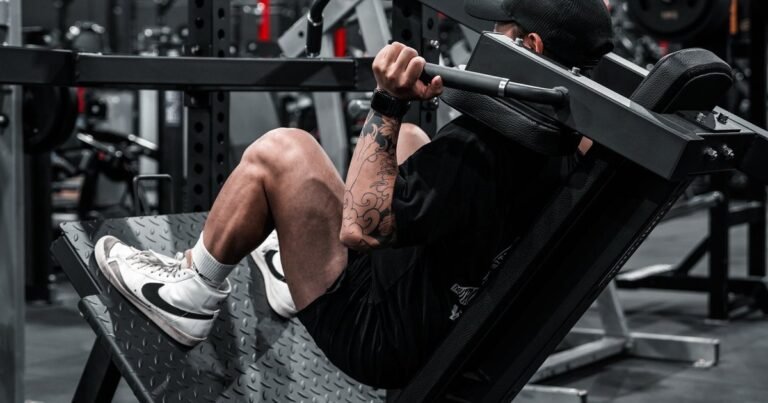
Choose a squat or leg press for knee and hip extension, a Romanian deadlift or trap-bar deadlift for posterior-chain strength, and a chest-supported dumbbell or machine row for horizontal pulling. An adjustable bench and a pair of dumbbells can cover several of those movements, while a suitable rack and barbell offer more options for progressive loading. Train each lift with consistent range and control. An initial prescription is two or three working sets per movement, five to eight repetitions for the heavier leg lifts and eight to twelve for the rows, stopping with approximately two repetitions in reserve.
These exercises are complementary, not identical to the rowing stroke. For instance, a chest-supported row is useful for training the upper back without requiring the lower back to brace through another demanding set. It is not intended to teach the sequencing of a racing stroke. Likewise, leg presses offer a way to train the legs without requiring every athlete to perform heavy back squats. Choose equipment that fits your ability and available space.

Equipment Worth Exploring
Explore equipment, accessories and gear from our carefully selected range.


Compact Leg Press CLP-700
Compact reverse-style leg press with a moving seat carriage and an adjustable footplate.

Linear Row LRX-750
Dual-sided rowing machine for supported rows, bent-over rows and varied pulling movements.


Competition Plates
Competition-style bumper plates for Olympic lifts and loaded strength training.

Rubber Hex Dumbbells
Rubber-coated hex dumbbell pairs with a stable shape for home and commercial strength training.


Learn to distribute your effort
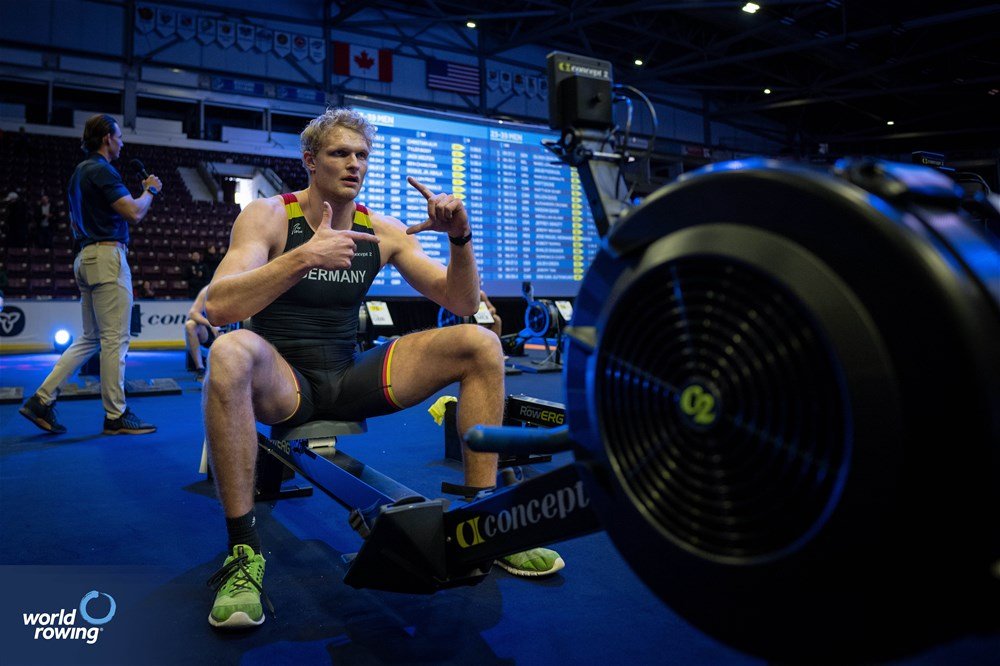
In 2019, Zeidler described a recurring problem in his hard indoor efforts: he had gone too aggressively through the first 700 metres and struggled later in the piece. Even a high-level athlete must learn to distribute effort. The machine rewards a strong start with immediate feedback, but that feedback tells you very little about whether the effort is sustainable.
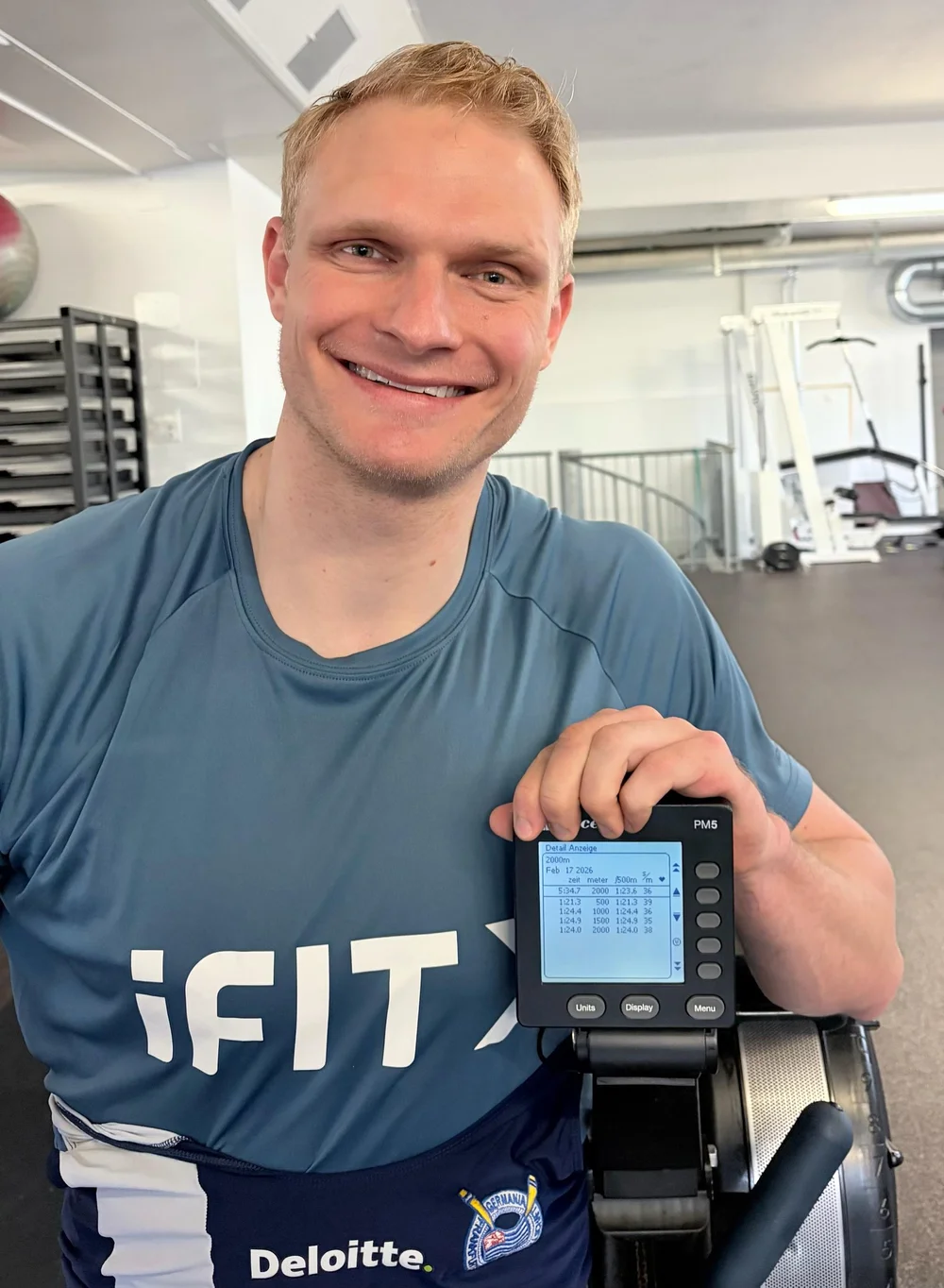
His personal best mentioned in that interview was 5:38.7 for 2,000 metres. That corresponds to approximately 1:24.7 per 500 metres on average. It is an illustration of elite performance in that historical context, not a target for newcomers or a current personal-best claim. The same principle applies if your own sustainable split is much slower: making the opening section disproportionately hard can undermine the overall result.
One way to practise pacing without a maximal test is to use three four-minute pieces with two minutes of easy rowing between them. Choose a deliberately conservative effort for the first, aim to match it on the second and increase slightly on the third only if you still feel composed. Keep the stroke rate within a range you can control rather than chasing a number. If the final interval deteriorates badly, the next session should start more modestly.
The longer-term objective is to associate a particular effort with a pace you can sustain. When you are ready for a measured 2k, our first 2,000-metre race preparation guide explains how to use previous sessions to choose a realistic target. Until then, consistency is more useful than a dramatic finish.

Cardio Shirts & Workout Gear
Cardio and conditioning gym gear for runners, endurance athletes and anyone who earns the sweat.

Anti Rowing Rowing Club Shirt – Meme & Top T-Shirt
Show some cardio attitude with a playful “Anti Rowing Rowing Club” tee.

Rowing – Dost Thou Even Row Medieval Knight Pullover fo Hoodie
Show off your medieval humor in a laid-back “Rowing” hoodie.


Anti Swimming Club Shirt Meme & Top T-Shirt
Make gym days more fun with “Anti Swimming Club” style.

with Shark Meme – Motivation Finds You Workout Pullover T-Shirt
Show some gym-day personality with “with Shark Meme”.

Cardio Is Hardio – Workout Meme Vest Muscle Shirt For S Tank Top
Add some cardio attitude to training with “Cardio Is Hardio”.

Don't Quit Do It – Motivational Workout Decal for Gym B Sticker
Give your everyday gear a playful “Don't Quit Do It” twist.

Everything Hurts And I'M Tired Motivation Jumper T-Shirt
Add a playful “Everything Hurts And I'm Tired” touch to your casual rotation.

Straight Outta Shape Hoodie
Stay casual and show some cardio attitude with “Straight Outta Shape”.

Anti Club Shirt Meme & Top T-Shirt
Make gym days more fun with “Anti Exercise Exercise Club” style.
A four-week rowing plan for lifters
The following four-week progression is an editorial adaptation of the general principles above, not Zeidler’s actual programme. It assumes a healthy adult who already performs resistance training and is beginning to row indoors. Start with two rowing days and retain two strength days. Separate the most demanding lower-body session from the harder rowing day when your calendar allows.
- Week 1: Complete two easy sessions of ten to fifteen minutes, with breaks if needed. Keep your usual strength training moderate and avoid maximal tests. Focus on the setup and sequence of the stroke.
- Week 2: Add about five minutes to one easy session if week one felt manageable. On the second day try three four-minute pieces at a controlled effort with two minutes of very easy rowing between them.
- Week 3: Keep one easy session at a repeatable duration. Repeat the controlled intervals and try to make the pace more even. Progress one variable at a time; there is no need to increase both the distance and intensity of every workout.
- Week 4: Repeat the easy session and perform a twenty-minute steady effort if you are comfortable with that duration. Compare your effort, pace and movement quality with the earlier weeks rather than setting an arbitrary time standard.
For the strength days, alternate a squat or leg-press emphasis with a hip-hinge emphasis, including a horizontal pulling movement on both days. Maintain your other upper-body exercises as tolerated. If your existing lifting schedule is already demanding, reduce a few lower-body accessory sets rather than adding the rowing on top of everything unchanged. Keep at least one genuinely easy day each week. Stop if you experience sharp pain, faintness or unusual breathlessness, and obtain appropriate medical advice if you have symptoms or a condition that affects exercise tolerance.
At the end of four weeks, success might mean that you can sustain twenty minutes without losing your rhythm, or that a familiar pace feels easier after a normal lifting week. That is the meaningful part of the swimmer-to-rower example: fitness transfers best when the new task receives its own attention. Build the engine, practise the movement and make your next session something you are capable of completing well.