Advertising disclosure: This page includes affiliate product links that may earn us a commission, as well as products from our own store.
An axle deadlift can stop because the hands open before the rest of the pull is finished. That makes the result interesting, but it also makes comparisons easy to muddle. The IronMind Apollon’s Axle double-overhand deadlift is a particular test, with an identifiable bar, a starting-height standard and a completion rule. Keep those details beside the weight instead of treating every thick-bar pull as the same achievement.
Identify the bar before comparing the load
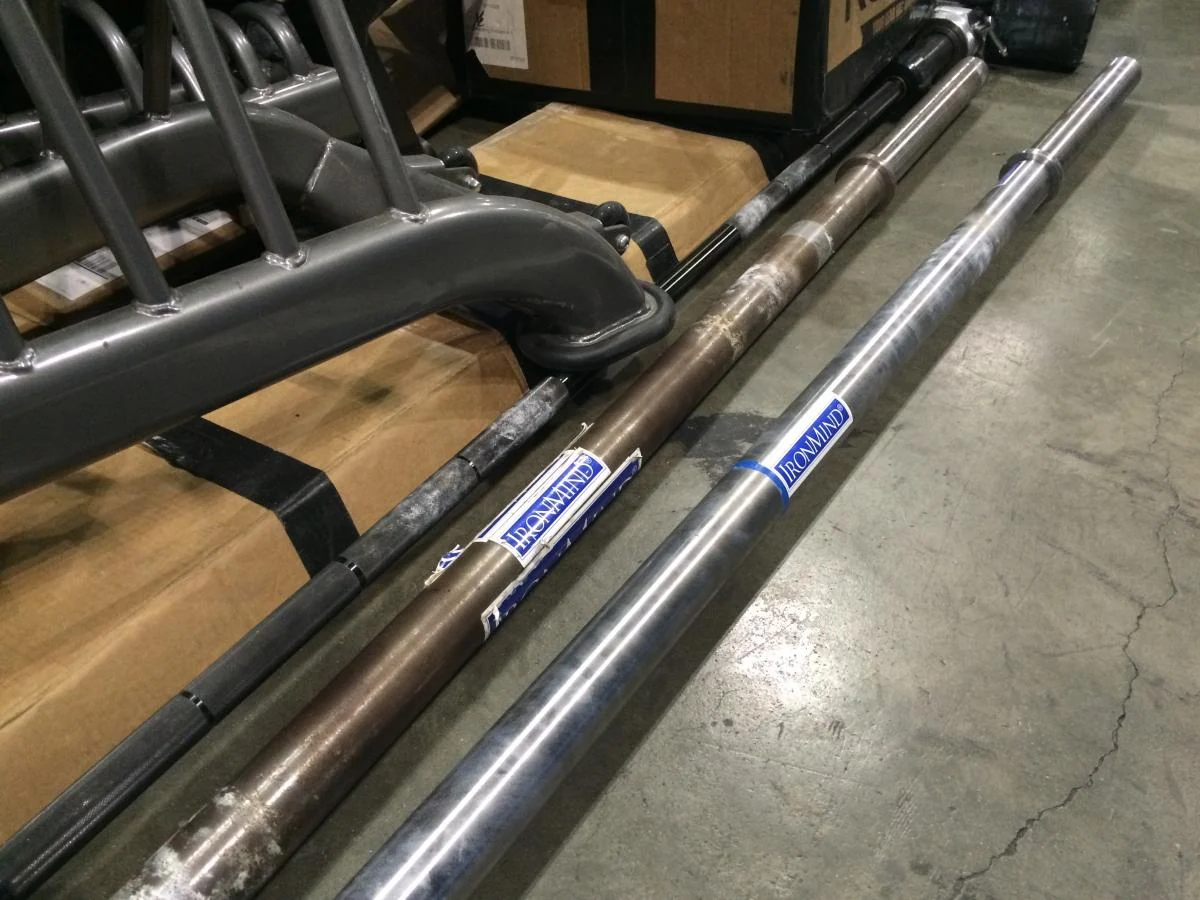
The standard Apollon’s Axle is a non-revolving steel bar with a two-inch gripping diameter. IronMind lists its mass at approximately 15 kg, its overall length at seven feet and its sleeve loading surface at 17 inches. Those specifications identify the implement; they do not make a different axle, a thick-grip attachment or a conventional Olympic bar interchangeable with it.
A small acute experiment in 11 trained men illustrates why this distinction matters. Deadlift maximums were lower with two- and three-inch bars than with the standard bar, and the effect differed across exercises. That does not supply a universal conversion for your axle result or establish how much long-term grip development a particular bar will produce.
Keep an ordinary-bar deadlift and an axle deadlift in separate training series. A lower axle number does not mean your normal deadlift has deteriorated. It may simply be the result of testing a different task. Comparing the numbers becomes more useful when you also know what stopped each attempt.
Check a bar’s identity directly rather than relying on its appearance in a distant photograph. Record the maker, model and gripping diameter when you first establish a training baseline. If you later change bars, make that a new entry rather than silently adding it to the old series.
Thick-grip attachments can provide another training option, but their texture, shape and connection to the underlying bar introduce different conditions. Treat them as their own exercise. There is no need to dismiss one tool to acknowledge that it does not recreate every feature of another.
Make starting height and total mass explicit
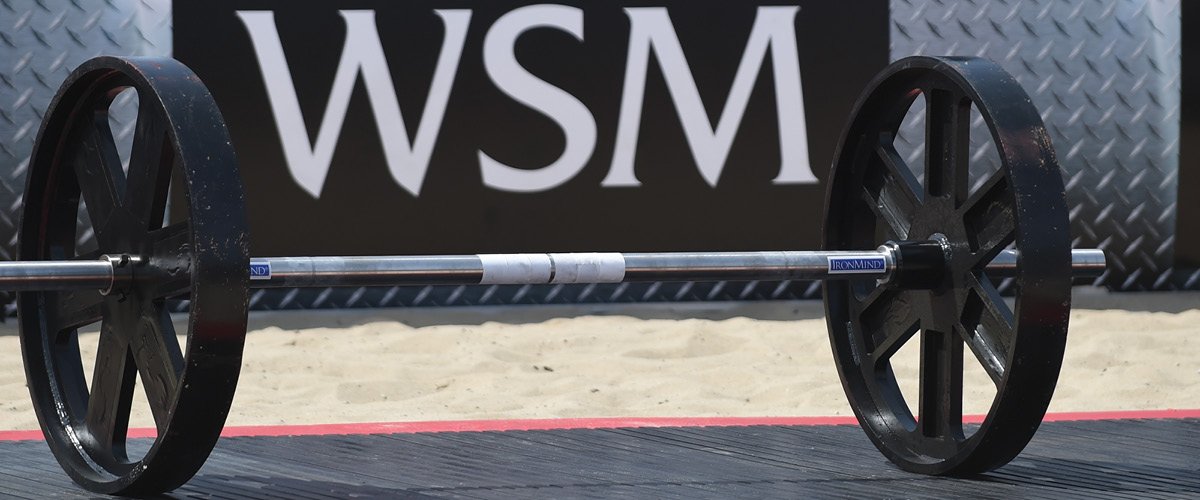
For the IronMind test, use the genuine bar with standard 450 mm diameter plates; the plates must be calibrated or weighed on a reliable scale. That establishes a much clearer comparison than describing the load only as a certain number of plates.
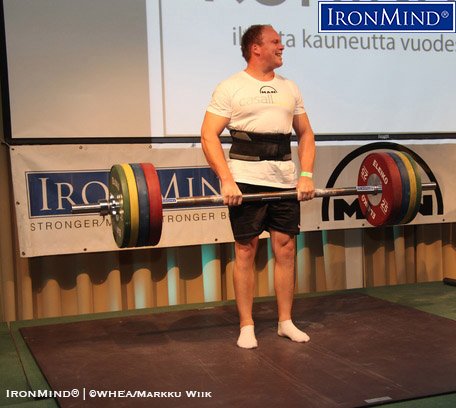
An axle shown with oversized strongman wheels illustrates a different starting-height problem. The wheels can place the bar higher than ordinary full-size plates. A photograph of the correct brand of bar is therefore not enough to establish the same test. Look at the complete assembly, including the objects supporting it.
In your training log, account for the bar, plates and any collars you include in the stated total. Here is an arithmetic example rather than a product specification: a measured 15 kg bar plus 40 kg of plates on each side gives 95 kg before adding any collar mass. Write the definition once so later entries use the same convention.
Keep plate diameter and plate mass as separate facts. Two loads can total the same weight while starting at different heights. Likewise, plates that look equally large do not automatically weigh the same. These are practical setup checks, not reasons to turn a normal training session into a calibration laboratory.
Take a simple setup photograph when establishing your baseline. Include enough of the bar, plates and floor to make the arrangement understandable later. If you use blocks or a raised starting position for another training purpose, label that variation clearly and compare it with sessions using that same arrangement.
Record units as well as the number. A kilogram entry and a pound entry can look deceptively similar in a short note. Keep any conversion separate from the original measured value so the record remains understandable later.
Keep the grip and surface conditions honest
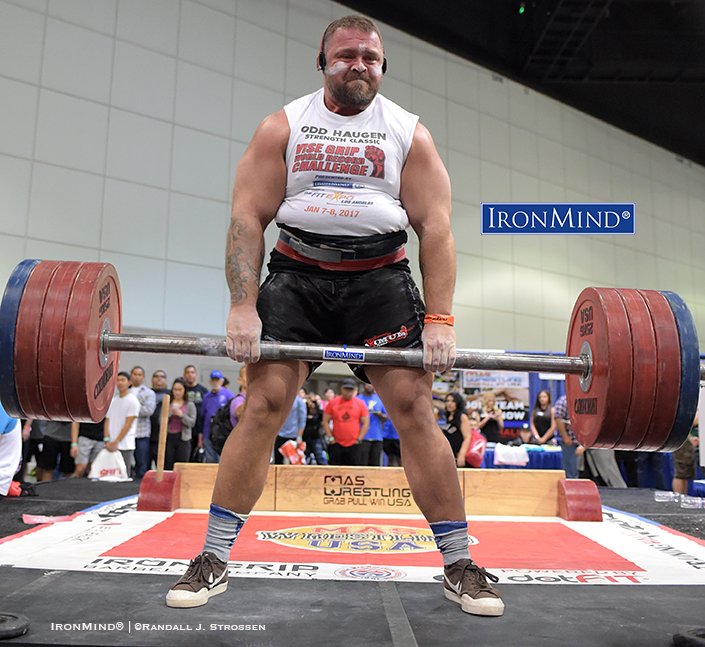
The test requires a double-overhand grip with both sets of knuckles facing away from the body. Hook and thumbless grips are prohibited. Ordinary magnesium-carbonate chalk is permitted on the hands; other grip aids, including liquid chalk, are not. The axle is wiped clean before each attempt.
That makes hand position and preparation part of the task, rather than incidental details. A mixed-grip pull may be useful in another context, but it does not answer the same question. Nor should a strapped attempt be recorded as if the hands alone retained the bar.
For a self-judged training session, write what you actually used. If you are learning a movement with a different grip, keep the entry and describe it accurately. An honest variation can still be useful information. It does not need to be presented as a competition-standard attempt to count as training.
Use a load you can control while practicing the intended hand position. Repeatedly testing the heaviest weight you can barely separate from the floor may tell you less about execution than a clearer successful repetition. Decide whether the session is practice, repeatable working sets or a dedicated test before choosing the load.
Also distinguish the reason for a miss. Did one hand open, did the bar slip in both hands, or did the lift stop while the grip remained secure? Those observations can guide the next training decision. They are more informative than assuming every unsuccessful axle pull is evidence of the same weakness.
A completed attempt includes the finish and return
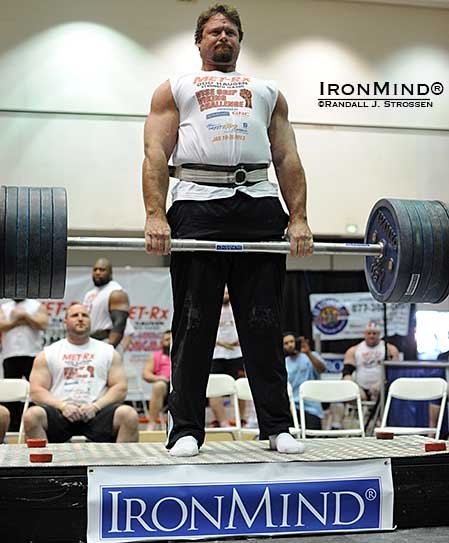
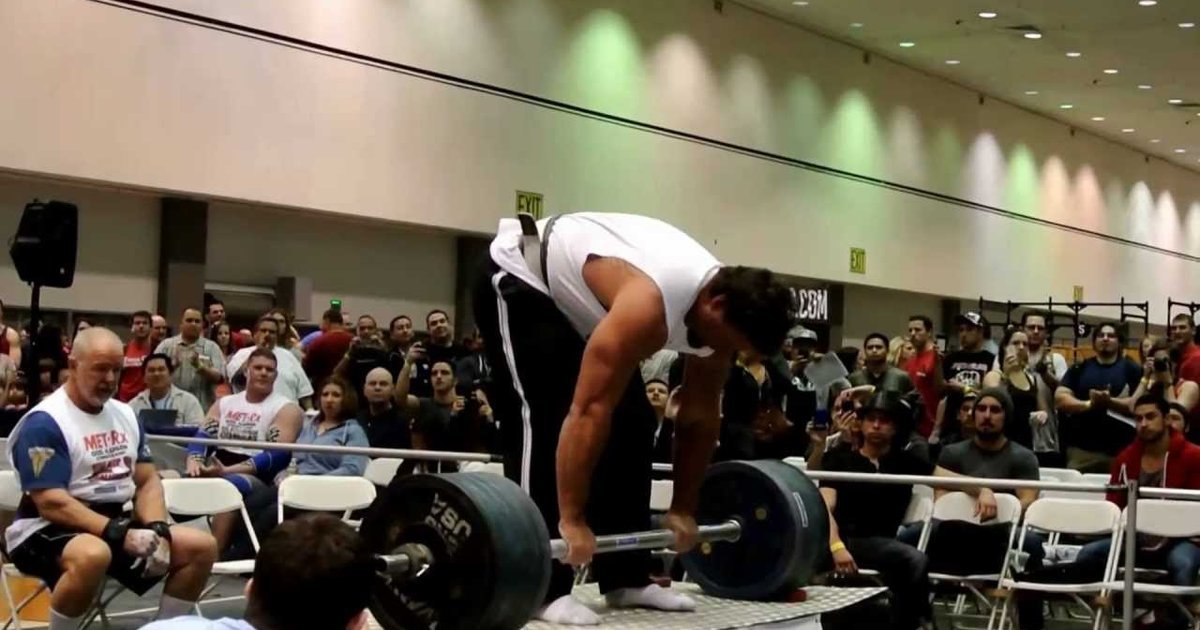
A successful attempt requires an erect finish with legs and hips locked, one second of control before the referee’s down signal, and continued hand contact until the weight rests on the floor. Resting the axle on the thighs, downward movement during the lift, releasing early or dropping it can invalidate the attempt. Sumo is permitted.
In contest conditions, the lifter has one minute after being called, with multiple tries allowed during that window. That is an event rule, not a recommendation to keep repeating maximum attempts whenever training is difficult.
For practice, ask a training partner to observe the whole repetition. A bar leaving the floor and a completed lift are different milestones. Both can be recorded honestly, but they should not receive the same label. Avoid making the review depend on a single dramatic still photograph.
If you film an attempt, choose a view that lets an observer follow the bar, knees, hips and return to the floor. Keep the start and end of the recording rather than cutting away immediately after the apparent lockout. A useful video supports review; it does not automatically turn a self-judged session into an official result.
Review the attempt before increasing the load. If you are unsure whether the finish met your chosen standard, a clearer repetition at the same weight can be more useful than a heavier ambiguous one. In a competition, the referee makes the decision. In a personal log, describe uncertainty instead of quietly converting it into a passed attempt.

Equipment Worth Exploring
Explore equipment, accessories and gear from our carefully selected range.



Competition Plates
Competition-style bumper plates for Olympic lifts and loaded strength training.

Grip Plates
Rubber-coated weight plates with handholds for loading barbells and machines.
Speed Collar
Quick-release collars designed to secure weight plates on standard two-inch Olympic bars.


Train the task without letting every session become a test
Decide where axle work sits among your priorities. When normal pulling strength is the main goal, tiring the hands beforehand can change the rest of the session. Grip-focused work can reasonably come later. If an axle event is the priority, schedule its important practice accordingly and record that change in order.
Grip training also includes different tasks: crushing, pinching and supporting a load. A pinching exercise or a wrist tool can be useful accessory work without being a direct substitute for retaining an axle in both hands. Choose accessories for the role they play instead of expecting every grip number to move together.
The equipment suggestions alongside this guide include conventional bars, plates and grip tools for different training tasks. A thick-grip attachment is not a certified Apollon’s Axle, and straps or wrist grips are not permitted aids for this test. Keep accessory choices separate from the identity and rules of the attempt you plan to compare.
A practical log can stay compact: bar identity, total load definition, starting setup, grip, hand preparation, session order, successful repetitions and the reason an attempt ended. Add a short note about the next decision. For example: “Grip remained secure; finish uncertain; repeat the same load with a clearer view.”
Before a dedicated test, make a short checklist and complete it before loading becomes demanding. Check that the area is clear, that the equipment is secure and that the person observing understands the finish you are using. Keep spectators and loose equipment away from the return path. These are practical preparation steps, not an invitation to attempt a load beyond your control.
Progress does not have to mean a heavier maximum every session. More consistent successful practice or a better-defined setup can make later testing easier to interpret. Choose a review point, compare like with like and adjust the work you can actually sustain. The result is a training record that explains your performance rather than merely collecting numbers.

Funny Gym Shirts & Workout Gear
Funny gym shirts, tanks, hoodies and workout gear for lifters who like training hard.

Grip Training Essential Gymbro Jumper & T-Shirt
For laid-back days and lifting humor: “Grip Training Essential”.

Grip Training Get A Grip Hoodie
Show off your lifting humor in a laid-back “Grip Training” hoodie.

Bending Bars Meme Breaking Bad Powerlifters & Bros Tank Top
Bring “Bending Bars Gym Meme” humor to your next lifting session.

Deadlifter Life Shirt – Halloween Ghost T-Shirt
Rep “Deadlifter For Life” humor in and out of the gym.

Old School Weight Strongman – Meme Shirt & Top T-Shirt
Show some powerlifting attitude with a playful “Old School Weight Lifter Strongman Graphic” tee.

Deadlift Addict & Barbell Cigarettes Can'T Quit T-Shirt
Show some deadlift attitude with a playful “Deadlift Addict & Barbell Cigarettes” tee.

Slip Not Grip Training – Heavy Metal Workout Decal for Sticker
A fun “Slip Not Grip Training” touch for bottles, laptops, and lockers.

Deadlift And Chill Shirt Netflix & Gains Meme Top T-Shirt
Bring “Deadlift and Chill” humor to your next gym day.

Skeleton Deadlift Sweater & Fans Meme T-Shirt
For laid-back days and deadlift humor: “Skeleton Deadlift”.

Deadlift Zombie Skull Muscle Shirt , Halloween Bodybuil Tank Top
Train hard, laugh a little, and rep “Deadlift”.