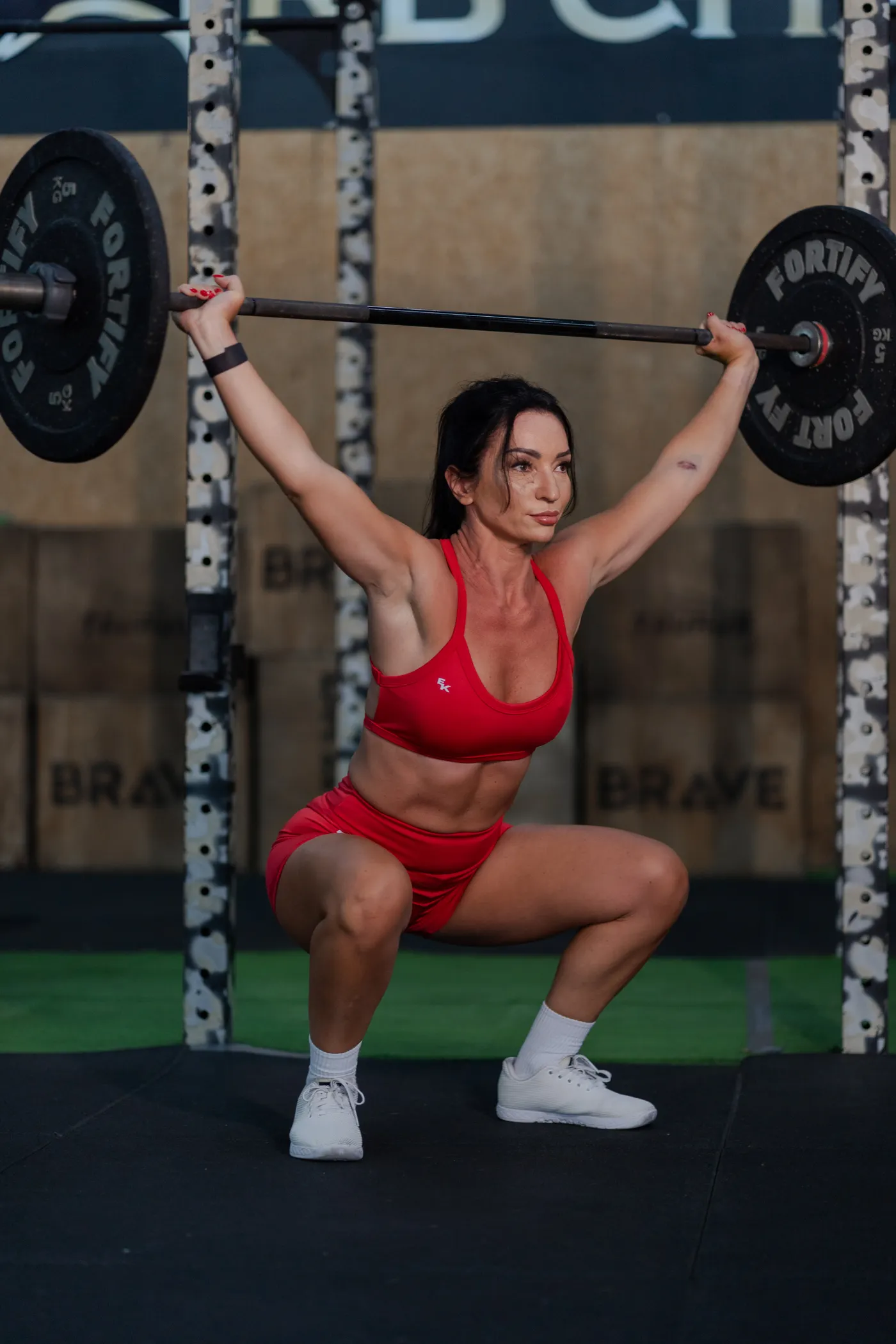
The overhead squat can make a strong lifter feel unexpectedly uncoordinated. Holding a bar above your head while descending demands ankle motion, hip control, a stable trunk and shoulders that stay organized while the legs move. Adding plates before those pieces cooperate rarely fixes the problem.
A useful coaching idea is to engage the hips and let the knees track with the toes. But this is not an instruction to roll onto the outside edges of the feet. The practical goal is a stable whole foot, comfortable range of motion and repetitions that look similar from start to finish.
Why overhead squats challenge coordination more than leg strength
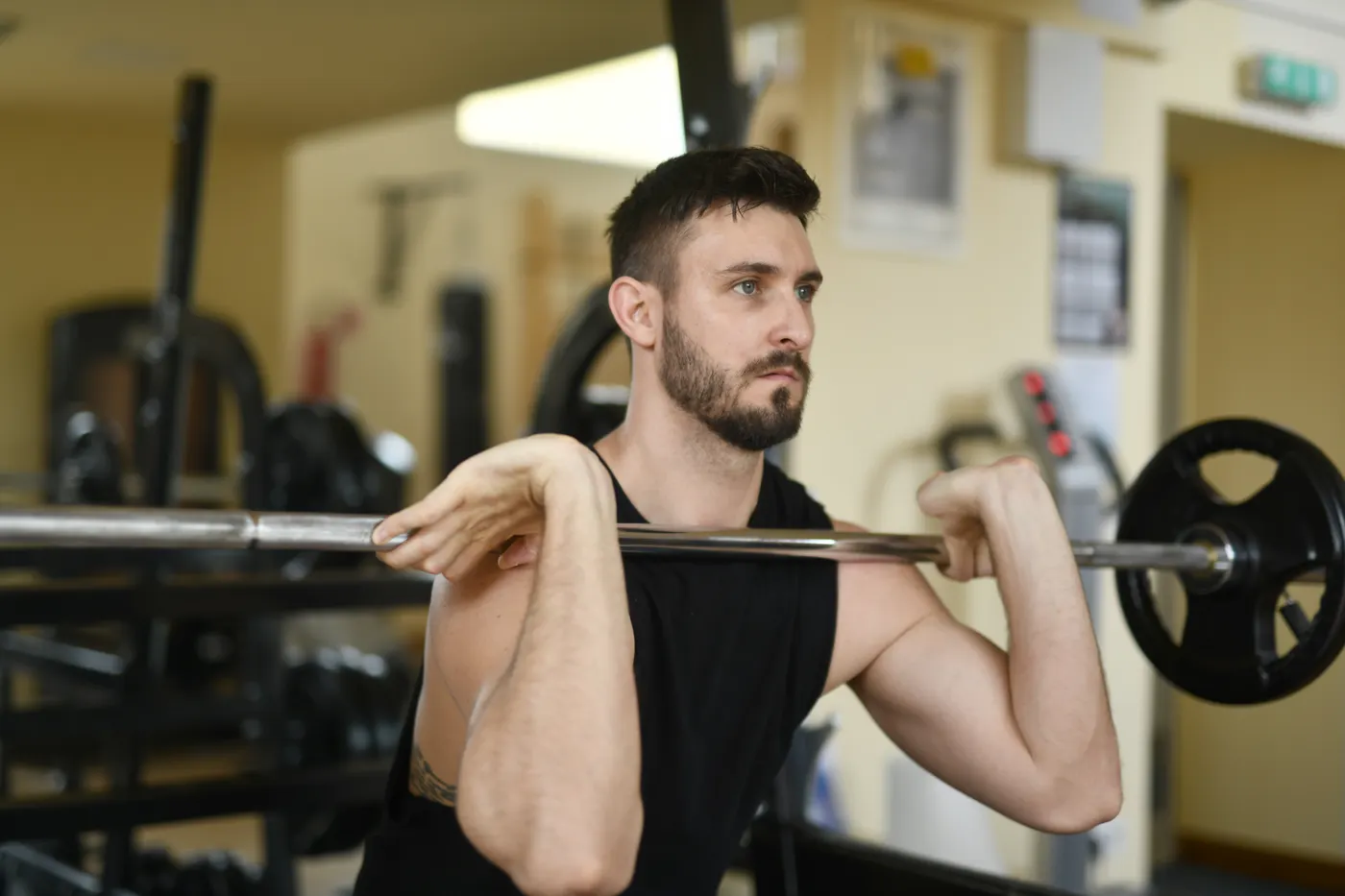
Compared with a back squat, the overhead variation places the load far from the body’s resting position. The arms must stay elevated as the hips and knees flex, while the trunk controls the position of the ribs and pelvis. If the bar drifts forward of the midfoot, the athlete must compensate to stay balanced. That can make an empty bar feel harder than a much heavier goblet squat.
It is useful to think of the movement as a skill drill, not a universal athleticism test. A lifter with long femurs, limited ankle dorsiflexion or different shoulder anatomy may need a wider stance, a slightly different grip or a shallower depth. Two technically sound overhead squats need not look identical.
Three-dimensional movement studies show coordinated changes at the foot, ankle, knee, hip, trunk and shoulder during an overhead squat. The findings fit a simple training principle: no single muscle or magic cue controls the entire lift. A small limitation in one region can change the position of the bar far above it.
Start by filming three unloaded squats from the side and the front. Look for a controlled descent, a steady arm position and pressure that does not abruptly shift from heel to toe. Do not chase maximum depth if the result is an unstable torso or painful shoulders. The first target is a pattern you can repeat calmly.
Foot pressure and knee tracking without exaggerated cues
Coaches often say to push the knees outward. That may help a lifter whose knees repeatedly collapse inward, but it is not a command to force them as wide as possible. The knees should travel in a direction compatible with the toes and individual hip structure. Some natural inward motion does not automatically mean injury, just as a perfectly vertical shin does not guarantee safety.
Use the foot-tripod idea: maintain contact through the heel, the base of the big toe and the base of the little toe. Pressure naturally shifts during a squat, but none of those three points should disappear completely. Deliberately rolling onto the outside of the foot can lift the big-toe side and make balance worse, especially with a load overhead.
Try five slow bodyweight squats while holding a rack upright lightly for balance. Pause at a comfortable depth, then stand without letting the heels rise. Repeat with the arms overhead. If the arms suddenly drift forward, you have found a useful question to investigate, not necessarily a single defective joint.
Experiment with a modest toe angle and stance width, changing only one variable at a time. A slightly wider stance may make room for the hips; a slightly narrower one may improve stability for someone else. Keep the floor clear, the shoes stable and the load light enough to stop when the movement changes shape.
For a home gym, this approach beats chasing a fashionable cue. The objective is controlled force through the floor while the bar stays close to the vertical line above the midfoot.

Equipment Worth Exploring
Explore equipment, accessories and gear from our carefully selected range.


GymPin Squat Wedges
Non-slip 15-degree squat wedges help elevate the heels for deeper quad-focused squats.


FID Bench MAX
Adjustable bench offering flat, incline, and decline positions + adjustable headrest.

Prepare the ankles and hips before demanding deep positions
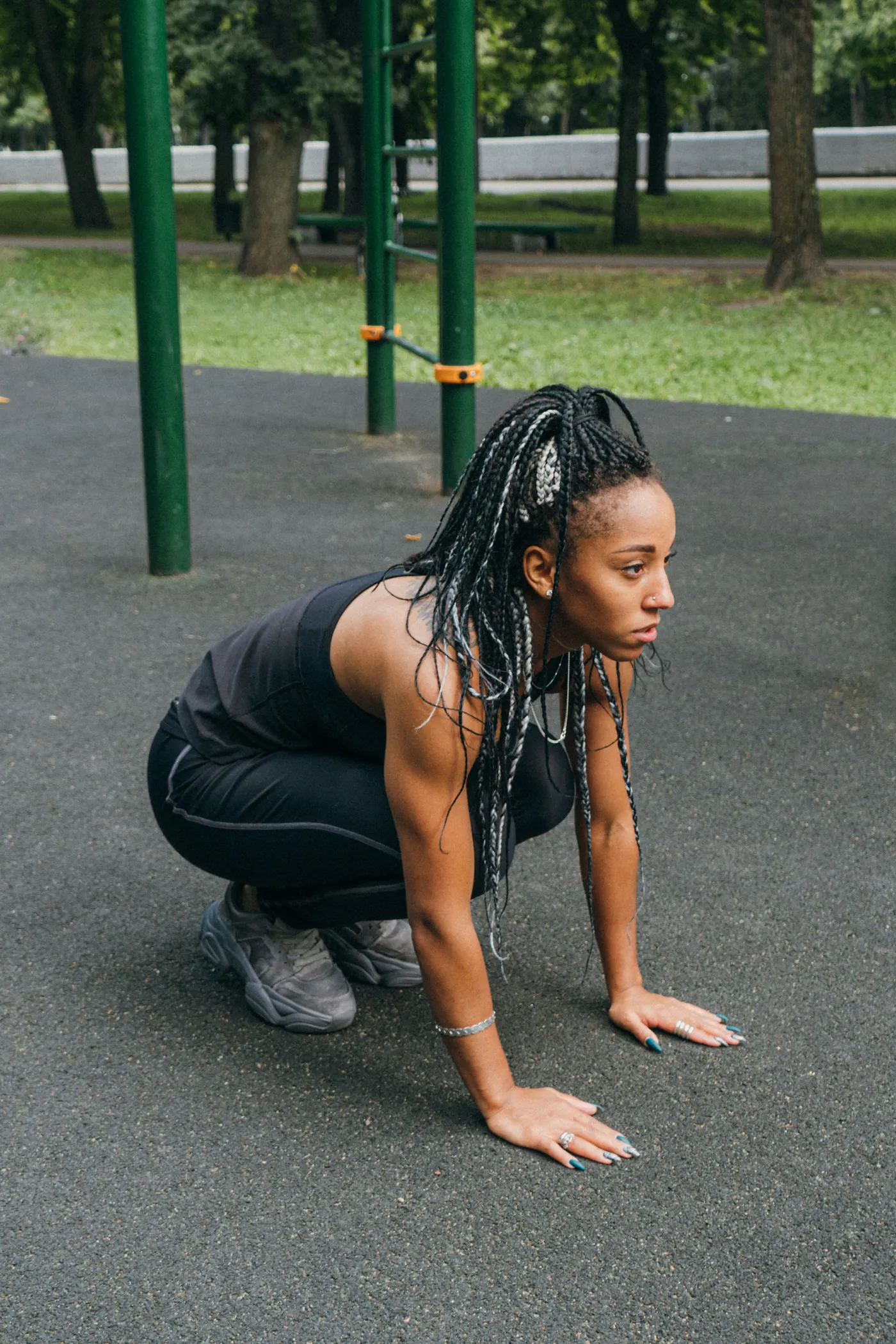
As the knees travel forward during a squat, the ankles need dorsiflexion while the heels remain supported. When that range is limited, the lifter may raise the heels, lean the torso forward or turn the feet farther outward. These are observations, not diagnoses, but they suggest what to test before loading the movement.
A simple knee-to-wall drill is a practical starting point. Stand facing a wall with one foot a short distance away. Keep the heel down and move the knee toward the wall without twisting the foot. Find a distance that allows a smooth touch, then perform two sets of six to eight repetitions per side. Avoid bouncing into discomfort or treating one session as a permanent mobility fix.
For the hips, try a supported squat hold using a rack upright or sturdy support. Breathe for 15 to 25 seconds at a depth you can control, then perform five unassisted bodyweight squats. If a slightly wider stance improves comfort, use it. If a small heel wedge helps you keep the torso organized, treat it as an equipment choice, not proof that ankle mobility no longer matters.
Body proportions influence squat appearance. Someone with long thighs relative to their torso may lean more than a shorter-femured lifter at the same depth. Judge the outcome by balance, repeatable bar path and comfort instead of copying a social-media pose.
Keep ordinary squats or split squats in your strength program while you learn the overhead pattern. You can develop the legs effectively without turning every workout into a flexibility test.

Leg Day Shirts & Workout Gear
Leg-day gym shirts and workout gear for lifters who never skip squats, lunges and lower-body punishment.

Girl – Invisible Booty To Visible Booty Meme Squats, T-Shirt
Rep “Gym Girl” humor in and out of the gym.

Let It Grow Leg Day Squats & Booty Gains Meme Tank Top
Add some leg-day attitude to training with “Let It Grow”.

Booty Building Mode Leg Day & Squat Meme Fans Hooded Hoodie
Show off your leg-day humor in a laid-back “Booty Building Mode” hoodie.

Yesterday I Skipped Leg Day – Beatles Music Meme Jumper T-Shirt
Show some gym-day personality with “Yesterday I Skipped Leg Day”.

Funny Viking Deadlift Gym | Leg Day Motivational Workou Sticker
A fun “Viking Deadlift” touch for bottles, laptops, and lockers.

Heavy Metal Deadlift – Gymbro Leg Day & Gains T-Shirt
Make gym days more fun with “Heavy Metal Deadlift” style.

Girl Booty Builder Leg Day Squats & Cute Vest Tank Top
Train hard, laugh a little, and rep “Gym Girl Booty Builder”.

Gym Rat Cheese Barbell | Funny Workout & Bodybuilding M Hoodie
Keep it laid-back with a little “Gym Rat Cheese Barbell” attitude.

PR or ER – Horror Deadlift Gym Crewneck and Powerliftin T-Shirt
Show some gym-day personality with “PR or ER”.

Cryin' Leg Day Tee
Make gym days more fun with “I Was Cryin' When I Met You Now I'm Tryin'” style.
Shoulder mobility and trunk control under the bar
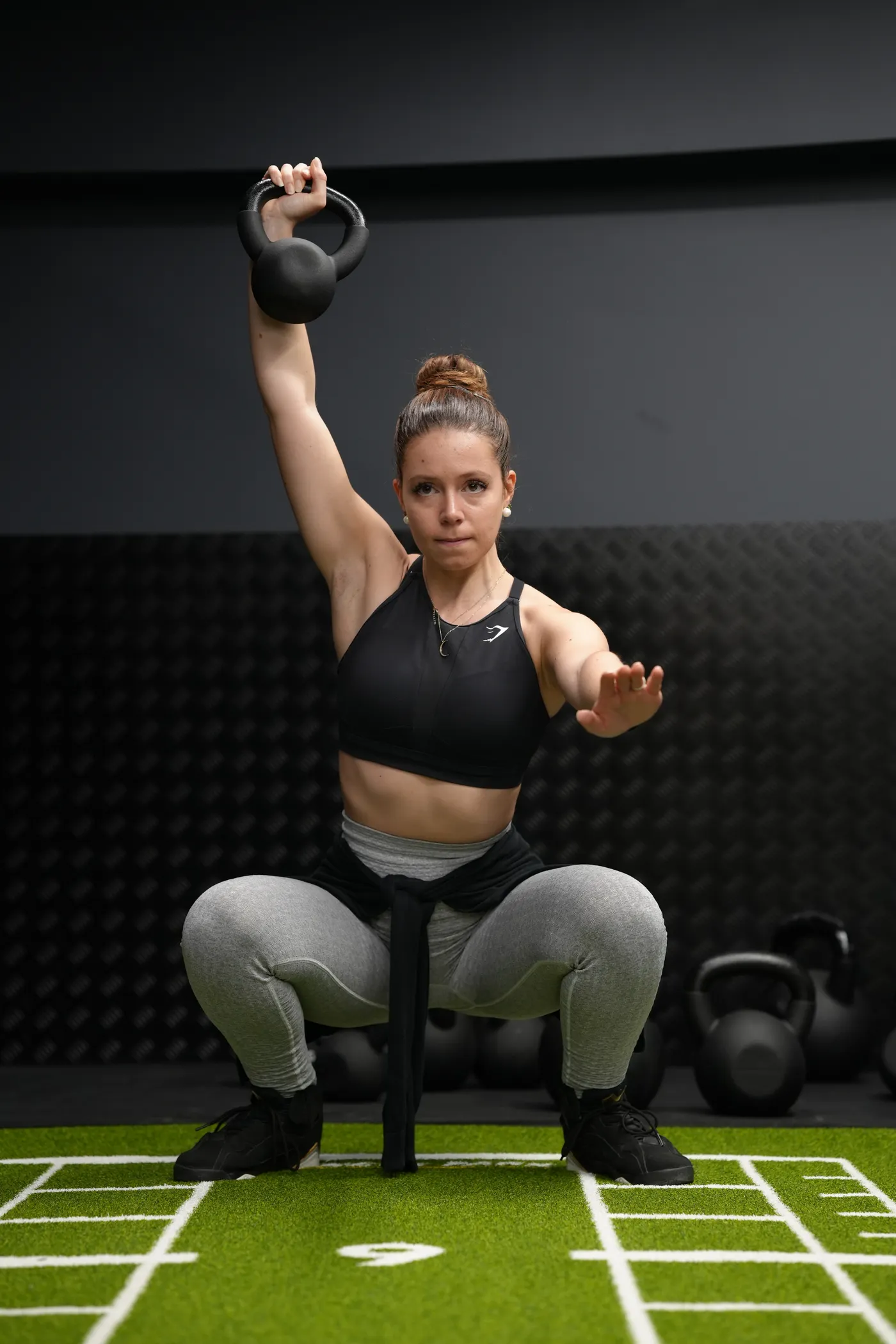
The shoulder blades move as the arms elevate, and the trunk must stay controlled rather than arching excessively to create the illusion of overhead range. A 2025 laboratory study found that changing elastic resistance altered scapular and trunk kinematics during overhead squats. That is useful mechanical evidence, but it does not prove that one band drill fixes every shoulder problem.
Begin with a dowel or light PVC pipe. Choose a grip that allows the arms to stay overhead without pinching or pain. Keep the elbows extended and the dowel roughly over the middle of the feet. A wider grip can reduce the shoulder range required, but an extremely wide grip is not a substitute for a stable position.
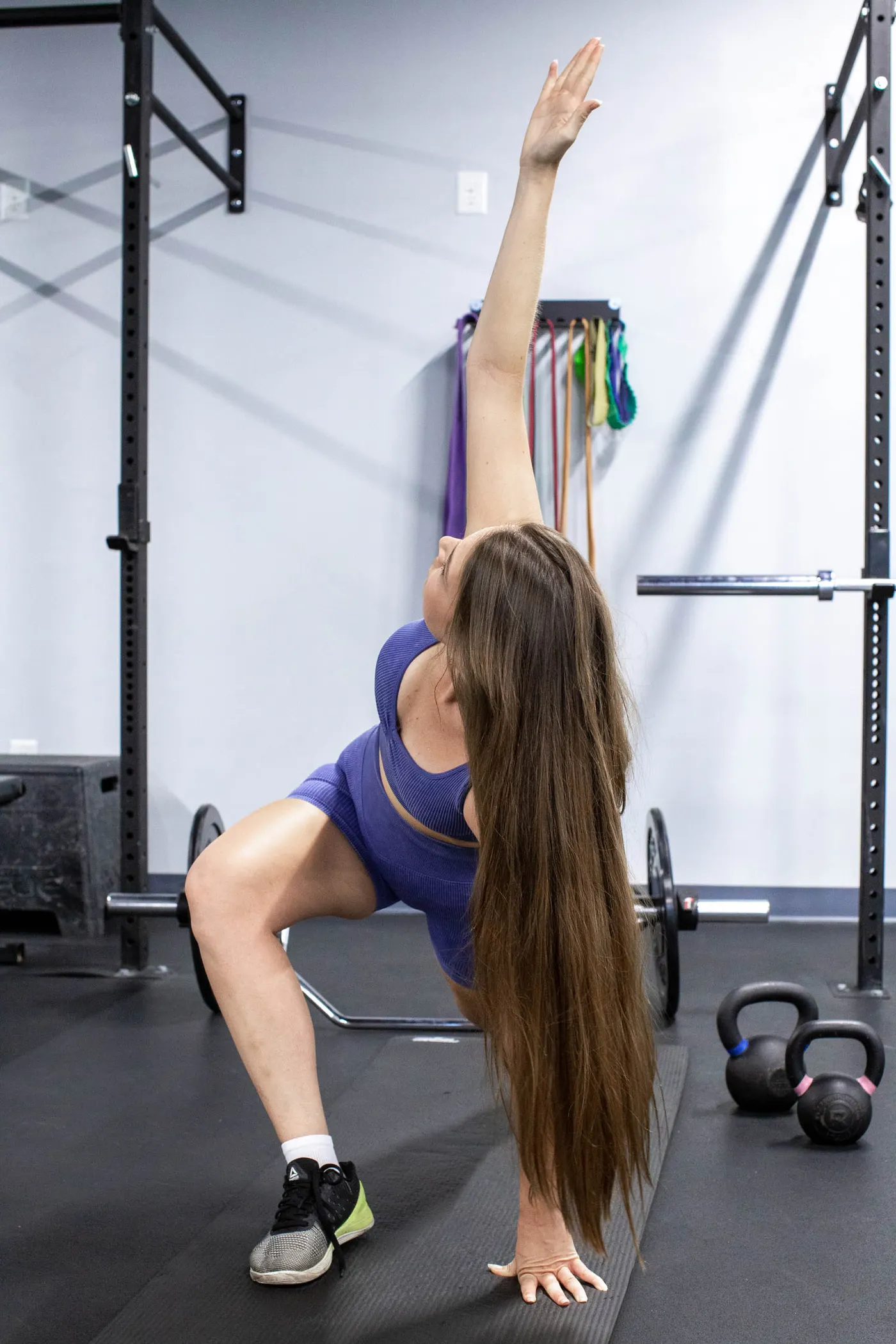
Two preparations work well: a controlled overhead reach and a wall-facing squat with the arms raised. During the reach, lift the arms without throwing the ribs forward. For the wall-facing squat, stand far enough away to descend smoothly while keeping the arms in position. Move closer only when the movement remains controlled.
If the bar falls forward, first reduce depth and resistance. Check whether the arms can reach the needed position while standing. If they cannot, forcing heavy overhead squats is unlikely to be productive. Shoulder pain, numbness or a history of instability deserves individualized assessment rather than repeated attempts to stretch under a load.
For many home-gym lifters, goblet or front squats make better main strength exercises while the overhead pattern is practiced as a separate skill. There is no rule requiring the most complicated squat to carry the most weight.
Four stages from bodyweight to a controlled barbell squat
Stage one: arms-up bodyweight squats. Perform three sets of five deliberate repetitions. Descend to the deepest comfortable position that preserves heel contact and a steady arm angle. Pause briefly, then stand without rushing. A shallower, clean repetition is better practice than an unstable deep one.
Stage two: dowel overhead squats. Use a broomstick or PVC pipe instead of a loaded bar. Perform three sets of four to six reps with a two-second descent. Keep the dowel above the midfoot and finish each set before fatigue changes your technique.
Stage three: build complementary squat strength. Goblet squats, front-loaded squats and light Frankenstein-style squats train useful leg and trunk strength while letting you practice an upright position. These are not identical to overhead squats, but they give the legs meaningful work without requiring the shoulders to hold a heavy load overhead.
Stage four: light barbell practice. Once the dowel pattern is repeatable, try an empty training bar in a clear, controlled area with appropriate safety equipment. Start with three sets of three to five reps. Do not increase depth and weight in the same session. If the bar drifts or the shoulders become uncomfortable, return to the previous stage.
These stages are checkpoints, not mandatory weekly promotions. An athlete may spend weeks on the dowel and still gain valuable positional awareness. If your primary goal is quadriceps growth, conventional squat variations are usually easier to progressively overload. Use overhead squats because you want the skill, not because every leg session needs to be more complex.
Equipment Worth Exploring
Explore equipment, accessories and gear from our carefully selected range.


Safety Squat Handles
Barbell squat handles that reduce shoulder positioning demands during high-bar squats.

Belt Squat Collar
Heavy-duty collar adapter for compatible belt-squat and landmine bar setups.

Squat Harness
Wearable harness for hands-free cable squats, sled work, and lower-body training.


A four-week overhead squat plan for a compact home gym
Practice twice per week with at least one day between sessions. Place the skill work near the beginning after five minutes of easy movement and gentle ankle, hip and shoulder preparation. Keep the main leg strength work separate so your overhead practice never needs to become a maximal-effort set.
Week one: Both days, do two sets of six knee-to-wall movements per side, five wall-facing squats and three sets of five arms-up bodyweight squats. Then perform three sets of eight goblet squats and two sets of eight rows. Record the stance and depth that feel most reliable.
Week two: Keep the mobility preparation. Practice three sets of five dowel overhead squats with a two-second descent and a brief pause. Follow with three sets of six to ten goblet or front-loaded squats, leaving two or three repetitions in reserve.
Week three: If the dowel position remains steady, perform four sets of four. Try a few empty-bar singles only if the overhead position is comfortable and the space and safety setup are appropriate. Otherwise repeat the dowel work. Add two sets of six split squats per side and a short anti-rotation core drill.
Week four: Complete three or four sets of three to five overhead repetitions at the most reliable level. Improve a small amount of depth or load, never both together. Finish with your usual lower-body squat or hinge work, choosing exercises that you can load with confidence.
Track technique, controlled depth and comfort rather than the number of plates. Stop the set for sharp pain, dizziness or loss of balance. Do not attempt heavy overhead work alone without a suitable safety strategy. Consistent practice matters more than a rushed promotion to a heavier bar.
Powerlifting Shirts & Lifting Gear
Powerlifting shirts and gym gear for squat, bench and deadlift lifters who live for heavy numbers.

Muscle Mommy Gym – Peach Booty Training Graphic for Gym T-Shirt
Make gym days more fun with “Muscle Mommy” style.


Gym Cult Occult Barbell Meme – Powerlifting Bodybuildin Hoodie
Show off your powerlifting humor in a laid-back “Gym Cult” hoodie.

Liftionaire Money Barbell Meme Workout Bodybuilding Fit T-Shirt
For laid-back days and lifting humor: “Liftionaire”.

Never Skip Leg Day Flamingo – Fitness Meme Decal for Wa Sticker
Stick a little “Never Skip Leg Day Flamingo” humor on your favorite gear.

More Plates More Dates | Weightlifting Meme Graphic Shi T-Shirt
Heavy lifts, good laughs, and a little “More Plates More Dates” energy.

I Love Deadlifts Muscle | Pink Heart Weight Plate Vest Tank Top
Add some deadlift attitude to training with “I Love Deadlifts”.

Deadlift Skull Explosion Pullover for Powerlifting Leg Hoodie
Show off your leg-day humor in a laid-back “Deadlift Skull” hoodie.

Flaming 45LB Weight Plate Fire Barbell Lifting T-Shirt
For laid-back days and powerlifting humor: “Flaming 45LB Weight Plate”.

9 Plates Deadlift Club Motivational Meme & Ultimate T-Shirt
Show some deadlift attitude with a playful “9 Plates Deadlift Club” tee.
Common form problems and what the evidence can actually tell us
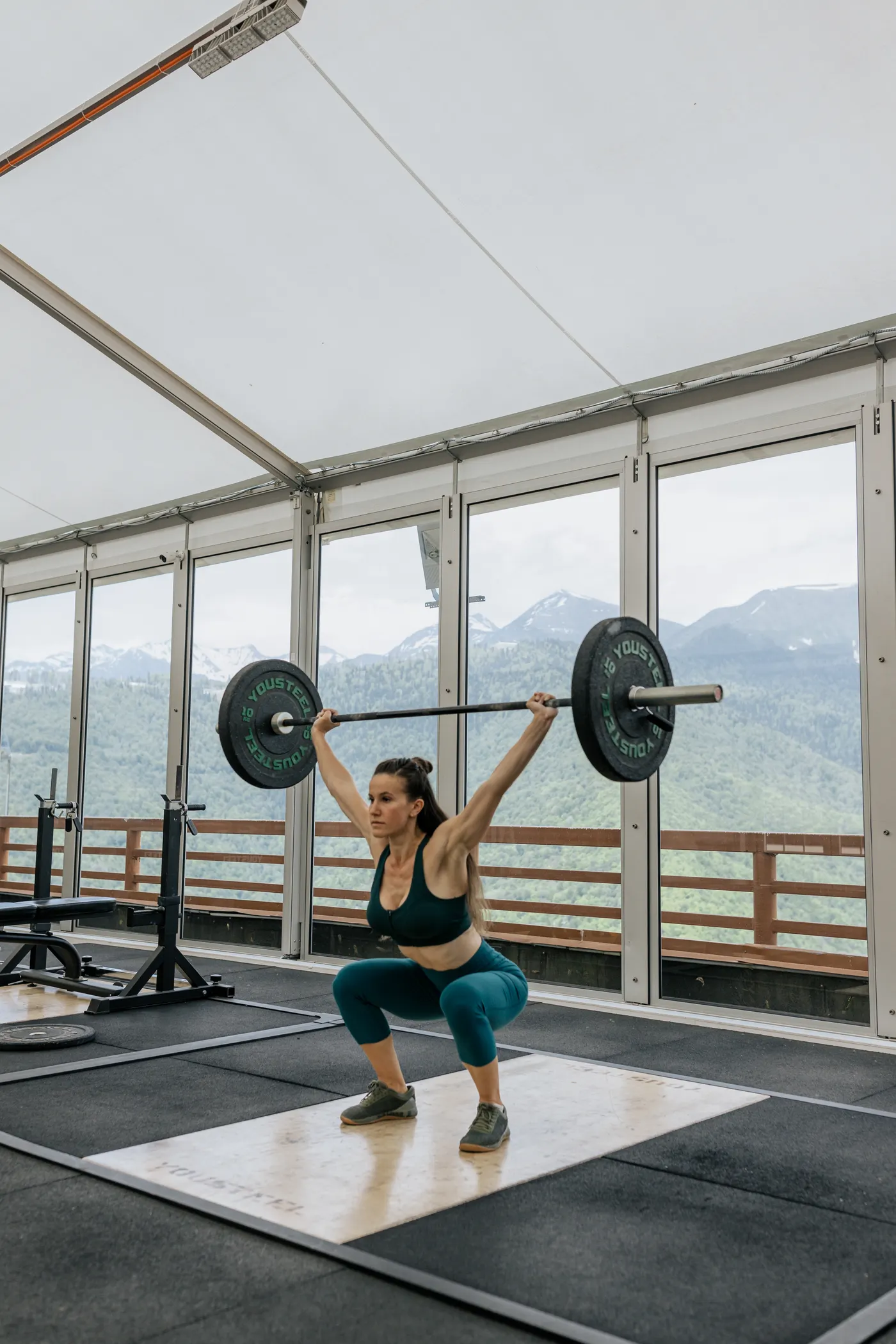
Heels rise: Reduce depth, review ankle range and test stance before increasing weight. A modest heel elevation may change the mechanics, but it cannot guarantee a sound squat.
The bar drifts forward: Check the standing overhead position, grip and upper-back control. Return to a dowel and use a shallower squat. If the shoulder cannot tolerate the position, substitute another squat variation.
Knees collapse or flare excessively: Slow the movement and keep the foot tripod grounded. Let the knees follow a comfortable path near the toes instead of forcing them outward. Some knee motion is normal; repeated painful or uncontrolled movement warrants closer attention.
The torso arches: Brace gently, keep the ribs from lifting excessively and check whether the shoulders can reach overhead without compensation. More weight rarely solves a mobility limitation.
Research comparing squat variations suggests that depth, stance, load position and stability demands change joint motion and muscle demands. But much of the literature consists of short laboratory studies, with limited evidence about long-term outcomes in diverse populations. Overhead squat assessments can describe movement differences; they do not diagnose injury risk from one imperfect repetition.
The strongest practical takeaway is to treat each cue as something to test. Build a comfortable position, practice it under light resistance, keep heavy leg work on exercises you control and progress only when the overhead pattern remains consistent. In a compact home gym, a dowel, a stable rack and a few carefully selected strength tools are enough to turn the overhead squat into a useful skill rather than a frustrating test of flexibility.