
Advertising disclosure: This page includes affiliate product links that may earn us a commission, as well as products from our own store.
Ray Ewry became an Olympic champion without needing a run-up. His events were the standing high jump, standing long jump and standing triple jump: familiar names with a crucial restriction. The athlete had to create the performance from a standing start, rather than bring speed down a runway.
That makes Ewry an unusually interesting figure for anyone who trains for strength or power. His career also comes with a counting problem. Eight Olympic gold medals and ten gold medals both appear beside his name. Understanding the difference makes the achievement clearer—and keeps a remarkable athlete’s story from becoming another exaggerated fitness legend.
The standing start was the challenge
Remove the approach and you change the task. A standing long jump asks the athlete to project the body horizontally from the takeoff position. A standing high jump asks for clearance over a bar. The standing triple jump adds a sequence of efforts after the initial standing takeoff. They share a starting constraint, but the winning result still depends on the specific event.
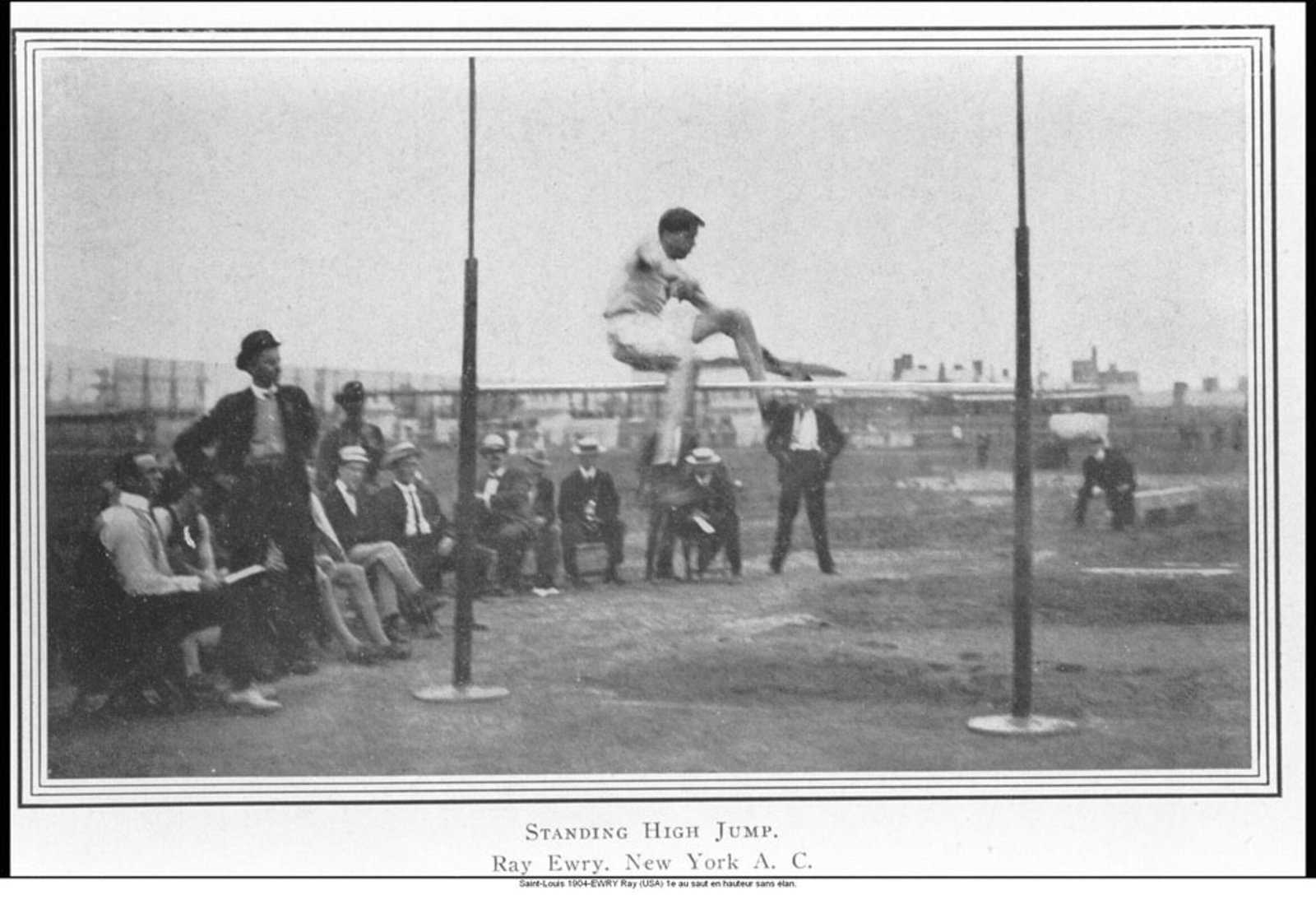
Ewry excelled across all three. That combination is more informative than calling him simply a man who could jump high. Distance, clearance and a sequence of contacts are different problems. A person watching one photograph should not assume that the same posture, timing or measurement explains every event in his medal collection.
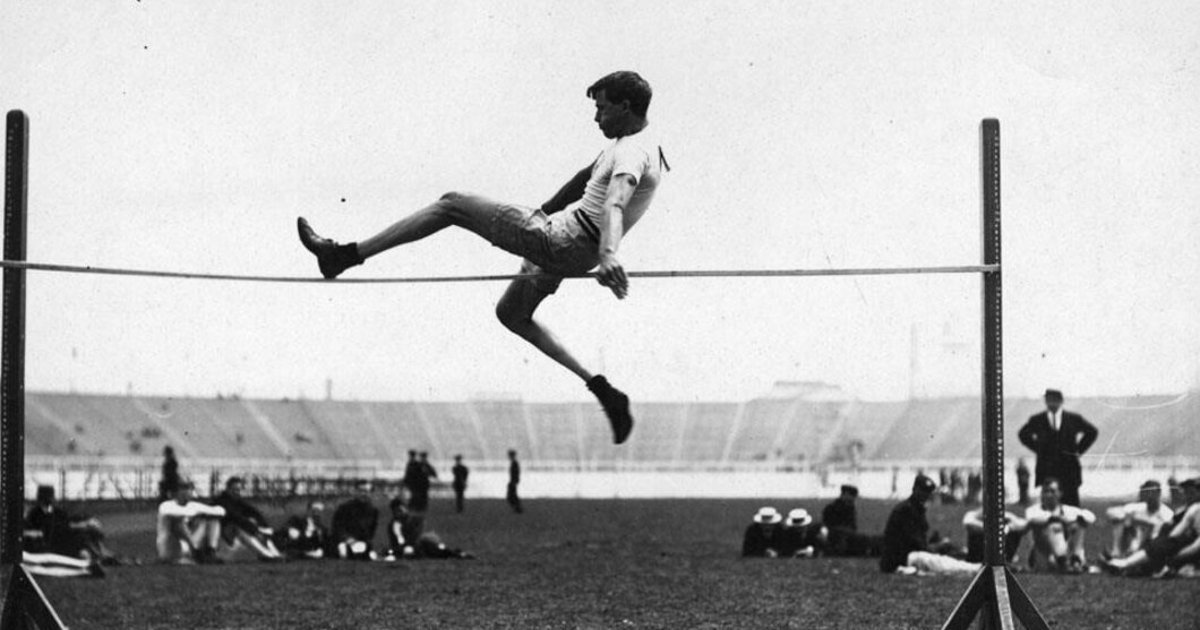
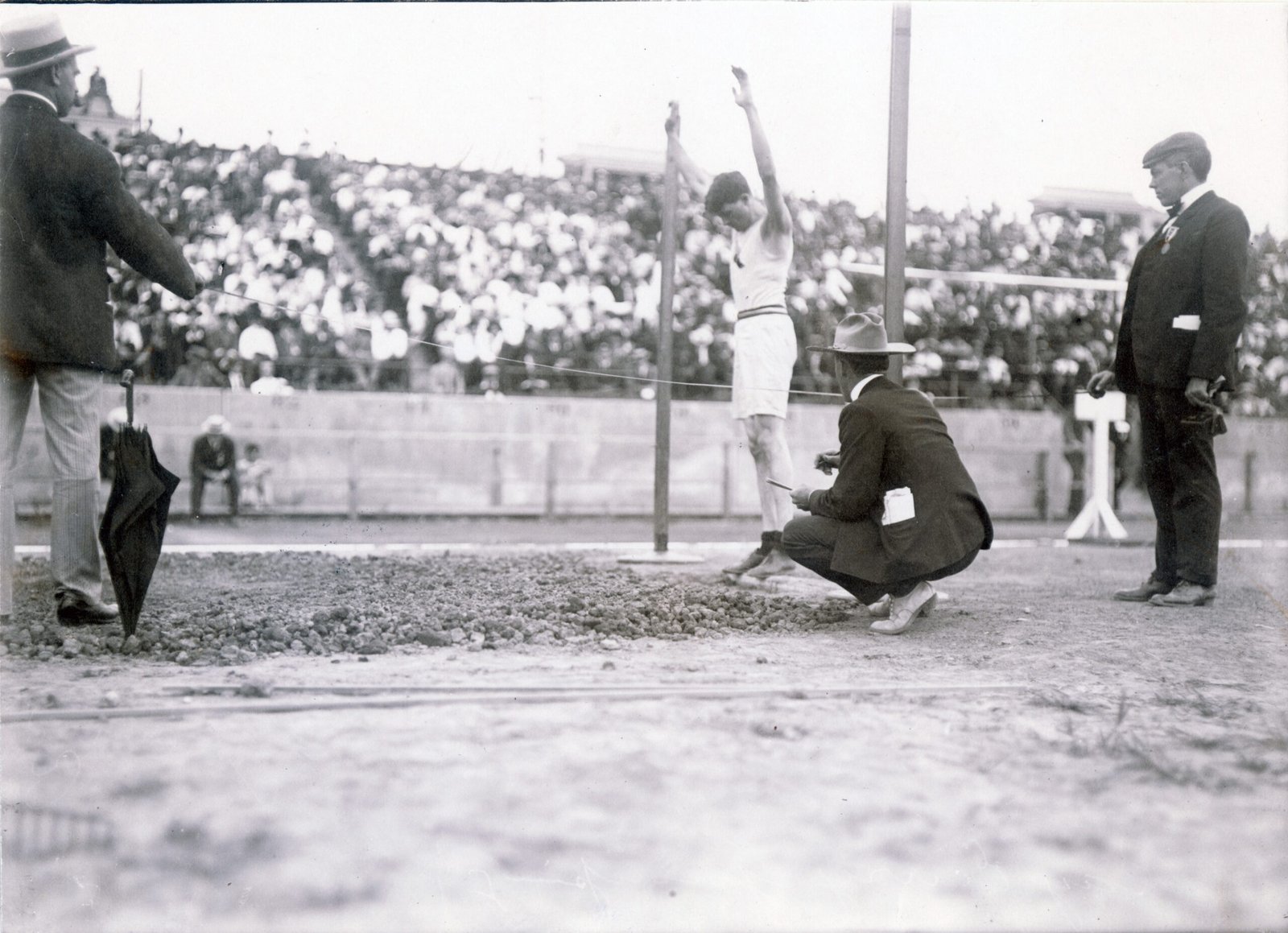
The photographs are striking partly because the apparatus looks so spare: uprights, a bar, a landing area and officials. There is little visual distraction from the athlete’s movement. Yet a simple-looking setup does not mean a simple performance. The task still involves coordinating the takeoff and arranging the body to satisfy the event’s rules.
It also deserves separation from the running high jump most viewers know today. Our account of how Dick Fosbury changed high-jump technique concerns a different event and competitive context. Comparing the two is useful for appreciating how the rules shape a skill, rather than treating every clearance as the same physical test.
Why the record says eight golds and sometimes ten
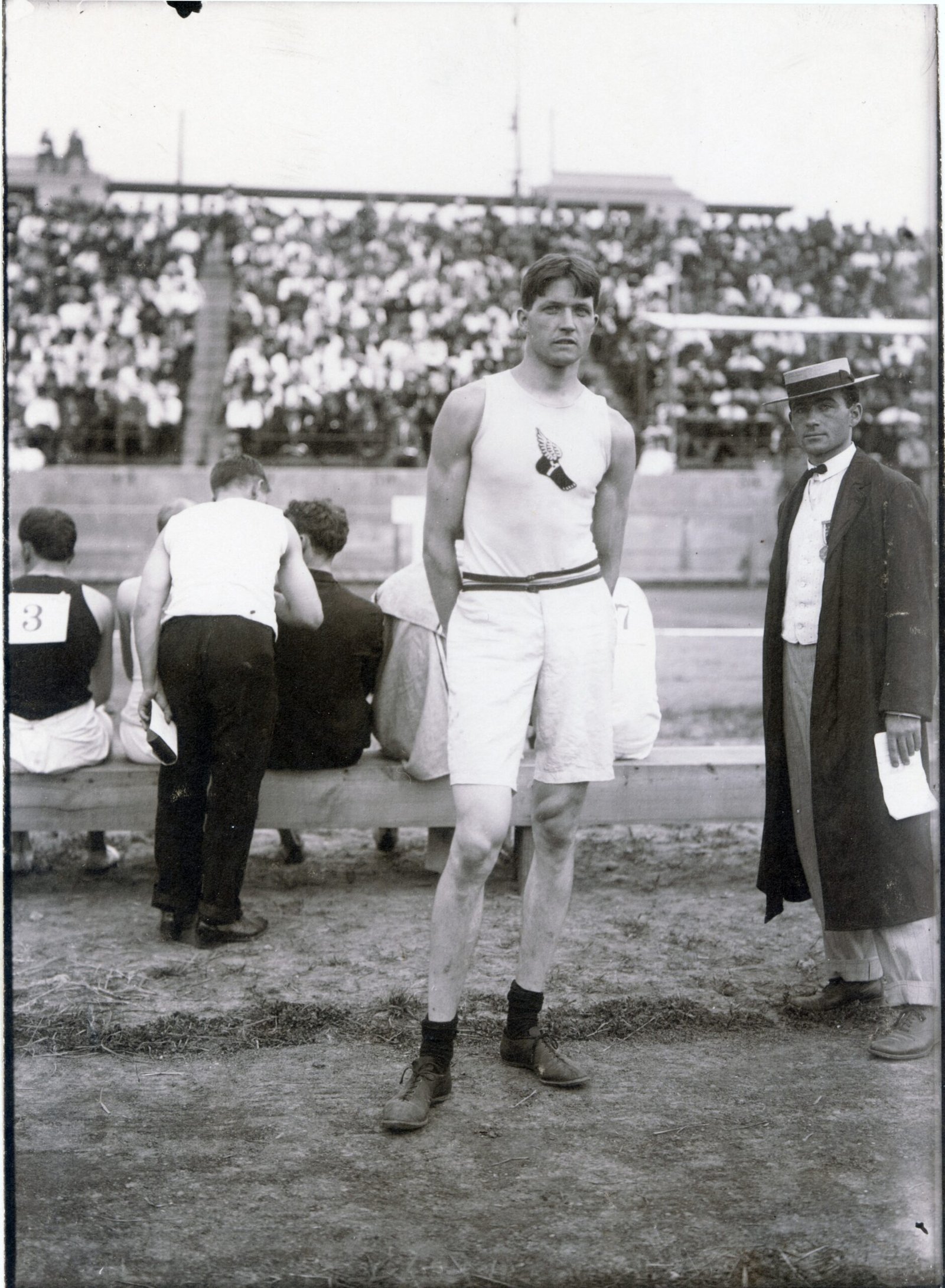
Ewry won three Olympic titles in Paris in 1900 and repeated that treble at St Louis in 1904. He then won the standing high jump and standing long jump in London in 1908. Those three Olympic appearances account for eight gold medals: three plus three plus two.
The additional two wins came in Athens in 1906, at the Intercalated Games. They were real competitions and real victories, but they sit separately from the modern Olympic medal tally. That is why a career summary including Athens can reach ten while the Olympic total remains eight. The difference is classification, not evidence that two performances were invented.
Keep that distinction when making comparisons. If one athlete’s number includes the Intercalated Games and another’s uses only the recognized Olympic tally, the headline has changed its counting rule halfway through. A short clarification is more useful than inflating or dismissing Ewry’s career to make a stronger-sounding claim.
This matters beyond Olympic history. Fitness records often depend on the equipment, event definition, bodyweight class or accepted judging standard. Before comparing two impressive numbers, identify what each actually counts. Ewry’s eight Olympic golds are extraordinary on their own; acknowledging the two Athens victories adds context without changing the category.
The final London double was a measured performance
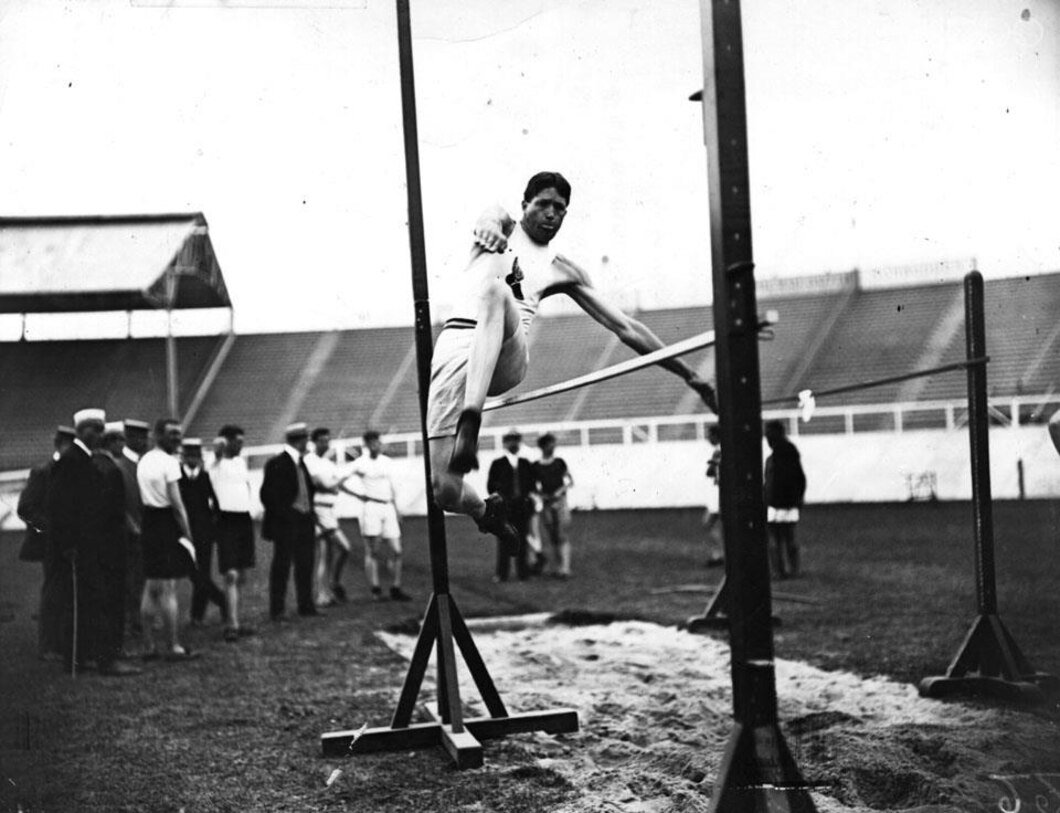
At London 1908, Ewry’s winning standing long jump was 3.33 metres. His winning standing high jump was 1.57 metres. The results give the story a scale that a medal total alone cannot provide. They also show why the event name must stay attached to the number: a standing long-jump distance is not a running long-jump distance.
The high-jump figure needs similar care. Bar height describes what was cleared, not a direct measurement of how far the athlete’s centre of mass rose from its starting position. Body position matters to clearance. Calling 1.57 metres a measured vertical jump of the whole body would turn a competition result into a different test.
Another useful distinction is between winning a championship and producing a personal best. The winning mark answers who won that competition under its conditions. It does not automatically identify an athlete’s best performance across every year, venue or measurement convention. Historical photographs are even less suited to supplying an exact height unless the attempt is independently identified.
Ewry’s repeated victories are therefore best appreciated with their event labels intact. The lasting fascination is his command of a demanding family of skills. There is no need to claim that one old result proves superiority over every modern sprinter, jumper or strength athlete competing under different conditions.
The athlete was also an engineer
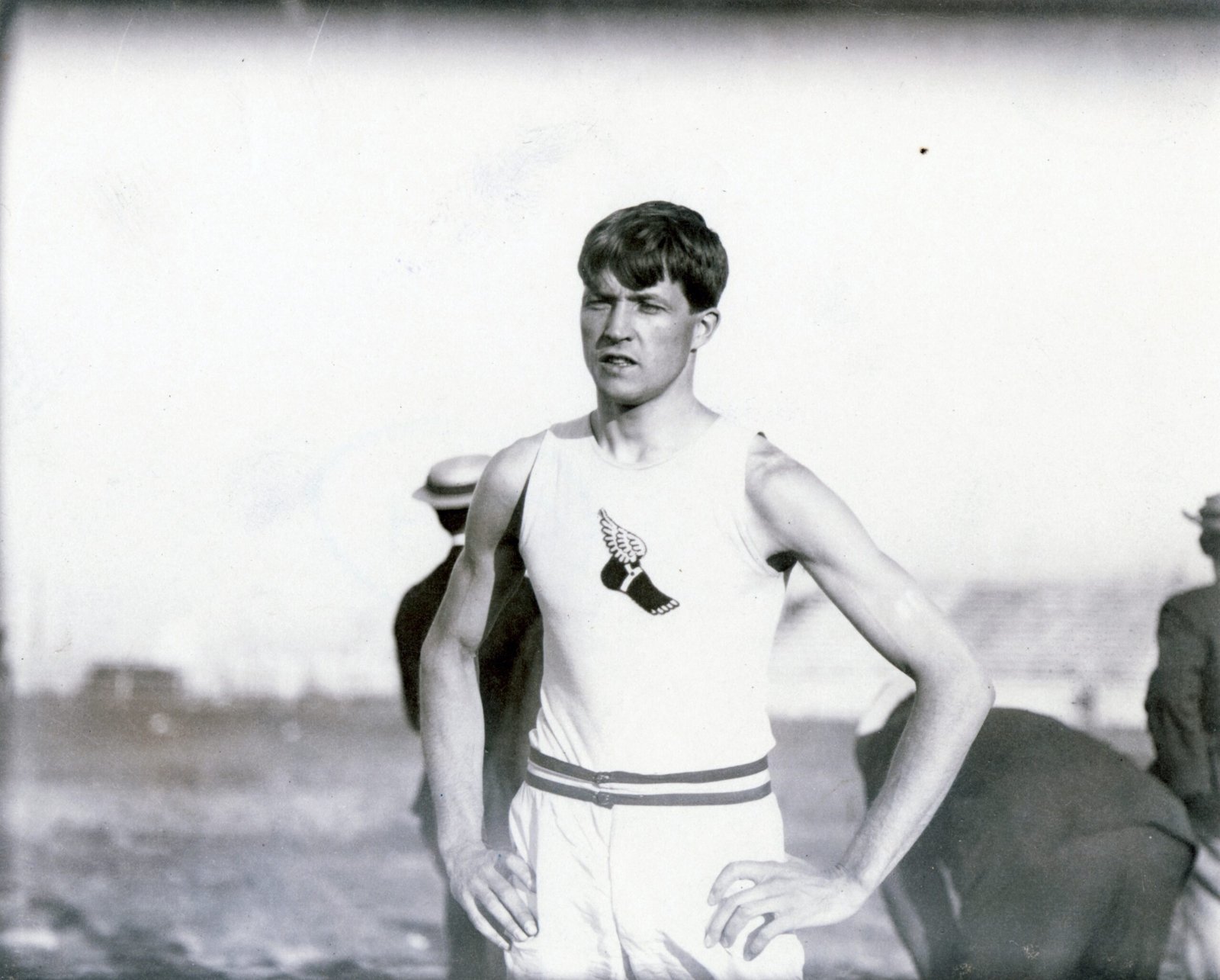
Ewry was born in Lafayette, Indiana, in 1873. He attended Purdue, took part in track and football, and worked as a hydraulics engineer. His sporting identity was not the whole of his adult life. That broader picture makes him more interesting than a medal statistic detached from the person who achieved it.
His childhood illness is also part of the documented biography: he had polio and experienced severe difficulty using his legs. His later athletic success is remarkable. It should not, however, be rewritten as proof that determination or a particular jumping workout can reverse another person’s medical condition.
A historical account cannot establish an individualized treatment plan. Nor does it give us enough information to reproduce every exercise, its progression, supervision or effect. Retelling the recovery respectfully means keeping the distinction between what happened in his life and what can responsibly be promised to someone reading about it now.
Early Olympic athletes often become one-line curiosities. Looking at their actual events and circumstances restores some of the detail. The story of Launceston Elliot’s one-hand lifting gold in 1896 offers another example: the feat becomes more meaningful when its original competition format stays attached to the name.
Take inspiration without inventing his programme
Ewry’s career invites a useful training question: what task are you trying to improve? A lifter might care about a standing broad-jump distance, a controlled landing or a sport-specific movement. Those are different goals from accumulating the largest possible number of tiring jumps. Decide which performance matters before treating every jumping exercise as interchangeable.
Standing jumps are also different from box jumps. A box adds a raised landing target, while a standing long jump measures horizontal distance. The height of a box should not be presented as the distance the body travelled upward. These distinctions make a training log more honest, even when the session has nothing to do with an Olympic event.
If you compare your own attempts, keep the procedure consistent: starting position, allowed arm movement, measurement method, surface and footwear. Record what you actually performed. A new procedure may be a useful exercise variation, but its result should not silently replace the old test in a progress comparison.
None of that requires claiming to know Ewry’s complete routine. His results document an exceptional competitor, not a ready-made programme for every reader. Appreciate the skill, preserve the counting rules and distinguish the historical achievement from your own training choices. The Human Frog’s story has enough substance to remain compelling without an invented secret workout.

Funny Gym Shirts & Workout Gear
Funny gym shirts, tanks, hoodies and workout gear for lifters who like training hard.


Meme : Obi-Wan'S High Ground Box Jumps T-Shirt
Show some bodybuilding attitude with a playful “: Obi-Wan's High Ground Box Jumps” tee.

Quadzilla Massive Quads Leg Day Squatting Meme Tank Top
Train hard, laugh a little, and rep “Quadzilla”.

Leg Day Is Calling You Decal Water Bottles & Sticker
Bring “Leg Day Is Calling You” attitude to your water bottle or laptop.

Never Skip Leg Day Chicken Legs Meme & Bros Hoodie
Show off your leg-day humor in a laid-back “Never Skip Leg Day” hoodie.

Leg Day Thou Shalt Not Skip Leg Day Medieval Gym Crewne T-Shirt
Show some gym-day personality with “Leg Day”.

Legendary Leg Day – Squat Meme Vest Muscle Shirt For At Tank Top
Add some leg-day attitude to training with “Legendary Leg Day”.

Never Skip Leg Day Flamingo – Fitness Meme Hooded Pullo Hoodie
Bring “Never Skip Leg Day Flamingo” gym humor to lazy days and post-workout plans.

Funny Gym Meme Graphic Tee
Show some leg-day attitude with a playful “Gym Meme Graphic” tee.






One Comment