Advertising disclosure: This page includes affiliate links that may earn us a commission at no additional cost to you.
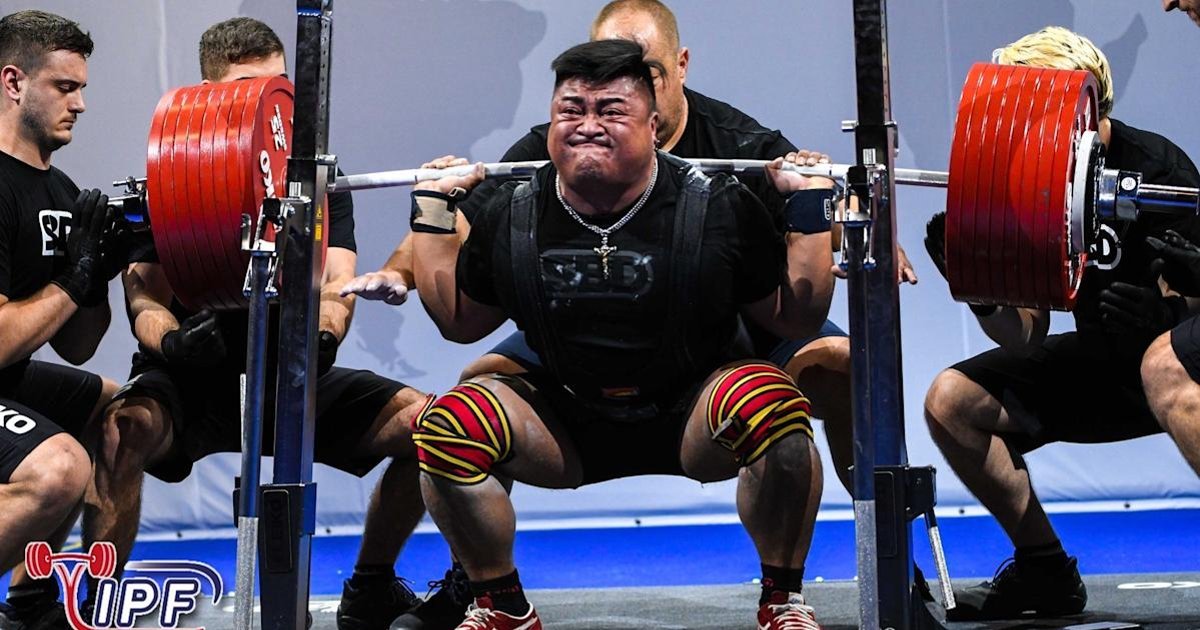
A lifting belt can make a challenging set of squats feel more secure. But does it actually improve performance, and is that feeling of stability the same thing as measurable balance? A 2026 experiment involving 49 adults offers a particularly useful distinction: wearing a belt helped participants complete more repetitions at the same load, even though objective measures of postural stability did not improve.
That distinction matters whether you are pursuing a stronger squat or simply deciding if a belt belongs in your gym bag. The evidence supports a potential performance aid, not a piece of equipment that guarantees a safer spine, bigger quadriceps or perfect technique. Here is how to interpret the experiment and incorporate a belt without becoming dependent on it.
What the 49-person squat experiment actually tested
The experiment included 29 men and 20 women. Each participant completed two testing sessions separated by one week. The researchers used a load based on each person’s six-repetition maximum without a belt. Participants performed sets to exhaustion with and without a belt, with the order randomized and reversed across the sessions. This helped separate the effect of the equipment from the effect of always testing one condition first.
With a belt, participants averaged 8.1 repetitions, compared with 6.5 without one. The difference was 1.6 repetitions at the same external load, or roughly 25% more repetitions relative to the beltless average. The average concentric phase, when the lifter rose from the bottom position, also took less time: 1.99 seconds versus 2.09 seconds.
These are group averages, not a prediction for every lifter. Some people may gain little from a belt, particularly if they are unfamiliar with the sensation or choose a poor fit. Others may find the difference substantial near the end of a demanding set.
It is also important to distinguish a beltless six-repetition maximum from a separate belted six-repetition maximum. Because the experimental load was established without a belt, participants were effectively asked how their performance changed when the equipment was added. The experiment does not tell us how much heavier each individual could squat for one repetition while belted.
For programming, the meaningful finding is that the belt can alter the difficulty of a fixed-load set. If you regularly change whether you use a belt, a training log that records only the weight and repetitions may conceal an important difference between sessions.
More repetitions does not mean better balance
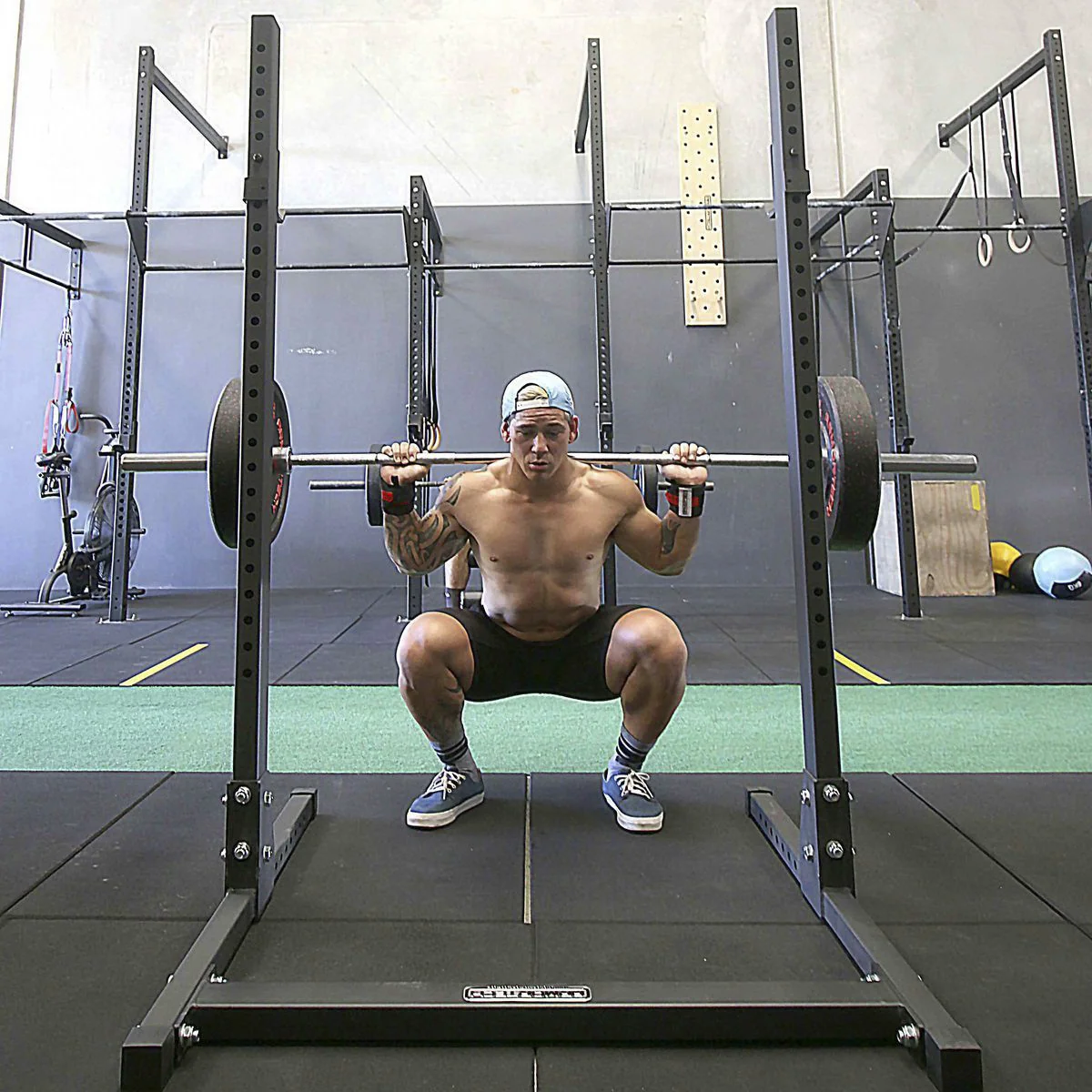
Participants reported feeling more stable when wearing a belt. Yet the force-platform measurements did not show an improvement in objective postural stability. Among experienced belt users, a normalized measure of sway path was even slightly greater in the belted condition. That does not establish that belts make squatting dangerous; it illustrates why perceived support and a specific laboratory balance measure should not be treated as interchangeable.
A force platform measures aspects of how a person interacts with the ground. It does not directly measure the stress on every spinal structure, the quality of every joint position or the chance of an injury months later. Feeling more confident may be valuable, especially when approaching difficult loads, but confidence is not a substitute for appropriate loading or controlled technique.
The same distinction applies when interpreting the repetition result. More repetitions in an acute experiment demonstrate improved performance under those conditions. They do not automatically demonstrate greater muscle growth. A long-term comparison would need to account for training volume, effort, recovery, load progression and changes in technique over weeks or months.
Imagine two lifters who both squat 100 kg for six repetitions without a belt. One adds a belt and achieves eight repetitions at the same weight, while the other still achieves six. The first lifter has a useful new way to organize training, but neither lifter has established that a belt prevents injuries or is essential for progress. Their response is information to use in programming, not a reason to make every set a maximal test.
How a belt changes the way you brace
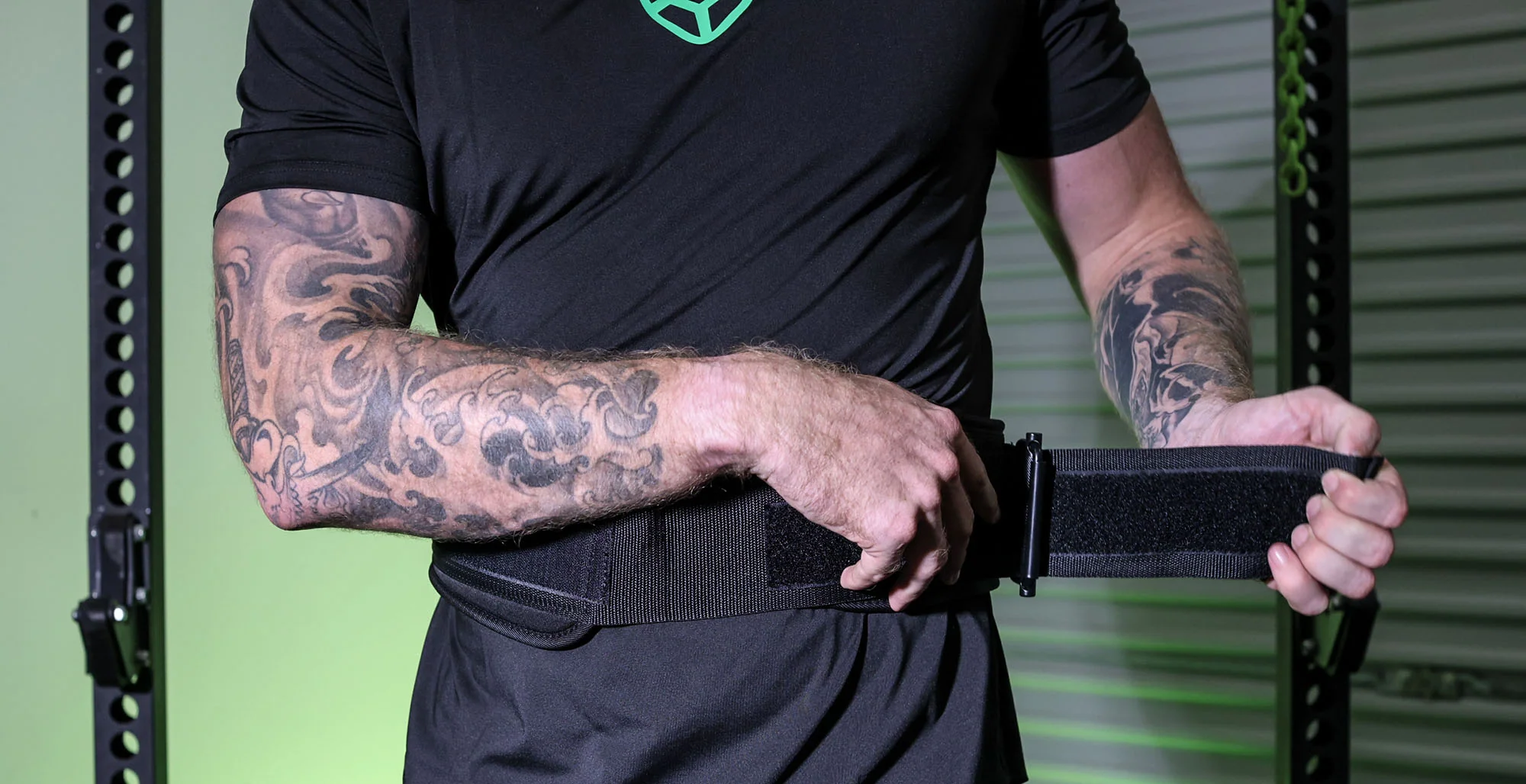
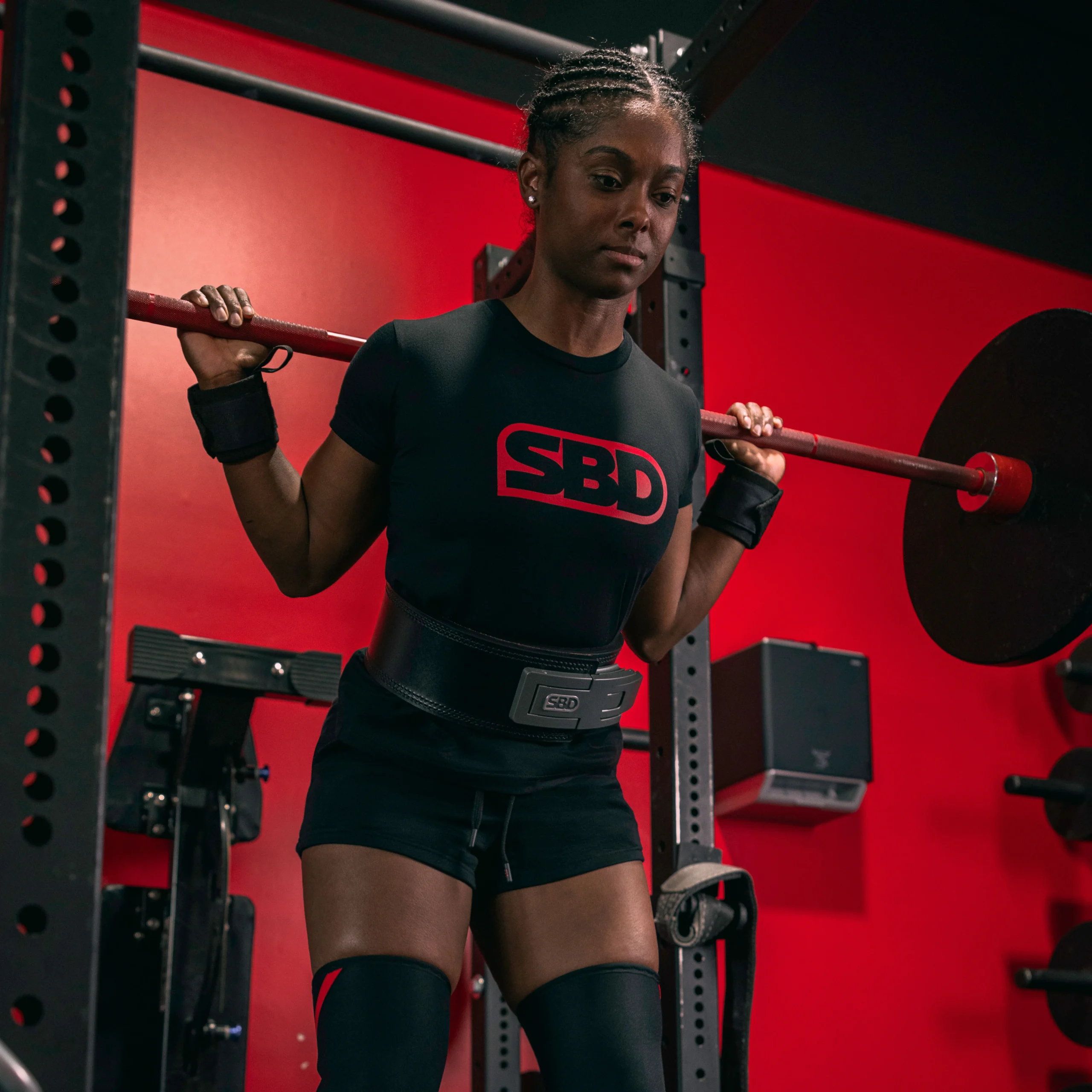
A belt gives the trunk something to expand against when the lifter braces. It is not intended to pull the waist as small as possible or to hold the torso rigid without any active muscular effort. The objective is to create a repeatable trunk position while maintaining enough tension to transfer force through the movement.
Earlier squat experiments help explain the potential mechanism. A small 1992 experiment involving five participants using an eight-repetition-maximum load measured intra-abdominal pressure that was approximately 25% to 40% higher with a belt. The repetitions were also generally faster. A separate 2001 experiment involving 14 healthy men squatting at 90% of their one-repetition maximum reported faster performance with a belt without significant differences in the measured muscle activity or joint kinematics.
These small experiments are useful physiological clues rather than proof of a universal benefit. A six-person lifting experiment from 1990 also showed that abdominal pressure varies with breathing and belt use. Together, the findings suggest that the belt changes the conditions under which the lifter creates pressure and performs the task, not that it supplies strength on its own.
To practise, start with a comfortably snug fit around the trunk. Take a controlled breath, expand the abdomen and sides against the belt, and establish tension before beginning the descent. Maintain that tension through the difficult portion of the repetition and reset your breathing as appropriate between repetitions. A belt that pinches, slides into the ribs or prevents you from reaching your normal squat depth is not necessarily better simply because it is tighter.
Rigid leather and more flexible nylon belts can feel quite different. The useful comparison is whether the belt allows you to reproduce your preferred brace and range of motion. Thickness, buckle type and stiffness are matters of fit and application, rather than reliable predictors of how many repetitions you will gain.

Equipment Worth Exploring
Explore equipment, accessories and gear from our carefully selected range.


Foldable Wall Rack
Wall-mounted folding squat rack designed to save floor space between workouts.


Competition Plates
Competition-style bumper plates for Olympic lifts and loaded strength training.

Grip Plates
Rubber-coated weight plates with handholds for loading barbells and machines.

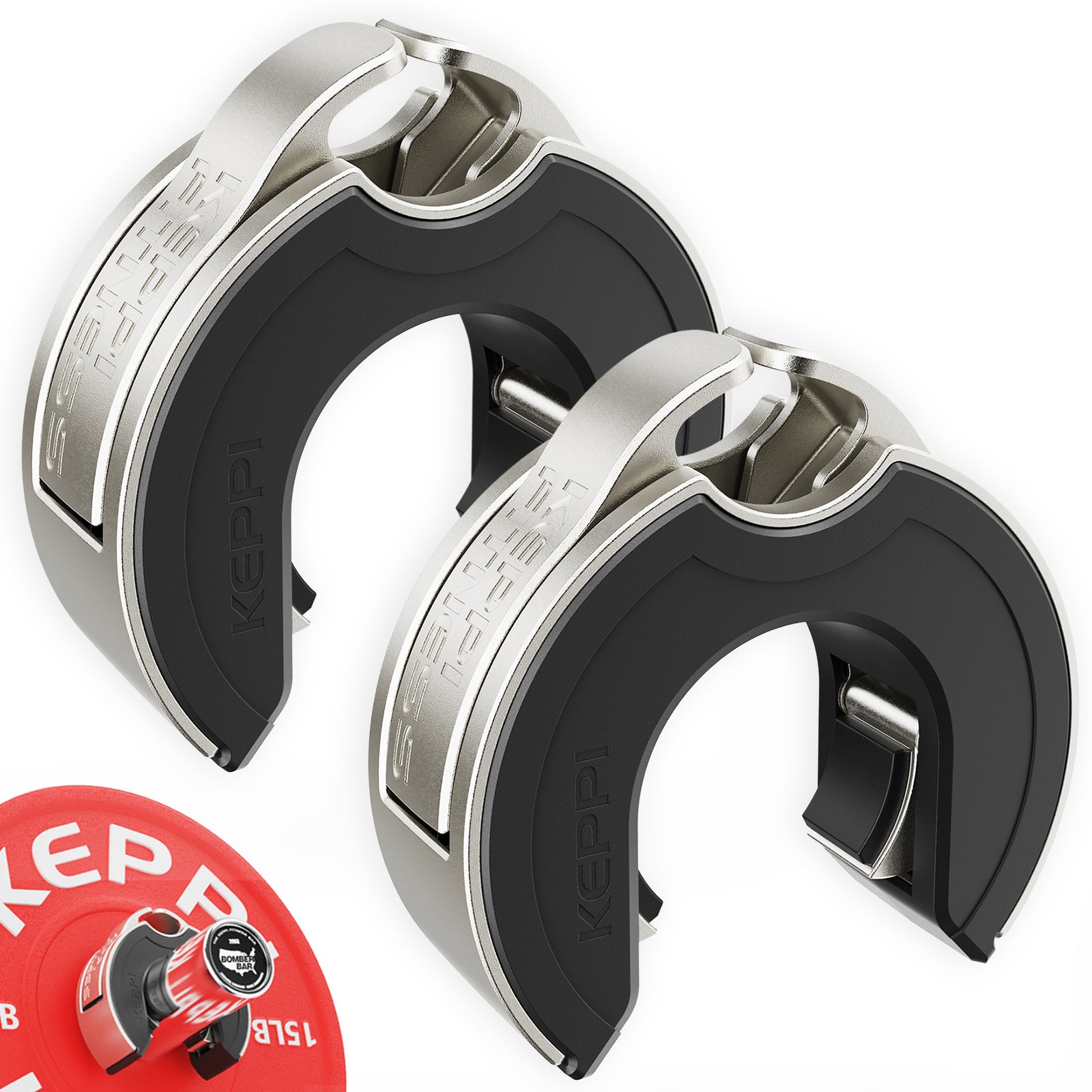
Keppi Open Collars
C-shaped magnetic Olympic barbell collars with a quick-lock mechanism and grippy lining.
A practical four-week belt and beltless squat plan
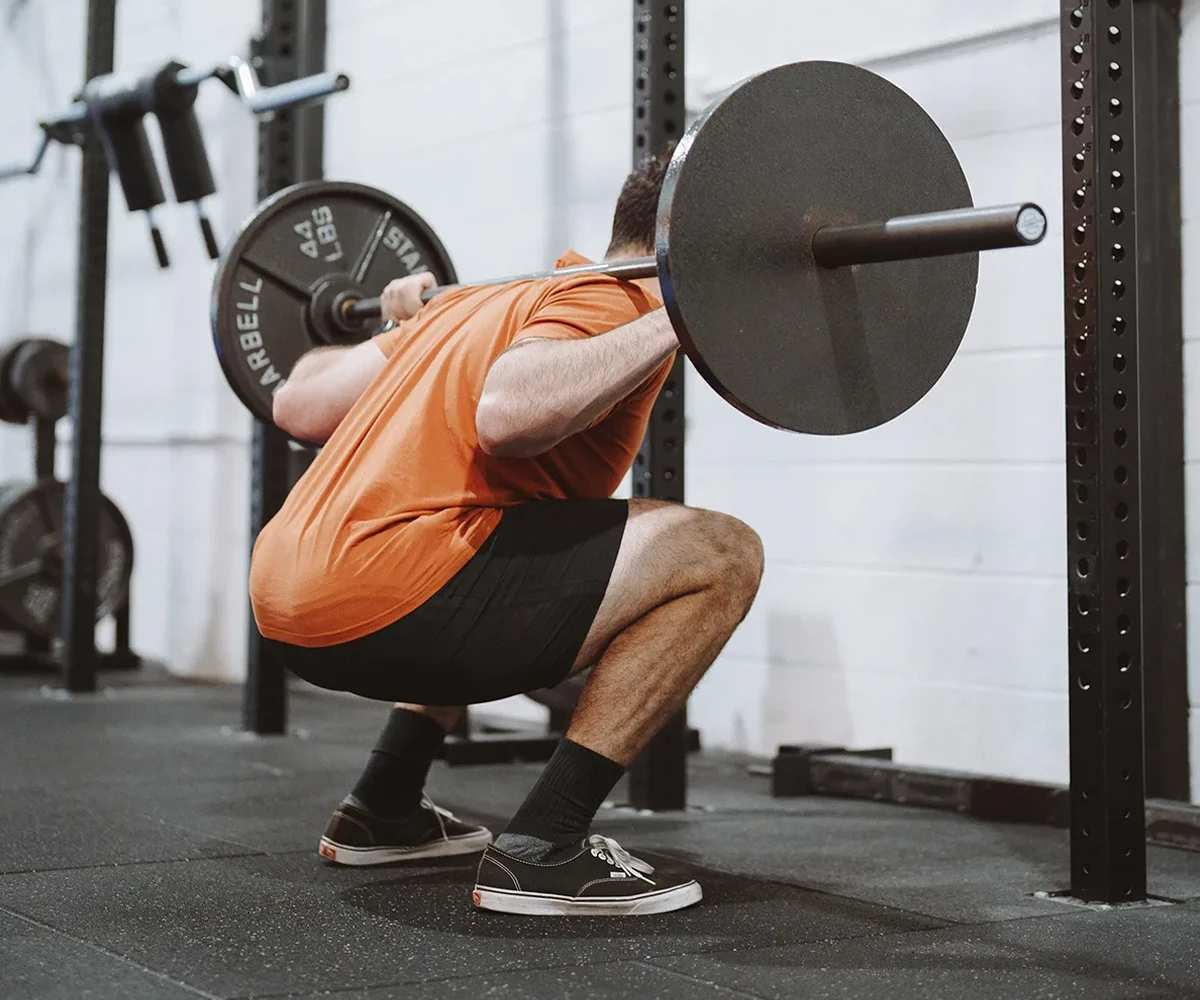
A simple way to introduce a belt is to retain beltless practice and use the belt selectively for harder work. This example assumes two squat sessions per week and a lifter who already knows how to perform a controlled squat. Choose loads using repetitions in reserve, meaning the number of technically sound repetitions you believe you could still complete.
Week 1: On the first day, perform three beltless sets of five with approximately three repetitions in reserve. On the second day, use the same general effort target for two beltless sets and one belted set. The goal is to learn the fit and breathing pattern, not to compare maximum performance immediately.
Week 2: Keep the first session beltless. On the second day, perform a belted top set of five with two repetitions in reserve, followed by two easier beltless sets of six. Record the load, depth, perceived effort and whether the belt was used.
Week 3: Repeat the structure and add a small amount of load to the belted top set only if the previous week’s effort and technique support it. Keep the beltless work controlled. Do not increase both the weight and the number of hard sets just because the belt feels supportive.
Week 4: Reduce the amount of hard work if fatigue has accumulated. Compare a familiar load under the two conditions using similar warm-ups, rest intervals and depth. You can stop at a predetermined effort rather than attempting a maximum. A phone video from the same angle may help you notice changes in depth or bar path, though it cannot replace laboratory measurements.
The useful comparison is not merely the largest number on the bar. Consider how the same load moves, how much effort it requires and whether your technique remains consistent. A belt might allow extra productive repetitions, or it might primarily make a heavy set feel more predictable. Either can be valuable if it fits your goal and recovery capacity.

Powerlifting Shirts & Lifting Gear
Powerlifting shirts and gym gear for squat, bench and deadlift lifters who live for heavy numbers.

I Love Squats | Valentine's Leg Day Hooded Hoodie
Keep it laid-back with a little “I Love Squats” attitude.

Heavy Metal Skeleton Squat for Powerlifting, Bodybuildi Tank Top
Bring “Heavy Metal Skeleton Squat” humor to your next lifting session.

6 Plates Squat Club Meme Shirt – Motivational Leg T-Shirt
Bring “6 Plates Squat Club” humor to your next gym day.

Don'T Fart Squats Sweater & Leg Day Meme T-Shirt
Show some gym-day personality with “Don't Fart Squats”.


Quadzilla Massive Quads Decal Leg Day Squat Meme Sticker
Stick a little “Quadzilla” humor on your favorite gear.

Squatbucks Gym | Funny Starbucks Parody Workout Decal | Sticker
Stick a little “Squatbucks” humor on your favorite gear.

Leg Day Leg Sweater Squats & Meme T-Shirt
Bring “Leg Day” humor to your everyday gym style.

Funny Squat Game Gym | Squid Game Parody Muscle Shirt F Tank Top
Your gym-day look, with a playful “Squat Game” twist.

Yesterday I Skipped Leg Day – Beatles Rock Music T-Shirt
Make gym days more fun with “Yesterday I Skipped Leg Day” style.
When a belt is useful and when it is not
If you are training for a competition where belts are allowed, using your intended belt for some demanding sets makes sense. It lets you practise the actual conditions under which you expect to lift. If you train for general strength or muscle growth, you have more flexibility: keep a belt for difficult sets if it helps, and leave it off when it offers no meaningful benefit.
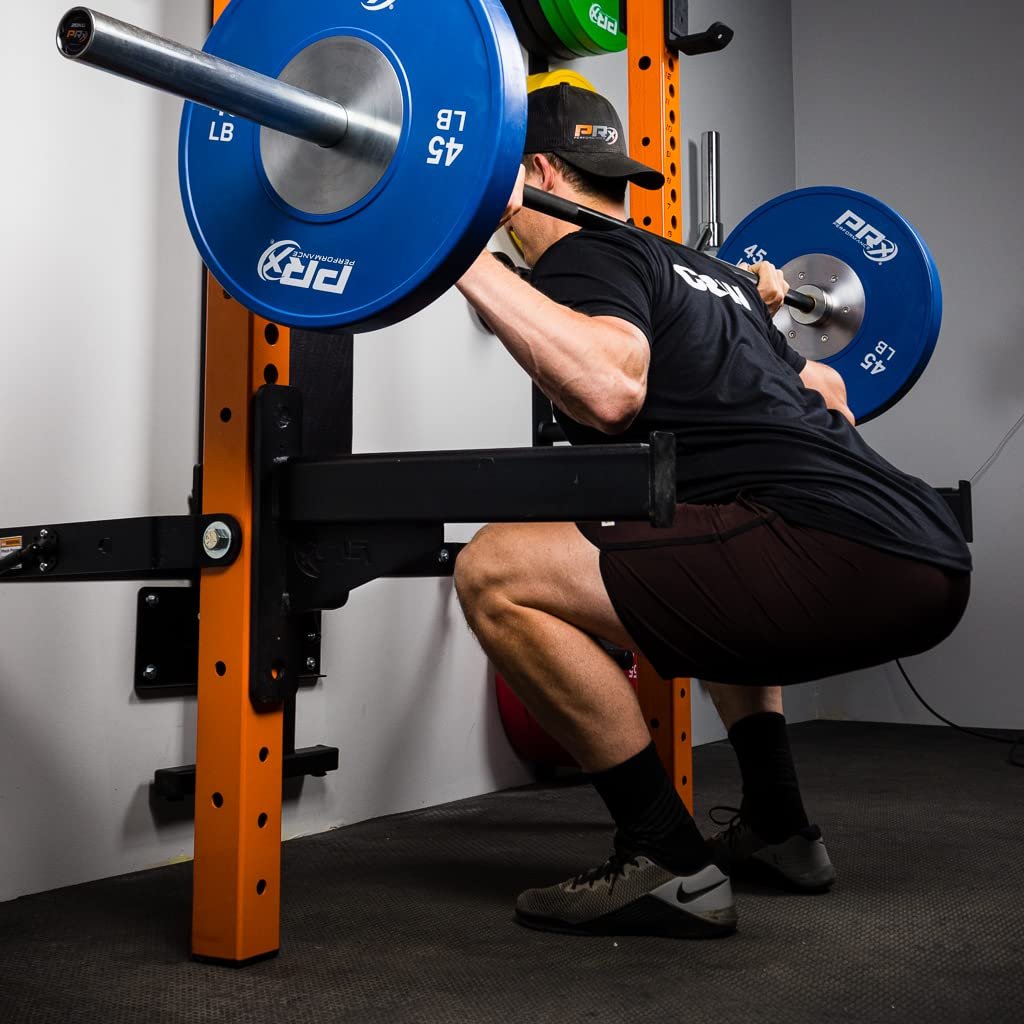
Use a rack with correctly positioned safeties and secure plates, and avoid turning an ordinary workout into an exhaustion test without an appropriate setup. The fact that an experiment included sets to exhaustion is not a recommendation to copy that protocol every week. A machine-based squat or belt squat can also be useful for training the legs, but it is a different task and should not be treated as a direct replication of the barbell experiment.
People who experience pain, dizziness or unusual symptoms while lifting should stop and seek appropriate professional guidance. A lifting belt is not a treatment for back pain. Heavy bracing and breath holding can temporarily raise blood pressure, so people with relevant medical conditions should discuss suitable lifting and breathing strategies with a qualified clinician.
The strongest takeaway from the 49-person experiment is that a belt may help you perform more repetitions at a fixed squat load while improving your subjective sense of support. It does not guarantee improved objective balance or establish injury prevention. Treat the belt as one optional tool in a broader strength programme, and judge its value by what happens to your own repeatable, well-controlled training.