It is tempting to treat a stronger squat or a heavier row as a direct ticket to a faster 2,000-metre ergometer time. The relationship is real, but rowing is more complicated than a weight-room personal record. Every stroke asks the legs, trunk and upper body to coordinate force while the athlete manages breathing, rhythm and fatigue. A 2026 research review offers a useful way to separate the strength qualities associated with speed from the training choices that actually build it.
Some product links may be affiliate links, which can support Mind Muscle Perfection at no additional cost to you.
1. What the 2026 rowing review measured – and what it did not
The review screened 1,435 research records and included 11 studies that examined relationships between neuromuscular strength measures and rowing-ergometer performance. The authors combined results when at least three studies tested a comparable strength measure. Most included participants were trained rowers, and the performance outcome was often a 2,000-metre time trial or the power produced during it.
The headline finding was a strong association between maximal strength and faster rowing. Combined estimates linked leg-press or back-squat strength with 2K performance at roughly r = -0.72, and bench-pull strength at roughly r = -0.71. The negative sign is not bad news: when the outcome is completion time, lower is faster. In practical terms, stronger athletes tended to post quicker times.
That does not establish that adding 20 kilograms to your squat will automatically remove a predictable number of seconds from your 2K. Stronger rowers may also have more training years, greater lean mass, better aerobic fitness or superior technique. The studies measured associations, not a controlled experiment in which every athlete received the same lifting intervention and nothing else changed.
Five regression studies combined strength with physiological and body-size variables and explained between 54% and 97.5% of the variation in rowing outcomes within their samples. Such models can fit a particular group very well without being a reliable universal prediction tool. Use the review to identify qualities worth developing, not to turn one gym number into a race-time calculator.
2. Leg strength matters because the stroke begins at the footplate
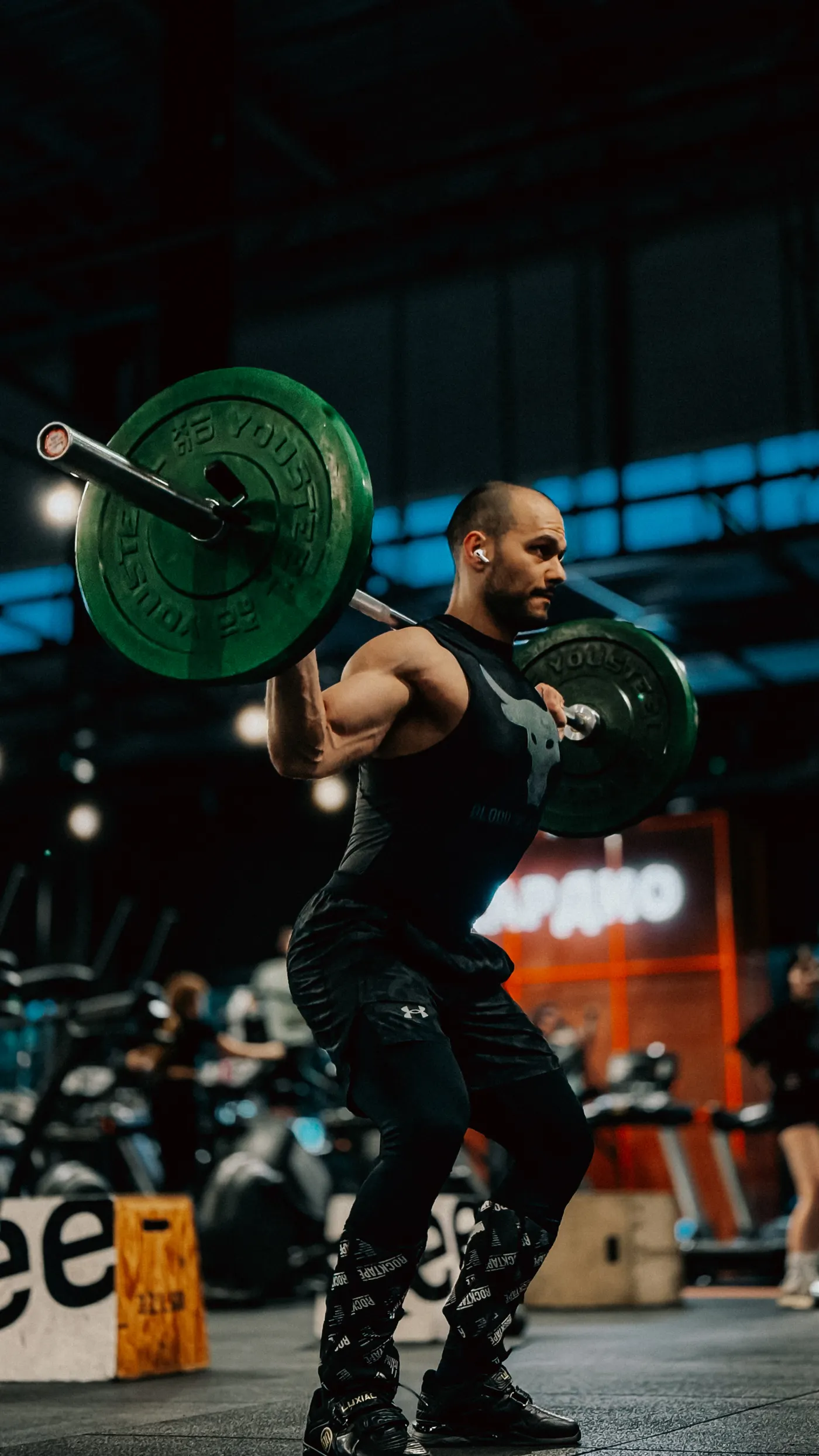
At the catch, the rower is compressed toward the front of the slide with the arms extended and the torso braced. The drive begins by pushing through the legs while keeping the handle connected to the flywheel or oar. The knee and hip extensors generate substantial force; the trunk then helps transmit it before the arms finish the stroke. That is why lower-body strength tests show up so consistently in performance research.
The squat and leg press are useful proxies for the ability to produce force through the legs. They are not identical to rowing. A squat uses a vertical load and a different range of motion; an ergometer requires coordinated horizontal force, controlled sequencing and repeated strokes under fatigue. The best translation is to build strength while also practicing the movement that needs it.
For a rower who already trains regularly, a sensible starting point is two or three challenging working sets of a squat or leg-press variation, usually with a few repetitions left in reserve. Moderate-to-heavy sets of roughly three to eight repetitions can develop strength without turning every session into a maximal test. Beginners can work with lighter loads and a broader repetition range while learning consistent depth and trunk control.
Strength does not require constant grinding. A technically sound rep that slows slightly under load is different from a lift that breaks position and demands a long recovery. If heavy squats leave the legs sore for three days and compromise important rowing intervals, reduce the lifting volume, separate hard sessions or choose a less fatiguing variation.
There is also a ceiling to specificity: the leg press may be a useful measure of force capacity, but it does not teach a clean catch or an efficient recovery. Build the engine in the weight room and learn to apply it on the erg.

Equipment Worth Exploring
Explore equipment, accessories and gear from our carefully selected range.

GymPin Barbell Row Handle
Heavy-duty handle attachment for barbell, landmine and T-bar rows.

T-Bar Row Attachment
Welded barbell attachment that connects a D-handle bar for landmine and T-bar rows.


GymPin Squat Wedges
Non-slip 15-degree squat wedges help elevate the heels for deeper quad-focused squats.

FID Bench MAX
Adjustable bench offering flat, incline, and decline positions + adjustable headrest.

Leather Lifting Straps
Padded leather straps support grip during heavy rows, deadlifts and pulling exercises.
3. Why upper-back pulling strength tracks rowing performance
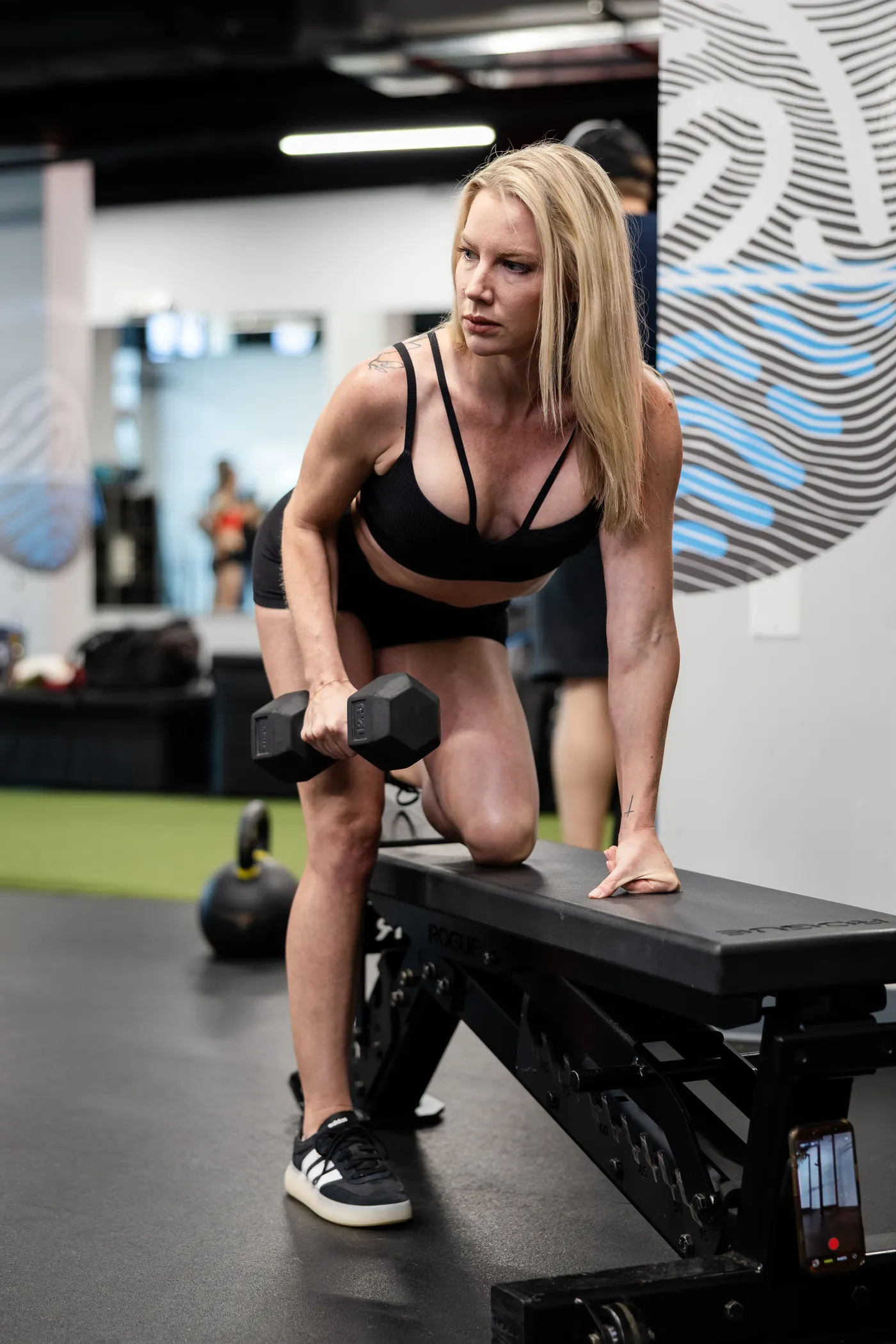
The bench pull is especially interesting because it tests a strong horizontal pulling action with the torso supported. In the 2026 review, maximal bench-pull strength was closely associated with faster ergometer performance. That makes mechanical sense: the upper back and arms contribute to the final part of the drive and help keep the handle path controlled as force passes from the legs through the trunk.
Still, rowing is not an endless sequence of arm curls. A common beginner error is to bend the elbows too early, stealing time from the leg drive and encouraging a rounded, cramped finish. The hands should stay connected to the movement without becoming the first engine in the chain. Better pulling strength is valuable when it supports that timing.
A chest-supported row, bench pull, cable row or controlled barbell row can build the muscles used to retract and stabilize the shoulder blades. Choose a version that lets you move through a repeatable range without jerking the torso. For most athletes, two or three sets of six to twelve repetitions provide a practical complement to heavier leg work. A neutral or slightly wider grip can be selected for comfort rather than treated as a secret performance hack.
Grip endurance matters, but squeezing every handle as hard as possible is not always the goal. Rowers need to maintain a secure connection while keeping the forearms and shoulders relaxed enough to preserve rhythm. Heavy carries or short hangs can add grip capacity, yet they should not leave the hands so tired that technical rowing suffers.
The most useful test is whether stronger pulling coincides with cleaner late-race strokes, not merely a larger gym number. If the handle path changes under fatigue, a technical correction may help more than another heavy set.

Powerlifting Shirts & Lifting Gear
Powerlifting shirts and gym gear for squat, bench and deadlift lifters who live for heavy numbers.

Back Sabbath Back Day Heavy Metal Back Training Workout T-Shirt
Bring “Back Sabbath Back Day” humor to your next gym day.

Barbell Heartbeat Crewneck Pullover Sweater for Powerli T-Shirt
Keep things casual with a little “Barbell Heartbeat” attitude.

Deadlift Skull Gym Gold Heavy Metal Pullover for Powerl Hoodie
Show off your metalhead humor in a laid-back “Deadlift Skull” hoodie.

Heavy Metal Skeleton Squat for Powerlifting, Bodybuildi Tank Top
Bring “Heavy Metal Skeleton Squat” humor to your next lifting session.

I Can'T Get No Squat-Isfaction Rolling Stones Meme , T-Shirt
Show some leg-day attitude with a playful “I Can't Get No Squat-isfaction” tee.

Praise The Deadlift Holy Lifting Meme Fans T-Shirt
For laid-back days and deadlift humor: “Praise The Deadlift”.

Funny Leg Day Gains Gym | LEGO Workout For Squats & Dea Hoodie
Keep it laid-back with a little “Leg Day Gains” attitude.

I Love Deadlifts | Pink Heart Plate Workout Pullover fo T-Shirt
For laid-back days and deadlift humor: “I Love Deadlifts”.

Deadlift Skull Explosion Gym Decal for Powerlifting Hea Sticker
Give your everyday gear a playful “Deadlift Skull” twist.

Since I've Been Lifting You Gym | Funny Led Zeppelin Ba Hoodie
Keep it laid-back with a little “Since I've Been Lifting You” attitude.
4. Explosive power adds a different quality from maximal strength

A heavy squat asks how much force you can produce. A jump, a fast pull or an explosive stroke asks how quickly you can produce useful force. The review found that several explosive-strength measures were associated with rowing power and time, although the studies differed in their tests and effect sizes. Some reported meaningful relationships for jump performance, rapid force development and maximal movement velocity.
That does not mean every rower needs a complicated Olympic-lifting program. Power cleans and high-velocity pulls can be effective tools for athletes who already have the technique and coaching to use them safely. Simpler alternatives include low-volume jumps, medicine-ball throws and intentionally fast concentric phases with manageable resistance. The point is to practice producing force quickly while the movement remains crisp.
For example, after a warm-up and before heavy lifting, try three sets of three controlled jumps with full recovery between sets. Step down from a box instead of repeatedly jumping off it, and stop when landing quality deteriorates. Another option is three sets of three to five fast, technically clean kettlebell swings for an athlete who already knows the hip hinge. Neither is a mandatory rowing drill; both are examples of a power stimulus.
Power training is sensitive to fatigue. Twenty sloppy jumps at the end of a brutal circuit are not equivalent to a few high-quality explosive efforts. If the goal is speed of force production, leave enough rest for each rep to be sharp. Rowing starts and short acceleration efforts remain the sport-specific place to practice turning that capacity into effective strokes.
The evidence supports paying attention to explosive ability, but it does not identify a single best exercise, rep scheme or guaranteed time improvement for every athlete.
5. Stroke technique decides how much strength reaches the handle
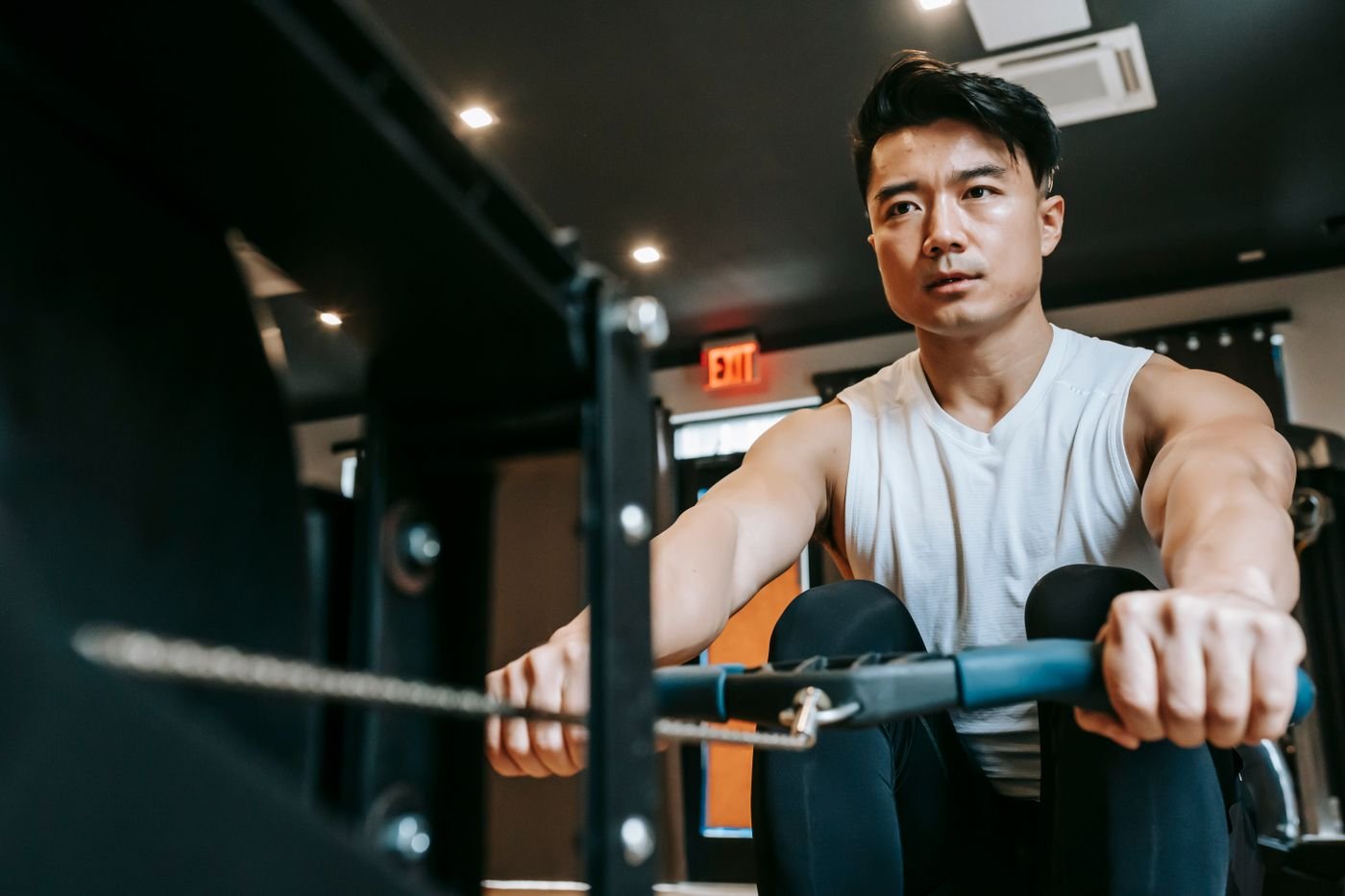
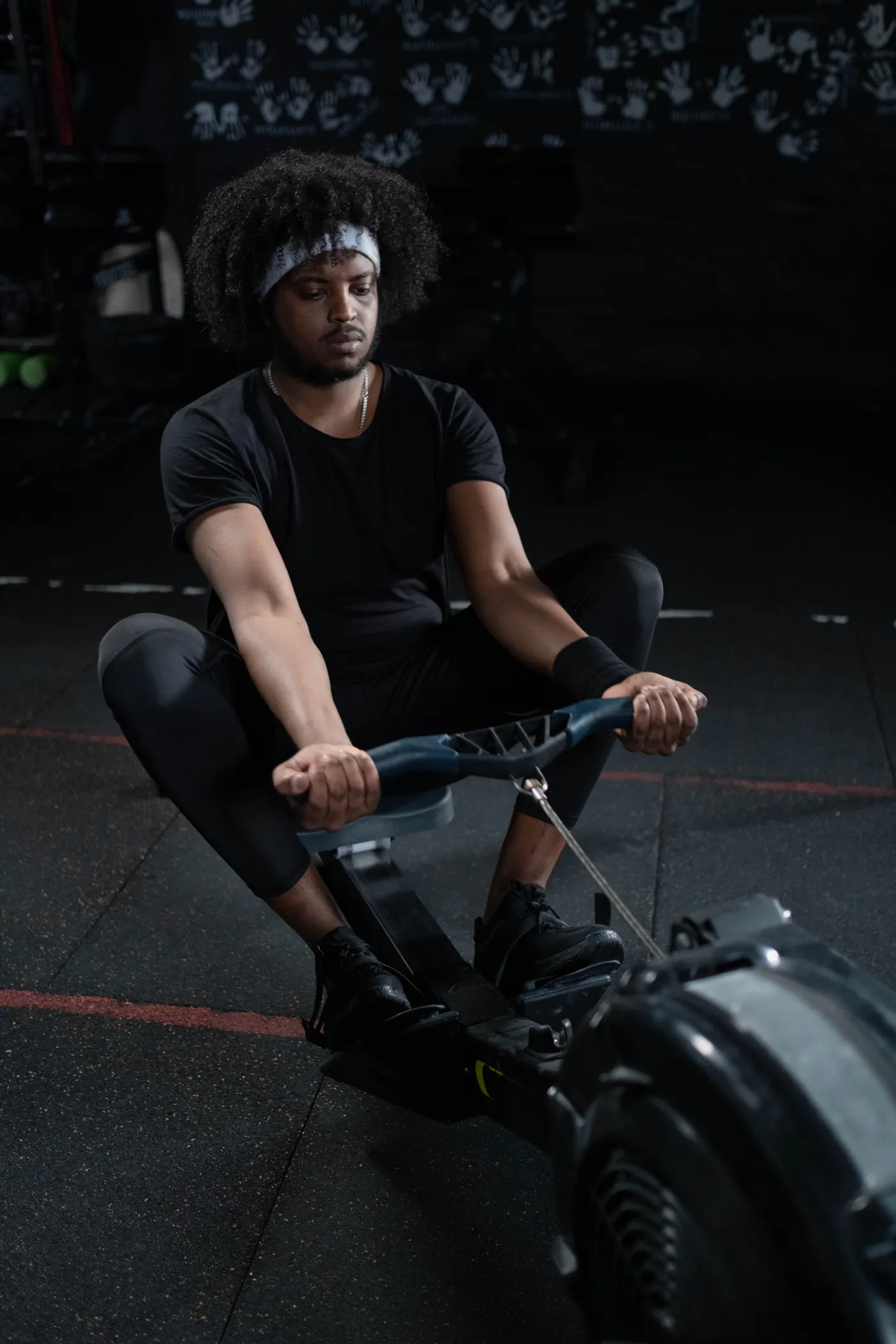
Force capacity is only one part of a rowing stroke. At the catch, keep the arms straight, the shoulders relaxed and the torso hinged forward from the hips. As the drive begins, press with the legs first. Then allow the trunk to swing through upright, and finally draw the handle toward the lower ribs. On the recovery, reverse that order: arms away, torso forward, knees bend and the seat slides toward the catch.
When these pieces overlap too early, the rower can waste the force created by strong legs. Pulling with bent arms from the catch may feel aggressive but often shortens the effective drive. Opening the back before the legs have contributed can create a rushed, unstable movement. Neither fault is fixed automatically by becoming stronger in the gym.
Try a simple five-minute technique warm-up before harder rowing: begin with arms-only strokes, add the body swing, then add the legs; next row at a deliberately low stroke rate while keeping the drive connected and the recovery unhurried. A brief pause at the body-over position can help identify whether the hands and trunk are moving before the knees bend.
Use the monitor as feedback rather than a command to sprint. At the same stroke rate and perceived effort, cleaner sequencing may improve consistency of split times. Avoid chasing a very high drag setting to make the machine feel like a heavy lift. Higher resistance is not automatically better technique or a more transferable strength stimulus.
Video from the side can be useful for spotting early arm bend, excessive layback or a rushed slide. Make one correction at a time, retest and keep the movement comfortable. Technical efficiency is the bridge between available strength and repeatable rowing power.
Equipment Worth Exploring
Explore equipment, accessories and gear from our carefully selected range.
VOLTRA
Compact digital cable trainer with smooth, adjustable resistance.

Go-Tone Pro
Portable digital cable trainer with up to 66 lb (30 kg) of adjustable resistance.
Back Bar
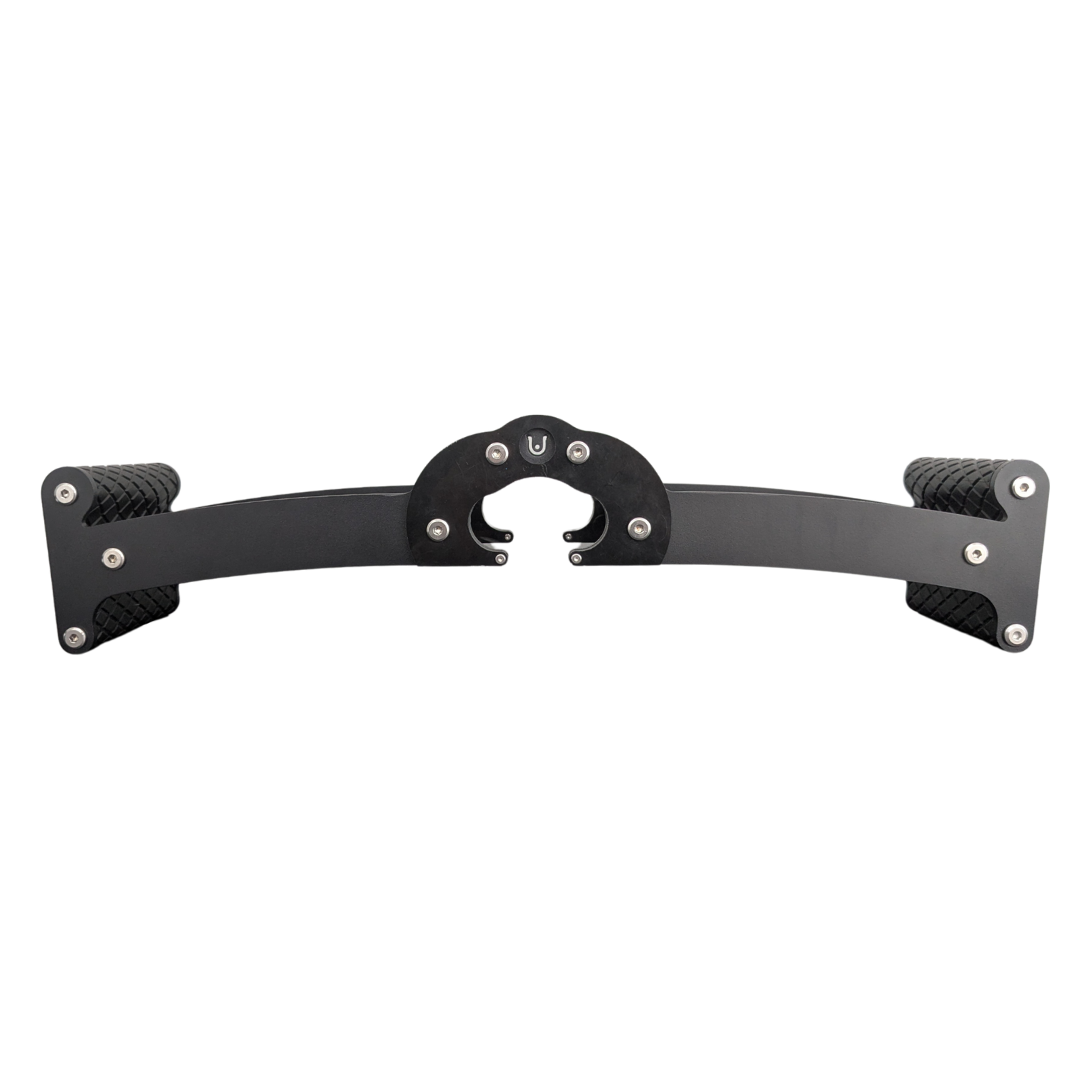
Multi-grip cable and landmine bar with a built-in deadlift jack.
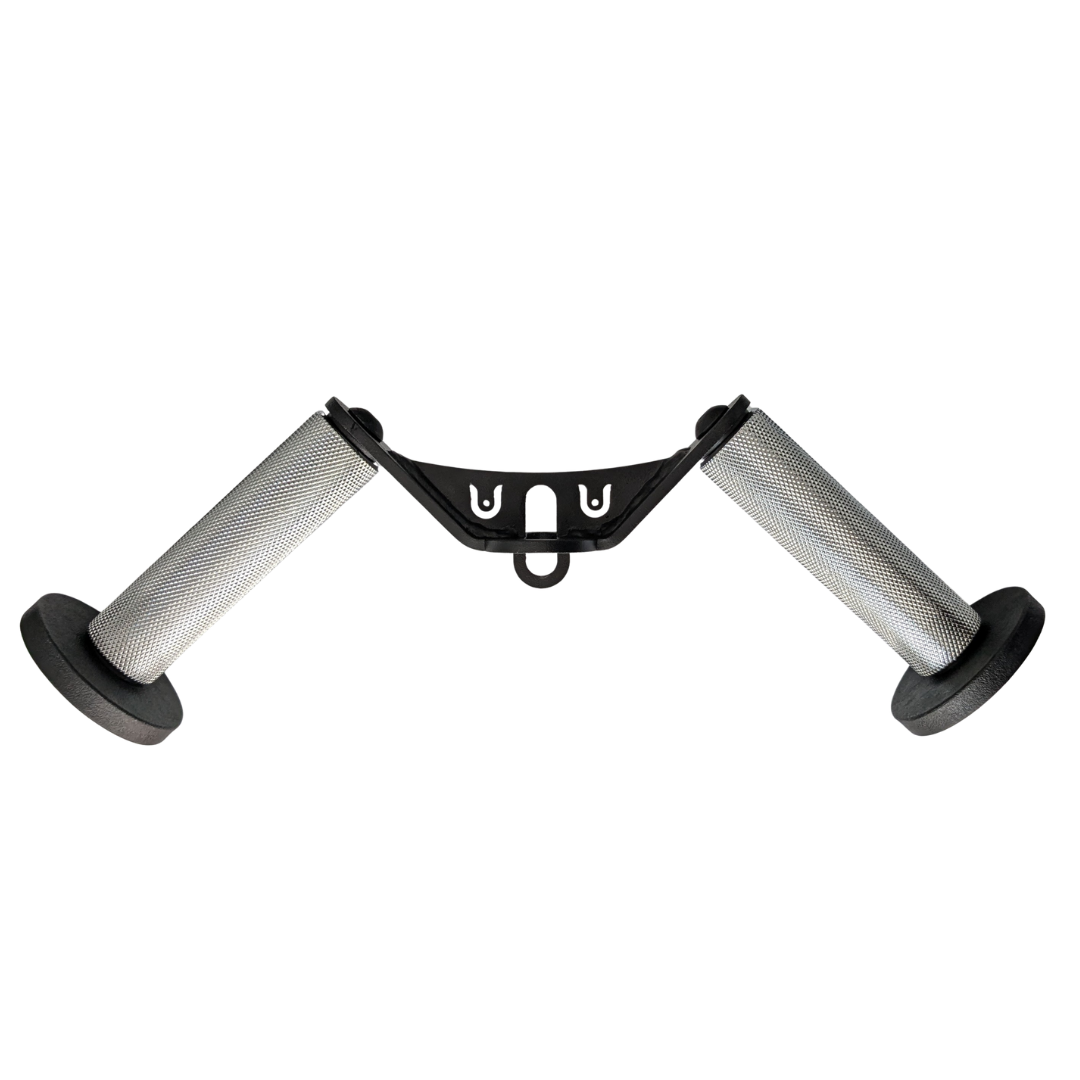
W Grip
Angled cable grip for comfortable rows, pushdowns, and curls.
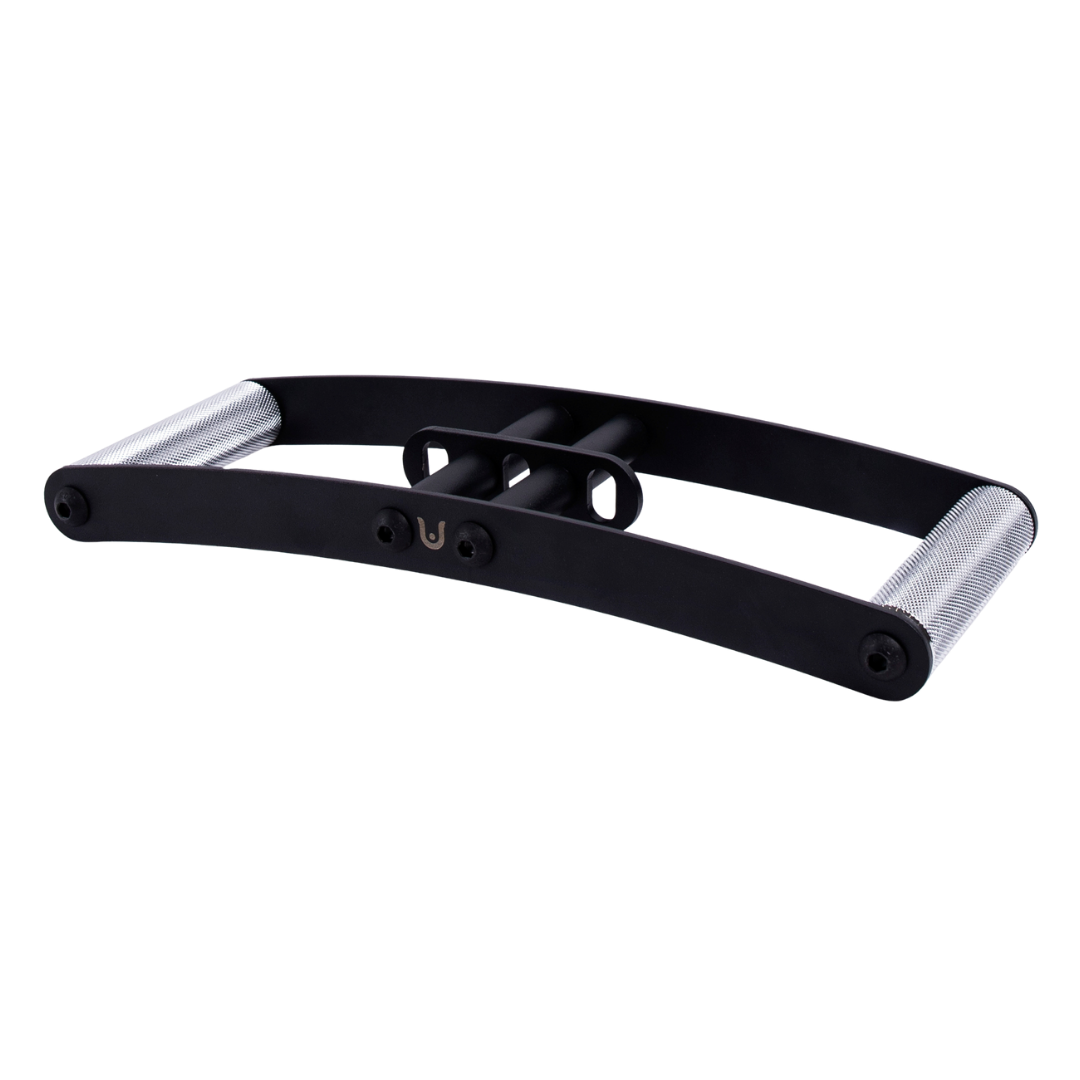
Horizon Grip
Ergonomic V-style cable grip for rows and back training.

Angles 90 Grips
Flexible grip attachments that allow natural wrist movement during pulling exercises.


6. Aerobic capacity still determines how long you can hold the pace
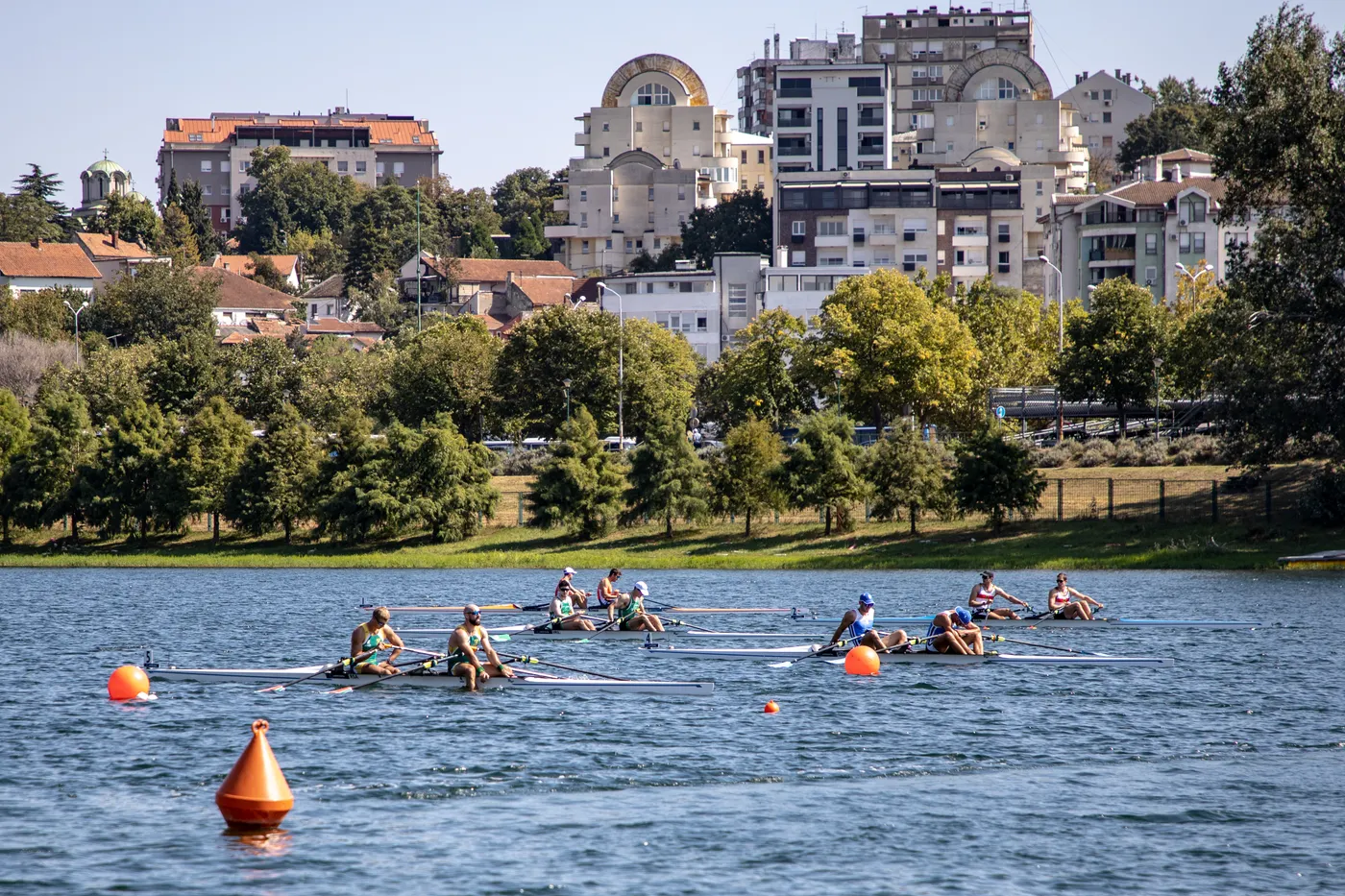
A fast 2K is not a single maximal pull repeated a few times. It is several minutes of hard, coordinated work in which the athlete must repeatedly reproduce useful force while the heart, lungs and muscles manage rising metabolic demand. Strength may help create a powerful stroke, but the aerobic system helps sustain the sequence without a dramatic collapse in pace.
This explains why a strong lifter can struggle on the erg despite excellent gym numbers. If their breathing and energy delivery cannot support the effort, the split deteriorates long before their maximal squat strength becomes the limiting factor. Conversely, an endurance-trained rower with limited strength may struggle to accelerate at the start or produce high force per stroke. The qualities complement each other rather than compete for a single winner.
Earlier intervention research found that both high-intensity interval and sprint-interval blocks could improve 2,000-metre rowing performance in trained athletes. In one study, changes of roughly nine to eleven seconds followed a block of interval training. Those findings are useful but should not be treated as a guarantee: samples were limited, training backgrounds varied and the athletes were already experienced.
A practical week usually includes a substantial amount of controlled rowing, one or two carefully chosen harder sessions, and enough easy work to recover. One interval option is four rounds of four minutes at a challenging but repeatable pace with three minutes of easy rowing between rounds. Another is a short start-practice session with full rest and attention to technique. Adjust the number of hard sessions to the athlete’s experience and total workload.
When evaluating progress, track 2K time alongside stroke rate, split consistency, perceived effort and the ability to recover between workouts. A bigger deadlift and a faster 2K are encouraging together, but the full training picture explains more than either number alone.
Cardio Shirts & Workout Gear
Cardio and conditioning gym gear for runners, endurance athletes and anyone who earns the sweat.


Anti Rowing Rowing Club Shirt – Meme & Top T-Shirt
Show some cardio attitude with a playful “Anti Rowing Rowing Club” tee.

Cardio Heartbeat Hoodie
Show off your cardio humor in a laid-back “Cardio Heartbeat” hoodie.

Shirt – Cardio Is Hardio – & Gymbros T-Shirt
Show some cardio attitude with a playful “Cardio is Hardio” tee.

Cardio Is Calling You , Meme Top Answer Or Decline? T-Shirt
Make gym days more fun with “Cardio Is Calling You” style.

Negative Cardio Review Cardio Sucks Running , Meme T-Shirt
Heavy lifts, good laughs, and a little “Negative Cardio Review” energy.

Hybrid Athlete – HYROX Training Crewneck for Strength & T-Shirt
Show some gym-day personality with “Hybrid Athlete”.

Shirt – Don'T Quit Do It – Meme & Gains T-Shirt
Show some lifting attitude with a playful “Don't Quit Do It” tee.

Everything Hurts And I'M Tired Motivation Jumper T-Shirt
Add a playful “Everything Hurts And I'm Tired” touch to your casual rotation.

Cardio Kills Gains Shirt 'S Meme & Top T-Shirt
Rep “Cardio Kills Gains” humor in and out of the gym.
7. A two-day strength template that supports rowing performance
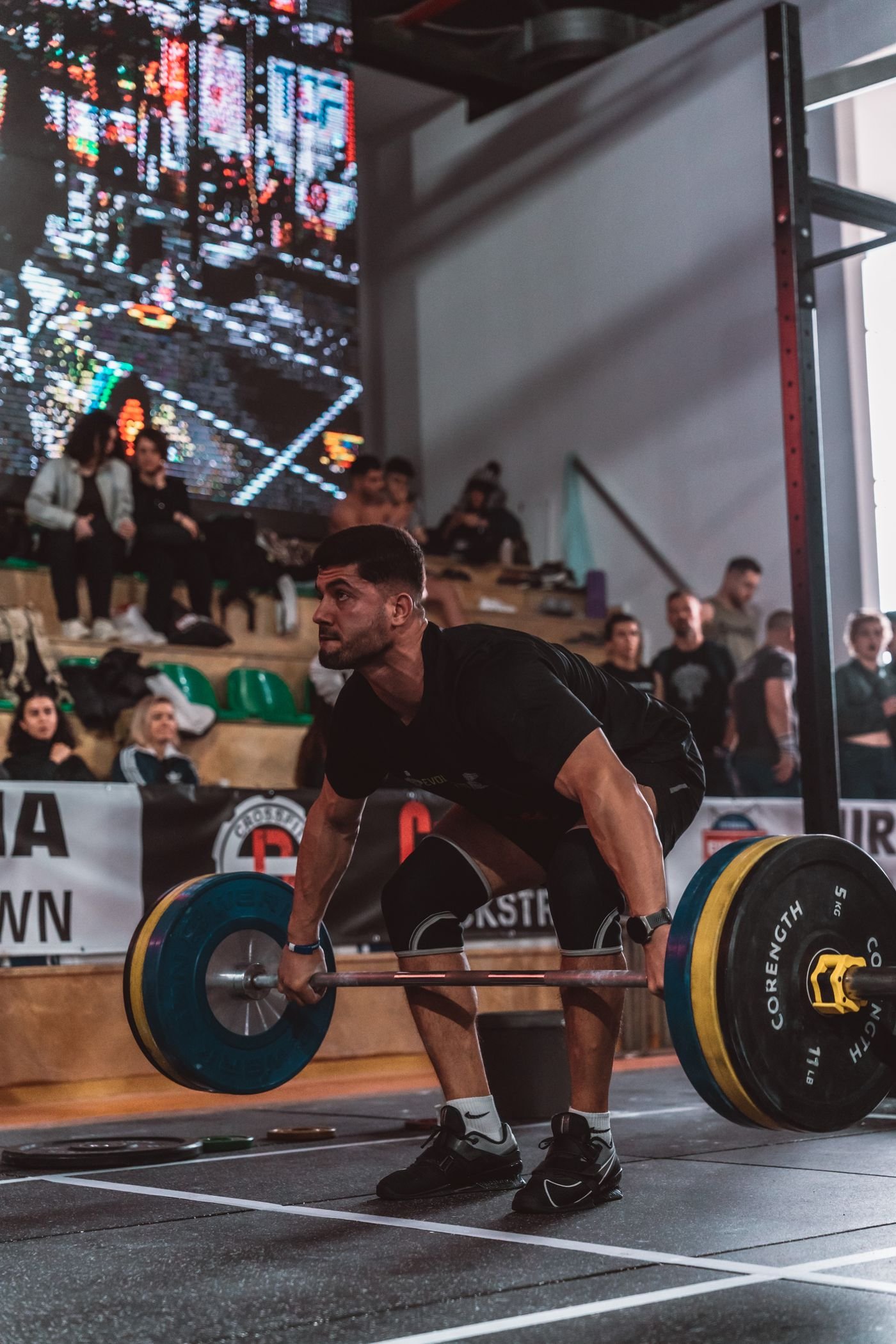
Supplemental strength work should build useful capacity without overwhelming the sessions that teach rowing skill and endurance. For a healthy adult with a basic lifting foundation, two short sessions per week are a reasonable starting template. Place them after an easier rowing day or later on a hard training day if that leaves a genuine recovery window before the next key erg workout. The right schedule depends on training age, injury history and weekly volume.
Day A – maximal-force emphasis: warm up with easy movement and several lighter sets. Perform three sets of four to six squats or leg presses; three sets of six to eight chest-supported rows or bench pulls; two sets of six to eight hip hinges; and two brief sets of trunk anti-rotation work. Leave roughly one to three repetitions in reserve on the main lifts. Rest long enough to keep technique repeatable rather than turning the workout into a breathless circuit.
Day B – controlled power and support: begin with three sets of three low-impact jumps or medicine-ball throws, resting fully. Follow with three sets of five to eight trap-bar deadlifts or another comfortable hinge, two sets of eight to twelve cable or dumbbell rows, two sets of single-leg work per side and a short carry or grip finisher. Athletes unfamiliar with jumping or Olympic-style lifts can omit them and emphasize crisp, controlled movements instead.
Progress conservatively. Add a repetition before adding weight, and increase load only while movement quality and rowing recovery remain stable. If the next day’s rowing split is unexpectedly slow and the legs are still heavy, reduce the accessory volume before blaming the aerobic program. A prior strength-training experiment in rowers found that several concentrated heavy sessions increased soreness and temporarily reduced strength and jump measures, even though the athletes’ 2K times did not significantly change. Acute fatigue and long-term adaptation are not the same thing.
Retest a meaningful measure after six to eight weeks: an appropriately standardized 2K, a repeatable submaximal split, or a strength test performed under comparable conditions. A faster race time with clean technique is the outcome that matters. The 2026 review supports the value of strength and power as performance markers; the smartest program develops them alongside rowing skill, aerobic fitness and enough recovery to use both.