Advertising disclosure: This page includes affiliate product links that may earn us a commission, as well as products from our own store.
Nordic Hamstring Curls: Start With Fewer Reps and Control the Lowering
The Nordic hamstring curl has a reputation for humbling strong lifters. Kneel with your ankles secured, lean forward without folding at the hips, and suddenly a few bodyweight repetitions can feel harder than a loaded machine set. The difficulty is not a reason to chase exhaustion on day one.
The useful lesson from recent training research is that a surprisingly small introduction can improve eccentric hamstring strength. A bigger program may create additional adaptations, but the appropriate starting dose depends on your experience, recovery and the rest of your leg training. Here is how to use the exercise rather than simply survive it.
What low-volume and high-volume Nordic research actually found
A 2025 analysis pooled 11 studies involving soccer players and separated lower-dose from higher-dose Nordic programs. In the lower-volume group, approximate prescriptions were one or two sets of three to five repetitions, once or twice a week. Eccentric strength improved, but the studies did not show similarly clear changes in measured muscle architecture.
Higher-volume protocols, commonly two or three sets of eight to twelve repetitions on two or three days weekly, were associated with improved eccentric strength and measurable changes in fascicle length and muscle thickness. This is not a prescription for a beginner to copy tomorrow. The participants, interventions and strength tests varied, and comparing groups across studies does not establish that every extra repetition causes more growth.
A broader synthesis of 42 studies found improvements in eccentric strength across a remarkably wide range of weekly repetitions. It did not identify a dependable relationship between total dose and strength gains in its meta-regression, and the certainty of evidence was low. Both summaries support sensible progression rather than a magic weekly rep total.
The studies also used different athletes and approaches to measuring strength. A recreational lifter with no Nordic experience should not automatically expect the same outcome as a trained soccer player. Muscle size, strength in a laboratory test, better sprinting and fewer injuries are distinct outcomes. A positive finding for one is not evidence that all the others improved.
Nordics load the hamstrings strongly while the knees extend and the muscles resist lengthening. That makes the move valuable for knee-flexion strength. It does not turn the exercise into a full posterior-chain program, nor do strength improvements alone prove that any particular lifter will avoid an injury.
Build a secure ankle anchor and protect the knees
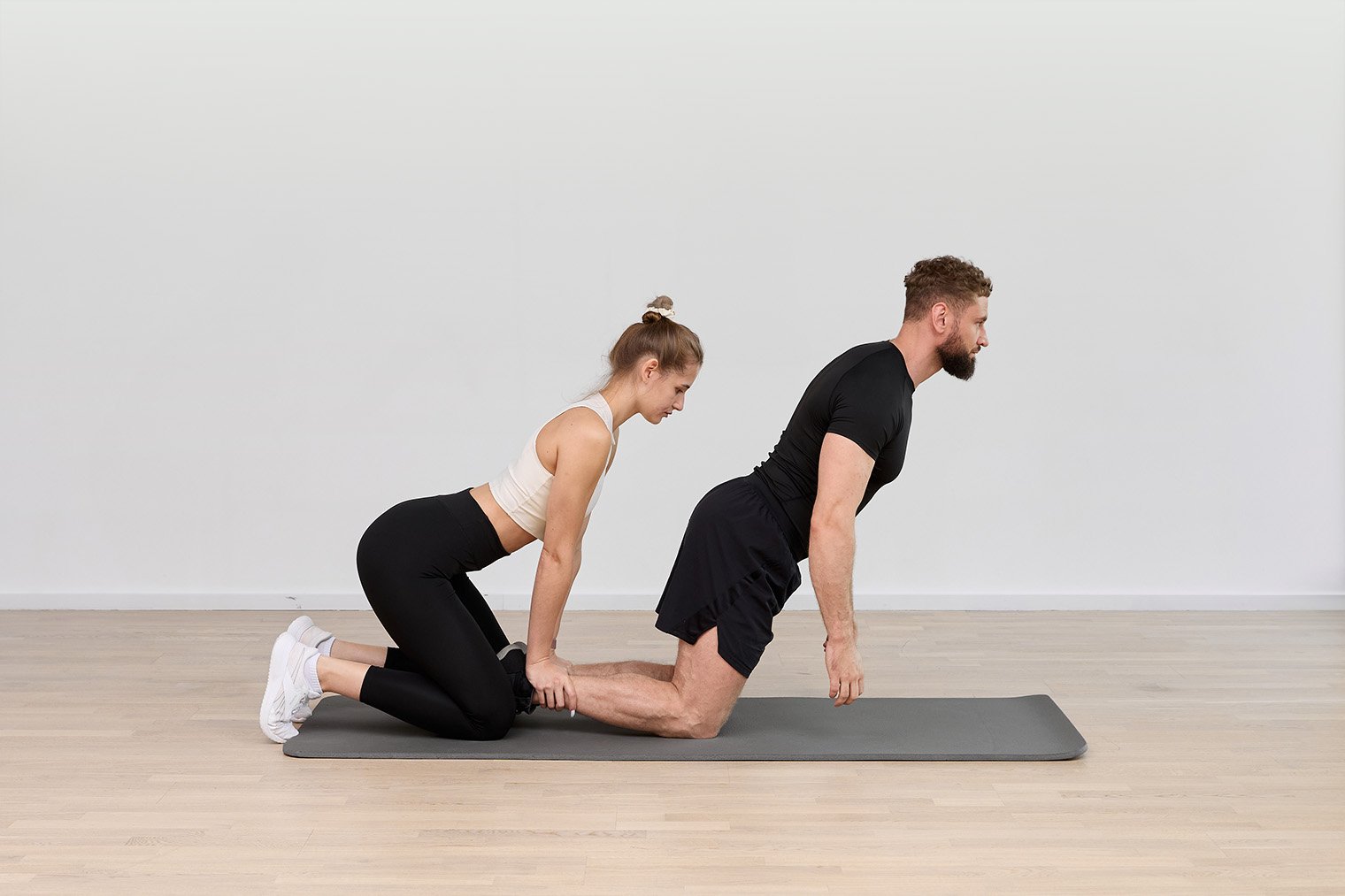
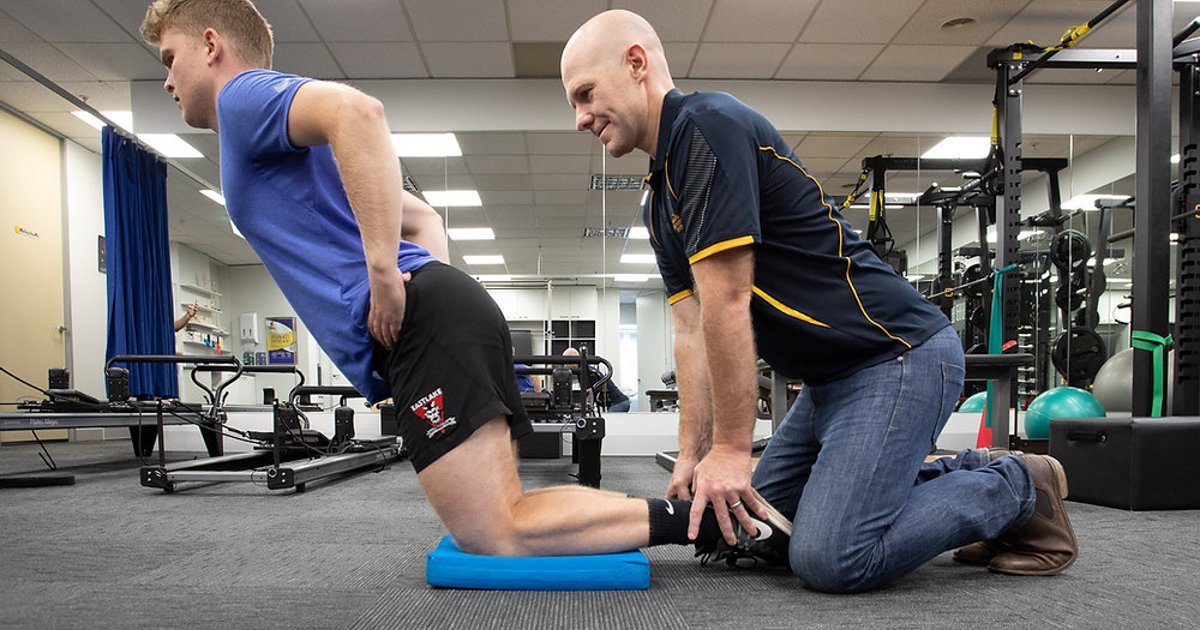
Start on a dense knee pad. Have a reliable training partner pin your lower legs just above the heels with both hands and body weight, or use a purpose-built Nordic station with a firm ankle restraint. A heavy bench or machine only counts as an anchor if it cannot slide, tip, lift or shift when your whole body leans forward.
Take a few seconds to test the anchor before starting. Kneel tall, keep the ankles comfortably secured, brace your stomach and lightly squeeze the glutes. Your head, shoulders, hips and knees should form one long line. Soft knee padding matters because the movement concentrates substantial pressure on a small surface.
Keep your palms available in front of the chest. Put a soft, clear landing area ahead of your knees, without dumbbells, plates or unstable boxes where your hands might land. If you cannot control the first few inches, use band assistance or a shorter range rather than relying on a last-second catch.
A partner-assisted setup is often easiest when learning because you can ask for feedback and stop immediately if the restraint shifts. When training alone, favour a properly designed station over improvising with a loose bar, moving furniture or a cable stack that could roll. Check the floor, ankle pressure and your available landing distance before the first full attempt.
Normal working effort and mild unfamiliar muscle tension are different from sharp knee pain, hamstring pain or a sudden pulling sensation. Stop the set when the latter appear. Recent hamstring injury, surgery or persistent symptoms call for individual assessment before starting strenuous eccentric work.

Equipment Worth Exploring
Explore equipment, accessories and gear from our carefully selected range.

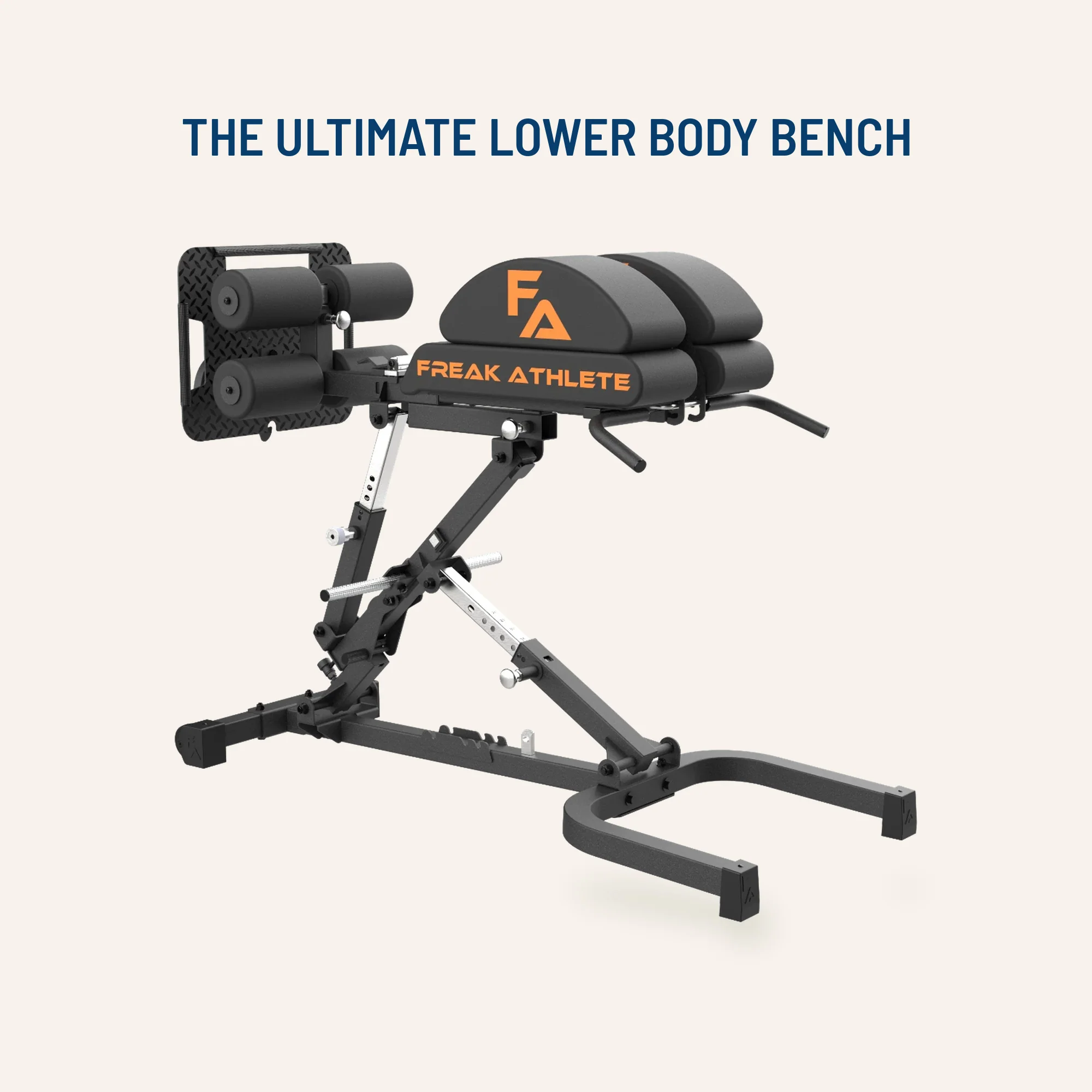

Glute Ham Developer GHD-820
Adjustable glute-ham developer with contoured pads and a fold-out knee support.


Leg Extension/Curl BCO-780
Leg extension and lying leg curl combo with plate loading, band pegs and a cable-loading option.

Seated Leg Combo BCO-680
Adjustable seated leg extension and leg curl machine with band pegs for added resistance.



45° Hyperextension HPX-650
Angled back-extension trainer with split padding, a ribbed footplate and resistance-band pegs.

HUSLA Leg Extension Pad
Pad attachment designed to increase usable range of motion on compatible leg-extension machines.
Lower slowly, catch safely and reset the repetition
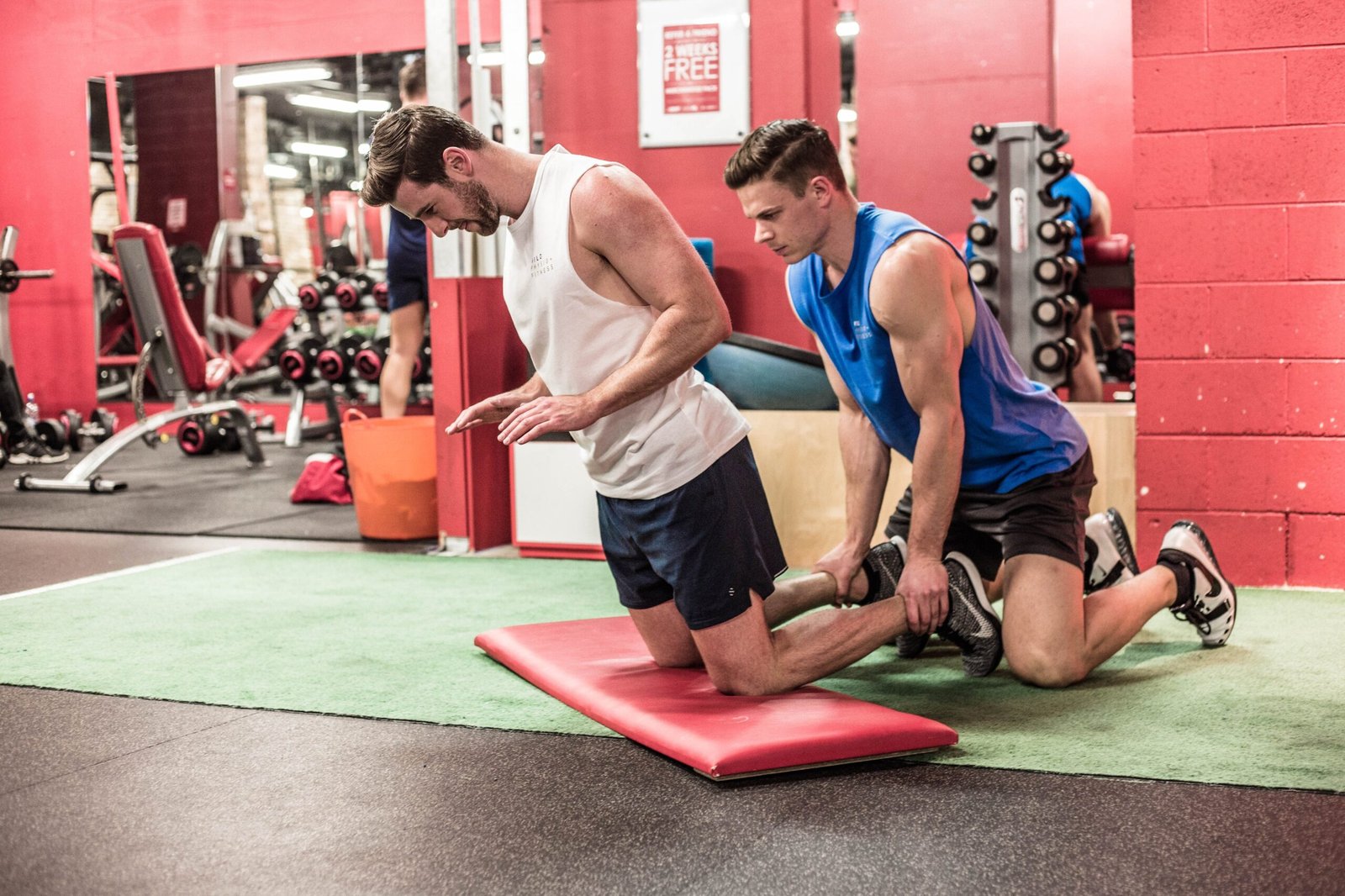
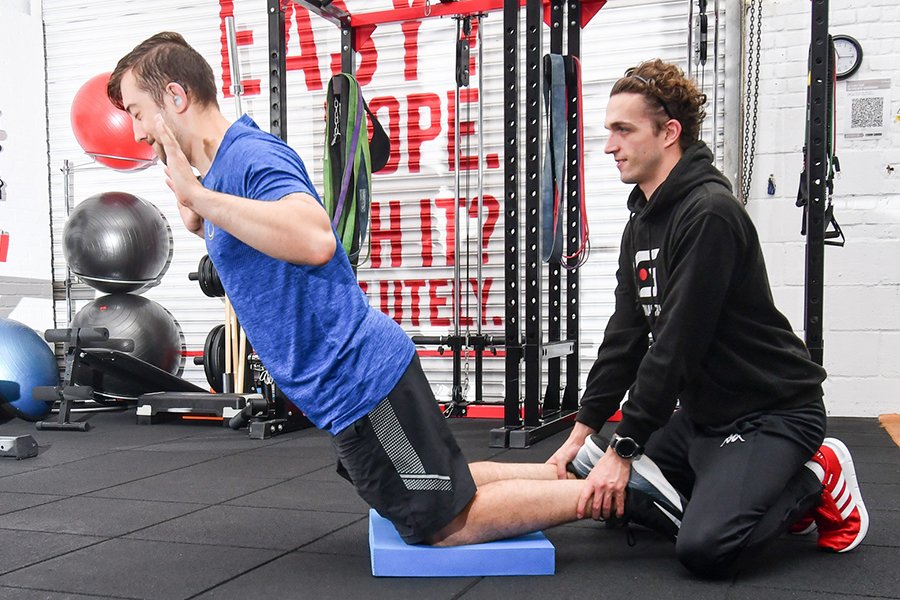
A Nordic repetition starts by leaning from the knees, not by bowing at the waist. Keep the hips extended, ribs stacked over the pelvis and neck neutral. Imagine the torso and thighs moving as one plank while the hamstrings act as the brakes.
Begin with a short, controlled forward lean. Aim for about two to four seconds on the lowering phase if you can maintain control, but shorten the descent before the torso collapses. When the hamstrings can no longer brake the fall, place your hands on the floor and absorb the remaining movement with your arms.
Push gently off the floor to return to kneeling, or walk the hands back if needed. A full unassisted concentric return is not necessary for an introductory eccentric set. Reset the trunk and make each new rep look like the first; sloppy bouncing at the bottom adds little to the intended work.
Watch for three familiar mistakes: hips shooting backward, a fast drop that no longer challenges the hamstrings, and chasing an impressive range by sacrificing the landing. A short video from the side can reveal whether your thigh and trunk stay aligned. A stable two-second lean performed under control is progress even before you can reach the floor.
Three careful reps can be a better session than ten desperate ones. Stop when you lose the straight-body position, the anchor moves or your landing becomes abrupt. Record controlled range and quality, not only completed repetitions. As control improves, lower farther before using the hands.
Choose the right variation and balance the rest of leg day
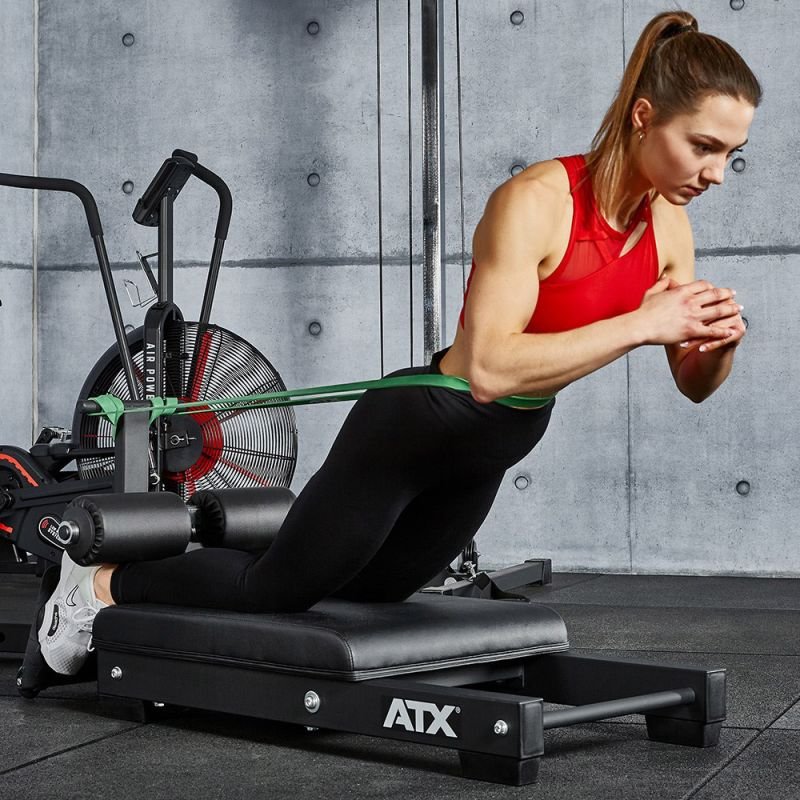
Band-assisted Nordics reduce the demand during the most difficult portion if a sturdy high anchor and secure resistance band are available. Partial-range eccentrics make the lowering distance manageable without pretending that a shortened rep is a full rep. A partner can provide a little assistance at the shoulders, but communication and a predictable landing are essential.
Do not confuse a Nordic with a conventional glute-ham raise. Both train the posterior thigh, but the machine setup and leverage can be different. Likewise, a seated or lying leg curl offers adjustable knee-flexion loading without requiring you to control nearly your entire body weight.
Romanian deadlifts and similar hinges train the hamstrings while the hip moves under load. Pairing a hip hinge with a knee-flexion movement offers a more complete approach than treating a single exercise as a magical solution. You can maintain familiar curls while adding a small Nordic dose.
A reasonable leg session could put squats or deadlifts first, followed by a moderate leg curl and only a few Nordic eccentrics. There is no need to turn every posterior-chain exercise into a maximal effort. The added fatigue is the variable to manage, not proof that the exercise is working better. If the next session suffers, scale back.
If your squat or deadlift workout is already demanding, place Nordics after your technically important heavy lifts, or on a separate lower-body day with enough recovery. Prioritizing them before sprinting or a max-effort hinge may make those later efforts less predictable. For athletic teams, scheduling matters as much as exercise choice.
Equipment Worth Exploring
Explore equipment, accessories and gear from our carefully selected range.

VForce 3IN1
All-in-one rack combining an adjustable Smith machine, functional trainer, and free-weight station.

VForce 3IN1 Max
Six-post all-in-one rack with Smith machine, functional trainer, and variable-force cables.

VForce 2IN1
Half rack and pivot-arm functional trainer with switchable 1:1 and 2:1 pulley ratios.

VForce Wall Trainer
Space-saving wall-mounted functional trainer with pivoting cable arms and variable resistance ratios.


Rubber Hex Dumbbells
Rubber-coated hex dumbbell pairs with a stable shape for home and commercial strength training.


Open Hex Bar
Open-frame trap bar with multiple handles for deadlifts, carries, and lower-body training.

Leg Day Shirts & Workout Gear
Leg-day gym shirts and workout gear for lifters who never skip squats, lunges and lower-body punishment.

The Walking Deadlift – Zombie Leg Day & Gymbro Gains T-Shirt
Make gym days more fun with “The Walking Deadlift” style.

I Want You To Stop Skipping Leg Day Uncle Sam – T-Shirt
Make gym days more fun with “I Want You To Stop Skipping Leg Day Uncle” style.

Viking Deadlift – Norse Bros & Meme Shirt T-Shirt
Show some Viking attitude with a playful “Viking Deadlift” tee.

Never Skip Leg Day – NSLD Fried Chicken Meme Vest Muscl Tank Top
Your gym-day look, with a playful “Never Skip Leg Day” twist.

We Don't Need No Leg Day – Pink Floyd Meme Vest Muscle Tank Top
Show some personality between sets with “We Don't Need No Leg Day”.

Skeleton Deadlift Deadlift Lovers & Leg Day Hooded Hoodie
Show off your leg-day humor in a laid-back “Skeleton Deadlift” hoodie.

Powerlift Deadlifts Powerage Album Cover Parody AC/DC H Hoodie
Keep it laid-back with a little “Powerlift Deadlifts” attitude.

Patriotic Uncle Sam – I Want You To Train Legs Meme Cre T-Shirt
Bring “Patriotic Uncle Sam” humor to your everyday gym style.

Siuuu Deadlift Cristiano Ronaldo Meme Decal Football Sticker
Put “Siuuu Deadlift” gym humor on your laptop, bottle, or gym gear.

Doctor Deadlift Sticker
Put “Doctor Deadlift” gym humor on your laptop, bottle, or gym gear.
A six-week Nordic progression without a soreness contest
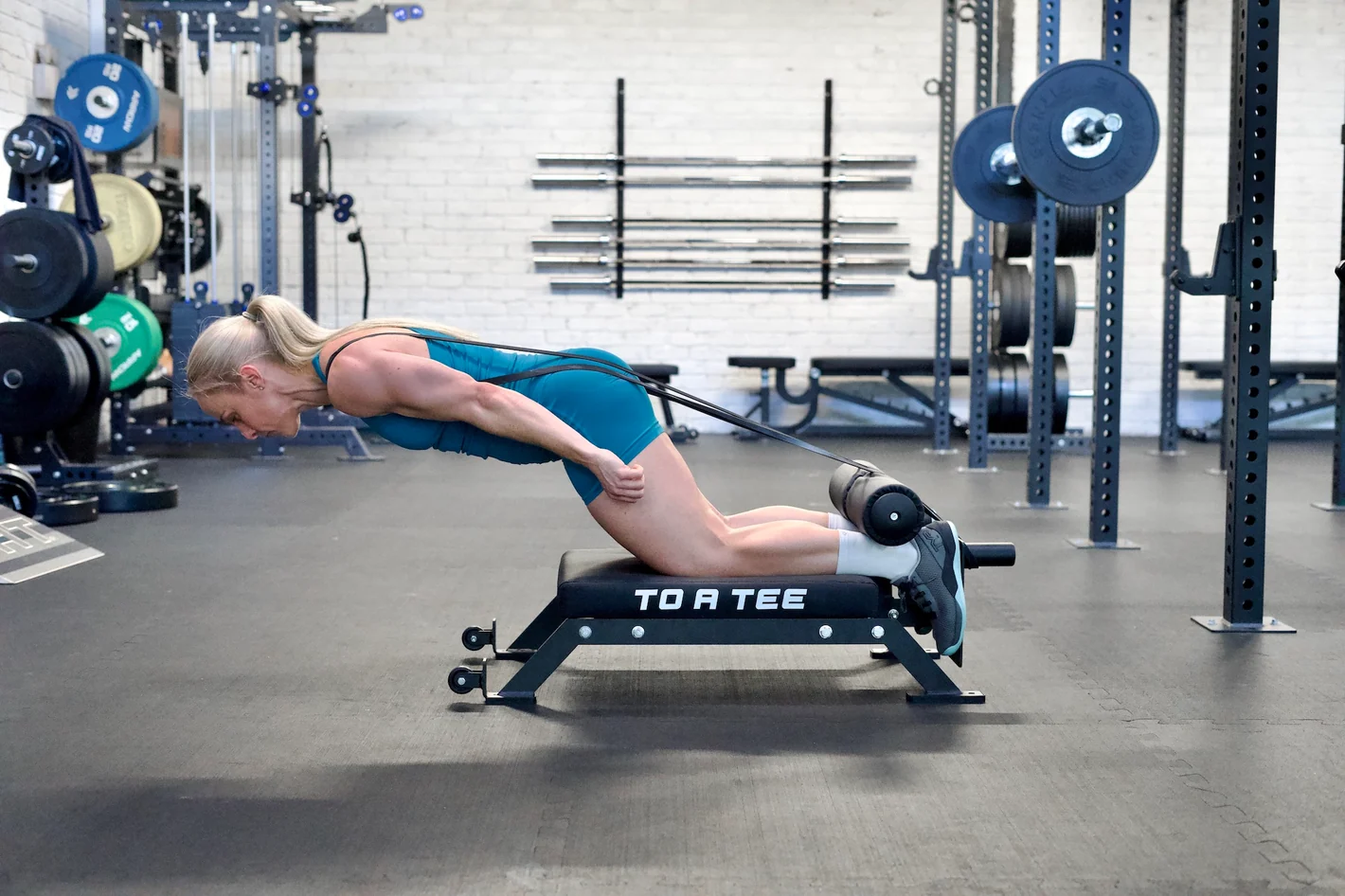
This is a conservative coaching example, not a protocol tested head-to-head in the reviews. Choose one or two weekly exposures with at least 48 hours between them. Leave room for your existing hamstring and lower-body training, especially during the first two weeks when unfamiliar eccentric work may produce noticeable soreness.
During weeks one and two, perform one set of three controlled partial or assisted descents once weekly, then add a second set only if you recover comfortably. In weeks three and four, aim for two sets of three to five clean reps on one or two days. Extend your controlled range before trying to remove assistance. A short session done consistently wins over a huge opening dose.
During weeks five and six, keep two modest sets and build toward four to six quality descents per set if recovery remains good. More advanced lifters can consider additional sets later, but do not jump directly to the high-volume research prescriptions. The goal is progress in range, control and repeatability, not matching a published group average.
Keep a simple log of assistance, range, reps and next-day soreness. Reduce the workload if fatigue noticeably changes running mechanics or compromises the rest of your training. For anyone returning from a strain, use a qualified rehabilitation plan rather than this general template. A controlled Nordic is a useful tool; it is not a replacement for the rest of a balanced training week.