Knee sleeves and knee wraps cover the same joint but do very different jobs. A neoprene sleeve usually stays on throughout training, while an elastic wrap is wound tightly around the knee for a heavy effort. That changes comfort, how the bottom of a squat feels, and even which powerlifting division permits the equipment.
The useful question is not which accessory looks more serious. It is whether it helps you repeat good squats, manage a heavy single, or compete under the correct rules. Research does not support the simple claim that any tighter knee support automatically adds weight to everyone’s bar.
1. Knee sleeves and wraps are not interchangeable
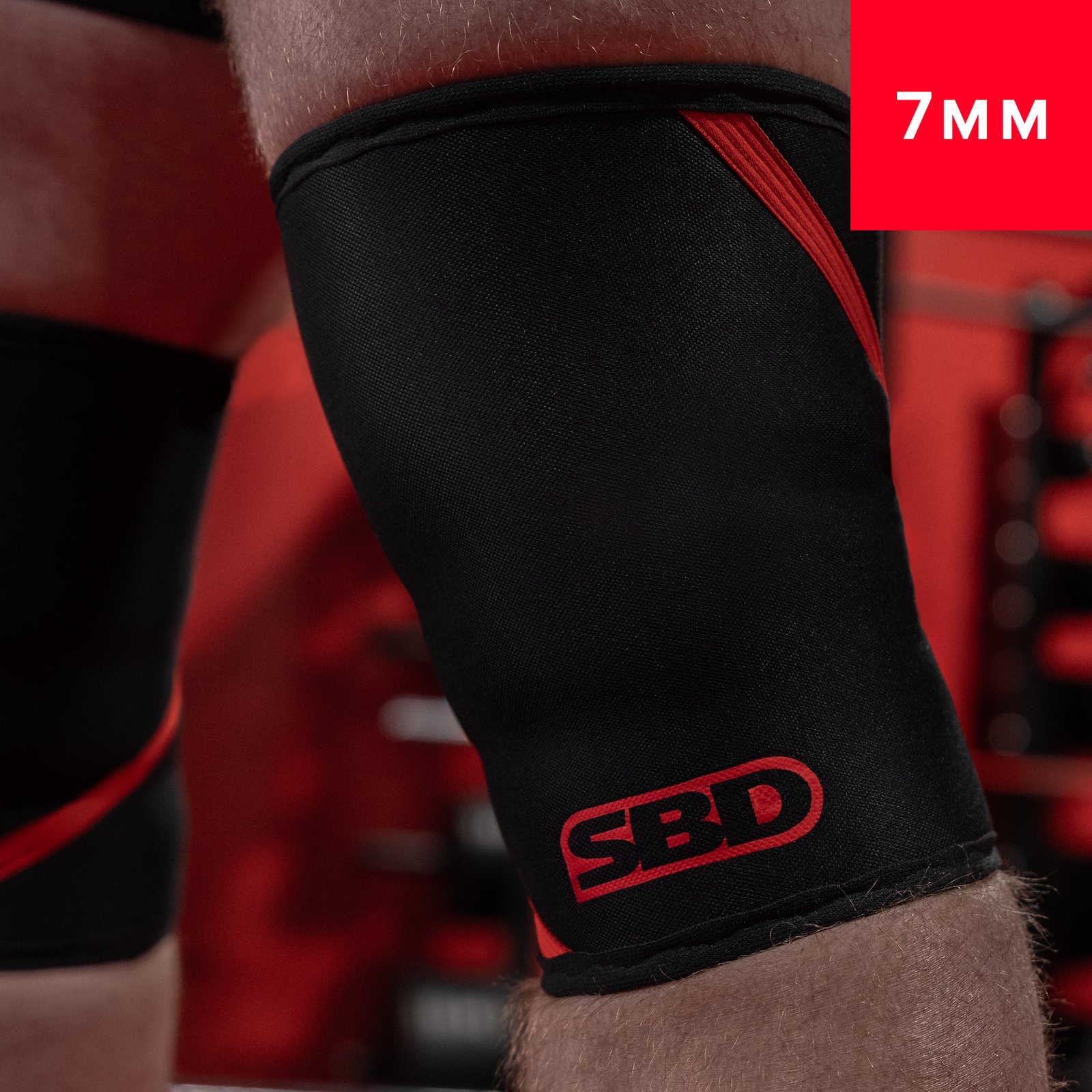
Most lifting sleeves are made of neoprene, commonly 5 mm or 7 mm thick. They slide over the leg and provide consistent compression, warmth and a feeling of support. A suitable sleeve allows you to bend and straighten the knee through a controllable range. It is not a replacement for muscular stability, a sensible training load or sound technique.
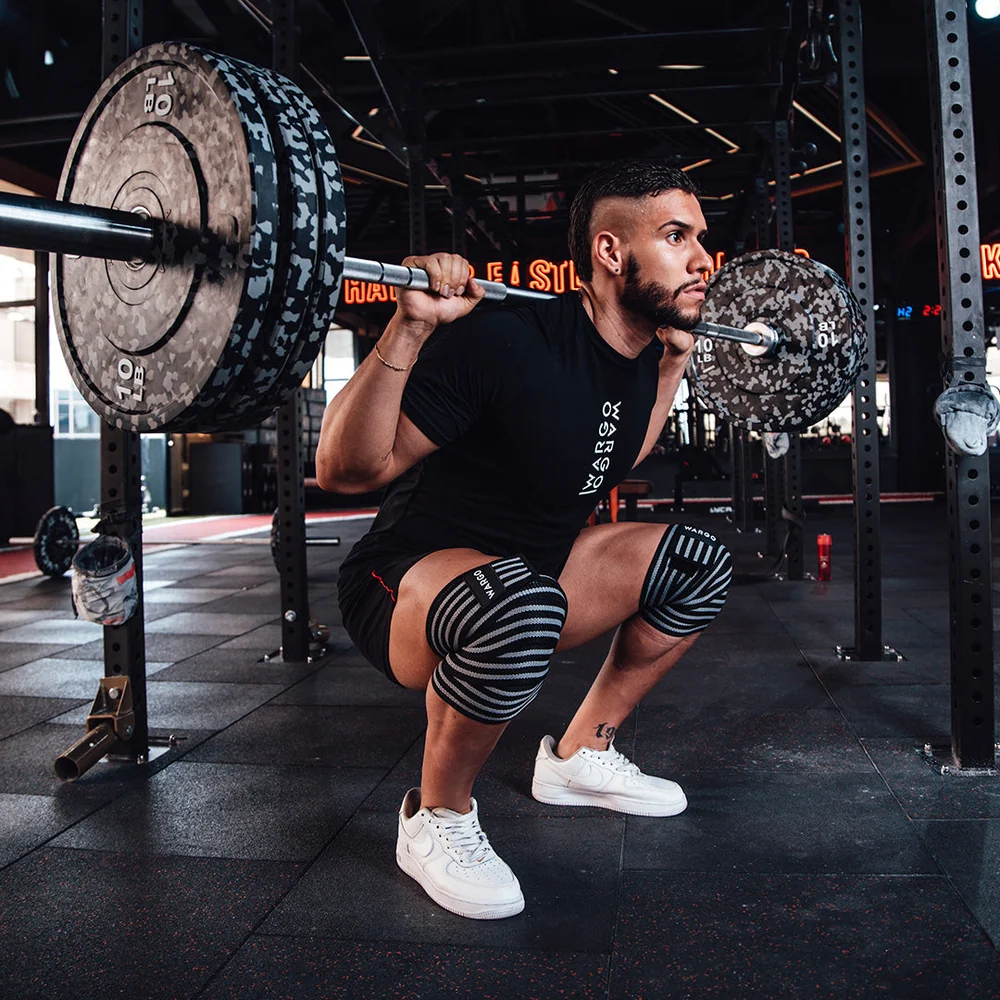
Wraps are long elastic strips wound around the knee before an attempt. The amount of tension depends on the material, wrapping pattern, number of passes and how tightly they are pulled. As the knee bends, the elastic material stretches and can provide rebound on the ascent. That is mechanical assistance, not merely a warming effect.
For someone squatting moderate weights in sets of eight, a sleeve is generally easier to use. Competition wraps may be uncomfortable and time-consuming to apply and often have to come off immediately after a set. Neither device should be treated as medical protection against an existing injury. Choose equipment for a defined training purpose, not because an accessory promises invincible knees.
2. The surprising weight-class results in competition
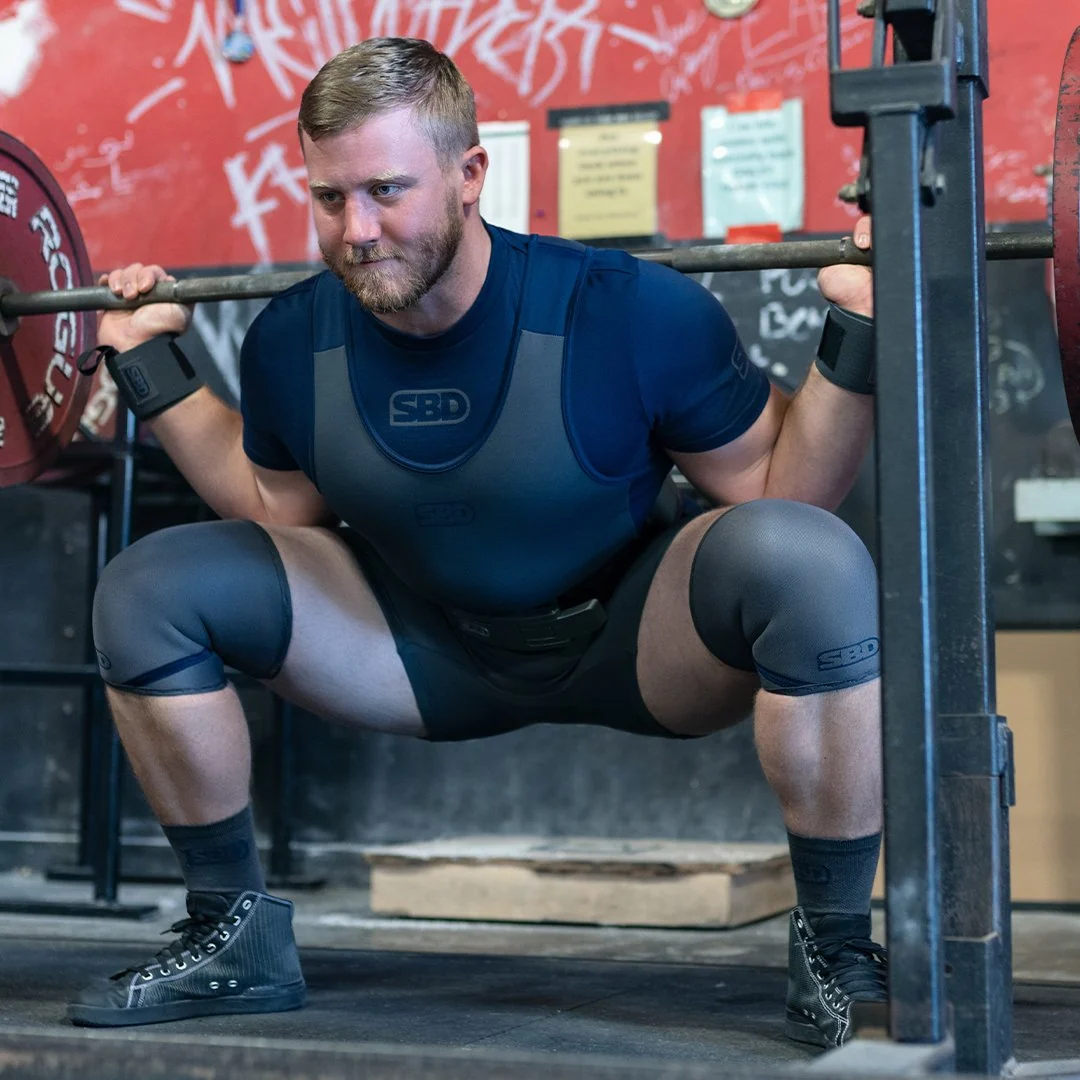
A 2023 analysis compared a very large historical sample of raw competition squats, where neoprene sleeves were permitted, against results from lifters using knee wraps. Among the men’s results, the wrapped group averaged about 203 kg compared with 195 kg in the raw group. That headline sounds like a straightforward advantage, but the picture changed substantially by bodyweight class.
The heavier men’s classes tended to show positive wrapped differences, including approximately 1.3, 4.8 and 6.9 kg in the three heaviest groups. The 59, 66 and 74 kg classes instead showed lower averages in the wrapped results. The women’s comparison was also mixed, with the heaviest class showing a positive wrapped difference while several lighter classes did not.
There is an important limitation: this was an observational comparison of different competitors, not a randomized trial of the same people under identical conditions. Strength, training history, body mass, federation, technique and equipment preferences may differ. The results cannot prove that wraps caused the heavier-class advantage or made lighter athletes weaker. They show that a universal equipment bonus is an unreliable assumption.
Keep separate personal records for wrapped and sleeved squats. A wrapped competition maximum is not automatically comparable with an unsupported training record. Your own consistent technique and repeated testing matter more than a population average.

Equipment Worth Exploring
Explore equipment, accessories and gear from our carefully selected range.


GymPin Squat Wedges
Non-slip 15-degree squat wedges help elevate the heels for deeper quad-focused squats.

Safety Squat Handles
Barbell squat handles that reduce shoulder positioning demands during high-bar squats.


3. Do neoprene sleeves really increase squat strength?
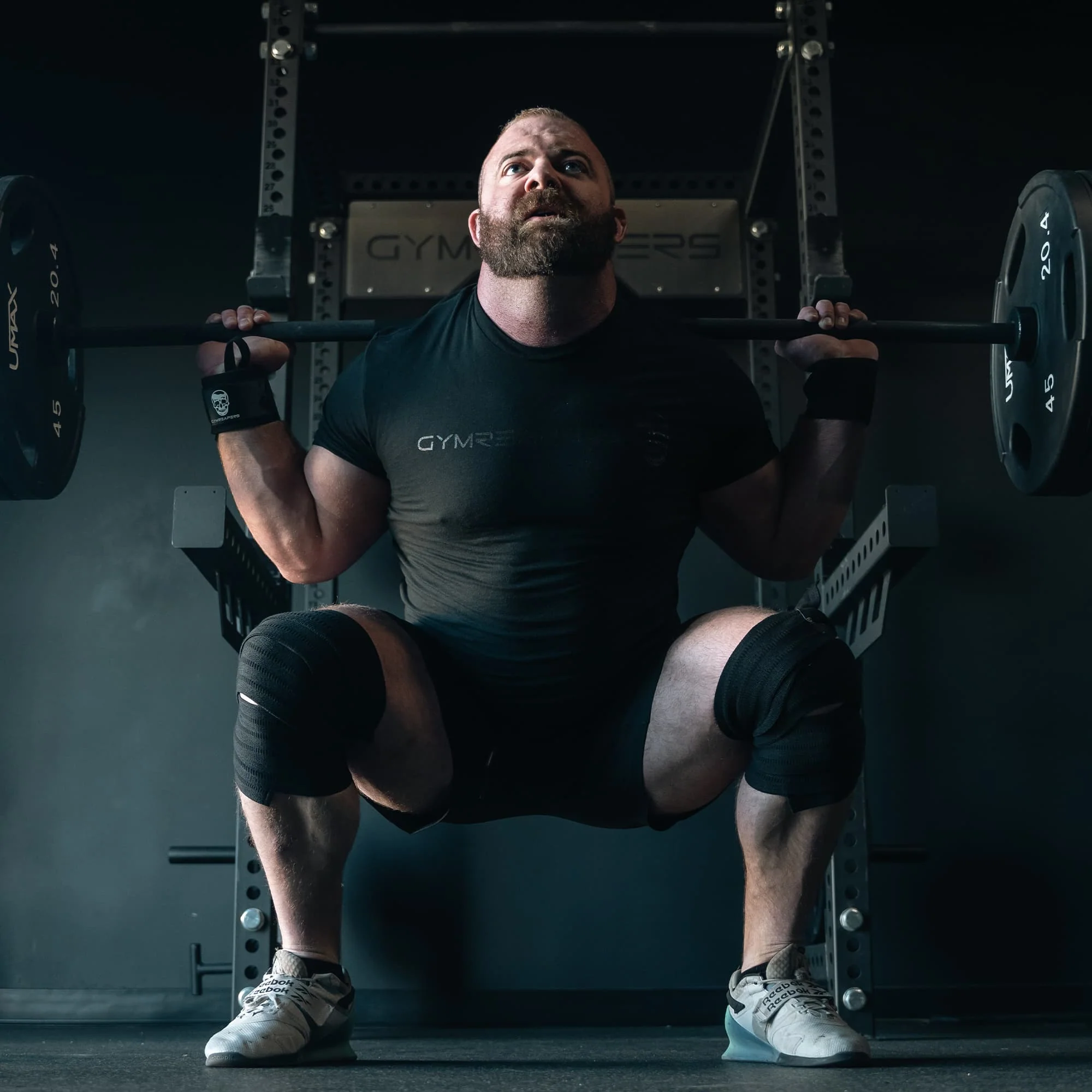
Controlled studies of sleeves do not all agree. In one crossover experiment, 15 resistance-trained men tested squats and power measures using a minimal control sleeve, a normal-size neoprene sleeve and a tighter version. The normal and tighter neoprene conditions averaged around 166 kg on the squat test, compared with about 161 kg in the control condition. Choosing the tighter sleeve did not add a meaningful extra benefit.
Another randomized test involving 15 trained men and women found no improvement in maximum squat weight with sleeves. Differences in participants, sleeve models and test design make it unwise to promise every buyer a five-kilogram boost. Some lifters may gain a modest advantage; others may notice mostly warmth, comfort or confidence.
Performance in one test is not the same as building stronger quadriceps over months. Compression can change perceived stability without proving that the sleeve itself creates more hypertrophy. If wearing sleeves helps you train with consistent depth and good control, that is a practical benefit. But the main drivers of progress remain quality sets, progressive loading and recovery.
For reliable comparisons, use the same model and size across a training block. Switching to a much stiffer sleeve halfway through a program can make your top-set numbers harder to interpret.

Powerlifting Shirts & Lifting Gear
Powerlifting shirts and gym gear for squat, bench and deadlift lifters who live for heavy numbers.

Heavy Squatter Meme Squats & Gains Leg Day Wizard Top T-Shirt
Heavy lifts, good laughs, and a little “Heavy Squatter” energy.

7 Plates Squat Club Shirt – Meme & Leg Day Gains T-Shirt
Rep “7 Plates Squat Club” humor in and out of the gym.

Squats Leg Day Heavy Weights Meme – Essential Top T-Shirt
Bring “Squats Leg Day Heavy Weights” humor to your next gym day.

Lifting Is My Therapy – Bodybuilding Powerlifting Meme Tank Top
Your gym-day look, with a playful “Lifting Is My Therapy” twist.

Swolebob Squatpants | SpongeBob Leg Day Meme Workout Sw T-Shirt
Show some gym-day personality with “Swolebob Squatpants”.

Uncle Sam Squats Funny Patriotic Gym – USA Meme Vest Mu Tank Top
Show some personality between sets with “Uncle Sam Squats Funny Patriotic”.

Lifting Cult Meme Bodybuilding Powerlifting Workout Dec Sticker
Give your everyday gear a playful “Lifting Cult” twist.

Squatzilla Meme Leg Day & Squat Fans Hooded Hoodie
Show off your leg-day humor in a laid-back “Squatzilla” hoodie.

Metalliftica Sweatshirt
Bring “Metalliftica Metallica Heavy Metal” humor to your everyday gym style.

I'M Still Gonna Squat You Monster Gingerbread Meme – Sticker
Give your everyday gear a playful “I'm Still Gonna Squat You Monster” twist.
4. Why tight wraps change the bottom of a squat
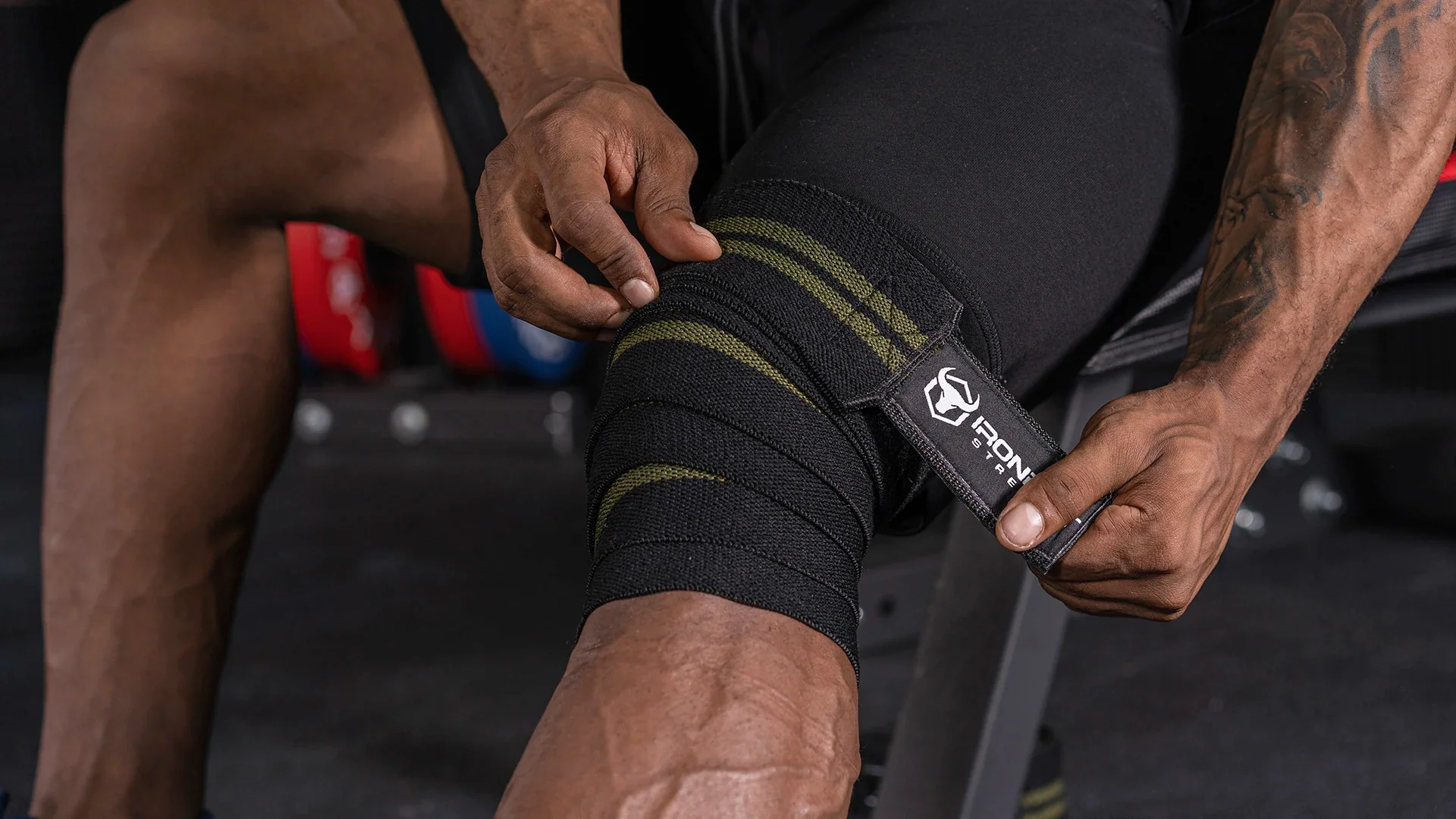
Elastic wraps store tension as the knee flexes. Near the bottom position, that stretched material can assist the lifter in starting the ascent. A small laboratory experiment with ten resistance-trained men found that wraps altered mechanical output and movement characteristics during singles at 80% of maximum. This is one reason a wrapped squat should not be recorded as identical to a sleeved squat.
The assistance has tradeoffs. Tight wrapping can be restrictive, change descent timing and make it difficult to stay comfortable between attempts. The lifter still needs a stable bar path, strong trunk brace, appropriate stance and controlled foot pressure. A poorly balanced squat does not become technically sound because the knees feel tightly supported.
If your competition permits wraps, practice with them before meet day. Use a repeatable wrapping pattern and, where possible, the same helper. Record the wrap model and approximate tension. If you compete in a classic division that allows approved sleeves but not supportive wraps, spending most of your training under wraps is a poor match for your event.
For ordinary muscle-building sets, most lifters will get more convenience from sleeves. Maximizing elastic rebound on a single attempt is a different goal from repeating clean, challenging sets for hypertrophy.
5. Thickness, sizing and comfort: a practical checklist
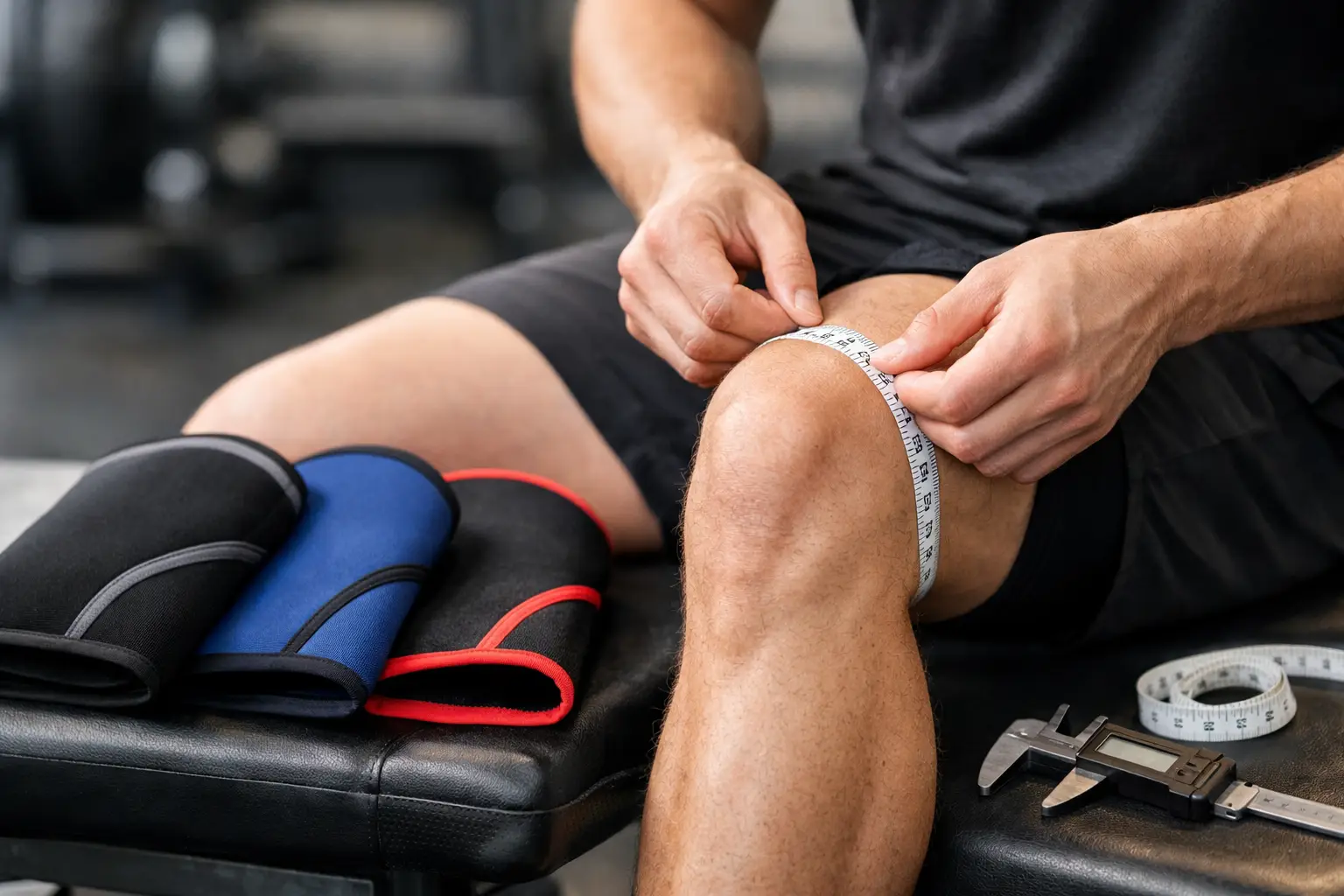
Measure the circumference around the kneecap with the leg straight and relaxed, then measure the widest part of the calf. Use the exact manufacturer’s size chart rather than assuming that one brand’s medium equals another’s. Some brands recommend sizing up when the calf is substantially larger than the knee. A training fit should feel snug without numbness, discoloration or sharp pressure.
Five-millimeter sleeves often allow easier movement for mixed training, Olympic lifting or conditioning. Stiffer seven-millimeter sleeves are popular for heavy squats and powerlifting. Thickness is only part of the feel: neoprene density, cut, seams and sizing all affect support. Extremely tight does not necessarily mean stronger, as the normal-versus-tight sleeve experiment suggests.
Try several bodyweight squats and empty-bar repetitions before loading. The sleeve should remain centered, not bunch painfully behind the knee, and allow your intended depth. If it slips or pinches, address the fit rather than forcing a heavy set. Hand wash neoprene and air dry it instead of exposing it to high dryer heat.
Competition rules matter. International powerlifting rules permit approved neoprene sleeves under defined specifications in classic lifting, while supportive wraps belong to equipped competition. Approved lists and restrictions can change, so check the current federation, division and event before buying equipment for a meet.
Equipment Worth Exploring
Explore equipment, accessories and gear from our carefully selected range.





Squat Harness
Wearable harness for hands-free cable squats, sled work, and lower-body training.

Belt Squat Collar
Heavy-duty collar adapter for compatible belt-squat and landmine bar setups.
VOLTRA
Compact digital cable trainer with smooth, adjustable resistance.

FID Bench MAX
Adjustable bench offering flat, incline, and decline positions + adjustable headrest.

6. Keep the squat technique, not just the support
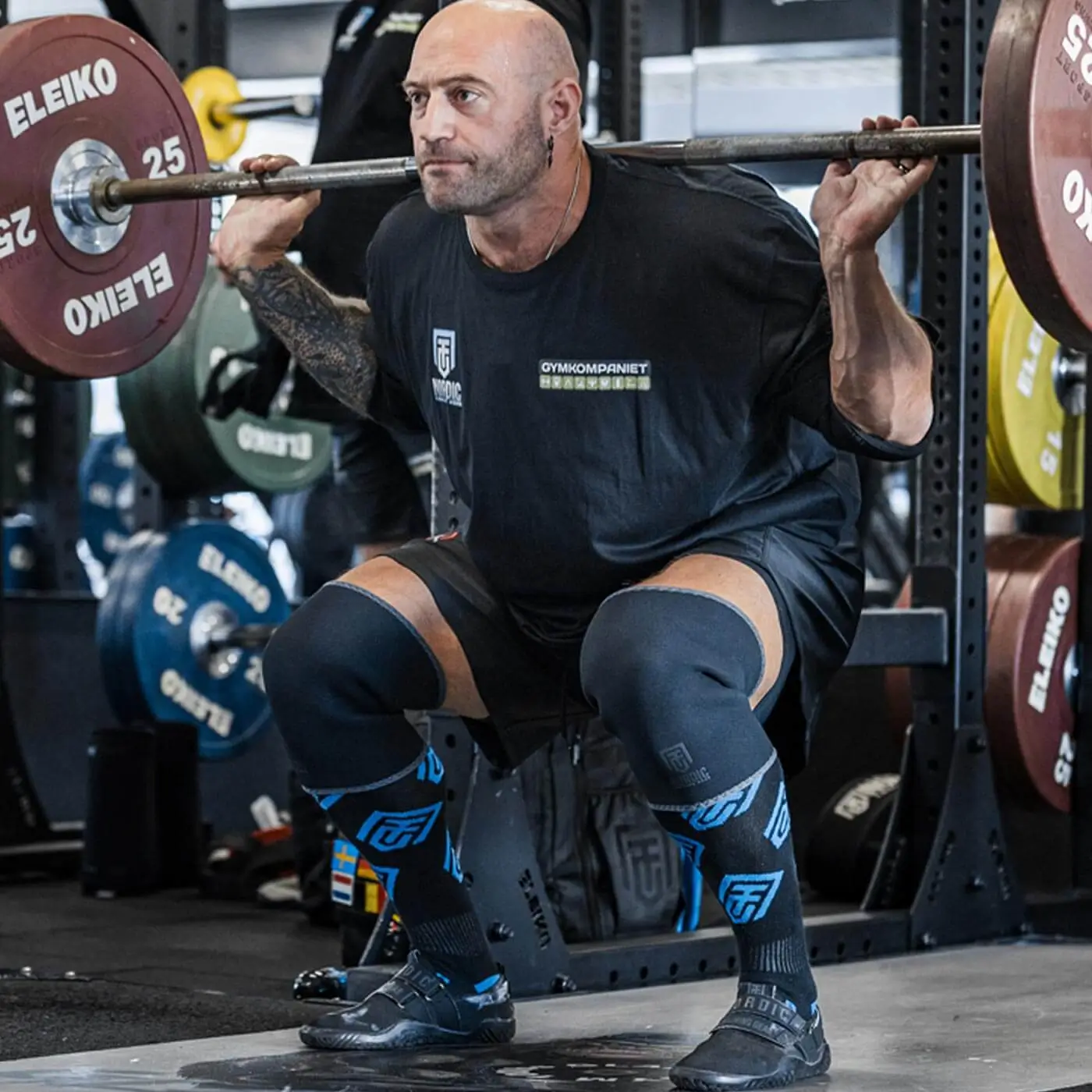
A sleeve can make the knees feel steadier, but the main technical checkpoints remain the same. Set the bar securely, create stable pressure across the foot, brace before descending and allow the knees to track naturally with your stance. Control the descent and maintain repeatable depth rather than relying on an exaggerated bounce. A wrap should not become an excuse for losing balance at the bottom.
Warm up gradually with unloaded squats and progressively heavier sets. If you normally wear sleeves, put them on at a consistent stage of the warm-up. Log whether each top set was sleeved, wrapped or unsupported. When changing equipment, start with a manageable load; altered support can change timing even when the exercise looks identical.
Persistent pain needs more than an accessory purchase. Sudden swelling, locking, giving way or pain that worsens under load deserves an appropriate clinical assessment. Compression may change the sensation around the joint without identifying what is wrong. Temporary changes in load, range or volume may be necessary while the problem is evaluated.
For building muscle and strength, prioritize repeatable technique, sufficient hard sets and recovery. Accessories are useful when they make those habits easier, not when they hide a problem.
7. A four-week squat-support test for your own training
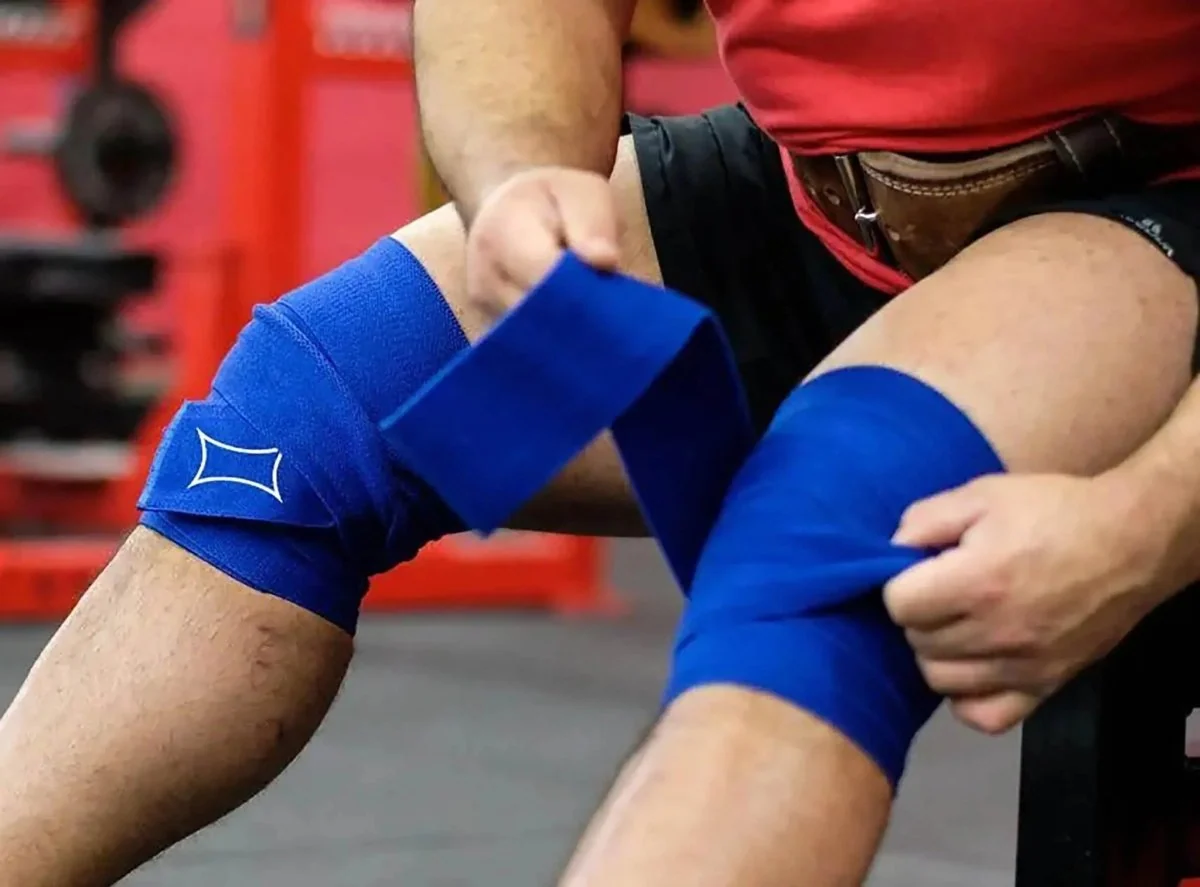
Instead of copying someone else’s promised increase, run a controlled comparison. Keep your squat variation, shoes, stance, depth standard and warm-up sequence as consistent as possible. Avoid frequent maximum attempts. The aim is to discover whether sleeves improve comfort and set quality without changing how you squat.
- Week 1 — baseline: complete two squat sessions in your usual setup. After warm-ups, perform three sets of five at a load leaving about two repetitions in reserve. Record load, depth, comfort and perceived effort.
- Week 2 — sleeves: repeat the same pattern with correctly sized neoprene sleeves. Start at the same working load. Note whether the bottom position feels more predictable and whether depth remains consistent.
- Week 3 — progress carefully: keep the sleeves and increase load only if every previous set met your technical standard. Do not let a feeling of support tempt you to cut depth or rush the descent.
- Week 4 — matched comparison: repeat one session in your original setup and one with sleeves, allowing adequate recovery. Compare set quality and comfort, not just the heaviest rep.
If you compete in wraps, use a separate familiarization block with submaximal wrapped singles and a consistent application method. Do not turn this experiment into a weekly max-out contest. Wraps require practice and make sense only if your competition rules and goals justify them.
The decision is straightforward. Choose sleeves for convenient, repeatable support during ordinary training; consider wraps for competition-specific heavy squats where they are permitted; use neither if your technique and comfort are already consistent. The best option supports your goal without distorting your training log.
Leg Day Shirts & Workout Gear
Leg-day gym shirts and workout gear for lifters who never skip squats, lunges and lower-body punishment.

Dont Skip Leg Day Muscle Shirt Athletic Vest Deadpool F Tank Top
Add some leg-day attitude to training with “Dont Skip Leg Day”.

Stars Stripes & Squats Patriotic Eagle – 4th of July Wo Sticker
Put “Stars Stripes & Squats Patriotic Eagle” gym humor on your laptop, bottle, or gym gear.

Deadlift Zombie Skull Gym Shirt for Powerlifters, Hallo T-Shirt
Bring “Deadlift” humor to your next gym day.

Lagertha Leg Day | Vikings Workout Sweater & T-Shirt
Bring “Lagertha Leg Day” humor to your everyday gym style.

Freedom To Skip Leg Day – Patriotic Statue of Liberty H Hoodie
Show off your leg-day humor in a laid-back “Freedom To Skip Leg Day” hoodie.

Santa Quads | Fitmas Leg Day Workout & Festive Hoodie
Bring “Santa Quads” gym humor to lazy days and post-workout plans.

Deadlift Skull Gym Gold Heavy Metal Decal for Powerlift Sticker
Give your everyday gear a playful “Deadlift Skull” twist.

Do You Even Deadlift Tee
Heavy lifts, good laughs, and a little “Do You Even Deadlift?” energy.

We Don't Need No Leg Day – Pink Floyd Meme Vest Muscle Tank Top
Show some personality between sets with “We Don't Need No Leg Day”.

The Ultimate Deadlifter Jesus Christ – Deadlifts Liftin Sticker
A fun “The Ultimate Deadlifter Jesus Christ” touch for bottles, laptops, and lockers.