Advertising disclosure: This page includes affiliate links that may earn us a commission at no additional cost to you.
Do kettlebell swings need to get heavier every fortnight to make you stronger? The answer is less straightforward than the usual progressive-overload slogan. If you have one kettlebell, that matters: buying another weight may not be the most important change you can make to your programme.
A six-week experiment published in 2022 compared two ways of adding swings to an existing functional-fitness routine. One group worked with the same bell throughout; another moved through three weights. Both improved several performance measures. The interesting question is which part of the progression was necessary and what you should measure before changing a load.
The six-week comparison: fixed load versus step loading
The comparison involved 28 men who already trained in high-intensity functional fitness. Their average age was about 29, and they had experience with kettlebell exercises. The two swing groups each contained 11 participants, while six men continued their usual training as a control group. Everyone kept doing their existing functional-fitness programme, so this was an addition to training rather than a test of swings as the only exercise.
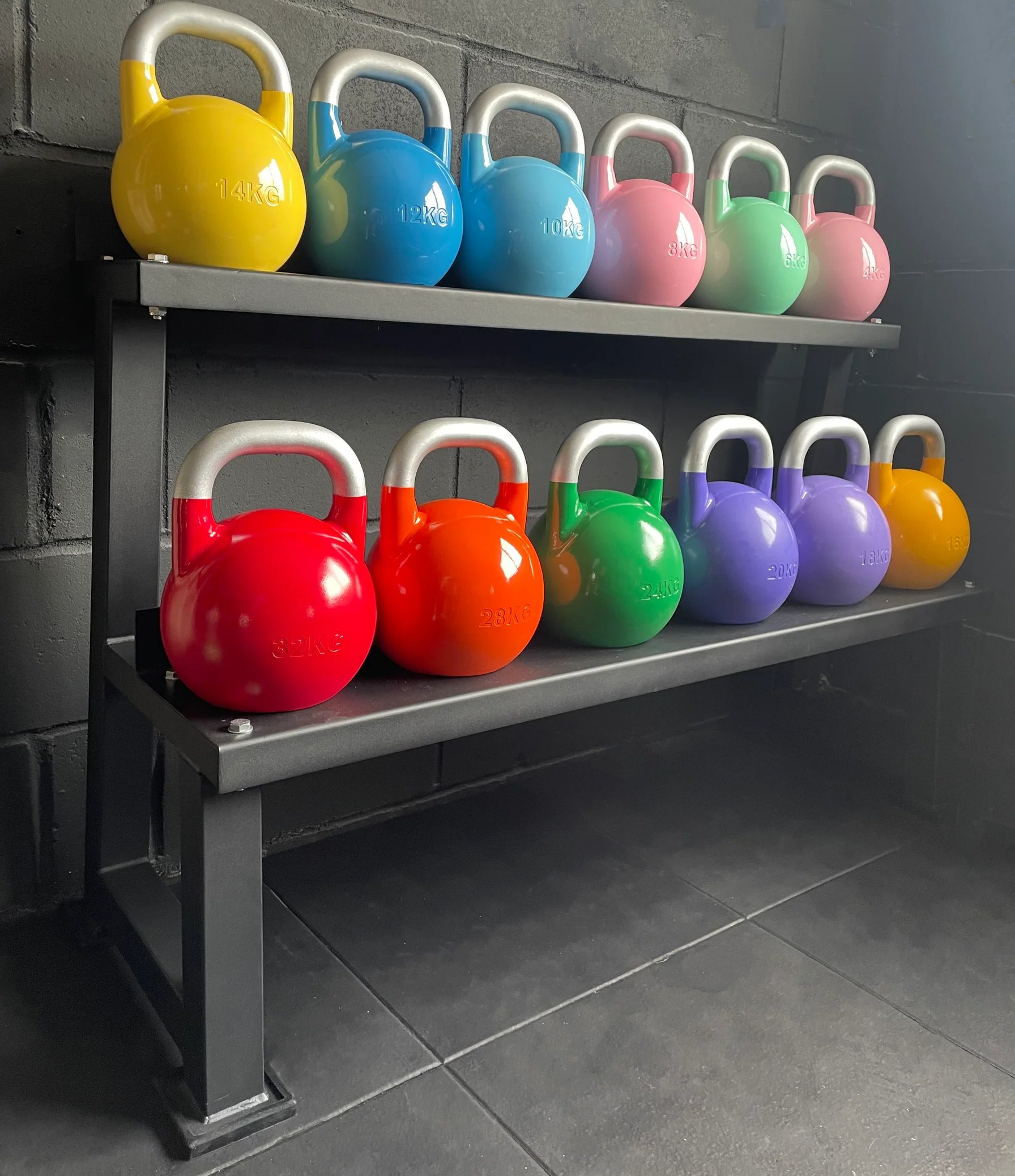
The fixed-load group used a 20 kg kettlebell for six weeks. The step-loading group started at 16 kg, moved to 20 kg after two weeks and finished at 24 kg. That creates the same nominal average load over the six weeks, without necessarily producing the same number of repetitions or total mechanical work.
| Training block | Fixed load | Step load |
|---|---|---|
| Weeks 1–2 | 20 kg | 16 kg |
| Weeks 3–4 | 20 kg | 20 kg |
| Weeks 5–6 | 20 kg | 24 kg |
Notice that the step group did not simply perform the same training and add more weight on top. It traded lighter early sessions for heavier later ones. That is an important distinction if you are deciding whether to progress at every opportunity. The experiment compared two load schedules, not a deliberately easy programme against a deliberately difficult one.
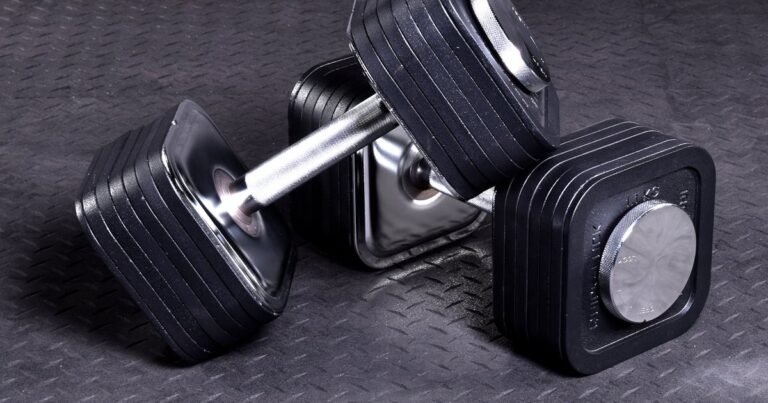
For a recreational lifter, the decision is also logistical. An adjustable bell makes small or staged weight changes convenient, whereas a fixed bell makes it easy to keep the implement and grip identical between sessions. Neither feature tells you whether your next swing will be more powerful. That depends on how you perform the movement and how much useful work you can recover from.
What the sessions actually involved
Participants completed two supervised swing sessions each week, on nonconsecutive days. Each session contained 12 thirty-second bouts of swings separated by thirty seconds of rest. They attempted as many repetitions as they could during each work interval using the instructed hip-driven technique. That is six minutes of work within a twelve-minute session, and twelve sessions over the intervention.
Do not mistake that format for a requirement to do all-out swings. These were experienced trainees under supervision. If you are learning, a shorter set with a deliberate reset gives you a chance to feel the difference between accelerating the bell with the hips and raising it with the shoulders. If your grip starts slipping, your back position changes or your swings become slow and disconnected, the interval has stopped serving the intended purpose.
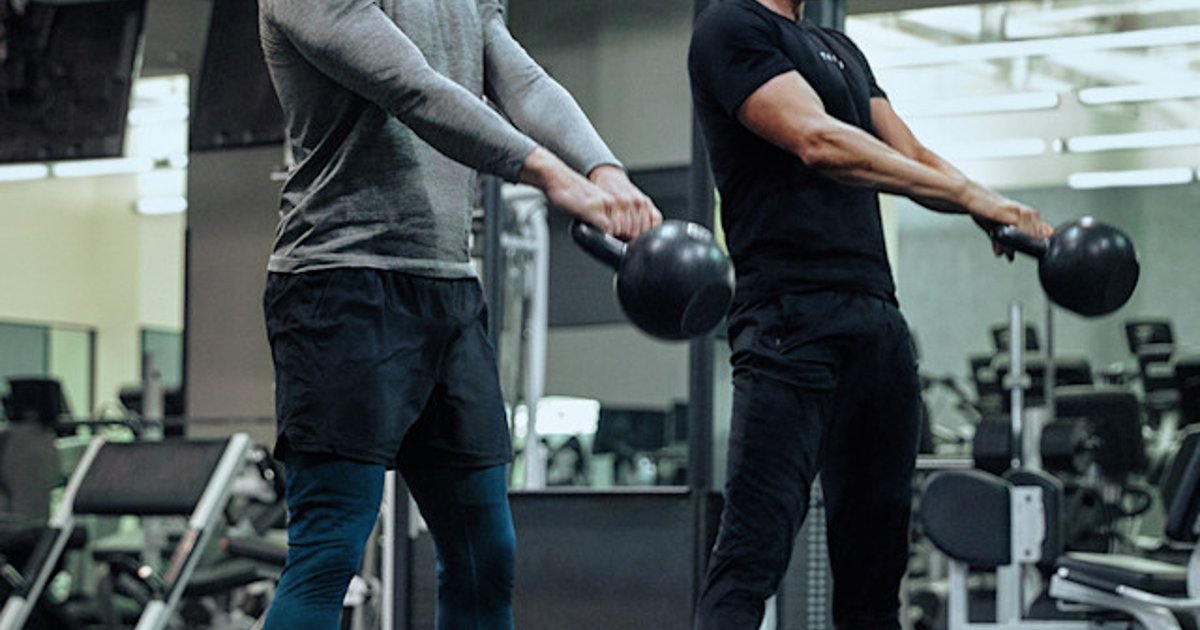
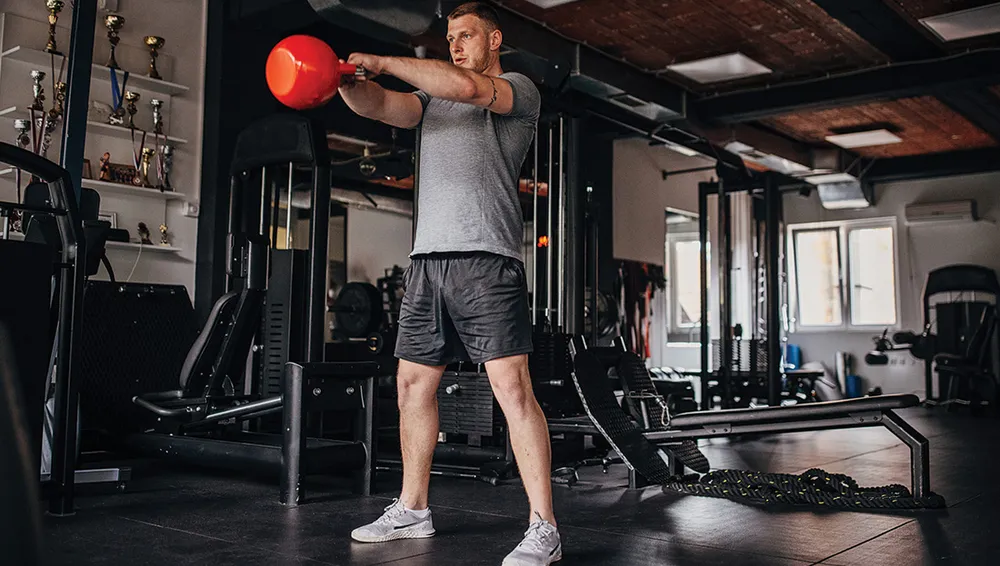
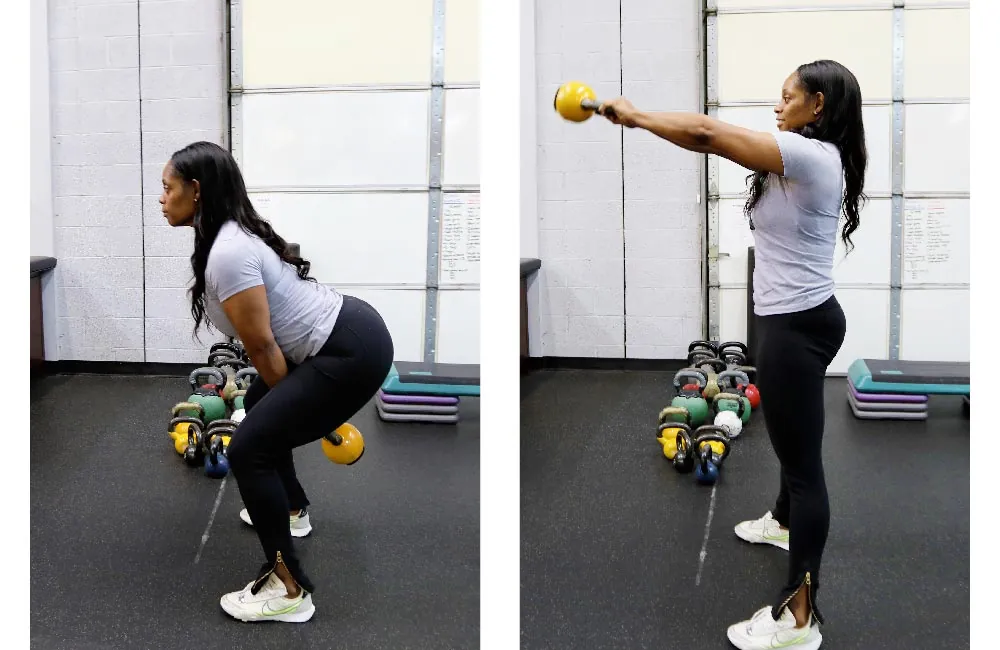
Set the bell slightly ahead of your feet, move your hips back and grip the handle with both hands. Initiate the backswing with control, then drive through the floor and finish tall. Let the bell rise as a consequence of that acceleration rather than chasing a particular height. Guide it back and hinge again only when it returns towards you. Practice parking the bell safely, rather than dropping it at the end of a set.
Earlier biomechanical work with a 16 kg bell showed substantial glute and lower-back muscle involvement during swings. Another experiment in 30 recreationally active adults compared bells at 10%, 15% and 20% of body mass and observed larger joint demands at the hip and lumbar region as load increased. These were acute mechanical observations, not evidence that a heavier swing is always better or that a particular load is safe for every back. That is precisely why the jump from one bell to another deserves respect.
Use the first few repetitions of every set as a technical reference. A steady hinge, secure grip and crisp extension are the standard. A set of twelve repetitions that deteriorates after eight is not twelve equally useful repetitions. If you want a simple performance measure, count only the reps that meet the same technical standard and record the load alongside them.
Strength and jump height improved, but the comparison matters
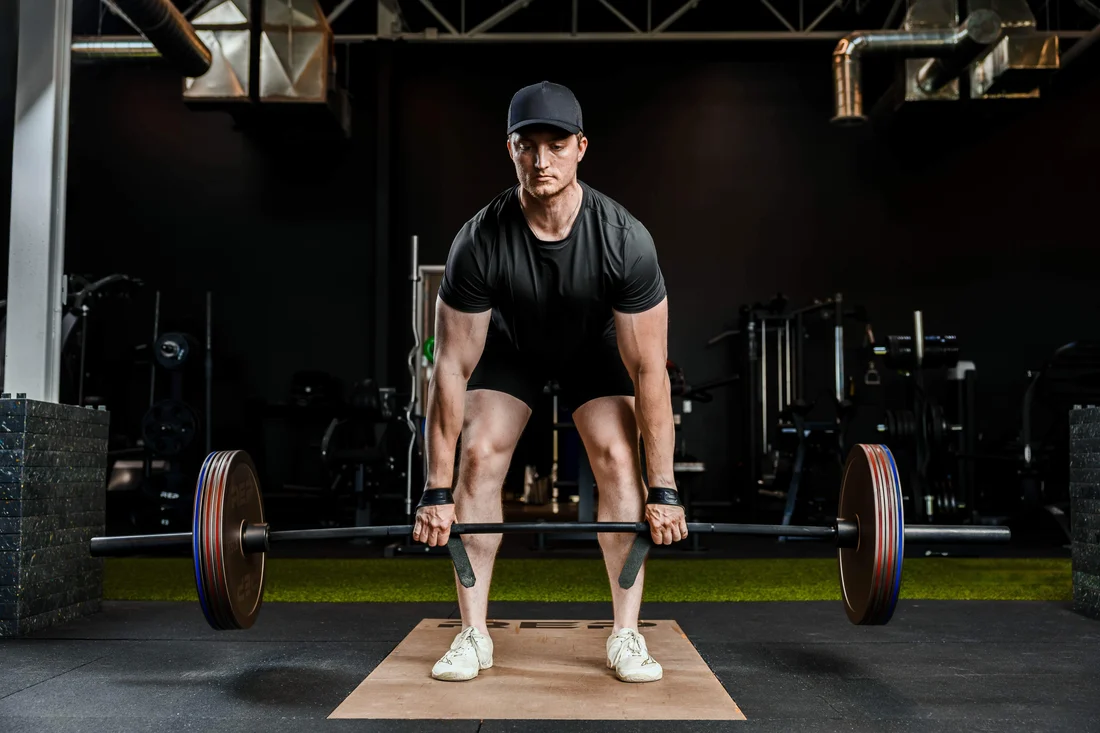
The two swing groups both improved their conventional deadlift one-repetition maximum and countermovement jump height across six weeks. The published percentage-change estimates were 8.7% and 7.8% for deadlift strength in the fixed and step groups, respectively, and 8.7% and 10.1% for jump height. No significant difference between the two swing schedules was demonstrated for those outcomes.
Those results are interesting because the strength test was not a kettlebell swing. It was a conventional barbell deadlift. Likewise, a vertical jump tests how effectively you move your body upward; it is not a direct measure of kettlebell swing speed. A hip-driven ballistic exercise can be useful alongside conventional strength work, but transfer to another exercise is not the same as practising that exercise directly.
An earlier six-week experiment in 21 young men compared swing training with jump-squat training and also found improvements in strength and jump performance without demonstrating a clear difference between the exercise groups. Taken together, the findings support swings as one possible component of a strength-and-power programme, not as a universal replacement for heavy resistance training.
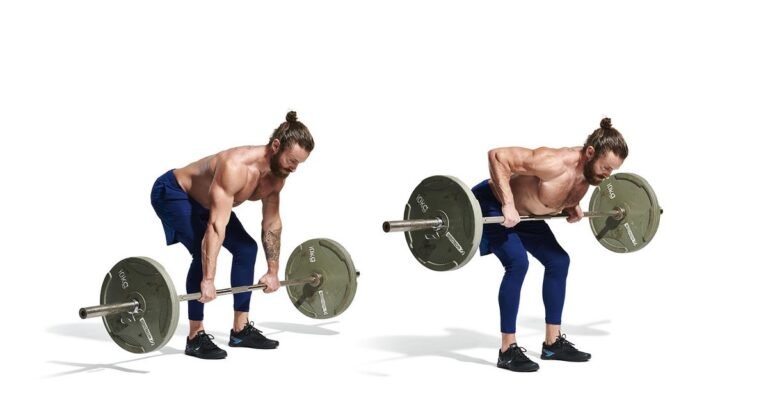
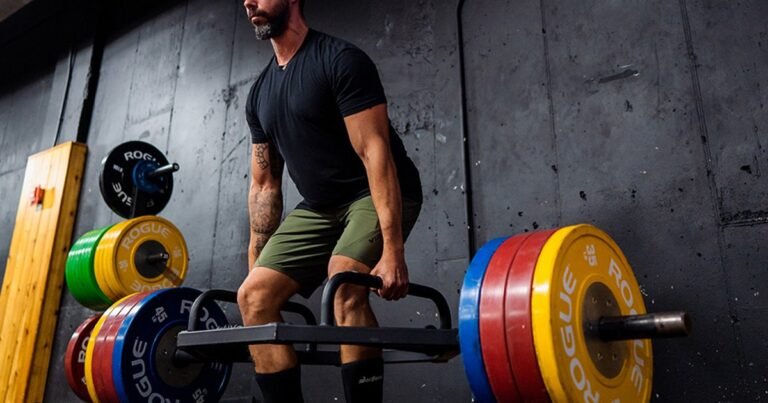
If your priority is a heavier conventional deadlift, keep practising the conventional deadlift. A straight bar, appropriate plates and collars let you make controlled load changes and track the actual lift. A trap bar can serve as an alternative hinge exercise, although its different mechanics mean it should not be treated as an identical deadlift test. Swings can add a faster hip-extension task with a much lighter external load.
There is another important limitation: the participants were already training, and the control group was small. Within-group improvement is not proof that every improvement was caused by the added swing sessions. A lack of a statistically detectable difference is not proof of exact equivalence either. The practical conclusion is modest: in this setting, you did not need the step-loading schedule to observe improvements in strength and jump height.
Some product links may be affiliate links, which can support Mind Muscle Perfection at no additional cost to you.

Equipment Worth Exploring
Explore equipment, accessories and gear from our carefully selected range.


Cast Iron Kettlebells
Textured cast-iron kettlebells for swings, squats, carries, and full-body training.


Competition Plates
Competition-style bumper plates for Olympic lifts and loaded strength training.


Grip Plates
Rubber-coated weight plates with handholds for loading barbells and machines.
Why the endurance result deserves a closer look
The muscular-endurance test was a conventional deadlift performed for as many technically valid repetitions as possible at 50% of one-repetition maximum. Only the step-loading group showed a statistically significant improvement from pre-test to post-test. The reported mean percentage change was 23.8%, while the fixed-load group’s estimate was uncertain, with a much wider confidence interval.
It is tempting to translate that into a simple rule that adding weight improves endurance. Resist that temptation. The endurance outcome was specific to a deadlift test, the groups were small, and a significant change in one group does not by itself establish that its change was significantly greater than that of another group. The result is a reason to consider a planned loading progression, not a guarantee that every trainee needs one.
For training purposes, distinguish three goals. If you want repeatable powerful swings, preserve speed and use enough rest to reproduce it. If you want to tolerate more work, progress the total number of good repetitions or gradually shorten rest while keeping the movement recognisable. If you want a heavier bell, progress load without simultaneously demanding a personal record for total repetitions. The three goals overlap, but trying to maximise all of them in one session makes progress harder to interpret.
For example, suppose you can repeat eight sets of ten swings with a 16 kg bell. You could add two repetitions to each set, add an additional set, or keep ten repetitions and try a heavier bell for fewer sets. Each choice changes the training stress differently. You do not have to take all three steps on the same day. A well-kept log makes it possible to tell which change you actually tolerated.
Recovery is part of that decision. Swings are often slotted into conditioning circuits after other demanding exercises, which can turn an intended power drill into a fatigue drill. If your lower back or grip feels exhausted from heavy pulling, choose a lighter session or move the swings to another day. You should not have to choose between finishing a swing interval and executing your next important strength session.

Functional Fitness Shirts & Workout Gear
Functional-fitness shirts, tanks and workout gear for athletes who train strength, conditioning and everything in between.

Gym Equation Kettlebell Makes Me Happy Design Workout a Hoodie
Make your off-duty look more fun with “Gym Equation”.

Kettlebell Heartbeat Muscle Shirt Athletic Vest Workout Tank Top
Add some lifting attitude to training with “Kettlebell Heartbeat”.

Dia De Los Muertos Kettlebell – Day of the Dead Jumper T-Shirt
Add a playful “Dia De Los Muertos Kettlebell” touch to your casual rotation.

Atlas Kettlebell Earth Lifting – Meme Top T-Shirt
Rep “Atlas Kettlebell Earth Lifting Graphic” humor in and out of the gym.

Grunge Kettlebell Sticker
Put “Grunge Kettlebell” gym humor on your laptop, bottle, or gym gear.

Funny Deez Guns Nutcracker Gym | Christmas Bodybuilding Hoodie
Make your off-duty look more fun with “Deez Guns Nutcracker”.

Donut Kettlebell – Bakery Gains Meme Jumper Pullover T-Shirt
Bring “Donut Kettlebell” humor to your everyday gym style.

Heavy Metal Skull Kettlebell Gym | Funny Workout Liftin Sticker
Put “Heavy Metal Skull Kettlebell” gym humor on your laptop, bottle, or gym gear.


A six-week swing plan you can actually repeat
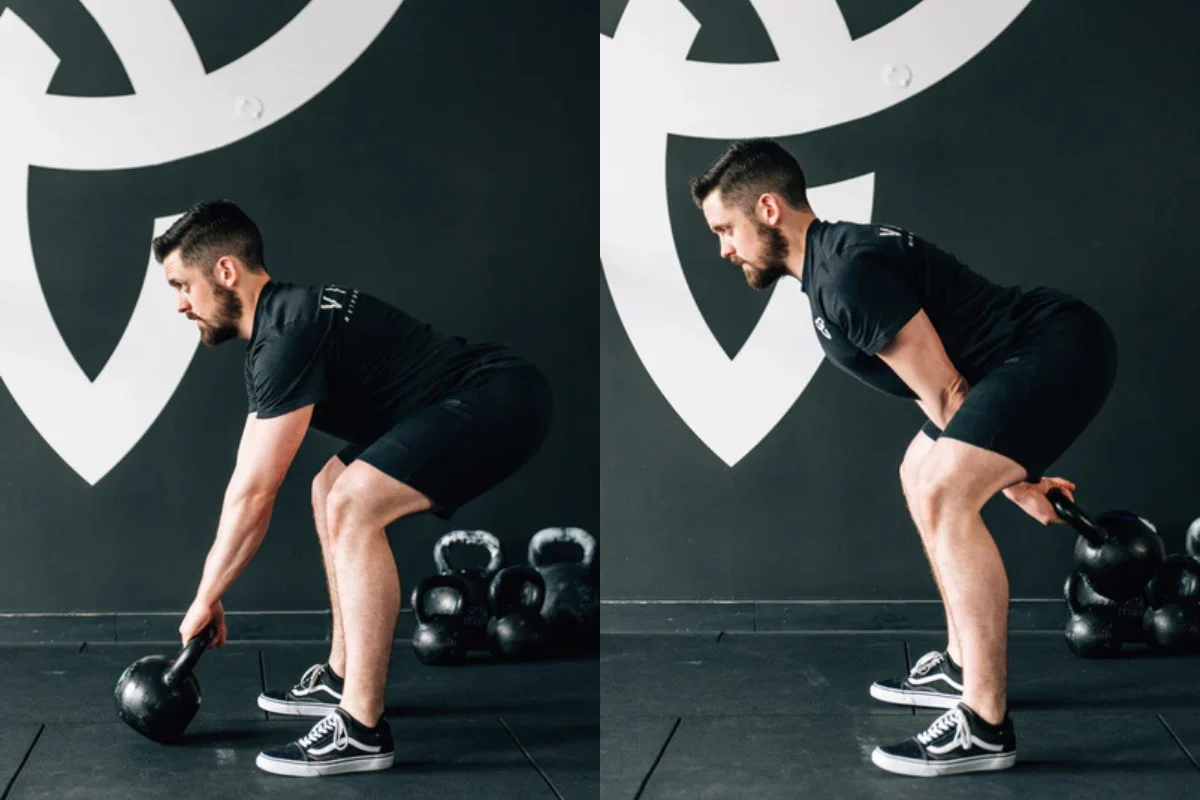
Here is an editorial adaptation for lifters with a solid hip hinge who want to add two manageable sessions a week. It deliberately starts below the study’s interval volume and is not the study protocol. Choose an initial bell that you can swing repeatedly with control, rather than selecting 20 kg simply because that was the fixed experimental load.
| Weeks | Session prescription | Progression decision |
|---|---|---|
| 1–2 | 6 × 8 two-hand swings; rest 60–90 seconds | Keep one comfortable load |
| 3–4 | 8 × 8; rest as needed | Keep the load if quality remains consistent |
| 5–6 | 8 × 8 at the same load, or 6 × 6 at a modestly heavier load | Choose volume or load, not both |
Schedule the sessions on separate days. If you lift on Monday, Wednesday and Friday, you might perform a short swing session after Monday’s upper-body emphasis and the second after Friday’s mixed session, provided the surrounding workouts leave sufficient recovery. Alternatively, give swings their own short session on a lighter training day. Keep a day or two between demanding hip-hinge exposures if your recovery requires it.
Before each session, warm up with easy movement and a few controlled unloaded hinges. Rehearse several light deadlifts and low-repetition swings before the work sets. Use a clear floor area, a secure handle and shoes that feel stable. If you are new to ballistic lifting, learn the hinge with controlled deadlifts first, and seek competent coaching if you cannot consistently control the bell.
At the end of each workout, record the bell weight, sets, technically good repetitions, rest duration and how the last set felt compared with the first. If you are getting through the same workload with cleaner execution and less disruption to the rest of your week, you have useful evidence of progress even before the load changes. If the heavier bell disrupts your timing, return to the earlier weight and build from there.
The real lesson from the six-week comparison is that a training stimulus does not become ineffective just because the equipment stays the same. A fixed weight can support meaningful performance gains, while planned load changes can give you another way to organise work. Start with the option you can execute consistently, then progress the variable that matches your goal. The strongest programme is the one whose useful repetitions you can keep repeating, not the one with the most impressive weight progression on paper.