Advertising disclosure: This page includes affiliate product links that may earn us a commission, as well as products from our own store.
Seated Good Mornings: Set the Bench, Brace the Hinge and Build a Stronger Back
Seated good mornings look simple: sit on a bench with a barbell across the upper back and lean forward. Yet the details matter more than the name. The bench reduces how far your hips can travel, the rack needs to accommodate a seated torso, and a small change in foot position can make the lift feel entirely different. None of this calls for an aggressive first working weight.
Used thoughtfully, the movement can train control and resistance to unwanted spinal movement while the hips extend. Used carelessly, it becomes a heavy forward fold with questionable range and no clear way to fail safely. This guide covers an appropriate bench setup, honest hinge mechanics, which muscles are actually challenged, sensible alternatives and a repeatable six-week progression.
1. Make the bench and rack do their jobs
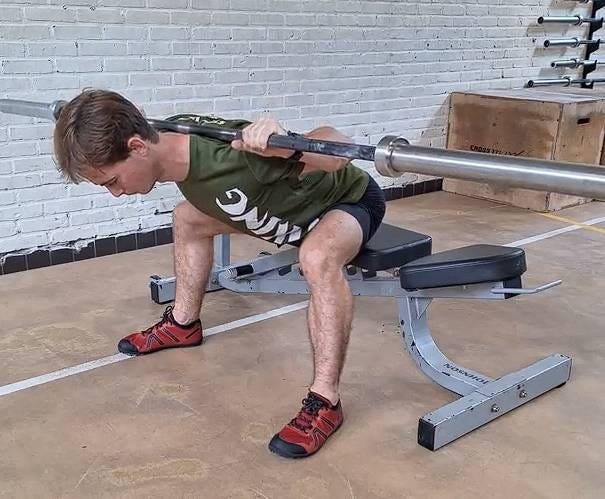
A seated good morning is not simply a regular good morning with a chair underneath you. Your pelvis stays supported while a barbell loads the upper back, so the bench position, rack height and available torso clearance determine the lift. Use a sturdy, level flat bench or purpose-built box that will not tip or slide. A narrow, soft or adjustable bench with an unlocked backrest is a poor starting point. There should be enough room to lean forward without the bench digging into your abdomen or your knees striking the rack.
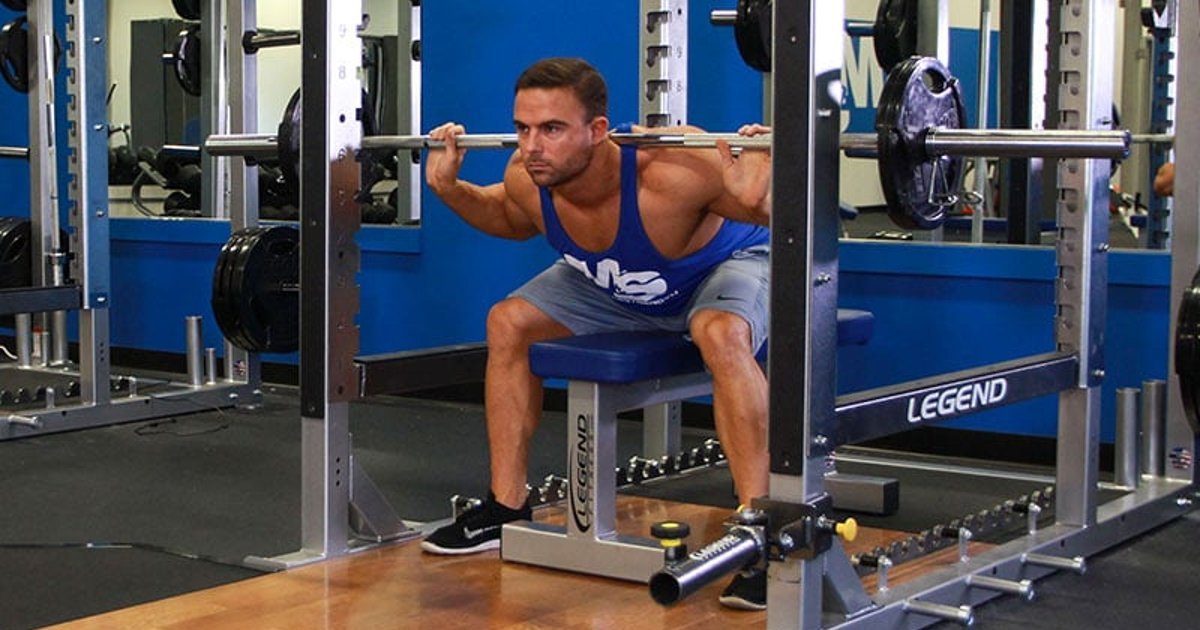
Place the bench centrally in a power rack and set the bar supports around seated upper-back height. You should be able to take the bar off the hooks without a dramatic shoulder shrug, prolonged tiptoe reach or a standing walkout. Position the safety bars at a tested height that catches the loaded bar if you cannot return upright, while still permitting your intended controlled hinge. The correct setting depends on your torso length, bench height, bar placement and rack geometry; a universal pin number is meaningless. Test the route with an unloaded bar before adding plates.
Sit toward the front half of the bench, but keep the whole sitting surface securely beneath your pelvis. Plant both feet flat, commonly somewhat wider than shoulder width, with knees tracking in the same general direction as your toes. Do not force a dramatic split or extremely wide stance. Your feet should support the movement without letting your hips slide off the seat. Check that the heels stay planted at the deepest comfortable position, then note where the bench and feet are so you can reproduce the setup.
Place the bar on the muscular shelf of the upper back, not on the bones of the neck. Grip both sides evenly, organize your shoulder blades and ensure both ends of the bar clear the uprights throughout the range. Start without plates or with a very light training bar. If the rack has no usable safeties or the bench cannot be secured, choose a simpler back-extension or hinge variation instead of improvising a heavy seated barbell setup.
2. Brace first, then hinge without chasing the floor
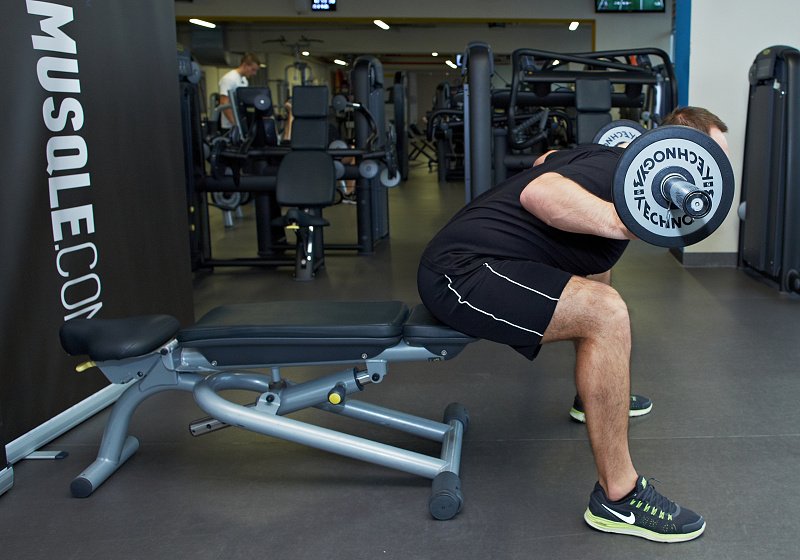
Start upright with your ribs stacked over your pelvis and your torso braced in a position you can maintain. Breathe into the trunk rather than only lifting the chest, tighten the abdominal wall and keep the head broadly aligned with the spine. A slight natural spinal curve is fine. Trying to exaggerate an arch or flare the ribs makes it harder to see when control deteriorates. Keep your hands steady on the bar, but do not try to pull yourself upright by yanking it forward.
Initiate the repetition by folding forward at the hips while your sitting bones remain in contact with the bench. The torso moves as a unit rather than each segment of the spine curling down in sequence. Lower over roughly two or three seconds, allowing the chest to approach the space between the thighs without forcing contact. A wider foot position can create room for the torso, but it is not a competition for the widest possible stance. Your knees may move slightly as your hips rotate; avoid turning the repetition into a series of little squats.
Stop the descent where you can still keep your brace and bar position, rather than insisting the torso becomes parallel to the floor. Hip anatomy, hamstring length, bench height, leg position and back control all change the comfortable endpoint. For some lifters that means a fairly short hinge at first. Forcing extra centimeters by rounding hard, bouncing against the thighs or lifting the hips off the bench defeats the purpose of the exercise. A video from the side helps distinguish an honest hip hinge from a collapsing lower back.
Pause very briefly without relaxing, then return by extending through the hips while keeping the trunk organized. Finish upright without leaning backward into an exaggerated lumbar extension. Let your breathing reset between reps if necessary, particularly early in learning the pattern. Sharp back pain, tingling, radiating symptoms or a sudden loss of control is a reason to end the set and reassess, not a signal to add more weight. Soreness and muscular effort are not interchangeable with joint pain.

Equipment Worth Exploring
Explore equipment, accessories and gear from our carefully selected range.


FID Bench MAX
Adjustable bench offering flat, incline, and decline positions + adjustable headrest.


Multi Bench MBX-650 2.0
Adjustable multi-bench with roller adjustment, 15 backrest positions and accessory mounts.


Multi Pull Smith Rack MPHR-780
All-in-one rack with a Smith machine, functional trainer, lat pulldown and low row.

Foldable Wall Rack
Wall-mounted folding squat rack designed to save floor space between workouts.

VForce 3IN1
All-in-one rack combining an adjustable Smith machine, functional trainer, and free-weight station.

VForce 3IN1 Max
Six-post all-in-one rack with Smith machine, functional trainer, and variable-force cables.

VForce 2IN1
Half rack and pivot-arm functional trainer with switchable 1:1 and 2:1 pulley ratios.
3. Know what the seated version can and cannot train
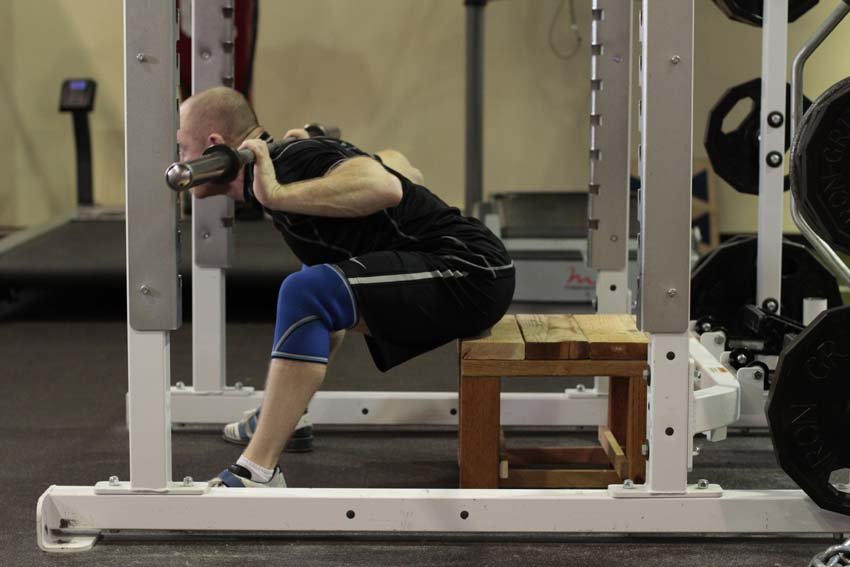
The name suggests an obvious hamstring exercise, but the seated version changes the leverage substantially. Because the knees are flexed and the pelvis is supported, the hamstrings are generally not stretched across both joints the same way they are in a standing Romanian deadlift. The torso still moves under a barbell load, and the spinal erectors must work to resist uncontrolled spinal flexion. The glutes and other hip extensors can contribute to returning upright, while the upper back helps maintain the bar position.
That mechanical explanation does not make it accurate to promise the seated good morning is the best possible exercise for back thickness or glute growth. A coaching demonstration can show how to perform a lift, but it cannot establish a long-term muscle-growth advantage. The size of any training effect depends on range, tension, load, fatigue and the rest of the program. If your target is maximal hamstring growth, seated good mornings should not automatically replace exercises that challenge the hamstrings at longer muscle lengths, such as a well-executed Romanian deadlift or a suitable leg curl.
It can, however, be useful as a deliberately controlled posterior-chain accessory. The fixed bench offers a repeatable start position for lifters who want to practice torso stiffness and forward hinging under a bar. It is also a straightforward reminder that a strong-looking movement does not have to involve an enormous load. The moment you move the hips, bench, feet or bar position between sessions, the leverage changes and your plate total becomes a less useful comparison.
Watch for three classic mistakes. First, the bar begins to roll high onto the neck because the upper back was never set. Second, the athlete chases extra depth by folding the spine rather than hinging the hips. Third, the athlete bounces upward or rocks the feet to escape the bottom. Each problem is easier to fix with lighter loading, a shorter honest range and clearer setup markers than by adding more sets.
4. Choose the right variation and fit it into your week
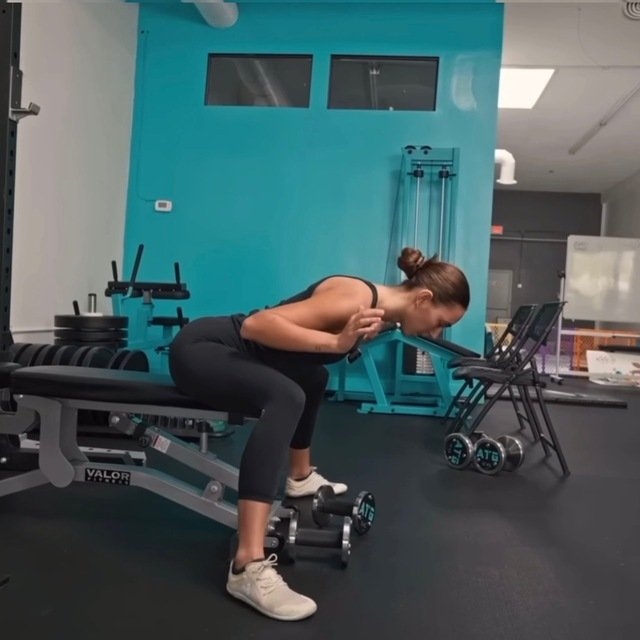
For someone primarily interested in hamstrings and heavy hip-extension strength, the standing good morning and Romanian deadlift typically offer a more direct long-length hinge. For someone seeking a controlled seated torso movement, the seated good morning offers a different challenge with less ability to move the hips backward. A back extension lets you load spinal and hip extensor musculature with the torso supported at a different angle and may be easier to set up. These are different tools, not a universal ranking of better and worse exercises.
The exercise also has practical variations. A light barbell lets you establish the normal rack path; a safety-squat-style bar can change shoulder and hand demands but only if the rack and bar are compatible. Holding a light plate in front of the chest can be a separate unweighted-to-weighted torso-hinge drill before attempting a barbell. The load path changes with each tool, so treat them as variations to re-learn rather than direct pound-for-pound substitutes. Avoid heavy unsupported dumbbells swinging beside the knees or an awkward plate balance in front of the face.
Place seated good mornings where your posterior-chain workload can tolerate them. After a maximal deadlift session, additional heavy trunk fatigue may make the exercise less useful than one or two controlled lighter sets. On a general lower-body day, it can follow a main squat or hinge as a technique-focused accessory. A sensible session might be a main squat movement, two or three seated good-morning working sets, a hamstring curl or back extension, and then easier isolation work. Count the sets toward your actual weekly workload instead of pretending they cost nothing.
The strongest cue is consistency: same bench, same foot width, same bar position, same depth and same rep tempo. Shopping for a bench, rack, plates or collars is secondary to having gear that fits safely and securely together; do not assume one accessory or bar is compatible with another brand’s rack without checking its exact specifications.
Equipment Worth Exploring
Explore equipment, accessories and gear from our carefully selected range.


Competition Plates
Competition-style bumper plates for Olympic lifts and loaded strength training.

Grip Plates
Rubber-coated weight plates with handholds for loading barbells and machines.


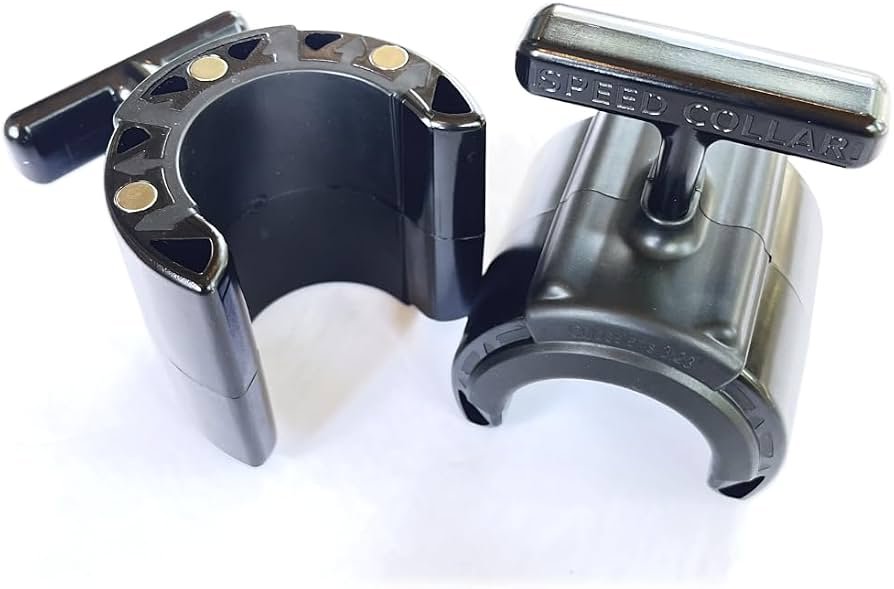
Speed Collar
Quick-release collars designed to secure weight plates on standard two-inch Olympic bars.
5. Progress over six weeks without turning it into a max lift
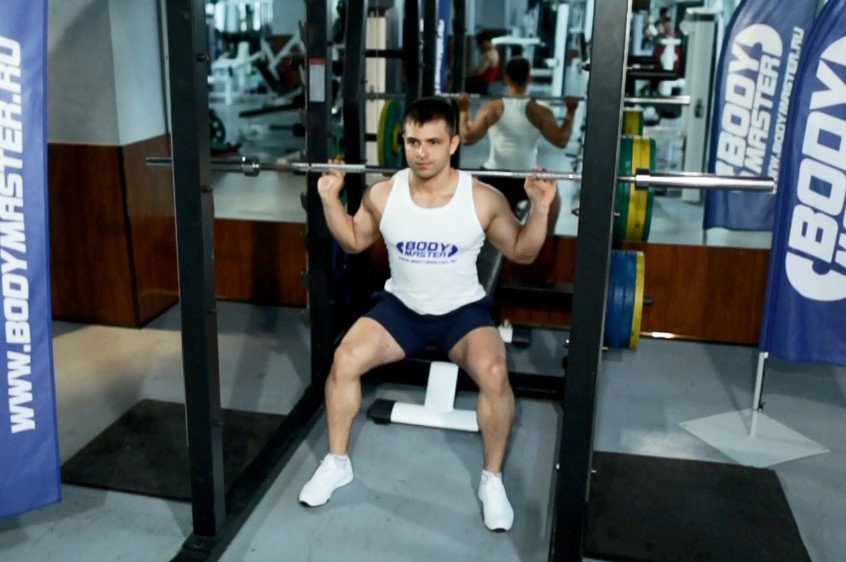
Weeks 1–2 are for a controlled baseline. Use a light bar or equivalent resistance and perform two sets of eight to ten repetitions, one or two times per week depending on the rest of your program. Rest about ninety seconds to two minutes, or longer when you cannot recover your brace. Write down bench height, foot spacing, safety position, load and a simple range cue such as how close the torso comes to the thighs. End every set with a couple of technically comfortable repetitions still available.
In weeks 3–4, move to three sets of eight to twelve if recovery and technique stay consistent. Keep a deliberate descent of roughly two to three seconds and avoid bouncing. Add a little load only after all planned repetitions show the same depth and torso shape. If the bar travels unevenly, one foot loses contact or the upper back softens, repeat the weight next workout. A modest increase in quality or range can count as progress even when the plates stay the same.
During weeks 5–6, keep three working sets and choose an achievable six-to-ten-repetition range. You may increase the resistance slightly when you can complete the top of that range with the same pause, brace and controlled return. Otherwise hold the load steady, reduce a set or take an easier week if trunk fatigue affects squats, rows or deadlifts. Avoid testing a one-rep maximum on a seated hinge simply to put a number in your training log. This exercise rewards repeatability more than a dramatic single attempt.
A sample lower-body session could use a five-minute general warm-up, light hip-hinge practice, two light rack-specific ramp-up sets, three working sets of seated good mornings, and then a leg curl or another complementary accessory. Give the posterior chain at least some recovery time before an equally demanding hinge session. Training twice weekly is optional, not compulsory; one focused exposure may be enough when other deadlift and squat work is already substantial.
Before finishing, guide the bar back onto both hooks deliberately with eyes on the rack position, or let the safeties catch it according to your tested plan if you cannot complete a rep. Never try to twist out from under a heavy bar while pinned against a bench. The successful six-week outcome is a reproducible brace, more confident range and gradually improved working sets, not the biggest number another lifter uses on a completely different bench.

Powerlifting Shirts & Lifting Gear
Powerlifting shirts and gym gear for squat, bench and deadlift lifters who live for heavy numbers.

Deadlift Pink Skull Graphic for Powerlifting Leg Day an T-Shirt
Make gym days more fun with “Deadlift” style.

Deadlift Viking Skull Gym Shirt for Powerlifters, Norse T-Shirt
Show some Viking attitude with a playful “Deadlift” tee.

Liftin Metal – Heavy Metal Rock Music Workout Jumper Pu T-Shirt
Show some gym-day personality with “Liftin Metal”.

Skull & Weights 45LB Plate Skull Weight Plate Dark Top Hoodie
Keep it laid-back with a little “Skull & Weights 45LB Plate” attitude.

Heavy Metal Gym Lifting Skull | Funny Workout Decal & B Sticker
Stick a little “Heavy Metal Gym Lifting Skull” humor on your favorite gear.

Gym Cult Member Occult Lifting Meme – Bodybuilding Powe Sticker
Give your everyday gear a playful “Gym Cult Member” twist.

Ego Cleaner Anatoly Crewneck Pullover Sweater for Power T-Shirt
Keep things casual with a little “Ego Cleaner Anatoly” attitude.

Deadlift Skull Explosion Muscle Shirt for Powerlifting Tank Top
Bring “Deadlift Skull” humor to your next lifting session.

Lift Heavy Be Happy Meme Bros & Gains Top T-Shirt
Show some powerlifting attitude with a playful “Lift Heavy Be Happy” tee.

I Want You To Lift Heavy Gym | Funny Uncle Sam Patrioti Sticker
Bring “I Want You To Lift” attitude to your water bottle or laptop.