Advertising disclosure: This page includes affiliate product links that may earn us a commission, as well as products from our own store.
Adjustable dumbbells save you from storing a full run of fixed pairs, but the adjustment process becomes part of every workout. The Ironmaster Quick-Lock 75 lb set takes a plate-and-locking-screw approach. To judge whether it suits you, look beyond the maximum number on the box. Count the complete implement, understand the locking parts, check the space around your hand and plan how often your routine changes weights. Those details determine whether a compact set also makes your sessions convenient.
Count the complete dumbbell, not just the plates
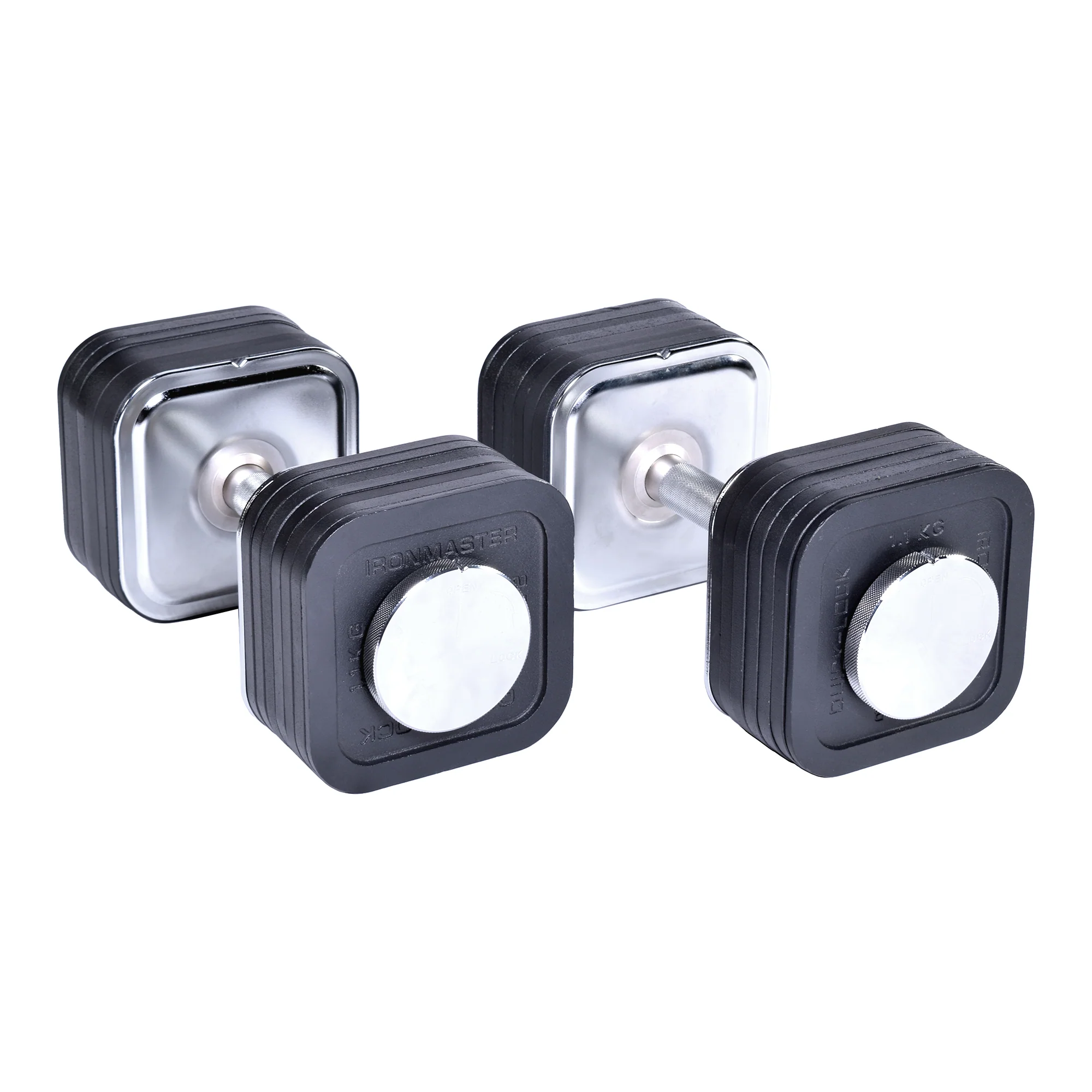
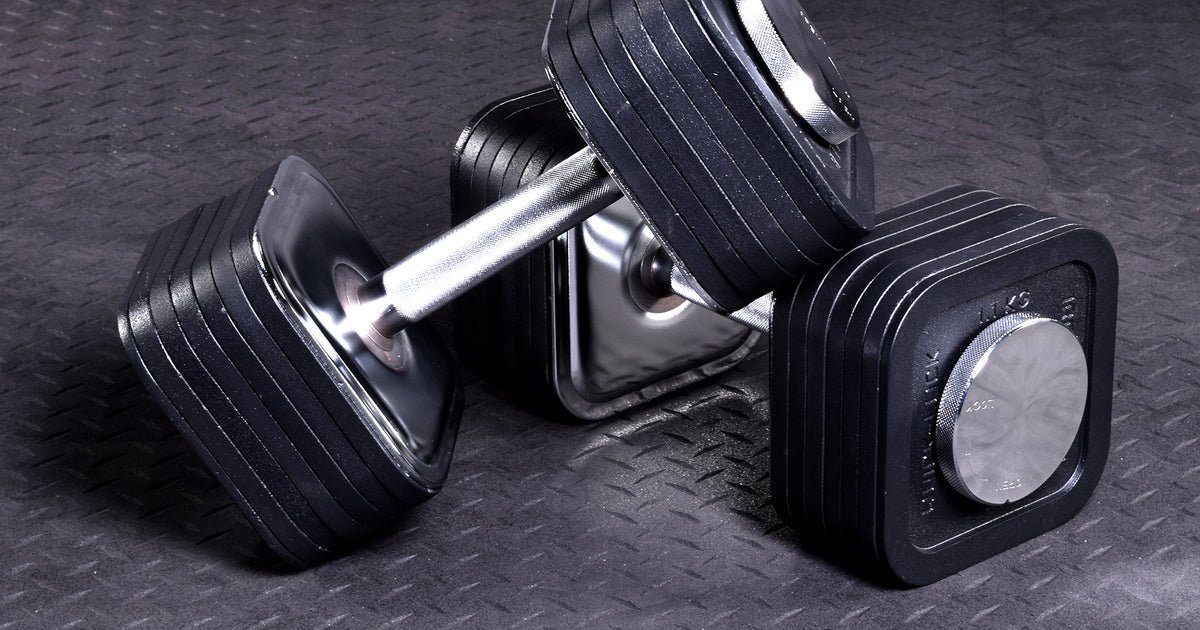
The standard 75 lb set contains two 5 lb handles, four locking screws weighing 2.5 lb each, twenty-four 5 lb plates and four 2.5 lb plates. A handle fitted with both standard screws therefore starts at 10 lb before external plates. That distinction matters: a bare handle weight and an assembled dumbbell weight are different figures.
For a straightforward loading example, place four 5 lb plates on each end of a standard handle. The external plates contribute 40 lb, and the handle plus two screws contribute another 10 lb, giving 50 lb for that dumbbell. This is an arithmetic illustration, not a suggested training load. Record the total you hold in your hand rather than only the plates you added.
The whole-set arithmetic provides a second check. The supplied plates total 130 lb: 120 lb from the larger plates and 10 lb from the smaller ones. The pair of handles and four screws add 20 lb. Together, that accounts for the advertised 150 lb across the pair. It does not mean one dumbbell in the standard set can be loaded to 150 lb.
Keep the unit convention consistent in your log. A pair of 50 lb dumbbells means 50 lb in each hand, while the combined external load is 100 lb. Either notation can work if you label it clearly. Confusing those conventions creates a false improvement before any training adaptation occurs. Make the entry unambiguous, particularly when comparing dumbbells with a barbell exercise.
Make the locking check part of the changeover
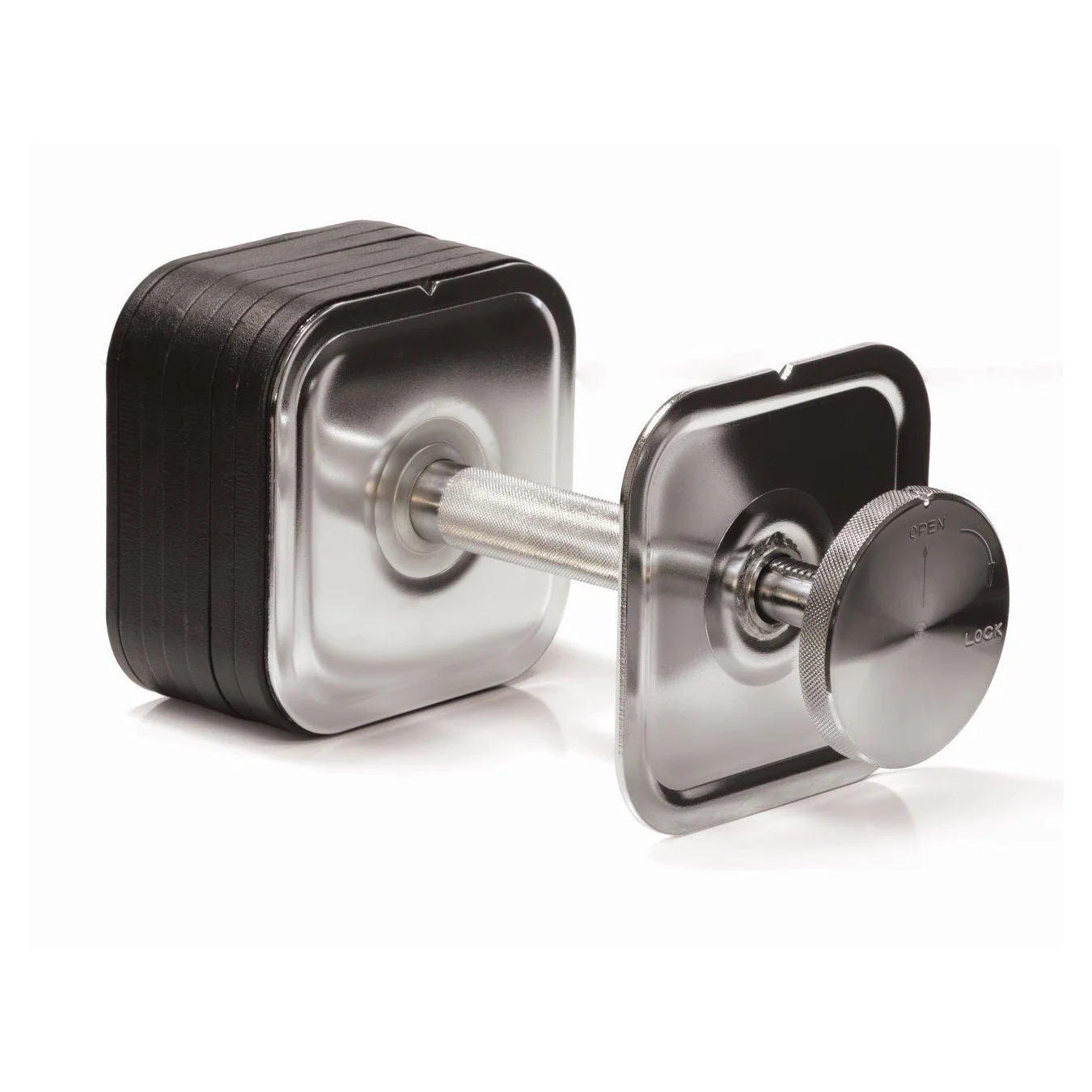
Quick-Lock uses removable locking screws with a partial-turn mechanism to secure the plates. The standard screw is a specific part of this system, not a generic collar for an Olympic bar. Its published capacity is six 5 lb plates plus one 2.5 lb plate per end. Use the hardware and loading instructions intended for your configuration.
Give yourself an organized place to change weights. Put the dumbbell down securely, identify the target load and keep removed components where they cannot roll or disappear under equipment. Changeover is easier to audit when you can see what came off and what will go back on. Avoid mixing spare screws or add-on hardware casually because similar-looking components may serve different configurations.
Before the next set, confirm the complete assembly according to the manufacturer’s operating instructions. The check includes both ends, the intended plate arrangement and a securely locked result. Do not treat a familiar-looking stack as proof that every part has been secured. If something does not seat or lock normally, stop and resolve that issue before lifting rather than trying to compensate with a tighter grip.
The useful speed comparison is the entire transition between working sets. It includes putting the weights down, moving plates, securing the screws and returning to your starting position. A product demonstration can show the mechanism, but it cannot establish your personal changeover time in a different room. Measure a normal sequence yourself if rapid weight changes are central to your program.
Check hand space as well as maximum weight
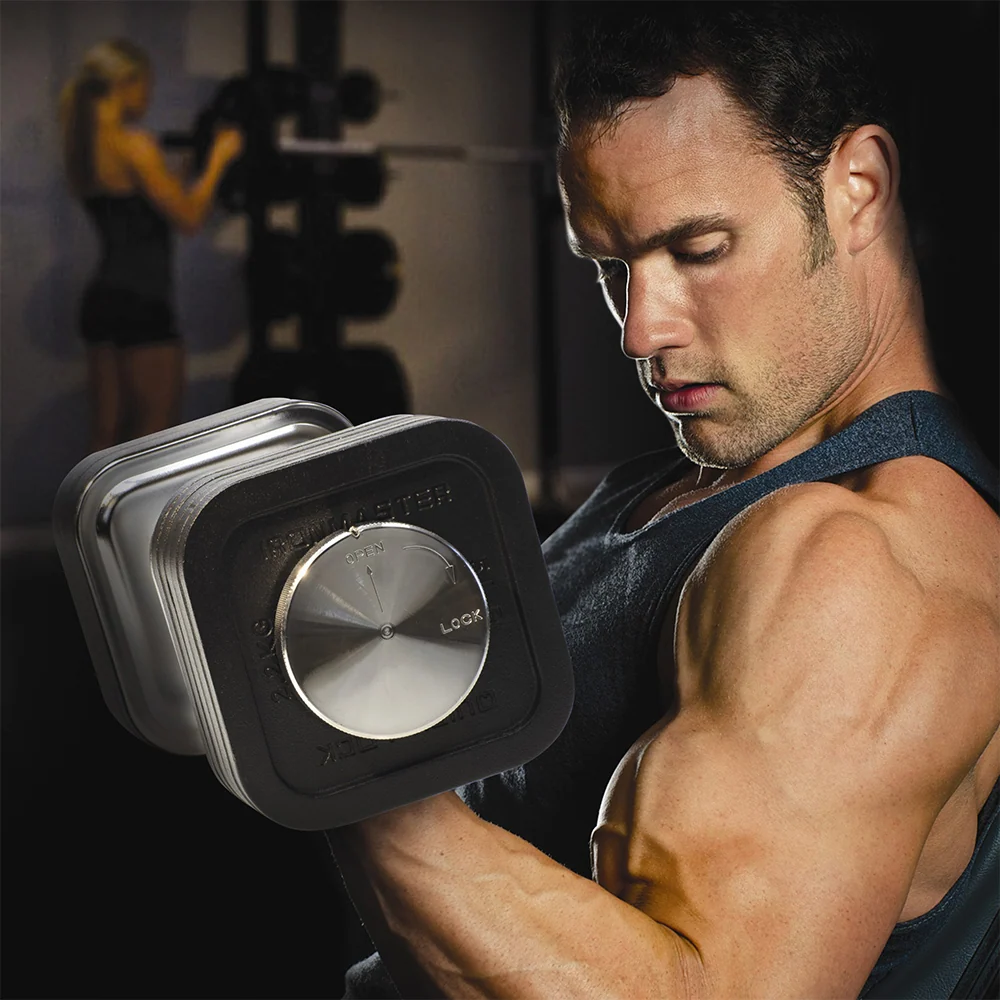
The US specifications list a 1.25-inch grip diameter and 6.5 inches of inside grip width for the standard handle. They also list a 14.5-inch dumbbell length at 75 lb, versus 9 inches at 20 lb. Those figures help describe the standard setup; they are not a promise that every hand position or accessory will fit.
Consider the exercises you actually perform. A curl, a row and a press place your hands and the dumbbell ends in different relationships to your body. Check the start, working range and return position for each one. A comfortable hold while standing is useful information, but it does not settle how the implement feels when brought close to the torso or set up for a press.
The optional Heavy Handle kit adds 15 lb per dumbbell by mounting weight inside the handle area. It also reduces the available grip space, so the decision involves more than a higher maximum number. For example, retaining the same external plates while adding 15 lb changes a 50 lb configuration to 65 lb. Update the log rather than assuming the familiar plate stack still represents the old weight.
Treat add-on choices as configuration changes. Check the exact instructions, usable hand space and compatibility of anything fitted around the grip. A thick-grip accessory that fits one arrangement may not suit another. Product cards accompanying this guide may show alternative equipment, but they do not certify compatibility with the Ironmaster handle, screws or proprietary plates. Verify that relationship before buying.

Equipment Worth Exploring
Explore equipment, accessories and gear from our carefully selected range.


FID Bench MAX
Adjustable bench offering flat, incline, and decline positions + adjustable headrest.

Multi Bench MBX-650 2.0
Adjustable multi-bench with roller adjustment, 15 backrest positions and accessory mounts.


VForce Wall Trainer
Space-saving wall-mounted functional trainer with pivoting cable arms and variable resistance ratios.

GymPin Ergo Handles
Pair of ergonomic cable handles shaped for comfortable triceps and pulling exercises.

GymPin D Handle Bar
Multi-use steel D-handle bar for cable rows, pulldowns and other cable exercises.
Plan storage around adjustment and pickup
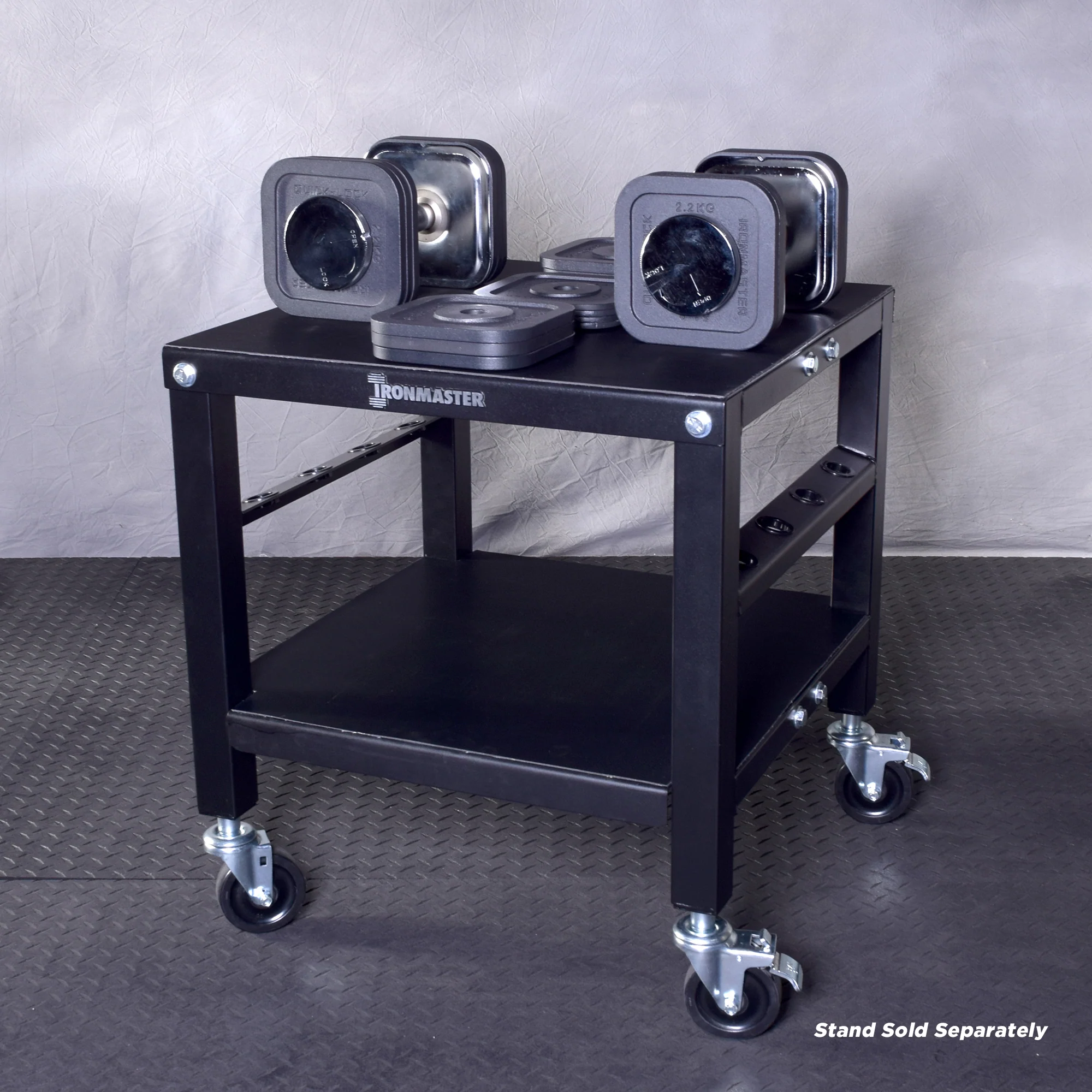
A dedicated stand can give the dumbbells, plates and locking screws a consistent home. Ironmaster sells stands separately, including its original stand rated to support a pair at 120 lb each. Choose the stand by the exact specification and configuration you intend to store, rather than assuming every stand in a photograph has the same capacity or organization.
Measure the usable station, not only its parked footprint. You need space to approach the weights, handle plates and move to the bench or exercise area. Consider where unused plates will sit during a lighter exercise and where the heavier dumbbells return after a set. Storage is more effective when it supports that complete sequence without crowding the path you walk.
Keep regularly used loads easy to distinguish. A simple arrangement of plates and a written loading example can reduce arithmetic errors when you are tired. The goal is a repeatable check, not memorizing every possible combination. If another person shares the equipment, agree on where parts return so that a missing screw does not become the first discovery of the next workout.
Compare this setup with your existing alternatives. Fixed dumbbells, plate-loaded handles, a barbell station and a cable station each create a different storage and transition pattern. A bench can support several dumbbell exercises, while bars, compatible plates, collars and cable handles offer other ways to organize training. Evaluate the actual routine rather than treating a compact dumbbell set as a universal replacement for every station.
Choose the system for your exercise sequence
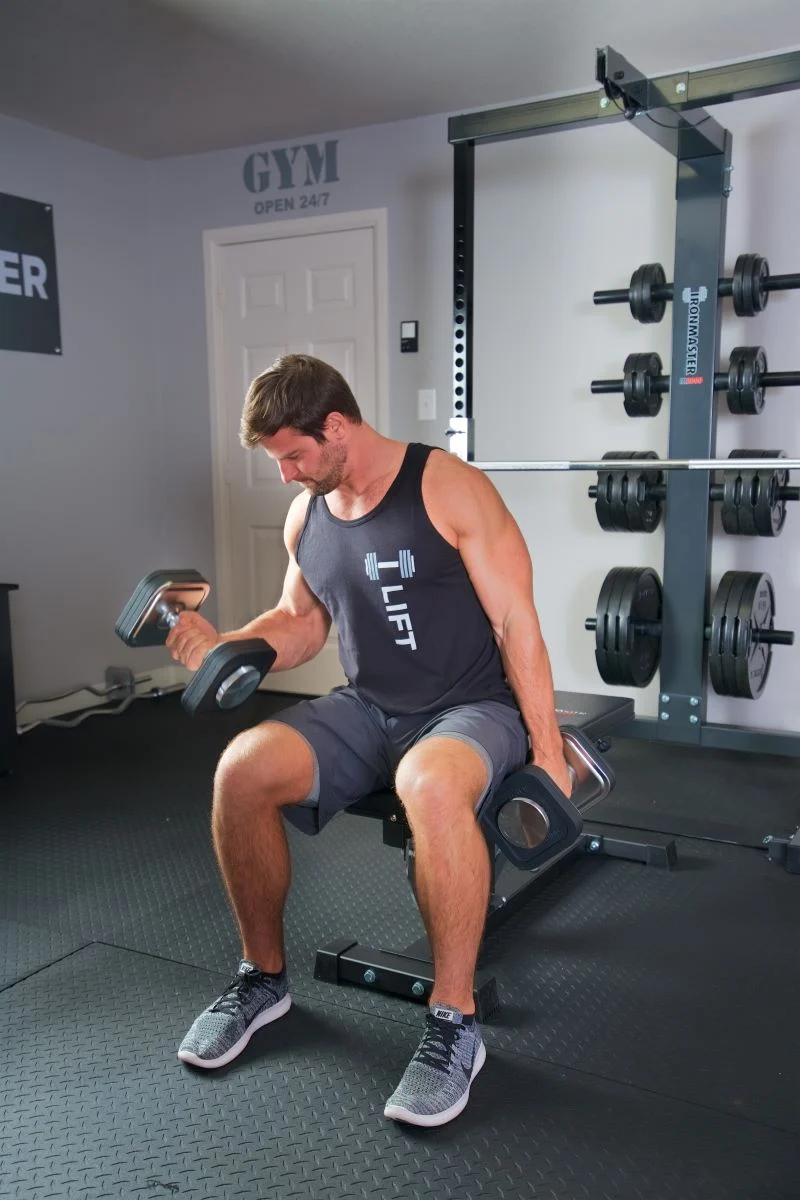
A routine that uses one load for several sets asks less of the adjustment process than one that changes weight after every movement. Write out a representative session before making the purchase decision. Include a demanding press or row, a lighter curl and any smaller accessory movement you regularly perform. Then mark each occasion when the dumbbells need a different load.
Think through the largest transitions as well as small increases. Moving from a heavy row to a much lighter arm exercise can involve a different amount of plate handling from repeating the same exercise with a modest adjustment. You do not need to abandon your preferred routine to suit the equipment. Instead, decide whether its normal transitions are a tradeoff you are willing to make.
Progression also needs a clear measurement. Keep exercise technique and range repeatable, record controlled repetitions and state the complete dumbbell weight. Do not assume that an advertised adjustment increment automatically describes the symmetric plate arrangement you plan to use. Consult the factory loading guidance for the exact combination, and distinguish a repeatable change in load from a change in how you perform the movement.
Expansion kits are available for heavier configurations, but buy for a realistic training role rather than a distant maximum alone. Consider the base set, suitable hardware, storage and the space your exercises require as one system. If those pieces fit your routine, the Quick-Lock approach can be a sensible compact option. The strongest reason to choose it is a clear match to your sessions, not an untested claim that it is best for every lifter.

Funny Gym Shirts & Workout Gear
Funny gym shirts, tanks, hoodies and workout gear for lifters who like training hard.

Dumbbell Heartbeat Crewneck Pullover Sweater Workout Fa T-Shirt
Add a playful “Dumbbell Heartbeat” touch to your casual rotation.

Meme – Shhh I'm Doing Math Plate Math Weightlifting T-Shirt
Heavy lifts, good laughs, and a little “Shhh I'm Doing Math Plate Math” energy.

Gym If You're Reading This It's Arm Day Drake Parody & Sticker
Stick a little “If You're Reading This It's Arm Day Drake” humor on your favorite gear.

Lift Smart Brain Weight Plate Mind Muscle Connection 45 Hoodie
Keep it laid-back with a little “Lift Smart Brain Weight Plate” attitude.

Safety Practice Safe Sets Sweater Jumper T-Shirt
Show some gym-day personality with “Gym Safety”.

Stronger Than Excuses Tank
Show some personality between sets with “Be Stronger Than Your Excuses”.


Gymhead Meme Mind Muscle Connection Decal Water Sticker
A fun “Gymhead” touch for bottles, laptops, and lockers.

Consistency Is Key Stoic Greek God Marble Sculpture T-Shirt
Make gym days more fun with “Consistency is Key Stoic Greek God Marble” style.

Shirt Lovers – I Love Valentine'S Day – Dumbbell & T-Shirt
Rep “for Gym Lovers” humor in and out of the gym.