Advertising disclosure: This page includes affiliate links that may earn us a commission at no additional cost to you.
Jonathan Edwards jumped 18.43 metres in 1995. The distance associated with his world record is 18.29 metres. Those two numbers can look like a contradiction until you add the wind reading: the longer jump had assistance beyond the limit for record recognition.
That distinction makes Edwards’ breakthrough season a useful story for anyone interested in athletic performance. A result needs its conditions, and a career needs more than its largest number. His path ran through a spectacular wind-assisted jump, three world records in one season and, eventually, Olympic gold. Each achievement answers a different question.
Why 18.43 metres did not become the world record
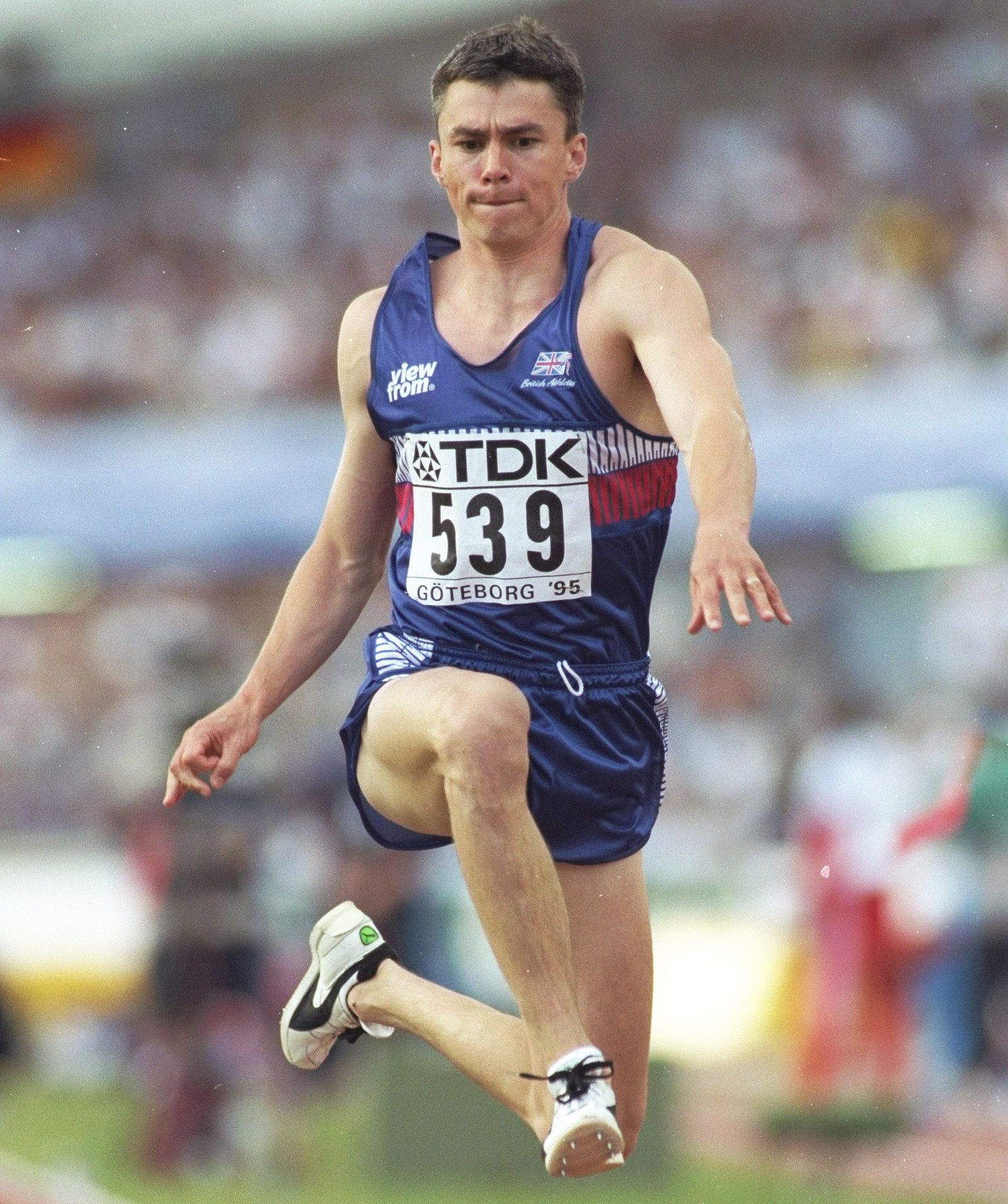
At the European Cup in Lille in 1995, Edwards reached 18.43 metres with a following wind of 2.4 metres per second. The distance was measured, but the wind assistance made it ineligible as a world record. Describing the jump as wind-assisted preserves both parts of the performance: he travelled an extraordinary distance, and it could not occupy the same record category as a qualifying mark.
The mistake is to treat eligibility as an opinion about how impressive a jump looked. It is a condition attached to the result. Removing that condition from a highlight makes the biggest number easier to share while making the comparison less useful. Equally, calling the performance meaningless would erase what Edwards actually did.
There is no need to invent a corrected distance by subtracting an assumed wind bonus. The measured 18.43 and its wind reading already provide the honest description. Estimating what the same effort would have produced in different conditions is another question, with assumptions that cannot be replaced by a neat subtraction.
Keep that distinction when reading performance headlines: the largest distance, the best eligible mark and the winner of a particular competition may be different entries. A short caption can leave room for all three without turning a remarkable effort into a misleading record claim.
The record had already moved before Gothenburg
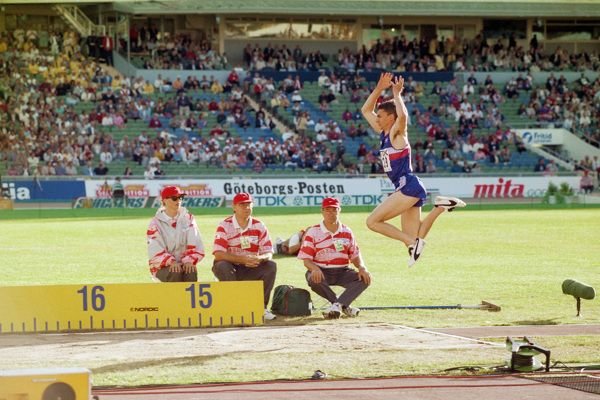
Edwards did not arrive at the 1995 World Championships needing to convert only a spectacular highlight into a recognised result. Earlier that season, he had taken the world record to 17.98 metres in Salamanca, improving Willie Banks’ 17.97-metre mark by one centimetre.
That smaller improvement matters to the sequence. If the story jumps directly from 18.43 in Lille to 18.29 in Gothenburg, it misses the point at which Edwards became the world-record holder. Salamanca supplied an eligible record before the championship final supplied something much larger.
Read the progression in chronological order and the achievements become clearer. The wind-assisted jump demonstrated a distance under its recorded conditions. Salamanca changed the record. Gothenburg would change it twice more. These are separate performances, even though they belong to the same extraordinary summer.
It also shows why a progress chart should keep context beside its numbers. A one-centimetre improvement can carry a different significance from a much larger mark in another category. Ranking clips purely by distance would conceal that difference. The dates, competition and conditions help explain what each result actually changed.
Two world records in the same final
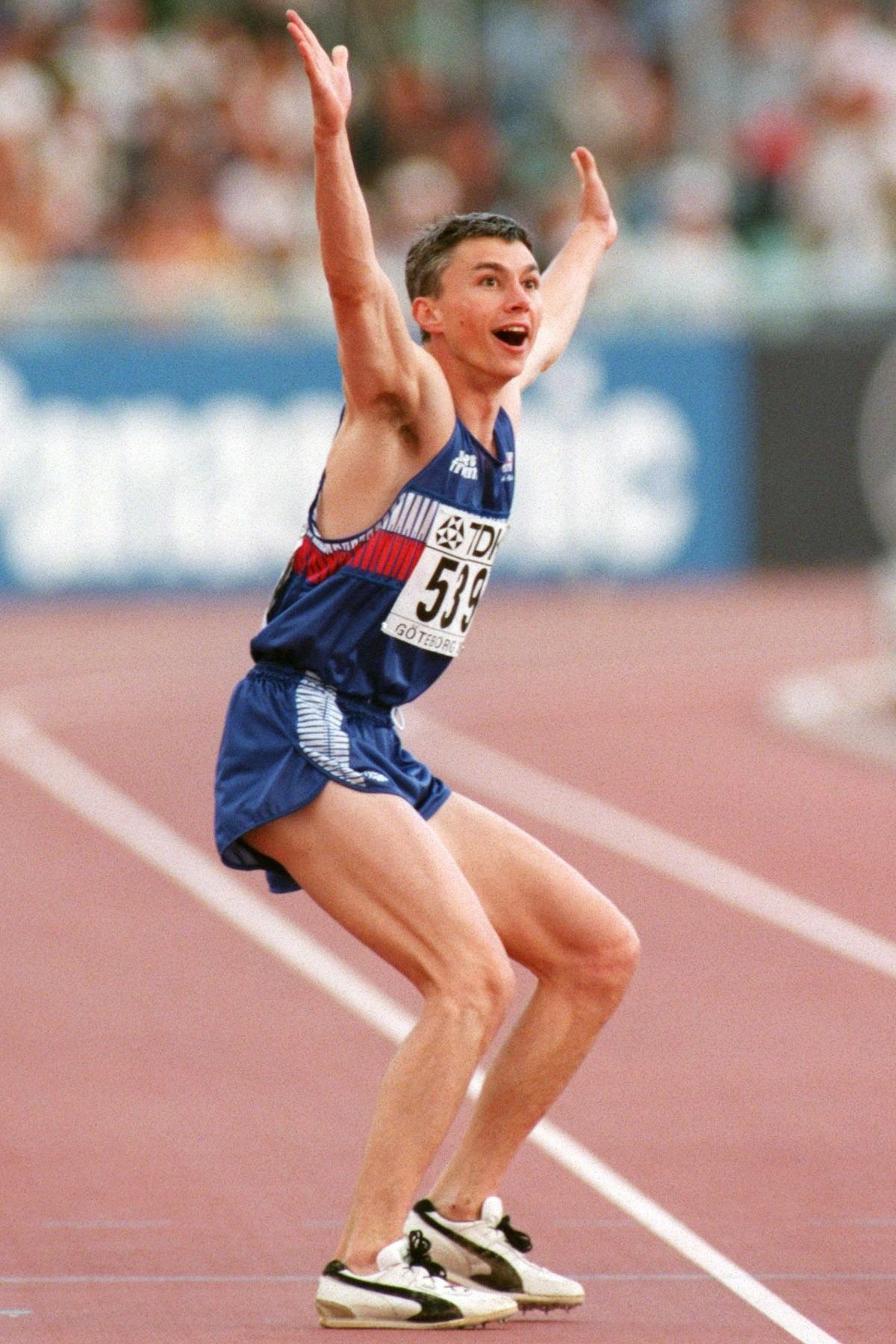
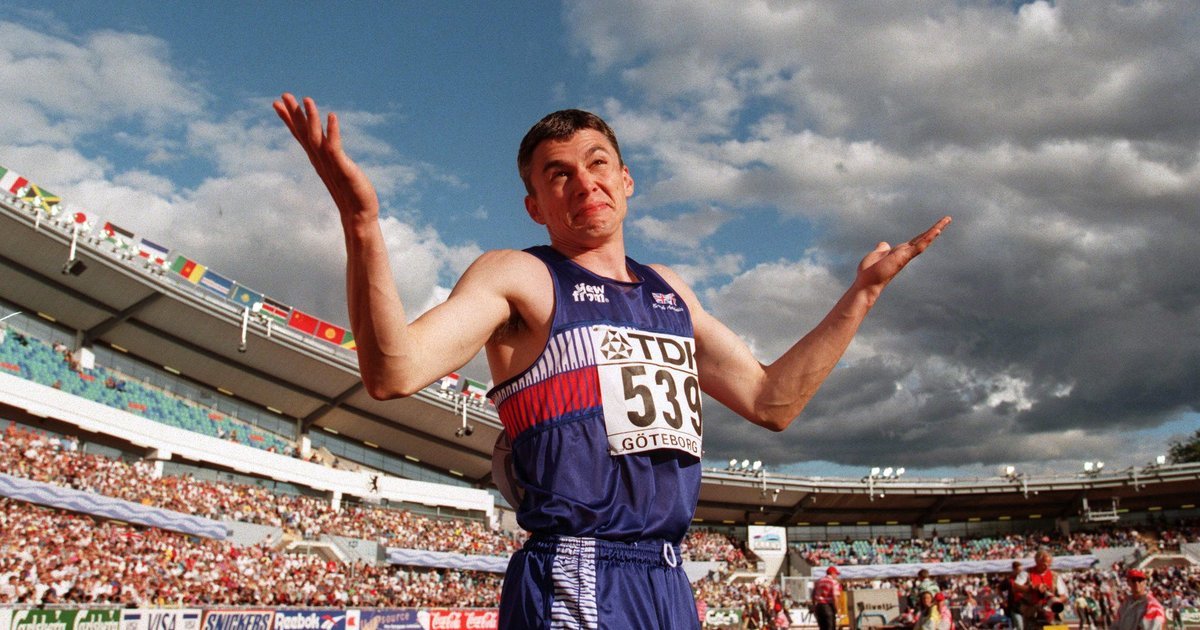
On 7 August 1995, in Gothenburg, Sweden, Edwards opened the World Championships final with 18.16 metres. It was the first record-eligible triple jump beyond 18 metres. On his second attempt, he extended the record again to 18.29 metres and won the world title.
The second mark added 13 centimetres to the first. That is an unusually compact piece of sporting history: the record set at the start of the final was replaced by the same athlete on his next attempt. The day contained two record performances, rather than one big jump surrounded by anonymous results.
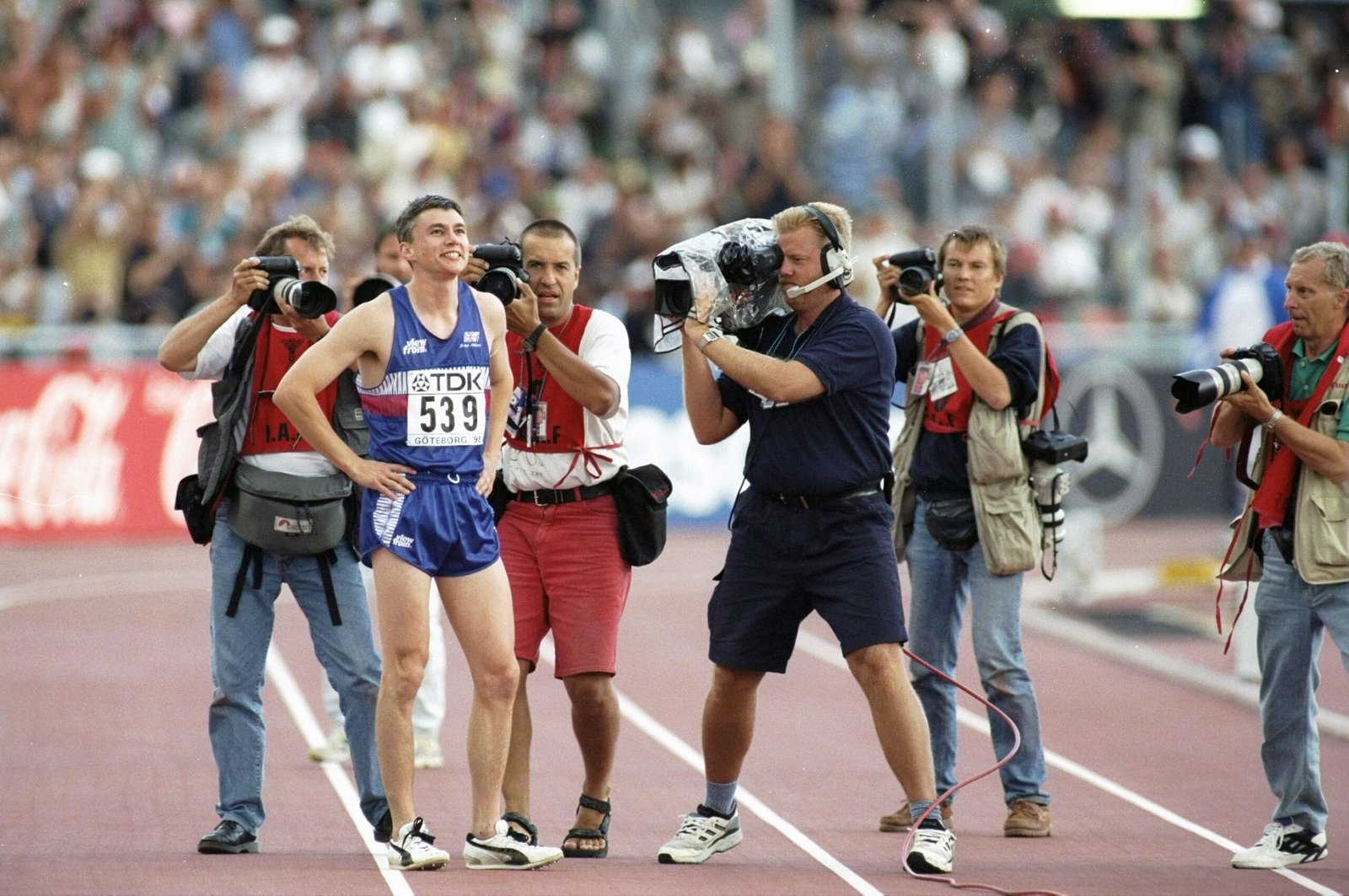
Those distances are best understood as measured outcomes of the complete event. Watching an athlete’s last airborne moment is compelling, but that photograph does not contain a training programme or tell you which single quality produced the result. It cannot establish a favourite lift, a gym personal best or a weekly jumping volume.
For a useful historical comparison, keep the actual sequence visible: 17.98 before the championships, then 18.16 and 18.29 in the final. There is enough drama in the verified progression. It does not need an invented secret exercise or a claim that one coaching cue explains the whole improvement.
A world record and Olympic gold are different achievements
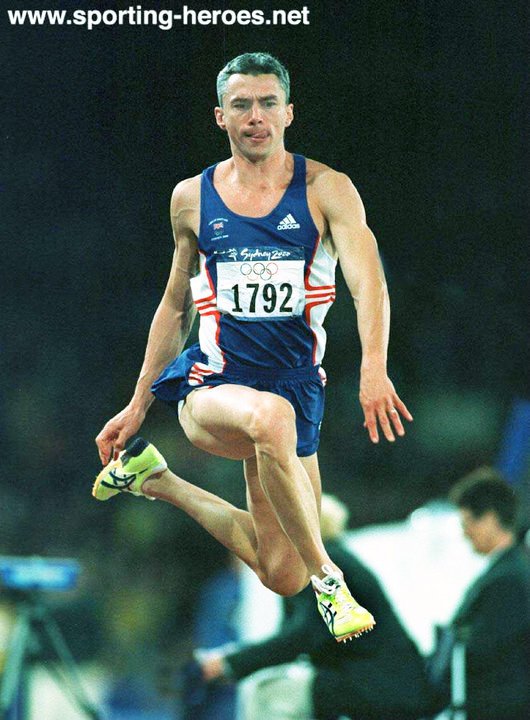
Edwards’ Olympic career did not simply follow the world-record line upward. After failing to qualify for the final at the 1988 and 1992 Games, he won silver in Atlanta in 1996. Kenny Harrison took the gold. Edwards became Olympic champion in Sydney in 2000, five years after the record-setting final in Gothenburg.
A championship asks an athlete to beat the field in that competition. A record compares an eligible performance with the previous record mark. One achievement does not automatically deliver the other, and losing a final does not remove an earlier record from the career.
A similar separation appears in Hicham El Guerrouj’s route from world records to Olympic gold. The events and athletes were different, but both careers become easier to understand when record performances and Olympic results remain separate measures of success.
Sydney therefore belongs in Edwards’ story on its own terms. It completed an Olympic ambition rather than merely repeating Gothenburg with a different medal ceremony. Calling every major victory a record, or assuming a record holder must win every final, makes the history less accurate and the athlete’s range of achievements harder to see.
What to keep when you compare your own progress
The useful training connection is the habit of describing a result clearly. If you track a lift, keep the load and repetitions alongside the exercise variation and the standard you used. If you change the movement or assistance, record the change. You can value the new performance without presenting it as a direct comparison with a different task.
This is an approach to keeping records, not a claim that gym repetitions can be converted into triple-jump metres. Edwards’ wind readings do not tell recreational lifters how to programme their week. They do offer a vivid example of why a number loses meaning when the relevant conditions disappear.
Keep the timescale visible too. In Al Oerter’s career, his longest throw came after his four Olympic titles. A medal, a personal best and a long run of participation can arrive at different stages. Recording only the biggest number makes it harder to recognise the other forms of progress.
Choose the measure before judging the session: consistency, a comparable performance, or practice of a particular task. Then keep the entry specific enough to be useful later. Edwards’ 1995 season leaves a memorable example: 18.43 metres was an exceptional wind-assisted jump, while 18.29 metres was the world-record performance in Gothenburg. The conditions belong beside the achievement.

Bodybuilding Shirts & Workout Gear
Bodybuilding shirts, tanks and gym gear for lifters chasing muscle, size, symmetry and the pump.

Consistency Is Key Stoic Greek God Marble Sculpture T-Shirt
Make gym days more fun with “Consistency is Key Stoic Greek God Marble” style.

Progress Stoic Bodybuilder Greek God Marble Sculpture T-Shirt
Heavy lifts, good laughs, and a little “Progress Stoic Bodybuilder Greek God Marble” energy.

Discipline Greek God Statue Stoic Sigma T-Shirt
Heavy lifts, good laughs, and a little “Discipline Greek God Statue Funny Stoic” energy.

Don't Quit Do It – Motivational Workout Hooded Pullover Hoodie
Show off your cardio humor in a laid-back “Don't Quit Do It” hoodie.

Meme – "Shhh I'M Doing Plate Math" Sweater & Jumper T-Shirt
Keep things casual with a little “"Shhh I'm Doing Plate Math" Workout Sweater” attitude.

Stronger Than Excuses Tank
Show some personality between sets with “Be Stronger Than Your Excuses”.

One More Rep Shirt: Motivational & T-Shirt
Make gym days more fun with “One More Rep” style.

Nice Try Gravity Astronaut Gym | Funny Workout & Liftin Sticker
A fun “Nice Try Gravity Astronaut” touch for bottles, laptops, and lockers.

Motivation Stoic Shirt: Sigma Bodybuilder Greek God T-Shirt
Rep “Motivation Stoic” humor in and out of the gym.

Shirt Motivational Weight Stack & Gymbros T-Shirt
Bring “Motivational Weight Stack” humor to your next gym day.