Why loaded jumps are different from heavy squats
A heavy squat tests how much force you can produce. A jump tests how quickly you can produce enough force to leave the floor. The distinction matters to lifters who want bigger numbers and more athletic movement. Sprint starts, changes of direction and vertical leaps all demand rapid force production. Loaded jumps add resistance to that fast movement without requiring the catch position of an Olympic lift.
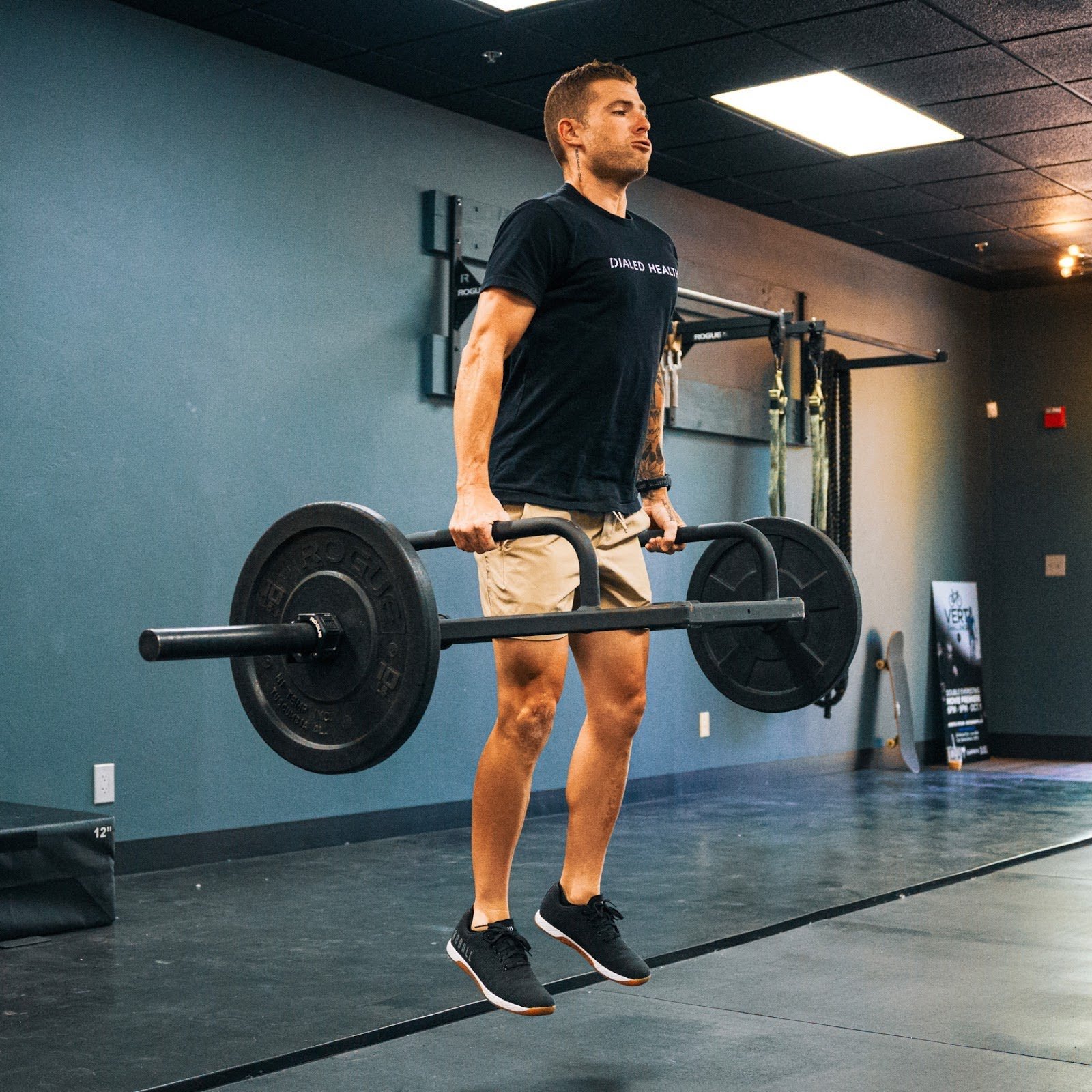
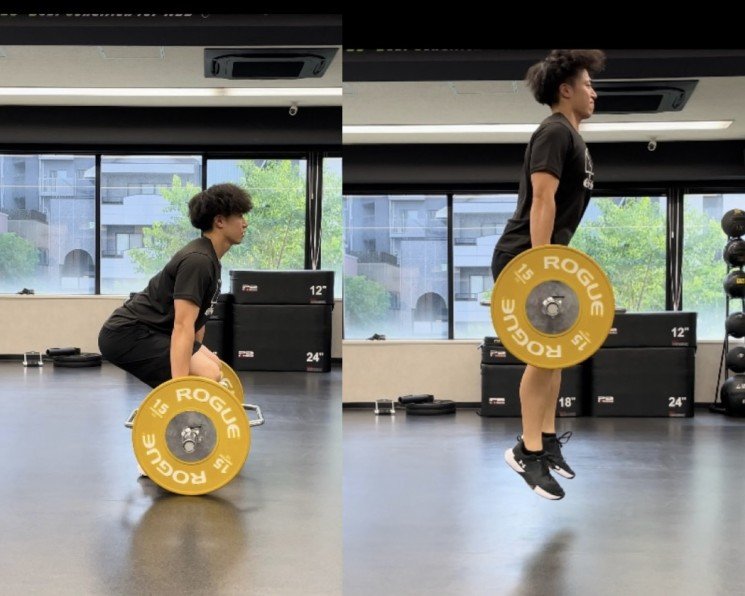
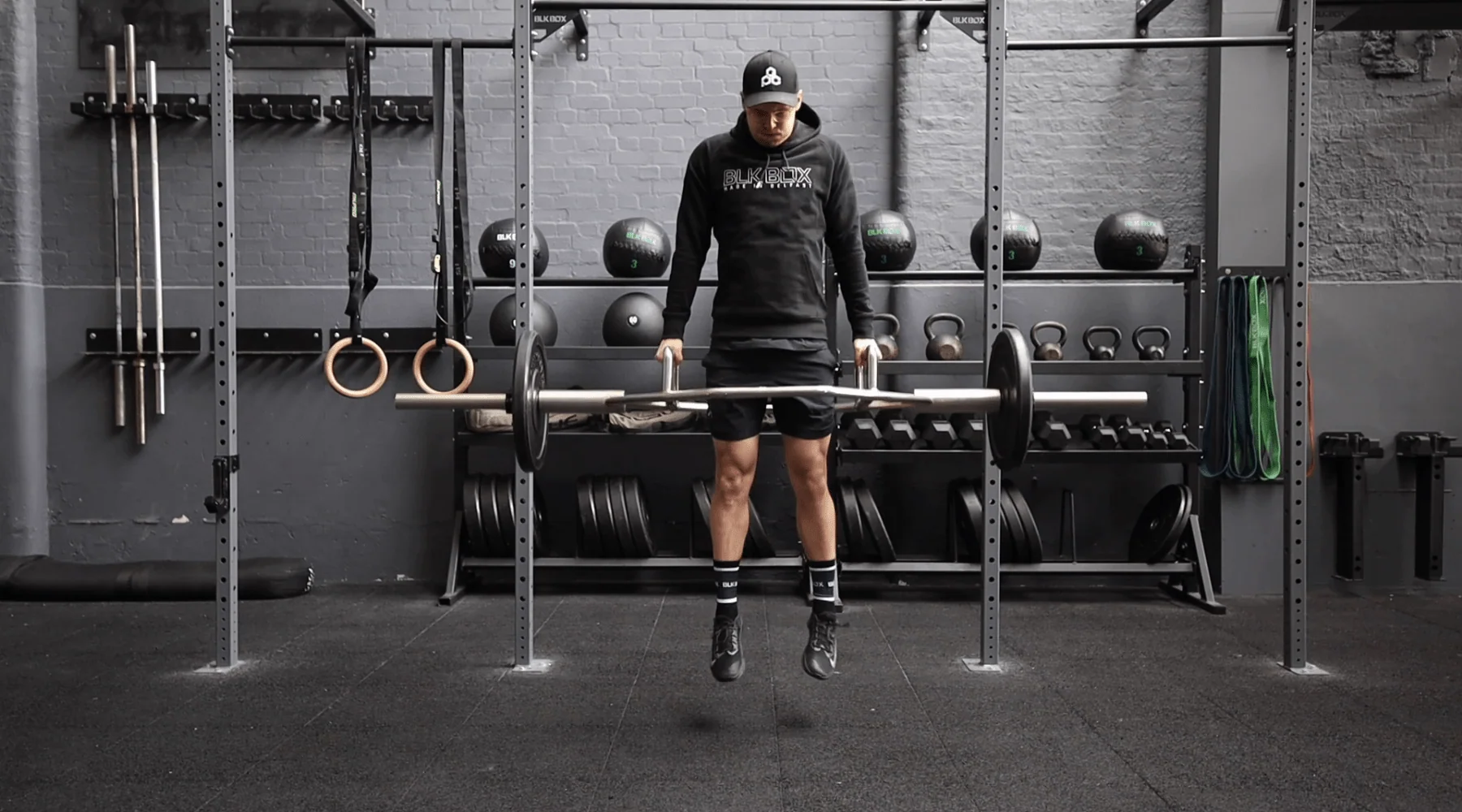
Two versions are particularly useful: the barbell jump squat, with a straight bar supported across the upper back, and the hex-bar jump, where you stand inside a trap bar and grip handles beside your legs. The hex bar keeps the load in the hands; the straight bar puts it on the shoulders. Both train explosive extension of the hips, knees and ankles, but their loading positions change balance and muscle demands.
These are not exercises to grind through. When a jump turns into a slow squat, you have changed the stimulus. A good repetition leaves the ground with intent and finishes with a stable, quiet landing. For basketball, football, HYROX or general gym performance, that quality matters more than impressing someone with the number of plates.
Power training complements heavy strength work. It does not replace squats, deadlifts, unilateral leg training or the ability to jump and land without external load. Think of it as a small, high-quality part of the program, not another movement to take to muscular failure.
The 2026 study: 15 trained men, two bars and four loads
A study published online in September 2026 compared hex-bar and traditional barbell squat jumps in fifteen resistance-trained men whose average age was approximately twenty-five. The researchers tested four loading conditions reported as 100%, 120%, 140% and 160% of body mass. They recorded electrical activity from eight lower-limb and back muscles and measured ground reaction force during the jump.
Participants jumped higher with the hex bar under the tested conditions. Jump height decreased as the load became heavier. Several muscles, including the glutes, spinal erectors, soleus and parts of the quadriceps, generally showed greater electrical activity as loading increased. Hamstring activation was comparatively unchanged across conditions. The clearest bar-specific difference appeared in the rectus femoris, which showed lower activity with the hex bar during early-to-middle push-off.
That does not prove the hex bar builds more muscle, improves sprint speed or prevents injury. Surface electromyography measures electrical activity, not hypertrophy. This experiment observed immediate responses rather than training adaptations over months. Its fifteen participants were trained young men, so the results should not be generalized to everyone who exercises.
The useful conclusion is narrower and more interesting: bar position and external load change the coordination demands of loaded jumping. An athlete can choose equipment based on comfort and performance while recognizing that no single bar has been crowned the universal winner.

Equipment Worth Exploring
Explore equipment, accessories and gear from our carefully selected range.


Leather Lifting Straps
Padded leather straps support grip during heavy rows, deadlifts and pulling exercises.


What changes when the weight moves from shoulders to hands
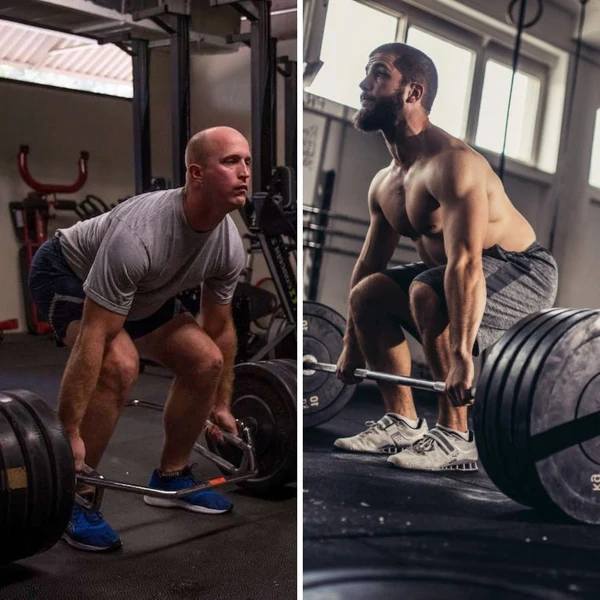
A straight-bar jump squat requires a stable upper-back shelf, trunk bracing and careful control of the bar as you accelerate and land. A hex bar hangs from the hands near the sides of the body. That may feel more balanced to lifters who dislike jumping with a bar across their shoulders, but the frame still has inertia and must remain level throughout the movement.
Do not confuse a hex-bar deadlift with a hex-bar jump. In a deadlift, you stand up while the feet remain on the floor. In a jump, you accelerate into flight and then absorb impact. That difference changes the appropriate weight, fatigue tolerance and safety requirements. A deadlift working set is not a suitable default load for explosive jumps.
The hex bar is also not automatically safer for every athlete. A badly centered grip can tip the frame. Too much weight can pull the shoulders down and make landings uncontrolled. The straight bar has its own challenges, including keeping the load secure across the upper back. Neither configuration eliminates stress on the spine, knees or ankles.
For home-gym owners, equipment choice is practical. If you already own a suitable trap bar, it can add a new training option. If you only have a straight bar, unloaded jumps, light dumbbell jumps or medicine-ball throws can train explosive intent without another purchase. Choose the movement you can perform reliably in your available space.
Technique: dip, drive, land and reset
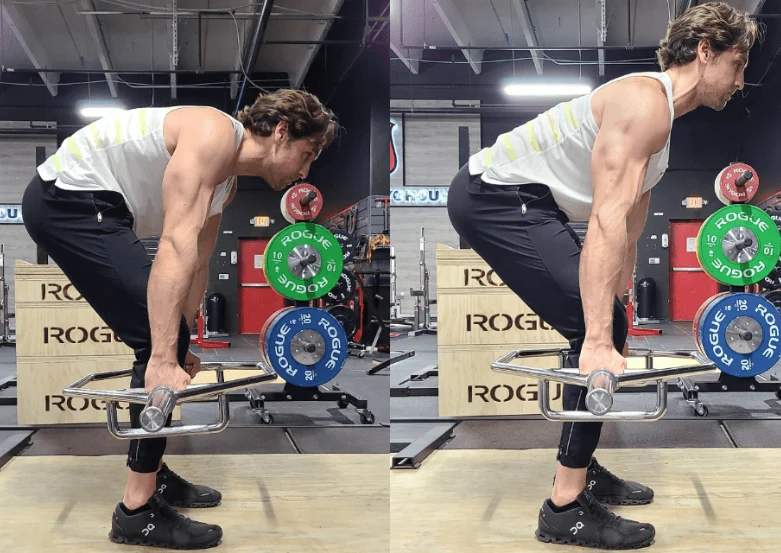
Warm up with easy movement, bodyweight squats and several unloaded vertical jumps. Check the floor for traction and make sure you have clear overhead space. A hex bar should be centered around your feet with secure plates and collars. Its unloaded weight may already be substantial, so start with bodyweight jumps if the empty bar feels awkward.
- Find the middle: Stand approximately hip-width inside the frame and grip the handles evenly so the bar hangs level.
- Brace: Keep the ribs stacked above the pelvis, shoulders engaged and arms straight. Avoid rounding the back to reach lower handles.
- Dip briefly: Bend the knees and hips enough to load the movement without sinking into a slow, deep squat.
- Drive fast: Extend through the hips, knees and ankles with maximum intent. Let the bar travel with the body rather than swinging it forward.
- Land softly: Bend the hips and knees to absorb impact. Stay balanced and prevent the bar or plates from crashing into the floor.
- Reset: Pause until your position is stable before attempting another repetition.
Use two to four repetitions per set with generous rest. A noisy landing, tipping frame, loss of jump height or repeated forward lean means the load or volume is too high. People with unresolved ankle, knee or back symptoms should not force loaded jumping as a shortcut to athletic performance.

Powerlifting Shirts & Lifting Gear
Powerlifting shirts and gym gear for squat, bench and deadlift lifters who live for heavy numbers.

The Ultimate Deadlifter Jesus Christ – Deadlifts Liftin Sticker
A fun “The Ultimate Deadlifter Jesus Christ” touch for bottles, laptops, and lockers.

Patriotic Eagle Deadlift Stars Stripes and Deadlifts Mu Tank Top
Bring “Patriotic Eagle Deadlift” humor to your next lifting session.

Dead Pull Deadpool Deadlift – Hero Meme Leg Day & – T-Shirt
Make gym days more fun with “Dead Pull Deadpool Deadlift” style.

Deadlift Uncle Sam Patriotic – 4th Of July & Gymbros T-Shirt
Heavy lifts, good laughs, and a little “Deadlift Uncle Sam Patriotic” energy.

Grim Reaper Deadlift Powerlifters & Leg Day Meme Hoodie
Stay casual and show some leg-day attitude with “Grim Reaper Deadlift”.

Skeleton Deadlift – Meme Deadlift Lovers, Leg Day & T-Shirt
Heavy lifts, good laughs, and a little “Skeleton Deadlift” energy.

Zombie Deadlift Sweater Deadlift Lovers & Leg Day T-Shirt
Bring “Zombie Deadlift” humor to your everyday gym style.

Deadlift Cyberpunk Skull Gym Shirt for Powerlifters, Sc T-Shirt
Bring “Deadlift” humor to your next gym day.

I Love Deadlifts | Pink Heart Plate Workout Pullover fo T-Shirt
For laid-back days and deadlift humor: “I Love Deadlifts”.

How much weight creates power rather than slow reps?
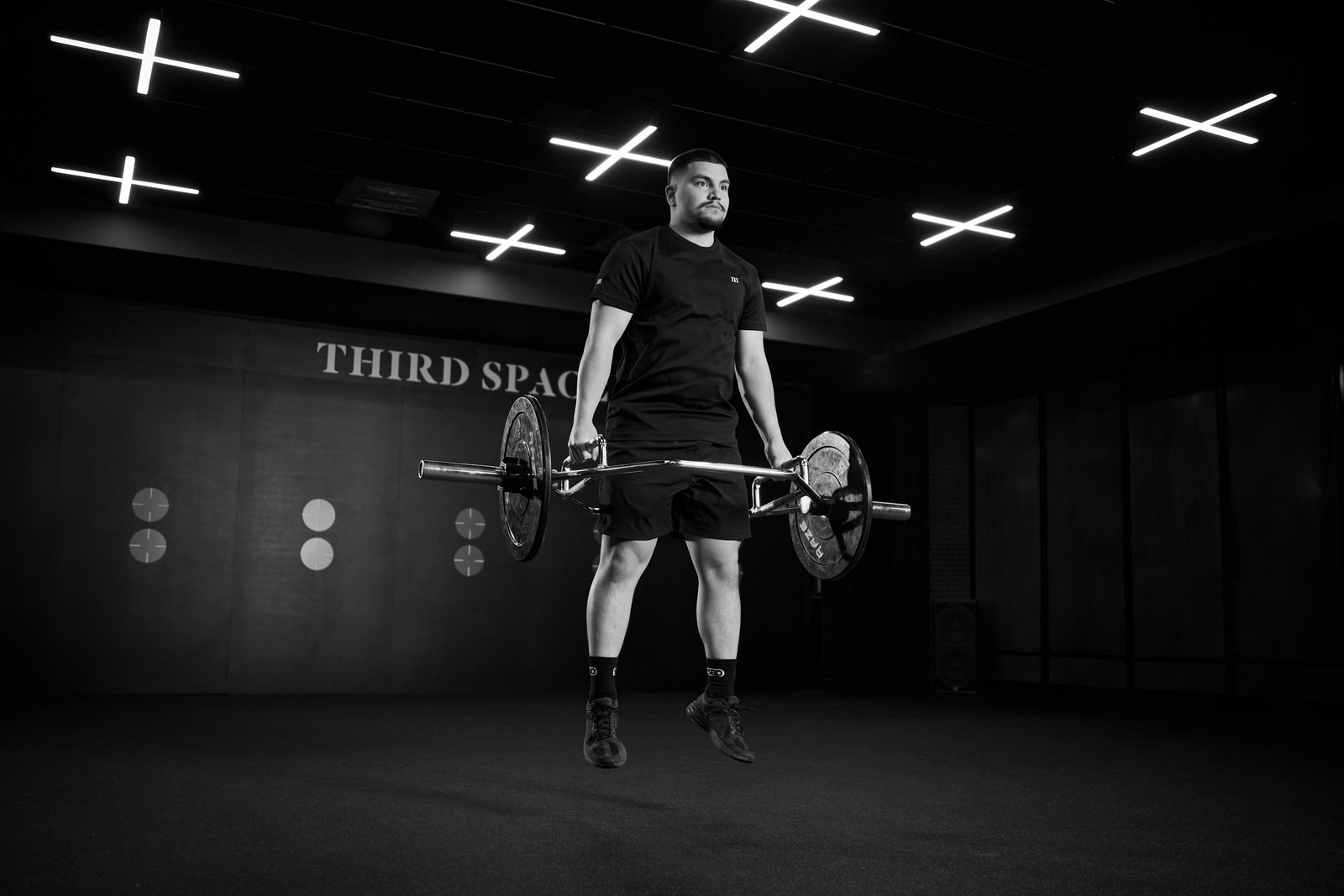
Power depends on force and movement speed. Adding plates can increase the force demand, but excessive loading reduces velocity and jump height. The September 2026 comparison showed that jump height declined as the load increased. More weight is therefore not automatically a better power stimulus.
Research in seventeen professional rugby players tested hex-bar jump squats at 10%, 20%, 30% and 40% of their box-squat one-repetition maximum. Peak power was highest in the 10–20% range for that sample and protocol. Another experiment comparing jump squats, hex-bar jumps and jump shrugs found that their load-power relationships differed. Be careful with percentages: a percentage of box-squat maximum is not the same as a percentage of body mass or trap-bar deadlift maximum.
Begin with three crisp unloaded jumps, then test a very light external load. If you cannot leave the floor decisively or land quietly, remove weight. When available, a jump mat or velocity sensor can help compare performance across loads. Without specialized technology, consistent side-view video and a repeatable landing standard are useful practical checks.
Rest two to three minutes between small sets. End the exercise before fatigue changes the movement. There is no prize for the heaviest jump that barely leaves the floor. The target is repeatable acceleration, not a disguised maximum-strength attempt.
A practical four-week lower-body power block
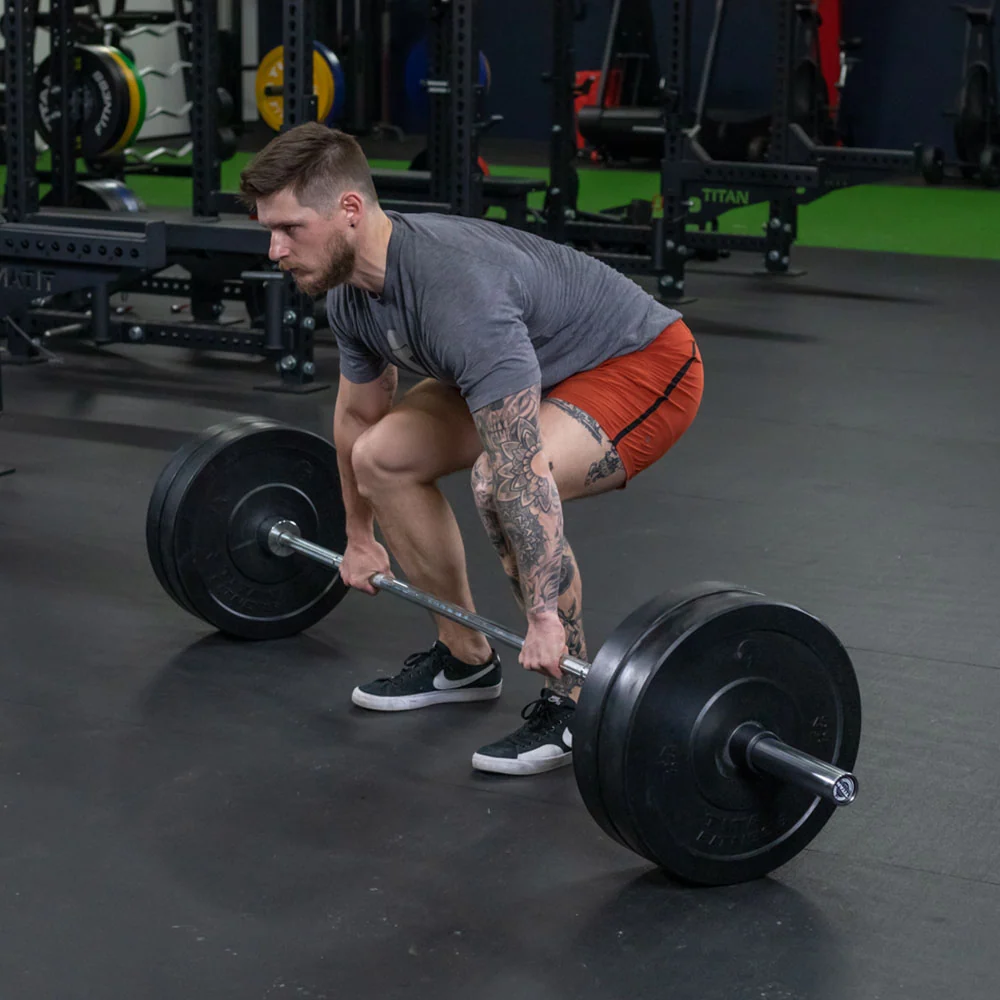
Put jumps after your warm-up and before heavy squats or deadlifts, while you are fresh. Two weekly sessions separated by at least forty-eight hours can work for a lifter with manageable sport and training demands. If you already sprint, play competitive sport or do frequent high-intensity conditioning, start with one session instead.
- Week 1: Two sessions of three sets of three unloaded jumps or very light hex-bar jumps. Rest two minutes. Film a few repetitions to check takeoff and landing.
- Week 2: Two sessions of four sets of three at the same easy load. Only increase resistance if every repetition remains fast and stable.
- Week 3: One session of five sets of two explosive jumps and another of three sets of three. Preserve jump height and avoid grinding.
- Week 4: Two sessions of three sets of two or three. Recheck an unloaded jump benchmark and compare movement quality with week one.
After the jumps, perform your normal strength work: for example, three sets of three to five squats or deadlifts, followed by a unilateral leg movement and a hamstring accessory. Keep repetitions in reserve so the session does not ruin your next power exposure. This is an example program, not a protocol that the fifteen-person acute study proved superior.
Log the bar type, total load, handle height, repetitions, jump quality, perceived speed and next-day soreness. A consistent, explosive jump at the same weight is meaningful progress. The objective is to add power work without sacrificing recovery, strength progression or sport performance.
Equipment Worth Exploring
Explore equipment, accessories and gear from our carefully selected range.


FID Bench MAX
Adjustable bench offering flat, incline, and decline positions + adjustable headrest.


Belt Squat Collar
Heavy-duty collar adapter for compatible belt-squat and landmine bar setups.

Safety Squat Handles
Barbell squat handles that reduce shoulder positioning demands during high-bar squats.

GymPin Squat Wedges
Non-slip 15-degree squat wedges help elevate the heels for deeper quad-focused squats.


Leather Wrist Grips
Padded leather lifting grips help support the hands and wrists on heavy pulling exercises.

Home-gym equipment, grip and the limits of the evidence
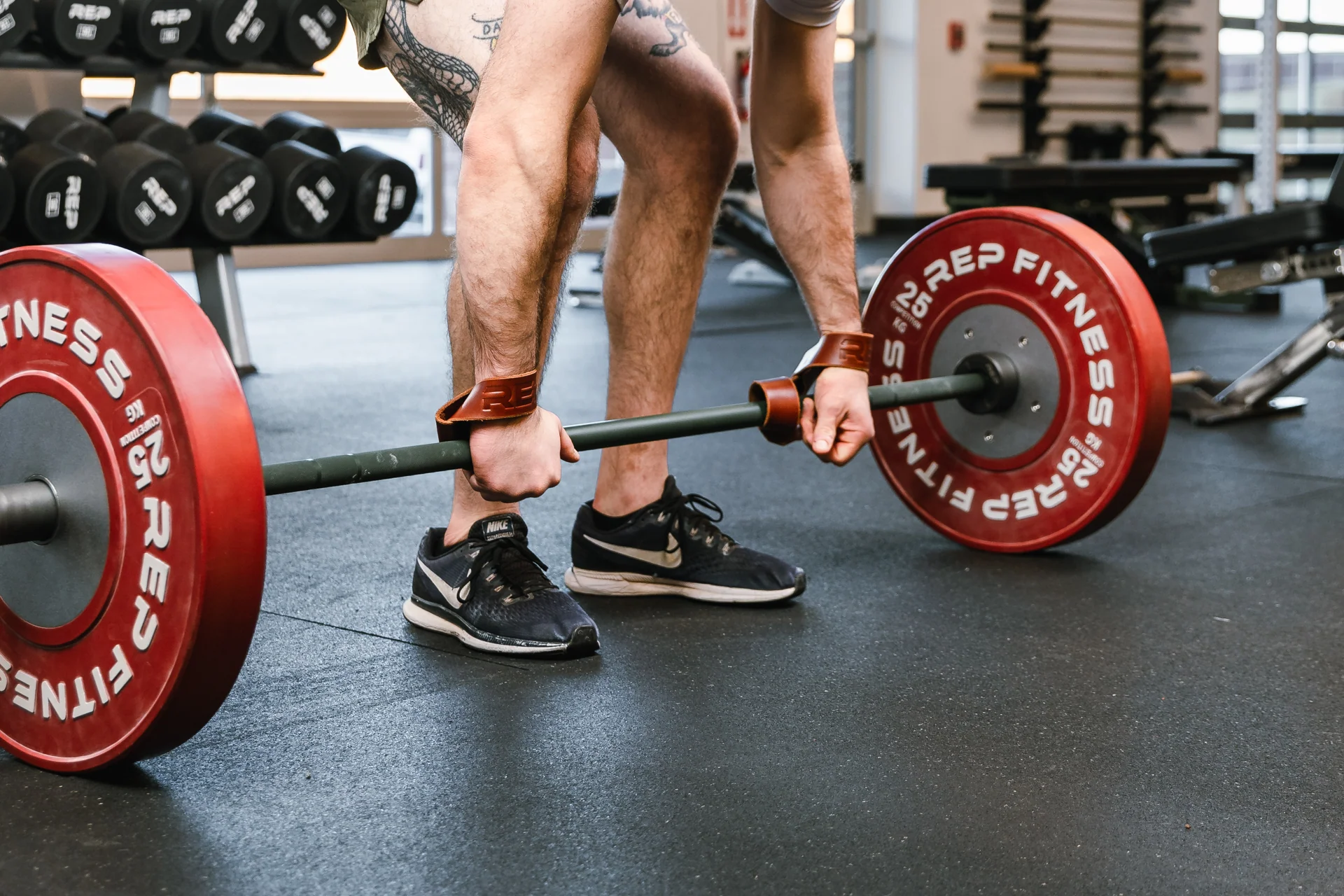
A suitable trap bar, secure collars and a predictable landing surface are the essentials. Open-frame bars can offer extra versatility for carries, lunges and rows, which matters in compact gyms. Check the unloaded weight, handle spacing and interior dimensions before buying. Tall or broad-shouldered lifters may need more clearance than the product photo suggests.
Use plates that remain secure during takeoff and landing. A rubber floor helps protect the room, but it does not make uncontrolled impacts acceptable. If the bar pulls out of position or your grip slips, lower the load. Grip straps should not be used to justify jumping with a weight you cannot otherwise control. Train grip separately with carries and controlled pulls.
One earlier four-week trial in twenty-nine rugby players suggested that hex-bar loaded jumps may produce favorable changes in some unloaded jump measures compared with barbell jumps. That is encouraging, but small sport-specific studies do not establish a universal advantage. Research on accentuated eccentric loading also shows that increasing braking demand can reduce some immediate propulsive outputs. More complicated loading is not automatically better.
Skip loaded jumps when you are too fatigued to land well, lack clear floor space, or have pain that changes your mechanics. Unloaded jumps, medicine-ball throws and basic strength exercises remain valuable alternatives. The new evidence supports thoughtful exercise selection, not a mandate to buy a hex bar or abandon straight-bar training.
Bottom line: Hex-bar and barbell squat jumps challenge the body differently. Use light, crisp repetitions, track quality and keep your heavy lifts. The best power exercise is one you can repeat safely while still recovering for the rest of your training.
Leg Day Shirts & Workout Gear
Leg-day gym shirts and workout gear for lifters who never skip squats, lunges and lower-body punishment.

Trap Bar Deadlift Behold Thee Trap Bar Medieval Knight T-Shirt
Make gym days more fun with “Trap Bar Deadlift” style.

The Walking Deadlift | Zombie Workout For Leg Day & Pow Hoodie
Make your off-duty look more fun with “The Walking Deadlift”.

Negative Leg Day Review 1 Star Not Recommended Tank Top
Train hard, laugh a little, and rep “Negative Leg Day Review”.

Deadlift Skull Explosion Pullover for Powerlifting Leg Hoodie
Show off your leg-day humor in a laid-back “Deadlift Skull” hoodie.

Deadlift Snake Skull – Hardcore Powerlifting Crewneck f T-Shirt
Show some gym-day personality with “Deadlift Snake Skull”.

Leg Day Squats Deadlifts Meme Hooded Hoodie
Show off your leg-day humor in a laid-back “Leg Day” hoodie.

Deadlift Pink Skull Gym Decal for Powerlifting Leg Day Sticker
Give your everyday gear a playful “Deadlift” twist.

Deadlift Purple Skull Gym Shirt for Powerlifters Heavy T-Shirt
Make gym days more fun with “Deadlift” style.

I Love Deadlifts Gym | Funny Valentine's Weightlifting Sticker
Put “I Love Deadlifts” gym humor on your laptop, bottle, or gym gear.

Leg Day Is Calling You Squats & Deadlifts Meme Hoodie
Stay casual and show some leg-day attitude with “Leg Day Is Calling You”.