Advertising disclosure: This page includes affiliate product links that may earn us a commission, as well as products from our own store.
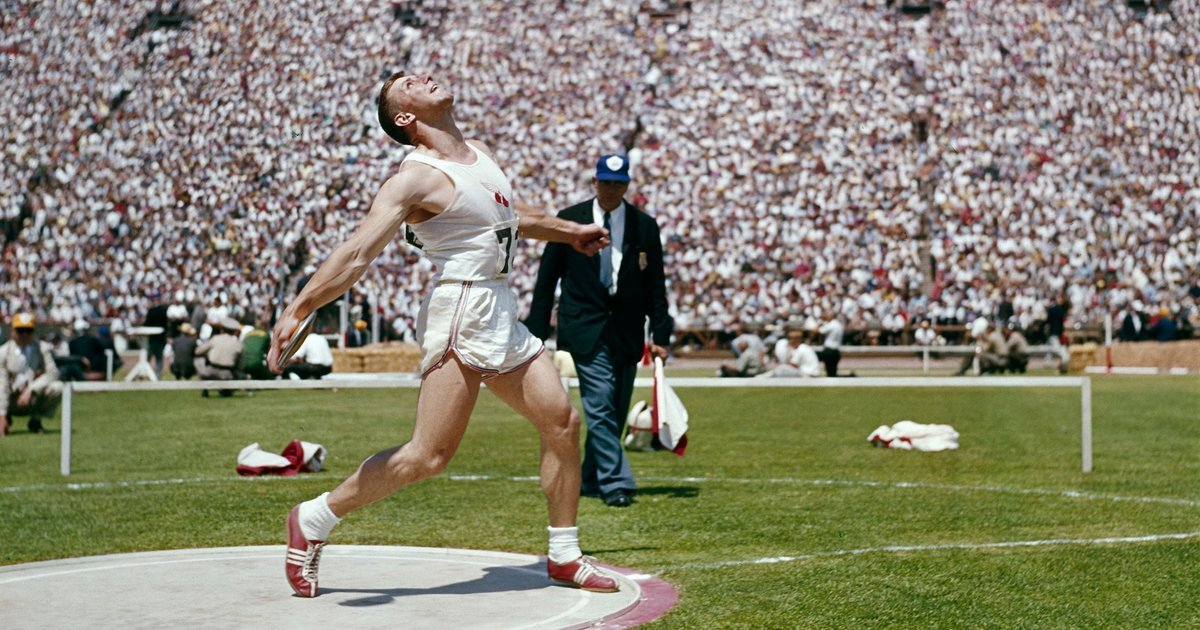
Al Oerter won the Olympic discus title in 1956, 1960, 1964 and 1968. Four Games, four gold medals and an Olympic record each time. Yet the longest official throw of his career came in 1980, when he was 43—well after the last of those victories.
That combination makes his story more interesting than a simple tale of an unbeatable young champion. It separates winning the competition in front of you from producing your greatest distance, and it gives a longer view of an athletic career. Oerter’s achievements involved strength and a demanding throwing skill, but they do not come with a ready-made routine for everyone who admires them.
The young thrower who kept returning
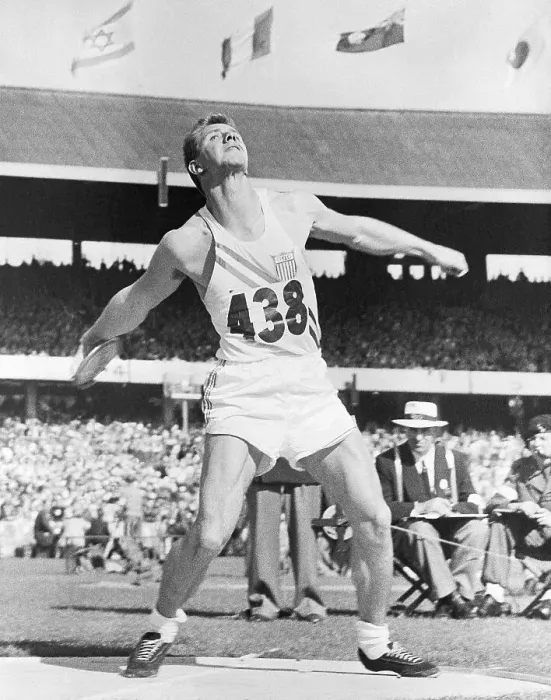
Oerter was a University of Kansas student when he won in Melbourne in 1956. His winning distance was 56.36 metres. The gold established him as an Olympic champion at 20, but it was the beginning of a sequence that would stretch across twelve years, not a complete summary of his development.
His broader competitive record matters too. He won collegiate titles and six national AAU championships. That background puts substance behind the famous Olympic highlights: he was a discus specialist competing repeatedly, rather than an occasional visitor who somehow discovered an extraordinary throw once every four years.
The Rome victory also included help from a rival. Fellow American Rink Babka offered a technical suggestion during the competition, and Oerter went on to win. That detail complicates the usual picture of championship opponents as people who only obstruct one another. Sharing an observation does not remove the competition: each athlete still has to execute a throw. It does, however, leave room for respect and useful cooperation inside a contest. For training partners, supporting someone else’s performance need not diminish the value of your own work.
Returning to the same championship is itself a different challenge from arriving for the first time. The opposition changes, preparation has to be rebuilt and an earlier medal does not count as a distance in the next final. Reputation can explain why spectators watch an athlete; it cannot put a valid mark on the results sheet.
For fitness readers, that is a useful distinction between an achievement and a permanent state. Having once been strong, fast or technically proficient gives you experience. It does not remove the work involved in demonstrating that ability again under the conditions of a particular event.
The scale of Oerter’s career becomes clearer when the four golds are treated as four separate competitions. Each demanded a result on the day. Adding them together is historically meaningful, but the total should not make the individual contests disappear.
Four golds, four distances, two kinds of record
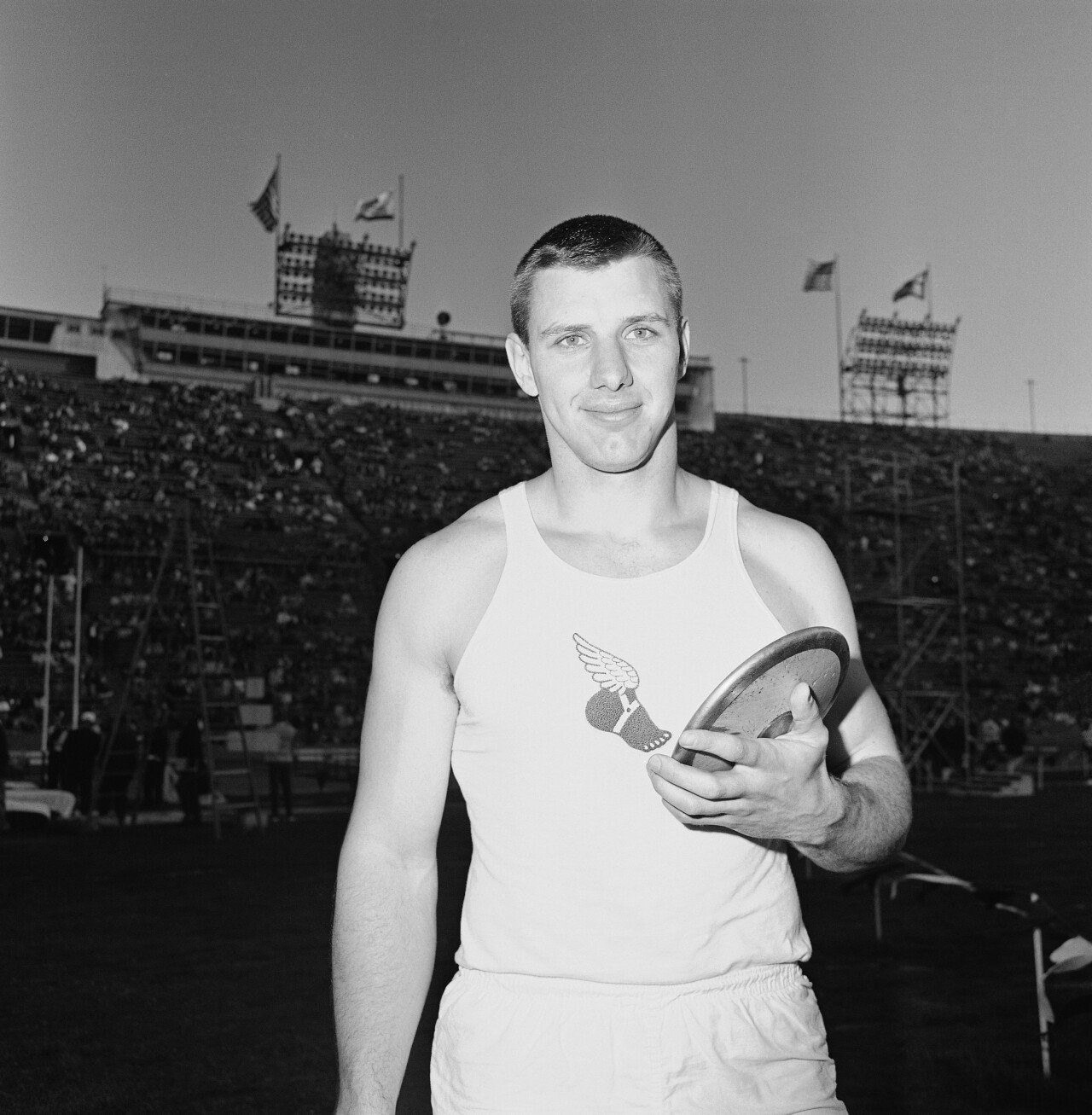
Oerter’s Olympic winning marks rose from 56.36 metres in Melbourne to 59.18 in Rome, 61.00 in Tokyo and 64.78 in Mexico City. These were Olympic records. An Olympic record and a world record are different distinctions: one concerns performances at the Games, while the other concerns the event’s wider record.
He also set four world records during his career. That does not mean each of his four gold-medal throws was a world record, or that he entered every Olympic final holding the world record. Keeping those statements separate preserves what he actually achieved.
There is another difference between a winning mark and a lifetime best. The winning mark answers who prevailed in that competition. A personal best describes an athlete’s greatest recorded performance. A champion can win with something short of a lifetime best, while another athlete can improve and still finish behind someone else.
Our feature on Edwin Moses’s 122 races and 107 finals explores a similar problem with sporting numbers. The labels are part of the information. Remove them and impressive statistics can become misleading even when the numbers themselves are correct.
For your own training records, use the same care. A best set, a competition result and a successful training block answer different questions. You can value all three without treating one as proof of the others. The result becomes more useful when you know precisely what was counted and under what conditions.
Tokyo’s injury story is history, not an instruction
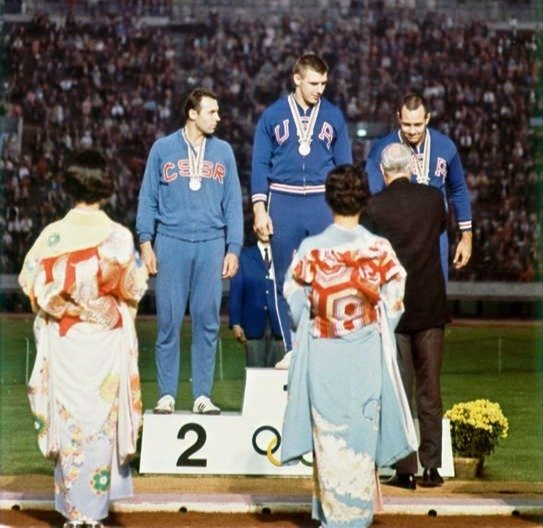
The 1964 victory carries one of the most dramatic episodes of Oerter’s career. He was dealing with a neck injury and then suffered a rib-area injury shortly before the competition. He still produced the throw that won another Olympic gold. Those circumstances belong in the historical account because they explain why the result became so memorable.
They are not a sound basis for telling a modern lifter or recreational thrower to ignore an injury. Knowing that an athlete competed and won does not establish that competing was safe, that the same decision would suit someone else or that pain improved the performance.
A biography also selects the moments that make a compelling story. Readers see the extraordinary outcome; they do not receive a complete clinical assessment, a controlled comparison or a guarantee about consequences. The medal cannot supply the missing information.
It is possible to respect determination without turning every detail of an exceptional episode into a general rule. Discipline can mean following an appropriate plan, accepting a change to that plan and judging progress over time. It need not mean treating every interruption as a test of personal worth.
This is especially important when motivational language moves from a sporting legend into an ordinary training session. A slogan about commitment may capture a feeling, but it is not an assessment of a particular person’s condition. Oerter’s Tokyo result is remarkable enough without presenting the injury as a technique to copy.
His best official throw came after the gold medals
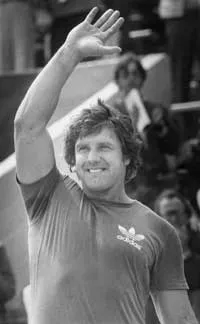
In May 1980, Oerter recorded his longest official throw: 227 feet 11 inches. He was 43. The distance was more than 15 feet beyond his winning effort at the 1968 Olympics. His return to the sport therefore produced something distinct from the earlier golds: a later personal performance that exceeded his Olympic winning distances.
Keep the competition context attached to that fact. He finished fourth at the 1980 US Olympic Trials, and the United States boycotted the Moscow Games. It is tempting to compare a season-best distance with the Olympic final and award him an imaginary fifth gold. That would replace a result with a hypothetical competition.
Distances thrown in separate meets do not reconstruct an unplayed final. The athlete would still have needed to qualify, arrive, compete and produce a valid throw under that event’s conditions. A comparison can show the quality of a performance without establishing what would have happened elsewhere.
Oerter’s later best is also not evidence that every athlete should expect the same age pattern. It describes his career, with its particular experience and circumstances. The useful point is narrower: the most famous phase of an athlete’s public story does not always contain their greatest individual mark.
Our account of Ray Ewry’s standing-jump victories likewise keeps the event and historical counting context beside the headline. Sporting history gets richer when we preserve those distinctions instead of making every story fit a familiar legend.
A career can mean more than a medal total

Oerter also worked in the computer industry and became an abstract artist. He founded Art of the Olympians, bringing together Olympic athletes who created art. Those parts of his life broaden the portrait beyond the throwing circle; they do not need to be turned into a claim that one pursuit automatically caused success in another.
For someone balancing training with work and other interests, that is a more realistic point of connection than an invented champion’s schedule. A biography can inspire curiosity about focus, improvement and commitment without telling you exactly how many sessions to perform or which exercises will reproduce an Olympic result.
There is room for personal records, steady practice and enjoyment in the same account of training. Keep a clear description of the thing you want to improve. If you train with a partner, make the comparison useful rather than assuming that both of you need identical targets. Consistency is easier to evaluate when the goal is specific.
Gym slogans about discipline, progress or one more repetition express motivation, not a complete programme. Use that energy with a plan that fits the task. Oerter’s four golds and later career best show why the task matters: winning a championship, throwing farther and building a long sporting life are connected achievements, but they are not interchangeable.

Funny Gym Shirts & Workout Gear
Funny gym shirts, tanks, hoodies and workout gear for lifters who like training hard.

Personal Record Birthday Cake Meme – Celebrate Your T-Shirt
Bring “Personal Record Birthday Cake” humor to your next gym day.


Discipline Stoic Tee
Show some lifting attitude with a playful “Discipline Stoic Sigma Bodybuilder” tee.

Commitment To Gains Stoic Sigma Greek God Marble T-Shirt
Rep “Commitment to Gains Stoic Sigma Greek God” humor in and out of the gym.

Improvement Stoic Sigma Bodybuilder Marble Statue – T-Shirt
Bring “Improvement Stoic Sigma Bodybuilder Marble” humor to your next gym day.

Don't Quit Do It – Motivational Workout Vest Muscle Shi Tank Top
Bring “Don't Quit Do It” humor to your next lifting session.

Be Stronger Than Your Excuses Motivational Workout Pull Hoodie
Make your off-duty look more fun with “Be Stronger Than Your Excuses”.

One More Rep Shirt: Motivational & T-Shirt
Make gym days more fun with “One More Rep” style.

Lift Together Grow Stronger for Gym Buddies and Lifting Tank Top
Bring “Lift Together Grow Stronger” humor to your next lifting session.

Consistency Is Key Stoic Greek God Marble Sculpture T-Shirt
Make gym days more fun with “Consistency is Key Stoic Greek God Marble” style.