Advertising disclosure: This page includes affiliate product links that may earn us a commission, as well as products from our own store.
Pistol Squats: Build Single-Leg Strength Without Rushing the Depth
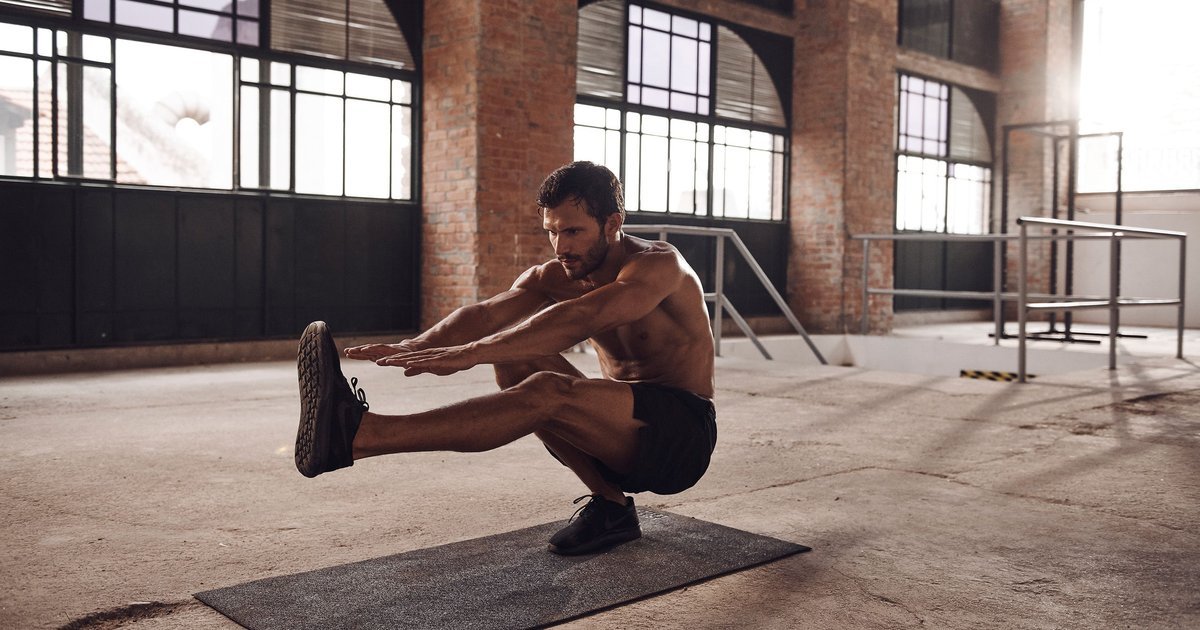
The pistol squat looks like a simple party trick until you try to stand up from the bottom on one leg. Your working quadriceps and glutes need enough force, your ankle must let the knee travel forward, your trunk must balance over a small base and your other leg has to stay lifted. Losing any one of those pieces can turn a strong lifter into someone who falls backward. That does not mean the movement is off-limits. It means a useful pistol squat is built in stages, not by attempting the deepest possible repetition every session.
This guide treats the pistol as both a unilateral strength exercise and a skill. You will learn how to identify your limiting factor, practice with honest assistance, control the descent and progress without turning every rep into a balance emergency. Full depth is one possible destination; cleaner, stronger single-leg work is the actual goal.
Check your ankle, balance and leg strength before chasing a full pistol
Start with the foot that will support your entire body. Stand barefoot or in a stable training shoe on level ground, spread your toes naturally and feel pressure under the heel, base of the big toe and base of the little toe. You should be able to lift the opposite foot briefly without clawing at the floor or whipping your arms around. If you cannot hold that single-leg stance for roughly twenty to thirty comfortable seconds, practice that first. It is a useful screen for your current control, not a medical test or a universal qualification standard.
Next look at ankle dorsiflexion: the ability to move the shin forward over the foot while the heel stays down. Try a gentle knee-to-wall movement, with your toes a short distance from the wall and your knee following the direction of your toes. Compare both sides rather than chasing one magic centimetre target. A pistol generally asks for more forward knee travel than a wide, two-legged squat, and the necessary amount depends on limb proportions, technique and footwear. A heel that floats as soon as you lower may be an ankle-range issue, a balance adjustment or simply an overly ambitious depth.
Strength matters just as much. Before demanding a full pistol, establish smooth two-legged squats and a controlled step-down or split squat on each leg. Your working knee needs to bend while the hip travels down and back; a deep squat is not supposed to be performed with the shin frozen vertically. The quadriceps extend the knee, while the glutes and other hip muscles help you stand and keep the pelvis organized. The free leg also creates a separate challenge: keeping its knee reasonably straight requires active hip-flexor effort and enough posterior-chain flexibility to clear the floor.
Readiness checkpoint: Can you balance on each leg, lower to a stable box without collapsing, and repeat a comfortable heel-down squat? If not, those are legitimate training exercises in their own right. Do not confuse a flashy full-depth attempt with a more productive strength session.
Use a box or secure hand support to make every descent repeatable
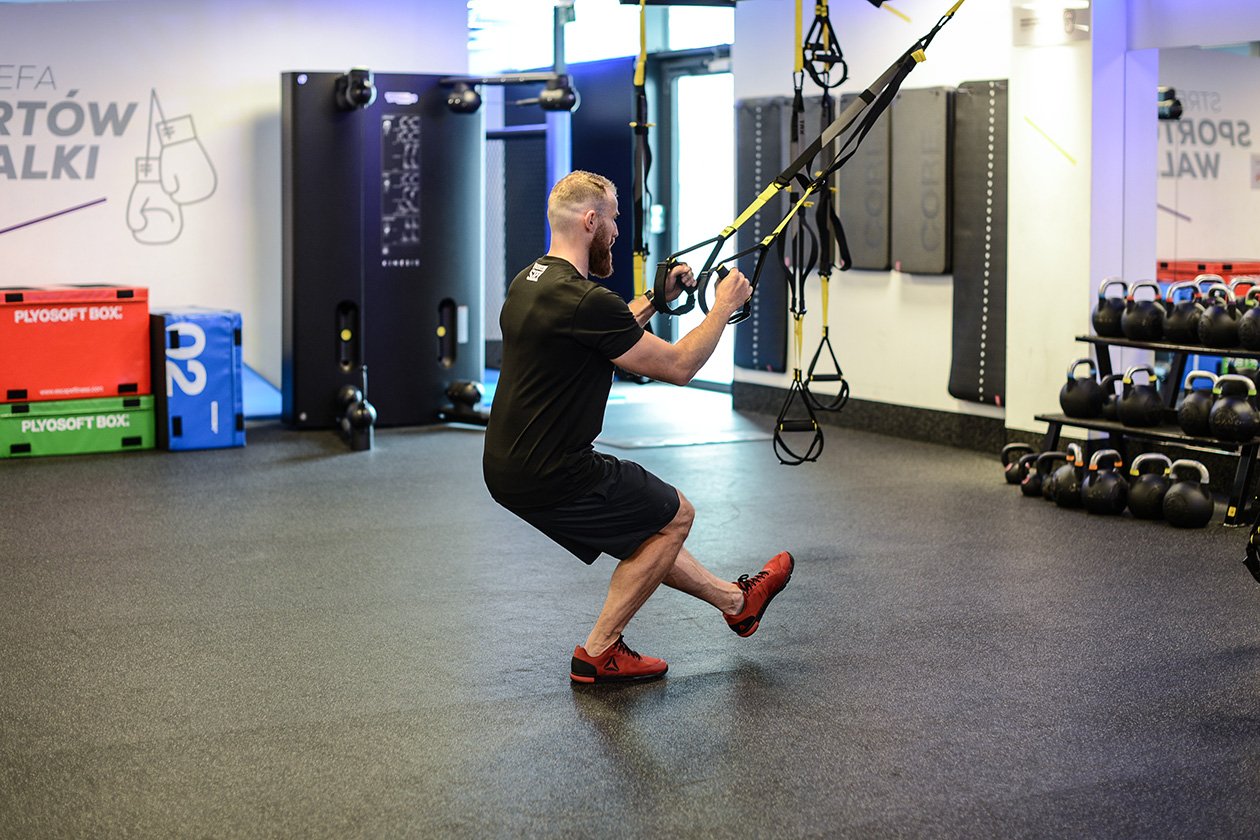
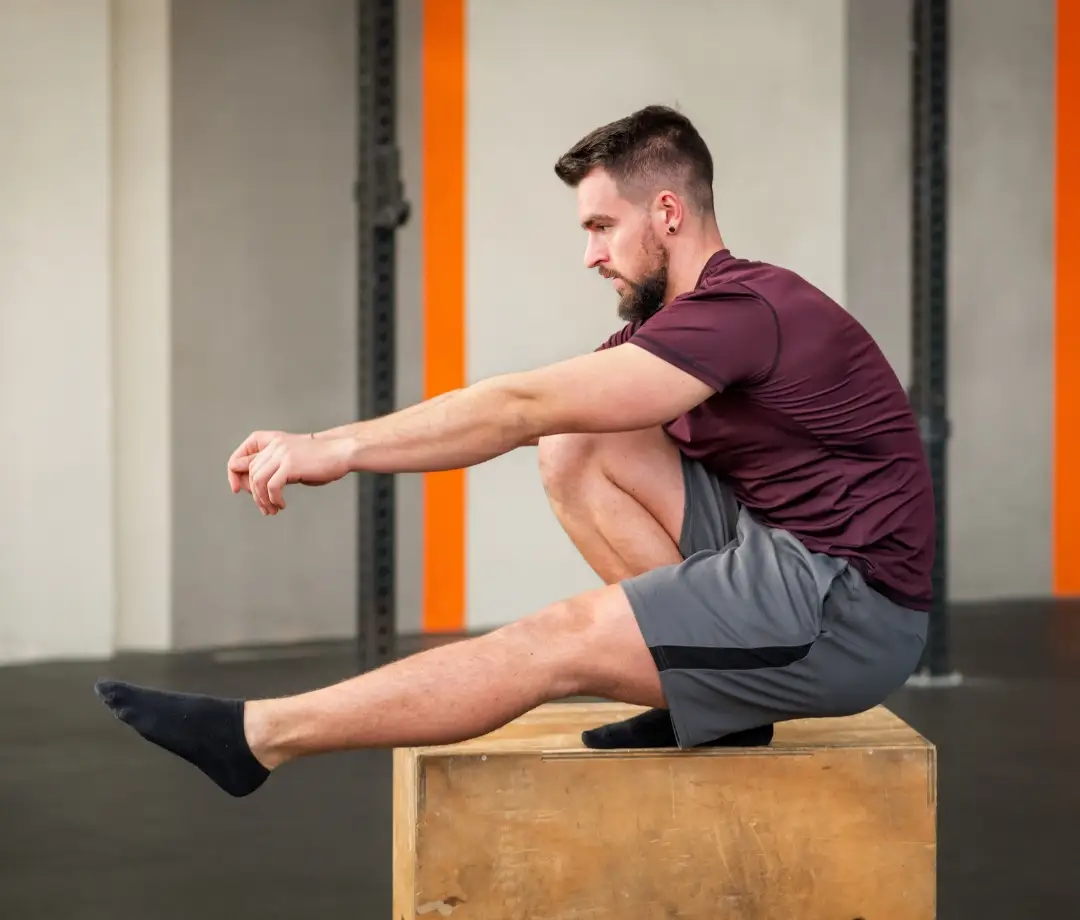
Assistance is not cheating; it is a way to train a difficult range without being limited by a sudden loss of balance. For a box pistol, set a stable bench or plyometric box behind you, initially at a height that allows a controlled sit and stand. Shift over one foot, extend the other leg forward and reach your arms out as needed. Lower slowly until you contact the surface lightly, pause without throwing your weight backward and drive back up through the whole working foot. If you must collapse onto the box or rock your shoulders to stand, choose a higher one.
For an assisted pistol, hold a solid rack upright or properly anchored suspension straps. Keep the support close enough to save your balance, but use your arms only for the help you actually need. There is no prize for choosing a wobbly attachment or yanking yourself out of the bottom. A sturdy rack, secure rings or stable trainer handles can turn a failed bodyweight repetition into productive knee-and-hip movement. Check every attachment and anchoring point before putting your bodyweight on it.
These regressions solve different problems. A box limits depth and gives you a clear target. Hand support can let you explore a deeper range while reducing the balance demand. A slow single-leg negative trains the lowering phase when you can descend further than you can stand up: take roughly three to five seconds down, then place the free foot down and stand with both legs. An easy counterweight held in front may also help your center of mass stay over the planted foot; surprisingly, holding a small plate can make the skill easier even though it technically adds load.
Pick one measurable variable for a block: slightly lower the box, use less arm assistance, or add a second clean rep. Changing all three in the same session is an efficient way to forget what actually improved. Do not force an uncomfortable knee or ankle into a deeper position just because the equipment allows it.

Equipment Worth Exploring
Explore equipment, accessories and gear from our carefully selected range.


Foldable Wall Rack
Wall-mounted folding squat rack designed to save floor space between workouts.




GymPin Squat Wedges
Non-slip 15-degree squat wedges help elevate the heels for deeper quad-focused squats.


Multi Pull Smith Rack MPHR-780
All-in-one rack with a Smith machine, functional trainer, lat pulldown and low row.

VForce 3IN1
All-in-one rack combining an adjustable Smith machine, functional trainer, and free-weight station.

Ultimate Power Seat
Rack-mounted power seat for lat pulldowns, leg extensions, and leg curls.
Perform the full single-leg squat with a steady foot and controlled rise
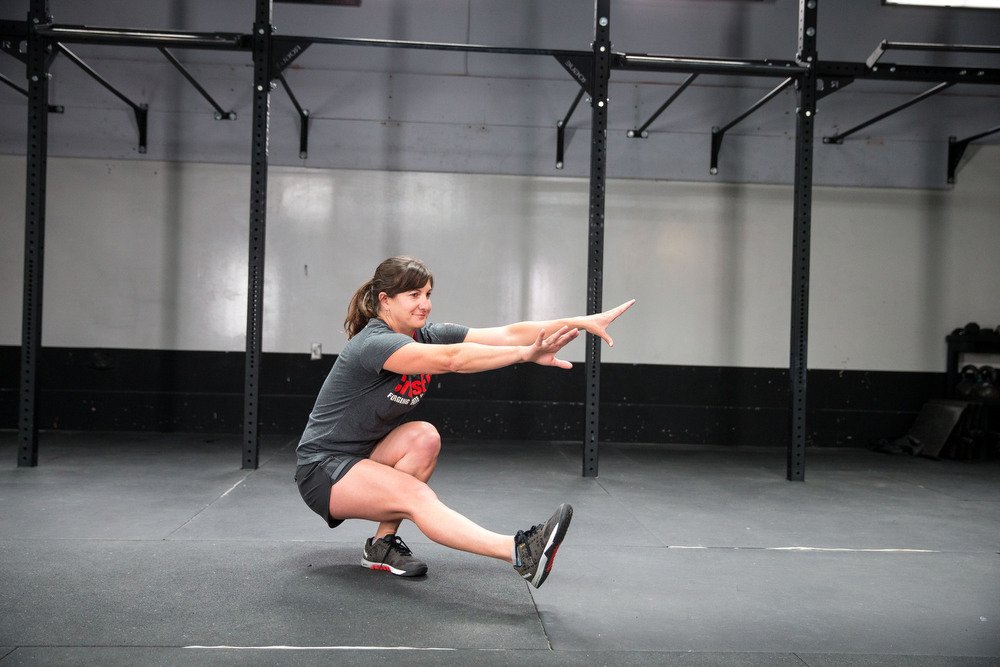
When the assisted versions feel consistent, start each unassisted rep standing tall and relaxed. Set the working foot in a position where your heel and forefoot can remain planted. Brace gently, look toward a fixed point ahead, extend the free leg and reach your hands forward for balance. There is no requirement to keep your torso perfectly vertical. On a deep single-leg squat, a controlled forward torso inclination often helps keep the combined center of mass above the stance foot.
Descend by flexing the knee and hip together. Let the knee travel in the same general direction as the toes rather than forcing it straight up and down. Lower only as far as you can keep pressure through the foot and maintain a deliberate path. Your free leg should stay clear of the floor, but it does not need to look like a rigid ruler for the set to be useful. If the hip shifts abruptly to one side or the bottom turns into an uncontrolled drop, pause the progression and regain control with a higher target or light assistance.
At the bottom, avoid bouncing off passive structures to launch yourself upward. Hold a short moment if you have the control, then push the ground away and let the hip and knee extend together. Think of standing through the working leg rather than throwing your shoulders forward and hoping the rest follows. Finish upright, regain balance and set up the next rep. A clean set of two can be better than a spectacular set of ten with alternating heel lifts, crashes and foot taps.
Keep comparisons honest by using the same range, support, shoe and tempo on both legs. Start with the side you control less confidently. Match its successful repetitions on the stronger side instead of compensating with extra sloppy work. Some asymmetry is normal; it is more useful to measure repeatable movement than to diagnose yourself from one wobbly attempt.
Fix heel lift, knee wobble and free-leg clearance without forcing pain
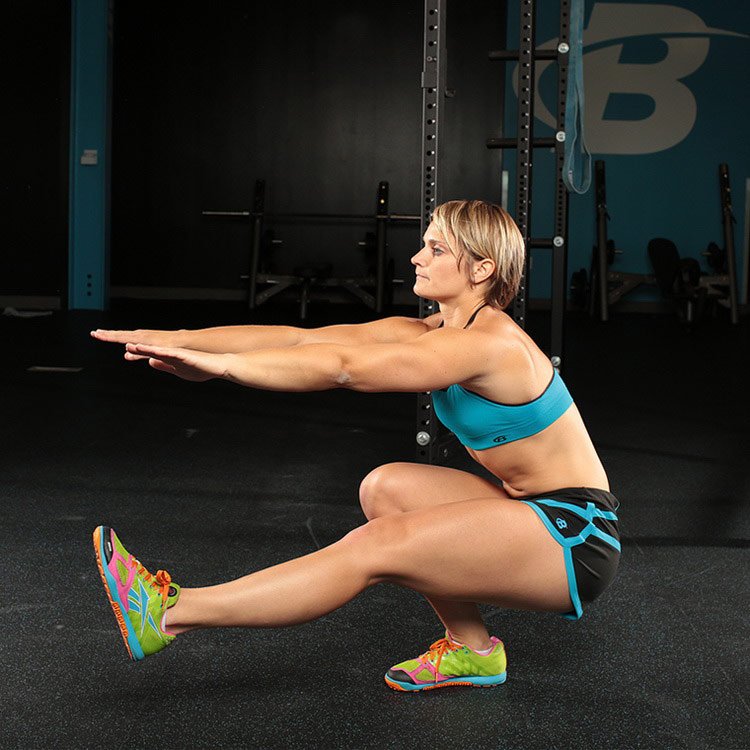
If the heel rises: first shorten the range or use assistance. Practice controlled knee travel with the heel planted. A small, secure heel elevation can temporarily reduce the ankle motion required and help you learn the pattern, but it changes the setup; do not count it as identical to a flat-foot pistol. If your shoe rocks on the heel lift or the wedge can slide, replace that improvised setup with a stable surface or return to box work.
If the knee drifts inward: treat it as information, not a reason to panic over a single frame. Watch whether the knee follows the toes in a comfortable track while the foot stays stable. Reduce depth or hold onto a rack if you cannot control the position, and strengthen the working leg through a range you can repeat. Avoid the opposite extreme of forcing the knee far outward while twisting the foot. A small amount of knee travel and natural individual variation are normal.
If you fall backward: try reaching the arms forward, slightly adjusting torso inclination or holding a very light plate out front. A fall backward can be a center-of-mass problem as much as a raw quadriceps weakness. If the free leg drops: practice active straight-leg holds or work from a box, where there is more room to keep the nonworking foot off the floor. If the lower back rounds: distinguish a controlled change in spinal position at deep hip flexion from an uncontrolled collapse; reduce depth if you cannot keep the movement comfortable and repeatable.
Pistol squats are not the only way to build legs. Split squats, reverse lunges, step-downs and leg presses can provide more straightforward loading and stability when hypertrophy is the main goal. Use the pistol when unilateral control and full-range bodyweight strength are worth training. Stop a variation that produces sharp, escalating or lingering joint pain; reduce load/range and seek qualified assessment if symptoms persist rather than treating pain as a mobility challenge to push through.
Equipment Worth Exploring
Explore equipment, accessories and gear from our carefully selected range.


Cast Iron Kettlebells
Textured cast-iron kettlebells for swings, squats, carries, and full-body training.


Rubber Hex Dumbbells
Rubber-coated hex dumbbell pairs with a stable shape for home and commercial strength training.


Follow a six-week progression that makes stronger reps the benchmark
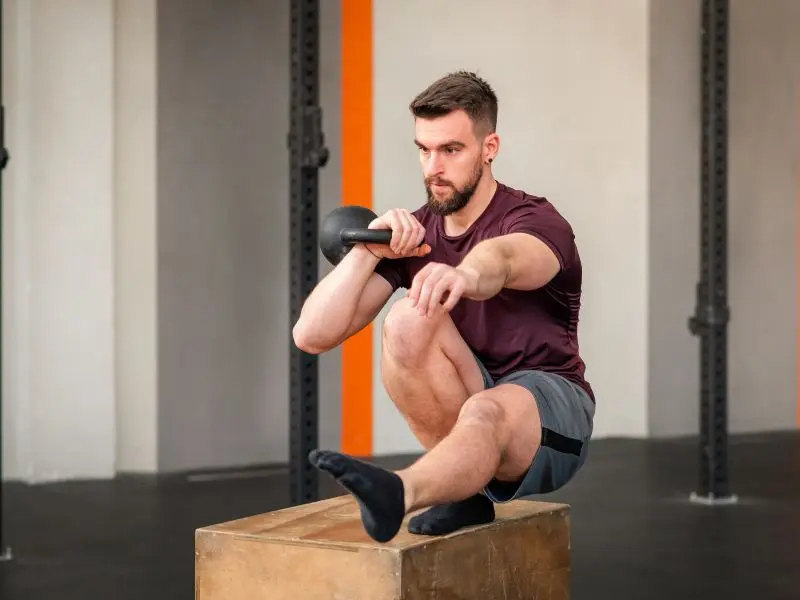
Train pistol-squat practice two or three times per week, preferably early enough in the workout that your balance is not already compromised. Warm up with a few easy two-legged squats, ankle movements and low step-downs. Allow roughly ninety seconds to two minutes between hard practice sets, longer when your breathing or coordination has not recovered. Count sets separately for each leg so the stronger side does not quietly do more work.
Weeks 1–2: build a dependable starting point. Perform three sets of five controlled box pistols per leg at a manageable height, plus two sets of five assisted deeper reps. Keep the lowering phase unhurried and record box height and assistance used. If five repetitions are not clean, reduce the target rather than pushing through five bad ones. Add gentle knee-to-wall practice and a few free-leg holds if either is your obvious limiting factor.
Weeks 3–4: earn more range. Lower the box by a small amount only when every rep can be touched softly and stood up without momentum. Keep three sets of four to six reps per side. Add two or three controlled negatives per side, stopping before the descent becomes a fall. Athletes who already own their full assisted range can progressively lighten the hand support rather than forcing a smaller box. Choose the same variation across several workouts so you can identify real improvement.
Weeks 5–6: test the next level without abandoning useful work. Start sessions with three to five unassisted singles per leg if you can perform them cleanly, then complete two sets of assisted or box repetitions. If an unassisted single is still unreliable, continue the prior level and aim for smoother control or a slightly deeper target. When sets of three to five full pistols become repeatable, a small front-held kettlebell or plate can serve as either a counterbalance or, eventually, genuine overload. Write down which purpose it serves rather than assuming the load automatically makes the exercise harder.
Keep conventional squats, split squats or other lower-body work in the program if your bigger goal is muscle gain. A pistol is a useful addition, not a requirement for impressive quads. After six weeks compare your original box height, assistance, depth, left/right rep quality and comfort. Those measurements tell you more than whether a single dramatic video rep happened to succeed.

Leg Day Shirts & Workout Gear
Leg-day gym shirts and workout gear for lifters who never skip squats, lunges and lower-body punishment.

Swolebob Squatpants Gym | Funny SpongeBob Meme Workout T-Shirt
Add a playful “Swolebob Squatpants” touch to your casual rotation.


Squat Game Gym | Funny Squid Game Parody Workout Decal Sticker
Bring “Squat Game” attitude to your water bottle or laptop.

Squat You Must Star Wars Leg Day Meme Hooded Hoodie
Show off your leg-day humor in a laid-back “Squat You Must” hoodie.

Squatbucks Gym | Funny Starbucks Parody Muscle Shirt | Tank Top
Train hard, laugh a little, and rep “Squatbucks”.


I Love Squats Gym | Valentine's Workout Pullover with F T-Shirt
For laid-back days and leg-day humor: “I Love Squats”.

Heavy Squatter Gym Wizards | Funny Harry Potter Muscle Tank Top
Show some personality between sets with “Heavy Squatter Gym Wizards”.


Heavy Metal Skeleton Squat for Powerlifting, Bodybuildi Tank Top
Bring “Heavy Metal Skeleton Squat” humor to your next lifting session.