Advertising disclosure: This page includes affiliate product links that may earn us a commission, as well as products from our own store.
Incline Reverse Flyes: Fit the Bench, Control the Arm Path and Train Your Rear Delts
The incline reverse fly gives a small dumbbell a surprisingly demanding job. With your chest supported, you lift the arms outwards rather than pulling the weights towards your ribs. It is useful rear-shoulder and upper-back work, but it quickly becomes a different exercise when the elbows keep bending or the torso leaves the pad. The aim is a movement you can repeat, not the biggest pair you can get airborne.
This guide focuses on the incline-bench version, with seated, standing and cable alternatives where they make practical sense. There is no requirement to force one bench angle, squeeze through discomfort or perform a dramatic extra stretch. Start by making the setup fit your body, then keep enough detail consistent to recognise actual progress.
1. Fit the bench before choosing the dumbbells
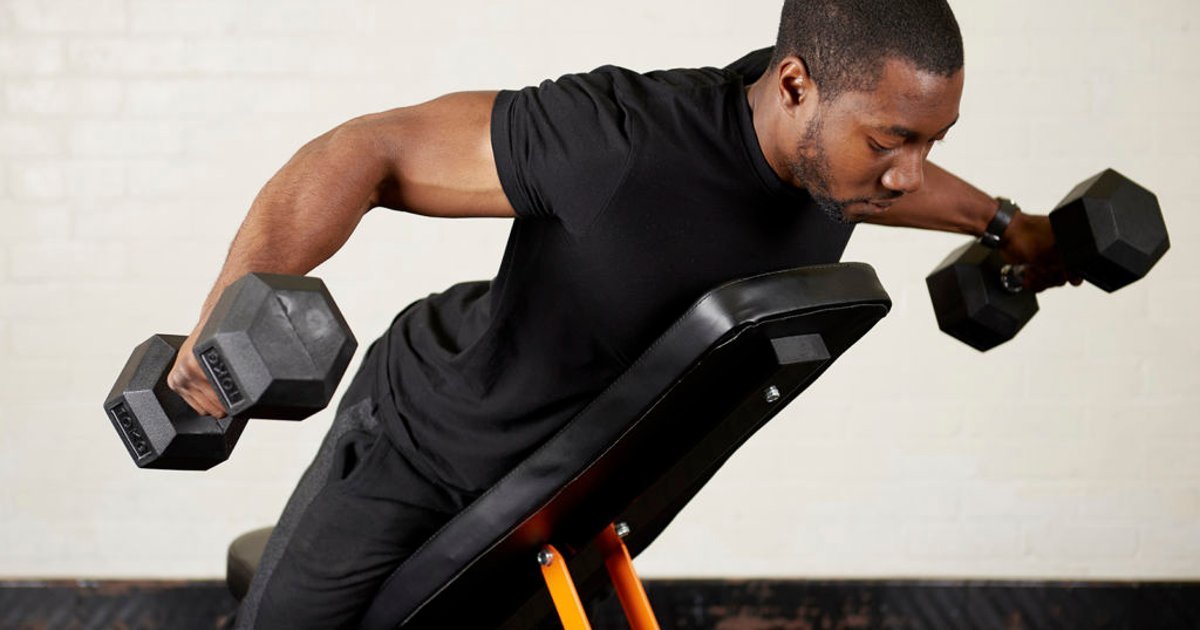
Set an adjustable backrest to a moderate incline and face into it. Around 45 degrees is a reasonable trial position, not a compulsory setting for every bench or lifter. Support your chest, place your feet securely and let the arms hang without the dumbbells striking the floor or bench frame. Use a light pair while checking those clearances.
The important part is the fit of the whole arrangement. A tall lifter may need a different seat position or foot placement from someone shorter. A wide pad may catch the upper arms; a high front edge may make breathing uncomfortable. Move the setup before adding weight. You should not need to crane your neck upwards to avoid the backrest, slide forwards to reach the floor or hold an awkward position just to copy someone else’s bench notch.
Check the backrest adjustment and the bench’s contact with the floor. A bench that shifts when you get into position needs attention before the set starts. Put the dumbbells somewhere reachable without twisting under load. If picking them up while straddling the bench is awkward, practise the entry and exit with lighter weights first. Avoid dropping them underneath the pad where you might step on them afterwards.
Take a few unloaded repetitions before the first working set. That gives you a chance to notice whether the bench edge interrupts the arm path. Write down the backrest notch and where your chest meets the pad once you find a comfortable arrangement. A repeatable setup makes later comparisons more useful than remembering only the dumbbell number.
2. Move the upper arms outwards, not the dumbbells backwards
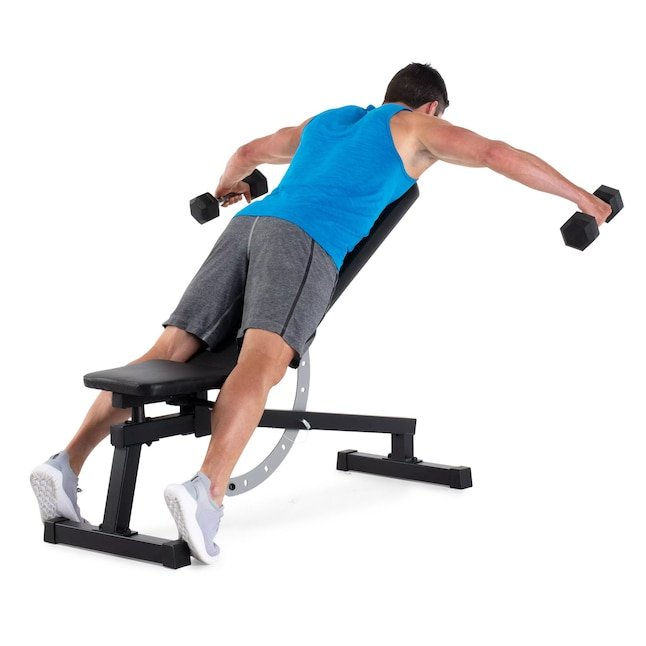
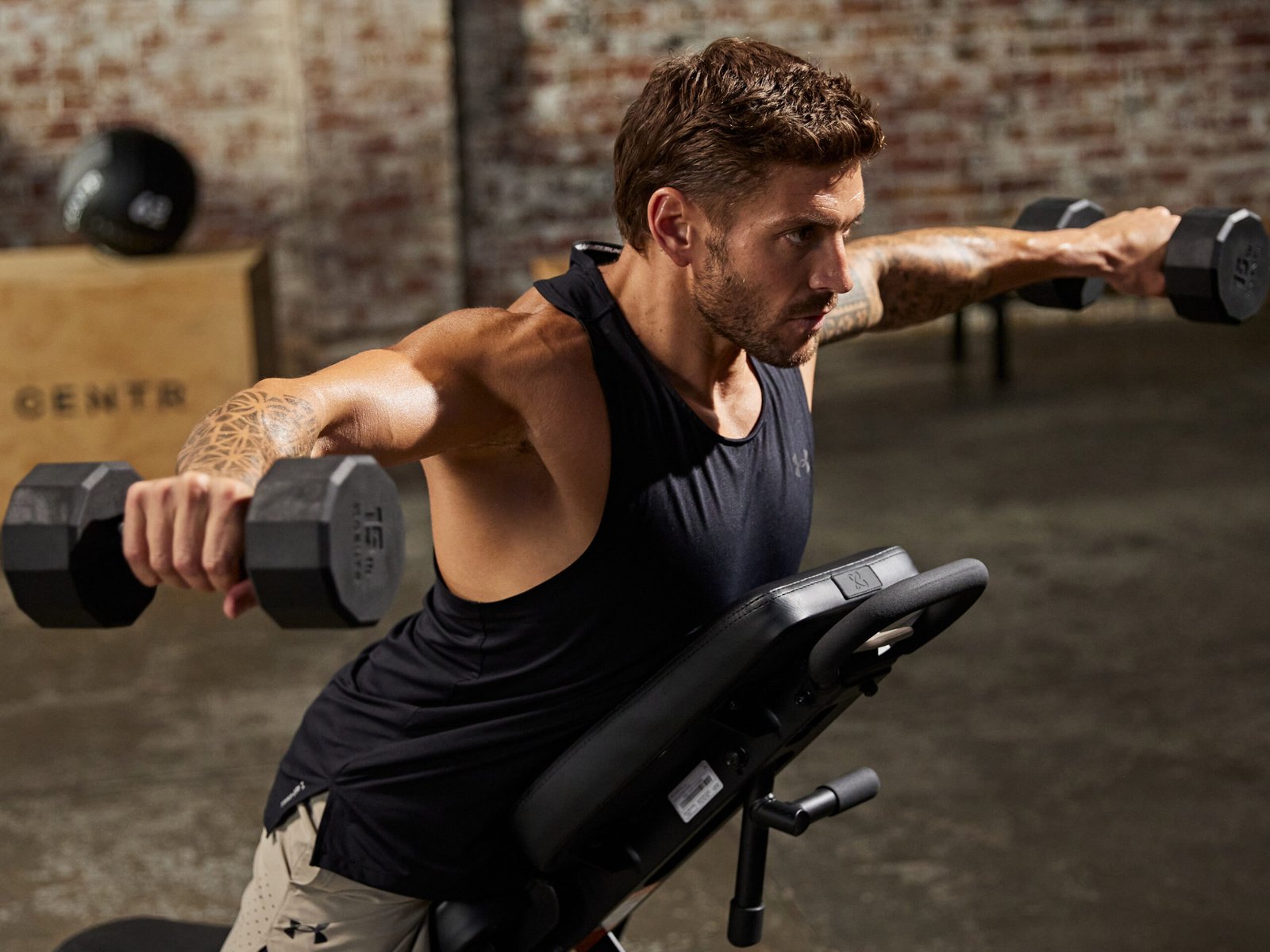
Begin with the palms facing each other and a small bend in the elbows. Lift the arms out to the sides while keeping that bend fairly steady. Stop around the point where the upper arms approach shoulder level, or earlier if that is your comfortable controlled range. Lower smoothly rather than letting the weights pull the arms down.
The cue is to widen the arms, not to throw the hands behind you. Picture the elbows describing a broad arc on either side of the bench. If the elbows fold progressively and the weights move towards the ribs, you are drifting into a row. A row is a valid exercise, but it should not quietly replace the reverse fly as a set becomes difficult.
Let the shoulder blades move naturally with the arms. A modest squeeze near the top can be useful; a forceful attempt to pin them together before every repetition can make the movement feel unnecessarily rigid. Keep the chest in contact with the pad and avoid lifting your head to watch yourself in a mirror. A short video from a safe angle can show the arm path without requiring you to turn during the set.
Think of the top as a consistent stopping point rather than a contest for maximum height. Extra travel gained by arching the torso changes the comparison. The bottom also deserves attention: reset the hanging position without bouncing the dumbbells together. Each repetition should begin from a position you recognise, so fatigue is visible rather than disguised by an increasingly loose rhythm.
3. Correct the mistake that actually changes your repetition
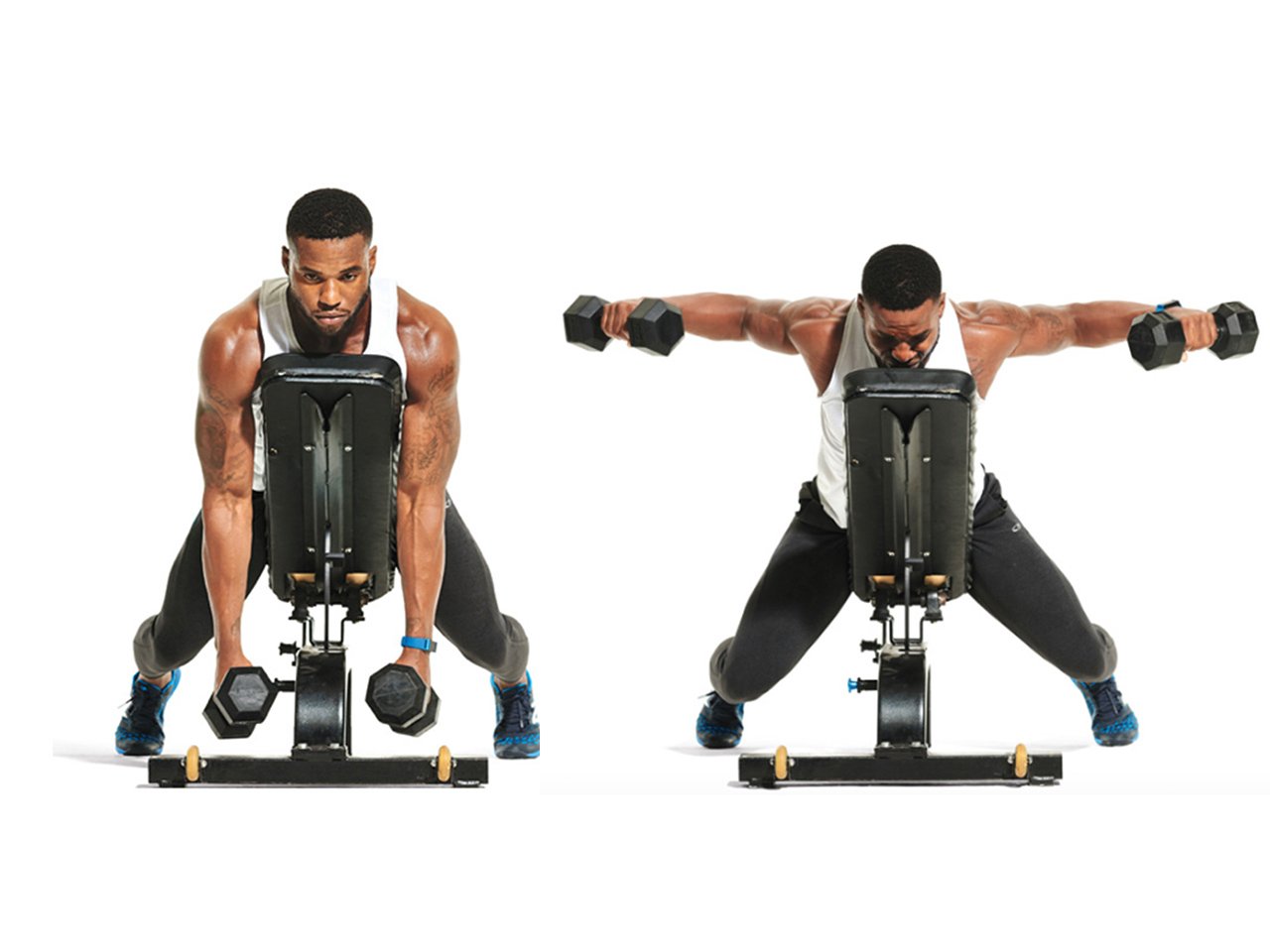
If the chest lifts off the pad, reduce the weight and check your bench position. If the elbows bend more on every repetition, stop the set before it becomes a series of rows. If you accelerate the dumbbells from the bottom and simply catch them at the top, try a lighter load that allows a smooth reversal. These are different problems; one vague instruction to “feel the rear delts” will not reliably solve all three.
Watch for a rising shrug, too. Your upper back contributes to the movement, but pulling the shoulders towards the ears should not become the strategy for lifting the next repetition. Reset with a comfortable neck position and consider ending the set when the pattern changes. More effort is expected near the end; a substantially different exercise is not the goal.
A useful troubleshooting approach is to change one thing at a time. First reduce the dumbbells. If the same obstruction remains, adjust the bench. If one shoulder still feels restricted, shorten the range rather than forcing a larger arc. Sharp, worsening or persistent joint pain deserves an individual assessment; this is a training guide, not a diagnosis or a promise that a reverse fly fixes shoulder problems.
Distinguish ordinary muscular effort from an instruction to tolerate anything. A set can be challenging without having to provoke a particular sensation. You do not need soreness the following day to justify keeping the exercise. The better question is whether your intended movement remains comfortable, controllable and compatible with the rest of your training.
4. Choose support and resistance for the job you need
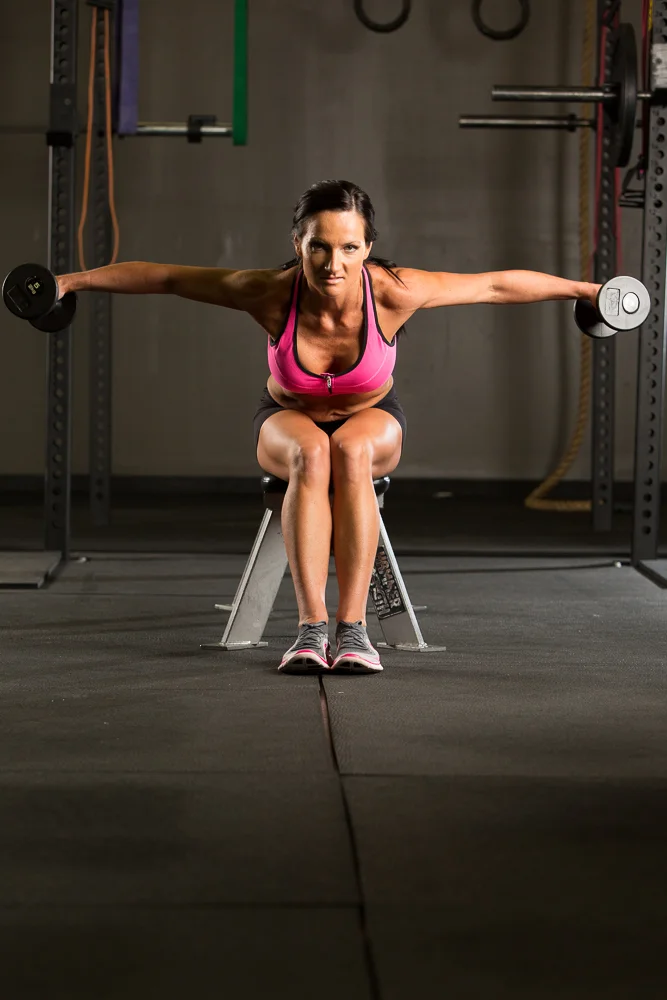
A seated bent-over reverse fly is an alternative when you do not want the chest pad. A standing version uses a hip hinge and asks you to maintain your torso position without that support. Both can work, but they add another thing to manage. If holding the hinge distracts you from the shoulder movement, the incline bench can simplify the task.
Cables offer a different direction of resistance, while a reverse-fly machine gives a guided path. Neither is automatically superior. Check whether the handles, seat and available range suit you. A cable setting that works for one person may pull another person’s arms in an awkward direction. A machine’s fixed arc may feel excellent or restrictive depending on its geometry and your proportions.
Choose equipment using practical criteria: secure support, room for the arms, manageable load increments and a path you can repeat. An adjustable bench and light dumbbells cover the main version. Cable systems, individual handles and a machine with a genuine rear-delt function serve the alternatives. The selection below reflects those options; you do not need several setups to train the same movement.

Equipment Worth Exploring
Explore equipment, accessories and gear from our carefully selected range.



Multi Bench MBX-650 2.0
Adjustable multi-bench with roller adjustment, 15 backrest positions and accessory mounts.


Rubber Hex Dumbbells
Rubber-coated hex dumbbell pairs with a stable shape for home and commercial strength training.
VOLTRA
Compact digital cable trainer with smooth, adjustable resistance.

Go-Tone Pro
Portable digital cable trainer with up to 66 lb (30 kg) of adjustable resistance.


Pec Fly/Rear Delt PEC-650
Combination machine with adjustable movement limits for chest fly and rear-delt exercises.
Keep records for each variation separately. A cable-stack number is not directly comparable with a dumbbell pair, and a new bench angle changes the arrangement even if the weights stay the same. If you switch versions, establish a new starting point instead of interpreting every number change as lost or gained strength. Equipment should make the exercise easier to organise, not make its progress harder to understand.
5. Progress the set without losing the movement
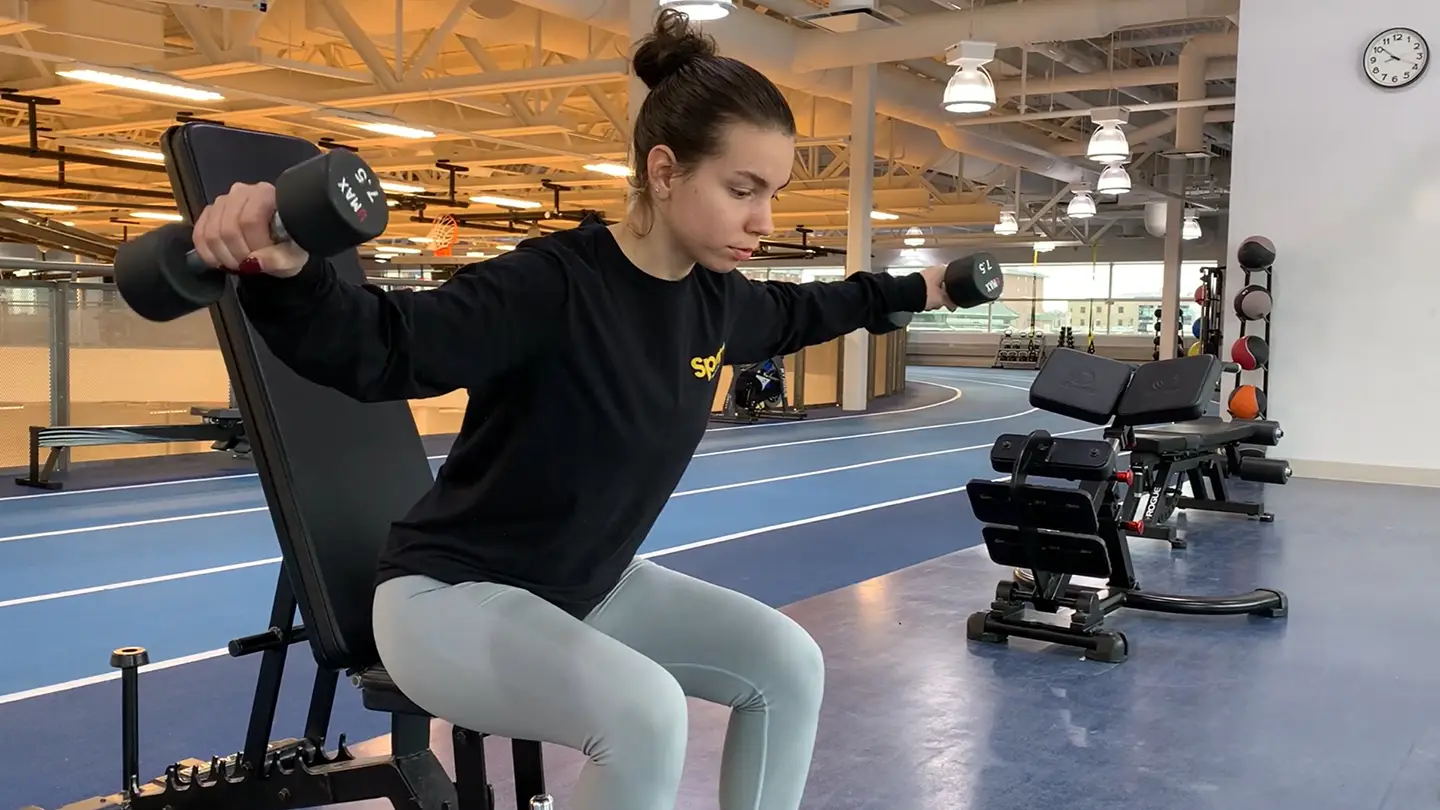
For an illustrative starting point, try one or two sets of roughly 12–15 controlled repetitions after your main upper-body work, on one or two suitable training days. Leave a few good repetitions available while learning the setup. This is a practical example, not an individually tested prescription. Account for the rows, presses and other shoulder work already in your programme before adding more.
Use the same bench setting, arm bend and stopping point across comparable sessions. Add a repetition when you can maintain them. When you reach the upper end of your chosen range, consider the smallest available weight increase. If that jump immediately creates swinging or shortened movement, keep the lighter pair and build more consistency instead. There is no obligation to increase the load every visit.
Record what the set actually contained: the dumbbell load per hand, completed repetitions, bench notch and any form change that ended it. “Fifteen, but the last three became rows” is a useful observation. Counting all fifteen as interchangeable hides the very information you need for the next decision. A brief note beats a longer list of increasingly incomparable numbers.
Control, consistency and repeatable dumbbell work are the theme here. Let those priorities guide the session even when a gym slogan sounds more dramatic. The designs below reflect that lifting culture; they are not technique instructions or evidence for a particular training method.

Bodybuilding Shirts & Workout Gear
Bodybuilding shirts, tanks and gym gear for lifters chasing muscle, size, symmetry and the pump.

Dumbbell Heartbeat Decal for Water Bottles Laptops Gym Sticker
Bring “Dumbbell Heartbeat” attitude to your water bottle or laptop.

Live Love Lift Muscle Shirt Athletic Vest Gymbro Workou Tank Top
Train hard, laugh a little, and rep “Live Love Lift”.

Liftionaire Money Barbell Meme Workout Bodybuilding Pow Hoodie
Keep it laid-back with a little “Liftionaire” attitude.

Meme Pink Dumbbells Top & Gymbros T-Shirt
Rep “Pink Dumbbells” humor in and out of the gym.

Heart And Brains Dumbbell Meme : The Ultimate T-Shirt
Make gym days more fun with “Heart and Brains Dumbbell Gym Meme” style.

Control Your Gains Stoic Greek God Marble Sculpture T-Shirt
Make gym days more fun with “Control Your Gains Stoic Greek God Marble” style.

Funny I Love Gym Valentine's Day – Gym Lovers Workout H Hoodie
Show off your gym-girl humor in a laid-back “I Love Gym Valentine's Day” hoodie.

No Reps No Glory Viking Gym – Funny Norse Workout Hoode Hoodie
Show off your Viking humor in a laid-back “No Reps No Glory Viking” hoodie.

Vitruvian Man With Dumbbells Shirt: Leonardo Da T-Shirt
Bring “Vitruvian Man With Dumbbells” humor to your next gym day.

Back Sabbath Back Day Heavy Metal Back Training Workout T-Shirt
Bring “Back Sabbath Back Day” humor to your next gym day.
Keep the incline reverse fly when it provides a clear, manageable place for rear-shoulder and upper-back work. Adjust or replace it when the setup remains awkward despite sensible changes. Progress can be a steadier return, an extra clean repetition or a small load increase at the same range. The useful result is a stronger repeatable movement, not a heavier exercise with the same name.