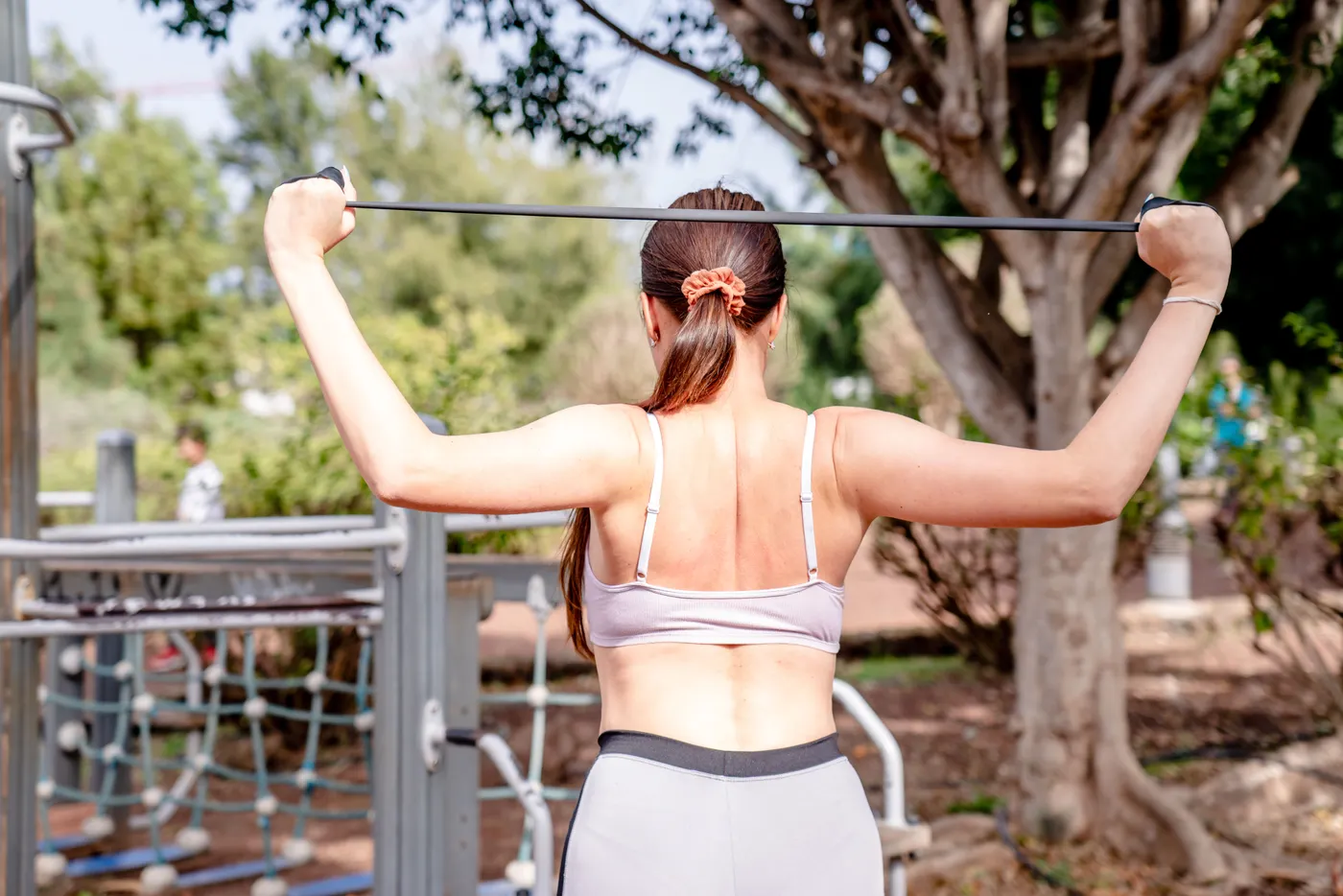
A mini band can make a short set of side steps surprisingly demanding. That does not mean every band position, stride or exercise trains the same muscles. Lateral band walks and monster walks are useful tools for building control around the hip, but they work best when you understand what they load, how to progress them and when to move beyond them. A 2025 evidence review examined the mechanics of these drills and the research behind their use in lower-limb training.
The key distinction is between making a muscle work during an exercise and proving that an exercise prevents injury or produces superior long-term strength gains. Band-walk studies often measure muscle activation in a laboratory; that is helpful for selecting movements, but it is not a direct measurement of muscle growth. Here is how to turn the available evidence into a practical, balanced training plan.
1. What the hip abductors actually do
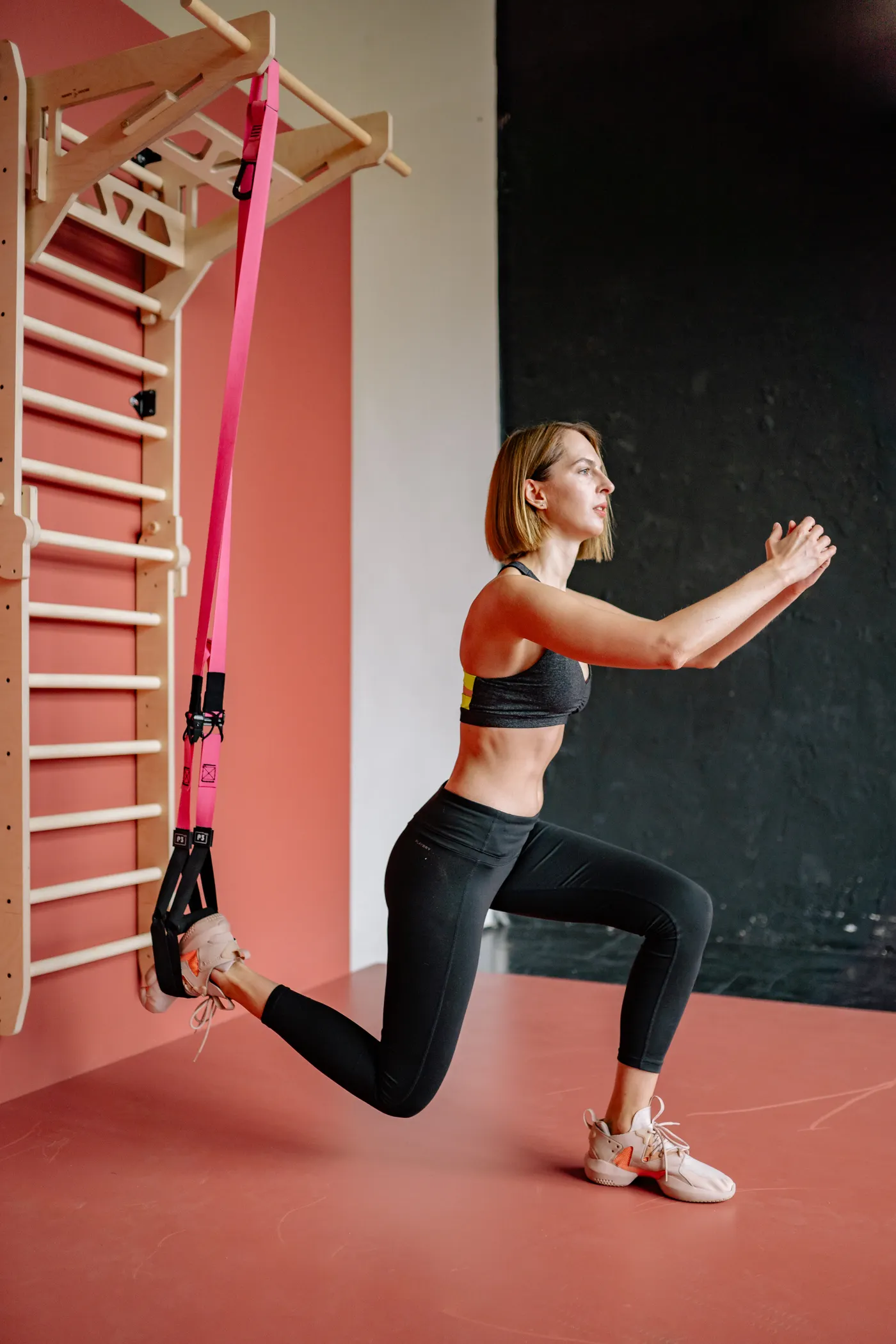
The gluteus medius and gluteus minimus help move the thigh away from the body’s midline and control the pelvis when one foot is on the floor. The gluteus maximus contributes to hip extension and, depending on position, to hip abduction and rotation. During walking, running, lunges and single-leg work, these muscles cooperate with the trunk, foot and other hip muscles to manage side-to-side forces.
Think about standing on your right leg while your left foot takes a step. Your right-side hip muscles help keep your pelvis from dropping excessively as your weight shifts. That stabilization task is different from simply lifting your left leg sideways. Both can be trained, and neither is automatically the best choice for everyone. If a knee drifts inward during a squat, hip control may be one contributor, but ankle motion, fatigue, load, skill and individual anatomy also matter.
It is tempting to label the gluteus medius a permanently ‘switched-off’ muscle whenever someone struggles with balance. That explanation is usually too simple. Muscles can be active yet insufficiently strong for a specific demand, and pain does not identify one weak muscle by itself. Treat lateral hip training as one part of a complete lower-body program rather than a universal fix for knee, hip or back discomfort.
A useful starting assessment is practical: can you hold a steady single-leg stance for 20–30 seconds, perform a controlled step-down, and keep your trunk relatively quiet during a light lateral walk? These are movement observations, not medical diagnoses. They can help you choose an appropriate exercise difficulty and track whether coordination improves.
2. Lateral band walks: the side-step pattern
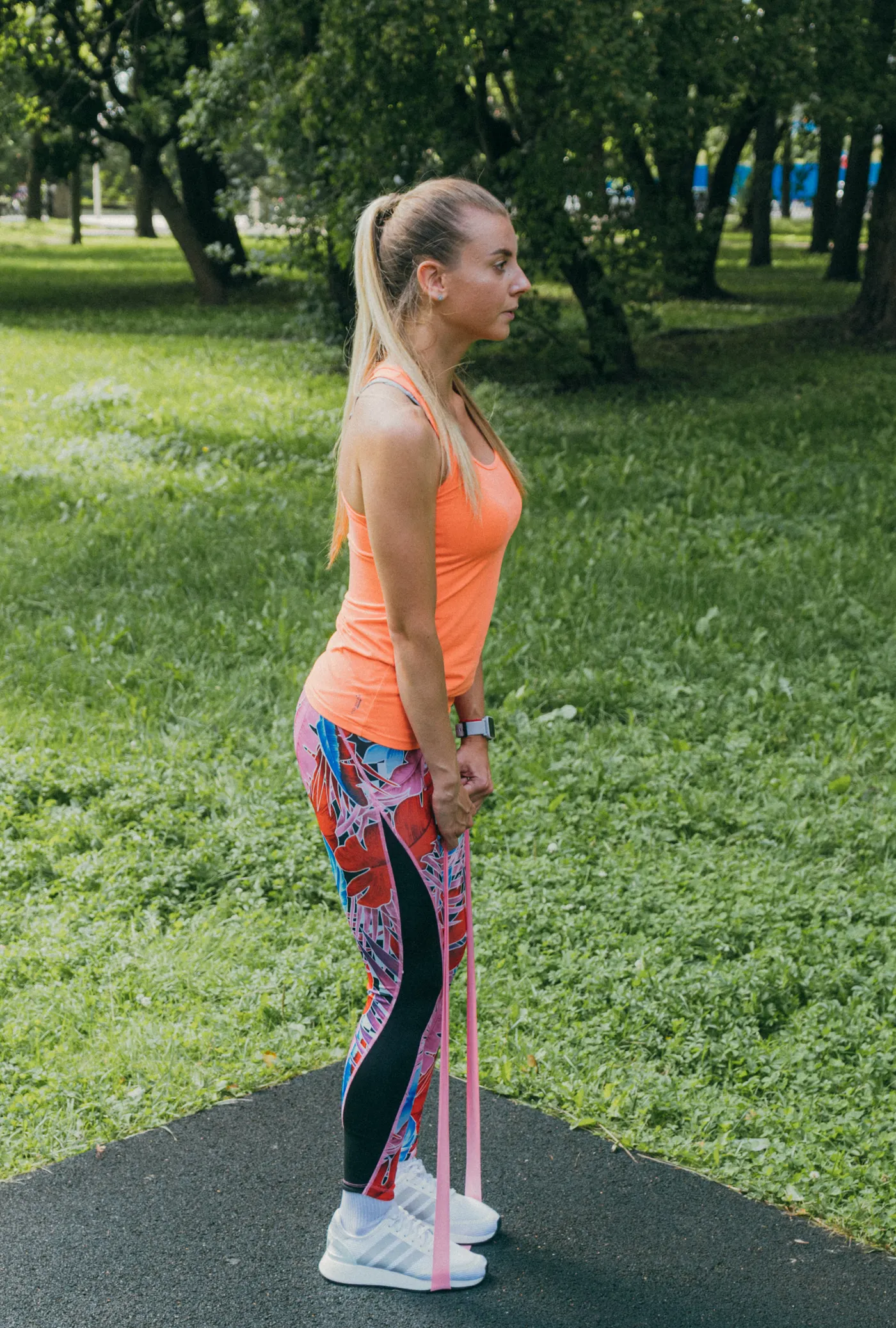
Place a looped resistance band above your knees and stand with your feet roughly hip-width apart. Bend your knees and hips slightly, keep your torso tall enough to breathe comfortably, and step sideways without allowing the trailing foot to snap back. Maintain a little tension between steps. After six to ten controlled steps in one direction, reverse without rushing.
The exercise challenges the muscles around the outside of the hips as the legs move apart and as the pelvis stays organized over the supporting foot. A moderate quarter-squat position can increase the work compared with standing completely upright, but squatting deeper is not automatically better. If the knees cave inward or the trunk swings dramatically, the band may be too heavy or the steps too large.
Start with a band above the knees because it is usually easier to control. Move it toward the ankles only when you can maintain alignment and deliberate foot placement. A lower band position generally increases the external challenge, but it also makes compensation easier. The best progression is the one that increases muscular effort without turning each step into a twisting contest.
For a warm-up, one or two sets of six to ten steps each way may be sufficient. For focused accessory work, try two or three sets with a slower return step and a brief pause. Keep the repetitions crisp rather than chasing a burning sensation at any cost. You should feel the lateral hips working, but a burn alone cannot tell you how much strength or muscle you are building.

Equipment Worth Exploring
Explore equipment, accessories and gear from our carefully selected range.
VOLTRA
Compact digital cable trainer with smooth, adjustable resistance.

Go-Tone Pro
Portable digital cable trainer with up to 66 lb (30 kg) of adjustable resistance.

GymPin D Cuffs
Adjustable wrist cuffs with textured grips for supported cable-machine exercises.



Squat Harness
Wearable harness for hands-free cable squats, sled work, and lower-body training.

Belt Squat Collar
Heavy-duty collar adapter for compatible belt-squat and landmine bar setups.
3. Monster walks: diagonal steps and changing directions
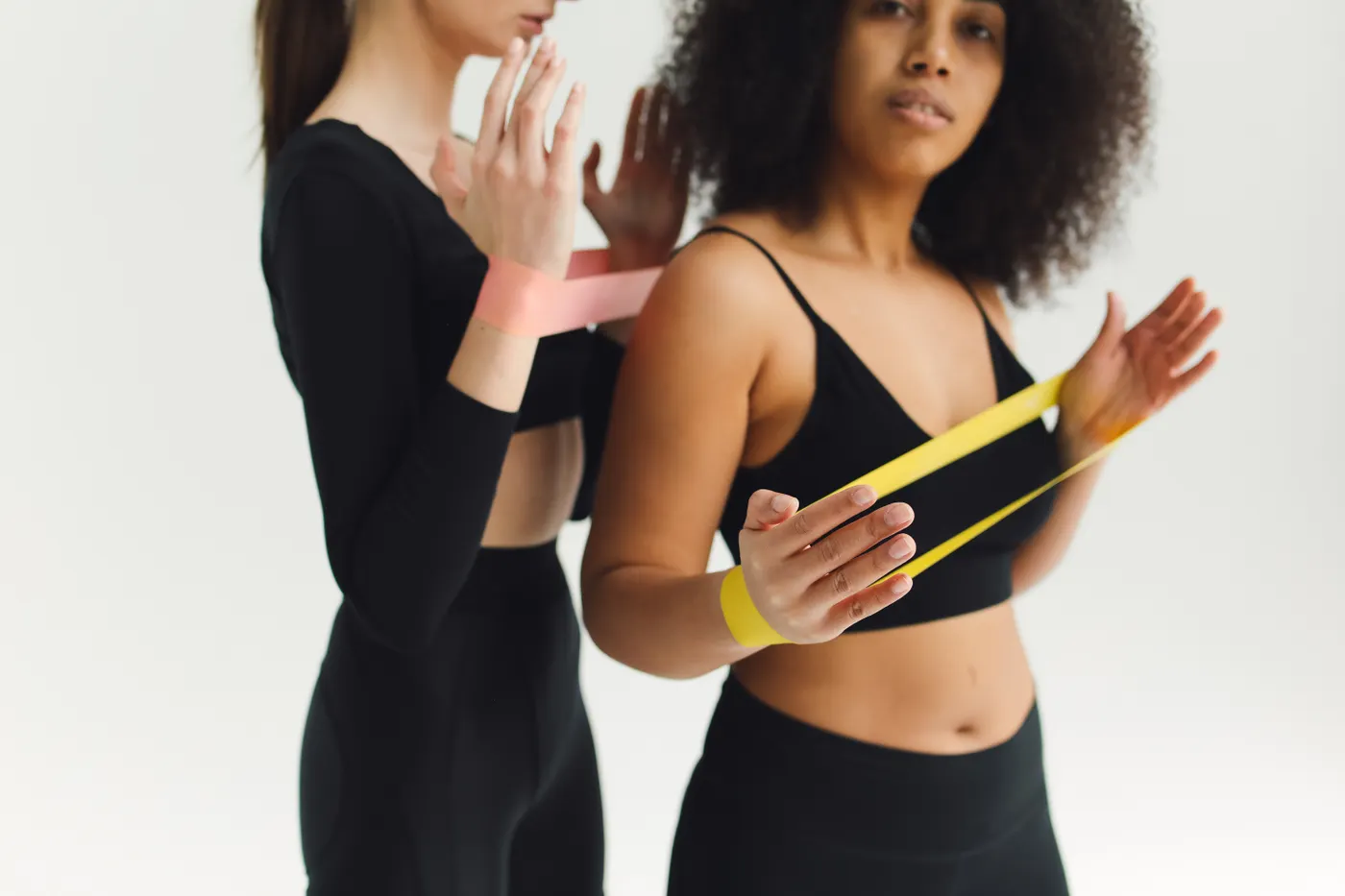
Monster walks use the same basic band setup but add diagonal travel. Begin in a shallow athletic stance with tension on the loop. Step forward and outward with one foot, then bring the other foot forward without letting the band go slack. After several steps, walk backward along a controlled diagonal path. Keep the toes broadly pointed forward rather than turning every step into a large outward rotation.
These diagonals introduce a different coordination challenge from pure side steps. The hip muscles must resist and create forces in more than one direction while the trunk and knees respond to the changing base of support. A monster walk is not inherently superior to a lateral walk; it simply asks for a slightly different movement pattern. Use lateral walks when you want a clear side-to-side emphasis and monster walks when you want to practice forward, backward and diagonal control.
For beginners, six small steps forward and six backward can be plenty. Keep the stride short enough that the pelvis remains steady and the feet do not collide. If you are repeatedly leaning your entire body into the direction of travel, lighten the band. If the band twists or rolls up, adjust its placement rather than pulling harder.
Both exercises can be useful in a warm-up before squats, running drills or sports practice, but do not assume a short activation circuit protects against injuries by itself. Long-term adaptation also requires appropriately challenging resistance training, recovery and exposure to the actual tasks you want to perform.

Leg Day Shirts & Workout Gear
Leg-day gym shirts and workout gear for lifters who never skip squats, lunges and lower-body punishment.

Booty Building Mode Gym Sweatshirt
Keep things casual with a little “Booty Building Mode” attitude.

Hippo Thrust Leg Day Meme Sweater Glutes & Booty Day T-Shirt
For laid-back days and leg-day humor: “Hippo Thrust”.


Big Booty Energy Glute Lovers & Bodybuilders Vest Tank Top
Add some lifting attitude to training with “Big Booty Energy”.

Thicc Booty Meme Glute Lovers Vest Tank Top
Your gym-day look, with a playful “Thicc Booty Gym Meme” twist.

Big Butt Energy – Meme , & Gains – Booty & Glutes T-Shirt
Make gym days more fun with “Big Butt Energy” style.

Brains Beauty Booty Sweater & Glute Building Meme T-Shirt
For laid-back days and gym-girl humor: “Brains Beauty Booty”.

Funny Squat Inspector Gym | Edgy Leg Day Meme Muscle Sh Tank Top
Show some personality between sets with “Squat Inspector”.

Funny Thickers Gym | You're Not You With A Small Booty Tank Top
Add some lifting attitude to training with “Thickers”.

Thicc Booty Energy – , & Meme Lovers – T-Shirt
Rep “Thicc Booty Energy” humor in and out of the gym.
4. Band placement, resistance and the limits of muscle-activation data
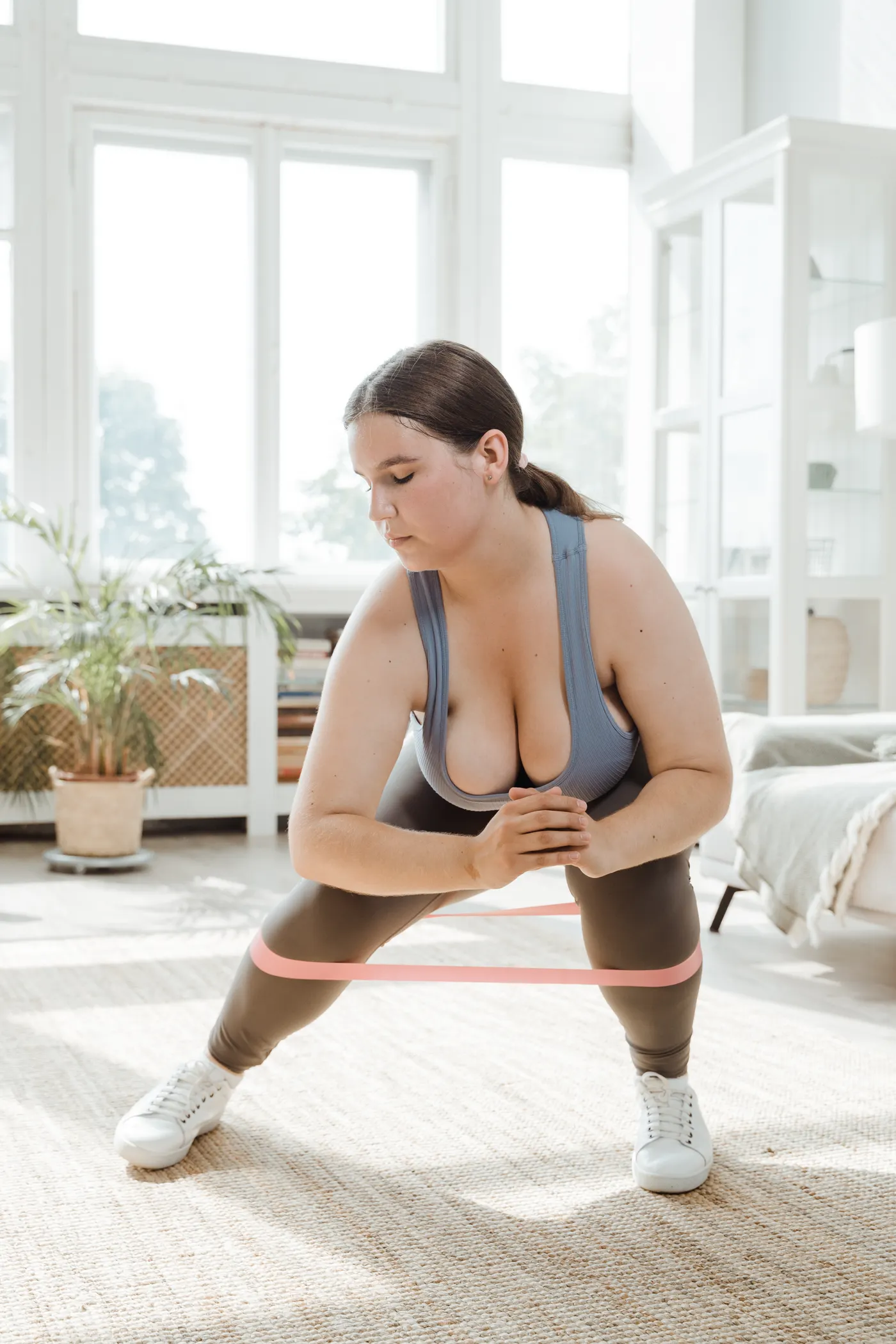
Moving a loop from above the knees to the ankles or forefeet changes the leverage against which the hip muscles work. Research summarized in the 2025 review found that ankle- or forefoot-level placement and a modest squat posture often produce higher measured gluteal activation during band walking. That does not justify placing the strongest possible band at the feet on day one. Higher measured activation is not automatically better technique, greater training volume or superior long-term results.
The research base is narrower than social-media certainty suggests. The review considered 13 studies overall, with four directly examining lateral or monster band walks. Many of the outcomes were electromyography measurements: electrical activity recorded at the muscle, not direct evidence that a specific band setup causes more hypertrophy. Different body proportions, hip anatomy, experience levels and test protocols can alter the numbers.
Use a three-step progression. First, learn the path and foot pressure with a light band above the knees. Second, increase controlled repetitions or time under tension while preserving position. Third, move the band lower or select a stronger loop, changing only one variable at a time. A useful set should feel challenging by the end without forcing you to lose the stance you began with.
Foot placement deserves equal attention. Keep your feet in contact with the ground long enough to push deliberately rather than bouncing between steps. Avoid allowing the trailing foot to spring inward, and keep your breathing natural. If you have acute hip pain, numbness or a recent injury, use a clinician-guided progression rather than interpreting discomfort as productive muscle activation.
5. When band walks are not enough: stronger single-leg options
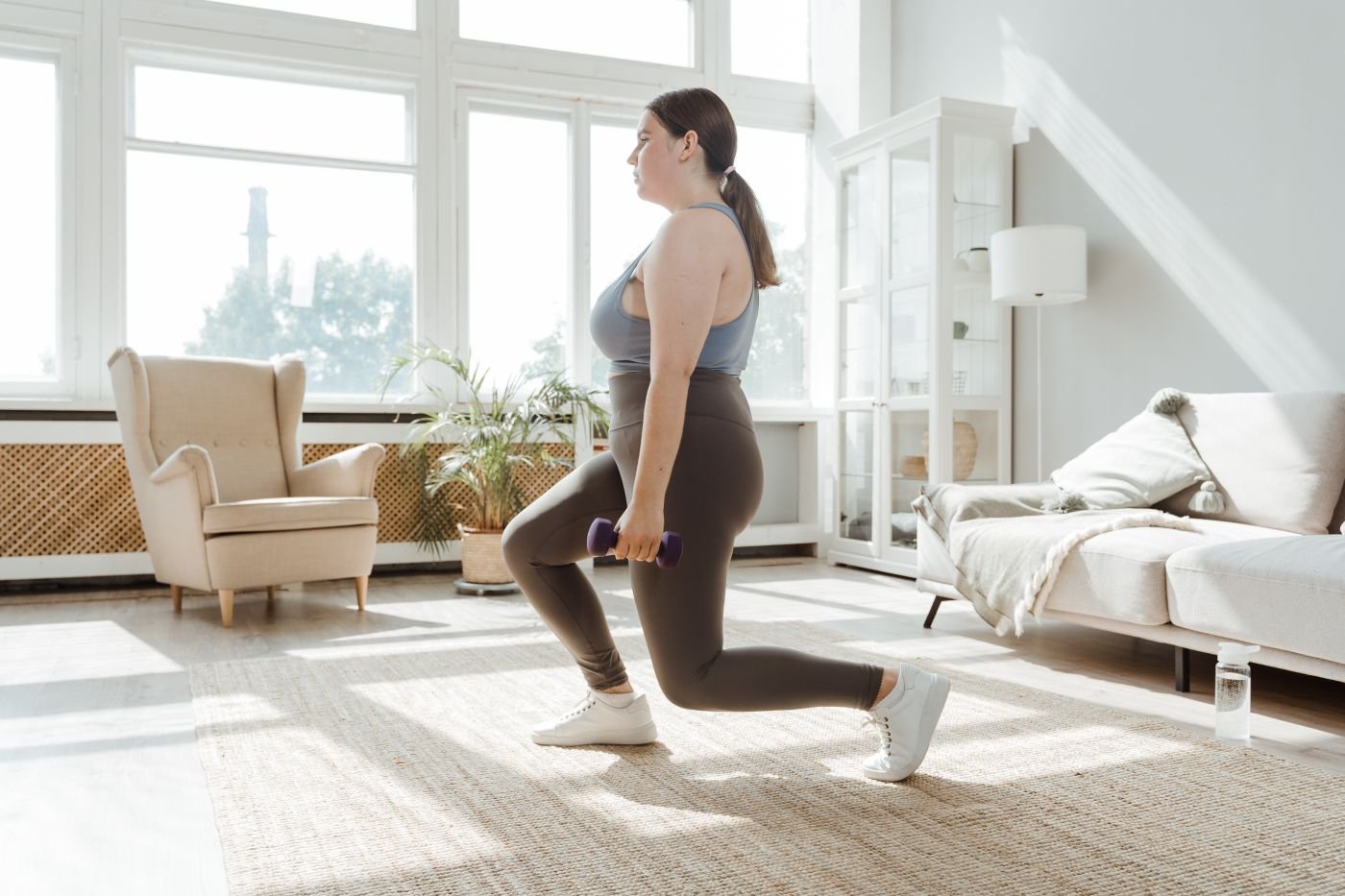
Band walks are accessible and convenient, but they should not become the entire hip program. Side-lying hip abduction provides a straightforward way to challenge the lateral hip without having to balance on one leg. A side plank adds a demanding trunk-and-hip stabilization task. Step-downs, split squats and single-leg Romanian deadlifts ask the hip muscles to control the pelvis while the rest of the lower body produces force.
For side-lying abduction, lie with your hips stacked and lift the top leg only as far as you can without rolling backward. Pause briefly, lower under control and avoid turning the movement into a high kick. For a side plank, begin with bent knees if the full lever is too difficult; aim for a straight line through shoulder, hip and knee. These movements can provide a clearer progression than adding endless band-walk steps.
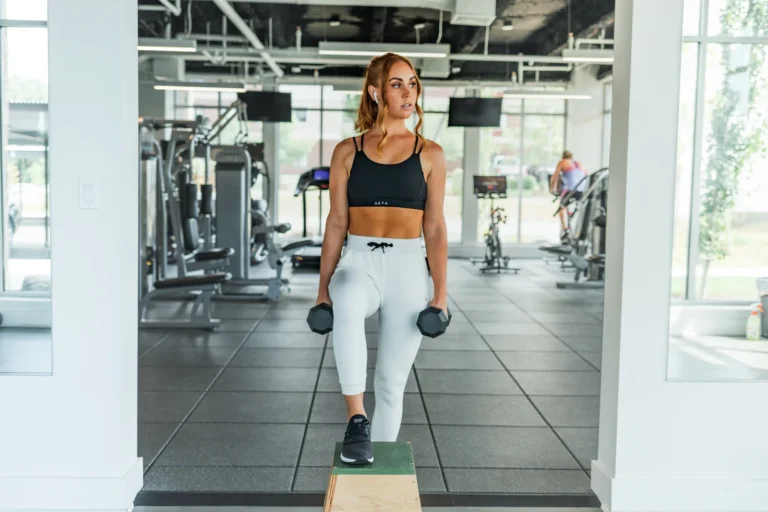
For step-downs, stand on a low platform and slowly reach the free heel toward the floor while controlling the standing knee and pelvis. For a single-leg Romanian deadlift, hinge at the hip, keep the load close and use a light hand support until balance stops limiting the exercise. These drills train the hip in coordination with the foot, knee and trunk, which makes them useful complements to isolated abduction work.
Reviews of muscle-activation studies show that different exercises can create very different demands, but the highest electrical signal is not always the best exercise for a given person. Choose movements that you can progressively load, recover from and perform consistently. If the goal is running performance, combine hip work with running-specific conditioning and technique rather than expecting a resistance band to replace them.
Equipment Worth Exploring
Explore equipment, accessories and gear from our carefully selected range.


FID Bench MAX
Adjustable bench offering flat, incline, and decline positions + adjustable headrest.

GymPin Squat Wedges
Non-slip 15-degree squat wedges help elevate the heels for deeper quad-focused squats.


HUSLA Leg Extension Pad
Pad attachment designed to increase usable range of motion on compatible leg-extension machines.

6. A practical two-day hip-stability training plan
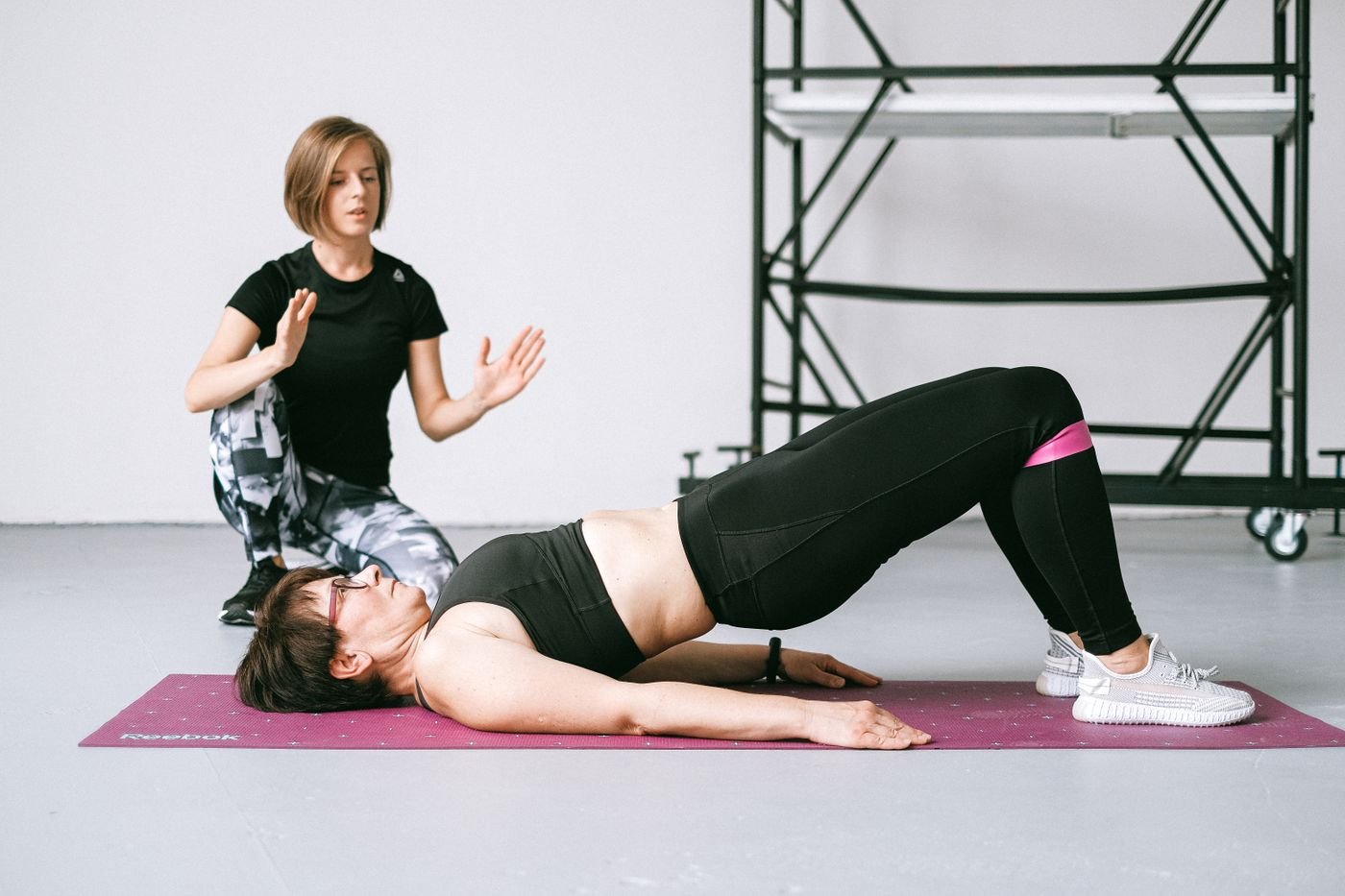
Train the lateral hips two or three times weekly, usually alongside normal lower-body sessions rather than in a separate marathon-length routine. On Day A, start with one easy round of lateral band walks for eight steps each direction. Then perform a squat or leg press for three sets of six to ten, a split squat for two or three sets of eight per leg, and side-lying abduction for two sets of 12–15. Finish with a short side plank on each side. Keep one to three good repetitions in reserve on the loaded movements while learning.
On Day B, use monster walks for two rounds of six steps forward and backward. Follow with a Romanian deadlift for three sets of six to ten, a low step-down for two sets of six to eight per leg, and a supported single-leg hinge for two sets of eight. Finish with a controlled band walk or a short single-leg stance if balance is the limiting skill. You do not need to perform every accessory to failure; quality repetitions are more useful than an elaborate list.
Progress for four to six weeks by increasing load, controlled repetitions or band tension only when technique remains repeatable. Record the band position and color, step count and perceived effort so that progress is more than a vague impression. Bands from different manufacturers can have very different resistance curves, so a color is not a universal strength rating. If you also run or play field sports, keep the hardest lower-body session away from your most demanding speed workout when possible.
People returning from injury, managing persistent pain or dealing with significant balance problems may need a different starting point. In those cases, individualized assessment matters more than following a generic template. For otherwise healthy lifters, the plan should feel like a small, purposeful addition to progressive strength training, not a replacement for it.
Bodybuilding Shirts & Workout Gear
Bodybuilding shirts, tanks and gym gear for lifters chasing muscle, size, symmetry and the pump.

Thicc AF Sweater Booty Lovers & Glute Gains Meme T-Shirt
Keep things casual with a little “Thicc AF” attitude.


OnlyGains Only Gains Meme – Booty & Leg Day Squats, T-Shirt
Show some leg-day attitude with a playful “OnlyGains Only Gains” tee.

Big Butt Energy Leg Day & Glute Gains Meme Vest Tank Top
Add some leg-day attitude to training with “Big Butt Energy”.


Juicy Booty Booty Builder Sweater Big Booty Gains & T-Shirt
Keep things casual with a little “Juicy Booty” attitude.


I Love Squats – Valentine's Day Leg Day Meme Hooded Pul Hoodie
Keep it laid-back with a little “I Love Squats” attitude.

Never Skip Leg Day Chicken Legs Meme Decal Water Sticker
Give your everyday gear a playful “Never Skip Leg Day” twist.

Leg Day Is Calling You Squats & Deadlifts Meme Hoodie
Stay casual and show some leg-day attitude with “Leg Day Is Calling You”.
7. Common mistakes and how to judge progress
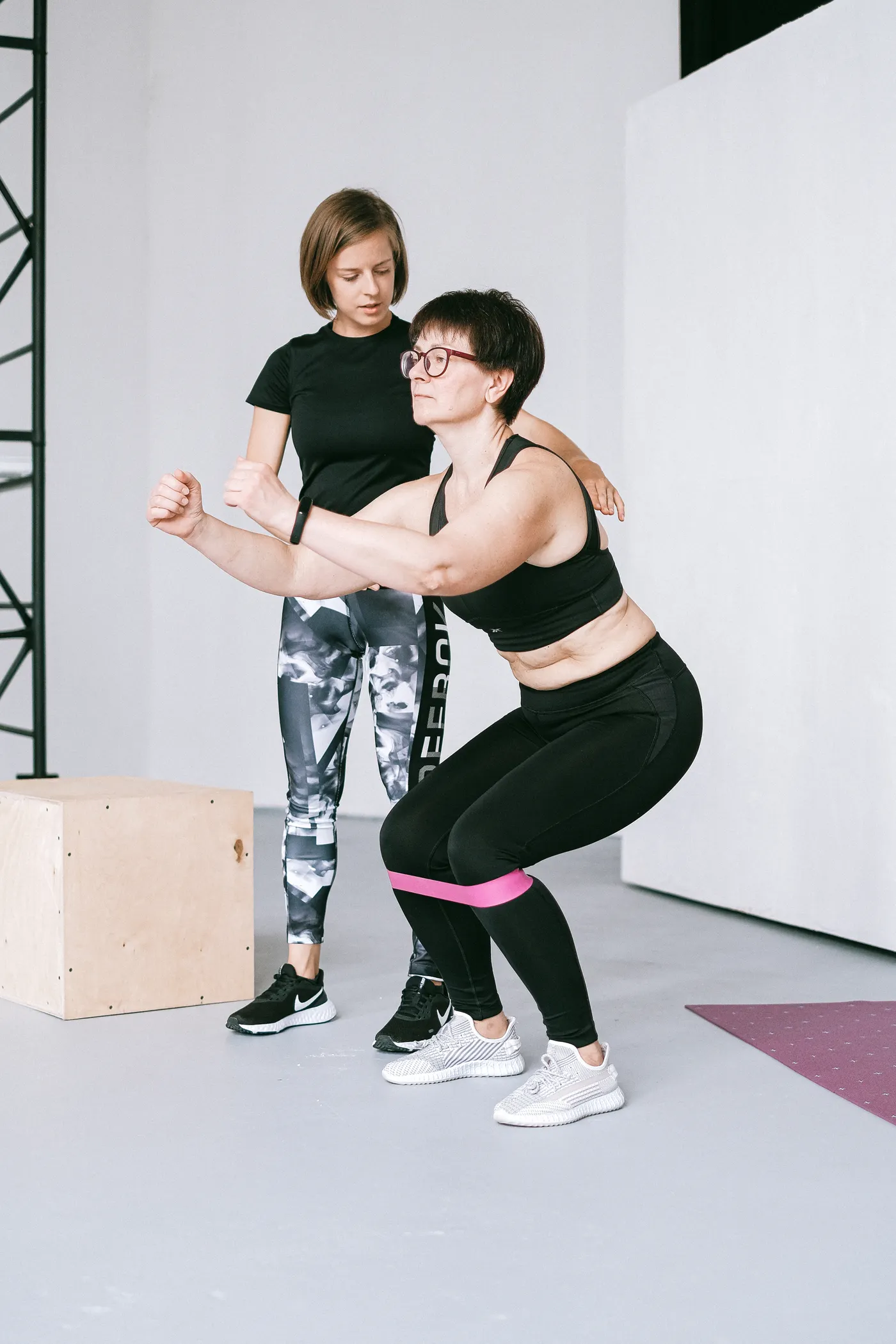
The most common error is using a band so strong that the exercise changes shape. You may see the feet turning out, the knees snapping inward, or the upper body swinging side to side to drag the band along. Another mistake is stepping so far that tension disappears between repetitions. Reduce the resistance, shorten the steps and return to a position you can actually control. You can make a light band demanding by slowing the trailing foot and pausing without losing balance.
Do not confuse soreness with success. Lateral hip muscles may feel unusually sore after a new drill, but severe soreness can interfere with normal training and is not evidence of better adaptation. Equally, no soreness does not mean the exercise failed. Track repeatable measures: smoother side steps, more stable step-downs, a longer controlled side plank, or a heavier single-leg hinge completed without excessive wobbling.
Be cautious about promises that glute medius drills automatically cure knee pain, low-back pain or running injuries. Hip-strengthening interventions are used in rehabilitation, and some reviews report improvements in selected conditions, but studies vary in quality, populations and accompanying treatment. Exercise selection should follow symptoms and function, not a universal ‘weak glutes’ diagnosis. Persistent pain deserves a qualified assessment.
The useful takeaway is simple: lateral band walks teach deliberate side-to-side control; monster walks add diagonal coordination; loaded single-leg work develops strength in more demanding positions. Start with clean movement, progress gradually, and use the drills to support the lifting or sport you actually care about. The goal is not to win a resistance-band contest. It is to build hips that can repeatedly handle the tasks you ask of them.