Advertising disclosure: This page includes affiliate product links that may earn us a commission, as well as products from our own store.
The hack squat machine takes balance out of the equation, but it does not take technique out of the lift. A footplate that feels perfect for one lifter may put another in an awkward position, and extra plates mean little if every heavier set becomes a shorter squat. This guide explains how to set the sled safely, find a repeatable stance, use meaningful depth, compare alternatives and build a six-week progression that prioritizes stronger quadriceps over inflated machine numbers.
Why the Hack Squat Feels Different From a Barbell Squat
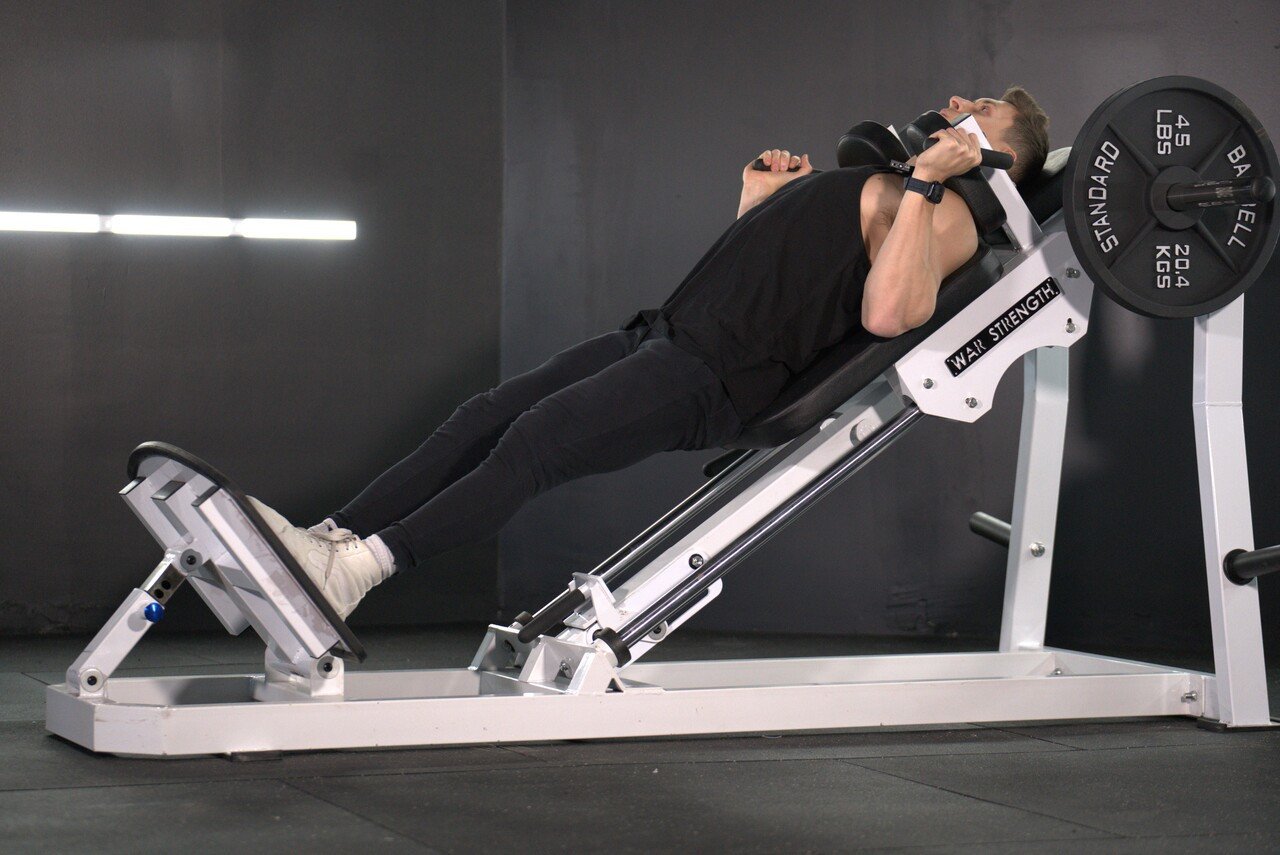
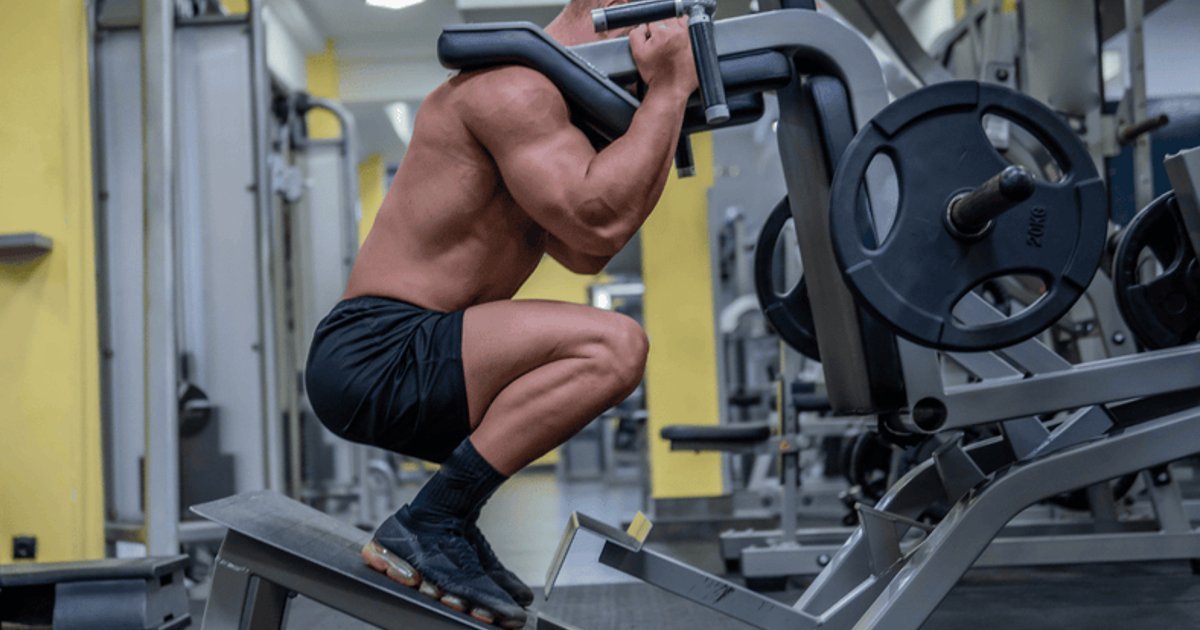
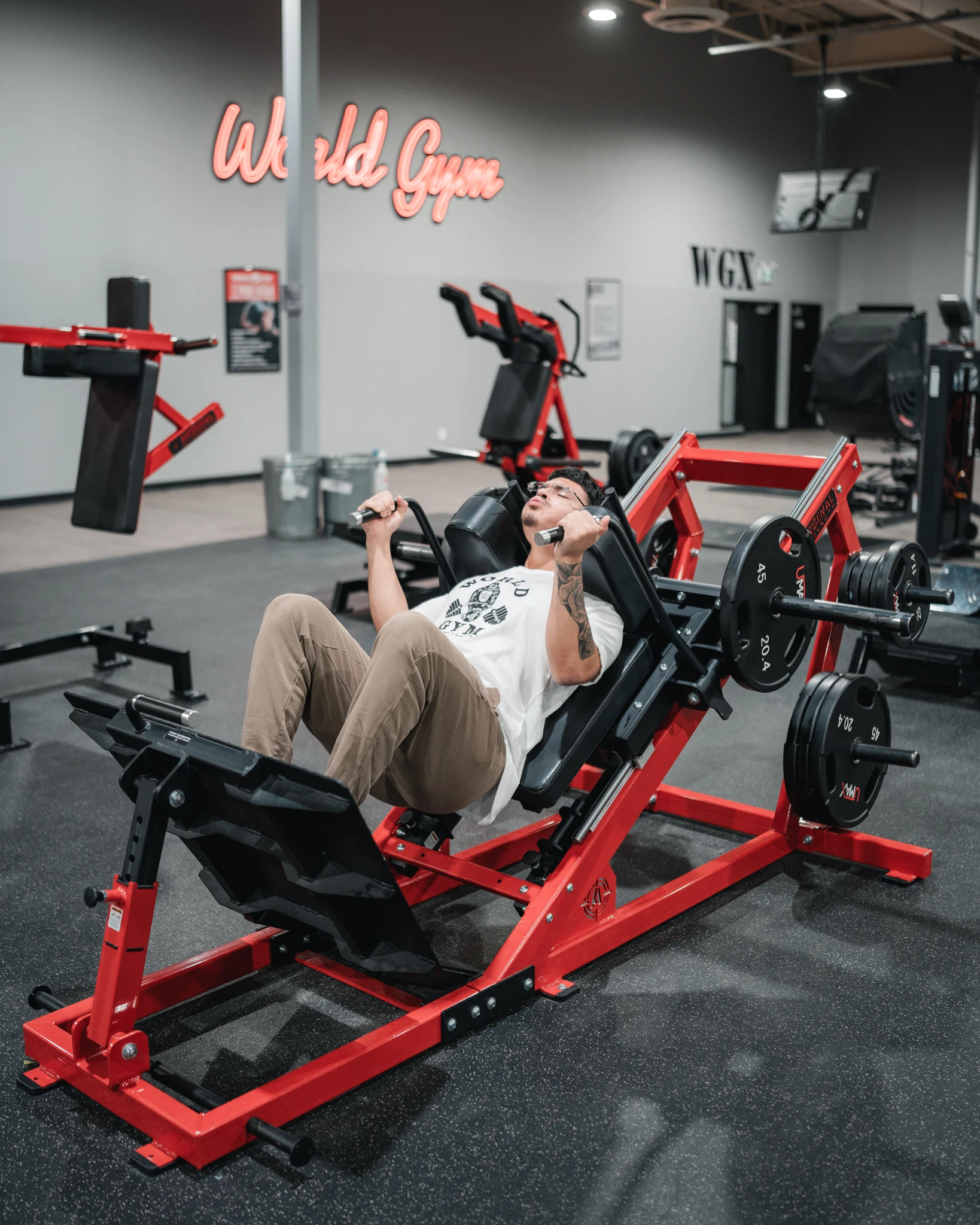
A typical 45-degree hack squat supports your back and shoulders on a moving carriage. Your feet stay on a fixed platform while the sled travels along rails. That support changes the training problem: instead of keeping a free barbell balanced over your feet, you can put more attention into driving the platform away and controlling your knees and hips through a predictable path.
The quadriceps do substantial work extending the knee. Your glutes and adductors assist with the hip, and your calves and trunk help keep the movement organized. The machine is often described as a quad exercise for good reason, but the name of a machine does not magically isolate one muscle. Stance, depth, machine geometry, loading and your proportions all affect what you feel. A burning quadriceps set is not proof that the glutes did nothing.
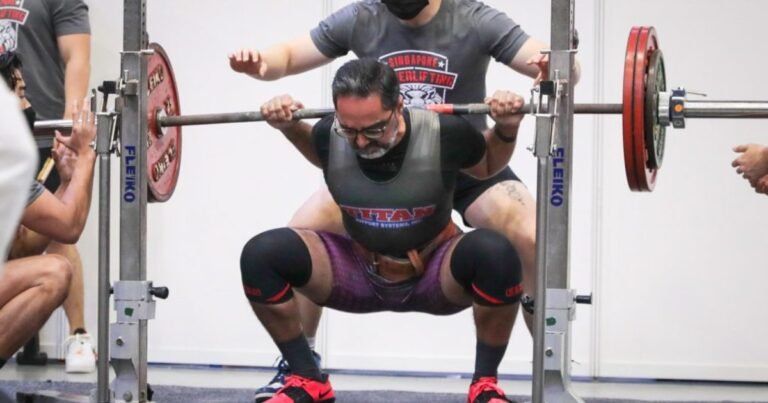
For bodybuilding, the appeal is practical. A stable setup lets you push hard without spending as much attention on bar balance. For a powerlifter, the limitation is equally practical: getting stronger on the hack squat does not automatically reproduce the balance, bracing or bar path of a competition back squat. Use the two movements as related tools rather than interchangeable tests.
The carriage angle matters too. Plates loaded on a sled are not mechanically equivalent to a barbell holding the same number of kilograms. Friction, rail angle and the carriage’s own weight vary by manufacturer. Record your progress on the same machine, with the same depth and stance, instead of comparing plate counts across gyms.
Set Up the Sled, Footplate and Safety Stops
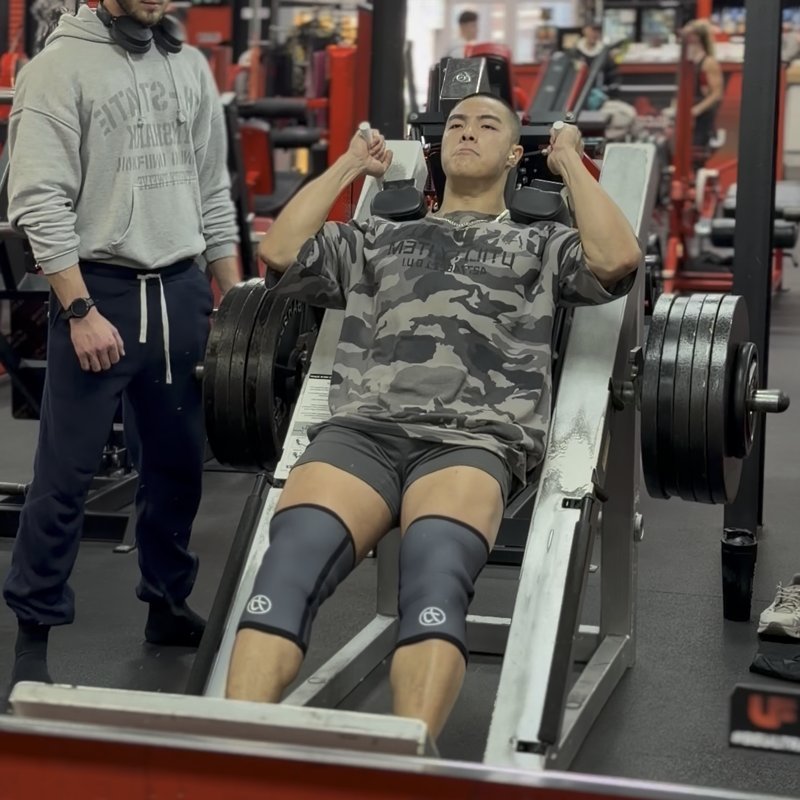
Begin with the machine completely unloaded or lightly loaded. Adjust the shoulder pads or starting height so the pads contact your shoulders comfortably rather than jamming into your neck. Keep your entire back supported if the machine is designed for it. Place your feet approximately shoulder-width apart, with toes turned slightly outward if that matches your natural squat pattern. Avoid starting on the extreme edges of the platform.
Before lifting, identify exactly how your particular safety handles and stop positions work. Machines differ: some unlock by rotating side handles, others use levers, and some have independently adjustable emergency catches. With a manageable load, extend your legs enough to clear the hooks, disengage the locks using the manufacturer’s mechanism and confirm that you can re-engage them without having to reach awkwardly. Never assume another gym’s machine operates the same way.
Think of the first repetition as a setup check. Are both heels planted? Are the knees tracking generally with the feet? Can the shoulders stay under the pads? Does the sled move smoothly without a clunk or uneven resistance? If any answer is no, rack it and adjust before adding plates.
Keep your hands on the intended handles and your torso against the support. Take a controlled breath and brace before each descent. Do not wedge a loose object under the heels, improvise an extension to the footplate or rely on a training partner to rescue a load that exceeds the machine’s safe adjustment range. Loading pins and plates must be secured according to the machine’s instructions.
A first working weight should let you demonstrate several identical repetitions. Use a warm-up ramp, for example five easy reps, another five with a moderate load and three at a weight below the intended first work set. These are preparation sets, not a reason to exhaust the legs before the main work.

Equipment Worth Exploring
Explore equipment, accessories and gear from our carefully selected range.

Leg Press/Hack Squat BPR-790
Convertible 45-degree leg press and hack squat machine with a broad footplate and band pegs.

Studio V-Squat
Plate-loaded V-squat machine for supported lower-body strength training.

Compact Leg Press CLP-700
Compact reverse-style leg press with a moving seat carriage and an adjustable footplate.

GymPin Squat Wedges
Non-slip 15-degree squat wedges help elevate the heels for deeper quad-focused squats.

Multi Pull Smith Rack MPHR-780
All-in-one rack with a Smith machine, functional trainer, lat pulldown and low row.

VForce 3IN1 Max
Six-post all-in-one rack with Smith machine, functional trainer, and variable-force cables.

Safety Squat Handles
Barbell squat handles that reduce shoulder positioning demands during high-bar squats.

Grip Plates
Rubber-coated weight plates with handholds for loading barbells and machines.

Belt Squat Collar
Heavy-duty collar adapter for compatible belt-squat and landmine bar setups.

Squat Harness
Wearable harness for hands-free cable squats, sled work, and lower-body training.
Foot Placement: Width, Height and Toe Angle Without Guesswork
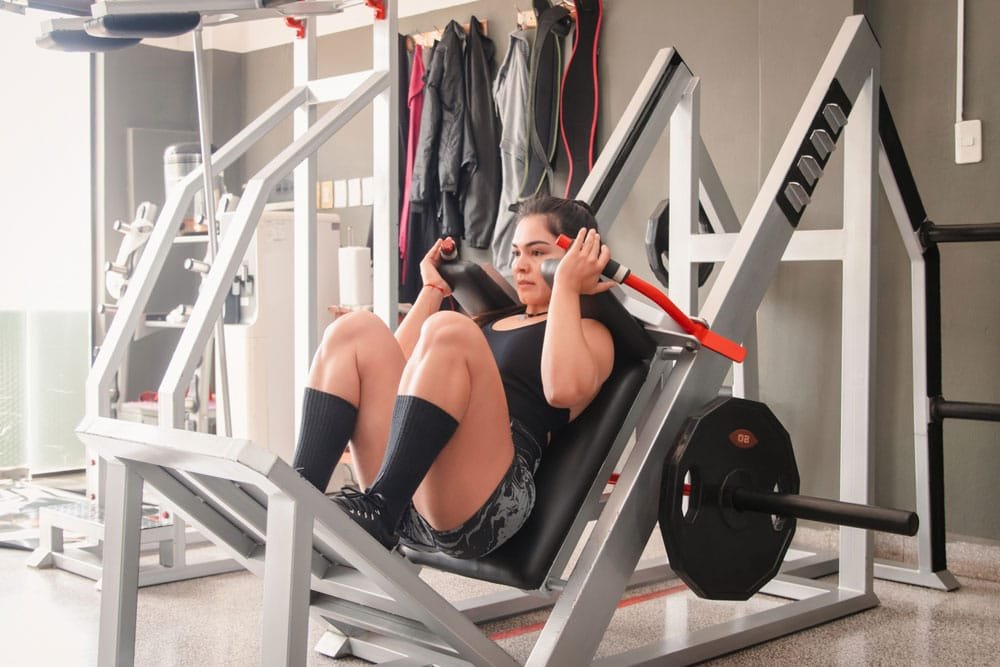
Foot placement is worth adjusting, but internet diagrams often make it sound far more precise than the evidence allows. On many hack squat machines, a lower foot position can increase how much the knees travel forward and may make the quadriceps feel more challenged. A higher position often changes the hip and knee demands. That does not establish a universal high-feet-equals-glutes rule, and a change in short-term muscle activation is not the same as proof of superior long-term growth.
Start in the middle of the platform with your whole foot supported. Squat through a comfortable range, then review what is actually happening. If the heels lift or the ankles run out of usable motion, try moving the feet slightly higher rather than forcing your knees or rounding through the bottom. If the hips feel excessively folded or you cannot descend without losing contact with the back pad, a modestly lower position may be worth testing. Machine designs can reverse or limit these choices.
For stance width, begin around shoulder-width and adjust by small amounts. A narrow stance may suit some lifters’ hip structure and make forward knee travel easier; another lifter will feel better slightly wider. The goal is a repeatable position where your thighs can move without being blocked by your torso and your heels remain stable. Point your toes in a direction that allows the knees to follow naturally; do not twist the feet outward just to imitate a photograph.
Change one variable at a time. Try two light sets with the default stance, then move your feet only a few centimeters and repeat. Compare control, attainable depth and comfort, not just which position makes the load feel lighter. Once you find a stance, note the approximate foot location and width in your training log. Consistency is more useful for tracking progress than chasing a new supposedly optimal angle each session.
If you use a wedge or heel elevation in a different squat variation, remember that a hack squat already supplies a fixed platform. Do not add accessories to the machine unless they are designed and approved for that use.

Leg Day Shirts & Workout Gear
Leg-day gym shirts and workout gear for lifters who never skip squats, lunges and lower-body punishment.

Booty Building Mode Sweater Leg Day & Squats Meme T-Shirt
Show some gym-day personality with “Booty Building Mode”.

Medieval Gym – Dost Thou Even Hoist Knight & Dragon Squ T-Shirt
Make gym days more fun with “Medieval” style.

Squats Leg Day Heavy Weights Meme – Essential Top T-Shirt
Bring “Squats Leg Day Heavy Weights” humor to your next gym day.

Quadzilla Massive Quads Leg Day Squatting Meme Tank Top
Train hard, laugh a little, and rep “Quadzilla”.

Wonder Squats & Leg Day Gains Superhero Hooded Hoodie
Show off your superhero humor in a laid-back “Wonder Lifter” hoodie.

Legday Gains – Squats & Deadlifts , Top Gymbros & T-Shirt
Heavy lifts, good laughs, and a little “Legday Gains” energy.

Nice Try Gravity Astronaut Gym | Funny Workout & Liftin Sticker
A fun “Nice Try Gravity Astronaut” touch for bottles, laptops, and lockers.

Heavy Metal Skeleton Squat for Powerlifting, Bodybuildi Tank Top
Bring “Heavy Metal Skeleton Squat” humor to your next lifting session.

Squats R Us Shirt – Leg Day Gains & T-Shirt
Heavy lifts, good laughs, and a little “Squats R Us” energy.

Leg Day Squats Deadlifts Decal Meme Vinyl Sticker
Give your everyday gear a playful “Leg Day” twist.
Depth and Tempo: Use the Range You Can Own
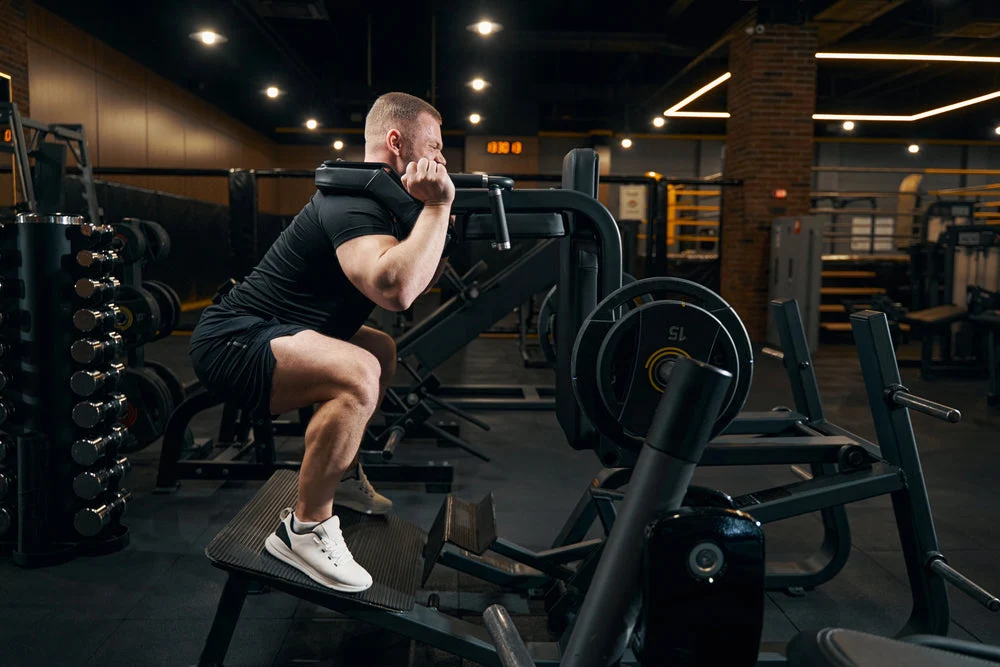
Depth is not a contest to see whose knees reach the biggest angle or whose sled bottoms out first. A useful repetition is the deepest position you can reach while keeping your feet planted, your back on the pad and your knee and hip movement controlled. Some machines have a short carriage travel, some have stops that must be adjusted and some place tall lifters in an unusually cramped bottom position. A fixed depth target makes little sense without those differences.
Lower the sled deliberately over about two or three seconds. Let the knees bend and travel naturally as the hips flex. Resist the temptation to crash into the bottom stops, bounce off soft tissue or immediately cut the next rep short when the quadriceps start burning. A brief change of direction at the bottom is enough; you do not need a long pause on every hypertrophy set.
Drive through the full foot on the ascent. Think about pushing the platform, not violently snapping the knees straight. A controlled return to the top with no exaggerated knee hyperextension keeps tension predictable. The most important technique rule is that the final repetition should look broadly like the first. If depth shrinks with fatigue, count that as a sign to end the set or lower the load, not as a new personal record.
Fuller comfortable ranges can be useful for training muscles at longer lengths, but more depth is not automatically better when the machine forces you into pain or your pelvis and back lose a stable position. Use a consistent range that you can progressively load. A slightly shallower but repeatable squat is more informative than alternating between very deep light sets and half-rep heavy sets while pretending they are the same exercise.
Knee and Back Comfort: Fix the Setup Before the Load
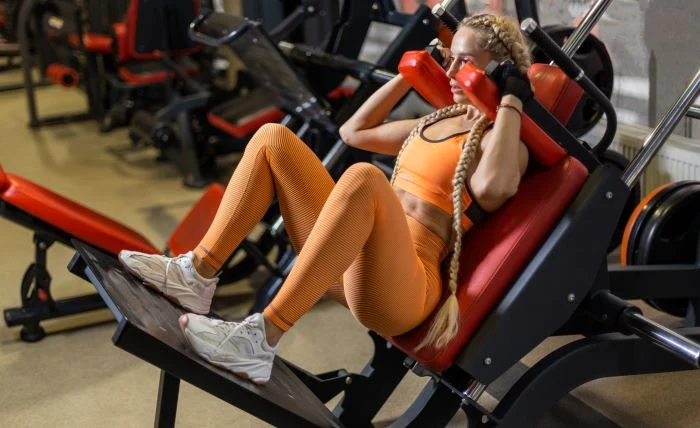
The hack squat is not intrinsically bad for knees. Knee extension under resistance is part of why the exercise trains the quadriceps. What matters is whether the load, range, frequency and position match your current tolerance. A small amount of exertion or local muscle fatigue is different from sharp joint pain, catching, sudden instability, numbness or symptoms that worsen rep after rep.
If a stance feels uncomfortable, rack the sled and make a small adjustment. Try a slightly higher foot position, a modestly different stance width or less depth while maintaining control. Reduce the load enough to find out whether the discomfort is position-related rather than forcing the same heavy repetition over and over. If pain persists, replace the exercise for the day and get individualized medical or rehabilitation advice when appropriate.
Back discomfort often comes from trying to fit your body into a sled that does not suit you. Some lifters instinctively lift the hips or curl their lower backs at the bottom to manufacture extra depth. On a supported machine that is a cue to stop earlier, adjust the setup or choose a different leg movement, not to press harder into the pads.
Use the safety catches every set and do not intentionally train to the point where a failed repetition requires someone else to hold the sled. Hard sets can be productive without turning each leg session into a failed-rep challenge. For beginners, leave approximately two or three clean repetitions in reserve. More experienced lifters may work closer to failure on selected sets if the machine’s catch system, technique and recovery allow it.
Hack Squat vs Leg Press, Smith Squat and Free Squat
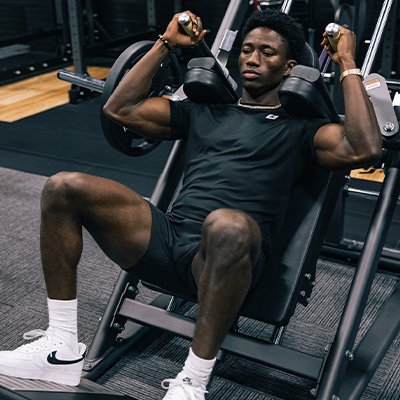
A hack squat and a 45-degree leg press both use guided resistance, yet the body position changes the movement. In the hack squat, the shoulders and trunk travel with the sled while the feet stay on the platform. On a leg press, the torso is typically seated against a backrest and the platform or sled moves relative to it. Both can develop the quadriceps, and both also involve other lower-body muscles. Choose based on comfort, movement quality and the equipment you can use consistently.
A Smith machine squat offers a guided bar but not the same full-body back support. Foot placement can make it feel more like a hack squat, yet the bar-contact point, torso position and freedom to move still differ. Before attempting a Smith variation, set its hooks and stops correctly and avoid placing your feet so far ahead that you slide or lose balance.
Free squats demand more independent balance and coordination. If your primary goal is to improve a barbell squat, practice that skill. If you already have heavy free squats in the week and want another challenging quad-focused pattern without the same balance requirement, the hack squat is a sensible accessory. Neither choice needs to win a universal ‘best exercise’ argument.
There is also the equipment question. Not every gym has an angled hack-squat sled, and some compact machines combine a hack squat and leg press on one chassis. On shared equipment, verify which configuration, stops, pads and footplate are intended before switching modes. A V-squat, belt squat, landmine squat or split squat can serve as alternatives, but each has a different load path and stability demand.
For progress tracking, do not compare a 200 kg hack squat to a 200 kg barbell back squat or treat the ratio as a direct strength test. Compare the same exercise, machine, depth, footwear and effort over time. The useful metric is a stronger controlled movement, not the most impressive total printed in your training app.
Equipment Worth Exploring
Explore equipment, accessories and gear from our carefully selected range.

Leg Extension/Curl BCO-780
Leg extension and lying leg curl combo with plate loading, band pegs and a cable-loading option.

Seated Leg Combo BCO-680
Adjustable seated leg extension and leg curl machine with band pegs for added resistance.

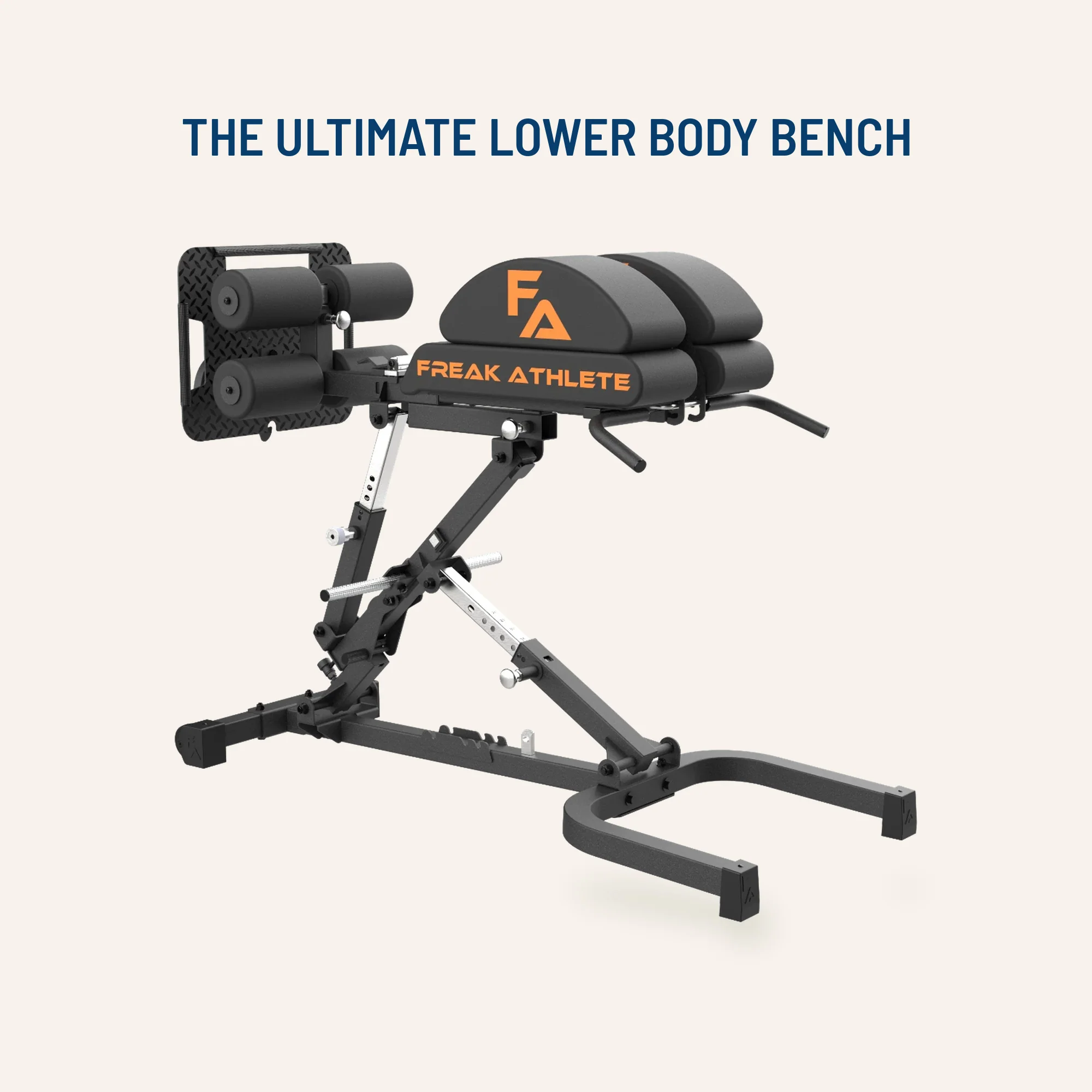


HUSLA Leg Extension Pad
Pad attachment designed to increase usable range of motion on compatible leg-extension machines.

Ultimate Power Seat
Rack-mounted power seat for lat pulldowns, leg extensions, and leg curls.

VForce 3IN1
All-in-one rack combining an adjustable Smith machine, functional trainer, and free-weight station.

A Six-Week Quad Plan That Protects Your Reps
Use the hack squat once or twice a week depending on your total lower-body workload. If you already back squat heavily, start with one hack-squat session. If it is your primary knee-dominant exercise, two moderate sessions may be easier to recover from than one enormous session. Count the hard work you also do on leg presses, split squats and extensions rather than treating every exercise as an isolated program.
Weeks 1–2: Establish the standard. Perform three sets of eight to twelve repetitions with roughly two to three reps in reserve. Rest two to three minutes between challenging sets. Use the same foot position and depth each session, and write down the load plus actual repetitions. If you finish all three sets at twelve smooth reps, add the smallest practical amount of load next session.
Weeks 3–4: Build usable volume. Continue three sets, aiming to add one or two total repetitions across the session or a modest load increase while keeping the same movement standard. Experienced lifters who recover well can add a fourth set, but that is optional. If another demanding leg workout falls within 48 hours, retain three sets rather than blindly increasing volume.
Week 5: Push controlled effort. Work in a six-to-ten-rep range for three or four sets at around one to two reps in reserve. Slightly heavier loading can be useful, but stop if the depth deteriorates or you begin relying on the bottom stops. The point is progressive tension through a controlled range, not a maximal sled test.
Week 6: Consolidate and evaluate. Return to three sets of eight to twelve with the technique and stance you established in week one. Compare repetitions at the same weight, or weight at the same repetitions and depth. If joints feel beaten up or performance has clearly dropped, reduce the number of hard sets and use the week to recover. Progress is also demonstrated by more stable execution, not only added plates.
Pair the hack squat with complementary work rather than duplicating its exact stress endlessly. A Romanian deadlift or leg curl covers more knee-flexor or hip-hinge training, while controlled leg extensions can add direct knee-extension volume. Calf training and unilateral movements can fit after the main work as long as the full session remains recoverable. For muscle gain, consistent food intake, adequate protein and sleep support what happens between sessions; no foot position can compensate for insufficient recovery.
Keep your log simple: machine, foot position, load, reps, set count, approximate reps in reserve and whether the depth stayed consistent. After six weeks, the best stance is the one you can repeat safely and progress—not the one that lets you squeeze on the most plates for a few centimeters of motion.
Bodybuilding Shirts & Workout Gear
Bodybuilding shirts, tanks and gym gear for lifters chasing muscle, size, symmetry and the pump.

No Plates No Dates | Weightlifting Meme For PRs & Gains T-Shirt
Heavy lifts, good laughs, and a little “No Plates No Dates” energy.

Barbell Crossed Weights 45LB Plate Hardcore Workout Gra T-Shirt
Show some powerlifting attitude with a playful “Classic Barbell Crossed Weights 45LB Plate” tee.

Molten Skull Crewneck Gym Wear Strength Gift Uplift Iro T-Shirt
For laid-back days and powerlifting humor: “Sweatshirt Molten Skull”.

More Plates More Dates | Weightlifting & Gains Meme Pul Hoodie
Make your off-duty look more fun with “More Plates More Dates”.

Skull & Weights 45LB Plate Skull Weight Plate Hardcore Tank Top
Add some Halloween attitude to training with “Skull & Weights 45LB Plate”.

Disco Weight Plate 45LB Plate Disco & Weights Party Wor T-Shirt
Show some powerlifting attitude with a playful “Disco Weight Plate” tee.

Preworkout – Heavy Metal Gym Shirt for Hardcore Lifters T-Shirt
Make gym days more fun with “Preworkout” style.

Pre-Workout Skull for Hardcore Lifters, Electric Bodybu Tank Top
Bring “Pre-Workout Skull” humor to your next lifting session.

Vinyl Record Weight Plate 45LB Plate Records & Weights T-Shirt
Show some powerlifting attitude with a playful “Vinyl Record Weight Plate” tee.

Iron Knight Motivational & Bodybuilders Vest Tank Top
Bring “Iron Knight” humor to your next lifting session.