Advertising disclosure: This page includes affiliate product links that may earn us a commission, as well as products from our own store.
Good mornings look simple: balance a barbell across your upper back, bow forward and stand up. But the difference between a productive hamstring hinge and an awkward lower-back grind comes down to the setup, knee bend and depth. This guide breaks down where the exercise fits, how to keep reps consistent, which alternatives make sense and how to progress over six weeks without chasing a reckless maximum.
What Good Mornings Actually Train
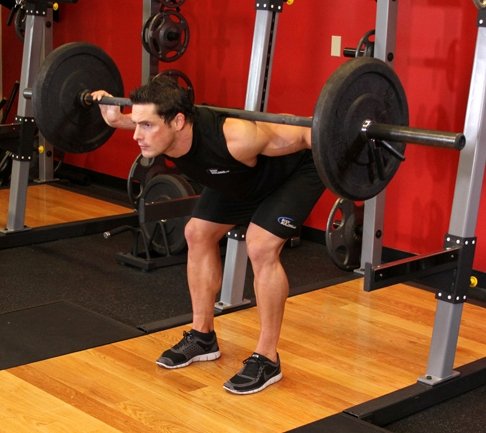
A good morning is a hip hinge with the barbell balanced on the upper back rather than hanging in the hands. That one difference changes how the weight acts on you: as your torso tips forward, the load creates a substantial turning demand around the hips and trunk. Your hamstrings and glutes help extend the hips to return you upright, while the spinal erectors and surrounding trunk muscles help maintain your chosen back position. This is why even a relatively light bar can make the exercise feel demanding.
The hamstrings cross both the hip and knee. A slight, consistent knee bend lets them contribute at the hip without turning every repetition into a squat. The glutes add hip-extension force, especially during the return. Your upper back must also hold the bar securely. None of these roles means the good morning automatically outperforms every other posterior-chain exercise for muscle growth.
Direct measurements provide context but not an unlimited promise. In one small experiment, 15 trained men performed good mornings at several percentages of their own good-morning maximum. Hamstring and erector-spinae electrical activity generally increased as the load rose. That describes immediate muscle recruitment and movement under testing conditions; it does not demonstrate superior long-term hypertrophy or justify loading to the limit of your back position.
Think of the good morning as a specialized, controllable accessory hinge. It can teach you to resist unwanted trunk motion while deliberately loading hip extension. It is not a required lift, a mandatory mobility test or a substitute for all hamstring work. If you already squat and deadlift, the most productive role is often a modest dose that builds capacity without exhausting the lower back before your main lifts.
Set the Bar, Rack and Brace Before You Hinge
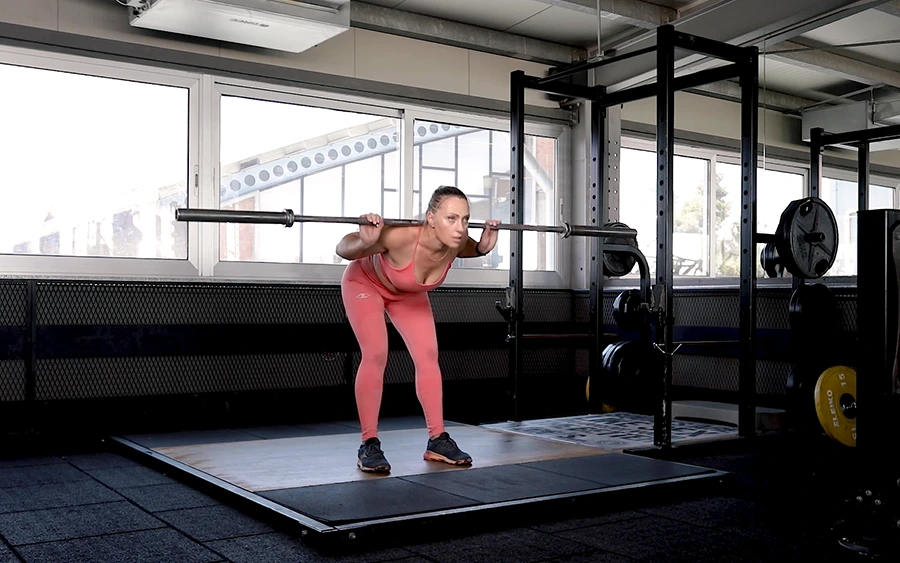
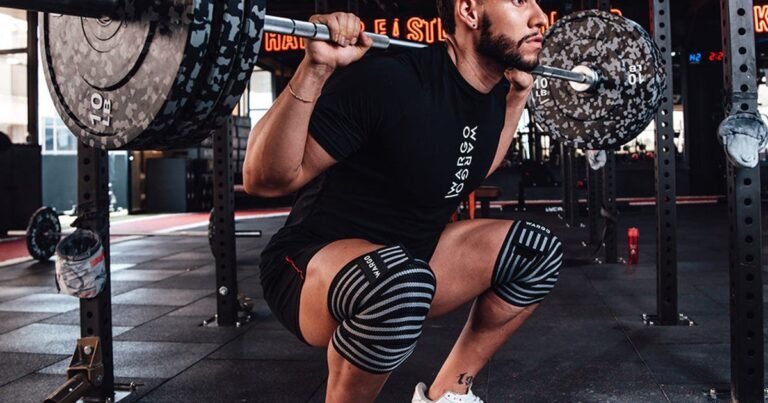
Start in a stable squat rack with the empty bar on hooks around upper-chest height. Place the bar on the muscular upper-back shelf, not directly on the neck. Grip it firmly enough to keep it from rolling, stand to clear the hooks and take only enough steps to create room. If your rack has safety arms, choose a height appropriate to the machine and the range you can control; they are a precaution, not permission to attempt a reckless maximum.
Set your feet roughly hip to shoulder width, with a stance that lets your weight stay balanced over the entire foot. Unlock the knees slightly and maintain that general amount of bend. Take a comfortable full breath, tighten the abdomen as though preparing for a firm push, and keep the ribs and pelvis organized. Your head should follow the torso rather than craning upward to stare into the mirror. Find a consistent sightline several feet ahead on the floor.
Before the first loaded rep, do five slow unloaded hip hinges. A dowel along your back can help: keep contact at the upper back and sacrum as the hips travel behind you. If you cannot feel the distinction between moving at the hips and simply folding through the waist, use an empty bar, a light band or a wall-touch drill until the pattern is predictable.

Equipment Worth Exploring
Explore equipment, accessories and gear from our carefully selected range.


Foldable Wall Rack
Wall-mounted folding squat rack designed to save floor space between workouts.

Multi Pull Smith Rack MPHR-780
All-in-one rack with a Smith machine, functional trainer, lat pulldown and low row.


Grip Plates
Rubber-coated weight plates with handholds for loading barbells and machines.


VForce 3IN1 Max
Six-post all-in-one rack with Smith machine, functional trainer, and variable-force cables.

Speed Collar
Quick-release collars designed to secure weight plates on standard two-inch Olympic bars.
Good mornings do not need a dramatic walkout. Two deliberate steps are usually enough to get clear of the hooks. Secure collars when plates are used, particularly if the bar may tilt, and verify that your shoes are stable. A barbell and rack that you can set up consistently are more valuable here than a complicated selection of attachments. The aim is to make the setup boring so you can concentrate on the hinge.
Find Your Hip-Hinge Depth Without Chasing Parallel
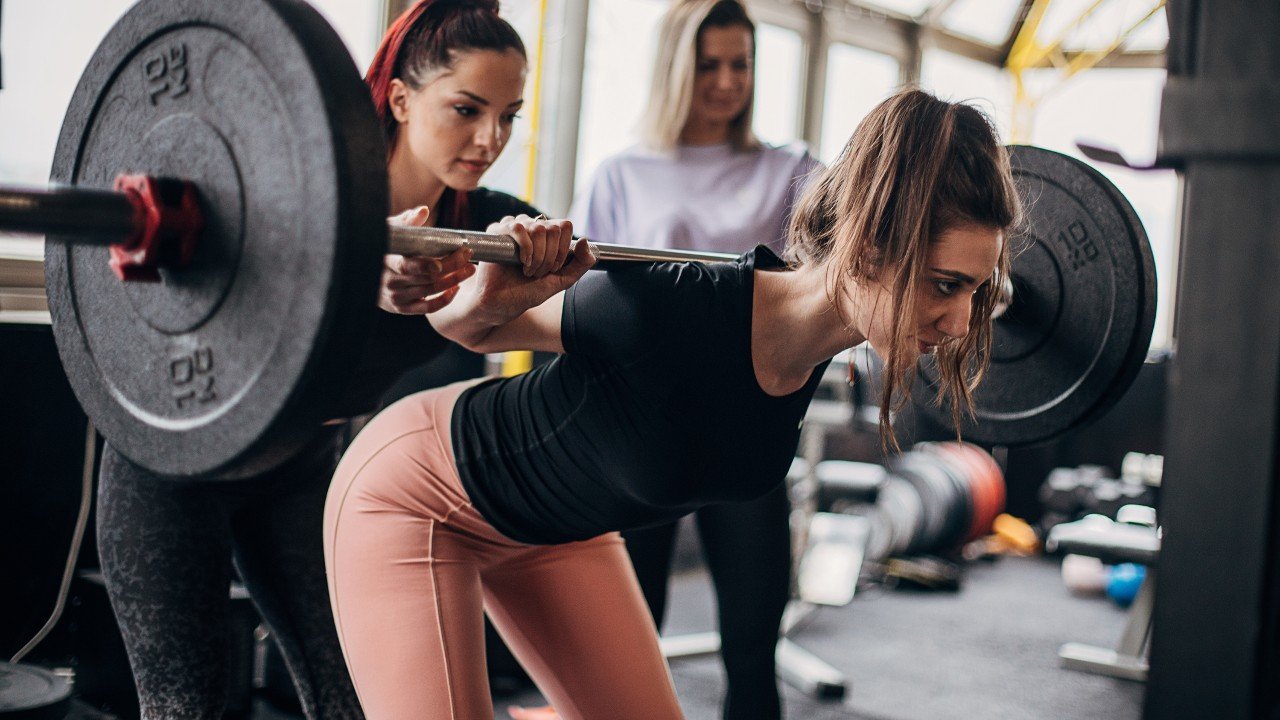
Begin each rep by pushing the hips backward as if trying to close a door with them. Let the torso lean forward because the hips are moving back, not because you are throwing the chest toward the ground. Keep the bar stable over the midfoot and the pressure distributed across the foot. A useful lowering speed is about two to three seconds for early practice; there is no prize for a sudden drop or an exaggerated pause at the bottom.
Stop where you can still control the bar, brace and back position. For many people that means the torso stays above parallel to the floor. Long femurs, short torsos, hamstring mobility and stance preferences change how the bottom position looks. Trying to copy somebody else’s depth is often a fast way to replace a good hip hinge with unwanted spine motion.
You can check your personal endpoint with two tests. First, can you pause briefly without the knees suddenly bending more to escape the hamstring tension? Second, can you reverse direction without a bounce or a visible change in lower-back shape? If either answer is no, reduce depth, load, or both. An occasional small amount of natural spinal movement is different from deliberately letting the torso collapse under weight.
Drive the feet into the floor and bring the hips forward to rise. Finish standing tall with the glutes engaged, not by leaning backward beyond neutral. Repeat the same depth on each rep. Video from the side can help you compare bar travel, knee angle and trunk control across a set. You should see the hips moving backward and forward, with a relatively stable knee bend. A comfortable stretch in the back of the thighs is useful feedback; sharp pain, tingling or radiating symptoms are reasons to stop.
What Changing Knee Bend and Load Really Does
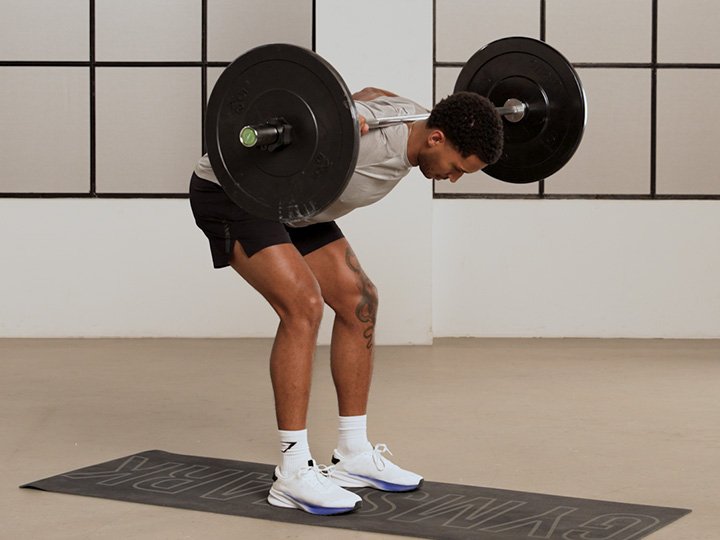
Knee position changes the feel of the good morning. With nearly locked knees, the hamstrings may limit your range early and the lift can feel harsh. With excessive knee bend, the movement can drift toward a squat-like pattern. There is no magic universal knee angle: use a small bend that remains reasonably consistent from top to bottom and allows you to hinge without losing balance.
Controlled laboratory observations of experienced lifters have shown that the amount of knee flexion and movement strategy can change with external load. In one 15-person data set, average knee flexion was roughly 17 degrees at a lighter tested load and around 25 degrees at the heaviest tested load. That is an observed response, not a recommendation to force either number. The participants were not evidence that novices should train at the higher percentages used in that experiment.
Load affects the leverage on the trunk because the bar rides on the shoulders. If your work set feels like a true maximum, it is probably too aggressive for learning the movement and may interfere with the next deadlift or squat session. Start with an empty bar or lighter training bar if needed. Progress only when all planned repetitions show the same range and control.

Powerlifting Shirts & Lifting Gear
Powerlifting shirts and gym gear for squat, bench and deadlift lifters who live for heavy numbers.

Barbell Buddies for Gym Buddies and Lifting Together Tank Top
Add some powerlifting attitude to training with “Barbell Buddies”.

45LB Metal Weight Plate Barbell Standard Lifting Hoodie
Keep it laid-back with a little “45LB Metal Weight Plate” attitude.

Gym Skull Weightlifting Design for Powerlifters Bodybui T-Shirt
Bring “Skull Weightlifting Design for Powerlifters” humor to your next gym day.

Liftionaire Money Barbell Meme Workout Bodybuilding Fit T-Shirt
For laid-back days and lifting humor: “Liftionaire”.

Be Happy Lift Heavy Happy Weights Emoji Weight Plate Hoodie
Show off your powerlifting humor in a laid-back “Be Happy Lift” hoodie.

Flaming 45LB Weight Plate Fire Barbell Lifting Workout Sticker
Put “Flaming 45LB Weight Plate” gym humor on your laptop, bottle, or gym gear.

Pink 45LB Weight Plate Barbell Lifting Apparel Tank Top
Add some gym-girl attitude to training with “Pink 45LB Weight Plate”.

Icy 45LB Weight Plate Frozen Barbell Lifting Workout Co Sticker
Put “Icy 45LB Weight Plate” gym humor on your laptop, bottle, or gym gear.

Dadlift Dads Meme Dad Strength Tank Top
Bring “Dadlift” humor to your next lifting session.

Iron Is My Therapy – Gymbro Meme , & Gains Top T-Shirt
Bring “Iron Is My Therapy” humor to your next gym day.
For a practical prescription, leave two to four clean repetitions in reserve while learning. Build confidence with six to twelve controlled reps instead of testing a one-rep maximum. If you want a heavier strength-oriented variation later, use it only after weeks of stable technique and with programming that accounts for fatigue from your other hinges. Good mornings reward repeatability much more than bravado.
Five Common Good Morning Mistakes and Their Fixes
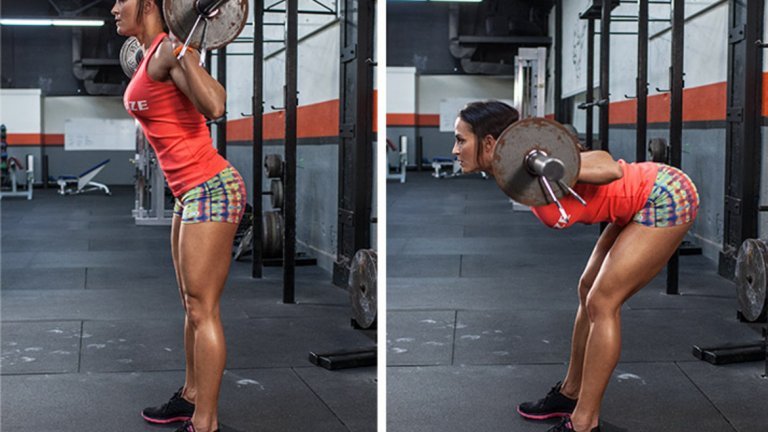
1. Resting the bar on the neck. The bar should sit on a secure upper-back shelf. If pressure is concentrated on the cervical spine, rerack it and correct placement. Changing grip width or upper-back tension may help. A thick pad is not a substitute for control because it can shift the way the bar sits.
2. Bending forward instead of moving the hips. When the hips stay in place and the chest dives, the exercise stops behaving like the controlled hinge you intended. Rehearse pushing the hips back toward a wall. Shorten the movement until you can maintain a calm trunk position.
3. Letting the knees turn every rep into a half squat. Some knee movement is natural, but a large increasing bend can hide the fact that the hamstrings have reached the intended range. Keep the knees softly bent and let the hips do most of the travel. Compare early and late reps on video rather than trying to make the knees perfectly rigid.
4. Loading before mastering the reversal. A common failure appears near the bottom: the lifter drops an extra inch, loses tension, then jerks the bar upward. Choose a lighter load and stop before the uncontrolled portion. Progress the weight only when you can reverse smoothly without a bounce or sudden head movement.
5. Treating every lower-back sensation as a target to chase. Some effort in the spinal erectors is expected. Sharp, worsening or radiating pain is not a training goal. Stop, lighten the exercise or choose a better-tolerated alternative. If symptoms persist or you have a relevant injury history, obtain individualized medical or rehabilitation advice.
Two useful coaching cues summarize the fixes: hips back until the position changes, then push the ground away and stand tall. Do not grind the final repetition to prove that your hinge is strong.
Good Morning vs Romanian Deadlift and Back Extension
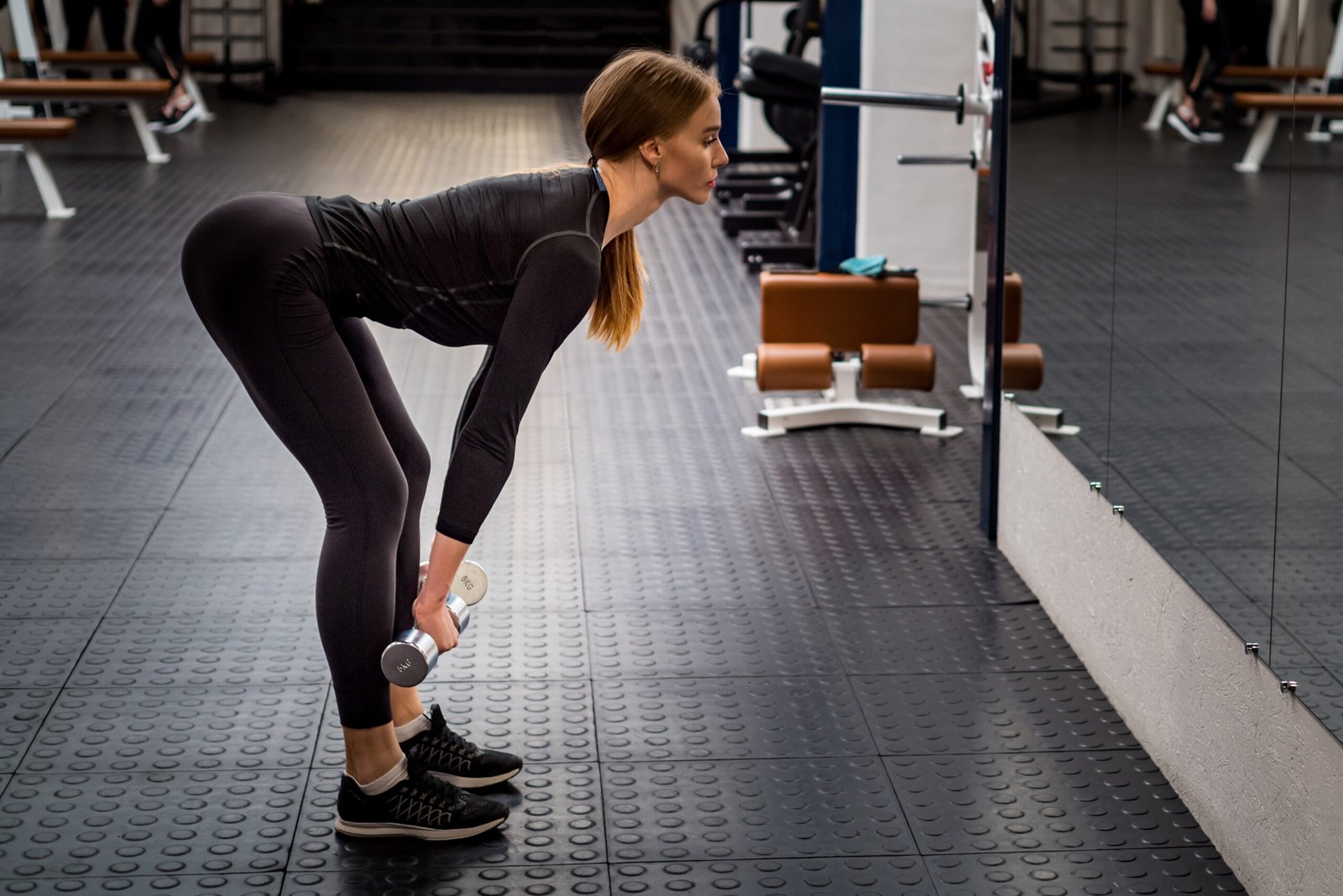
The Romanian deadlift, barbell good morning and back extension all train hip-extension patterns, but the equipment position and fatigue profile differ. In an RDL the bar hangs in your hands and travels close to the legs. That often makes it easier to adjust the weight, terminate a rep and identify the load directly through the hands. A good morning places the bar on the back, increasing the importance of bar security, balance and a consistent trunk brace.
In a small study comparing several hamstring exercises, the Romanian deadlift produced especially high hamstring electrical activity under the tested conditions. That does not automatically predict larger muscles over months: activation measurements do not replace controlled long-term training comparisons. It does suggest that you need not insist on heavy good mornings to get useful posterior-chain work.
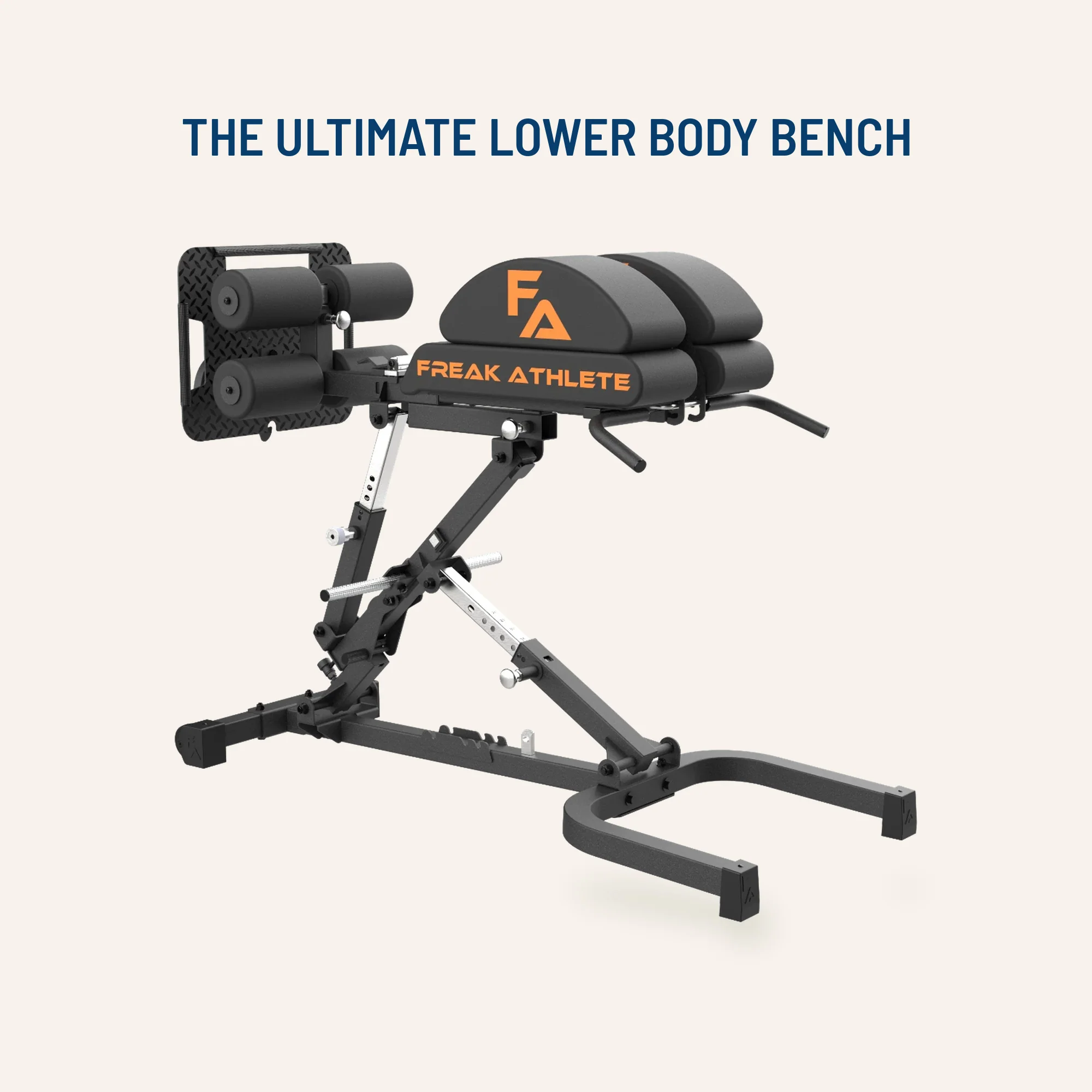
A 45-degree back extension supports the body at the hips or thighs and may be easier for lifters who want to keep a bar off the back. It can emphasize glute and hamstring extension when performed by moving at the hip with controlled spinal position. A glute-ham raise or Nordic-style curl adds more knee-flexion work and can complement hip-hinge training rather than imitate it.
Use this decision rule: pick the exercise that you can perform consistently, recover from and progress alongside your other lifts. Choose RDLs if you prefer holding the load and need easy weight adjustments; good mornings if a coached, bar-on-back hinge fills a specific gap; back extensions when you want a simpler supported option; and curls or Nordics for additional hamstring work at the knee. None deserves top billing in every program.
Equipment Worth Exploring
Explore equipment, accessories and gear from our carefully selected range.

45° Hyperextension HPX-650
Angled back-extension trainer with split padding, a ribbed footplate and resistance-band pegs.

Glute Ham Developer GHD-820
Adjustable glute-ham developer with contoured pads and a fold-out knee support.


Leg Extension/Curl BCO-780
Leg extension and lying leg curl combo with plate loading, band pegs and a cable-loading option.

Open Hex Bar
Open-frame trap bar with multiple handles for deadlifts, carries, and lower-body training.


Cast Iron Kettlebells
Textured cast-iron kettlebells for swings, squats, carries, and full-body training.

Rubber Hex Dumbbells
Rubber-coated hex dumbbell pairs with a stable shape for home and commercial strength training.
If deadlifts are already a major session priority, put demanding good mornings afterward or on another day. Placing them immediately before your heaviest pulls can fatigue the same spinal stabilizers and change technique in the lift that matters most to you. Track total hinge exposure, not only how heavy the good-morning bar gets.
Good Morning Variations and a Six-Week Progression
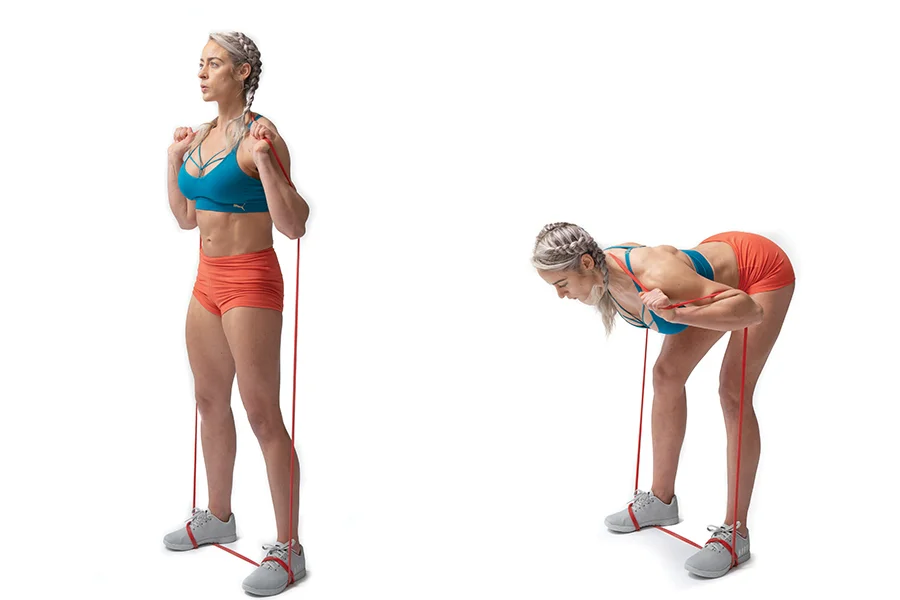
A light resistance band can teach the hinge without requiring a heavy bar on your shoulders. Stand securely on the band and hold it over the shoulders according to its design, keeping it away from the throat. Band resistance typically rises as you stand, so the bottom and top feel different from a barbell. Use the variation as practice, not as proof you have mastered heavy external loading. A seated good morning is a separate specialized variation with less contribution from the legs; it is not the easiest substitute for an inexperienced lifter.
Here is a conservative six-week example for someone already comfortable with an unloaded hinge and basic barbell training. The sets below are working sets after easy warmups, and each repetition should retain your chosen depth and trunk position. Leave room for your other lower-body sessions and skip the barbell version if it aggravates symptoms.
| Weeks | Good morning work | Progression focus |
|---|---|---|
| 1–2 | 2 sets of 10, light bar | Repeatable hinge depth, steady brace and smooth reversal |
| 3–4 | 3 sets of 8–10 | Add reps first; small load increase only if every rep matches |
| 5 | 3 sets of 8 | Modest increase with two or more clean reps in reserve |
| 6 | 2–3 sets of 6–8 | Consolidate technique; no maximum test required |
Train the good morning once or twice a week with at least a day or two between demanding hinge sessions, adjusting for squat and deadlift volume. Start with two or three minutes of rest if needed to reset your brace. An example lower-body day could be squats, controlled good mornings, a knee-flexion hamstring exercise and calves. On a separate day, use RDLs or another hinge only if fatigue and soreness remain manageable.
Record the bar weight, reps, approximate reps left in reserve, exercise depth and any unusual discomfort. If a session’s last reps shorten or turn into knee-driven half squats, repeat the current load rather than progressing. If a lighter band or supported back extension provides better training, use that instead.
Leg Day Shirts & Workout Gear
Leg-day gym shirts and workout gear for lifters who never skip squats, lunges and lower-body punishment.


I Love Deadlifts Gym | Pink Heart Weight Plate Funny Wo Sticker
Put “I Love Deadlifts” gym humor on your laptop, bottle, or gym gear.

Deadlifts & Dragons Fantasy Swoleplaying Game T-Shirt
Make gym days more fun with “Deadlifts & Dragons” style.

SIUUU Deadlift Cristiano Ronaldo Meme Sweater T-Shirt
For laid-back days and deadlift humor: “SIUUU Deadlift”.


Leg Day Gains | LEGO Inspired Workout For Squat & Deadl Hoodie
Stay casual and show some leg-day attitude with “Leg Day Gains”.


Gym Sworn to the Iron Oath Medieval Knight for Heavy Li Hoodie
Show off your medieval humor in a laid-back “Sworn to the Iron Oath Medieval Knight” hoodie.

Praise The Deadlift Holy Lifting Meme , & T-Shirt
Show some deadlift attitude with a playful “Praise The Deadlift” tee.
The successful six-week outcome is not a heroic personal record. It is six weeks of controlled, gradually more capable hip hinges that leave you ready for the rest of your strength program. Let posture, useful range and recovery determine the next step—not the number of plates on the bar.