Advertising disclosure: This page includes affiliate product links that may earn us a commission, as well as products from our own store.
The French press looks simple: take an EZ curl bar overhead, bend your elbows, then straighten them. In practice, the difference between a productive triceps set and an awkward one is usually not the weight. It is the bar’s starting position, the path behind your head, and whether your shoulders let your upper arms stay reasonably stable. A seated French press also feels different from a lying skull crusher, even though people often use the names interchangeably. Here is how to choose the variation, make it comfortable, and progress without turning an isolation exercise into a dangerous balancing act.
What the French press is really training
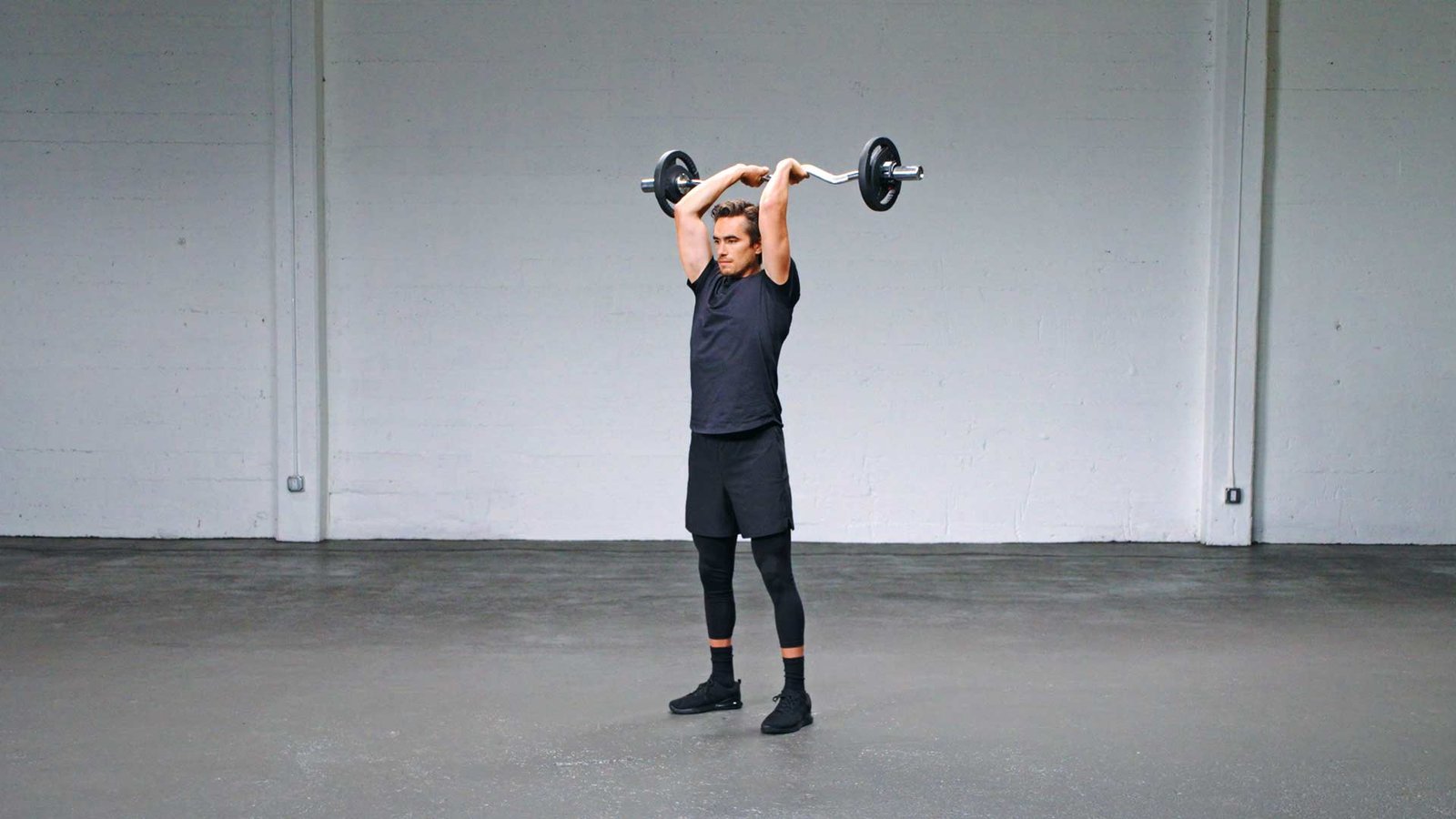
A French press is an elbow-extension exercise performed with your upper arms raised, commonly with an EZ bar and commonly seated. Your triceps straighten the elbow while your shoulders and torso hold the upper arm in position. The long head of the triceps crosses both the elbow and shoulder joints. Raising the arm overhead changes its length at the shoulder, so a controlled elbow bend can load it in a relatively lengthened position. The lateral and medial heads remain involved: there is no version that switches them off.
The precise label matters less than the movement. In an overhead French press the bar travels behind the head; in a classic lying skull crusher it often travels toward the forehead. Some lifters call a lying extension with the bar moving behind the head a French press as well. This terminology explains why two exercise demonstrations with the same title can look surprisingly different. Before copying a set, check the torso angle, shoulder angle and bar path rather than assuming identical stimulus.
Direct triceps training can complement bench presses and overhead presses because those compound lifts involve chest, shoulders and stabilizers too. That does not guarantee the French press automatically improves your pressing lockout. A stronger triceps may help when elbow extension is genuinely the limiting factor, but changes in bench technique, programming and total training volume also matter. Treat this as an accessory selected for its manageable stimulus, not as a secret substitute for pressing practice.
There is useful evidence for training overhead. In one small 12-week MRI-based study, participants performing cable triceps extensions with their arms overhead experienced greater triceps growth than participants training with their arms in a neutral position. The finding supports taking shoulder position seriously. It did not compare EZ-bar French presses against skull crushers, and it does not prove that any single grip or depth is universally superior.
Set up a seated EZ-bar press before the first rep
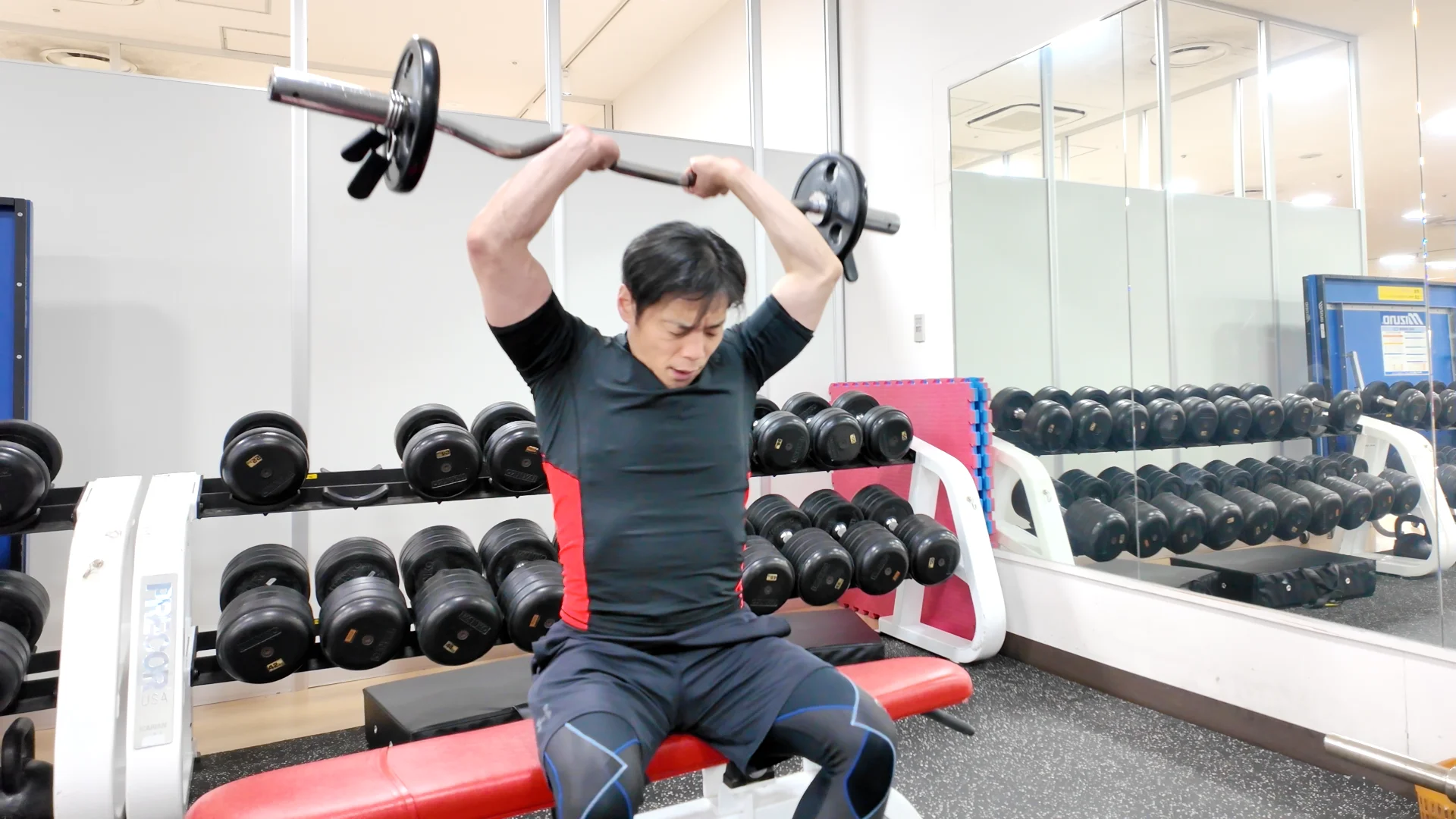
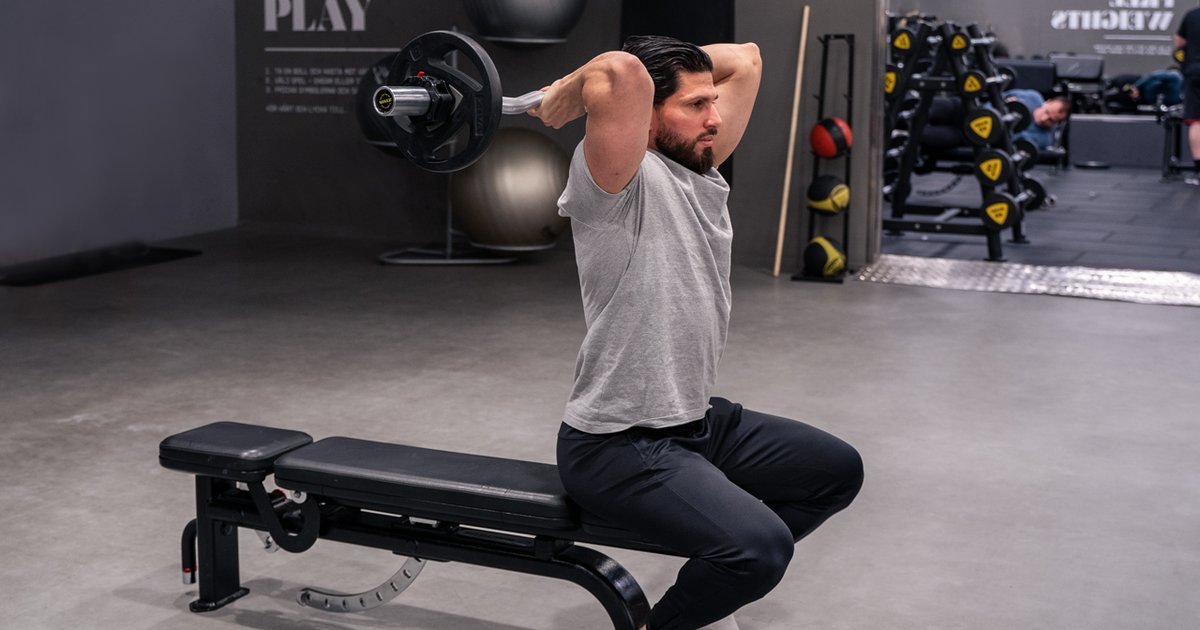
Begin with a light EZ bar, a stable bench and enough clearance behind your head. A back-supported bench may make it easier to control your ribcage, but a flat bench is perfectly workable if you can remain upright. Place your feet firmly on the floor. If the bar is too heavy to bring overhead in a controlled manner, the set is already too heavy for this setup; a partner-assisted handoff or lighter implement is a better solution than wrestling it into position.
Take the angled inner grips using a secure, closed overhand grip. The angled bar can feel more natural at the wrists than a completely straight bar, but comfort differs by anatomy and grip width. Press the bar overhead from in front of your body, with a stable wrist and the bar clear of your skull. Keep your ribs gently down and your abdomen firm. Do not push the hips forward, turn the torso into a dramatic arch, or chase an exaggerated upright upper-arm position that your shoulders cannot tolerate.
To start the repetition, bend primarily at the elbows and guide the bar down behind the head. Let the upper arms remain relatively quiet instead of swinging forward on every lowering phase. Descend until you feel a substantial but comfortable triceps stretch, not until the bar hits your neck or the plates threaten the bench. Briefly control the bottom; then extend the elbows to return overhead. You can reach a natural, controlled near-straight position at the top without snapping or hyperextending the joints.
A useful first workout is two easy practice sets of 10–12, followed by two working sets of roughly 8–15 controlled repetitions. Keep several good repetitions in reserve until the movement path feels predictable. Log the bar’s total loaded mass, not just the plates, because fixed EZ bars and rackable curl bars can differ considerably in their unloaded weight. If the bar repeatedly drifts toward your face, reduce load and reset the start rather than trying to save the repetition with your neck.

Equipment Worth Exploring
Explore equipment, accessories and gear from our carefully selected range.


EZ Curl Barbell
Olympic EZ curl bar with angled grips for curls and triceps exercises.

FID Bench MAX
Adjustable bench offering flat, incline, and decline positions + adjustable headrest.

Multi Bench MBX-650 2.0
Adjustable multi-bench with roller adjustment, 15 backrest positions and accessory mounts.


Grip Plates
Rubber-coated weight plates with handholds for loading barbells and machines.

Speed Collar
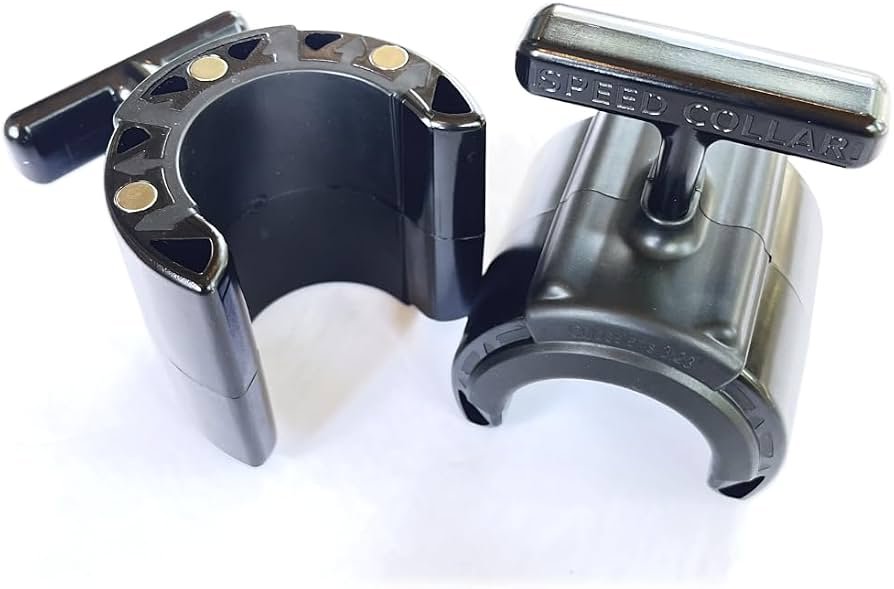
Quick-release collars designed to secure weight plates on standard two-inch Olympic bars.

Elbow position, wrist comfort and shoulder range
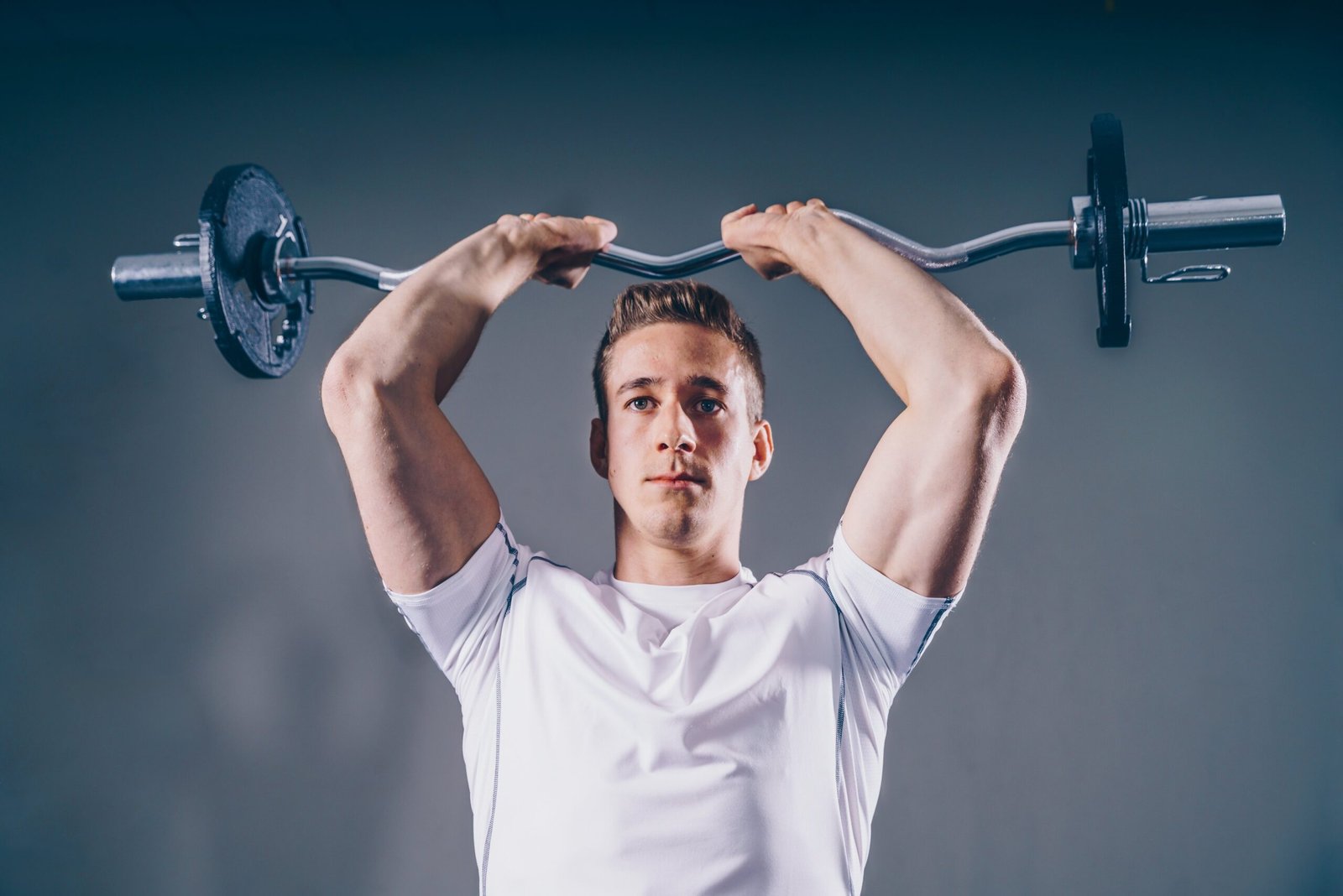
Good technique does not mean welding the elbows to an invisible rail. Your upper arms may move slightly as the joint finds a comfortable path, especially with longer forearms or limited overhead shoulder range. Aim for consistent, controlled motion with elbows generally pointing upward and forward. Excessive outward flaring, large shoulder swings or a sudden elbow collapse are clues that the bar is too heavy, the range is too ambitious, or the variation is wrong for you today.
Grip width is a practical experiment, not a competition to squeeze your hands together. Try a moderate narrow grip on the EZ bar’s slanted sections, then move a small distance outward if your wrists feel twisted or your elbows pinch. The useful criterion is that you can keep the wrists stacked, avoid dropping the bar toward the back of the neck, and repeat the same path for multiple reps. A closer grip does not automatically deliver more long-head growth, and painful joint angles offer no bonus muscle-building effect.
Watch the ribs, too. If your torso arches hard to get your hands overhead, you may have turned a triceps isolation lift into a lumbar-extension challenge. Lower the weight, lean back against a supportive pad if comfortable, or select a cable or single-dumbbell variation. A little natural movement is not failure; losing the ability to control where the bar is going is. Train to a range of motion you own rather than forcing a textbook silhouette.
Elbow discomfort can also reflect training dose. The French press places loading through a deep elbow bend, and doing multiple heavy triceps variations after a long pressing session may exceed what your elbows currently tolerate. Start with controlled 8–15-rep sets, avoid abrupt load jumps, and give the elbows enough recovery. Sharp or persistent pain is a reason to stop the aggravating movement and seek an individual assessment if it does not settle, not a signal to chase an even deeper stretch.

Bodybuilding Shirts & Workout Gear
Bodybuilding shirts, tanks and gym gear for lifters chasing muscle, size, symmetry and the pump.

Every Day Is Arm Day
Make gym days more fun with “Every Day is Arm Day Octopus Gym Meme” style.

Top Guns Muscle Shirt Huge Muscles Air Swole Meme Top T-Shirt
Make gym days more fun with “Top Guns” style.

Pumpeye Sweater Forearm & Grip Training Popeye Meme T-Shirt
For laid-back days and bodybuilding humor: “Pumpeye”.

Guns Gains Glory Eagle , Gymbro & T-Shirt
Show some powerlifting attitude with a playful “Guns Gains Glory” tee.

I Love Gym Bicep Heart | Bodybuilding Meme Pullover For Hoodie
Bring “I Love Gym Bicep Heart” gym humor to lazy days and post-workout plans.

Funny Guns N Poses Gym – Rock Music Posing Meme Decal f Sticker
A fun “Guns N Poses” touch for bottles, laptops, and lockers.

Dost Thou Even Curl Tank
Bring “Dost Thou Even Curl Medieval Knight Bicep” humor to your next lifting session.

Gym If You're Reading This It's Arm Day Drake Parody & T-Shirt
Bring “If You're Reading This It's Arm Day Drake” humor to your next gym day.

Big Guns Rock Gym Funny Workout Muscle Shirt Who Love R Tank Top
Bring “Big Guns Rock” humor to your next lifting session.

Deez Guns Nutcracker | Christmas Bodybuilding Meme Swea T-Shirt
Bring “Deez Guns Nutcracker” humor to your everyday gym style.
Seated, standing and lying French presses are different tools
The seated overhead version generally makes it easier to notice upper-arm movement because your base of support is stable. Add a back pad if you tend to arch when the bar passes behind your head. The standing version asks more from your balance and trunk bracing, and can work well when there is no convenient bench. Neither is automatically a superior muscle-builder. Compare how cleanly you maintain the elbow path and what your shoulders tolerate, rather than comparing the same plate load across two positions.
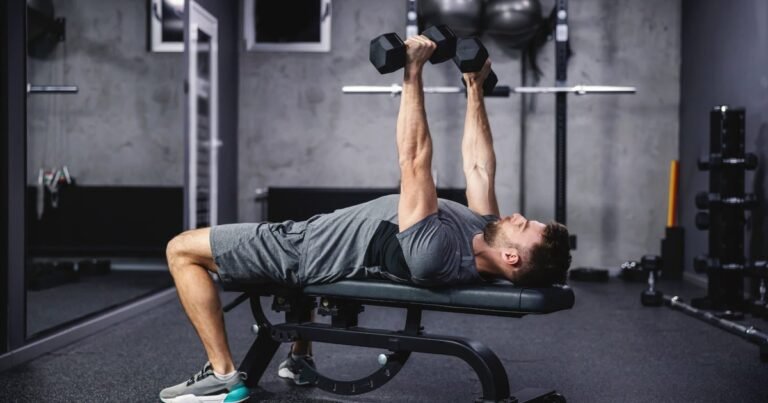
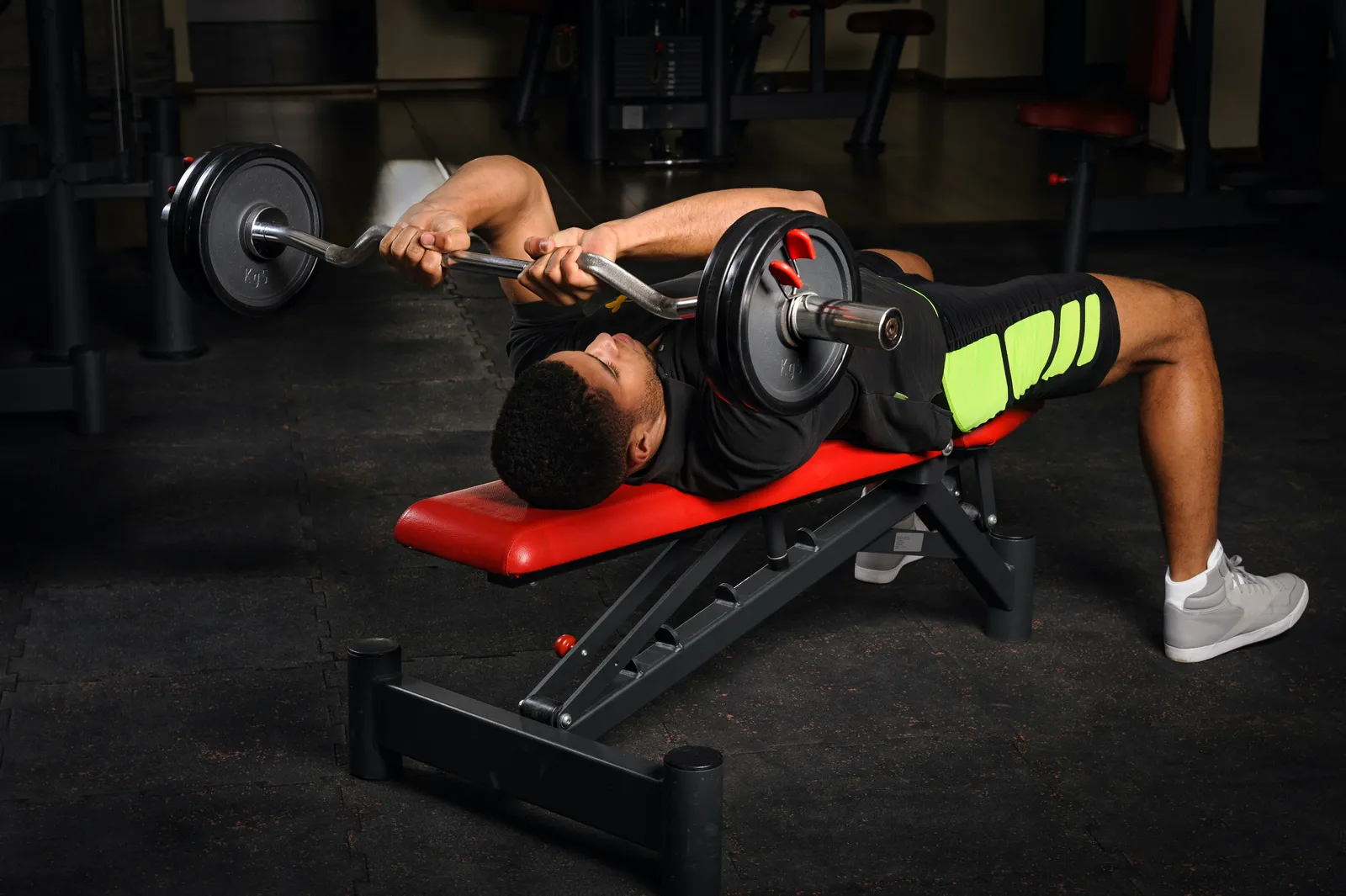
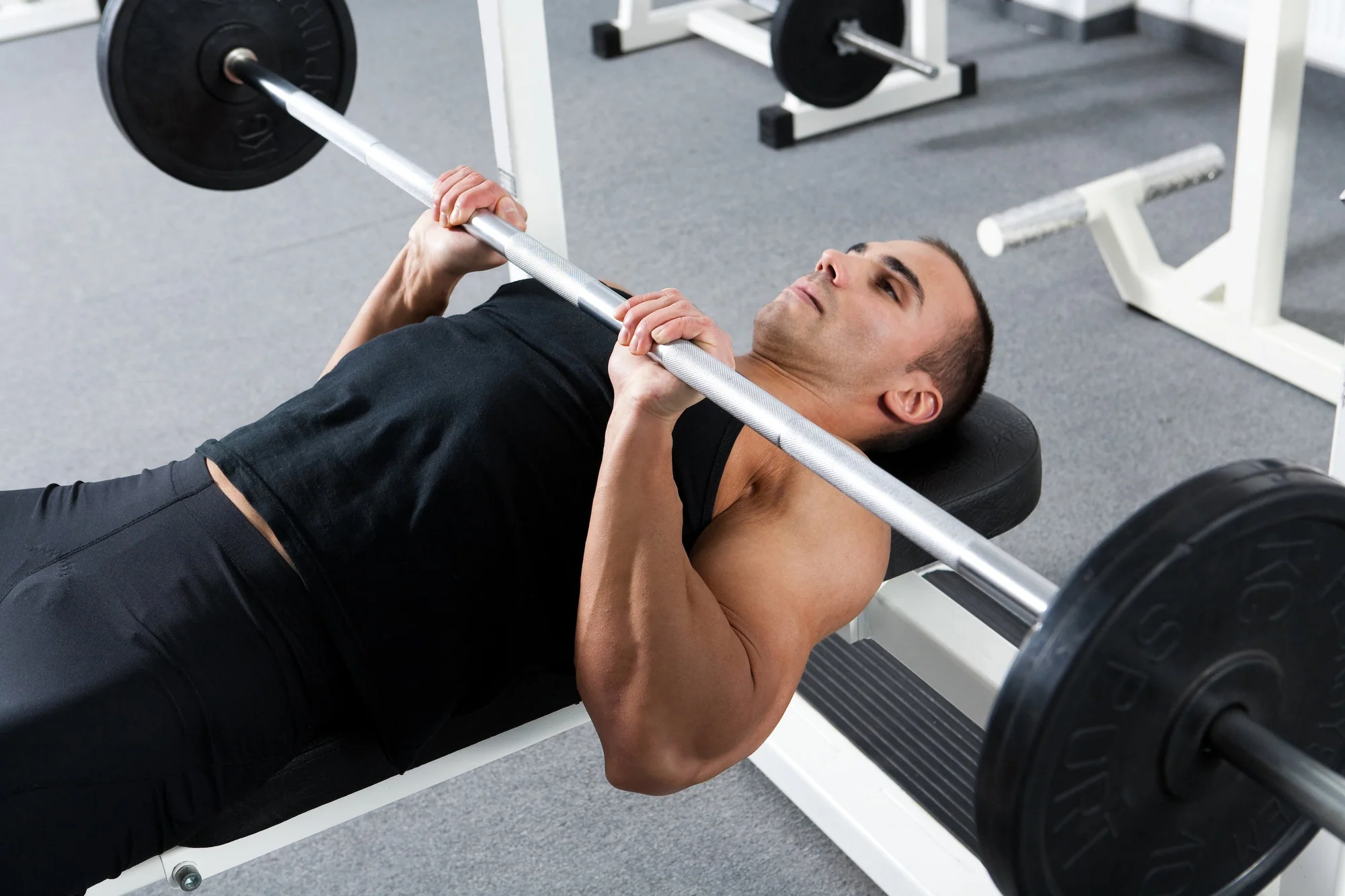
The lying version changes the relationship between gravity and your shoulder. Bringing the bar behind the head instead of straight toward the forehead can keep the arms angled backward and change where the exercise feels hardest. A conventional skull crusher with upper arms nearly vertical and a bar headed toward the forehead is a related elbow-extension movement, not an exact copy. If you prefer a lying setup because it feels safer or lets you keep the elbows quieter, that is a legitimate choice.
These positions also complicate claims about the best stretch. The long head spans the shoulder and elbow, but the actual training stimulus depends on joint angles, external moment arms, exercise resistance, and effort. A barbell’s resistance is set by gravity; the torque around the elbow changes as the bar moves even if the plates weigh exactly the same throughout. A cable can load a different portion of the movement because its line of pull differs. This is why counting repetitions alone cannot tell you whether two French press variations were identical training exposures.
Use simple decision rules. Choose seated if back support improves consistency; standing if overhead mobility and trunk control are comfortable; lying if the free-weight path feels steadier; or a cable if the joint angle and resistance curve suit you better. Film a light set from the side if you are unsure whether the elbows or shoulders are doing most of the work. An accessory is only useful when you can repeat it consistently enough to measure progress.
Equipment Worth Exploring
Explore equipment, accessories and gear from our carefully selected range.
VOLTRA
Compact digital cable trainer with smooth, adjustable resistance.

VForce 2IN1
Half rack and pivot-arm functional trainer with switchable 1:1 and 2:1 pulley ratios.

Long Tricep ERGO Ropes
Extended triceps ropes with ergonomic grips for cable pressdowns and overhead extensions.

Multi-Length Tricep Strap
Adjustable-length cable strap for triceps, biceps and upper-body cable exercises.
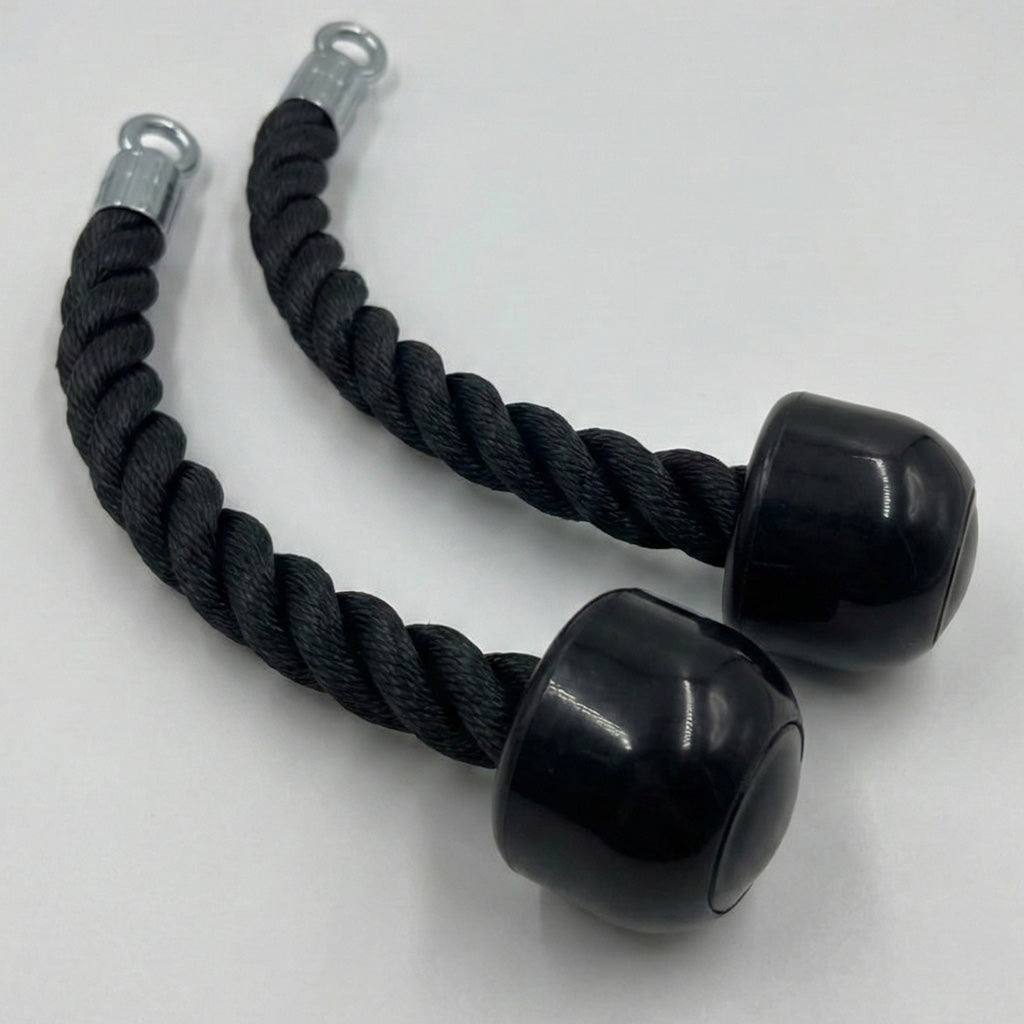
Individual Tricep Ropes
Pair of individual cable ropes for triceps pressdowns and cable hammer curls.


Rubber Hex Dumbbells
Rubber-coated hex dumbbell pairs with a stable shape for home and commercial strength training.

GymPin Ergo Handles
Pair of ergonomic cable handles shaped for comfortable triceps and pulling exercises.

VForce Wall Trainer
Space-saving wall-mounted functional trainer with pivoting cable arms and variable resistance ratios.
When to switch to dumbbells or cables
The EZ bar is convenient because it loads both arms together and usually offers comfortable angled grips. Its limitation is the fixed distance between your hands. If one shoulder needs a slightly different angle, both arms still have to follow the same bar. A single dumbbell held with both hands can let you adjust hand position, but a large dumbbell may become awkward behind the head. Individual dumbbells can give each arm a freer path, though stabilizing them independently is demanding.
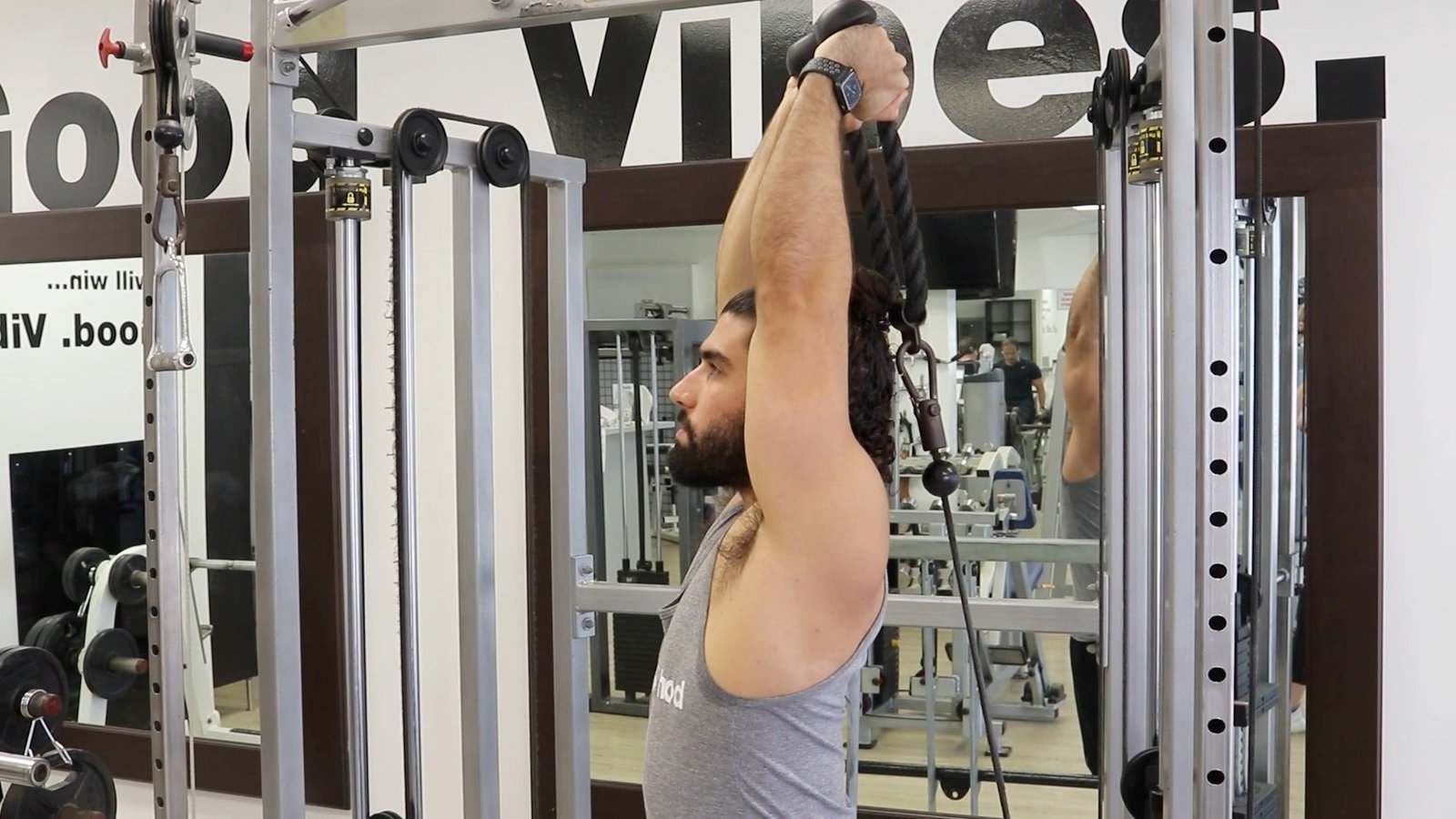
An overhead cable rope extension is another option: set the pulley low enough to maintain tension when you extend the elbows, face away from the machine, and adopt a stable staggered stance. Keep the cable clear of your head and avoid drifting your shoulders with every rep. The rope lets the hands separate slightly at the top, which some wrists appreciate. You still need to compare the available range and manage the cable’s pulling direction; calling the tension perfectly constant at the joint would oversimplify how leverage works.
There is also no need to treat the overhead press as compulsory. If shoulder flexion itself aggravates a joint, a pushdown performed beside the torso can train all three triceps heads while using a different shoulder position. A close-grip bench press or dip offers a heavier compound pattern, but those introduce meaningful chest, shoulder and stabilization demands. Picking among them should reflect your goal, comfort, available equipment and current recovery, not a myth that only one exercise builds triceps.
A sensible accessory pair is one overhead extension and one pushdown or pressing variation, provided total weekly volume is appropriate. Alternating tools between training blocks can reduce boredom and give troublesome joints another angle without pretending that constant exercise variation is required for growth. If using a cable attachment, verify the carabiner is closed and the weight path is clear. If using a free bar above your head, use secure collars, a manageable load and a safe way to end the set.
A six-week progression that respects your elbows
Put the French press after your primary presses on an upper-body or arm session, when the priority is controlled triceps work rather than maximal bar speed. A practical starting dose is two working sets twice weekly, with 8–15 repetitions per set and at least one or two high-quality repetitions left in reserve. Experienced lifters may use more total direct triceps sets, but remember that benching, dips and other presses already provide elbow-extension work. Additional exercises add fatigue as well as stimulus.
Weeks one and two: choose a version that feels stable and learn a repeatable bottom position. Use the same bench and grip for both weeks, 2 sets per session, and keep 2–3 good repetitions in reserve. Note any elbow or shoulder irritation the following day. If you reach the top of your rep range without altering the arc, you have earned a small progression; if the final reps become back-bending body English, keep the load unchanged.
Weeks three and four: work toward the upper end of your chosen rep range. For example, a bar you can extend for 10 clean reps might become 12 or 13 without additional plates. When both sets reach the top of the range at a similar effort level, add the smallest available increment. Because the long arm of the lever makes even small weight increases noticeable, a one- to two-kilogram change may be more sensible than a dramatic jump. Use the same controlled lowering tempo rather than speeding up to claim a new personal record.
Weeks five and six: keep the technique standard and evaluate whether a third set is justified by recovery and progress, not by an arbitrary promise of growth. An extra set is not mandatory. If your elbows are irritated or your pressing performance is falling, reduce direct isolation volume and test whether the problem resolves. If recovery is good and reps are progressing, maintain the routine. Rest roughly 90–150 seconds between tougher sets, longer if breathlessness or poor stability is limiting the next attempt.
Record three things: the actual bar or dumbbell mass, repetitions completed with the same range of motion, and a simple effort or discomfort note. This is especially important if you rotate between a cable, a loaded EZ bar and fixed-weight bars. Their numbers are not interchangeable. Progress means producing more controlled work over time, not merely holding a heavier implement above your head. Most lifters will get more from a modest load they can repeat than a spectacular but erratic set.
Funny Gym Shirts & Workout Gear
Funny gym shirts, tanks, hoodies and workout gear for lifters who like training hard.


Iron Is My Therapy – Gymbro Meme , & Gains Top T-Shirt
Bring “Iron Is My Therapy” humor to your next gym day.

Lift Heavy Be Happy Meme Bros & Gains Top T-Shirt
Show some powerlifting attitude with a playful “Lift Heavy Be Happy” tee.

Forged In Iron Shirt – Essential & Top T-Shirt
Heavy lifts, good laughs, and a little “Forged In Iron” energy.


Body Under Construction Meme , Gymbro Top T-Shirt
Bring “Body Under Construction” humor to your next gym day.

Mind Muscle Perfection Embroidered Brain and Biceps Gym Hat
A playful “Mind Muscle Perfection Embroidered Dad” cap for workouts and weekends.

Anti Social Lifting Club – & – T-Shirt
Make gym days more fun with “Anti Social Lifting Club” style.

Shirt – I'M Strong Barbell Heartbeat , Gymbro , & T-Shirt
Bring “I'm Strong Barbell Heartbeat” humor to your next gym day.
The French press earns its place when it lets you train the triceps through a comfortable overhead range while controlling the bar, elbows and ribs. Seated, standing, lying and cable versions are options, not stages in a hierarchy. Pick one you can set up safely, build repeatable reps, and let evidence about training position inform your choices without overclaiming what any single study has shown.