Advertising disclosure: This page includes affiliate product links that may earn us a commission, as well as products from our own store.
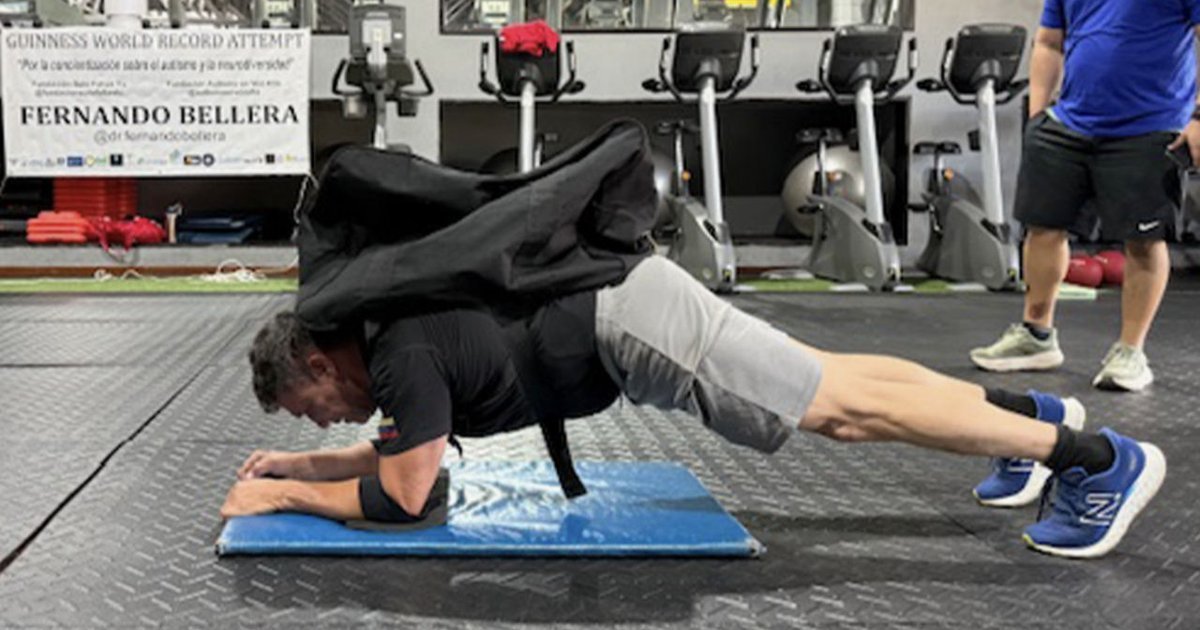
Fernando Bellera’s 6-minute, 52-second abdominal plank with a 200 lb pack is a striking strength-endurance feat. The Venezuelan neurosurgeon’s January 27, 2026 performance in Valencia involved roughly 90.7 kg of external load. That is an entirely different task from holding an ordinary plank for a little longer.
The useful question for most lifters is what this specialised achievement actually measures. A record can make an exercise interesting without becoming a sensible training prescription. Bellera’s performance offers a good starting point for understanding load, leverage, breathing and the difference between practising a test and building a useful core routine.
1. Read the event before comparing the time
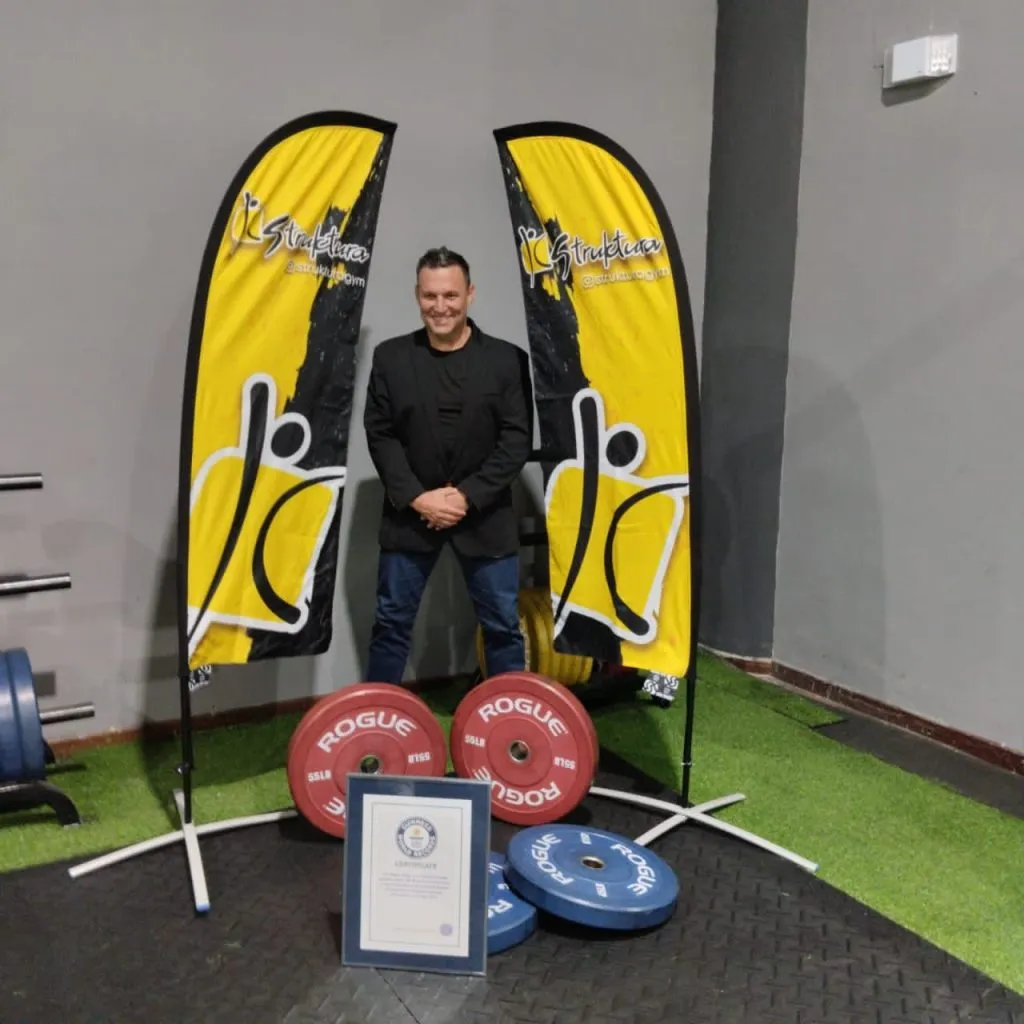
Bellera’s event combines a defined pack weight with a timed abdominal-plank position. His 6:52 belongs to that combination. It should not be placed on a leaderboard beside an unloaded hold, a straight-arm plank or a maximum-weight attempt as though the only difference were effort. Change the support position, resistance or rules and you change the test.
His earlier recorded holds were 6:15 in 2023 and about 6:33 in 2024. Those dates matter: this is a look at an established progression, rather than a claim that the January performance happened this week. The achievement is impressive without exaggerating its recency or calling every version of a plank the same record.
For your own training log, borrow the specificity. Write down whether you used your toes or knees, where your elbows sat, the surface, any external resistance and what ended the set. A timer reading without those details is difficult to interpret. Forty seconds with a consistent position and breathing pattern is more useful feedback than a longer hold obtained by repeatedly changing your body shape.
Filming an occasional set from the side can help establish a repeatable standard. Decide before starting what counts as the finish: losing the intended position, being unable to maintain breathing, or reaching the planned duration. Otherwise, today’s apparent personal best might simply be a different exercise. That is a measurement problem, even when the effort feels harder.
2. Weight and leverage create different challenges
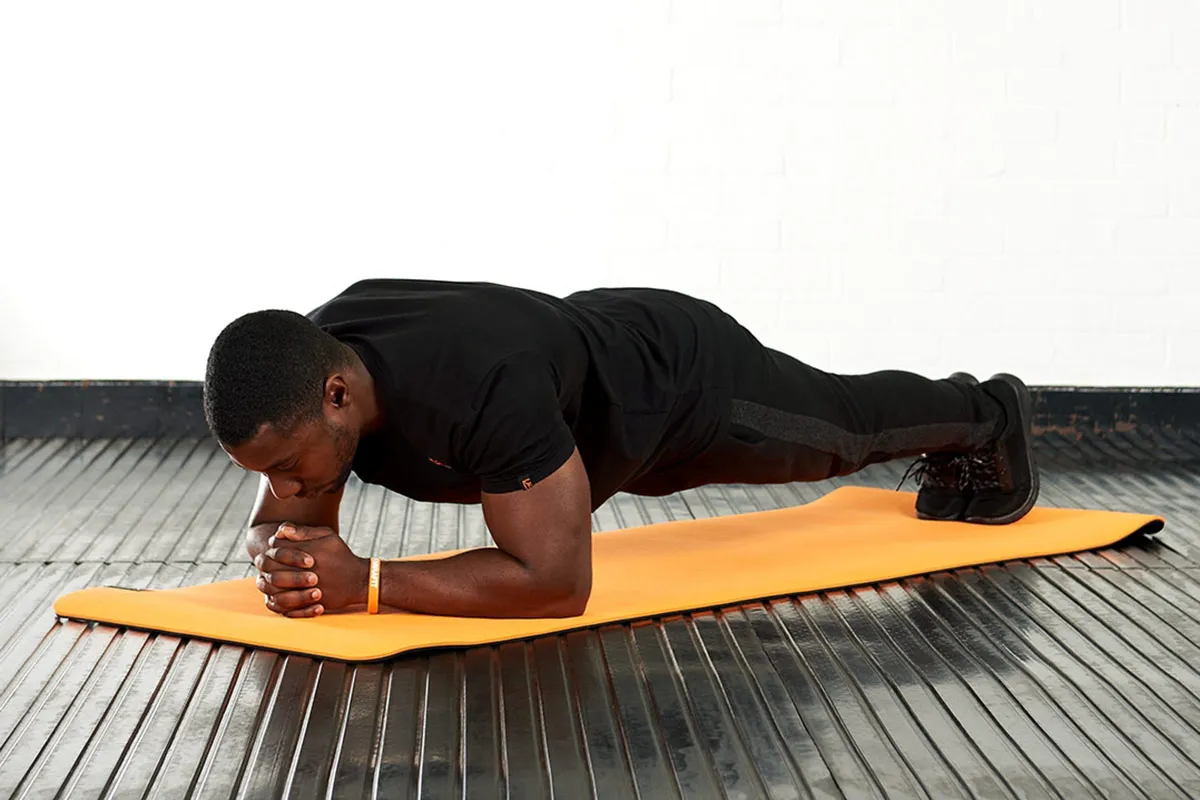
A plank asks you to support your body between contact points while resisting unwanted movement. The muscles around your trunk work alongside your shoulders, hips and legs. Adding a pack changes the external forces; moving the elbows changes the geometry. Both can make a hold harder, but they are not interchangeable units of difficulty.
Think about two otherwise similar attempts. In one, the elbows remain beneath the shoulders and the person adds resistance. In the other, the person keeps bodyweight alone but places the elbows farther forward. The second version lengthens the lever. A shorter time in that position does not automatically mean someone has become weaker. It may mean the chosen variation asks more of them.
A small experiment involving 19 people compared four plank variations in short holds. Combining a longer lever with a posterior pelvic tilt produced higher measured activation in several abdominal regions than the traditional version. That is evidence about muscle activity during those tests. It does not establish a universally best plank, prove greater long-term muscle growth, or tell us how to prepare for Bellera’s loaded event. Our guide to long-lever planks and the 19-person study explains that distinction in more detail.
For practical progression, keep the comparison clean. If you alter the lever, establish a new baseline before extending the hold. If you eventually use external resistance with suitable coaching, record its placement as well as its mass. A shifting bag and an evenly secured load can create different demands. A photograph cannot reveal every force involved, and a heavier object is not automatically a better training tool.
3. Breathing is part of the standard
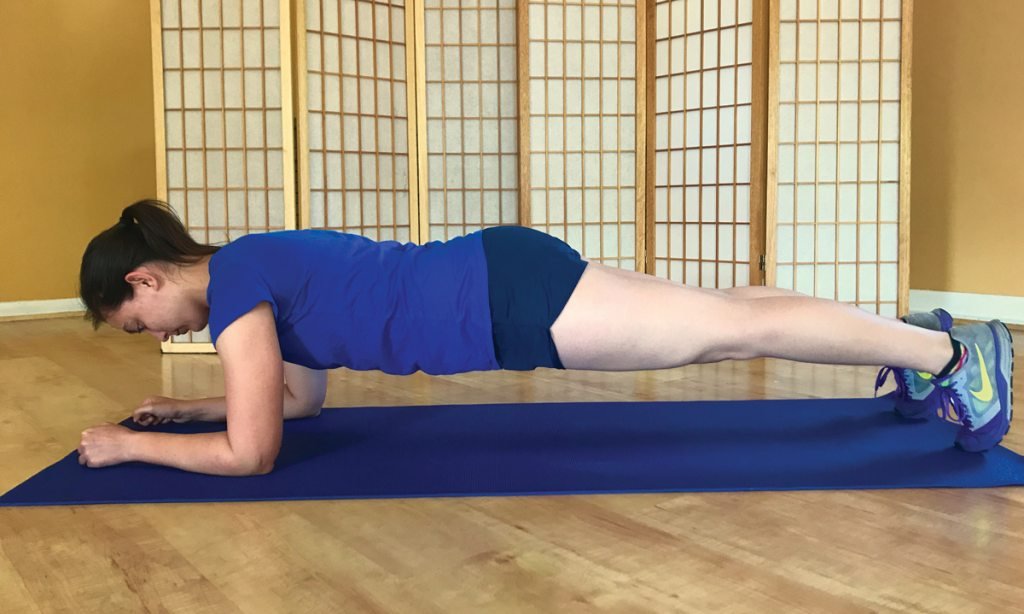
For an ordinary core session, choose a plank you can hold while continuing to breathe. Start with the elbows under the shoulders, extend through the legs and create a steady torso position. Keep your head comfortable rather than lifting your chin to watch a timer. End the hold when maintaining that position becomes a struggle you cannot control.
Some muscular effort is expected. The question is whether you can maintain the task you intended. If the hips rise every few seconds, the lower back progressively arches or breathing becomes a prolonged strain, the useful set may already be over. Adding time after that point makes the log less consistent. Reducing the difficulty lets you practise the actual skill again.
Breath-holding during strenuous resistance exercise can raise blood pressure. That is a reason to avoid turning a routine plank into an improvised maximum-effort contest. Someone with a heart condition, recent surgery or an exercise restriction needs guidance appropriate to that condition before attempting demanding loaded holds. Bellera’s medical profession does not make an exceptional performance an individual clearance for somebody else.
Stop for pain, dizziness or unusual symptoms rather than treating them as evidence of commitment. Do not have a training partner pile weights onto your back to recreate a video. The practical lesson is to choose a controllable exercise with a clear way to finish it. Preparation, supervision and the ability to remove resistance matter more than whether the setup looks dramatic.
4. Build a progression you can repeat next week
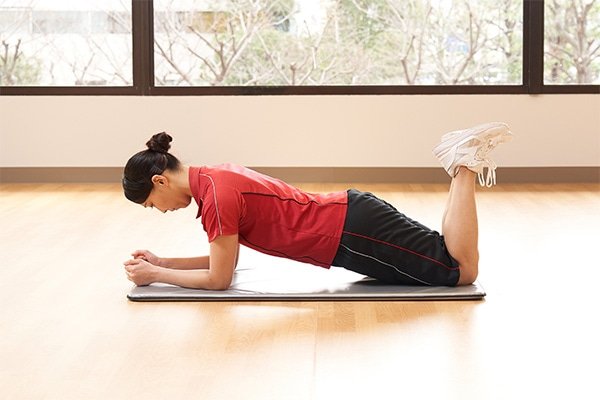
A useful starting point is an easy enough variation to repeat for several controlled sets. A knee-supported plank shortens the lever; an elevated support can also reduce the demand. Use a stable surface and pick the version that allows a consistent position. There is no requirement to start on the toes merely because that is the version most often shown online.
Here is an illustrative progression for a healthy lifter, not Bellera’s routine or a record-preparation plan. Begin with three holds of roughly 10–20 seconds, resting about a minute between them. Choose a duration that leaves some control in reserve. Repeat the session twice in the week, with recovery between sessions, and note how the last set compares with the first.
When all three holds look and feel repeatable, add a few seconds to each. If the last set deteriorates, keep the duration steady or use an easier variation. Once moderate holds are comfortable, consider a small leverage change instead of extending every session indefinitely. Return to shorter holds when the exercise becomes harder. Change one feature at a time so you can tell what improved.
Record the variation, set durations and the reason you stopped. A simple note such as “three clean holds, breathing steady” provides more direction than “abs destroyed.” You might progress by using less support, maintaining position more consistently or recovering better between sets. The clock is one measure among several. Choose the measure that matches your goal, and leave dramatic record loads out of this beginner progression.
Some product links may be affiliate links, which can support Mind Muscle Perfection at no additional cost to you.

Funny Gym Shirts & Workout Gear
Funny gym shirts, tanks, hoodies and workout gear for lifters who like training hard.


Check Out My Six Pack Donut – Donut Meme Decal for Shak Sticker
A fun “Check Out My Six Pack Donut” touch for bottles, laptops, and lockers.

6Pac Shakur Muscle | Vest for Bodybuilding & Six Pack A Tank Top
Train hard, laugh a little, and rep “6Pac Shakur”.

Funny Calisthenics Gym Hooded Pullover for Bodyweight L Hoodie
Bring “Calisthenics” gym humor to lazy days and post-workout plans.

Calisthenics Evolution Decal for Water Bottles Laptops Sticker
Put “Calisthenics Evolution” gym humor on your laptop, bottle, or gym gear.

Calisthenics Heartbeat Crewneck Pullover Sweater for Hu T-Shirt
Add a playful “Calisthenics Heartbeat” touch to your casual rotation.

Turn Off Gravity Funny Calisthenics Gym Hooded for Huma Hoodie
Show off your lifting humor in a laid-back “Turn Off Gravity Funny Calisthenics” hoodie.


Be Stronger Than Your Excuses Funny Gym
Bring “Be Stronger Than Your Excuses” humor to your everyday gym style.

Consistency Is Key Stoic Greek God Marble Sculpture T-Shirt
Make gym days more fun with “Consistency is Key Stoic Greek God Marble” style.
5. Give the plank a job in the rest of your program
A long plank is a demonstration of a particular capacity. It does not tell you everything about lifting strength, sporting skill or abdominal development. For a lifter who wants better control during squats, presses and carries, the plank should contribute to the week rather than compete with every other exercise for recovery and attention.
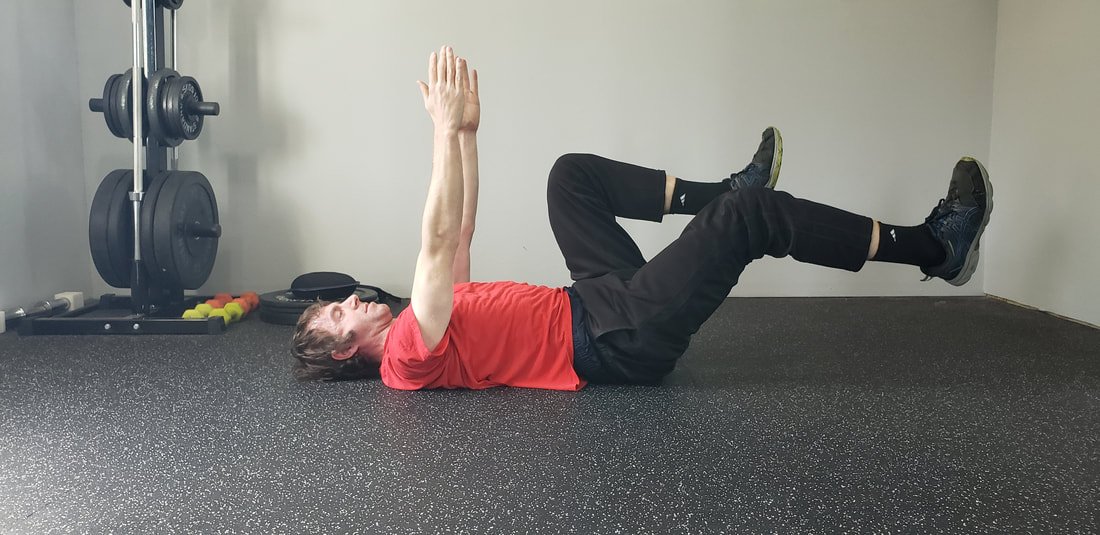
You can pair a short static hold with a controlled moving drill. A dead bug, for example, lets you practise maintaining trunk position while moving the limbs. Start with a range you can manage, move slowly and shorten the reach if your back position changes. A knee extension with the arms still, as pictured, is one way to simplify the task before coordinating opposite arm-and-leg movements.
Other sessions might use a side-support variation or an appropriately loaded carry, depending on your training and equipment. These exercises introduce different demands; none needs to become a daily maximum test. Our core-training guide covering bracing and carries provides a broader framework for choosing complementary work.
Keep ordinary strength training, conditioning and recovery in view. A demanding abdominal finisher that compromises tomorrow’s main session may be a poor trade for your actual goal. Likewise, a hold-time improvement does not guarantee a particular physique outcome. Judge the routine by whether it is sustainable and helps you train with greater control.
Bellera’s achievement deserves appreciation on its own terms: a highly specific loaded endurance performance. The transferable habit is precision. Define the task, practise it consistently, measure it honestly and progress at a level you can manage. Your next useful milestone can be three repeatable sets with better control; it does not need a 200 lb pack.