Advertising disclosure: This page includes affiliate product links that may earn us a commission, as well as products from our own store.
A forearm plank can feel dramatically harder even when you never add a plate or another second. Move your elbows forward, control your pelvis, and the same floor becomes a different challenge. A controlled comparison of 19 participants helps explain why, but it also draws a clear line between immediate muscle activation and the muscle growth that many social clips casually promise. Here is how to use the evidence without confusing a tougher-looking hold with a better training plan.
What the 19-person plank experiment actually measured
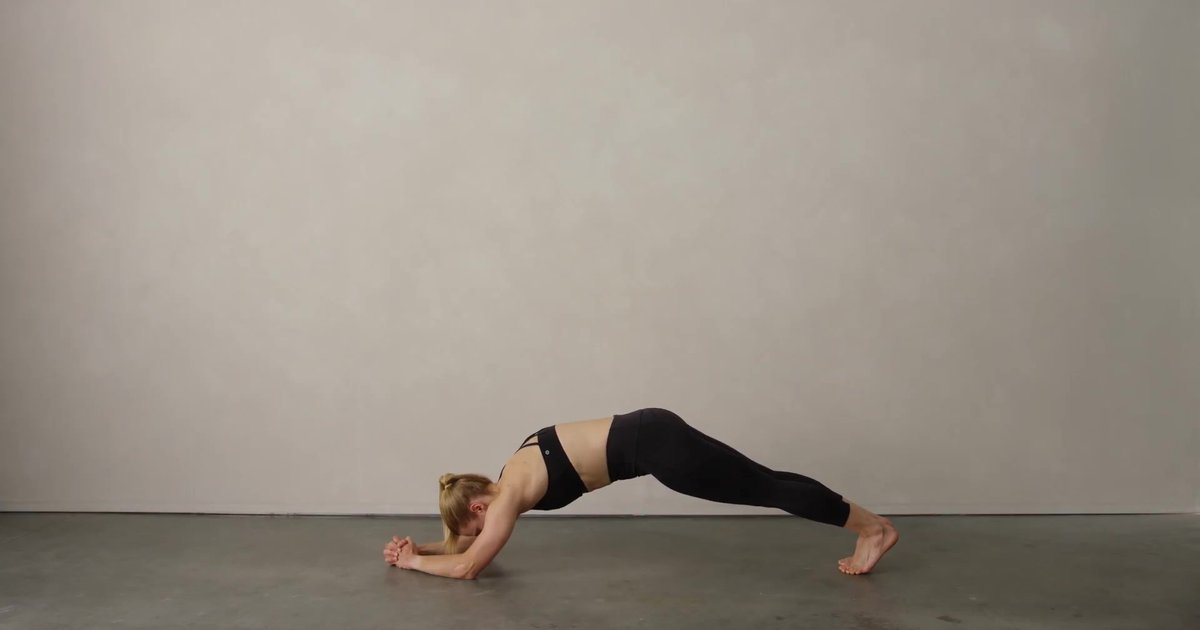
In a controlled laboratory comparison, 19 participants performed four different plank conditions for 30 seconds each. Those conditions included a conventional forearm plank, a plank with the elbows farther forward, a standard-lever plank with a deliberate posterior pelvic tilt, and a long-lever plank combined with that tilt. Surface sensors recorded electrical activity from several trunk muscles. That design addresses an interesting question: can you change the challenge without holding the plank for longer?
Compared with the regular plank, the combined long-lever and posterior-tilt position produced significantly higher activation in the upper rectus abdominis, lower abdominal stabilizers and external oblique. Moving the elbows forward by itself increased measured activation in the upper rectus abdominis and lower abdominal stabilizers. The posterior-tilt-only version particularly raised external-oblique activity. Taken together, the comparisons suggest that both elbow position and pelvic control matter, although they do not contribute identically to every measured muscle.
An electromyography result is a snapshot of electrical activity during an exercise, not a photograph of muscle growth. The experiment did not randomly assign lifters to weeks of training, compare ab thickness, or establish an ideal hold duration for long-term strength. You cannot legitimately turn these findings into a promise that one 30-second hold will produce bigger abs than several ordinary sets. The narrow, useful conclusion is that changing the lever and pelvis can make the task more demanding within the same brief time window.
There is also an important naming problem. Some people call any hard plank an RKC plank; others reserve long-lever plank for elbows deliberately ahead of the shoulders, and some combine both ideas. A regular forearm plank with extra effort is not mechanically identical to the study’s longest-lever condition. When you compare sessions, name the version and record the physical setup rather than assuming that every plank variation shares the same stimulus.
Place the elbows forward without turning the hold into a collapse
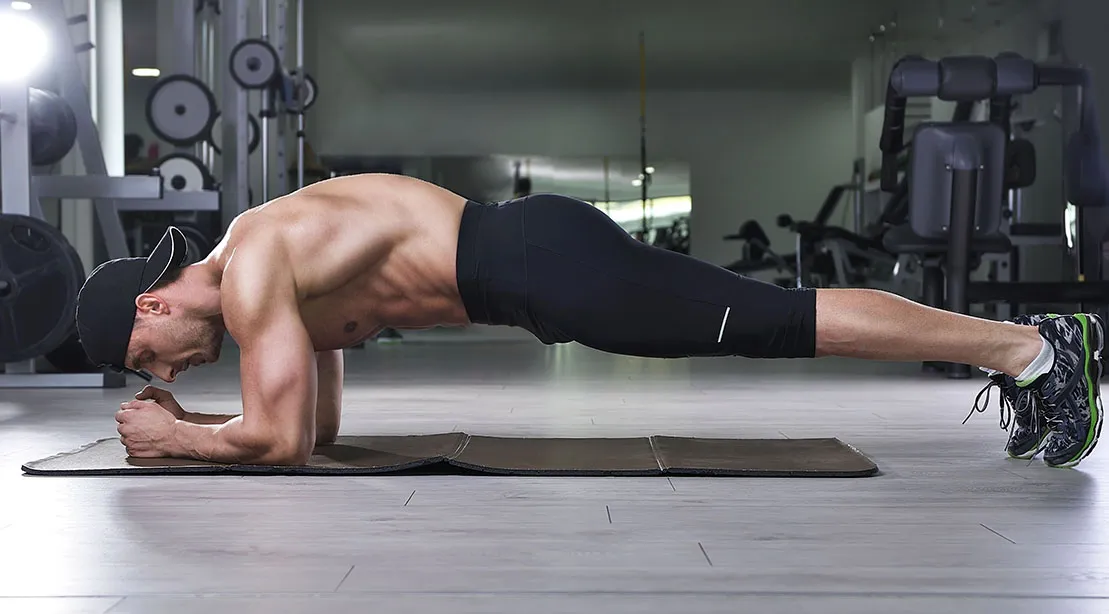
Start in a conventional forearm plank on a nonslip mat. The elbows begin near shoulder height, feet set comfortably apart, and toes press into the floor. Raise the body until the head, torso, hips and legs form a manageable continuous line. From there, walk the elbows several centimeters forward. You have just lengthened the distance between the shoulders and the forearm support. Keep the shoulder area active instead of sinking between the upper arms.
Greater reach makes it harder to resist the trunk dropping toward the ground. That extra challenge is the point, but there is no award for walking the elbows farthest. Use the smallest step that noticeably increases effort without changing the low-back shape. For an early test, put a strip of removable tape beside the elbow location. The distance between the elbow mark and the shoulder’s vertical projection is much more reproducible than saying the hands felt a little farther away.
Keep the forearms grounded and look down rather than craning the neck. A wider foot stance may make balance easier; a narrow stance can add a different challenge, so keep stance fixed when evaluating the lever. If your shoulders are sensitive to prolonged forward-reaching positions, reduce the distance and the hold time, and choose a simpler variation if discomfort persists. Feeling the abdomen work is not permission to ignore a sharp sensation in the shoulder or lower back.
Try three controlled attempts of 10 to 20 seconds with generous recovery. Stop the watch when you can no longer keep the elbows in place or the trunk aligned. If a 15-second attempt is clean and the next ends at eight because the hips sag, you have learned something more useful than squeezing out another 20 untidy seconds. The long lever should be a repeatable training variable, not an improvised endurance competition.

Equipment Worth Exploring
Explore equipment, accessories and gear from our carefully selected range.


Power Tower
Freestanding pull-up and dip station with adjustable handles for bodyweight training.




Foldable Wall Rack
Wall-mounted folding squat rack designed to save floor space between workouts.

Multi Bench MBX-650 2.0
Adjustable multi-bench with roller adjustment, 15 backrest positions and accessory mounts.

Add pelvic tilt and tension as a separate progression
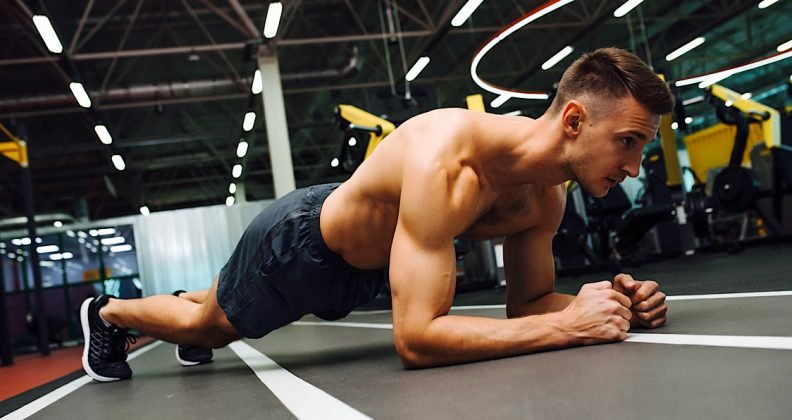
The second variable is pelvic position. Imagine gently drawing the front of your pelvis toward your ribs while tightening the glutes and the front of the abdomen. You do not need to curl into a dramatic rounded shape. The practical aim is to stop the lower back from dipping while the rest of the body stays controlled. Exhale enough to establish the brace, then keep breathing in smaller, regular breaths rather than holding your breath for the entire set.
Begin with the elbows under the shoulders and practice the pelvic adjustment in an easier plank. If you cannot hold it there, moving the elbows forward merely piles a harder demand onto an unstable foundation. In a mirror or side-on video, compare the rib cage and pelvis at the start, middle and end of the set. If the belly drops as fatigue rises, the final seconds are not equivalent to the first few, even when the timer keeps running.
Next, try the same pelvic position with a modest forward elbow shift. Keep the distance, breathing and foot width unchanged for several sessions. The idea is to make one variable harder while retaining the others. A maximal glute squeeze can help some people understand the cue; if it causes cramping or ruins the alignment, ease the contraction rather than treating every muscle as an on-off switch.
Coaching language often promises instant deep-core activation, a stronger spine, or even protection from injury. A brief muscle-activation comparison cannot validate those outcomes. It can support a more careful coaching choice: practice the position you intend to load, monitor whether you actually hold it, and select a version that lets you accumulate clean work without provoking symptoms. For most lifters, that simple standard is more productive than chasing the hardest-looking variation.

Calisthenics Shirts & Street Workout Gear
Calisthenics and bodyweight-training gear for pull-ups, dips, handstands and street-workout athletes.


Always Pull Yourself Up Funny Gym T
Heavy lifts, good laughs, and a little “Always Pull Yourself Up” energy.

Shirt – Calisthenics Heartbeat Gymbros & Meme Lovers T-Shirt
Bring “Calisthenics Heartbeat” humor to your next gym day.


Calisthenics Evolution
Show some lifting attitude with a playful “Calisthenics Evolution” tee.

Human Flag Crewneck Calisthenics Pullover Sweater Worko T-Shirt
Bring “Human Flag” humor to your everyday gym style.

T-Rex Hates Push Ups Hooded for Calisthenics Workout Fa Hoodie
Keep it laid-back with a little “T-Rex Hates Push Ups” attitude.

Shirt – Lord Of The Calisthenics Rings – Meme T-Shirt
Rep “Lord of the Calisthenics Rings” humor in and out of the gym.

Be Stronger Than Your Excuses – Motivational T-Shirt
Rep “Be Stronger Than Your Excuses” humor in and out of the gym.
Separate long-lever holds from RKC planks and body saws
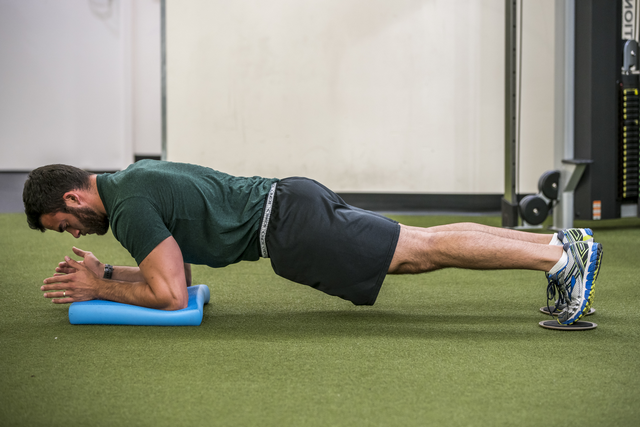
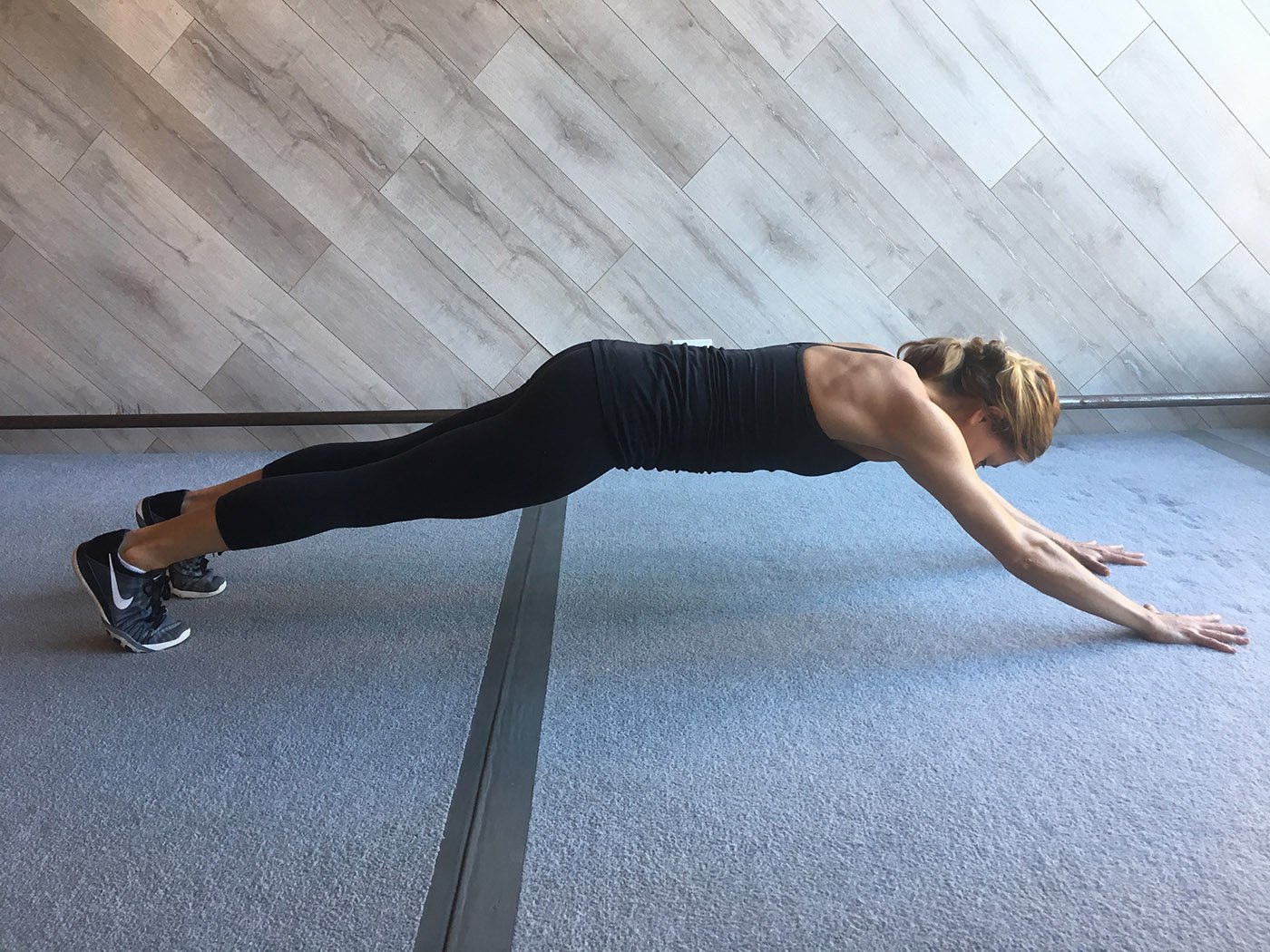
These variations can look almost identical in a short social clip. A traditional plank generally places the elbows close to or beneath the shoulders. A high-tension RKC-style plank emphasizes active glute, quadriceps and abdominal contraction, often with a feeling of pulling the elbows toward the toes without actually moving them. A long-lever plank deliberately shifts forearm support farther forward. The combined long-lever pelvic-tilt version changes both things at once.
A body saw introduces movement. From a forearm-plank position, sliding the feet backward and forward changes the distance and the challenge throughout the repetition. Sliders or another controlled low-friction setup may help, but a slick floor can also send the feet farther than planned. Do not assume the sliding version is a scientifically proven superior abdominal exercise. It is a practical variation whose movement, range and tempo need their own instructions and log entries.
If your aim is to standardize an isometric hold, the static long-lever version is often simpler to measure. You can mark the elbows, set a fixed body line and stop at the first change. If you enjoy a dynamic anti-extension task and have a safe floor setup, body saws can provide another option. These are programming choices, not a hierarchy in which every person must master the hardest possible level.
Be careful with workout comparisons. A 25-second RKC hold with the elbows beneath the shoulders, a 15-second long-lever hold and five body-saw repetitions are three different doses. They cannot be added into a meaningful total merely because all recruit the abdominal wall. Record which version you used, the location of support, and either honest duration or actual repetitions. That makes progression visible without pretending the numbers are interchangeable.
Equipment Worth Exploring
Explore equipment, accessories and gear from our carefully selected range.
VOLTRA
Compact digital cable trainer with smooth, adjustable resistance.

Go-Tone Pro
Portable digital cable trainer with up to 66 lb (30 kg) of adjustable resistance.

VForce Wall Trainer
Space-saving wall-mounted functional trainer with pivoting cable arms and variable resistance ratios.

FID Bench MAX
Adjustable bench offering flat, incline, and decline positions + adjustable headrest.


Cast Iron Kettlebells
Textured cast-iron kettlebells for swings, squats, carries, and full-body training.

Slam Ball
Low-bounce weighted slam ball for explosive throws and high-intensity conditioning.

Competition Wall Ball
Competition-style weighted wall ball for HYROX, wall-ball shots, and functional conditioning.

A four-week progression you can actually repeat
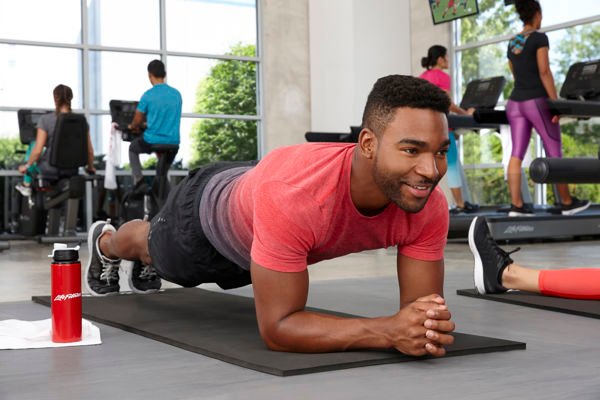
Use this as an illustrative teaching plan rather than a trial-validated prescription. Keep conventional strength training and ordinary exercise in your routine; do not replace every trunk movement with planks. During week one, practice two brief sessions after lifting, separated by at least a day. Perform three sets of a conventional forearm plank for roughly 15 to 25 seconds. Record the elbow position, foot width, breathing and the first reason the hold ends.
In week two, preserve the same three sets and start the first or second attempt with the elbows just a few centimeters farther forward. Aim for a shorter clean hold, perhaps 10 to 15 seconds, rather than copying last week’s clock. If the lower back sags or the shoulder position fails immediately, move the elbows back. Make the exercise slightly harder only after the same alignment has been repeatable for more than one session.
In week three, rehearse the pelvic tilt with the elbows back at their original location. Then combine the tilt with a modest long lever for one set if you can maintain both. Do not jump straight from a comfortable standard plank to your maximum reach and maximum bracing effort. Keep the movement intentionally challenging, not punishing. Change only one variable in the training log at a time whenever possible.
In week four, choose the best repeatable version and complete three controlled sets twice that week. Progress by a small amount of time, a small forward step, or slightly better pelvic control, but not all three at once. A set should end when the target position stops being true. If symptoms arise, return to an easier version or seek individual guidance for persistent discomfort. Success is not a personal-record stopwatch number; it is a training position you can reproduce and gradually improve.
Funny Gym Shirts & Workout Gear
Funny gym shirts, tanks, hoodies and workout gear for lifters who like training hard.

Meme I Have Abs-Olutely No Idea What I'M Doing T-Shirt
For laid-back days and bodybuilding humor: “I Have Abs-olutely No Idea What I'm Doing”.

Check Out My Six Pack Tacos – Taco Six Pack Hooded Pull Hoodie
Bring “Check Out My Six Pack Tacos” gym humor to lazy days and post-workout plans.

Consistency King Tee
Make gym days more fun with “Consistency King Stoic Greek God Marble” style.

Discipline Stoic Tee
Show some lifting attitude with a playful “Discipline Stoic Sigma Bodybuilder” tee.

Progress Stoic Sigma Greek God Marble Sculpture – T-Shirt
Rep “Progress Stoic Sigma Greek God Marble” humor in and out of the gym.

Progressive Overload Milo Tee
Bring “Progressive Overload Milo Bull” humor to your next gym day.

Shirt – Train Hard Gains – Meme , & Workouts T-Shirt
Bring “Train Hard Gains” humor to your next gym day.

Train Like A Machine – Iron Man Inspired Bros & T-Shirt
Rep “Train Like A Machine” humor in and out of the gym.

Strong Inside And Out Shirt Weights And Brains Meme T-Shirt
Rep “Strong Inside And Out” humor in and out of the gym.

Unbreakable Gains Back Tee
Make gym days more fun with “Unbreakable Gains: Strong Back Greek God” style.