Advertising disclosure: This page includes affiliate product links that may earn us a commission, as well as products from our own store.
Two different 2026 Rogue Invitational strength championships ended the same way: one point separated first and second. Trey Mitchell outscored Martins Licis 46–45, while Angelica Jardine beat Inez Carrasquillo 53–52 in Aberdeen, Scotland. Both champions secured the winning margin on the final Mons Meg stones. Yet neither result can be explained by one spectacular lift alone.
Here is how the six-event standings unfolded, why a competitor can win more events and still lose the title, and what ordinary lifters can learn without attempting dangerous competition loads. These are results from October 23–24, 2026, not a newly held contest or an MMP hands-on test.
One final stone changed both championships
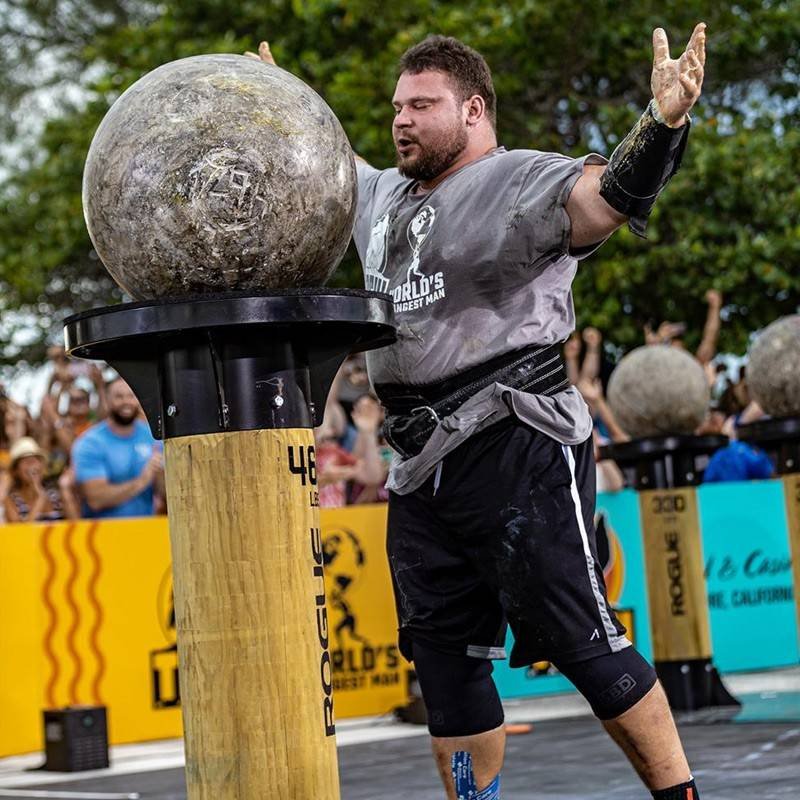
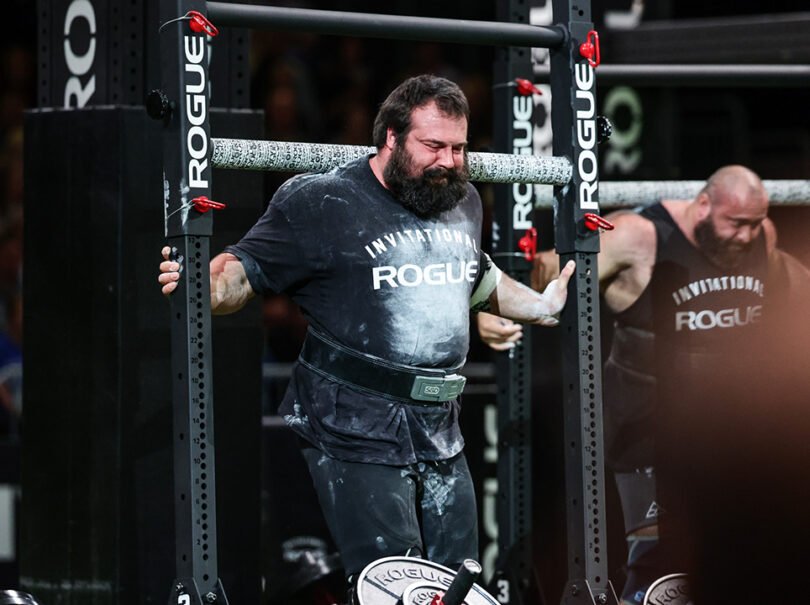
Nine strongmen and nine strongwomen competed at P&J Live across six very different tests: a deadlift ladder, Viking press, Conan’s Wheel, yoke-and-log carry, grip medley and the Mons Meg stones. The closing event required four increasingly heavy stones to be loaded onto their targets. The men’s set culminated at 440 pounds; the women’s at 300 pounds. Mitchell finished his four stones in 30.44 seconds, and Jardine completed hers in 26.85 seconds.
Those are times, not simple measures of maximum strength. A stone’s size, friction, body position and target height affect how quickly it can be picked, lapped, driven upward and released. Regripping can cost more time than a small difference in raw pulling power. With the highest scorers going head-to-head, the last run felt like an individual duel; nevertheless, earlier event finishes determined who still had a chance to win.
The final men’s standings were Mitchell 46, Licis 45 and Rayno Nel 44. The women finished Jardine 53, Carrasquillo 52 and Lucy Underdown 42. A dramatic finale should not disguise an entire weekend of work: every placing in the first five events contributed to those totals. In strongman, consistency is not the opposite of spectacular strength. It is what makes a spectacular finishing performance count.
There is also a distinction between event order and event importance. A competition placing is earned over the whole schedule; stones were decisive because they happened last and the totals were close. If the schedule had ended with a press or carry instead, spectators might have watched an entirely different final skill become the defining highlight. The leaderboard, rather than the camera angle, reveals the competitive story.
How Trey Mitchell erased a one-point deficit
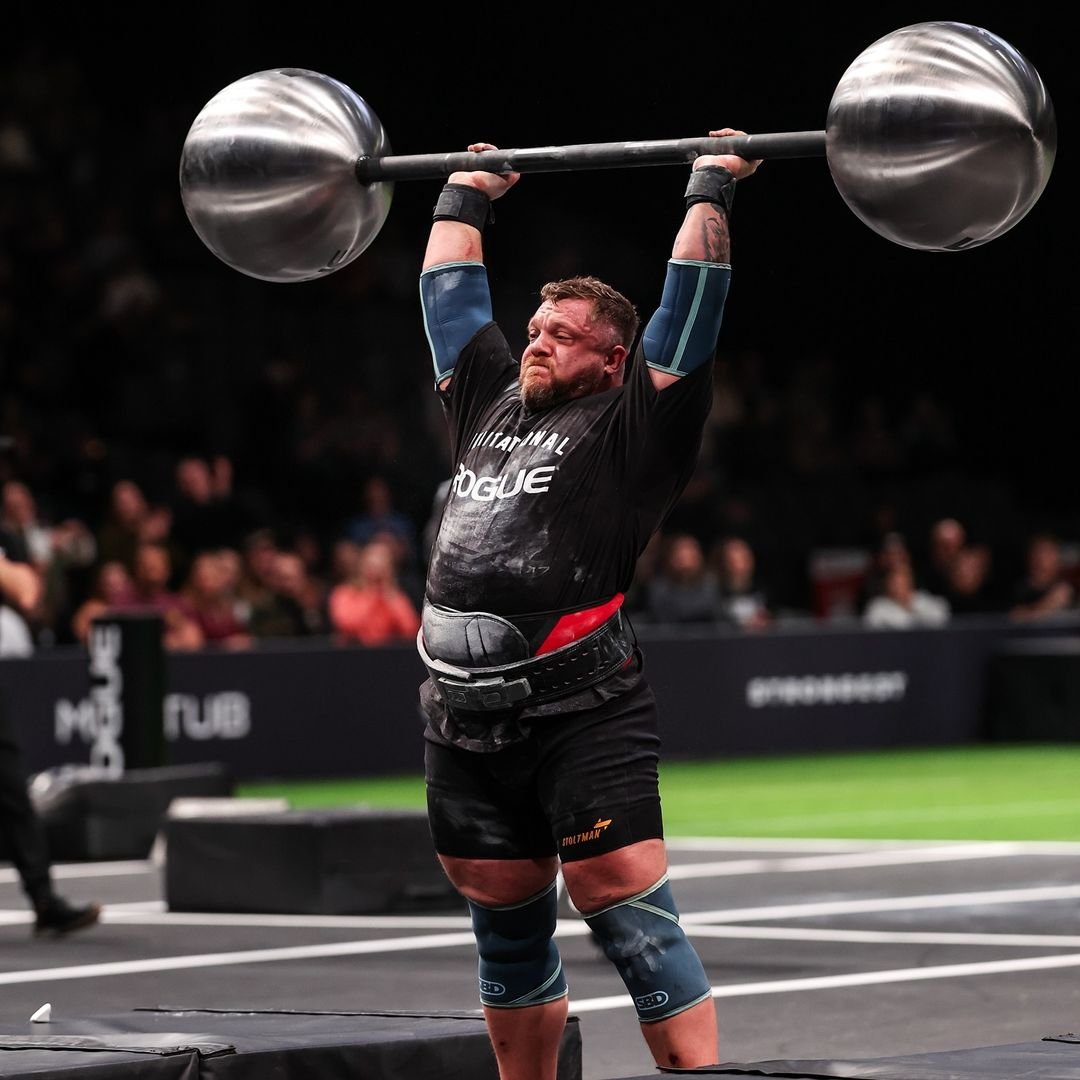
Mitchell entered the last event trailing Licis by one point. His fastest complete stone run overturned it. The comeback began earlier, however, with 15 repetitions on the 400-pound Viking press. He also won the second day’s yoke-and-log medley: a 1,050-pound yoke carry followed by work on a roughly 363-pound log. Both events rewarded the ability to express strength repeatedly while controlling breathing, equipment and transitions.
Not every discipline suited him equally. Mitchell placed seventh on Conan’s Wheel, a sustained loaded-carry challenge measured by degrees travelled around a central axis. That result left room for the leaders to score, but his press, combined medley and stones supplied enough points to overcome the weak placing. A field-event specialist might describe such a weekend as uneven. A strongman competitor has to view it as a total score, not a list of personal bests.
Licis was more than a passive runner-up. He won the opening deadlift ladder and held the overall lead going into the final. At the stones he loaded three successfully, then fell short of completing the fourth. Nel finished all four in 39.94 seconds and took third overall. Just two points separated all three podium finishers, illustrating how narrow the margin becomes when a top group trades strong finishes across the weekend.
The result also ended Mitchell Hooper’s three-year Rogue title streak. Hooper led after the opening day on 23 points without taking an event win, showing that consistently strong placings can build a lead. But he added only 10 points on day two and finished sixth overall on 33. None of this rewrites his broader career; it simply demonstrates that even established champions cannot treat an unfamiliar combination of tasks as an automatic victory.

Equipment Worth Exploring
Explore equipment, accessories and gear from our carefully selected range.


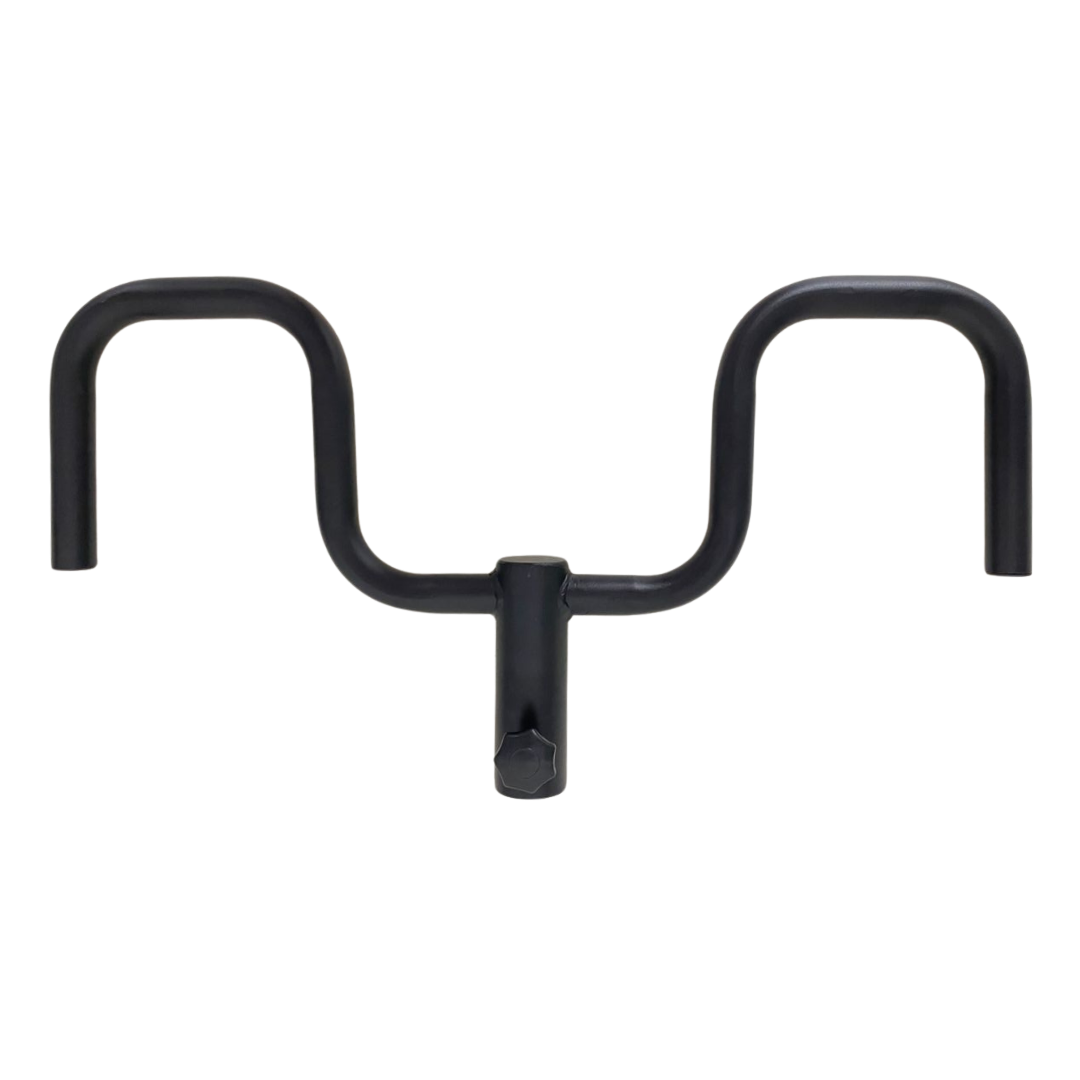
Open Hex Bar
Open-frame trap bar with multiple handles for deadlifts, carries, and lower-body training.


Pro Sled System
Heavy-duty push-pull training sled for loaded conditioning, speed, and strength work.


Leather Lifting Straps
Padded leather straps support grip during heavy rows, deadlifts and pulling exercises.


Leather Wrist Grips
Padded leather lifting grips help support the hands and wrists on heavy pulling exercises.
Angelica Jardine won while her rival dominated events
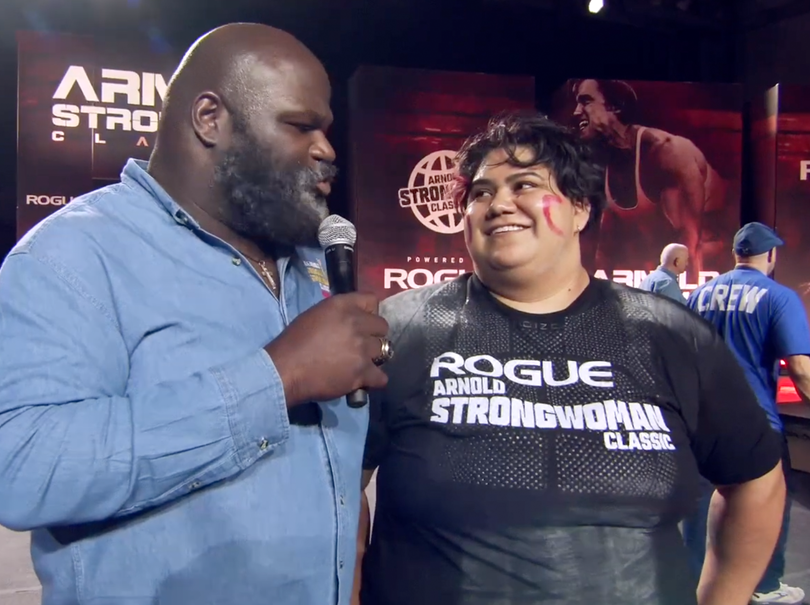
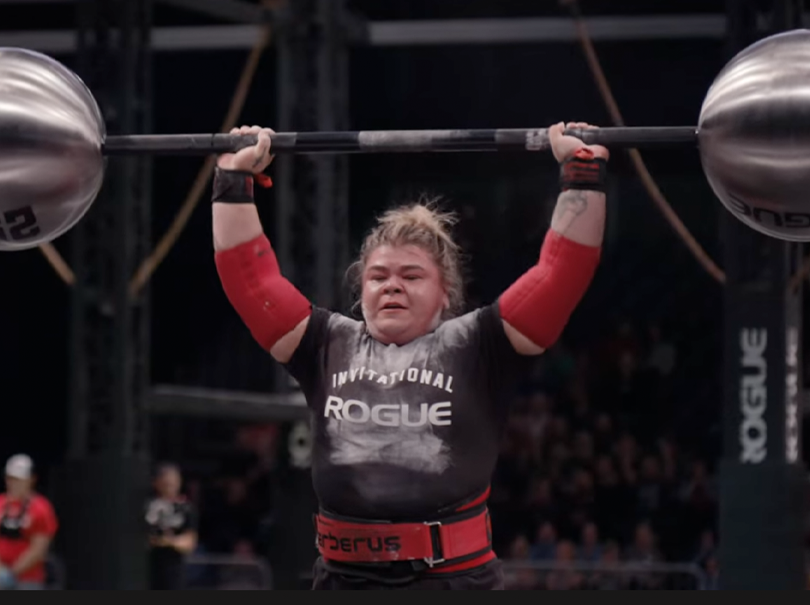
The women’s standings offer an even clearer lesson in score accumulation. Carrasquillo won four of six disciplines, including the Viking press, Conan’s Wheel, the yoke-and-log and the grip medley. Jardine won only the final stones. The overall result was still 53–52 for Jardine because her worst finishes were much closer to the front: third, third, second, second and second before the finale.
On the first day, Jardine completed nine lifts in the deadlift ladder, then registered 16 Viking-press repetitions and covered 797 degrees on Conan’s Wheel. Carrasquillo’s strongest moments were striking—23 repetitions on the press and 991 degrees on the wheel—but a poor placing in the deadlift ladder cost her points that the string of victories could not fully recover. The points system rewards both peaks and a useful competitive floor.
On day two, Carrasquillo won the carry-and-press and grip medley, bringing the pair level going into the stones. Jardine did not need to match Carrasquillo rep for rep in those events; second places kept the deficit within reach. During the final run Jardine had to reset her position on the heaviest stone before completing the set in 26.85 seconds. Carrasquillo finished in 35.31 seconds, so the two finalists received different event points and the title changed hands by one.
Jardine was already an experienced champion, having won the 2024 Arnold Strongwoman Classic. The 2026 Rogue victory was therefore a development in an established career rather than an overnight transformation. Her season-specific preparation and full training log are not available from a results table, and it would be irresponsible to manufacture a weekly program for her. What can be said is that broad competence and avoiding bottom-of-the-field placings mattered as much as the eventual event win.

Strongman Shirts & Strength Gear
Strongman gym shirts and strength gear for lifters who train stones, carries, presses and brutally heavy objects.

Enter Strongman Enter Sandman Parody Strongman Atlas St Tank Top
Your gym-day look, with a playful “Enter Strongman” twist.

Shirt – Strongmen Avengers Superhero – Meme Top T-Shirt
Rep “Strongmen Avengers Superhero” humor in and out of the gym.

Strongman Superman Hooded Pullover Gymbros Comic Hero W Hoodie
Bring “Strongman Superman” gym humor to lazy days and post-workout plans.

Big Man Batman Gym Hero Sweatshirt
Keep things casual with a little “Big Man Batman Gym Hero” attitude.

Atlas Greek Mythology The Power Within Top & Gymbros T-Shirt
Show some bodybuilding attitude with a playful “Atlas Greek Mythology” tee.


The Original Atlas Stone Shirt – Greek Mythology T-Shirt
Heavy lifts, good laughs, and a little “The Original Atlas Stone” energy.

Mount Liftmore Strongman Brian Shaw & Eddie Hall T-Shirt
Rep “Mount Liftmore Strongman” humor in and out of the gym.


Strongman Metallica Heavy Metal – Meme Shirt & Gains T-Shirt
Rep “Strongman Metallica Heavy Metal Graphic” humor in and out of the gym.
What a result sheet says—and what it cannot say
Strongman and strongwoman event points are essentially rewards for relative position. Your score depends on how you perform against the people competing that day, not on meeting a fixed universal standard. That makes comparison across different contests tricky. A single extra repetition might move someone past two athletes and change a podium, while another repetition might leave the ranking exactly as it was. The 2026 finishes were about rankings across six tasks, not simply the biggest absolute number on a bar.
Each event challenges a distinct blend of attributes. Viking presses demand pressing efficiency and endurance. Conan’s Wheel adds leg drive, loaded posture and sustained movement. Farmer carries test grip, gait, trunk control and pacing; stones involve object handling and the ability to repeat a technically awkward lift with rising weights. For another example of awkward-object loading, our Dinnie Stones guide explains why an uneven pair of stones is not simply a heavier deadlift. A regular barbell deadlift can build strength that helps in several of those tasks, but it will not automatically teach someone to load a stone or manage a yoke.
Competition highlights do not establish a scientifically proven training method. We cannot derive each champion’s weekly volume, injury history, fatigue management or recovery decisions from six scoreboard lines. A 440-pound stone performed in a contest is an achievement, not an appropriate workout target for recreational athletes. The athletes also benefit from extensive technical familiarity that is invisible in a short clip.
For a useful distinction between historical strength challenges and accessible preparation, the goal is to choose what transfers to your gym. Build barbell strength through progressive work, use lighter loaded carries to practice whole-body control, and treat specialty implements as skills to learn rather than objects to brute-force. Consistency across movement patterns is an attainable lesson; attempting to recreate champion-level loads is not.
Equipment Worth Exploring
Explore equipment, accessories and gear from our carefully selected range.


Lever Arm Multi Press LMP-650
Multi-press with independent lever arms and an integrated adjustable bench for upper-body training.


Competition Plates
Competition-style bumper plates for Olympic lifts and loaded strength training.


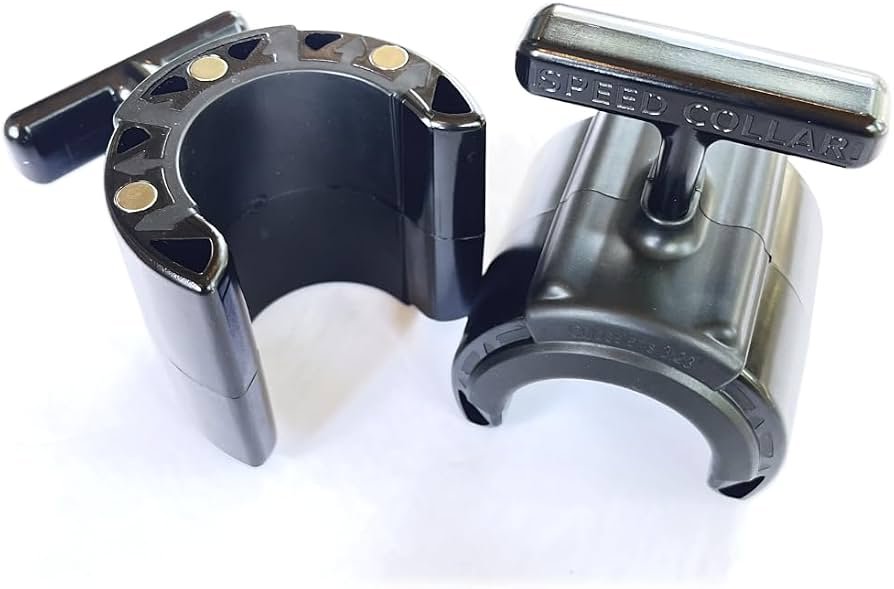
Speed Collar
Quick-release collars designed to secure weight plates on standard two-inch Olympic bars.
A safer strongman-inspired session for a normal gym
You can borrow the contest’s variety without buying six unusual implements. Warm up, then complete three or four sets of trap-bar deadlifts or another familiar hinge for five to eight clean reps, leaving two or three repetitions in reserve. Follow with a landmine press or dumbbell overhead press for three sets of six to ten per side. The purpose is to practice controlled strength before moving into exercises that also challenge grip and breathing, not to establish a maximal lift every session.
For the carry, choose a pair of dumbbells—or the kind of farmer’s walk handles used for dedicated carry training—that you can hold while walking 15–30 metres without swaying or shortening your stride dramatically. Rest enough to keep the next effort consistent. Perform three to five walks, then, if you have room and sound equipment, add a few short sled pushes. In a small home gym, suitcase holds and loaded marches in place are reasonable substitutes for space-limited training, but they are not identical to moving quickly under a heavy yoke.
A practical finisher can pair a controlled carry with six to eight landmine presses and a comfortable recovery walk. Repeat two or three rounds. Record load, distance, posture and how well you recover between rounds. In the first week, establish a repeatable baseline. Next week, slightly improve the path or control. Later, consider a modest increase in load or one additional round if technique remains solid. In a fourth week, repeat the first session to see whether the same work feels more predictable.
Never treat a random stone, unsafe homemade frame or heavy awkward object as a suitable first exercise. Finger injuries, unstable footing and compromised lifting posture are real risks. Authentic stone loading belongs with suitable equipment and experienced supervision. The champions’ lesson is less glamorous but more useful: maintain skills across several events, avoid avoidable weak links and execute the final task with something left in reserve.
Powerlifting Shirts & Lifting Gear
Powerlifting shirts and gym gear for squat, bench and deadlift lifters who live for heavy numbers.

Bending Bars Meme – Barbell Squat Bench Deadlift, & T-Shirt
Heavy lifts, good laughs, and a little “Bending Bars Gym Meme” energy.

Deadlift Lovers – Grim Reaper Skeleton , Bros & Leg T-Shirt
Rep “Deadlift Lovers” humor in and out of the gym.

Praise The Deadlift Holy Lifting Meme , & T-Shirt
Show some deadlift attitude with a playful “Praise The Deadlift” tee.

The Walking Deadlift – Zombie Leg Day & Gymbro Gains T-Shirt
Make gym days more fun with “The Walking Deadlift” style.

Nice Try Gravity Astronaut Deadlift – , Gymbros & T-Shirt
Rep “Nice Try Gravity Astronaut Deadlift” humor in and out of the gym.

Shirt – Deadlift – Meme Gains & Bros T-Shirt
Heavy lifts, good laughs, and a little “Deadlift” energy.

Heavy Enough Tee
Bring “If You're Not Scared It's Not Heavy Enough” humor to your next gym day.

Platehead Powerlifting Tee
Heavy lifts, good laughs, and a little “Platehead Gym Skull” energy.

Shirt & Barbell Heartbeat , Gymbros & Meme Lovers T-Shirt
Heavy lifts, good laughs, and a little “Funny Gym Shirt & Pump” energy.

Shirt – Lifting Is My Therapy Bros & – Barbell Meme T-Shirt
Make gym days more fun with “Lifting Is My Therapy” style.