Advertising disclosure: This page includes affiliate product links that may earn us a commission, as well as products from our own store.
Chris Hemsworth’s 2019 tour workout looks manageable until you count the rounds. The session, published on 23 April during the Avengers: Endgame promotional period, combines a bodyweight warm-up, a long strength circuit and an abdominal finisher. It offers plenty to do, but its most useful lesson is how carefully an ordinary lifter needs to manage the dose.
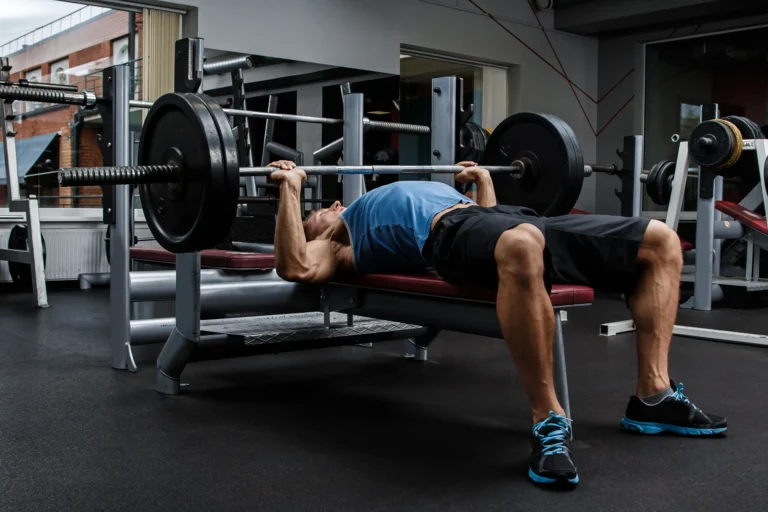
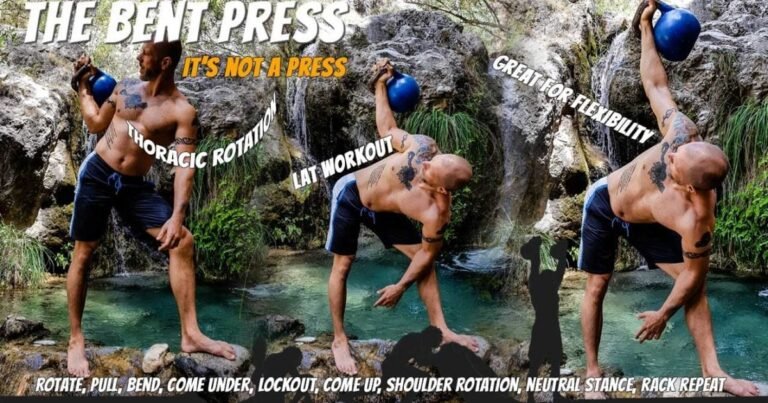
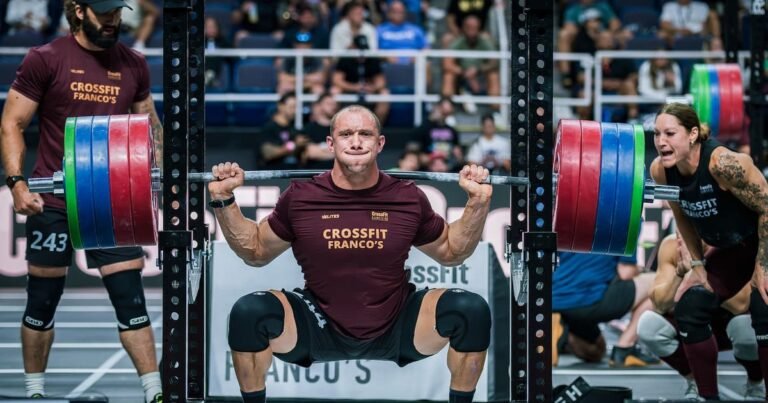
This is a breakdown of that dated session, followed by clearly labelled editorial scaling suggestions. It is not Hemsworth’s current routine, his complete film-preparation programme or a promise that copying one workout produces Thor’s physique. The accompanying section photographs illustrate his wider training history; they do not document every exercise in the original session.
The warm-up is already a meaningful workload

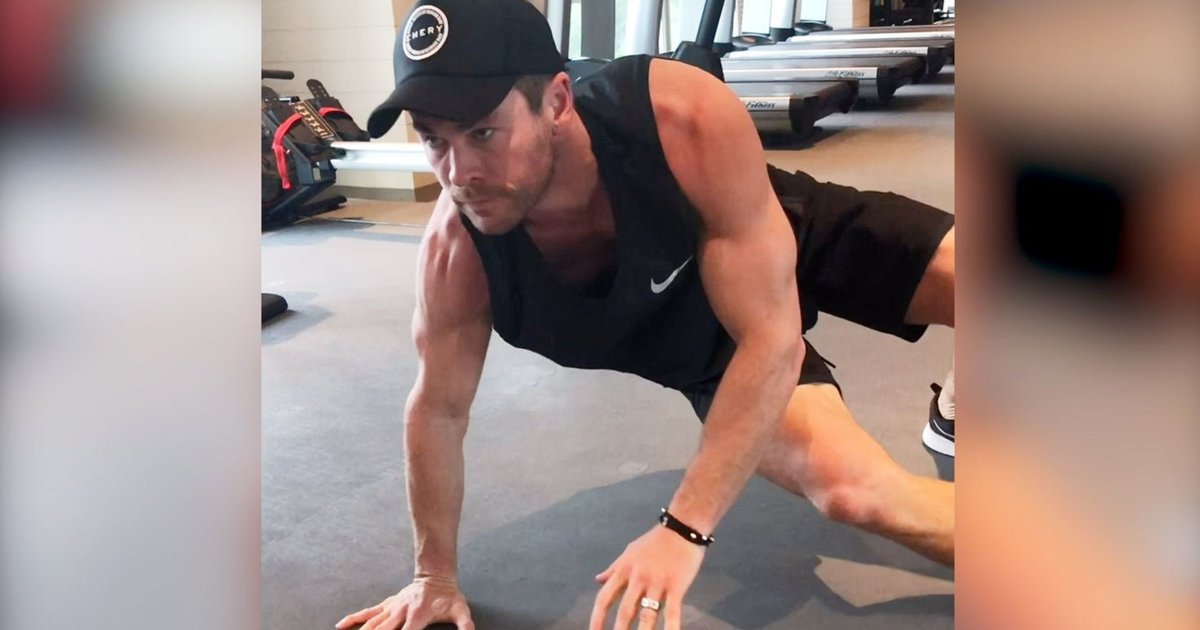
The published warm-up uses four rounds, six repetitions per movement and 30 seconds between rounds. Its bodyweight movements include squatting, floor transitions and crawling. Treat that as a block of exercise in its own right, rather than assuming that anything labelled a warm-up must be easy.
A useful warm-up prepares you for the work that follows. If your arms are already shaking during floor transitions, or you need a long break before picking up a dumbbell, the preparation may be taking more out of you than intended. Finishing every prescribed round is less useful than arriving at the first working set ready to move well.
For a less experienced lifter, an editorial adaptation would be a few minutes of easy movement followed by a short rehearsal of the session’s patterns. Practise a comfortable squat, a hip hinge and a light press. Add a simple floor transition only if you can perform it smoothly. This reduces complexity while keeping the preparation connected to the workout.
Separate readiness from exhaustion. Being warmer and more comfortable in the movement is a useful signal. Being breathless does not establish that a joint is prepared for a heavy load. If an unfamiliar movement causes pain, stop it rather than trying to make the warm-up itself a test of toughness.
Eight strength movements explain the session’s appeal
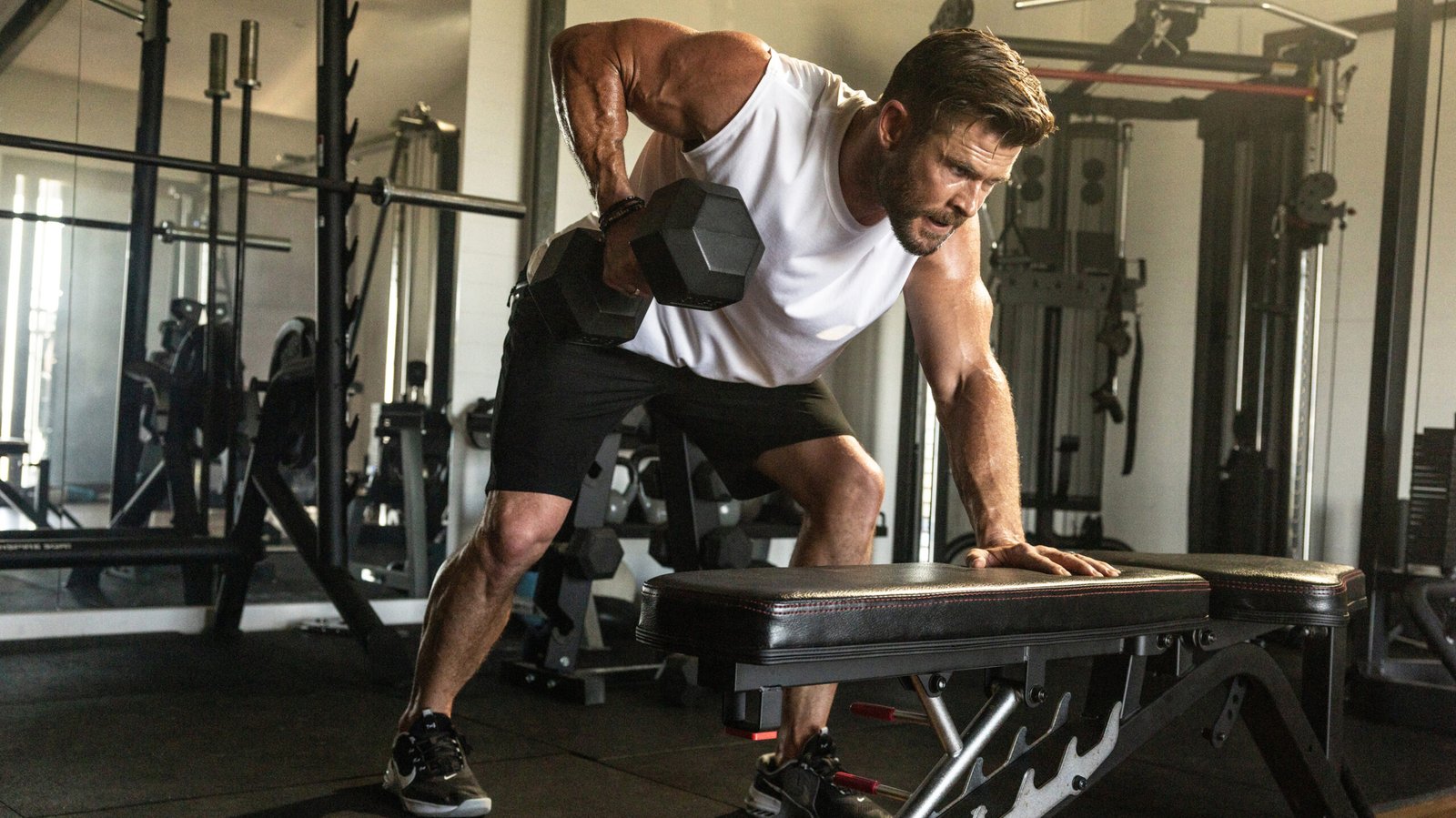
The original strength block specifies five rounds of ten repetitions, with 45 seconds between rounds. It lists overhand chin-ups, bent-over dumbbell rows, dumbbell biceps curls, dumbbell squats, dumbbell lunges, a squat-curl-overhead-press combination, cable triceps extensions and incline dumbbell chest presses. Lunges are ten per leg. A dumbbell overhead extension is offered when cables are unavailable.
The selection moves through pulling, arm work, lower-body work and pressing. That variety helps explain why a celebrity circuit can be enjoyable: the next exercise changes the task before the whole session becomes a long series of identical sets. But variety also creates practical demands. You need a suitable pulling station, space to lunge, a bench and loads that suit different movements.
One pair of dumbbells will not necessarily fit everything. The load you can curl cleanly may be far below the load you would choose for squats. Conversely, grabbing your squat dumbbells for an overhead combination could make the weaker movement decide the quality of the entire sequence. Select equipment around the exercise, not around the photograph you want to imitate.
For rows, organise the hinge before pulling. Keep a stable trunk and move the load under control rather than repeatedly lifting your chest to finish the repetition. A supported one-arm row is a possible editorial substitution when maintaining the bent-over position is the limiting factor. It changes the exercise, so record it honestly instead of claiming to have completed the original version.
Dumbbells, an adjustable bench, a secure pull-up station and cable-extension accessories relate directly to those tasks. Choose them for fit, loading and available space. The products below are modern options for that equipment context, not items claimed to have been used or endorsed by Hemsworth in 2019.

Equipment Worth Exploring
Explore equipment, accessories and gear from our carefully selected range.


Rubber Hex Dumbbells
Rubber-coated hex dumbbell pairs with a stable shape for home and commercial strength training.

FID Bench MAX
Adjustable bench offering flat, incline, and decline positions + adjustable headrest.

Power Tower
Freestanding pull-up and dip station with adjustable handles for bodyweight training.
VOLTRA
Compact digital cable trainer with smooth, adjustable resistance.

Long Tricep ERGO Ropes
Extended triceps ropes with ergonomic grips for cable pressdowns and overhead extensions.

Multi-Length Tricep Strap
Adjustable-length cable strap for triceps, biceps and upper-body cable exercises.

Multi Bench MBX-650 2.0
Adjustable multi-bench with roller adjustment, 15 backrest positions and accessory mounts.
Count the volume before deciding to copy it
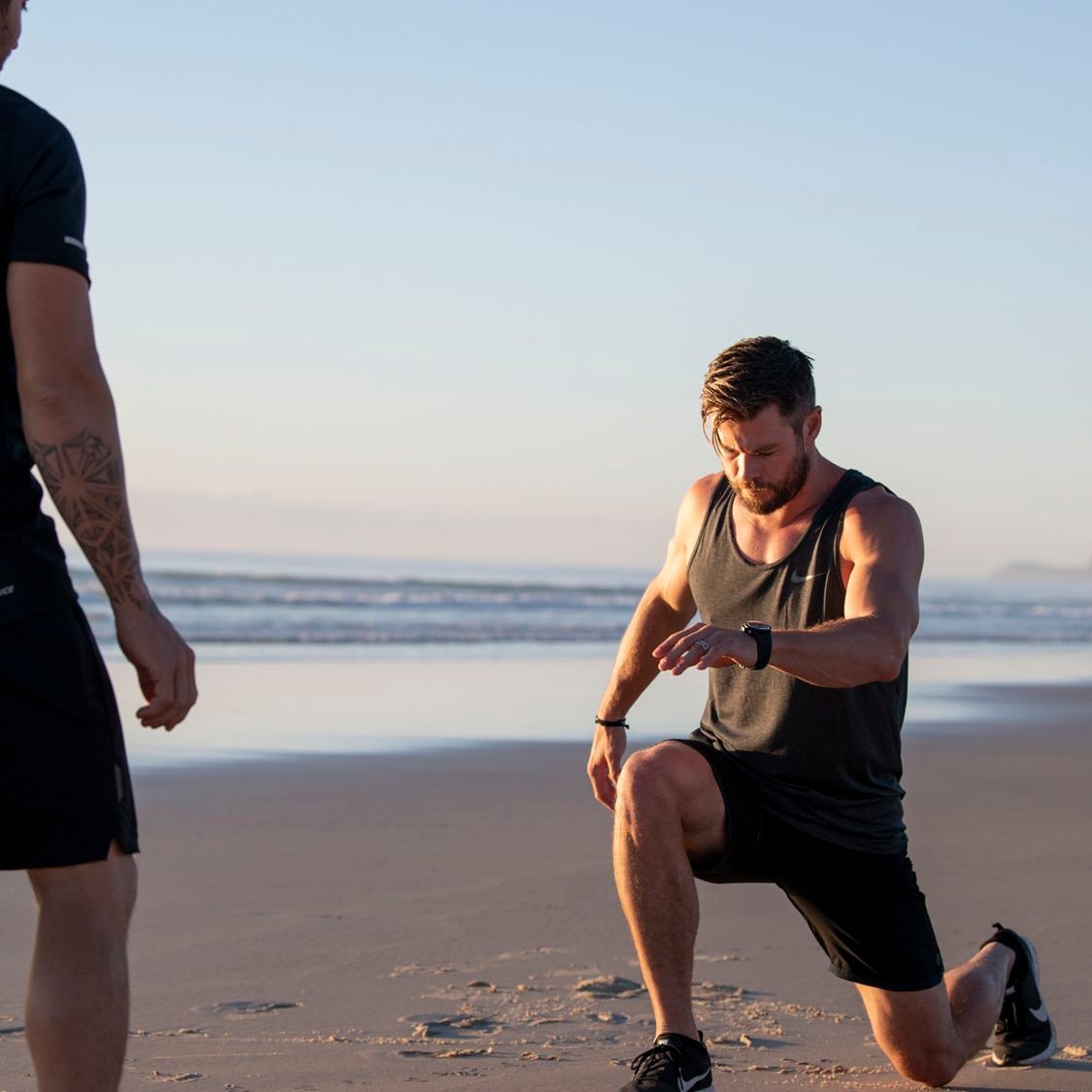
Eight exercises repeated across five rounds produce forty exercise bouts before the abdominal block. That is straightforward arithmetic, not a claim that forty bouts equal forty equally demanding muscle-building sets. A curl, a lunge and a multi-part combination place different demands on the body.
Unilateral counting can also hide work. Ten lunges per side means twenty alternating-leg repetitions if you perform them that way. It does not mean ten total. Meanwhile, a squat-curl-press repetition contains several actions. Comparing the session with a simple eight-exercise checklist understates what you are being asked to complete.
The short between-round rest is another variable. A rest prescription tells you how the session was written; it does not establish that your technique will remain sound on that schedule. Set-up time, a shared gym and different exercise capacities all affect how the workout unfolds. Extending a rest period is a legitimate adaptation when it lets you perform the next task properly.
A practical editorial starting point is to try one or two strength rounds with conservative loads, then assess the result. That is a trial dose, not a newly discovered Hemsworth programme. If technique deteriorates, reduce the difficulty or stop the exercise. If the trial is manageable, there is still no requirement to add every missing round at the next session.
For the lower-body movements, preserve a controllable range and a stable stance. A lunge that becomes increasingly hurried or unstable is giving you useful information about the dose. Record where quality changed. That observation is more actionable than a vague conclusion that the workout was brutal.
The abdominal finisher is optional work to budget for
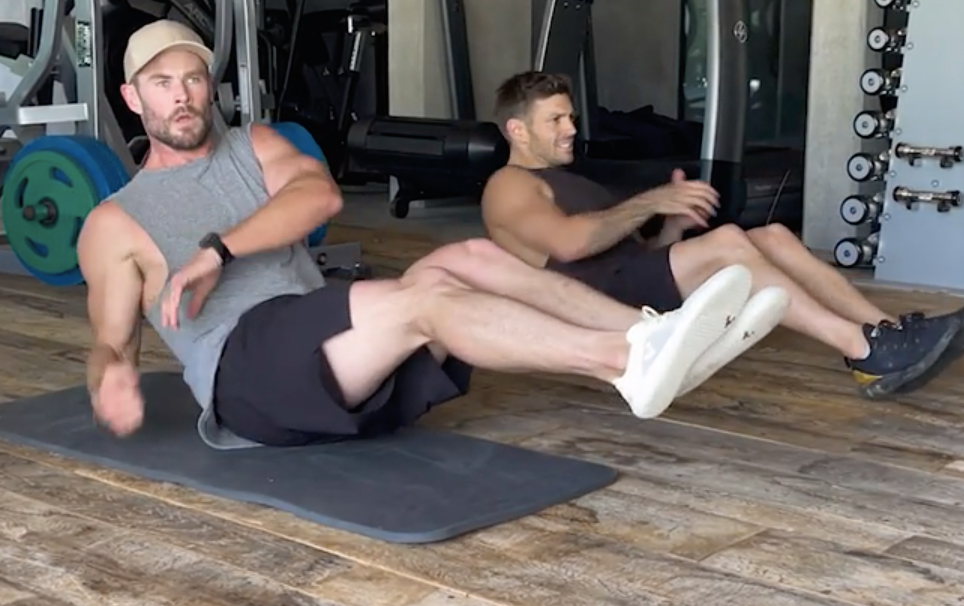
The original abdominal block adds three rounds of five exercises, fifteen repetitions each and 30 seconds between rounds. It includes cable wood chops and several floor-based movements. That is another fifteen exercise bouts after the strength circuit, with extra counting where a movement is prescribed per side.
There is no need to turn the finisher into a contest with your lower back. Keep the movement within a range you can control. If you are swinging your legs or jerking through a twist simply to finish a number, change the task rather than making the final repetitions increasingly different from the first ones.
An editorial alternative is to choose one controlled trunk exercise for a small amount of additional work, or omit the finisher when the main session has already exhausted your useful capacity. This changes the original workout. The benefit is that you can make the decision deliberately, based on what happened in the preceding block.
Do not interpret the presence of an abs circuit as evidence for a specific fat-loss result. A workout description establishes what was prescribed. It does not establish the diet, recovery, adherence or long-term outcomes of every person who tries it. Keep the performance question separate: can you control the exercise and repeat the session productively?
Make the next session easier to judge
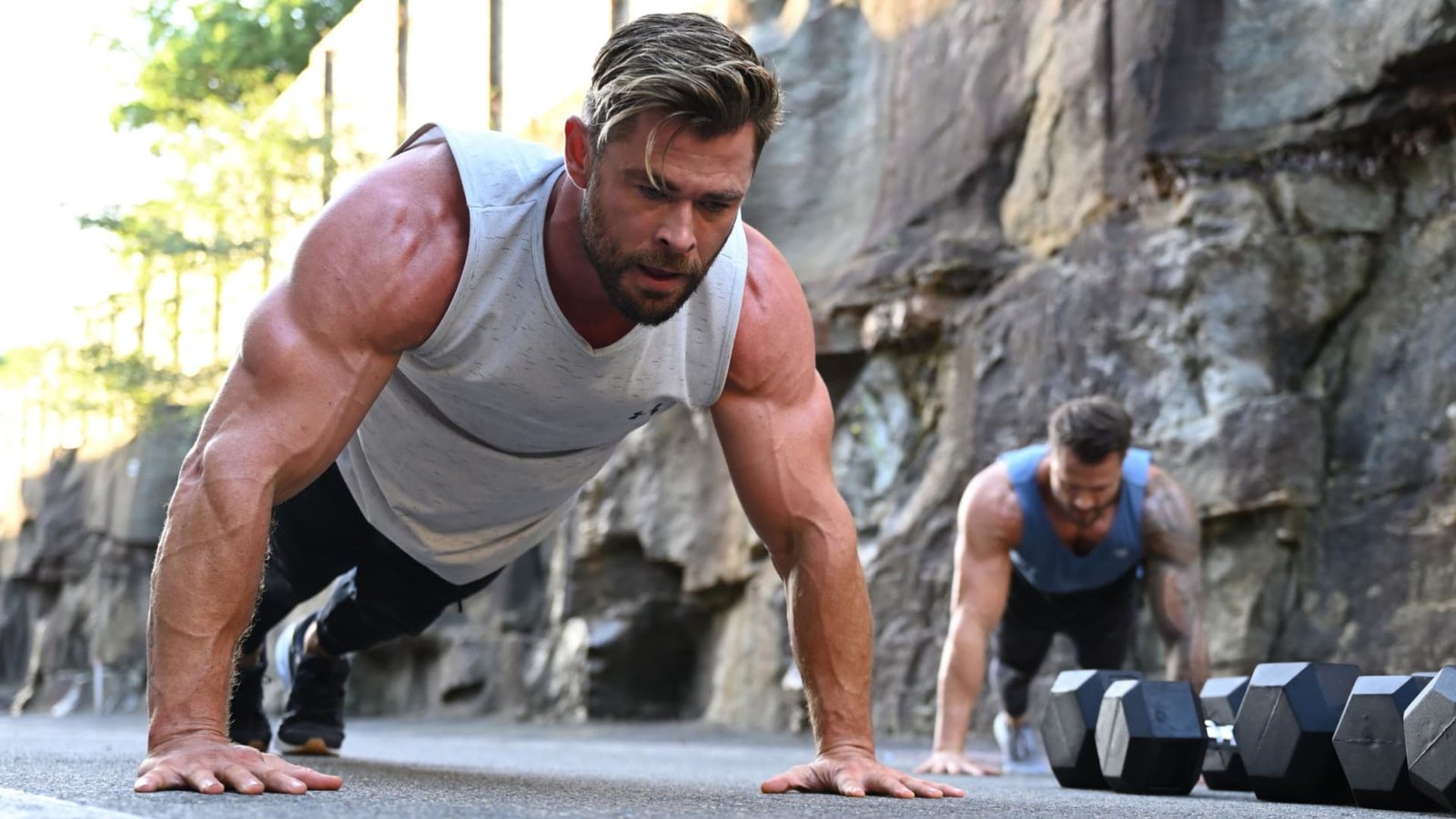
If the workout interests you, write down your adaptation before starting. Record the exercises, loads, repetitions, rounds and rest you intend to use. Afterwards, note what you actually completed. Without that distinction, a shorter rest, heavier dumbbells and fewer rounds can all blur into the same description of a hard workout.
For a simple comparison, keep most variables steady the next time. You might complete the same repetitions with cleaner technique, use a modestly heavier load on one exercise or add a little work after the original trial proves manageable. Avoid changing everything simultaneously if your aim is to understand what improved.
Leave recovery time between hard sessions for the same muscle groups. General strength guidance commonly uses at least two weekly sessions as a baseline, rather than requiring a daily celebrity circuit. Your wider programme matters: adding this workout on top of existing pressing and pulling creates a different workload from using it as your main session.
The Thor association makes the session memorable, and superhero gym designs can be a fun part of that fandom. Keep the distinction intact: merchandise is entertainment, while training decisions should reflect your actual capacity. A familiar character is a good reason to become curious about exercise; it is not a loading recommendation.

Funny Gym Shirts & Workout Gear
Funny gym shirts, tanks, hoodies and workout gear for lifters who like training hard.

Mighty Thor Hero – Superhero , Gymbros & Meme Lovers T-Shirt
Show some superhero attitude with a playful “Mighty Thor Gym Hero” tee.

Thor & Bros Chris Hemsworth Superhero Meme Shirt T-Shirt
Heavy lifts, good laughs, and a little “Thor Pump Cover Gym” energy.

Lightning Is My Pre- Thor Hero – , Superhero , Meme T-Shirt
Bring “Lightning Is My Pre-workout Thor Gym Hero” humor to your next gym day.

Thor Hammer Curls Meme Hero Top Shirt T-Shirt
Show some superhero attitude with a playful “Thor Hammer Curls Meme” tee.

Thunder & Gains Shirt & Thor-Inspired Bros & Heroes T-Shirt
Make gym days more fun with “Thunder & Gains” style.


Thor'S – , Bros & Meme Lovers T-Shirt
Heavy lifts, good laughs, and a little “Thor's” energy.

Worthy Hero Thor Superhero Comic Book & Gymbros T-Shirt
Show some superhero attitude with a playful “Worthy Gym Hero Thor” tee.

Fathor Stronger Than Your Average Dad Hooded Pullover Hoodie
Show off your superhero humor in a laid-back “Fathor” hoodie.

Superhero Diet Fat Thor – Norse Meme Workout Vest Muscl Tank Top
Your gym-day look, with a playful “Superhero Diet Fat Thor” twist.
Hemsworth’s tour session gives you a concrete workout to examine. The useful response is to understand its structure, choose a manageable entry point and keep a record that makes the next decision clearer. Completing an appropriate version consistently is a more meaningful target than winning a single exhausting imitation.