Advertising disclosure: This page includes affiliate product links that may earn us a commission, as well as products from our own store.
Bent Press: Learn to Move Under the Kettlebell Before Chasing Weight
A bent press looks like a one-arm overhead press performed at a strange angle. Watch the kettlebell more closely, though, and a different movement appears: the lifter lowers and rotates underneath it, straightens the arm, then stands with the weight overhead. That distinction changes how you should learn it.
The attraction is a technical lifting skill that combines a supported rack, coordinated body movement and an overhead finish. It deserves patient practice rather than a test of how much you can rescue. Start with a load you can manage comfortably throughout the setup and return, and treat coaching as useful feedback rather than a sign that the exercise is beyond you.
1. Establish the rack before moving underneath
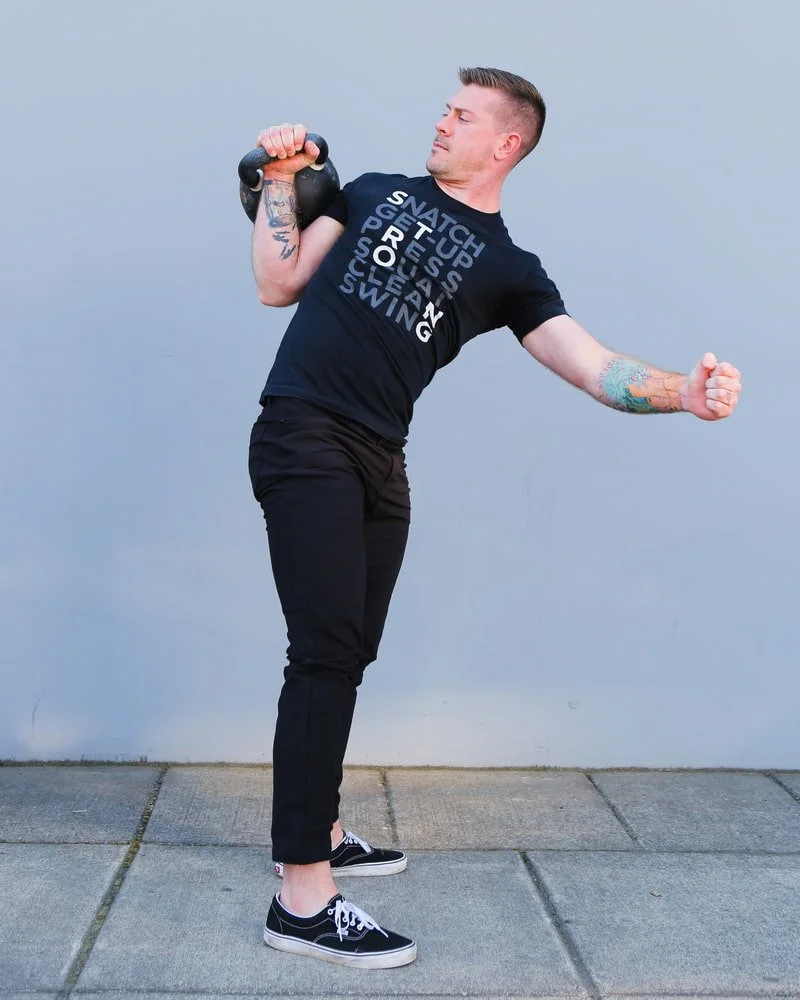
Begin with the kettlebell at the shoulder and the forearm upright beneath the handle. Find a stance that gives your torso room to turn away from the bell. Feet angled away from the loaded side can help create that space; copying an exact foot angle matters less than maintaining support and a controlled route underneath.
The elbow begins close to the side of the torso, supported rather than floating out in front. Rotate through a comfortable upper-body position without forcing the shoulder backward. If the bell immediately pulls the wrist sideways, or you cannot settle into the rack without shuffling, simplify the setup before attempting the rest of the lift.
A practical first exercise is to rehearse the start without weight, then repeat it with a light bell. Check that you can enter and leave the position deliberately. This separates a setup problem from a load problem: adding weight will not clarify a position that already feels uncertain unloaded.
Choose the implement with the whole movement in mind. Kettlebell handle size and bell shape affect how it sits against the forearm. A dumbbell is another implement used for bent pressing, but its balance and clearance differ. Switching tools is a new practice task, not evidence that the same load should feel identical.
2. Move your body down instead of driving the bell up
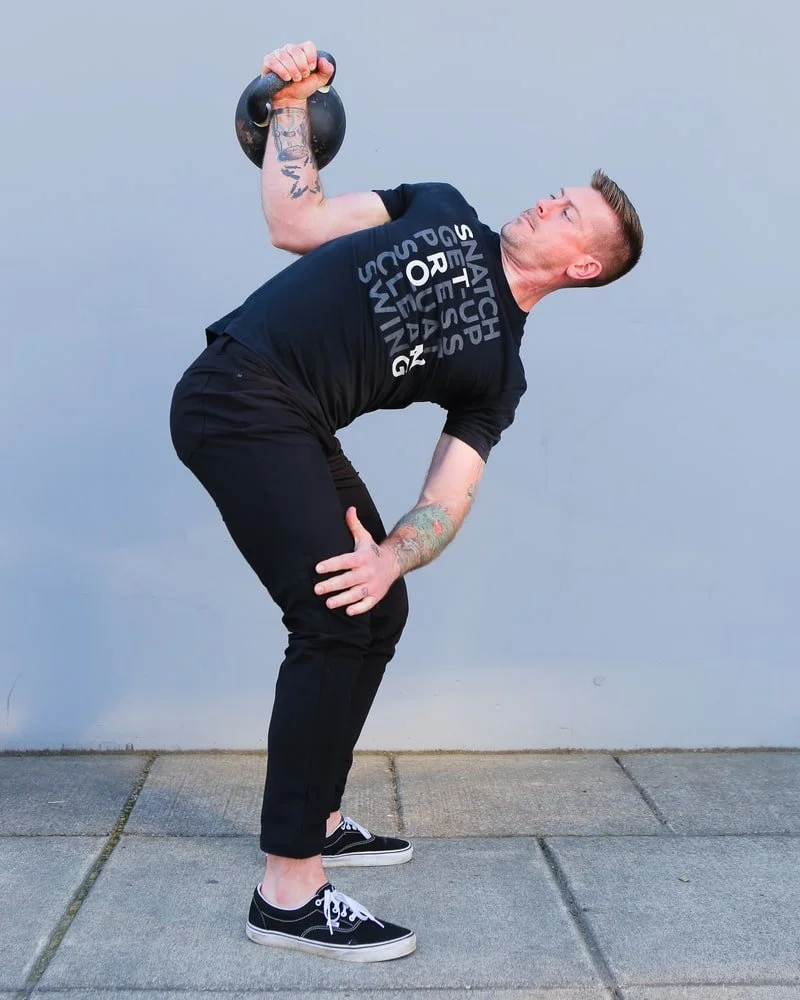
From the supported start, move the hips back and lower the torso away from the kettlebell while keeping the forearm beneath it. The arm gradually straightens as your body moves underneath. The useful distinction is between creating room under the load and trying to push the load upward with a bent-over shoulder press.
Expect the bell to stay at roughly the same height during this part, rather than following the rising path of a strict press. It does not need to remain frozen in space to the millimeter. The coaching idea is to reduce unnecessary upward pushing while organizing your body beneath the hand.
Work slowly enough to notice where the movement changes. If the elbow shoots outward or the forearm tips, stop and reconsider the position with a lighter load or no load. A side view can help reveal whether you are moving underneath or simply leaning and pressing. Film from outside the lifting area, with the camera secured before starting.
Keep the distinction clear when judging progress. A heavier repetition completed through a different, hurried pattern may tell you less than a lighter repetition that follows the intended path. The immediate goal is a repeatable movement, not a new number for your overhead-press log.
3. Finish under control, then stand and return
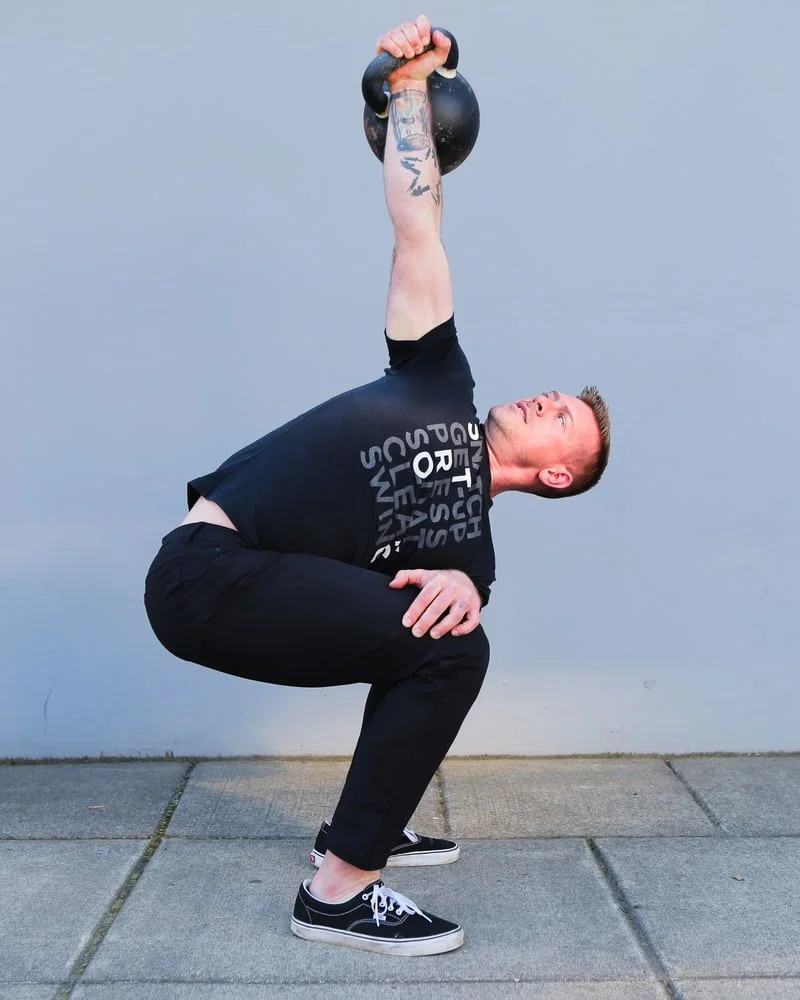
Once the arm is straight and the weight is supported overhead, finish by bringing the body upright beneath it. The stand is its own phase. Avoid rushing it while the elbow is still bending or the bell is drifting away from the supported position.
Think through the return before the first repetition. You need a manageable route back to the rack and a controlled way to place the kettlebell down. The overhead finish is not the end of the task if getting down requires an improvised catch. Use a load and practice arrangement that let you finish the entire sequence deliberately.
Keep the surrounding floor clear, with enough room for your stance and the full movement. A crowded gap between benches is a poor place to learn a lift involving rotation and an overhead load. If you do not know how to end an unsuccessful attempt, establish that procedure with a qualified coach before adding weight.
Short practice sets make each return easier to assess. For example, perform one controlled repetition, reset fully and decide whether the next attempt should repeat the same task. This is a learning example rather than a tested optimal prescription. Stop the practice when control deteriorates, not after accumulating several increasingly uncertain attempts.
4. Understand the windmill-like and squat-under finishes
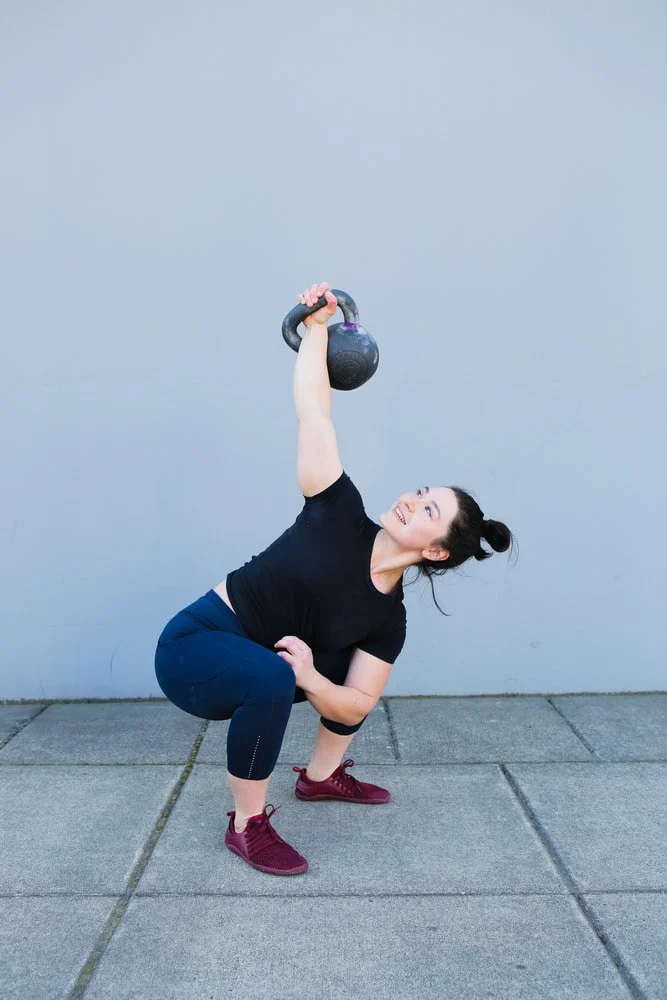
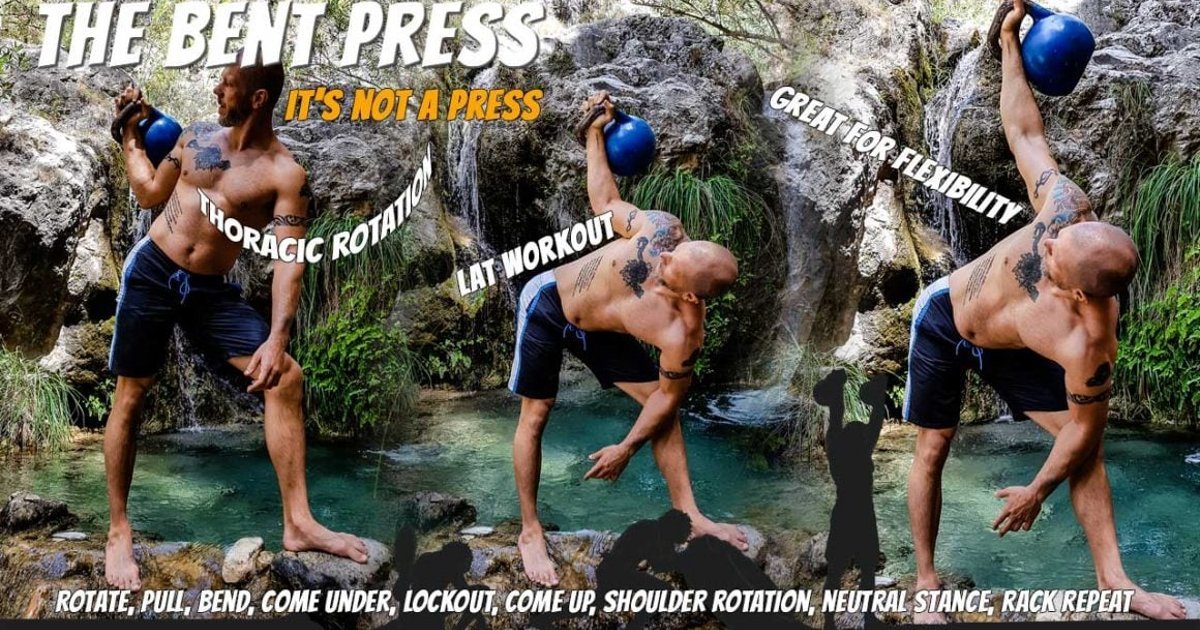
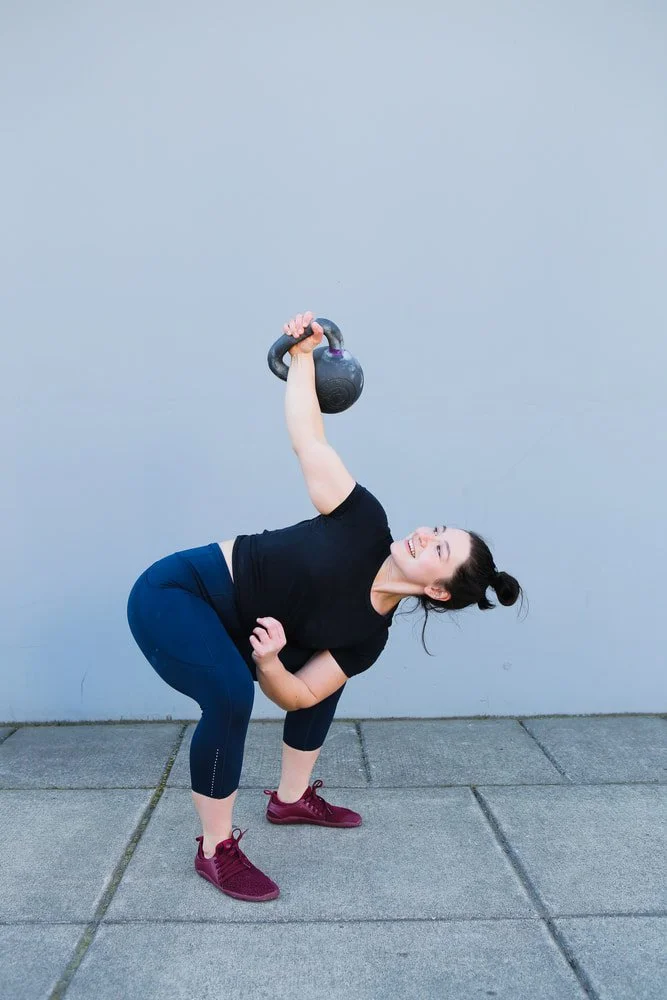
Not every bent press reaches the same bottom shape. Some lifters use a position resembling a windmill, with more hip hinging and one leg comparatively straight. Others bend both knees more and move into a squat-under position. Body proportions, available motion and the technique being taught influence that choice.
The visible difference does not make these unrelated exercises. In both approaches, the lifter moves beneath the load before standing. Nor does it make either position automatically suitable for every person. A photograph shows one moment in someone else’s lift; it cannot establish the stance or depth you should force yourself to reach.
A standing windmill also differs from a bent press because its loaded arm starts straight. Practicing that position can be part of a coaching progression, but it does not replace learning the bent press’s transition from a bent elbow to a supported lockout. Half-kneeling drills offer another way to explore components without copying the entire standing lift immediately.
Use those distinctions to ask better questions during instruction: Where should my elbow begin? Am I moving under the hand? Which bottom position can I reach and leave consistently? Specific observations are more useful than trying to imitate the deepest position in a demonstration.
5. Build a repeatable skill before increasing the challenge
Keep early practice brief enough to remain attentive to each phase. An example is a few singles per side, with a complete reset and enough rest to repeat the same movement. The appropriate load may be much lighter than your normal pressing weight. There is no universal kilogram starting point or requirement to outlift your strict press.
Record the implement, load, side and the part that needed attention. “Rack stayed settled; lost position while standing” gives you a more useful next-session target than “felt awkward.” If one side needs a simpler drill, give it that drill rather than forcing matching weights to make the log look symmetrical.
Progress one element at a time. Repeat a consistent light version before increasing load; avoid simultaneously adding weight, repetitions and a new bottom position. Adjustable equipment can offer loading options, but check its locking mechanism and clearance for the actual movement. Plates or add-on weights are useful only where the manufacturer permits their use.

Equipment Worth Exploring
Explore equipment, accessories and gear from our carefully selected range.

Cast Iron Kettlebells
Textured cast-iron kettlebells for swings, squats, carries, and full-body training.


Rubber Hex Dumbbells
Rubber-coated hex dumbbell pairs with a stable shape for home and commercial strength training.


Grip Plates
Rubber-coated weight plates with handholds for loading barbells and machines.
The bent press can sit alongside ordinary presses, get-ups and other strength work without replacing them. Its value here is learning this particular skill. It does not establish guaranteed shoulder-health benefits, superior muscle growth or automatic transfer to every overhead lift. Keep those claims separate from the satisfaction of performing a difficult movement well.

Funny Gym Shirts & Workout Gear
Funny gym shirts, tanks, hoodies and workout gear for lifters who like training hard.

Heart Shaped Kettlebell Valentine’s Day in Love with Ke T-Shirt
Make gym days more fun with “Heart Shaped Kettlebell Valentine’s Day” style.

Strawberry Kettlebell – Viral Kettlebell Meme Decal for Sticker
Stick a little “Strawberry Kettlebell” humor on your favorite gear.

Dumbbell Meme Shirt – Essential & Gymbros Seeking T-Shirt
Make gym days more fun with “Dumbbell Gym Meme” style.

Control Your Gains Stoic Greek God Marble Sculpture T-Shirt
Make gym days more fun with “Control Your Gains Stoic Greek God Marble” style.

Lift Smart Brain Weight Plate Mind Muscle Connection 45 T-Shirt
For laid-back days and lifting humor: “Lift Smart Brain Weight Plate”.


Earth Kettlebell Meme Shirt – Lifting The Earth T-Shirt
Show some lifting attitude with a playful “Earth Kettlebell” tee.


The Only Difference Between Good And Great Is One T-Shirt
Bring “The Only Difference Between Good And Great” humor to your next gym day.

Gym Equation Kettlebell Makes Me Happy Workout Decal Sticker
A fun “Gym Equation” touch for bottles, laptops, and lockers.