Advertising disclosure: This page includes affiliate product links that may earn us a commission, as well as products from our own store.
In one eight-week experiment, 21 experienced male lifters trained one leg with blood-flow-restriction cuffs that adjusted pressure as they moved and the other leg with a fixed-pressure setting. Both legs became stronger and showed thigh-muscle growth, but the extra pressure-control feature did not show a measurable advantage. That is a useful finding in a market where increasingly sophisticated equipment can sound like an automatic upgrade. The study does not prove that all BFR methods are equivalent, and it does not invite anyone to reproduce cuff pressures without proper supervision. Here is what actually happened, what it means, and what remains unanswered.
Inside the eight-week study: two pressure modes, two legs
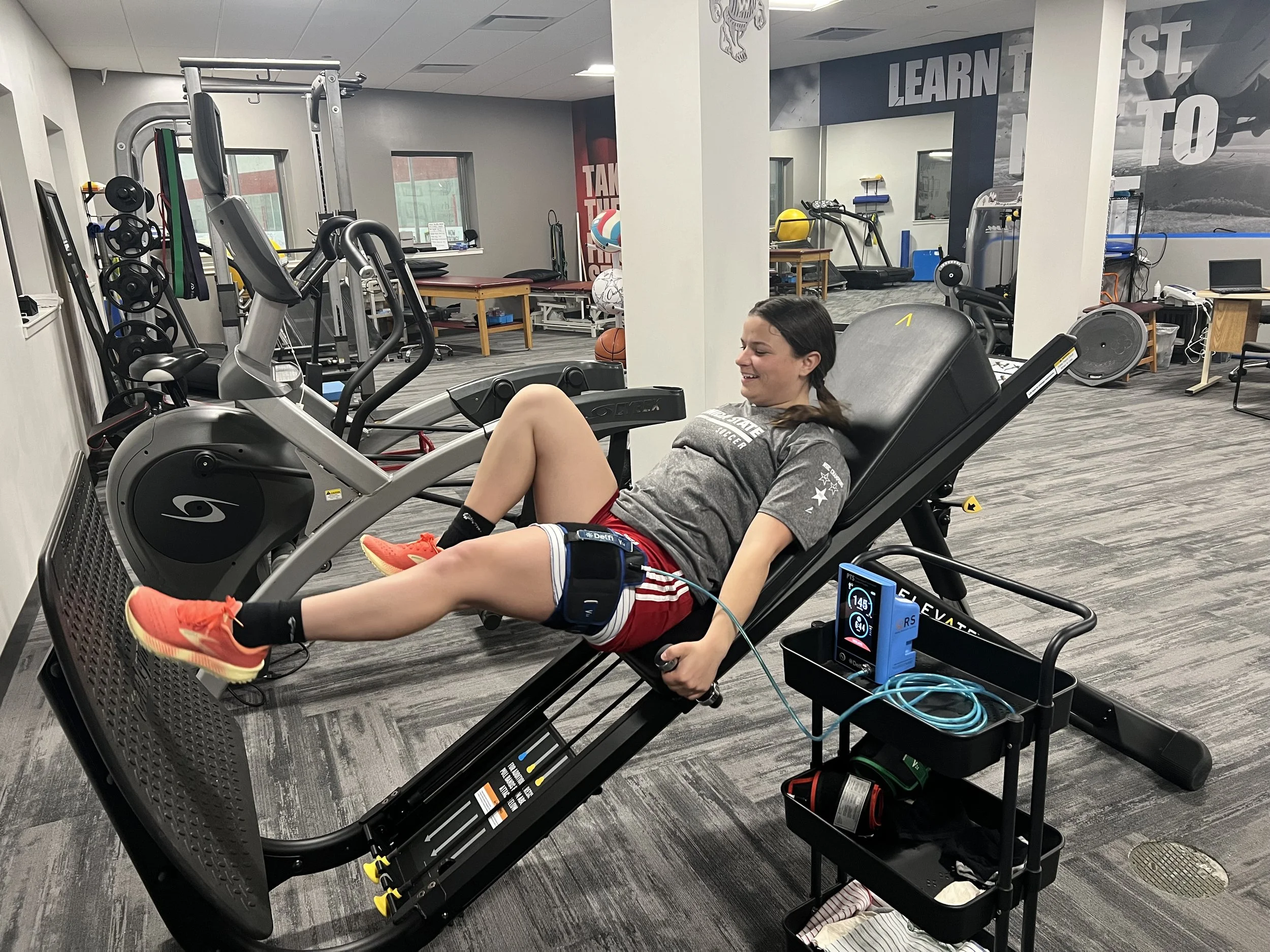
Researchers recruited twenty-four resistance-trained men and analyzed twenty-one who completed the experiment. Participants were about twenty years old on average and had at least three years of lifting experience. This matters immediately: the results describe young, experienced men under controlled conditions, not novices, people recovering from surgery, older adults or anyone training unsupervised with improvised straps. The study was reported in February 2026 and used an eight-week, randomized within-person design rather than comparing two unrelated groups of lifters.
Each participant trained both legs, with one leg randomly assigned to an autoregulated blood-flow-restriction cuff setting and the other to a non-autoregulated, fixed-pressure setting. Sessions took place twice weekly and involved single-leg squats and knee extensions. Researchers standardized the programmed training, measured each person’s limb occlusion pressure, and prescribed sixty percent of that measured pressure in both conditions. Those details limit the question being tested: the comparison was about the cuff’s response to pressure changes, not whether blood-flow restriction is universally superior to regular strength training.
Before and after the intervention, investigators measured portions of the quadriceps by ultrasound, including muscle thickness and cross-sectional area, and tested strength on the trained movements. They also collected perceived effort and discomfort at selected sessions. A separate leg acting as its own person’s comparator helps reduce differences in genetics, habits and starting strength, but it does not eliminate measurement uncertainty or prove the result will generalize across devices.
What autoregulated and fixed-pressure cuffs actually change
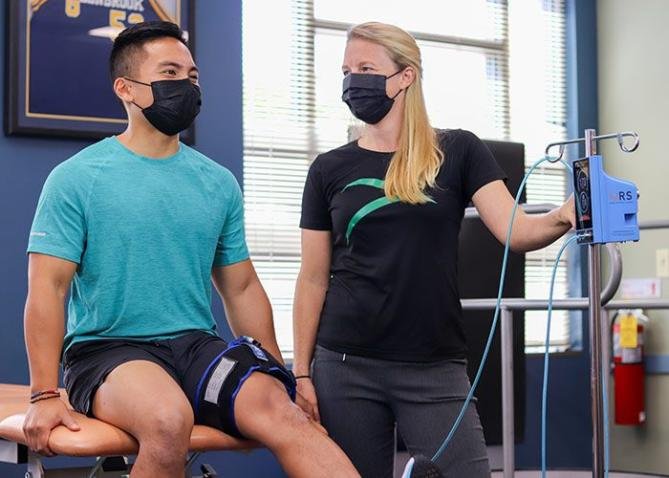
Blood-flow-restriction training uses a properly fitted proximal-limb cuff to alter circulation while the athlete performs resistance exercise, often with lower loads than would be selected for conventional heavy sets. The pressure is usually referenced to an individual’s measured limb occlusion pressure rather than chosen as an arbitrary tightness. That measurement and the clinical screening that precedes it are not the same thing as tying on a generic band and guessing how tightly it should feel.
In the study, an autoregulated setting actively adjusted cuff pressure when contractions and changing muscle shape would otherwise shift the pressure at the limb. The non-autoregulated setting maintained its programmed inflation without the same active response. Both were assessed with the same device family and the same relative pressure target. Autoregulation, in this context, refers to an equipment-control algorithm. It does not mean the lifter was using autoregulated set selection, daily readiness scores or repetitions in reserve.
A device that holds pressure more consistently can be attractive for usability or monitoring, yet a technically smoother pressure trace is not automatically a bigger muscle-building stimulus. That is the key distinction this research probes. Participants still had to perform progressive exercise, and any adaptation could arise from the training work common to both legs. Neither condition was an untreated control, so the design cannot isolate how much of the observed growth came specifically from restriction rather than from lifting.
Muscle size and strength improved without a winning pressure mode
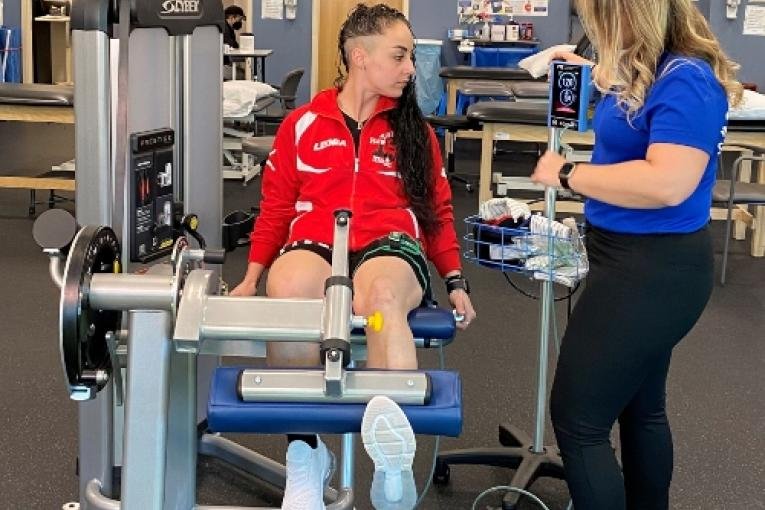
After eight weeks, measurements of quadriceps muscle thickness and cross-sectional area generally improved in both legs. The researchers assessed rectus femoris and vastus lateralis using ultrasound at specified sites. They did not detect a statistically significant difference between autoregulated and fixed-pressure conditions for those muscle-size outcomes. That finding supports similarity under this protocol, but it is not proof that every pressure system, training population or training duration is interchangeable.
Strength followed the same overall pattern. Knee-extension one-repetition maximum rose by approximately 26.9 percent in the autoregulated condition and 26.3 percent in the fixed-pressure condition. The report also describes large gains in the single-leg squat test in both conditions, with no convincing separation between them. Those percentages describe within-study changes from the participants’ own baseline; they should not be advertised as predicted gains for someone buying a cuff or adding a new accessory.
Perceived exertion and discomfort declined over repeated sessions in both conditions, and the investigators found no clear between-mode advantage. That may partly reflect participants becoming familiar with the work. Importantly, no adverse events were reported during this small, screened eight-week trial; that observation cannot establish general safety for people with vascular risks or justify unmeasured cuff pressure. The useful headline is narrower than ‘autoregulation does nothing’: the extra pressure-control feature did not produce a measurable advantage on the outcomes studied here.
Why a null difference is not a universal verdict on BFR equipment
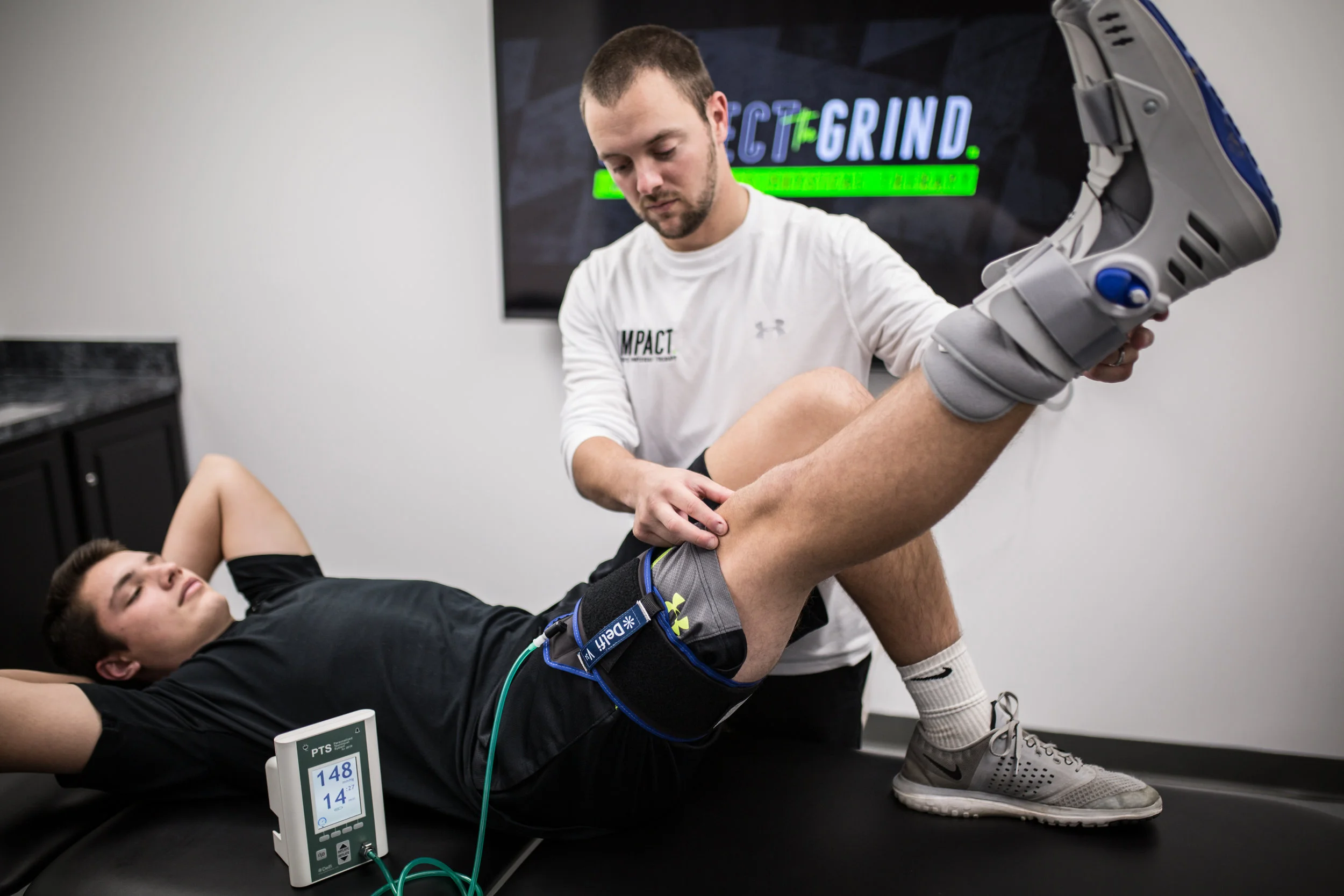
Several design features could reduce the opportunity for the two pressure modes to diverge. Both legs used individualized pressure based on limb occlusion measurements, a matched exercise menu, controlled cadence, and a progressive program. The team used a non-failure training approach, which may have produced less extreme pressure variation than very hard sets taken near exhaustion. When both groups already follow an organized protocol, the pressure algorithm may have less room to influence the result.
Equally important are the constraints. Twenty-one completers cannot reveal every small benefit, identify rare adverse outcomes or cover meaningful differences between women, older lifters and clinical populations. The intervention lasted eight weeks; long-term effects beyond that period were not studied. The comparison was made with one equipment system at a specific pressure and exercise prescription, so a different cuff width, sensor, application or regulation strategy should not be treated as proven equivalent.
Not finding a statistically significant difference is not the same as demonstrating mathematical equivalence. The researchers did not show that autoregulation can never improve comfort, pressure stability or user experience in other settings. Nor did they compare modern autoregulated cuffs against training without a cuff, which would answer a different question altogether. Some authors also had relevant industry relationships disclosed in the publication; readers should weigh methods, endpoints and independent replication rather than treating a manufacturer feature or marketing claim as decisive.

Equipment Worth Exploring
Explore equipment, accessories and gear from our carefully selected range.

Leg Extension/Curl BCO-780
Leg extension and lying leg curl combo with plate loading, band pegs and a cable-loading option.

Seated Leg Combo BCO-680
Adjustable seated leg extension and leg curl machine with band pegs for added resistance.


HUSLA Leg Extension Pad
Pad attachment designed to increase usable range of motion on compatible leg-extension machines.

Compact Leg Press CLP-700
Compact reverse-style leg press with a moving seat carriage and an adjustable footplate.

Leg Press/Hack Squat BPR-790
Convertible 45-degree leg press and hack squat machine with a broad footplate and band pegs.


Studio V-Squat
Plate-loaded V-squat machine for supported lower-body strength training.

GymPin Squat Wedges
Non-slip 15-degree squat wedges help elevate the heels for deeper quad-focused squats.
BFR safety and equipment decisions deserve more care than the hype
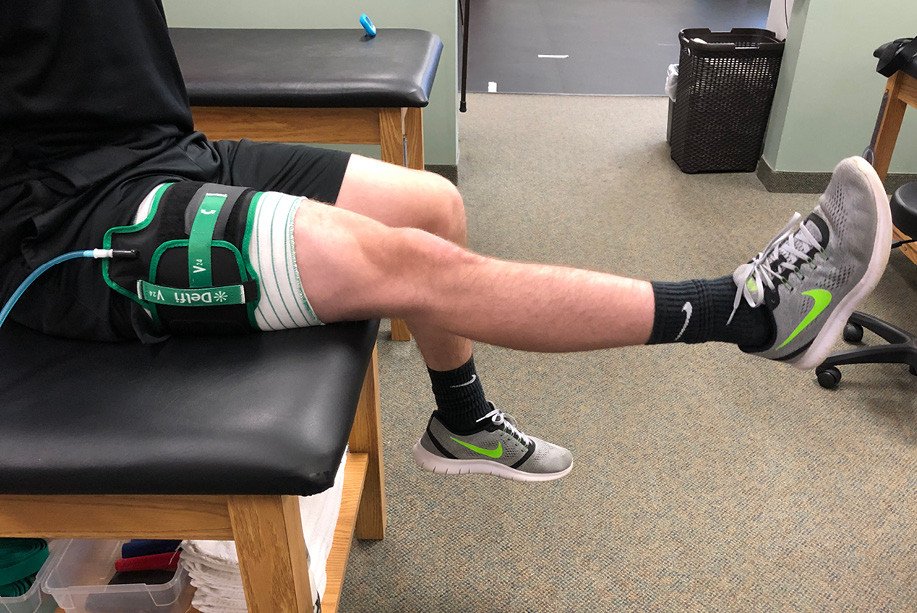
Using blood-flow restriction is not the same as wearing ordinary knee sleeves or compression clothing. Appropriate screening, correct cuff placement, limb-pressure measurement, and device monitoring are important, particularly for people with histories of blood clots, cardiovascular or peripheral vascular problems, neurological symptoms or recent surgery. Anyone with those concerns should discuss eligibility with a qualified clinician rather than inferring safety from a small study of healthy trained men.
The practical danger is attempting to reproduce a research protocol with elastic straps, guessing at a pressure, or assuming that painful numbness, color change or severe discomfort is evidence the cuff is ‘working.’ This article is not a prescription for a pressure percentage or an instruction to perform unsupervised occlusion training. If a supervised session produces unusual pain, tingling, dizziness, alarming swelling or other concerning symptoms, stop and seek professional assessment instead of trying to finish the planned number of repetitions.
For the actual strength movements, the fundamentals remain familiar: choose a stable setup, move through a controlled range, and progress repeatable work without letting the apparatus hide poor technique. A leg-extension station, an adjustable bench or free weights can support ordinary lower-body exercise without requiring blood-flow restriction. A device feature should earn its place by solving a real problem for a particular lifter, not merely because the app can display a more complicated pressure graph.
A four-week decision framework without copying the trial
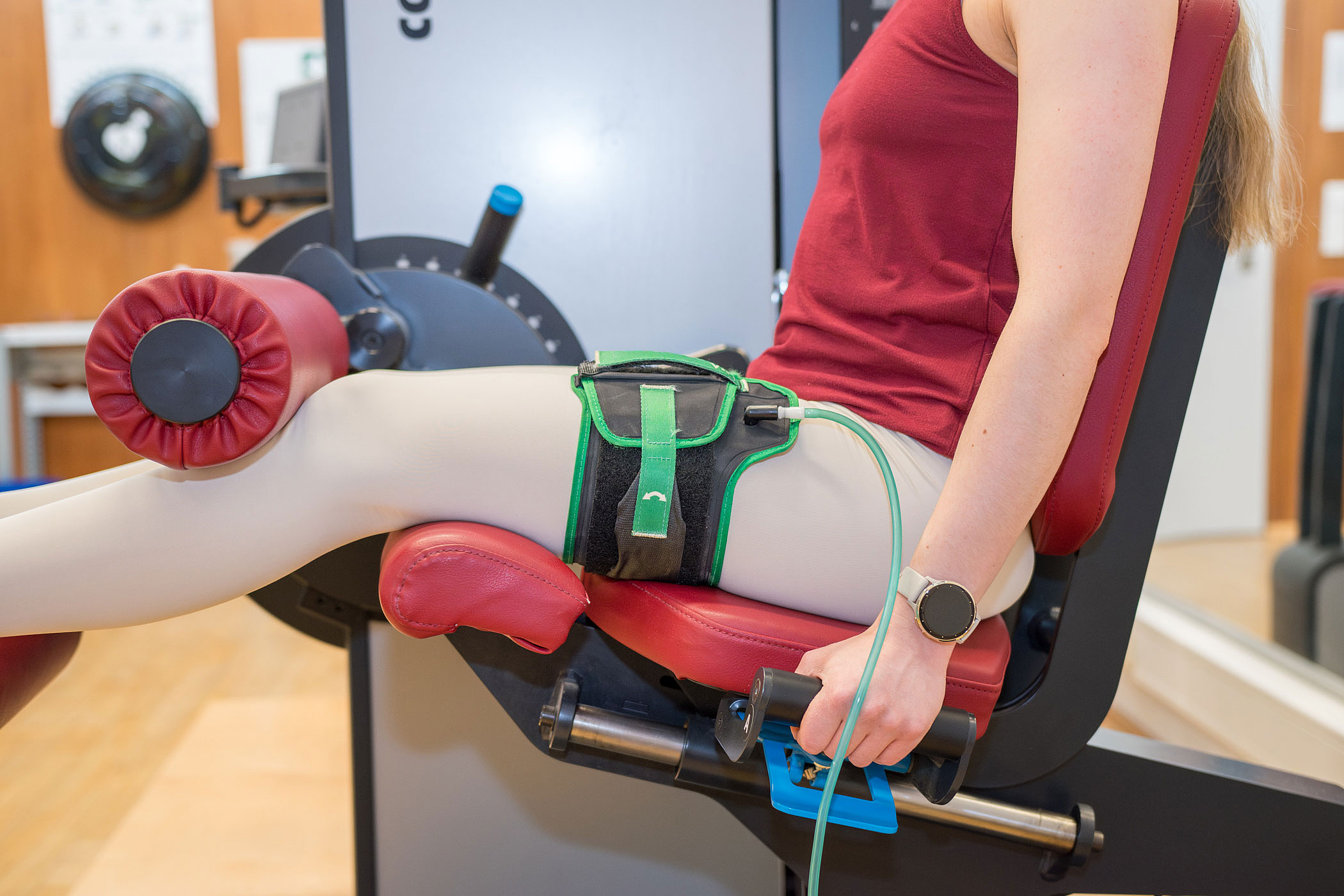
Start by defining the question you actually care about. If your goal is stronger legs, establish baseline performance in a repeatable squat or knee-extension variation using equipment you can control safely. Record the load, range of motion, tempo, repetitions, perceived effort, and how your legs feel the following day. Keep two sessions sufficiently comparable that improvements in performance can be distinguished from changes in setup or depth.
During the first week, practice the chosen movements with manageable loads and log the result. Week two should repeat the same standards before any increase. During week three, a small increase in repetitions or load may be appropriate if movement quality and recovery remain acceptable. At week four, compare like-for-like sets and any daily-life functions you care about. This is a general tracking framework, not the eight-week BFR trial protocol and not evidence that four weeks is enough to assess muscle hypertrophy reliably.
If a qualified professional is considering BFR for a specific use, ask what device-pressure feature is required, how limb occlusion pressure is measured, how contraindications are screened, and what outcome would justify the added complexity. Do not assume the most expensive autoregulation setting must lead to larger quadriceps or a better one-repetition maximum. The research supports a grounded conclusion: in one well-controlled eight-week comparison involving twenty-one trained men, dynamically adjusted pressure did not outperform fixed pressure on measured thigh size, strength, effort or discomfort. Good training structure still matters far more than an unsupported product promise.

Leg Day Shirts & Workout Gear
Leg-day gym shirts and workout gear for lifters who never skip squats, lunges and lower-body punishment.


Girl Bootybuilder Squats & Gains Meme Superhero Leg T-Shirt
Heavy lifts, good laughs, and a little “Gym Girl” energy.

Fried Chicken Gains – Thanksgiving Leg Day Meme Hooded Hoodie
Bring “Fried Chicken Gains” gym humor to lazy days and post-workout plans.

Never Skip Leg Day Flamingo – Fitness Meme Pullover Jum T-Shirt
Keep things casual with a little “Never Skip Leg Day Flamingo” attitude.

Legendary Leg Day – Squat Meme Decal for Gym Bottles & Sticker
Put “Legendary Leg Day” gym humor on your laptop, bottle, or gym gear.

Never Skip Leg Day – NSLD Meme Fried Chicken Jumper Pul T-Shirt
Add a playful “Never Skip Leg Day” touch to your casual rotation.

Thicc AF – Booty Lovers – Meme Shirt Thicc Glutes & T-Shirt
Make gym days more fun with “Thicc AF” style.