How should you choose the weight for today’s workout? One familiar answer is to use a fixed percentage of your maximum. Another is to judge how many repetitions remain in reserve. A third is to measure how fast the final repetition moves. A 2026 randomized pilot compared those approaches for 12 weeks in 36 older adults. Velocity guidance showed a bench-press advantage in one comparison, but the squat and functional results were more nuanced. The lesson is not that everyone needs a sensor: it is that the best load-selection system must be both useful and repeatable.
1. What the 36-person strength trial actually tested
The 2026 randomized pilot enrolled 18 men and 18 women, averaging roughly 62 years of age, and allocated them to three resistance-training load-prescription methods for 12 weeks. The investigators matched participants on baseline strength before allocation. The central question was not whether lifting works, but how to decide the load used in a lifting program as strength and day-to-day readiness change.
One group used percentages of a one-repetition maximum, one used perceived exertion and repetitions in reserve, and one adjusted loads with individualized last-repetition concentric velocity. These are methods of prescribing the weight, not three entirely different forms of exercise. All groups followed structured resistance training and were evaluated on strength, knee-extensor muscle thickness and functional performance.
The primary strength outcomes included four-repetition-maximum bench press and back squat. The functional tests included repeated chair stands, timed up-and-go, fast walking and stair-climb power. Those outcomes matter for different reasons. A better bench press does not automatically mean someone climbs stairs more quickly, and an increase in local muscle thickness is not a measure of whole-body muscle growth.
With only 36 participants split into three groups, this was a small pilot. It can identify a promising difference, but cannot settle which method is universally best for all ages, exercises or training histories. Any recommendation should reflect both the positive results and the uncertainty.
2. Three methods, three ways to handle a difficult workout
Percentage-based training begins with a tested or estimated maximum. If the squat maximum is 100 kg, a planned session at 70% would use about 70 kg. It is straightforward to schedule, easy to repeat and convenient for tracking. However, a percentage that feels manageable on Monday might feel surprisingly hard after poor sleep, an illness or a demanding week. The estimate can also become outdated as the lifter grows stronger.
RPE and repetitions in reserve ask the lifter to judge effort. Stopping a set when approximately two clean repetitions remain is a two-reps-in-reserve target. This can account for good and bad days without changing the overall program. The limitation is accuracy: beginners frequently misjudge how many repetitions they could complete, and effort can be difficult to estimate on unfamiliar exercises.
Velocity-based loading measures movement speed. The trial used an individualized last-repetition velocity approach, so the speed of the final concentric repetition helped determine training load. A reliable sensor can reveal a performance change that the lifter may not notice. But sensors cost money, and measurement accuracy depends on setup, exercise consistency and interpretation.
These systems need not compete in everyday training. You can begin with a percentage, use perceived effort as a reality check and consult bar speed if a trustworthy measurement device is available. Technique and recovery still matter more than slavishly following a number.

Equipment Worth Exploring
Explore equipment, accessories and gear from our carefully selected range.
VOLTRA
Compact digital cable trainer with smooth, adjustable resistance.

Go-Tone Pro
Portable digital cable trainer with up to 66 lb (30 kg) of adjustable resistance.




FID Bench MAX
Adjustable bench offering flat, incline, and decline positions + adjustable headrest.


3. The bench-press result that made velocity stand out
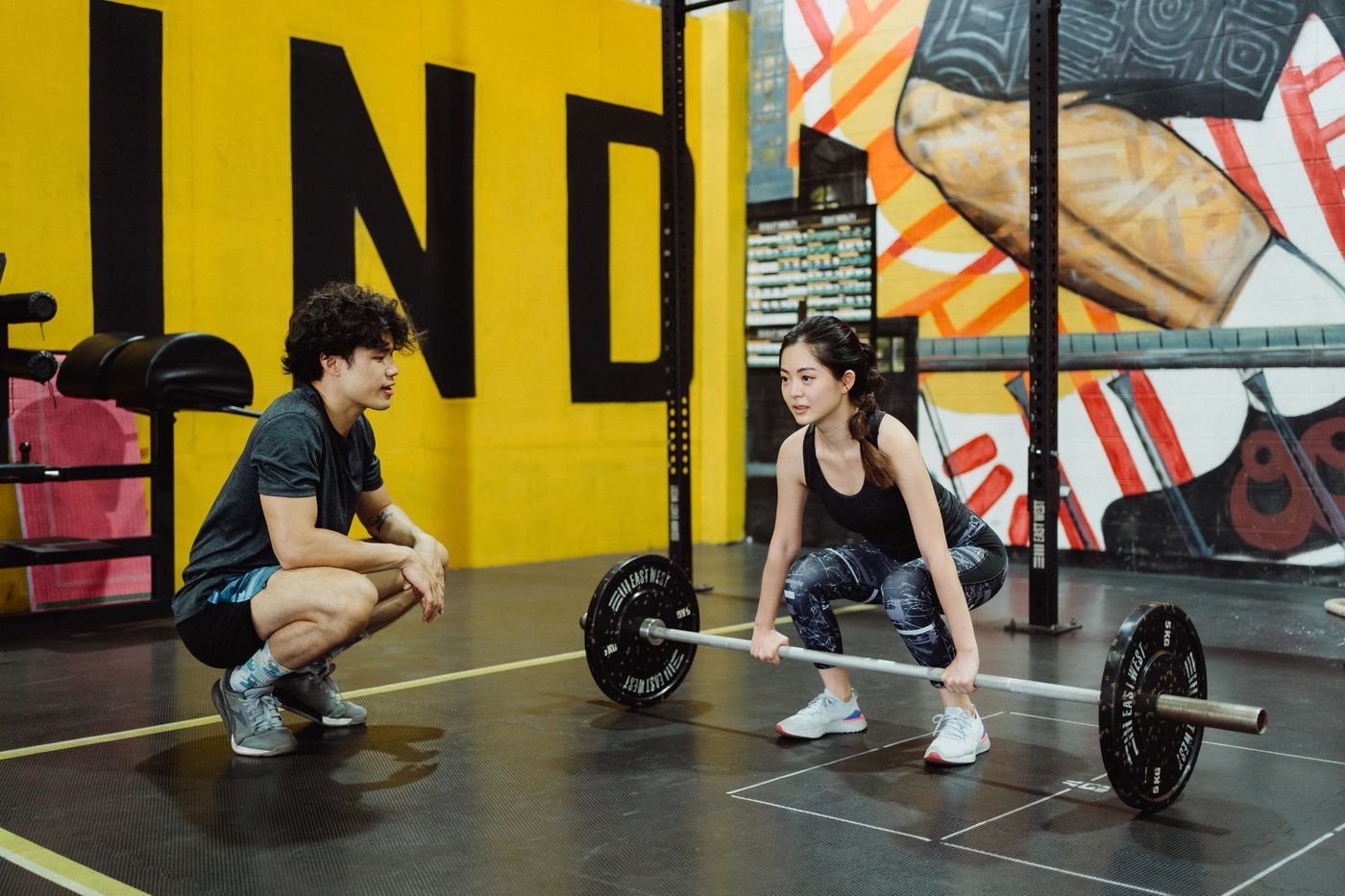
After 12 weeks, the velocity-guided group improved its four-repetition-maximum bench press by an average of 12.2 kg, with a reported standard deviation of 4.9 kg. The fixed-percentage group improved by 6.8 kg, with a standard deviation of 4.5 kg. The RPE-based group improved by 8.5 kg, with a standard deviation of 4.4 kg. The overall group-by-time comparison for bench press reached statistical significance, and the velocity-guided improvement exceeded the fixed-percentage improvement.
That is a useful finding for this specific test. It is not proof that a velocity sensor doubles muscle growth or that RPE is inferior for everyone. The RPE group’s intermediate gain was not statistically distinguishable from either other group. Group averages can also hide a wide range of individual responses.
Objective feedback might encourage a lifter to increase load when the final repetition moves faster than expected or reduce it when a normal weight suddenly slows. Either response could help manage training stress. But the trial does not isolate which mechanism caused the bench-press difference, so explanations should remain hypotheses rather than established facts.
Without a sensor, track the load, repetitions, a consistent effort estimate and the quality of the last few repetitions. When three sets of eight become comfortably repeatable at the target effort, increase the weight slightly. When technique deteriorates or a planned moderate set becomes a grind, maintain or reduce the load. A clear rule is more useful than guessing afresh each workout.

Powerlifting Shirts & Lifting Gear
Powerlifting shirts and gym gear for squat, bench and deadlift lifters who live for heavy numbers.

Bending Bars Meme – Barbell Squat Bench Deadlift, & T-Shirt
Heavy lifts, good laughs, and a little “Bending Bars Gym Meme” energy.

Iron Made Heavy Metal Made by Iron Rock Music for Bodyb T-Shirt
Show some gym-day personality with “Iron Made Heavy Metal Made by Iron Rock”.

Barbell Breaker Heavy Metal Workout Bar Breaker Lifting Hoodie
Keep it laid-back with a little “Barbell Breaker” attitude.

I’m Strong Barbell Heartbeat Muscle Shirt for Powerlift Tank Top
Show some personality between sets with “I’m Strong Barbell Heartbeat”.

Iron Is My Therapy – Lifting Bodybuilding Powerlifting Sticker
Bring “Iron Is My Therapy” attitude to your water bottle or laptop.

Gym The Bar Does Not Lie Medieval Knight Crewneck for S T-Shirt
Show some gym-day personality with “The Bar Does Not Lie Medieval Knight”.


Lifting Is My Therapy – Bodybuilding Powerlifting Meme Hoodie
Stay casual and show some powerlifting attitude with “Lifting Is My Therapy”.

Lift Heavy – Hardcore Heavy Metal Gym Muscle Shirt for Tank Top
Bring “Lift Heavy Tank” humor to your next lifting session.

Lift Together Grow Stronger Buddies Friendship Workout T-Shirt
Make gym days more fun with “Lift Together Grow Stronger” style.
4. Squats and muscle thickness: the necessary caveats
Every group significantly improved its four-repetition-maximum back squat. Average increases were 17.9 kg with fixed percentages, 22.3 kg with RPE and 28.5 kg with velocity guidance. That numerical ranking looks impressive, but the between-group comparison for squat did not reach the study’s significance threshold (p = 0.106). It would be incorrect to call velocity training a proven squat winner based on these results.
A nonsignificant difference does not establish that all methods are exactly equal. Small trials have limited power to distinguish modest effects from normal variation. The appropriate interpretation is narrower: each method produced squat gains, and the study did not establish a reliable between-group squat advantage.
For knee-extensor muscle thickness, the velocity-guided group increased by approximately 0.71 cm compared with 0.21 cm in the RPE group, a significant contrast in the reported analysis. That is a localized measure, not a complete assessment of total-body hypertrophy. A strength increase can also reflect technical learning and nervous-system adaptations, not merely muscle growth.
Choose a metric that fits your objective. If your goal is a stronger press, monitor press performance. If it is leg strength, measure a repeatable lower-body lift. If everyday function is the priority, track meaningful daily tasks as well. Cherry-picking one dramatic outcome is a poor substitute for reading the full pattern.
5. Functional fitness improved with all three approaches
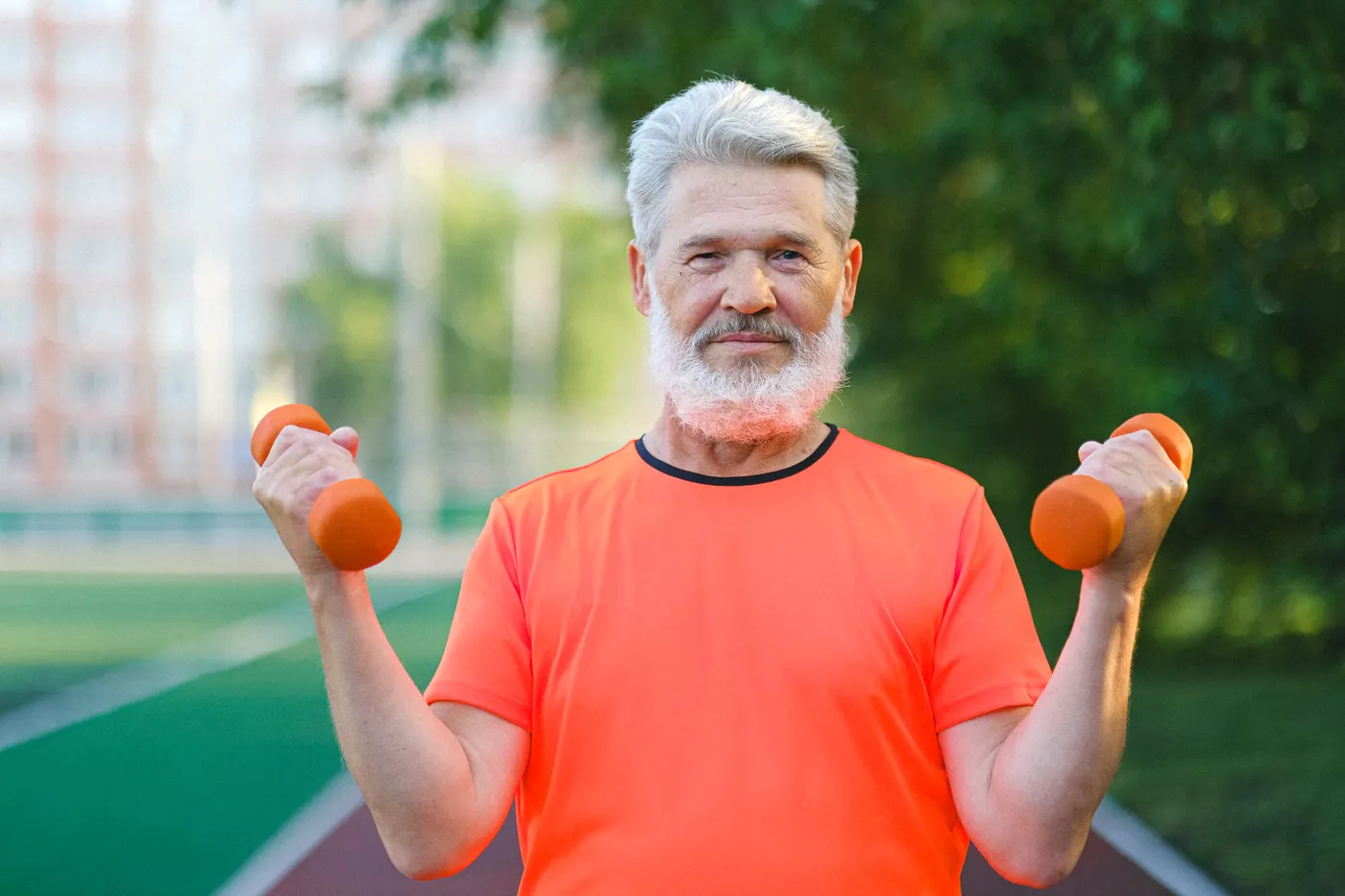
The investigators also measured five repeated chair stands, timed up-and-go, six-meter fast walking and stair-climb power. All three training groups improved functional performance similarly. This matters because getting up from a chair, turning, walking quickly and climbing stairs are valuable outside the gym. The study did not show that an expensive load-tracking device was required to improve these abilities.
Functional tests involve coordination, balance, confidence, joint comfort and familiarity as well as muscular strength. The results cannot tell us exactly which adaptation caused each improvement. They do support the practical idea that a structured, progressively challenging lifting program can benefit multiple abilities in adults around this age.
Broader systematic reviews of resistance training in older adults also report improvements in strength and functional performance across a variety of programs. Those reviews include different people, training doses and outcomes, so they should not be used to inflate this small trial into universal proof. They reinforce the broader value of consistent training rather than a single load-selection formula.
Someone interested in maintaining independence could track a comfortable chair stand, a carry, a stair climb and the ease of moving household items. If the barbell numbers improve but the desired daily activity remains difficult, add more task-specific practice. That is a reason to adapt the program, not a reason to abandon strength training.
Equipment Worth Exploring
Explore equipment, accessories and gear from our carefully selected range.


GymPin Squat Wedges
Non-slip 15-degree squat wedges help elevate the heels for deeper quad-focused squats.

Safety Squat Handles
Barbell squat handles that reduce shoulder positioning demands during high-bar squats.



6. Choosing the right system for your own training
For a beginner, repetition ranges and modest increments are usually easier to apply than frequent maximum tests or detailed bar-speed profiles. Choose a load that permits controlled technique and several repetitions in reserve. Repeat the same basic exercises long enough to recognize normal effort. A qualified trainer can help establish appropriate starting loads if pain, limited mobility or medical issues complicate exercise selection.
Percentage-based plans remain useful for experienced lifters who appreciate predictable blocks. They make training volume and intensity easy to audit. Revisit estimated maximums periodically and allow reasonable adjustments when the day’s performance clearly differs from the plan. Never force a weight just because a spreadsheet says so.
RPE is particularly useful when sleep, work stress or recovery fluctuate. It becomes more accurate with practice. On safe movements, occasionally compare an estimated reps-in-reserve number with what you can actually do. If the estimates are consistently far off, adjust the calibration rather than pretending the number is objective.
Velocity tracking adds value when you already have a reliable sensor, consistent technique and a clear reason to monitor movement speed. The technology is not mandatory for strength or hypertrophy. Measurement placement, range of motion and exercise setup must remain comparable from session to session; otherwise small changes may reflect noise.
The best approach is one you can execute on an ordinary training day. Keep the decision rules simple, make the exercise challenging enough to stimulate progress, and avoid turning every session into a maximum test.
Bodybuilding Shirts & Workout Gear
Bodybuilding shirts, tanks and gym gear for lifters chasing muscle, size, symmetry and the pump.

Progressive Overload Milo Tee
Bring “Progressive Overload Milo Bull” humor to your next gym day.

Consistency Is Key Stoic Greek God Marble Sculpture T-Shirt
Make gym days more fun with “Consistency is Key Stoic Greek God Marble” style.

The Only Difference Between Good And Great Is One T-Shirt
Bring “The Only Difference Between Good And Great” humor to your next gym day.

Whole Lotta Reps AC/DC – Rock Music & Gymbros – Meme T-Shirt
Bring “Whole Lotta Reps AC/DC” humor to your next gym day.

Bodybuilder Repsody – Queen Rock Music Meme T-Shirt
Make gym days more fun with “Bodybuilder Repsody” style.

Be Happy Lift Heavy Happy Weights Emoji Weight Plate Sm T-Shirt
Make gym days more fun with “Be Happy Lift” style.

Coffee Shots & Heavy Squats for Caffeine Lovers, Liftin T-Shirt
Show some leg-day attitude with a playful “Coffee Shots & Heavy Squats” tee.

Liftionaire Money Barbell Meme Workout Shirt Bodybuildi T-Shirt
Show some powerlifting attitude with a playful “Liftionaire” tee.

Therapy Barbell – Lifting Bodybuilding Powerlifting Mem T-Shirt
Rep “Therapy Barbell” humor in and out of the gym.

Muscle Mommy Muscle Club for Gym Girls, Lifting, Bodybu T-Shirt
Heavy lifts, good laughs, and a little “Muscle Mommy Muscle Club” energy.
7. A practical 12-week home-gym progression framework
This is a general programming example, not a reconstruction of the trial protocol. Train the whole body twice weekly with at least one rest day between sessions. Day one can include a squat or leg press, horizontal press, row and hip hinge. Day two can include a split squat or step-up, comfortable press, vertical pull and posterior-chain movement. Begin with two working sets per exercise and consider adding a third once technique and recovery are stable.
Weeks 1–2: establish your baseline. Use loads that allow eight to twelve smooth repetitions with approximately two to four repetitions in reserve. Record the weight, reps and how the final set felt. Avoid testing a true maximum on every exercise. If an exercise produces unusual joint pain, adjust the movement, range or equipment instead of pushing through it.
Weeks 3–6: build the work. Keep the load while moving from eight toward twelve repetitions. When the top of the range is repeatable with clean technique, add the smallest practical increment and return to the lower end. RPE users should maintain similar effort rather than forcing an old load. Velocity users should compare readings only under consistent conditions and use a preset adjustment rule.
Weeks 7–10: monitor fatigue. Look for gradual gains while technique remains stable. If performance declines across several sessions, recovery is poor or aches accumulate, temporarily reduce sets or load. One bad workout is not a crisis; a repeated trend is useful information. Keep walking and other activities sustainable.
Weeks 11–12: assess progress. Retest a safe multi-repetition performance target rather than necessarily attempting a maximal single. Compare chair-stand quality, walking confidence or another meaningful functional measure. Decide which loading system helped you make consistent decisions. The goal is to finish stronger with a clear plan for the next block, not to declare one algorithm the winner for everyone.
The 36-person trial offers a promising bench-press signal for objective feedback alongside worthwhile progress with simpler methods. Most lifters will benefit more from consistently applying a workable system than from obsessing over the perfect number.