Advertising disclosure: This page includes affiliate product links that may earn us a commission, as well as products from our own store.
Cable Y raises use two low pulleys and a diagonal overhead path to add controlled shoulder and upper-back work. Here is what the exercise trains, how to set the station, which mistakes matter and how to progress for six weeks without turning a light accessory into a full-body swing.
What a Cable Y Raise Trains: Delts, Traps and Shoulder-Blade Movement
The cable Y raise is an upward, outward arm raise, not a miniature shoulder press. Start with the hands in front of the hips and sweep them diagonally until the arms make a broad Y. Your shoulders move in a plane slightly forward of your torso while the shoulder blades rotate upward to accommodate the reach. That combination makes the exercise useful as controlled accessory work when heavier presses and rows already dominate your program.
The lateral deltoids help lift the upper arms, with anterior and posterior deltoid fibers contributing depending on your elbow and arm path. The lower and middle trapezius, serratus anterior and smaller muscles around the shoulder support the scapular motion. It is misleading to say that one exact muscle works alone or that a lighter Y raise replaces every other shoulder exercise. Training effect depends on range, resistance, effort, anatomy and the rest of your weekly volume.
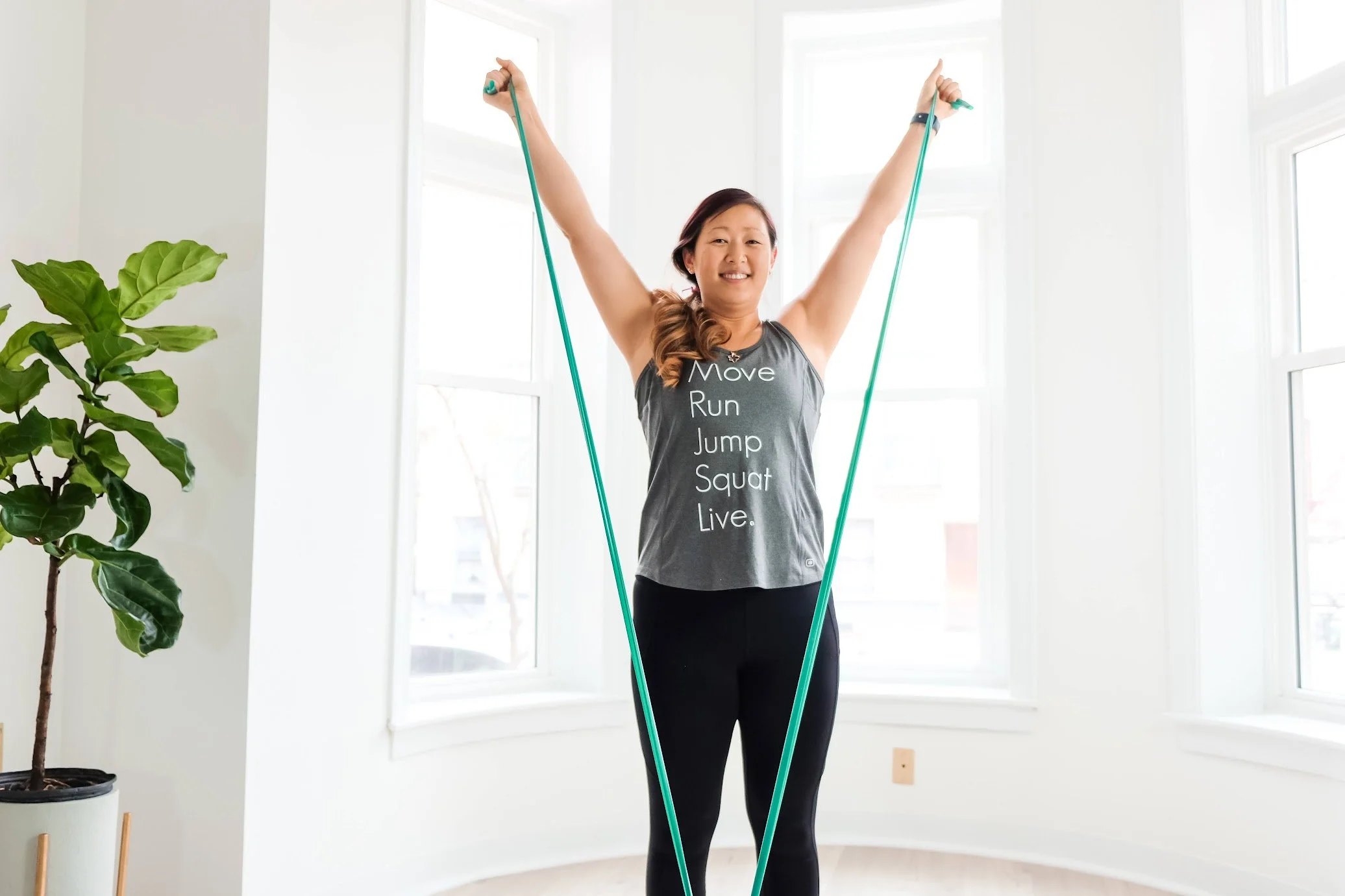
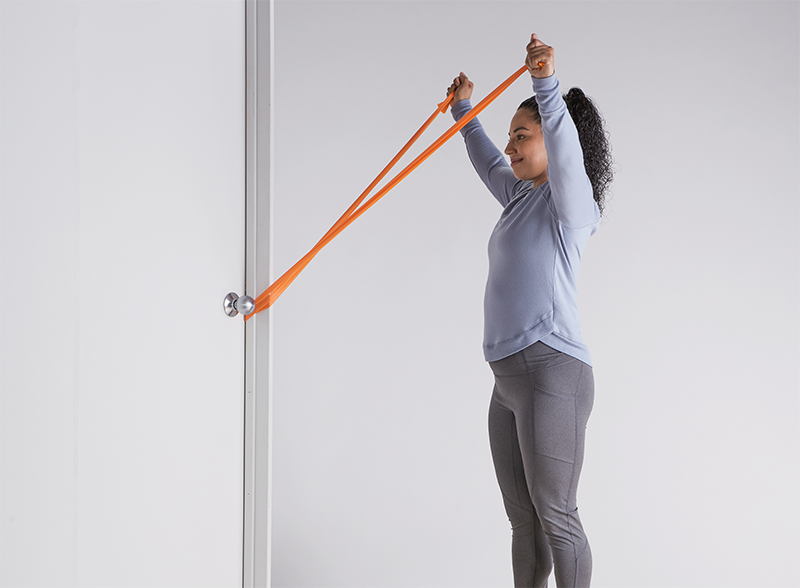
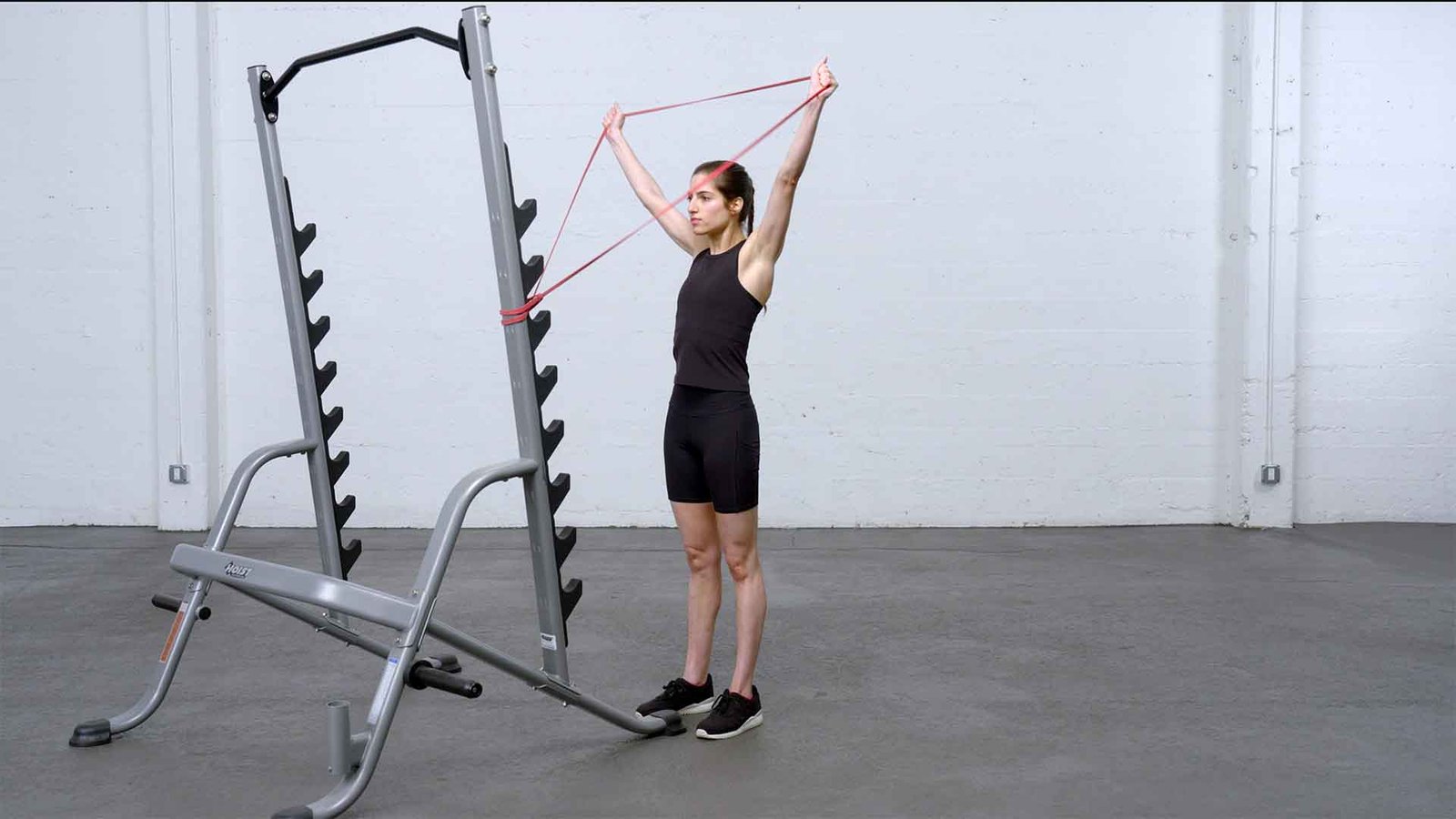
Notice the difference between feeling the upper back work and proving superior growth. Muscle-activation observations during Y-pattern movements cannot establish that cable Y raises prevent injuries, correct posture on their own or produce more hypertrophy than lateral raises. Use the Y as a skillful, measurable exercise, not a treatment. A resistance-band version shown in the accompanying photograph illustrates the same overhead Y shape, but its resistance curve differs from cables.
Set Up Two Low Pulleys for a Repeatable Cable Y Raise
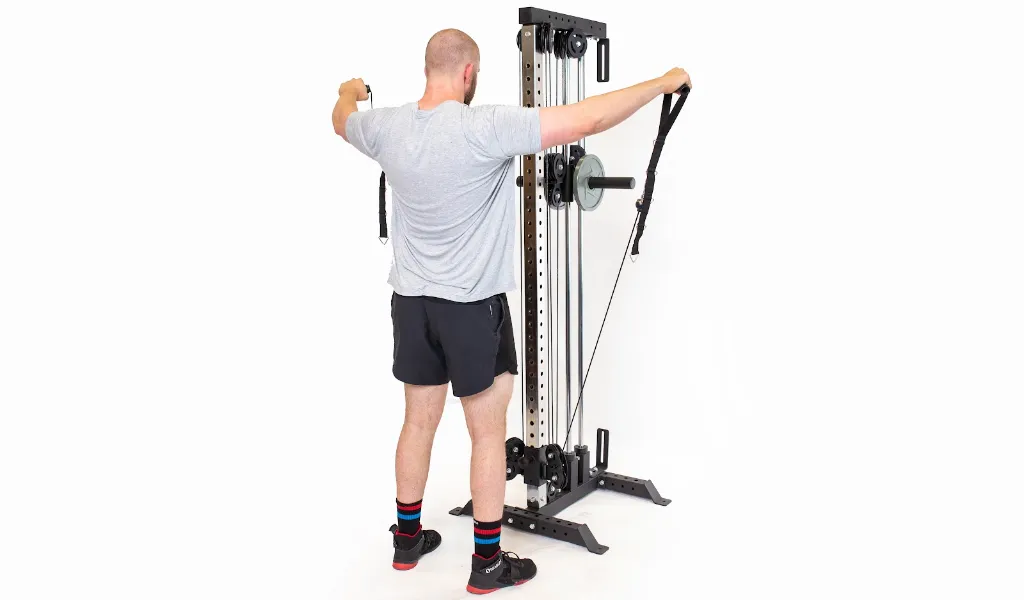
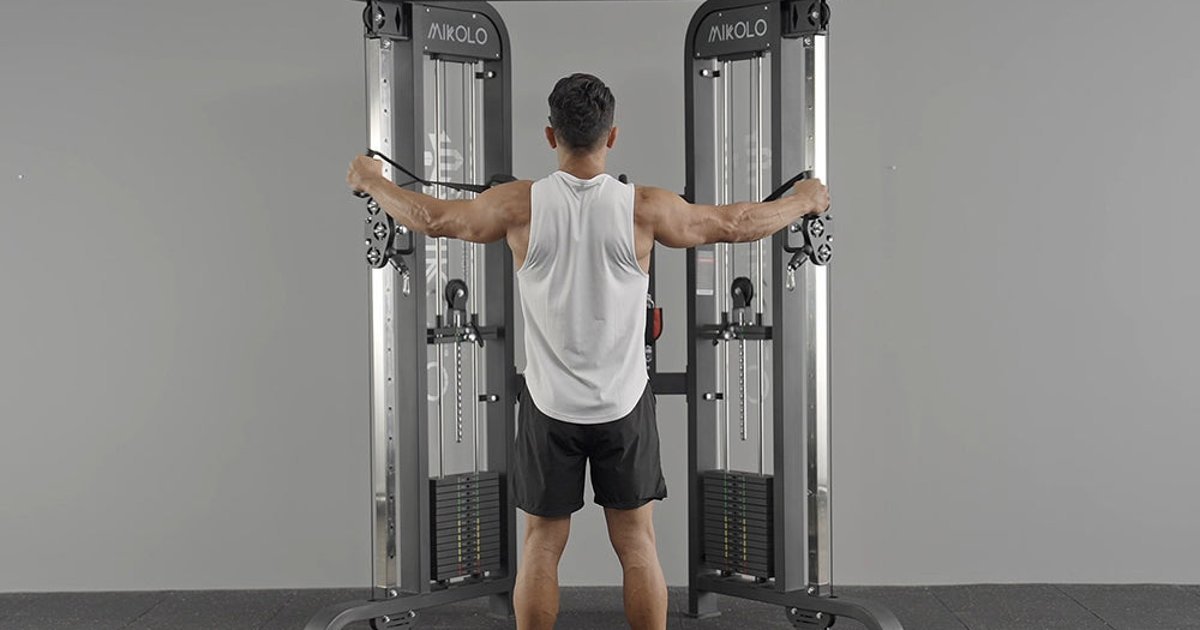
Set a dual adjustable pulley machine to its lowest practical positions and attach two comfortable single handles. Take the left handle in your right hand and the right handle in your left so the cables cross lightly ahead of your hips. Face the station and step back just enough that both cables stay taut without dragging the stack into an awkward starting position. Keep your feet roughly hip-width apart and your knees soft.
Choose the lightest setting that lets you reach diagonally without swinging. The resistance at each hand follows the direction of that cable, so changing your distance from the towers changes the exercise. Record the same pulley heights, distance and handle arrangement whenever you compare load or repetitions. Two nominally equal stacks may not deliver equal hand resistance when their pulley ratios differ; chase a consistent movement instead of a deceptively large stack number.

Funny Gym Shirts & Workout Gear
Funny gym shirts, tanks, hoodies and workout gear for lifters who like training hard.


Dost Thou Even Press Hoodie
Show off your medieval humor in a laid-back “Shoulder Press” hoodie.


Gymbros Meme – Buddies & – Gains & T-Shirt
Bring “Gymbros Meme” humor to your next gym day.

Fake Personal Trainer & Meme Fans Athletic Shirt Tank Top
Train hard, laugh a little, and rep “Fake Personal Trainer”.

Gymrat Mousetrap | Funny Workout Decal For Gym Bags & W Sticker
A fun “Gymrat Mousetrap” touch for bottles, laptops, and lockers.

Musclenomics Muscle Graph : The Ultimate Meme Shirt & T-Shirt
Make gym days more fun with “Musclenomics Muscle Graph” style.

Lift With Me Meme Michelangelo Sistine Chapel & Hoodie
Show off your bodybuilding humor in a laid-back “Lift With Me Gym Meme” hoodie.

Gym Skull Muscle Shirt for Powerlifting Bodybuilding Tr Tank Top
Train hard, laugh a little, and rep “Skull”.

Start tall with ribs over pelvis, chin neutral and a gentle bend at each elbow. The handles begin near the upper thighs, not behind your body. A slight staggered stance can improve stability, but avoid using the rear leg to drive the weight. If the handles cannot travel upward and outward without scraping your arms or trapping the cables, stand a little farther back or reduce the starting cross. Do not force an uncomfortable overhead position.
Perform Each Rep: Thumbs Up, Wide Y and a Controlled Lowering
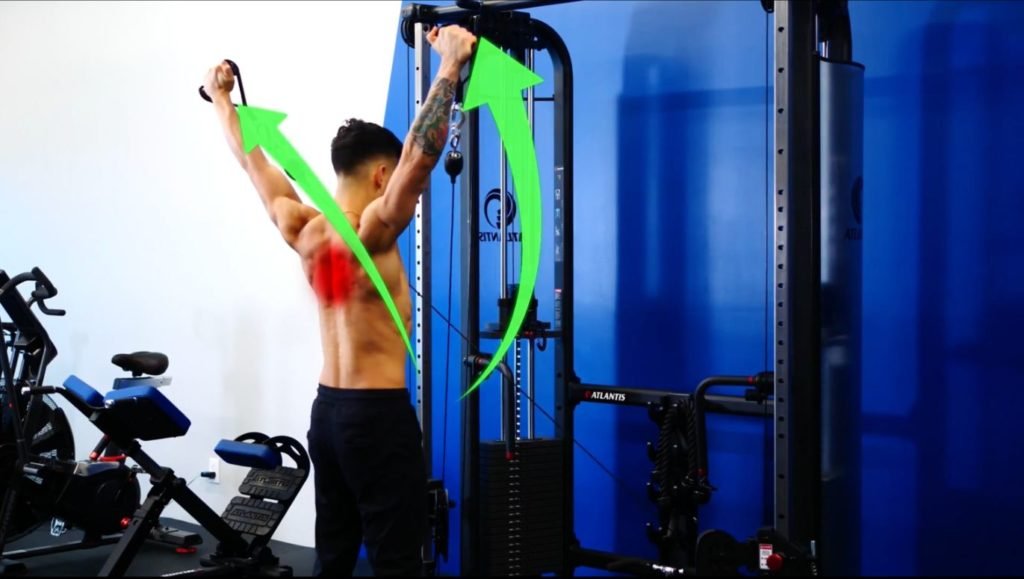
Initiate by moving both hands outward and upward along diagonal lines. Keep the elbows softly bent with about the same angle from start to finish rather than curling the handles as the weight becomes difficult. Think of reaching toward the upper corners of the room. Let the shoulder blades rotate naturally as the arms rise; trying to pin them down throughout the movement can fight the mechanics of overhead elevation.
Finish when the hands form a comfortable Y slightly ahead of the head. That might be near ear height for one lifter and a little lower for another. Stop if you must flare the ribs, lean backward, shrug aggressively or pinch through the shoulders to continue. A thumbs-up or neutral wrist orientation usually makes a smooth path easier. Neither a frozen shoulder blade nor a dramatic squeeze at the top is a requirement.
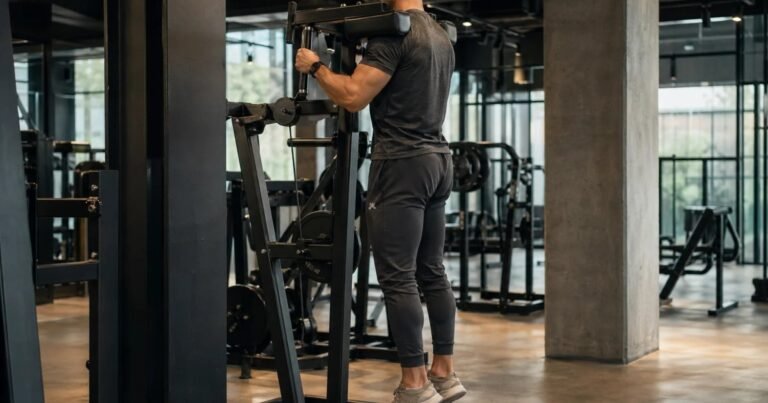
Pause briefly if you can maintain position, then take roughly two to three controlled seconds to lower the handles on the same diagonals. Return to a tensioned start instead of allowing the handles to snap together. Exhale through the raise and inhale on the return if comfortable. Film from behind to compare left and right arm paths. The photographed cable Y raise illustrates the diagonal hand path, although the highlighted arrows on the demonstration image are editorial annotations rather than measured biomechanics.

Equipment Worth Exploring
Explore equipment, accessories and gear from our carefully selected range.
VOLTRA
Compact digital cable trainer with smooth, adjustable resistance.

Go-Tone Pro
Portable digital cable trainer with up to 66 lb (30 kg) of adjustable resistance.

VForce Wall Trainer
Space-saving wall-mounted functional trainer with pivoting cable arms and variable resistance ratios.

VForce 2IN1
Half rack and pivot-arm functional trainer with switchable 1:1 and 2:1 pulley ratios.

VForce 3IN1
All-in-one rack combining an adjustable Smith machine, functional trainer, and free-weight station.

GymPin D Cuffs
Adjustable wrist cuffs with textured grips for supported cable-machine exercises.

GymPin Ergo Handles
Pair of ergonomic cable handles shaped for comfortable triceps and pulling exercises.

Premium Carabiner
Durable carabiner for connecting cable attachments and training accessories.

GymPin D Handle Bar
Multi-use steel D-handle bar for cable rows, pulldowns and other cable exercises.
Seven Cable Y Raise Errors and the Simplest Fix for Each
First, using too much load turns an intended shoulder accessory into a whole-body heave. If your knees spring or torso rocks, reduce the stack. Second, excessive lumbar arching creates fake overhead range; maintain ribs over the pelvis and finish slightly lower. Third, bending the elbows more and more transforms the movement into an improvised high pull; freeze a small, comfortable elbow bend.
Fourth, finishing with the arms nearly horizontal makes a T rather than a Y. A T raise can be useful, but it emphasizes a different path: decide which exercise you are doing. Fifth, pulling the hands behind the ears can create an unpleasant pinched position; end slightly in front of the head instead. Sixth, forcing the shoulders down or locking the shoulder blades can disrupt the upward rotation that accompanies raising the arms. Let them move smoothly without a theatrical shrug.
Seventh, chasing stack numbers across different cable stations can hide deteriorating form and pulley-ratio differences. Progress by adding good repetitions with the same setup before adding a plate. A sensible check is to repeat a set with substantially less weight: if the arm path suddenly looks different, the original load was probably steering the lift. Shoulder discomfort is a reason to modify or stop, not something to push through to finish a prescribed rep count.
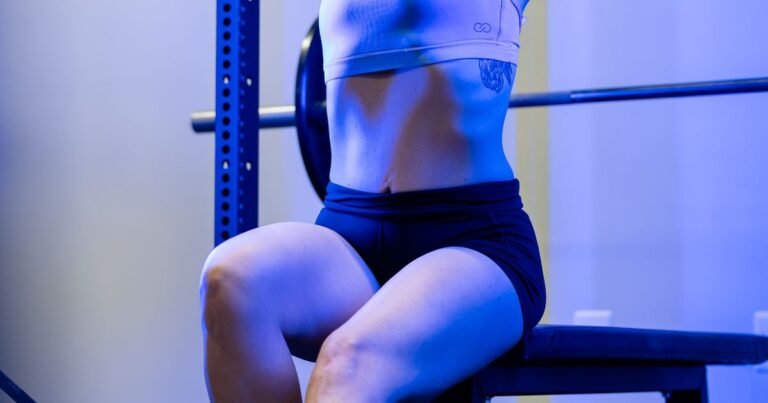
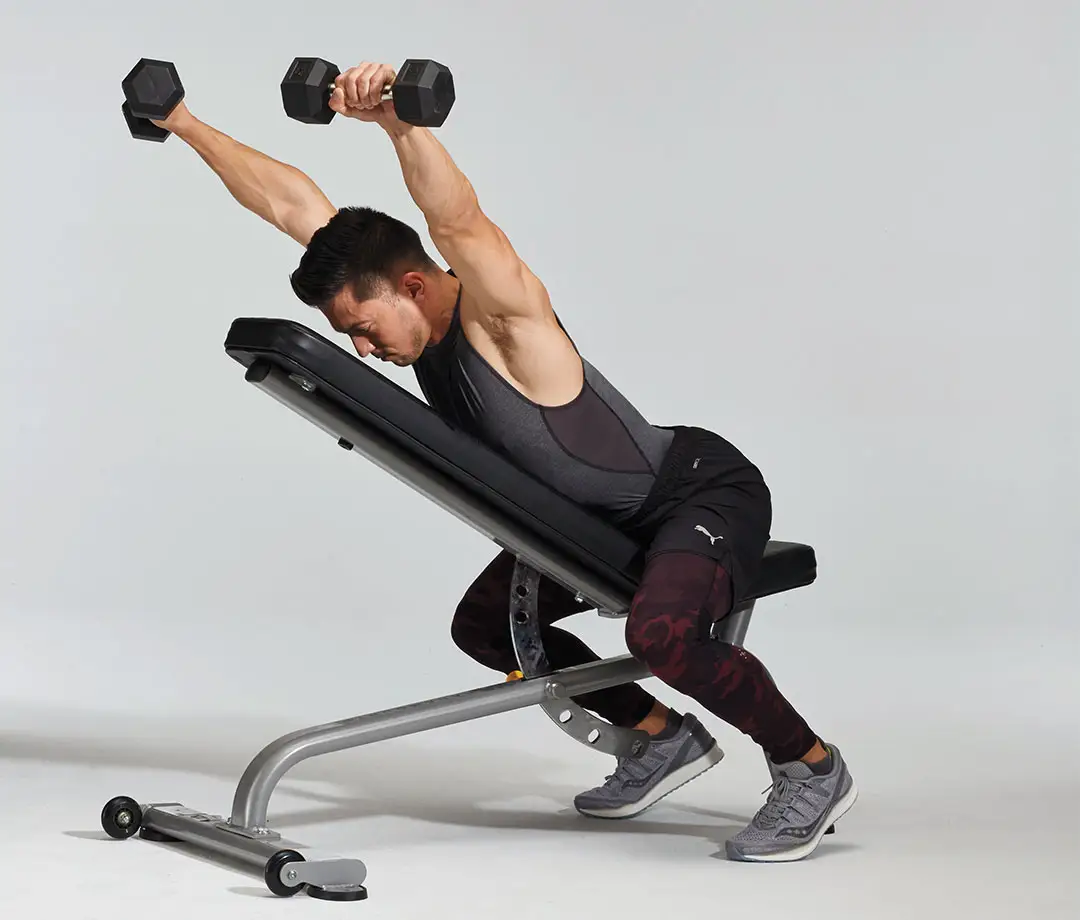
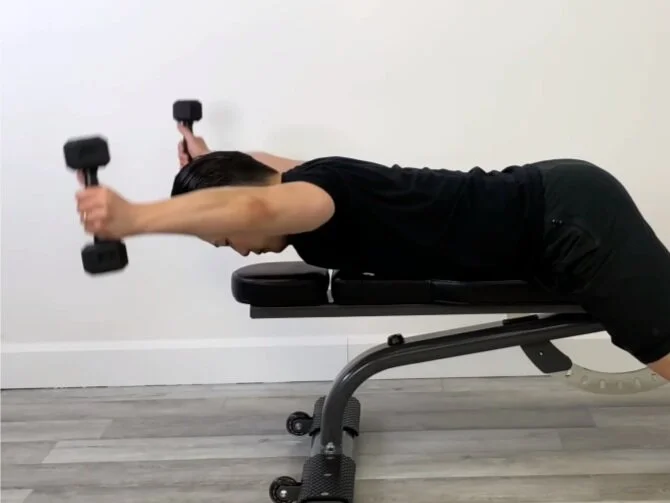
Make corrections one at a time. Changing the load, stance, pulley height and final arm position simultaneously leaves no clear explanation for why a set improved. The accompanying supported Y-raise photograph illustrates a torso-stable alternative when controlling the standing movement is challenging.
Cable Y Raise vs Incline Dumbbell Y, Resistance Bands and Face Pulls
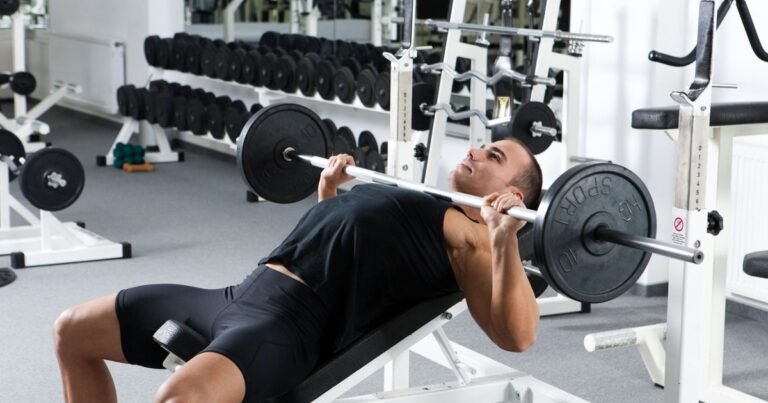
An incline dumbbell Y raise supports the chest and limits body English. That can help a beginner feel the arm path or let a fatigued lifter practice a smaller load. Dumbbells load the movement according to gravity, while cables pull toward the pulley throughout the arc. Neither method has a guaranteed muscle-growth advantage. A sufficiently steep incline and sensible range keep the exercise distinct from an ordinary lateral raise.
Band Y raises travel into the same shape, but the tension generally changes as the elastic stretches. They are portable and can work well in a warm-up; set a band anchor so its line of pull makes sense for your shoulders, and inspect the band for damage. A face pull involves a larger elbow bend and a more horizontal pulling path. It is not the same exercise even though both can recruit rear shoulders and upper-back muscles.
Equipment Worth Exploring
Explore equipment, accessories and gear from our carefully selected range.

Leather Wrist Grips
Padded leather lifting grips help support the hands and wrists on heavy pulling exercises.

U Clips
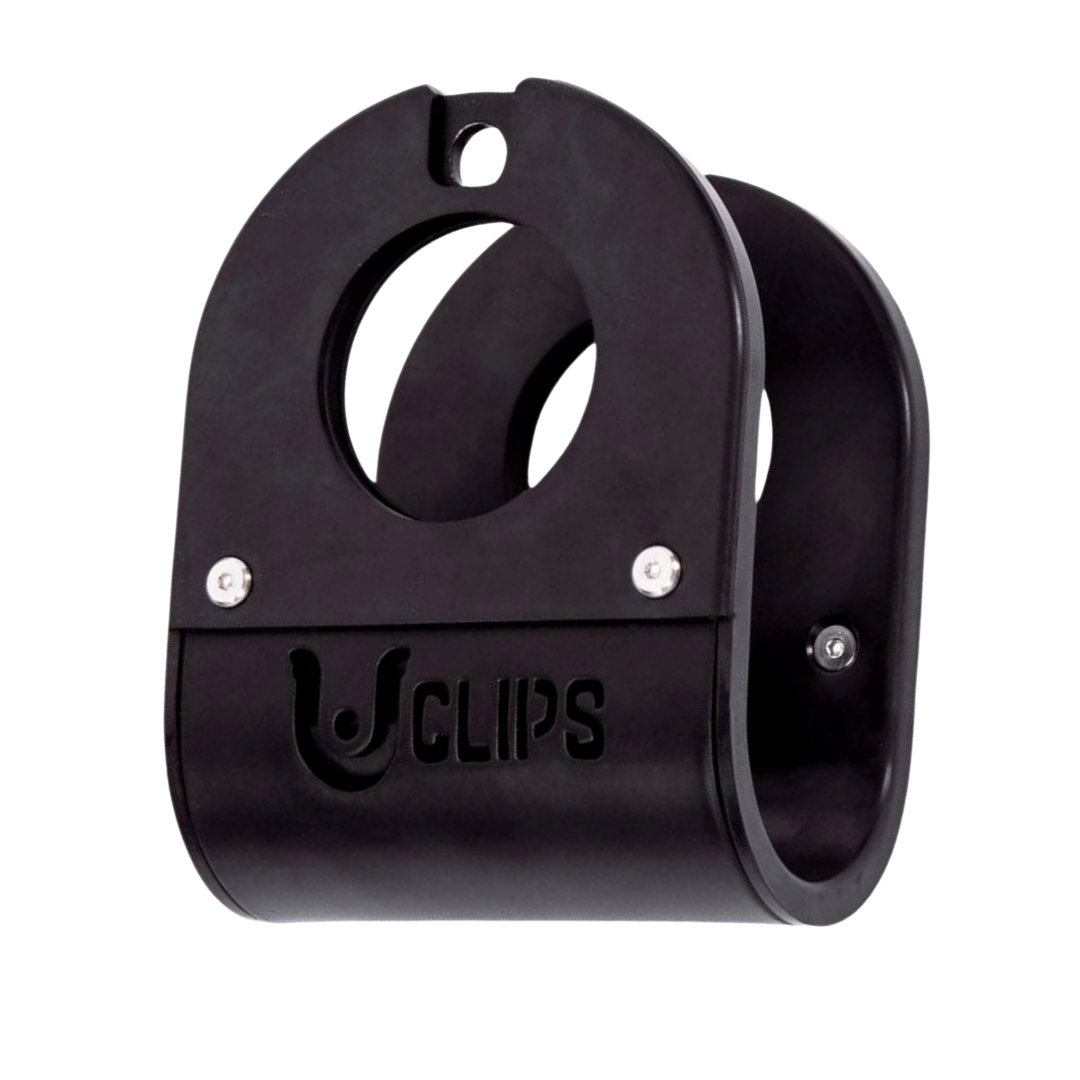
Versatile gym clips for barbell, landmine, and attachment setups.
Horizon Grip
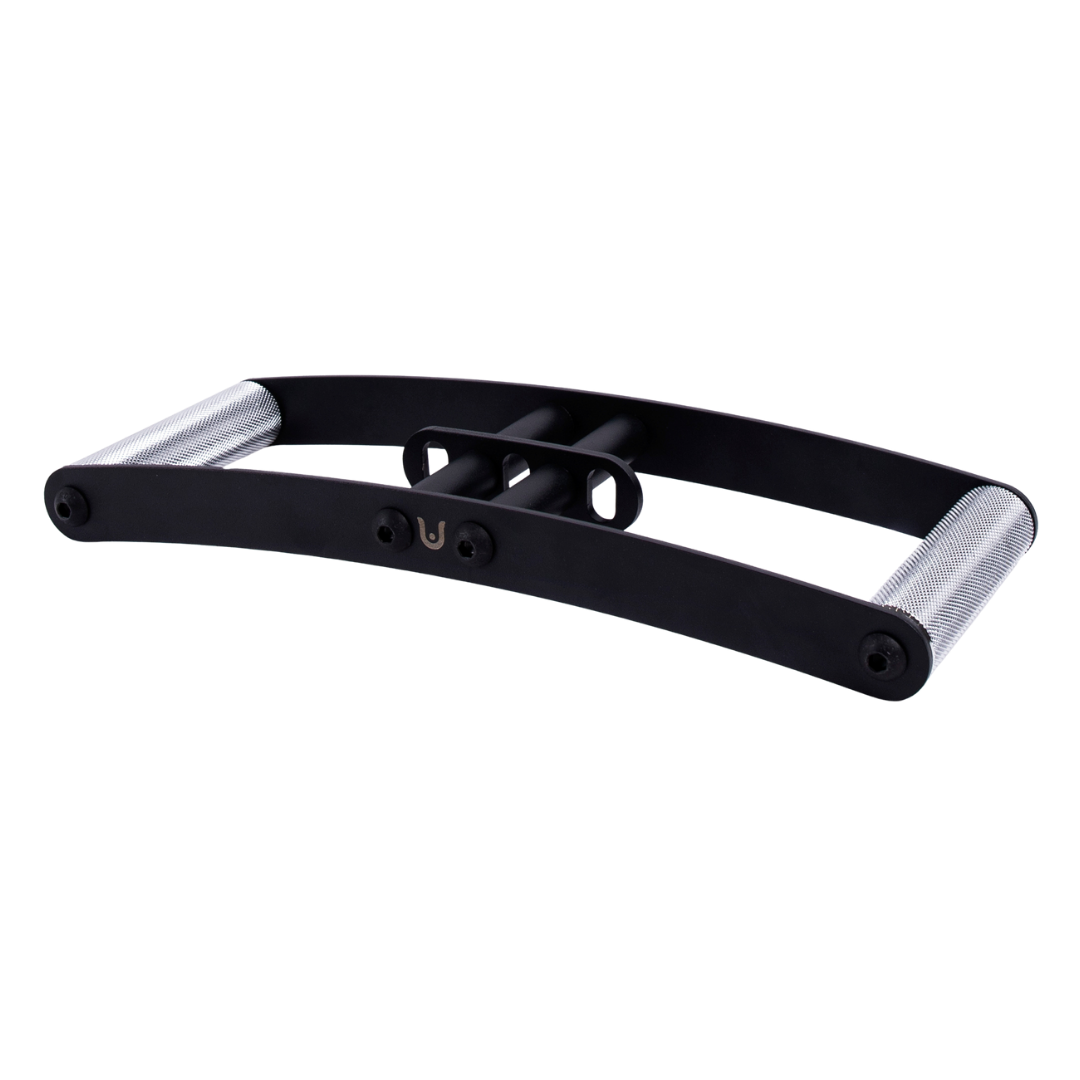
Ergonomic V-style cable grip for rows and back training.


VForce Lat Tower
Wall-mounted cable tower with pivot arms and adjustable 1:1 or 2:1 pulley ratios.

FID Bench MAX
Adjustable bench offering flat, incline, and decline positions + adjustable headrest.


Foldable Wall Rack
Wall-mounted folding squat rack designed to save floor space between workouts.
If you already perform overhead presses, side lateral raises and substantial rows, the cable Y is usually a small, purposeful addition rather than a whole shoulder workout. Use it to develop a repeatable upward reach and train the movement with light resistance. The pictured band Y example is a real alternative, not a cable machine demonstration. The goal is to match the exercise to what you can execute consistently, not to collect five movements because they all mention the trapezius.
Where Cable Y Raises Fit in a Shoulder or Pull-Day Workout
Place cable Y raises after heavy presses, pulls or rows when you use them mainly to accumulate careful shoulder accessory volume. Start with two sets of 10–15 controlled repetitions, stopping with about two or three technically good reps in reserve. If they are serving as a warm-up before heavier work, do one or two even lighter sets and avoid fatigue. Neither version needs an all-out set or forced repetitions.
On a two-day upper-body routine, put the first session after pressing and the second after rows or rear-delt training. Rest around 45–90 seconds between lighter sets, extending the break when breathing or shoulder control is still limiting you. If your shoulders already feel heavily taxed from overhead pressing, lower the Y-raise volume rather than adding it on top without accounting for total training. Soreness alone is not evidence of more effective training.
Equipment matters mainly for repeatability: two independently adjustable low pulleys, two smooth swivel handles and a clear stance area. Wrist-friendly cable cuffs can be useful if gripping small handles is limiting, but they change the feel and should not be compared directly with handle-based records. A single-cable variation can train one side at a time; keep stance and line of pull matched. An incline bench and light dumbbells offer a simple non-cable alternative for the same Y-pattern practice.
Bodybuilding Shirts & Workout Gear
Bodybuilding shirts, tanks and gym gear for lifters chasing muscle, size, symmetry and the pump.

Swole Jesus Lateral Raises Tank
Bring “Swole Jesus Lateral Raises” humor to your next lifting session.

Shirt Pull Day – Back & Biceps Meme Top T-Shirt
Heavy lifts, good laughs, and a little “Pull Day Graphic” energy.


Lightning Skull Crewneck Gym Wear Strength Gift Uplift T-Shirt
Keep things casual with a little “Sweatshirt Lightning Skull” attitude.

Muscle Daddy Pink Barbell Plate Gym Shirt for Men Who L T-Shirt
Show some lifting attitude with a playful “Muscle Daddy” tee.

Fight Your Inner Demon , Meme Top T-Shirt
Heavy lifts, good laughs, and a little “Fight Your Inner Demon” energy.


Meme : Lift O'Clock Top Gains & Bros T-Shirt
Show some lifting attitude with a playful “: Lift O'clock” tee.

Log the machine, cable setting, handle, stance, load, repetitions and whether both hands reach the same comfortable end position. That small record is more useful than writing only ‘Y raises, 15 reps.’ The accompanying band-based Y photo shows another way to practice overhead reach, not a claim that resistance bands and cables are mechanically identical.
A Six-Week Cable Y Raise Progression You Can Actually Follow
Use two nonconsecutive sessions per week as the starting template. Weeks 1–2: perform two sets of 12–15 smooth reps per session with a light load, leaving roughly three reps in reserve. Spend the first session determining pulley height, distance, handle grip and comfortable top position. Repeat the same setup in subsequent sessions and prioritize matching arm paths and controlled lowering over additional weight.
Weeks 3–4: move to three sets on the first weekly session and keep two sets on the second if fatigue is manageable. Work inside a 12–18 repetition window and add repetitions before load. If you reach the top of the window in every set while keeping the torso quiet and both hands symmetrical, increase the resistance by the smallest available increment next time, then return to the lower end of the window. If the next stack jump is large, stay at the old setting and improve tempo or consistency rather than forcing progression.
Weeks 5–6: keep two or three working sets on each day, adjusting effort toward roughly one to two clean reps left by the final set. On the last session, compare video and log entries from week one: was the Y shape more repeatable, and could you control more reps without arching? Those are valid improvements even when the stack number has barely moved. Shoulder irritation, unusual pain or persistent recovery problems should prompt less volume, a smaller range or a change of movement rather than rigidly following the calendar.
Example session: main press or row, one or two other necessary upper-body accessories, then cable Y raises for the planned sets. Consistency with the rest of your training matters more than the exact week number. Your progress is a cleaner, stronger Y that your shoulders tolerate, not a promise of perfect posture, injury prevention or dramatic new muscle size.
A Y raise should look calm and repeatable. Start lighter than you expect, keep your training log honest and choose the version that fits your shoulders and available equipment.
Some product links may be affiliate links, which can support Mind Muscle Perfection at no additional cost to you.