Advertising disclosure: This page includes affiliate product links that may earn us a commission, as well as products from our own store.
Some product links may be affiliate links. If you shop through them, Mind Muscle Perfection may earn a commission at no extra cost to you.
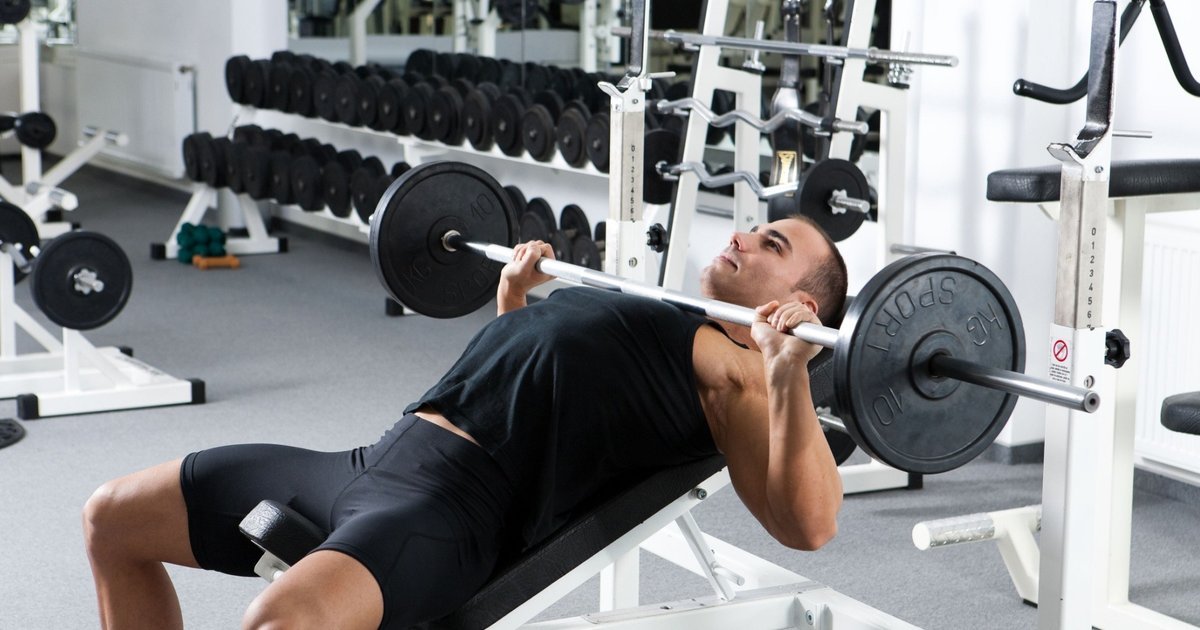
For upper-chest day, most lifters know the ritual: move the adjustable bench up a couple of clicks, grab a barbell, and hope the new angle hits the pecs instead of turning the workout into a shoulder press. The tricky part is that those clicks can mean very different things. A modest incline, a medium incline and a steep incline do not load the pressing muscles identically.
A controlled experiment with 20 young men compared barbell incline presses at 20, 32 and 43 degrees. The researchers measured electrical activity in the upper portion of the chest during eight repetitions at a standardized relative load. The result favors the two steeper settings over 20 degrees for that particular measurement—but it does not identify a magic angle that guarantees more muscle growth. Here is what the numbers actually mean, how they fit with other angle comparisons, and how to make your next chest session more productive.
What the 20-man incline bench experiment actually tested
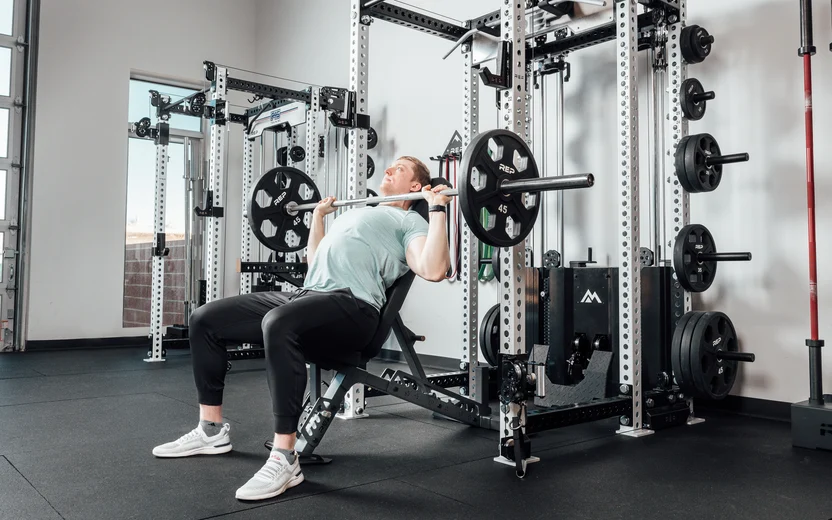
The volunteers pressed at three bench inclinations: 20°, 32° and 43°. Each condition used eight repetitions at 60% of the person’s one-repetition maximum, while sensors measured activity in the clavicular—or upper—portion of the pectoralis major during the upward portion of the lift. That is a relatively controlled way to ask whether the angle changes how strongly this region becomes electrically active during a set.
The average recorded root-mean-square signal was 0.59 ± 0.29 millivolts at 20°, 0.64 ± 0.32 at 32°, and 0.66 ± 0.34 at 43°. Overall differences were detected across the conditions, with the flatter 20-degree setting showing less activity than the steeper options in the reported comparisons. The difference between 32° and 43° was not statistically clear. In practical terms, the data support choosing a moderate-to-steeper incline rather than assuming a barely raised bench maximizes upper-pec activation.
Notice the scale of the change, though. The averages are close, and individuals varied. Nobody was followed for months to measure gains in upper-pec thickness. Nobody was assigned exclusively to a 20-, 32-, or 43-degree training program. The test answers a short-term muscle-activity question, not which incline necessarily builds the biggest chest over twelve weeks.
Useful interpretation: start somewhere around 30–45 degrees, then judge the exercise by stable technique, chest tension and sustainable progress. The measured difference is a clue, not a compulsory setting for every body.

Equipment Worth Exploring
Explore equipment, accessories and gear from our carefully selected range.

Rubber Hex Dumbbells
Rubber-coated hex dumbbell pairs with a stable shape for home and commercial strength training.




FID Bench MAX
Adjustable bench offering flat, incline, and decline positions + adjustable headrest.


Grip Plates
Rubber-coated weight plates with handholds for loading barbells and machines.


Foldable Wall Rack
Wall-mounted folding squat rack designed to save floor space between workouts.
Why an earlier angle comparison favored roughly 30 degrees
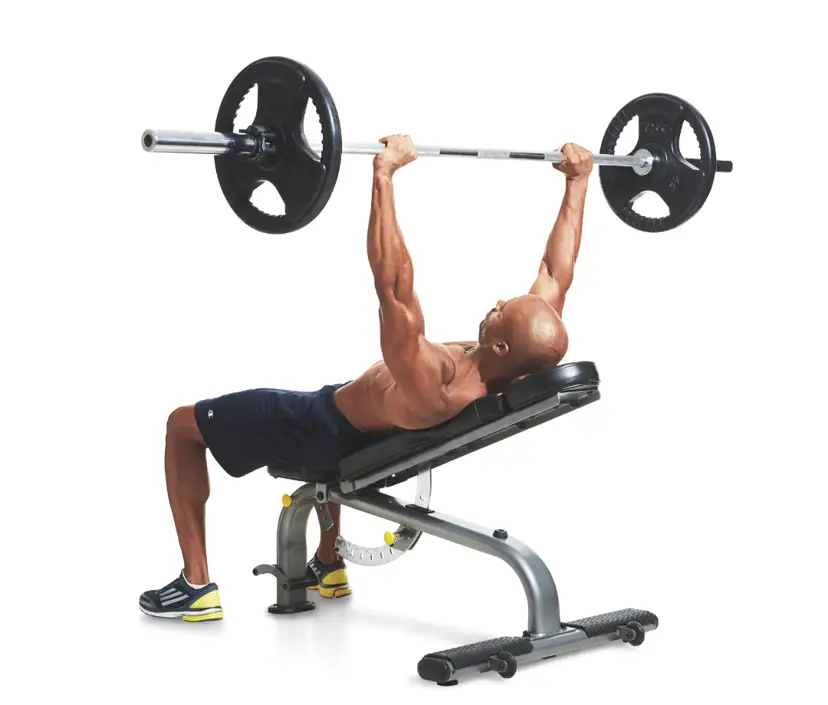
It is tempting to call the highest number in a study the winner and ignore everything else. But a separate comparison of 30 trained adults tested flat pressing plus 15°, 30°, 45° and 60° bench settings at a similar relative intensity. In that experiment, the upper-chest region displayed its strongest recorded activation around 30 degrees. The mid- and lower-chest regions favored the flat bench, while the anterior shoulder became increasingly involved as the backrest steepened.
Those findings are not automatically contradictory. Both experiments place a meaningful upper-pec stimulus in the middle part of the incline range. One compared 20, 32 and 43 degrees in young men; the other compared a wider spread of inclines and several muscles in trained adults. Electrode placement, how a lifter moves under a load, strength at each angle and the choice of participants can alter the signal. Even the definition of an equivalent working load matters when the same number of plates feels very different at 30 and 60 degrees.
Also remember that the highest activation is not synonymous with the best hypertrophy outcome. Muscle growth depends on repeated exposure to suitable mechanical tension, enough challenging sets and recovery. A bench angle that offers excellent measured recruitment but hurts your shoulders, shortens your pressing range or limits load progression might be inferior for your training across a whole block.
Instead of arguing whether 32° or 43° wins by a few hundredths of a millivolt, look for a comfortable angle that you can reproduce. If your gym bench has unmarked stops, consistently using the same middle notch is often more useful than obsessing over a theoretical number.
Upper pecs, front delts and what a steeper press changes
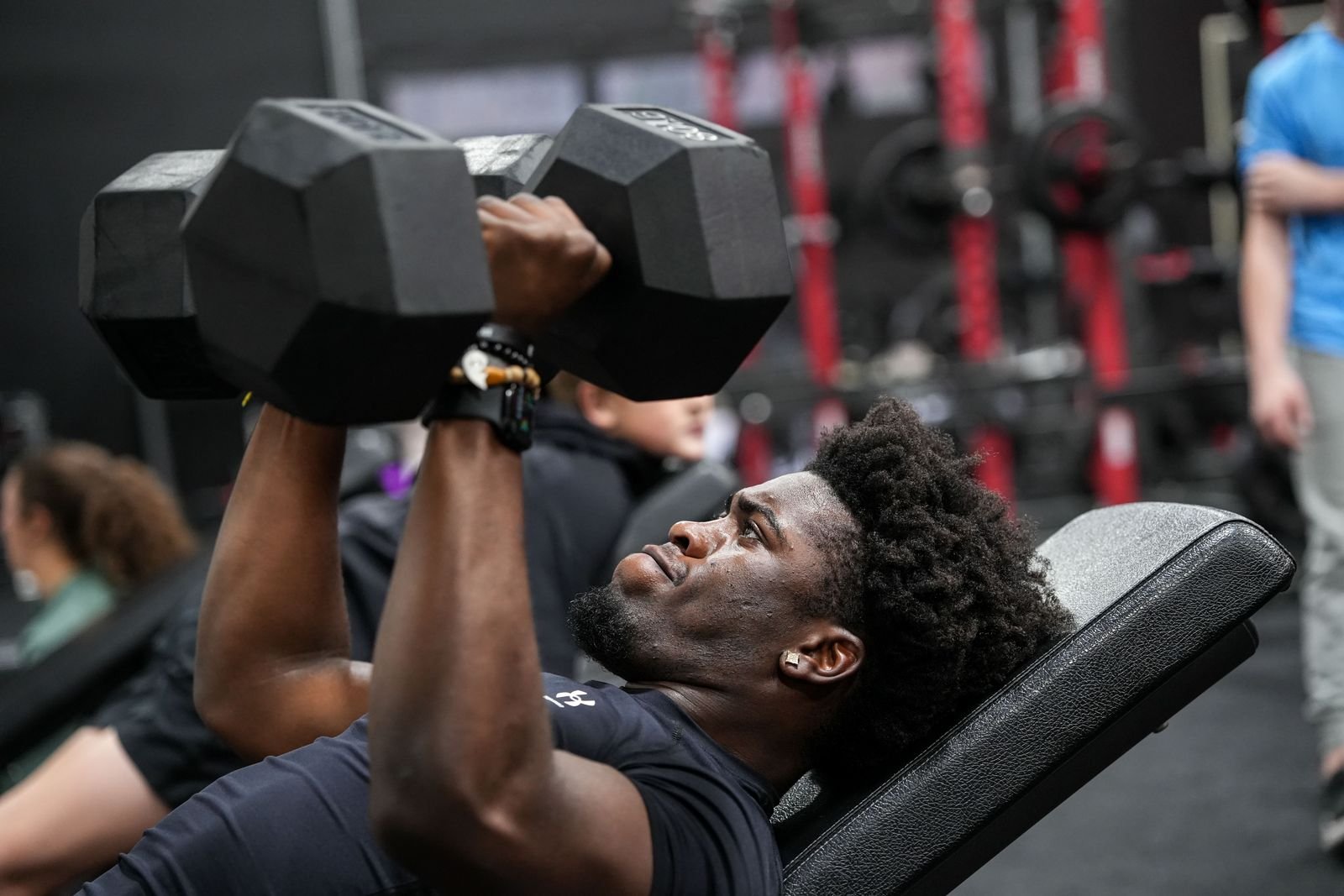
The pectoralis major has fibers with different orientations, including the clavicular portion near the collarbone. Those upper fibers contribute to bringing the arm forward and across the body. Raising the bench changes the direction of the press relative to your torso, which can change how the chest and shoulder muscles share the job.
There is a tradeoff. As an incline becomes steep, the movement increasingly resembles a shoulder press. The front deltoid still helps at ordinary inclines; it is not possible or desirable to switch it off. But once the bench climbs toward 60 degrees, a much larger share of the action can shift toward shoulder flexion. In the wider angle comparison, front-deltoid activity was highest at 60 degrees, whereas the upper-pec signal peaked lower.
That is why the best upper-chest bench position is not necessarily the most vertical one you can tolerate. A 75-degree backrest might be terrific for your shoulders, but it would be a strange default for a chest-focused session. Conversely, a nearly flat backrest still trains the chest, but it may not provide the distinct upper-pec emphasis you wanted from an incline movement.
Gym-floor check: feel a solid upper-chest effort while maintaining a smooth pressing path. If your set is limited primarily by front-shoulder discomfort or an awkward rack position, reduce the angle or swap the implement. Muscle sensation alone is not proof of where growth will occur, but discomfort and unstable execution are actionable reasons to adjust.

Bodybuilding Shirts & Workout Gear
Bodybuilding shirts, tanks and gym gear for lifters chasing muscle, size, symmetry and the pump.

I Love Bench Press | Black Heart Weight Plate Graphic S T-Shirt
Show some powerlifting attitude with a playful “I Love Bench Press” tee.

Shirt for Chest Day | I Love Bench Press with Pink Weig T-Shirt
Show some gym-girl attitude with a playful “for Chest Day” tee.

My Bench Press Is Stuck Horror Scary Movie Meme Hoodie
Show off your Halloween humor in a laid-back “My Bench Press Is Stuck Horror” hoodie.

Chest Day Sweater Bench Press & Meme T-Shirt
Add a playful “Chest Day” touch to your casual rotation.

If You're Reading This Its Chest Day | Drake Workout Me Sticker
Stick a little “If You're Reading This Its Chest Day” humor on your favorite gear.


Gym Dost Thou Even Fly Medieval Knight Chest Workout Cr T-Shirt
Show some gym-day personality with “Dost Thou Even Fly Medieval Knight Chest”.

Work on His Pecks Tee
Show some bodybuilding attitude with a playful “Why Did The Chicken Go To The Gym? To Work” tee.

Bench Press and Chill Funny Gym T
Make gym days more fun with “Bench Press and Chill” style.

Ultimate Bench Press Tee
Heavy lifts, good laughs, and a little “Ultimate Bench Press” energy.
Set your bench and bar path before adding plates
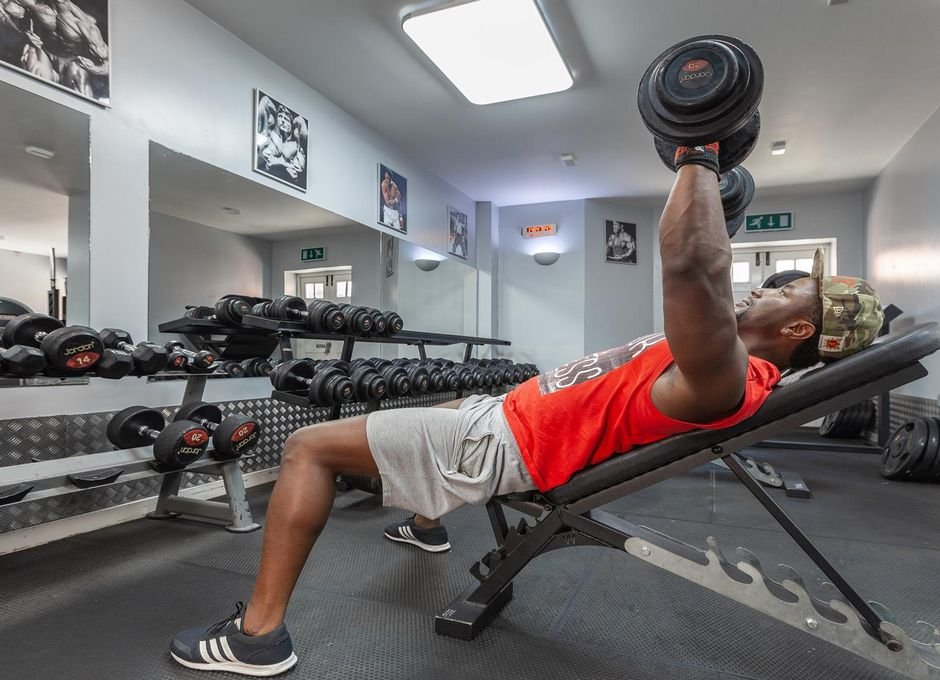
Put your bench at a modest-to-moderate incline, approximately 30 degrees for a first trial. Secure it firmly so the back pad cannot move when you brace. Get your eyes beneath the bar in a position that allows a safe unrack without reaching excessively behind your face; where a rack is available, set safety pins and use a competent spotter for demanding sets.
Plant your feet and keep your glutes in contact with the bench. Bring your shoulder blades into a stable position on the pad without forcing an exaggerated arch. Grip the bar so the forearms are approximately vertical at the bottom of the repetition when viewed from the front. Most people do well with a moderately wide grip rather than an extreme one. Wrists should remain stacked over the forearms instead of bent far back.
Lower the bar under control toward the upper chest in a path that fits your shoulder anatomy. Your elbows do not need to flare out to ninety degrees, nor should they be welded tightly against your ribs. Allow enough elbow flare for a controlled chest press and an unconstrained shoulder position. Press upward and slightly back toward a balanced top position. Avoid bouncing, deliberately grinding through sharp pain or losing the pad contact just to finish a rep.
If a steep incline causes the bar to drift toward your neck, your elbows to feel trapped or the shoulders to dominate, try one stop lower and compare. Bench markings are not standardized between brands; measure the actual backrest relative to the floor if you need precision. Film a side view of a moderate working set so you can see the bar path and body position rather than guessing based on the feel of one rep.
Barbell, dumbbells and cable flyes: what belongs where?
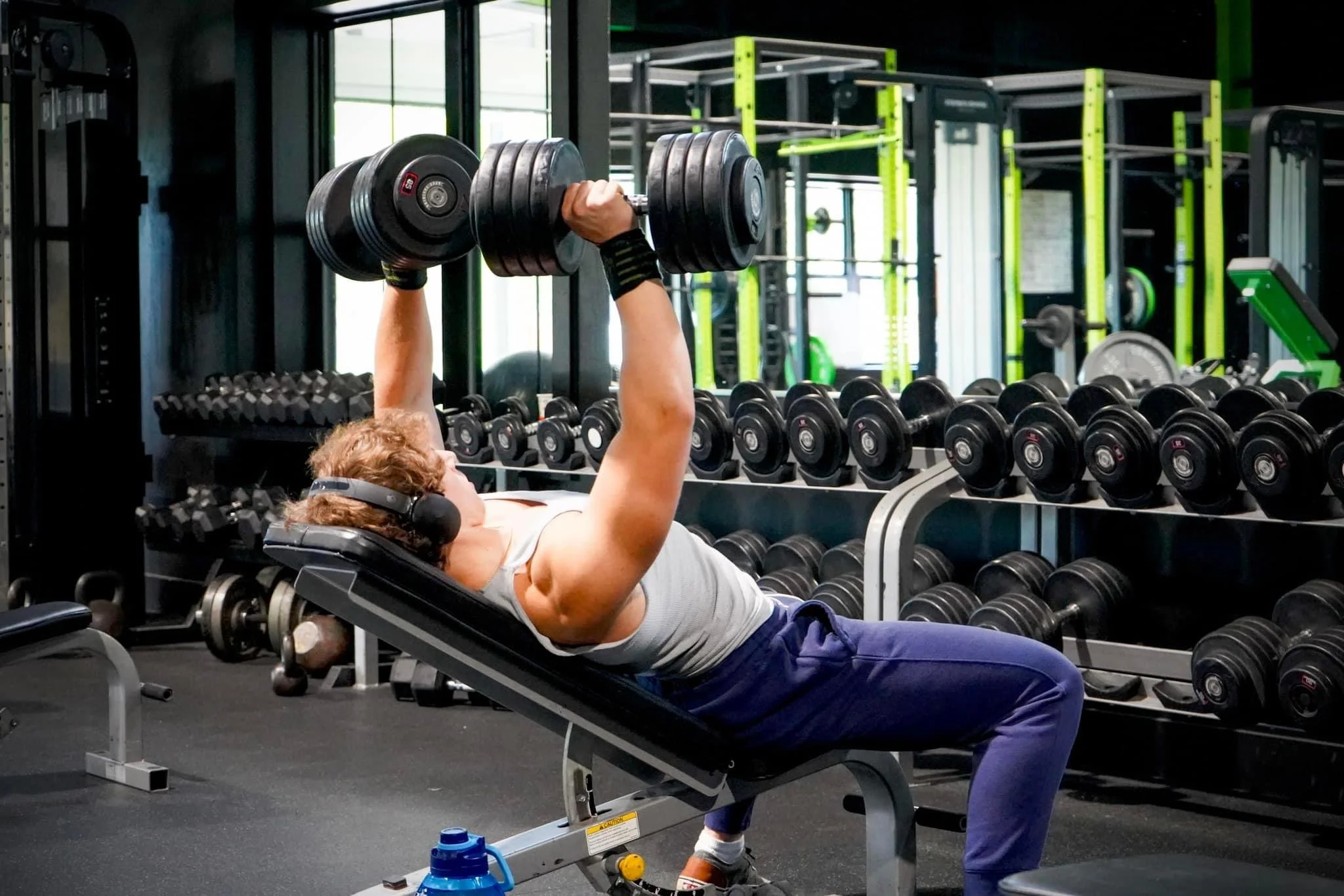
The experiment was about the barbell incline press, so it cannot directly tell you the exact ideal angle for dumbbell pressing. Dumbbells often let each arm find a slightly more comfortable path, and they allow a wider spread of positions than a straight bar. They also demand more stabilization, making the weight on each hand a poor comparison to half your barbell load.
Use the barbell when you want a repeatable, measurable main press. It is easy to add small increments and compare reps from week to week. Choose dumbbells when a fixed bar path irritates a shoulder, when you want to explore a longer comfortable range of motion, or when available equipment makes them more convenient. Neither choice automatically guarantees superior upper-chest development; good execution and progressive training matter more than the implement’s reputation.
Cable flyes provide a complementary pattern rather than a replacement for every press. An upward-and-inward cable path can challenge the chest while keeping elbow extension relatively constant. Select a line of pull that suits your joints, use controllable resistance, and avoid turning the movement into a violent front raise. The point of adding a fly is to supply another hard chest stimulus without piling every demanding set onto the same heavy pressing pattern.
If you have room for two chest movements, a moderate-incline press followed by a fly or flat press is a coherent pairing. Pick the pair that you can progress without aggravating the shoulders; you do not need three versions of nearly the same incline press in one workout.
Equipment Worth Exploring
Explore equipment, accessories and gear from our carefully selected range.

VForce 2IN1
Half rack and pivot-arm functional trainer with switchable 1:1 and 2:1 pulley ratios.

VForce 3IN1
All-in-one rack combining an adjustable Smith machine, functional trainer, and free-weight station.

VForce Wall Trainer
Space-saving wall-mounted functional trainer with pivoting cable arms and variable resistance ratios.
VOLTRA
Compact digital cable trainer with smooth, adjustable resistance.
GymPin D Cuffs
Adjustable wrist cuffs with textured grips for supported cable-machine exercises.
U Clips
Versatile gym clips for barbell, landmine, and attachment setups.



Competition Plates
Competition-style bumper plates for Olympic lifts and loaded strength training.
A practical upper-chest session and four-week progression
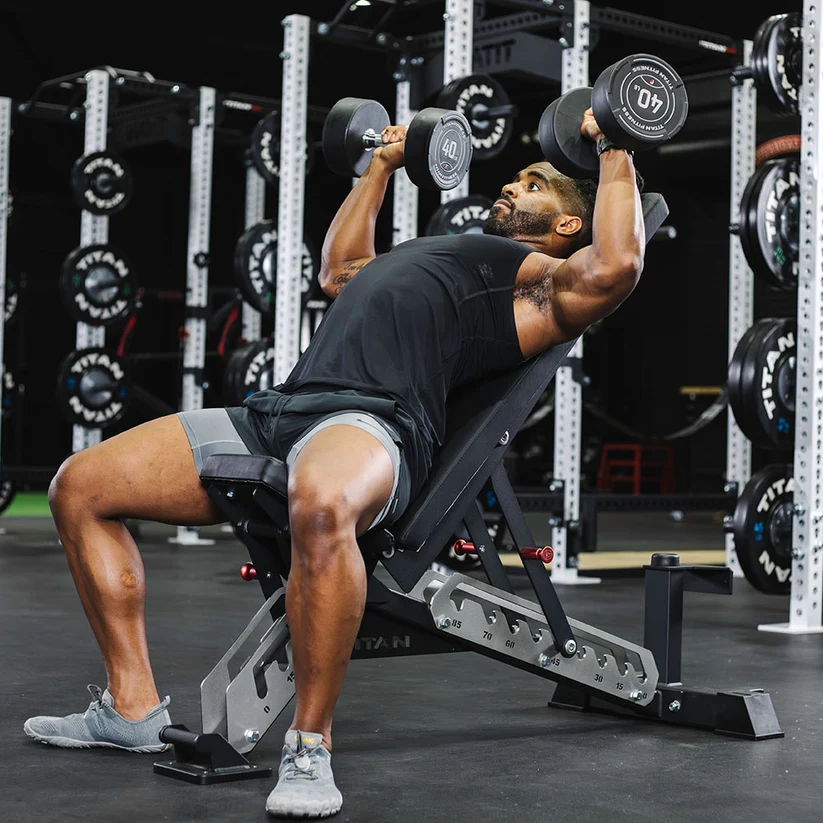
Here is a chest-focused session that uses the angle evidence without treating any bench setting as sacred. Warm up with easy pressing and a few progressively heavier sets before counting your work sets. The following is an illustrative starting point for an otherwise healthy, experienced recreational lifter—not a prescription for every recovery capacity.
- Incline barbell or dumbbell press: 3 working sets of 6–10 repetitions at a repeatable 30–40° bench angle. Keep roughly one to three reps in reserve and rest two to three minutes.
- Flat dumbbell or machine chest press: 2–3 sets of 8–12 repetitions. Use a controlled descent and enough rest to maintain form.
- Low-to-high cable fly or comfortable chest fly variation: 2 sets of 12–15 repetitions with a deliberate, pain-free range.
- Optional triceps work: 2 sets if you still recover well and your overall program has room for it.
For week one, use weights you can perform cleanly with a couple of reps left. In week two, add a rep to some sets while retaining the same angle and range. In week three, add a small amount of load only where you have reached the top of the rep range with reliable technique. In week four, evaluate progress, joint comfort and total weekly pressing volume; repeat or trim a set if accumulated fatigue is building. You are not required to escalate every variable each week.
Train chest again later in the week if it fits your split, keeping your overall hard-set volume realistic. If you already perform substantial shoulder and triceps work, count those demands when arranging recovery. A lifter who benches twice weekly and presses overhead hard may need fewer incline sets than a lifter whose other upper-body exercises are rows and pull-ups.
Do not change angle, grip, tempo and load all at once. Holding most variables steady helps you decide whether your pressing performance is genuinely improving or you have simply found a mechanically easier position.
Powerlifting Shirts & Lifting Gear
Powerlifting shirts and gym gear for squat, bench and deadlift lifters who live for heavy numbers.

2 Plates Bench Club & Chest Day Top T-Shirt
Rep “2 Plates Bench Club” humor in and out of the gym.


Shirt – I Want You To Bench Press Uncle Sam T-Shirt
Heavy lifts, good laughs, and a little “I Want You To Bench Press Uncle Sam” energy.

Barbell Breaker Heavy Metal Workout Bar Breaker Lifting Hoodie
Keep it laid-back with a little “Barbell Breaker” attitude.

Barbell Heartbeat Crewneck Pullover Sweater for Powerli T-Shirt
Keep things casual with a little “Barbell Heartbeat” attitude.

Barbell Flag USA Patriotic Gym | Funny Workout Decal | Sticker
Put “Barbell Flag USA Patriotic” gym humor on your laptop, bottle, or gym gear.

Heavy Barbell – Meme Shirt & Top T-Shirt
Make gym days more fun with “Heavy Barbell Powerlifting Graphic” style.

Barbell Country Club Shirt Meme Top & T-Shirt
Heavy lifts, good laughs, and a little “Barbell Country Club” energy.

Therapy Barbell – Bodybuilding Powerlifting Meme Muscle Tank Top
Your gym-day look, with a playful “Therapy Barbell” twist.

I’m Strong Barbell Heartbeat Decal for Powerlifting Str Sticker
A fun “I’m Strong Barbell Heartbeat” touch for bottles, laptops, and lockers.
What the results cannot prove—and the decision that matters
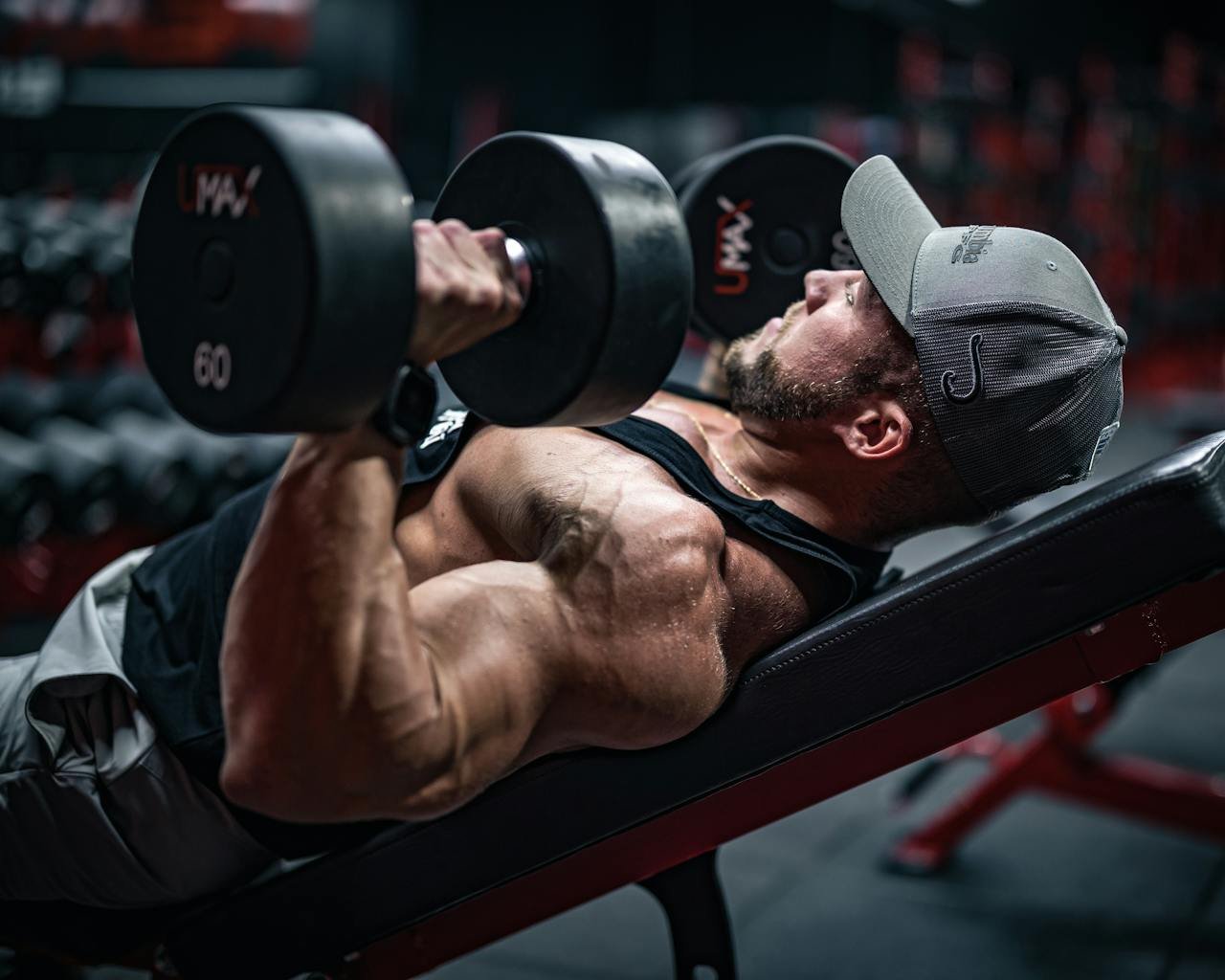
The 20-man experiment measured electrical signals during a single acute testing session. It did not compare muscle growth, injury rates, shoulder comfort or long-term strength at different inclines. The participants were young men, so we should not assume identical rankings for every older lifter, woman, highly advanced powerlifter or person rehabbing a shoulder. A result averaged across a group also cannot tell you how your own shoulder geometry responds.
The sensor recordings have their own limits. A surface EMG signal is influenced by electrode placement, tissue, movement conditions and recruitment patterns; it is not a direct measurement of the mechanical tension experienced by every muscle fiber. The wider 30-person comparison adds useful context, but it, too, was an acute activation test. Neither result justifies turning a 0.02-millivolt difference into a guaranteed amount of future pec growth.
Meanwhile, the ordinary rules of muscle-building have not gone away: sufficient challenging practice, repeatable range of motion, sensible weekly set volume, increasing performance over time, and enough food and sleep to adapt. You can build an impressive upper chest with an incline that is not mathematically perfect; you are less likely to do so with a supposedly perfect angle that you cannot execute or recover from consistently.
Bottom line: for an upper-pec-focused barbell press, the best starting zone is often about 30–45 degrees. The 20-person test recorded greater upper-pec electrical activity around 32–43° than at 20°, while a broader comparison favored roughly 30° and showed more front-shoulder involvement at steeper angles. Start in that middle zone, choose a pain-free path, track meaningful progress, and let several weeks of strong training matter more than one notch on a bench.