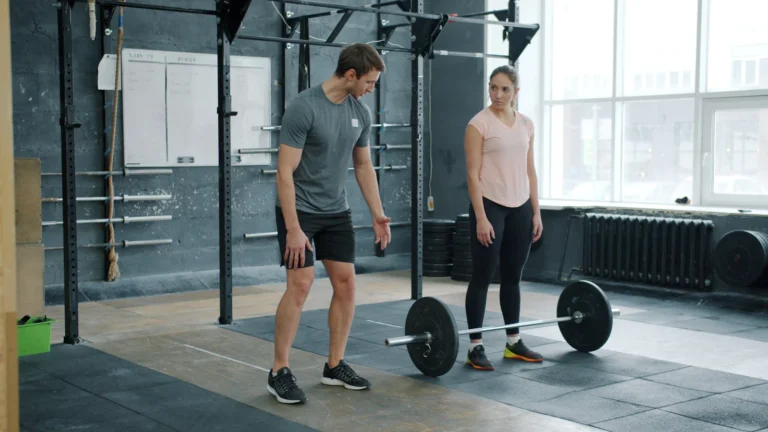
Can stretching build muscle? Flexibility, strength and hypertrophy are different outcomes. A stretch can improve one without necessarily changing the others. Evidence suggests passive stretching may sometimes produce small muscle-size changes, but the findings are uncertain. Progressive resistance training remains the better-established approach for adding muscle. The practical question is how stretching fits into training, not whether it can secretly replace lifting.
What the Larger Stretching Review Actually Found
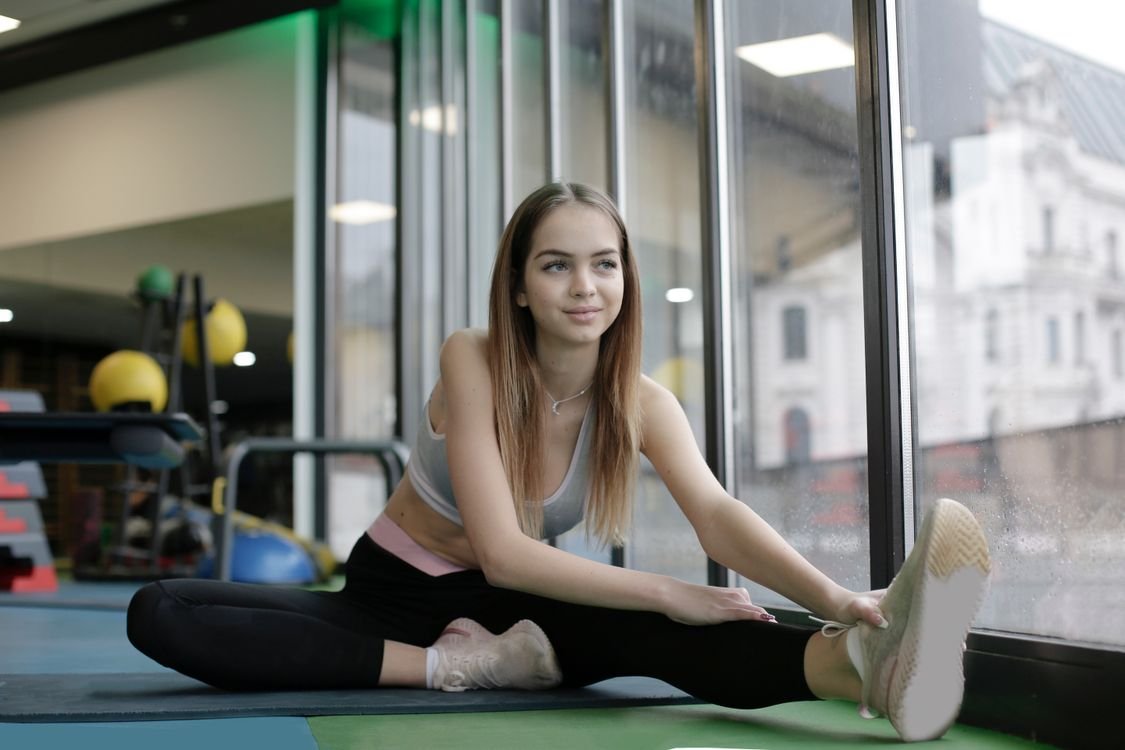
A 2024 synthesis combined 42 longitudinal studies involving 1,318 participants to examine whether repeated static stretching affects maximal strength and muscle size. Across the available studies, stretching produced a small positive average effect on maximal strength and a smaller average effect on hypertrophy. The standardized effect for muscle size was about 0.20. That statistic does not mean an individual stretch adds 20 percent to a muscle.
Certainty matters. The evidence was graded as low certainty for several outcomes, and protocols varied widely in their duration, frequency, target muscles and measurement methods. Some participants were inexperienced, while others were accustomed to training. An average across these conditions is not a validated routine for a trained lifter.
Longer interventions and greater accumulated stretching time sometimes showed more encouraging effects than shorter exposures. Yet the differences between categories were not uniformly decisive. It would be misleading to convert these observations into a guaranteed threshold of minutes or sessions. The findings suggest passive tension might sometimes stimulate adaptation when exposure is substantial, not that every brief stretch builds muscle.
Importantly, this evidence does not establish that stretching matches progressive resistance training for hypertrophy. A comparison against doing little or no training is not the same as comparing a stretching routine with an effective lifting program. If adding muscle is your main goal, the modest findings are a reason to stay curious, not a reason to replace challenging sets.
Why Another Review Reached a More Cautious Conclusion
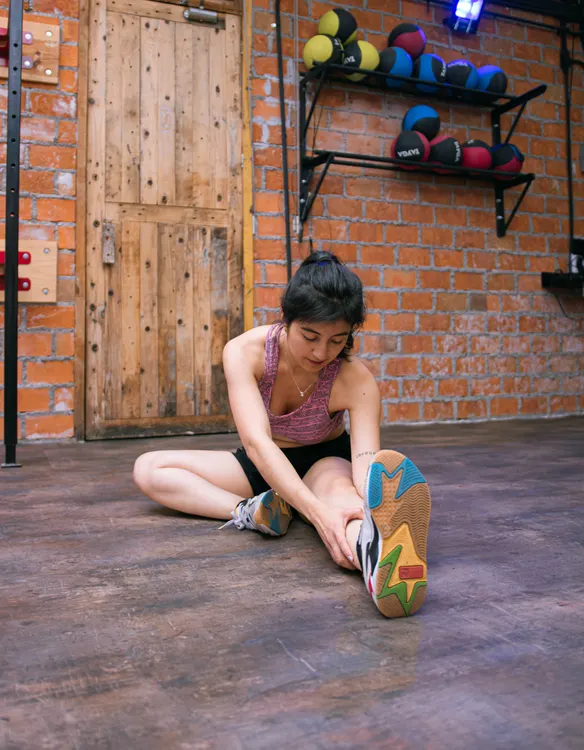
A separate 2024 synthesis examined 25 studies focused on chronic stretching and muscle hypertrophy. Its overall point estimate was trivial, with uncertainty wide enough to make the practical effect unclear. Subgroup patterns hinted at greater changes among trained participants and with longer stretching exposure, but these observations did not establish a reliable muscle-building prescription.
Two reviews can reach different levels of confidence without either being dishonest. They may apply different eligibility rules, include different trials, use different statistical models or emphasize different uncertainty estimates. A small positive average effect and an unclear practical benefit can both describe an evidence base that is still developing. Neither finding supports a sweeping claim that stretching never affects muscle; neither proves static holds rival progressive lifting.
Measurements deserve attention too. Experiments may track muscle thickness at a particular site, cross-sectional area or other indicators of adaptation. Small changes can be sensitive to measurement technique, the timing of testing and the region of a muscle examined. An increase in one local measurement is not automatically a visible physique transformation.
The studies also differ in what participants did outside the stretching intervention. Prior training experience, ordinary activity and adherence can influence what happens over several weeks. Without consistent direct comparisons against good resistance training, the evidence cannot tell a lifter how many conventional working sets a stretch is worth. The practical reading is conservative: stretching may provide a small additional stimulus in some circumstances, but flexibility remains its clearest purpose.

Equipment Worth Exploring
Explore equipment, accessories and gear from our carefully selected range.


FID Bench MAX
Adjustable bench offering flat, incline, and decline positions + adjustable headrest.


VOLTRA
Compact digital cable trainer with smooth, adjustable resistance.
A Deep Stretch Is Not the Same as a Loaded Rep
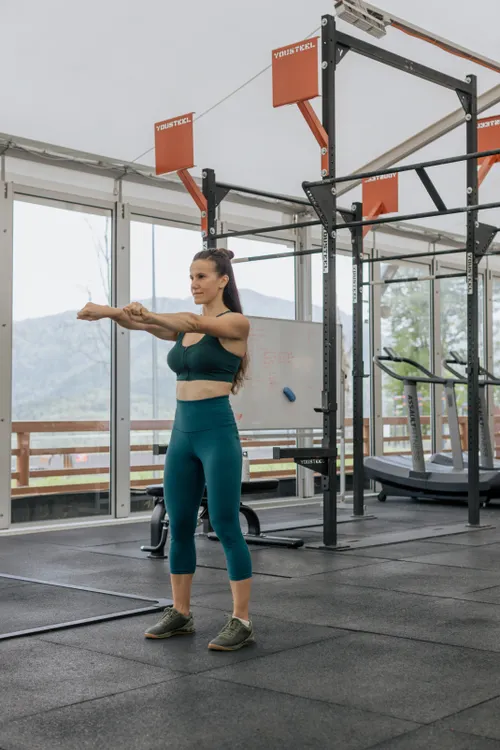
Muscle tissue experiences tension when it is stretched, and tension matters for adaptation. However, a passive hold and a controlled loaded repetition do not deliver the same combination of force, neural recruitment, movement and fatigue. During a squat, curl or row, a muscle produces force as joint positions change. During a passive stretch, external positioning creates tension without the same active contraction demand.
Reliable hypertrophy programs use challenging resistance, enough hard sets and progression over time. A passive stretch may feel intense, but discomfort is not a calibrated measure of mechanical loading. Tolerating a deeper position next month does not necessarily mean the muscle has grown. It may simply mean the position has become more comfortable.
Lengthened-position resistance training is a separate topic. A loaded exercise that challenges a muscle near a longer length still involves active force production and can be progressed by adding resistance or repetitions. It should not be lumped together with sitting in a static stretch. Evidence favoring certain loaded muscle lengths cannot be transferred to passive stretching without direct experiments.
For example, a Romanian deadlift loads the hip extensors through a controlled movement. A standing hamstring stretch places the same general region in an elongated position, but lacks repeated contractions and easily quantified external resistance. Both may have a place in a program, yet they answer different questions. Use the deadlift to train strength through a range you control; use the stretch when increasing comfortable flexibility is useful. Treating them as interchangeable obscures what each exercise actually accomplishes.
The Time-Cost Problem: How Much Stretching Was Studied?
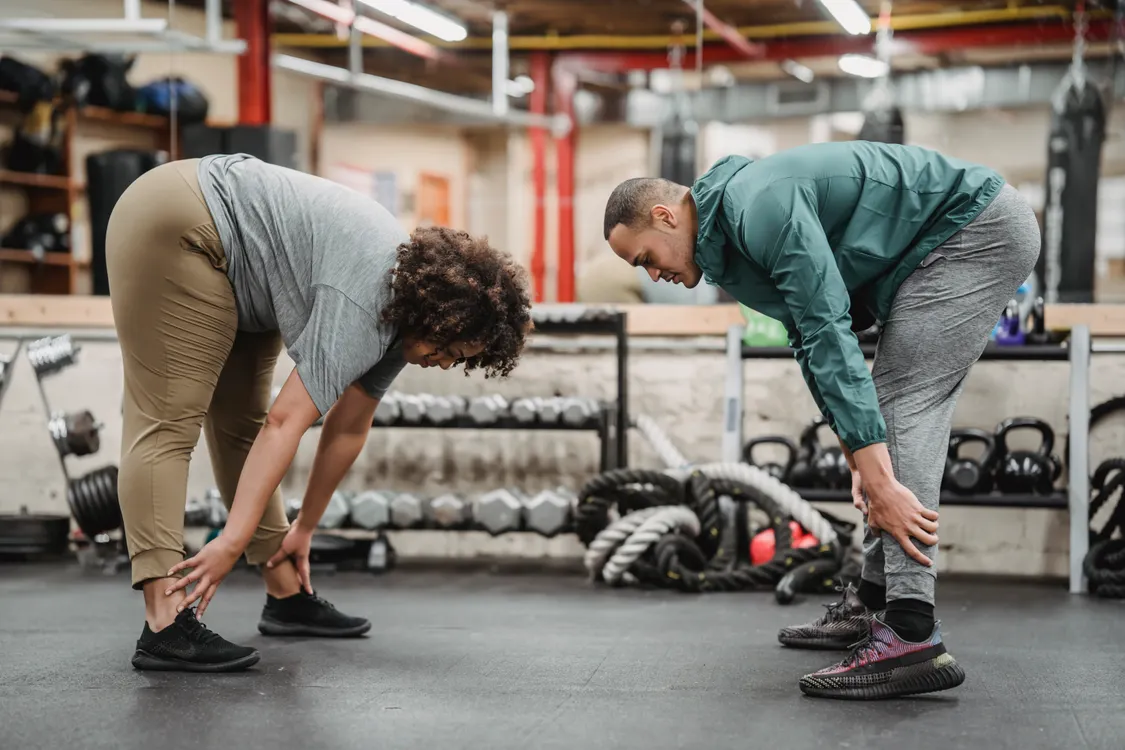
One reason the muscle-growth discussion needs context is that stretching doses vary enormously. Some protocols use brief holds as part of an ordinary warm-up. Others accumulate several minutes for a particular muscle and repeat that exposure many times each week. The latter becomes a substantial training commitment rather than a quick add-on.
In the larger synthesis, longer stretching periods and higher exposure sometimes showed small effects where shorter exposures did not. But the categories were not clean proof of a universal threshold, and the trials did not establish exactly how many minutes every lifter should hold a pose. More exposure can mean more discomfort, scheduling friction and opportunity cost. A protocol that is possible under controlled conditions may be hard to sustain alongside work, sport and normal training.
Imagine a lifter with forty-five minutes available. Spending ten extra minutes on demanding static holds means ten minutes not spent on working sets, rest intervals or exercise setup. If adding muscle is the primary goal, that trade needs a clear justification. Current evidence does not show that stretching time reliably beats productive resistance training time for hypertrophy.
For someone whose mobility limits exercise positions, the calculation changes. A few targeted stretches may help achieve comfortable squat depth or overhead motion, making subsequent training more practical. That benefit matters even if the stretches themselves add no measurable muscle. A useful routine is not necessarily the one with the most total stretching minutes; it is the one that addresses a real limitation without crowding out higher-priority work.

Bodybuilding Shirts & Workout Gear
Bodybuilding shirts, tanks and gym gear for lifters chasing muscle, size, symmetry and the pump.

Mind Muscle Connection Tee
Show some lifting attitude with a playful “Mind Muscle Connection” tee.


Meme – Shhh I'm Doing Math Plate Math Weightlifting T-Shirt
Heavy lifts, good laughs, and a little “Shhh I'm Doing Math Plate Math” energy.

Meme Installing Muscles & Lifting Shirt Bros & T-Shirt
Bring “Installing Muscles” humor to your next gym day.


Everything Hurts And I'm Tired Duck Meme , Lifting & T-Shirt
Heavy lifts, good laughs, and a little “Everything Hurts And I'm Tired” energy.

Creatine Monster – Bro Weightlifting, & Gains – Meme T-Shirt
Rep “Creatine Monster” humor in and out of the gym.

Tough Cookie – Gingerbread Weightlifting , Bros & T-Shirt
Make gym days more fun with “Tough Cookie” style.

Lift Eat Repeat – Weightlifting & – Meme Bros & T-Shirt
Make gym days more fun with “Lift Eat Repeat” style.

My Leg Hurts Leg Day , Meme Lovers & Bros Casual T-Shirt
Bring “My Leg Hurts” humor to your next gym day.
Flexibility Gains and Strength Gains Need Separate Scorecards
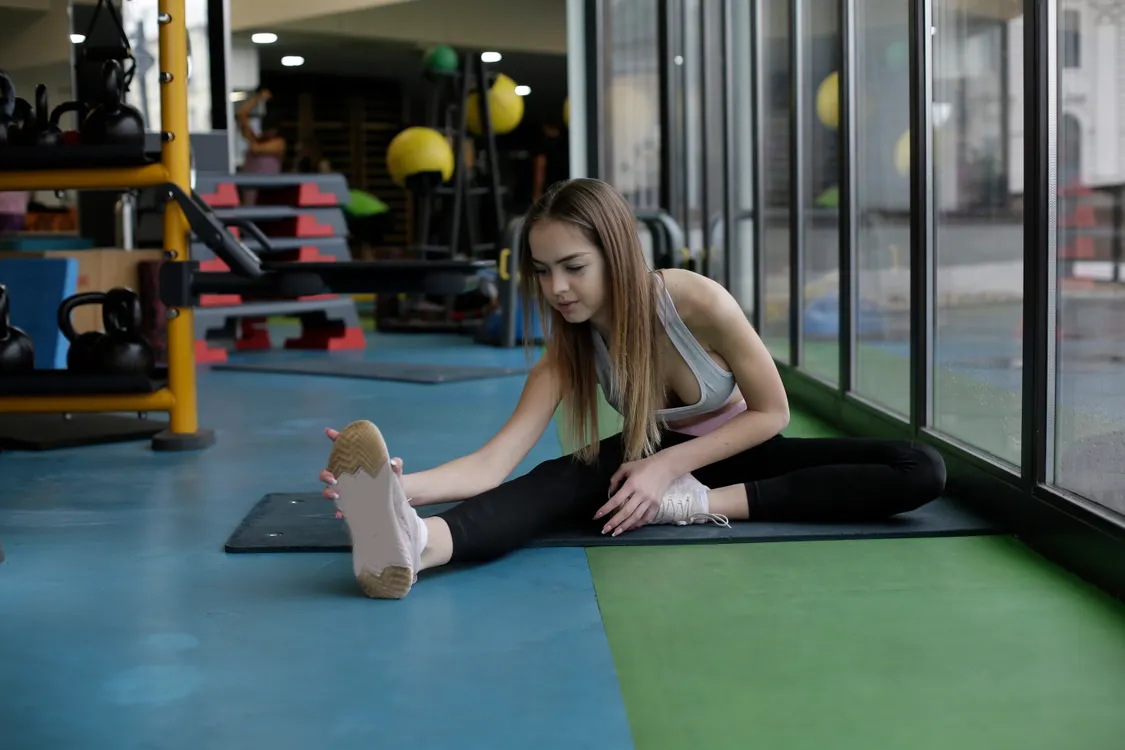
Stretching is a useful way to increase joint range of motion, but flexibility improvements do not automatically imply increased muscle size. People can become more comfortable in end-range positions through changes in stretch tolerance and other adaptations. Those changes can improve everyday movement and exercise technique without being visible on a tape measure.
Resistance training can also improve flexibility. A synthesis of 55 studies found that training with external loads improved range of motion and did not differ significantly from stretching in the available direct comparisons. A later review of 36 studies likewise found flexibility improvements from resistance training, while warning that variation between studies and risk of bias limit certainty. The point is not that every squat replaces all mobility work. It is that controlled lifting through an appropriate range can contribute to flexibility too.
Strength is another separate outcome. A review of 35 studies found small improvements in dynamic strength after stretching programs compared with no training, but no clear improvement in isometric strength. Adding stretching to resistance training did not consistently increase strength beyond lifting alone. Those are average group findings, not a forecast of how much weight a particular person will add to a bar.
Track the outcome you care about. Use comfortable depth, joint motion and consistency for mobility; repeatable loads and repetitions for strength; and longer-term measurements or training trends for muscle gain. If a stretch lets you squat with better control, it has value even if it did not directly grow your quadriceps. If your lifts improve but a particular joint still feels restricted, targeted flexibility work may remain worthwhile. One subjective feeling of being looser cannot stand in for all three scorecards.
Equipment Worth Exploring
Explore equipment, accessories and gear from our carefully selected range.

Go-Tone Pro
Portable digital cable trainer with up to 66 lb (30 kg) of adjustable resistance.


When to Stretch Around a Strength Workout
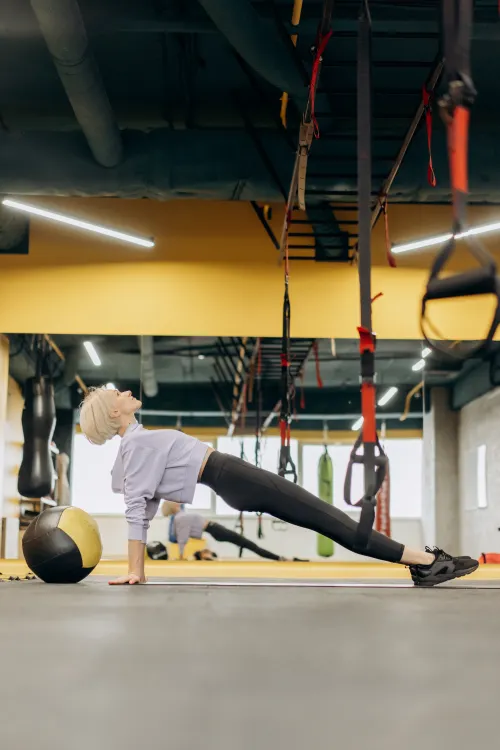
Timing matters most when stretching could interfere with the work that follows. Prolonged static stretching immediately before explosive or heavy performance can sometimes reduce short-term output, particularly when it is the main warm-up activity. Dynamic movement and progressively heavier rehearsal sets are generally more task-specific ways to prepare for demanding lifting. Comparisons of warm-up methods have found dynamic approaches more consistently favorable for some explosive lower-body tests than static stretching alone.
That does not mean a brief comfortable stretch before lifting is automatically harmful. Effects depend on duration, the activity that follows and what else is included in the warm-up. If a joint needs a little additional range to reach a controlled squat or overhead position, short targeted mobility work may help. Follow it with movement-specific practice rather than assuming a stretch is sufficient preparation.
After training or in a separate session, the immediate performance tradeoff becomes less important. A practical plan might place focused flexibility work on lighter days or after the main sets, when it does not consume energy needed for primary lifts. Keep the intensity tolerable, avoid bouncing into pain, and progress range gradually. You do not need to turn every stretch into a maximal discomfort test.
Stretching should not be treated as a medical solution for persistent pain or as a guarantee against injury. If a position repeatedly causes sharp discomfort, forcing longer holds is not a sensible progression. The programming aim is useful motion and manageable exposure, not the deepest possible stretch. For most lifters, the quality of the next demanding set matters more than achieving an impressive position for a photograph.
A Practical Plan for Lifters Who Want Muscle and Mobility
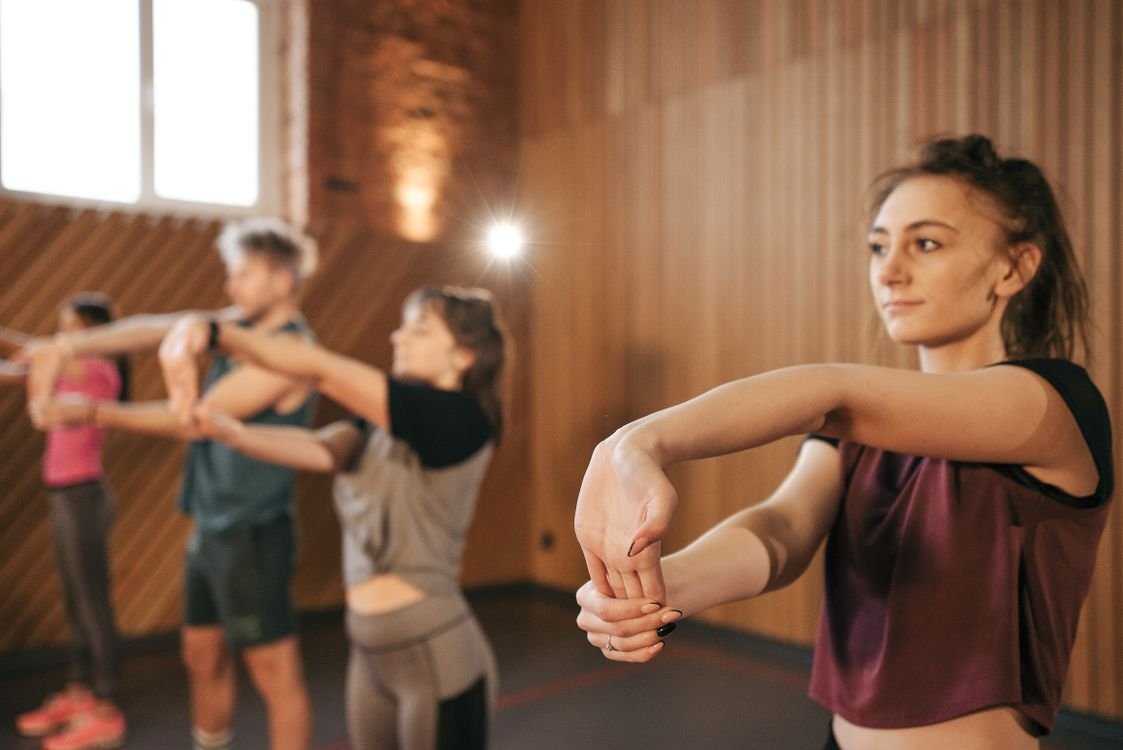
Start with the non-negotiable: keep a resistance-training program built around movements you can perform consistently and progress over time. For hypertrophy, prioritize challenging sets, appropriate exercise selection, recovery and a manageable weekly workload. Stretching can complement that program, but it should not quietly displace the work with the strongest evidence for muscle gain.
Next, identify one or two genuine mobility restrictions. Perhaps ankle range makes squatting uncomfortable, or shoulder positioning limits an overhead press. Choose stretches that address those particular positions rather than adding a long generic routine for every muscle. Use gentle, repeatable holds and check whether the movement you care about becomes easier over several weeks. A simple plan you actually follow is more useful than a complicated one you abandon.
For a four-week self-check, record a comfortable range-of-motion marker before beginning: a squat depth you can control, a knee-to-wall ankle measure or a shoulder reach that does not provoke pain. Keep your strength program stable, add a modest amount of targeted stretching on predictable days, and reassess under similar conditions. Record the time spent and whether the change actually helps training. This is personal feedback, not a clinical experiment or a way to prove muscle growth.
If your primary goal is adding size, do not count a stretch hold as a hard hypertrophy set. If flexibility is your priority, accept that a dedicated stretching block may deserve its own time. If you want both, combine progressive lifting through comfortable ranges with a small, purposeful flexibility dose. The available evidence supports that balanced approach much more clearly than the claim that stretching alone can replace weight training.
Funny Gym Shirts & Workout Gear
Funny gym shirts, tanks, hoodies and workout gear for lifters who like training hard.

Weights Breakfast Pancake Weights Lifting Meme Sticker
Put “Weights For Breakfast Pancake Weights” gym humor on your laptop, bottle, or gym gear.

Abolish Sleevery Abraham Lincoln Huge Arms Meme T-Shirt
Make gym days more fun with “Abolish Sleevery” style.

OnlyGains Meme – Bros – & Lifting, Humor T-Shirt
Rep “OnlyGains Gym Meme” humor in and out of the gym.

5 AM Squad Morning Bro Meme & T-Shirt
Heavy lifts, good laughs, and a little “5 AM Squad” energy.


Dost Thou Even Hoist Sir? – Do You Even Lift, Bro? T-Shirt
Make gym days more fun with “Dost Thou Even Hoist Sir?” style.


Platehead Powerlifting Tee
Heavy lifts, good laughs, and a little “Platehead Gym Skull” energy.

Gymhead Skull Plate – , Meme Shirt Bros & T-Shirt
Make gym days more fun with “Gymhead Skull Plate” style.