Advertising disclosure: This page includes affiliate product links that may earn us a commission, as well as products from our own store.
The lowering half of a biceps curl is easy to underestimate. You lift the dumbbell, it returns to your side, and the next rep begins. But the muscle is still producing force as the elbow opens. That is an eccentric contraction, and deliberately emphasising it has become a popular way to make light or heavy weights feel different.
A six-week comparison involving 34 previously untrained male university students tested a more useful question than whether slow negatives create a pump: can curls that emphasise only the lowering phase improve strength and muscle size, and do they offer any trade-off in perceived effort? The answer was mixed. Several performance measures improved across all approaches, while important changes in ordinary curl strength and arm muscle thickness were not statistically clear in the light eccentric-only group. Here is what that means for your own training.
What the six-week dumbbell curl comparison actually tested
The participants were split into three groups. Eleven performed a conventional dumbbell arm curl that included both lifting and lowering the weight. Another eleven used a lower-load eccentric-only version, emphasising the descent. The remaining twelve trained with a higher-load eccentric-only version. None was regularly doing targeted elbow-flexor resistance exercise before the comparison, so these were beginners at this specific kind of work rather than experienced bodybuilders.
All three groups trained twice a week for six weeks. Loads were progressively increased, from 30% toward 90% of a relevant one-repetition maximum. Crucially, the conventional and lower-load eccentric groups used a concentric maximum as their reference, while the heavier eccentric group used an eccentric-only maximum. You therefore cannot treat the percentages as interchangeable kilogram prescriptions: a person’s strength while resisting a descending weight can differ from their strength lifting it.
The researchers tracked more than the weight used for a standard curl. They measured maximal concentric and eccentric performance, isometric elbow-flexion strength at three joint angles, concentric power and the thickness of the biceps brachii and brachialis. They also recorded how demanding participants said their sets felt. That combination matters because a training method can improve one capability without producing an equally convincing change in every other one.
The comparison did not test a magic rep tempo, a commercial curl device or advanced lifters in a high-volume bodybuilding program. It tested defined training methods in a small beginner population over a short period. Read the outcome against that design before deciding to abandon ordinary curls.
Which strength and power measures improved

The clearest shared result was that eccentric one-repetition maximum improved in all three groups: about 9.8% with standard lifting-and-lowering curls, 10.3% with lower-load eccentric-only curls and 12.8% with the higher-load eccentric-only option. The group changes were reported as similar for this measure. That is encouraging if your aim is to become better at resisting a weight during the return phase.
Maximum isometric elbow-flexion strength at 30, 60 and 90 degrees also improved across the conditions, as did a test of concentric peak power at a specified fraction of maximal isometric strength. The broader lesson is not that every program was identical, but that several strength-related capacities can respond even when the exercise emphasises only one phase of the repetition.
For a more familiar gym benchmark, the study also tested the weight participants could actively curl upward. This concentric one-repetition maximum increased significantly in the conventional group by about 11.8% and in the heavy eccentric-only group by about 9.9%. The lighter eccentric-only group’s increase was not reported as statistically significant for that outcome. A difference in which groups reach a significance threshold does not, by itself, prove a clear difference between those groups; still, it is enough to reject the blanket claim that light negatives fully replace lifting the weight.
Do not turn these numbers into predictions for an individual lifter. A ten-percent group average increase in an unfamiliar testing movement after six weeks does not imply your own one-rep curl will rise by exactly that amount. Technique practice, learning the test, training history and normal person-to-person variation all matter.

Equipment Worth Exploring
Explore equipment, accessories and gear from our carefully selected range.


Rubber Hex Dumbbells
Rubber-coated hex dumbbell pairs with a stable shape for home and commercial strength training.

FID Bench MAX
Adjustable bench offering flat, incline, and decline positions + adjustable headrest.


Multi Bench MBX-650 2.0
Adjustable multi-bench with roller adjustment, 15 backrest positions and accessory mounts.


EZ Curl Barbell
Olympic EZ curl bar with angled grips for curls and triceps exercises.

What the muscle-thickness results do and do not prove
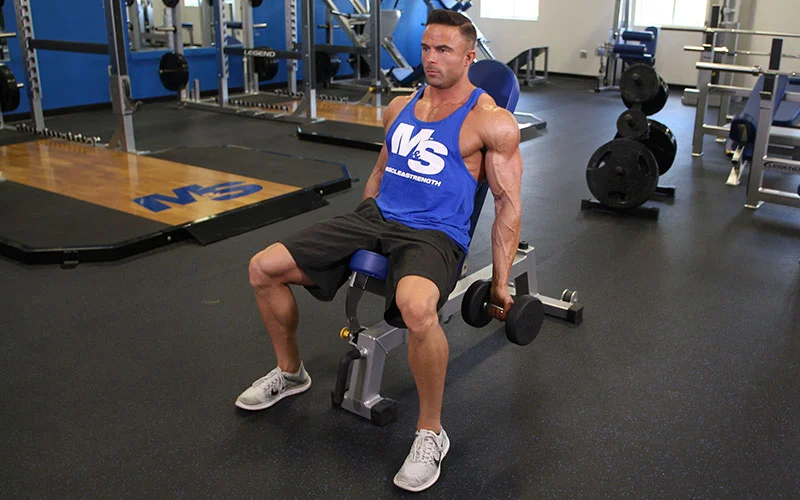
The trial also measured thickness in the two main elbow flexor muscles under examination. Statistically significant increases were evident after the conventional curls and the heavier eccentric-only curls, around 3.9% and 5.4%, respectively. They were not evident after lower-load eccentric-only curls over the same six weeks. Those percentages should not be read as a guaranteed head-to-head victory for the heavier eccentric group: the researchers did not establish a difference between the two groups whose muscle-thickness changes were significant.
Muscle thickness is useful evidence, but it is not identical to a complete muscle-volume scan or a long-term physique transformation. Different sites on a muscle may adapt differently, and a short intervention can miss changes that become clearer with longer follow-up. A study of 34 novice men, divided across three protocols, also has limited power to resolve modest differences. That makes the pattern interesting rather than definitive.
For bodybuilding, the practical implication is straightforward. If adding arm size is your priority, do not remove the lifting phase of every curl simply because negative repetitions feel distinctive. Conventional full-range curls provide an obvious, measurable way to train both phases; heavier eccentric emphasis may be useful as a variation, but the lighter eccentric-only method did not match every hypertrophy-related signal in this particular test.
You can still experiment with tempo. A controlled two- or three-second descent is a simple starting point; it is not the same intervention as exclusively performing eccentric repetitions with assisted resets. Keep those distinctions clear when comparing your results with a trial.
Why a lower effort rating is not the whole recovery story
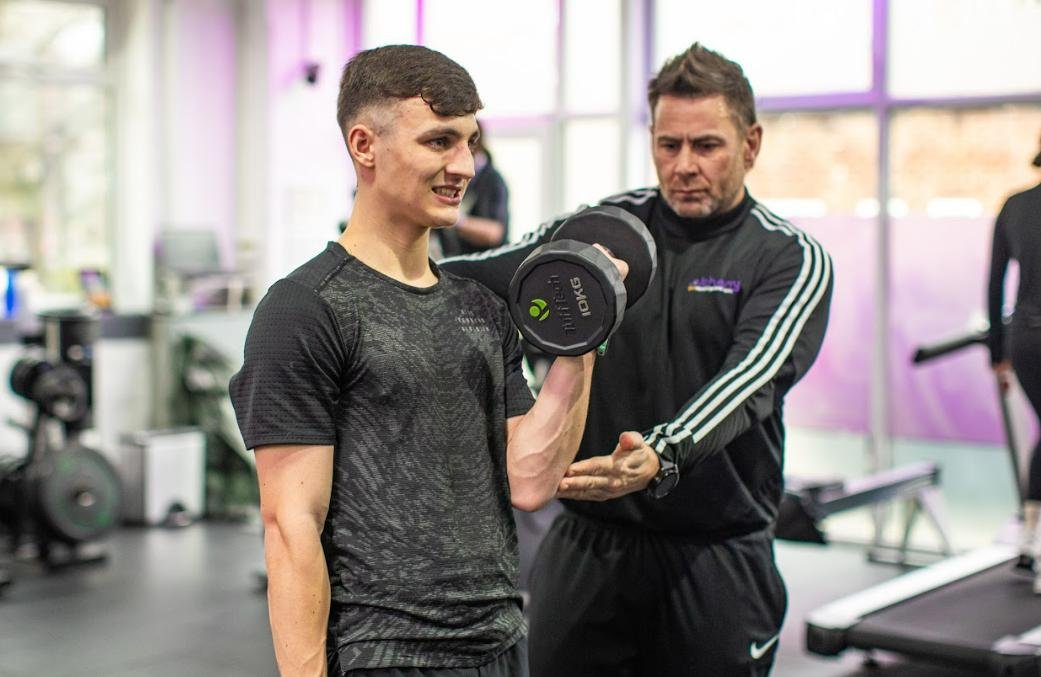
The lighter eccentric-only group reported an average session rating of perceived exertion of about 4.0, versus 5.1 for the heavier eccentric-only condition and 6.2 for conventional curls. Lower perceived effort is a meaningful finding, particularly for someone building confidence with resistance training. It suggests that, within this protocol, participants could improve several performance outcomes without rating the work as highly demanding.
But an effort score is not a direct measurement of tendon strain, next-day soreness, total recovery demand or injury risk. A set can feel easier on a rating scale while still exposing muscle tissue to a novel lowering challenge. If you are new to eccentric work, suddenly increasing the duration, load and number of negatives at once is an avoidable mistake. Introduce one variable at a time and consider how the arms feel in the days afterwards.
Another experiment on eccentric-only curls examined performance to failure across several sets. It found a higher repetition count in the first eccentric-only set under the tested conditions, but a larger subsequent drop-off across sets. That highlights why comparing one impressive set without accounting for later fatigue can mislead. A different protocol, rest period and load definition can change what the training actually feels like.
In your training log, pair subjective effort with objective information: load, repetitions, range of motion, how the weight was returned to the top, and whether you had to shorten the final descents. Feeling less exhausted is useful only if the work you intend to perform is still being performed consistently.
How to practise the lowering phase without turning it into a stunt
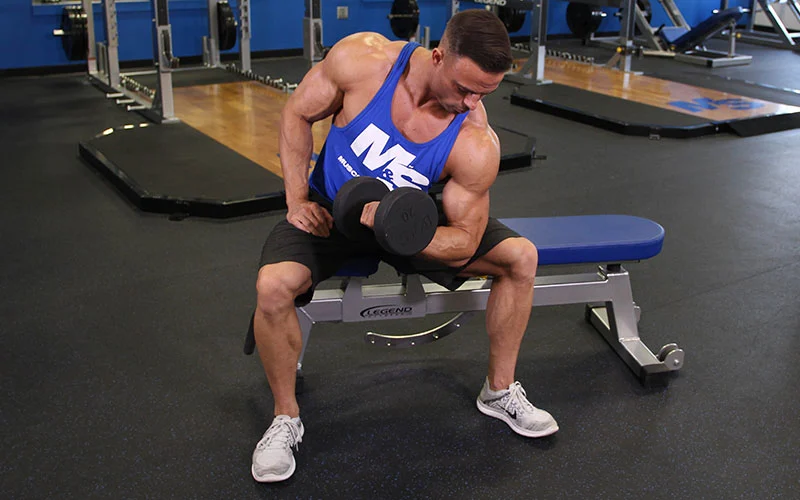
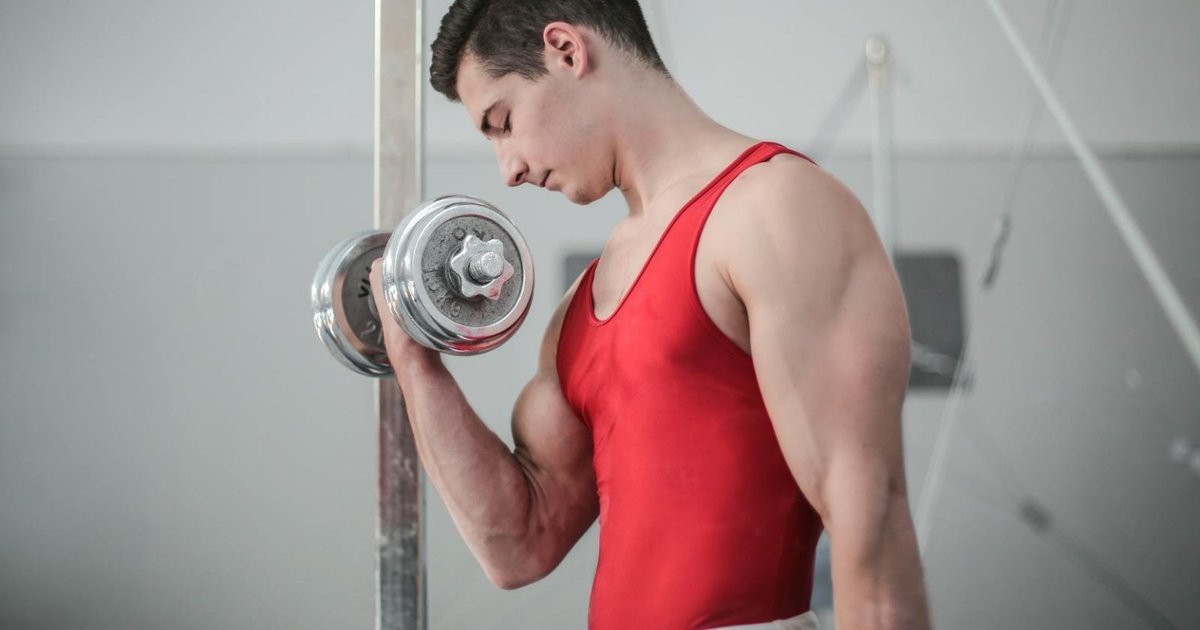
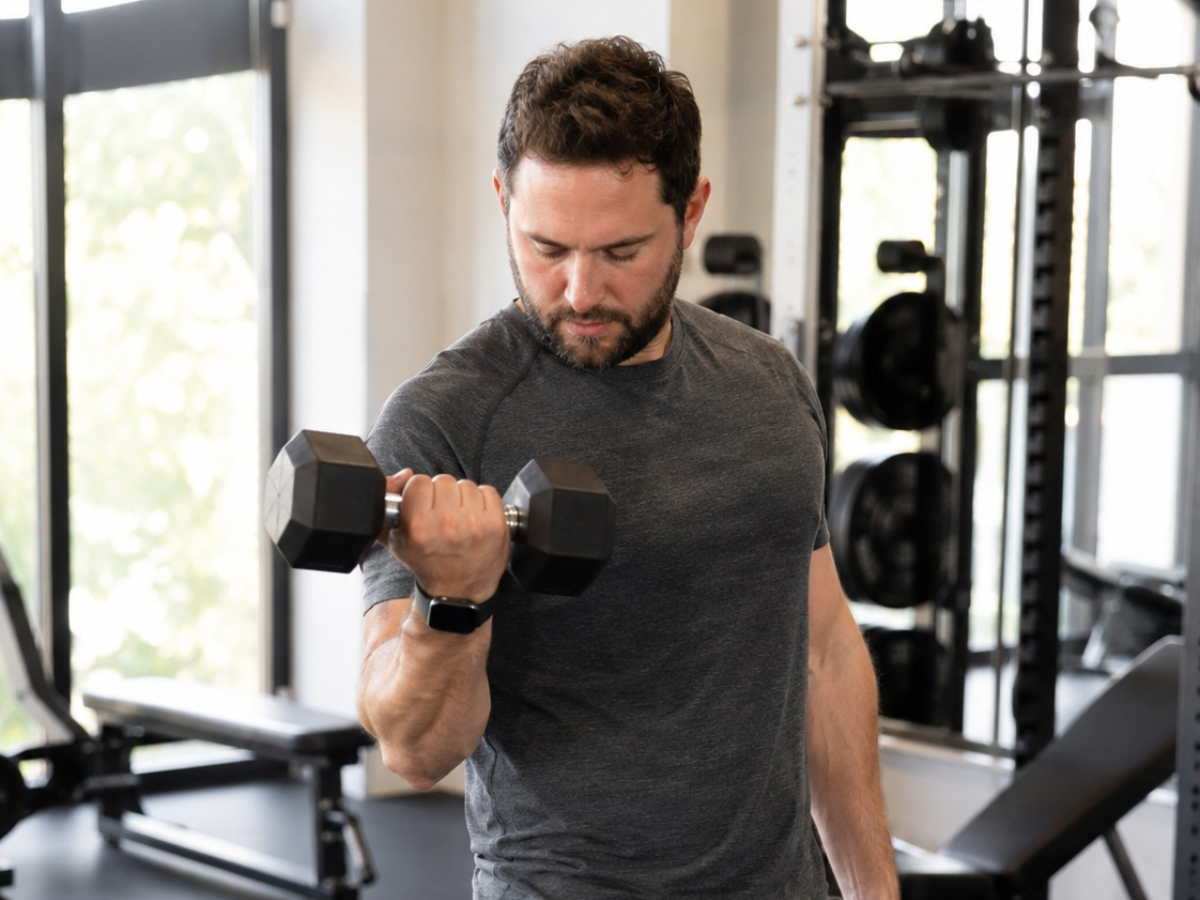
Start with an ordinary alternating dumbbell curl. Stand upright or sit securely, keep the upper arm relatively still, and curl without swinging your torso. Then deliberately lower each weight under control instead of letting gravity choose the speed. The goal is a repeatable elbow movement, not a dramatic slow-motion performance that ends with your shoulder rolling forward.
To try a genuinely eccentric-focused repetition, raise a manageable weight using the other hand or an appropriate partner’s help, then let the working arm control the descent. Do not use the nonworking hand to pull at the wrist awkwardly or twist the elbow into an uncomfortable position. If you cannot control the weight through your intended range, it is too heavy for that version. Keep the wrist comfortably aligned with the forearm rather than curling it toward you to cheat the lift.
For an introductory session, try one or two short sets of a few controlled negatives after the main curls, rather than replacing an entire arm workout. Rest enough to preserve technique and stop if there is sharp pain or a notable loss of control. These are cautious coaching suggestions, not the exact protocol validated by the six-week comparison.
An adjustable bench, dumbbells and an uncluttered lifting area are enough to practise both conventional and controlled eccentric curls. You do not need a specialised accessory. If you choose a preacher or incline version, understand that the upper-arm position changes the movement and its resistance profile; it should not be presented as identical to the tested dumbbell setup.
How to fit eccentric curls into a realistic arm-training week
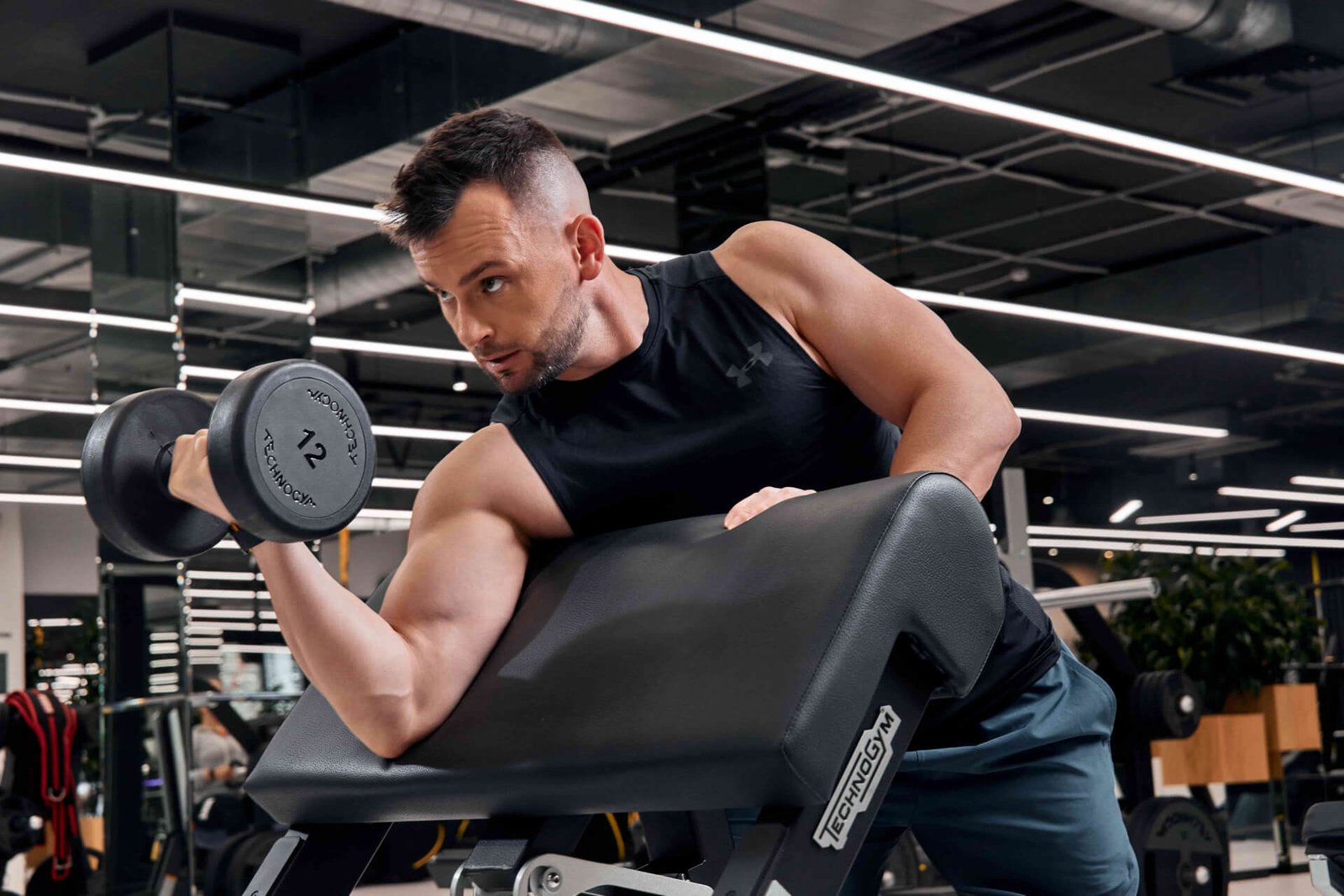
For a lifter already training back and biceps, the easiest application is to keep a basic curl as the centre of the session and experiment with controlled lowering in a small, predictable dose. For example, perform two or three sets of regular dumbbell curls with a load that leaves about two clean repetitions in reserve. On the last set, make the final few descents deliberate without changing your posture or extending the session indefinitely.
During the following week, improve consistency before adding load. If elbow comfort, recovery and form remain good, you can try a separate small set of assisted eccentric repetitions rather than making every set heavier. A later week might add a repetition or a modest weight increment, but not both at once. Take a lighter week or remove the extra eccentric work when it competes with rows, pull-ups and other demanding elbow-flexor training.
This is an example of gradual progression, not a four-week transformation promise. Beginners who find ordinary curls challenging may benefit more from mastering a full repetition first. Experienced lifters can use negative emphasis as variety, but should not assume that a six-week novice study predicts the same muscle-growth response after years of training. Watch your total direct and indirect arm workload rather than treating eccentric work as free volume.
The main finding is nuanced: lower-load eccentric-only curls improved many strength and power measures at lower perceived effort, but did not show every significant gain seen with conventional or heavier eccentric-only curls. For growing arms, ordinary curls are still a sensible foundation. Controlled negatives can be a useful tool, not a replacement rule.

Bodybuilding Shirts & Workout Gear
Bodybuilding shirts, tanks and gym gear for lifters chasing muscle, size, symmetry and the pump.

Curls The Girls Shirt – Bicep Curls Top & Gymbros T-Shirt
Rep “Curls For The Girls” humor in and out of the gym.

Dost Thou Even Curl Tank
Bring “Dost Thou Even Curl Medieval Knight Bicep” humor to your next lifting session.

Big Biceps Theory Meme Sweater Bro Science T-Shirt
Add a playful “Big Biceps Theory” touch to your casual rotation.

OnlyGains Big Biceps & Meme Fans Hooded Hoodie
Make your off-duty look more fun with “OnlyGains Big Biceps”.

I Love Gym Bicep Heart | Swole Heart Decal For Water Bo Sticker
Stick a little “I Love Gym Bicep Heart” humor on your favorite gear.

Shirt – Biceps Of The Caribbean , Meme Gains & Bros T-Shirt
Heavy lifts, good laughs, and a little “Biceps of the Caribbean” energy.

Resistance Is Gainz: Stoic Greek God Bodybuilder T-Shirt
Rep “Resistance is Gainz: Funny Stoic Greek God” humor in and out of the gym.

Hypertrophy Stoic Sigma Greek God Marble Sculpture T-Shirt
Bring “Hypertrophy Stoic Sigma Greek God Marble” humor to your next gym day.

Micro Biceps Club President Gym | Funny Muscle Shirt | Tank Top
Train hard, laugh a little, and rep “Micro Biceps Club President”.

Beauty And The Biceps Decal Water Bottles & Gear Meme Sticker
Bring “Beauty And The Biceps” attitude to your water bottle or laptop.