Advertising disclosure: This page includes affiliate product links that may earn us a commission, as well as products from our own store.
Cable shrugs can look simple while hiding several different setups. Choose the pulley position, keep the shoulder movement distinct from a row, and compare progress only within a clearly defined variation.
Learn the shoulder lift before loading the cables
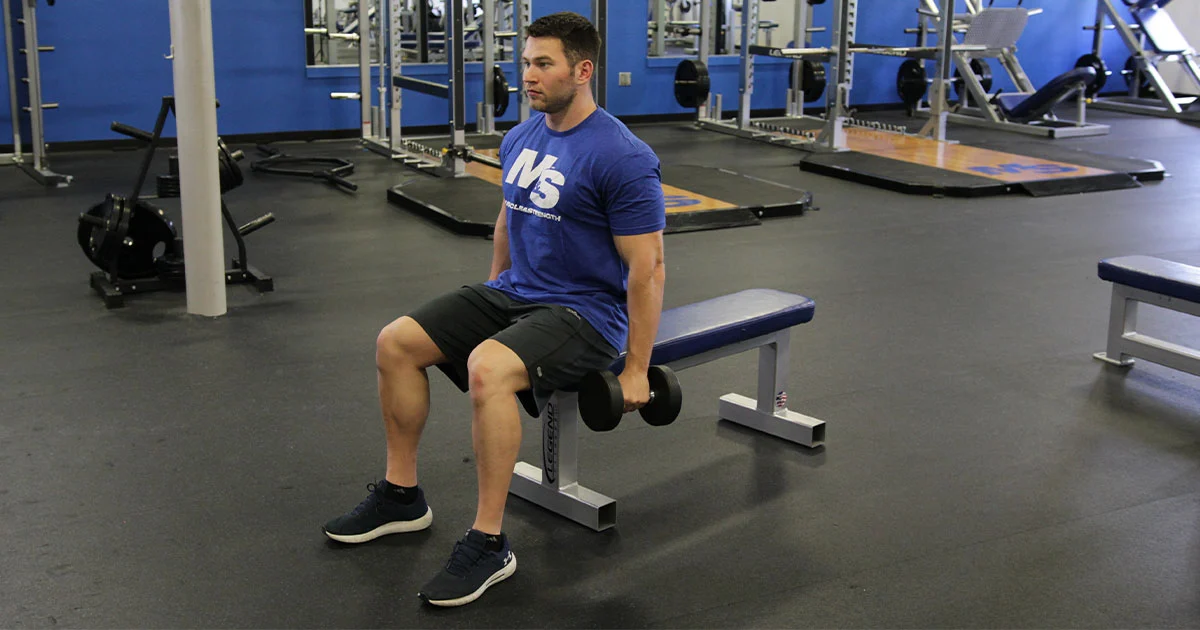
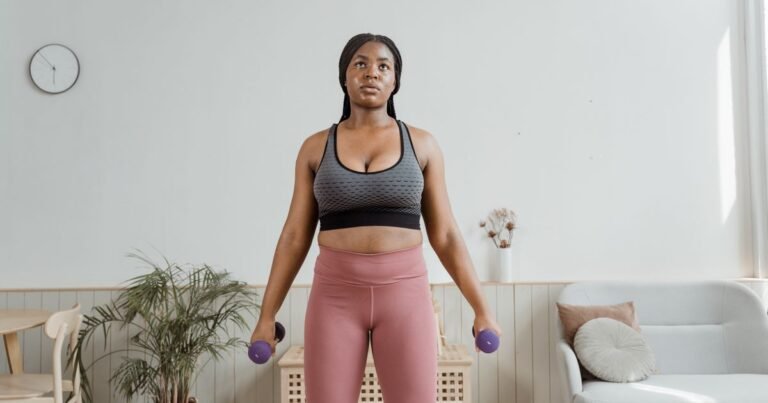
A shrug trains the shoulder lift rather than a curl of the arms. A light seated dumbbell version can make that distinction easier to see: the weights remain beside the body while the shoulders rise and return. That photograph illustrates the basic action, not the standing cable setup. Keep your head comfortably aligned with your torso and let the shoulder movement determine the repetition, rather than pushing your chin forward to make the finish look higher.
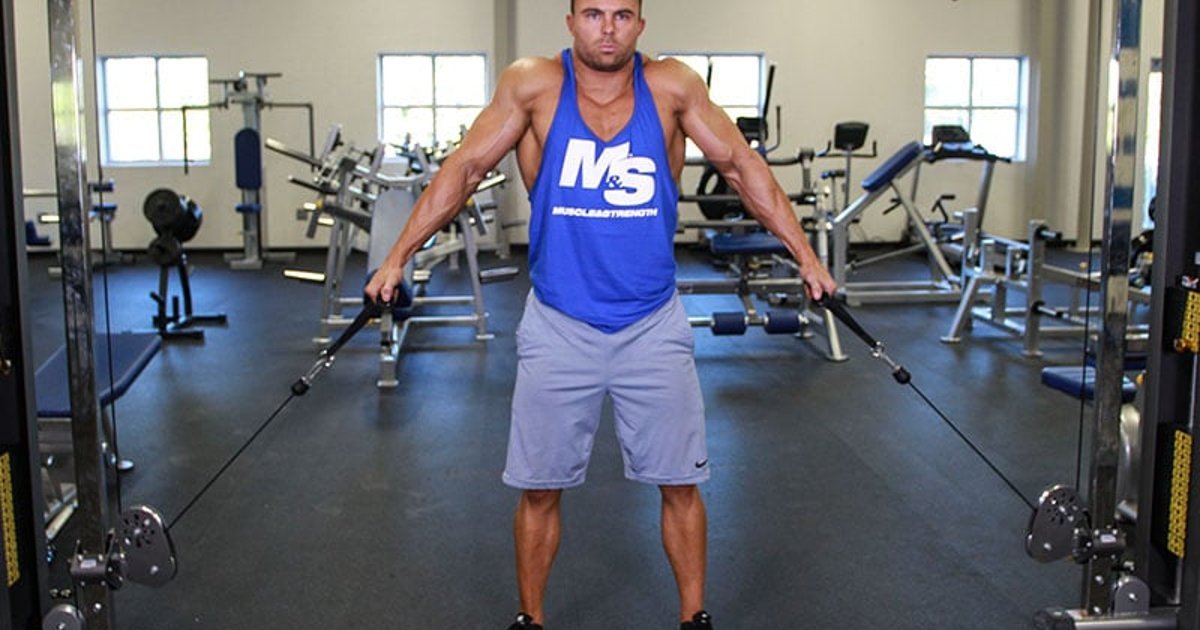
For the standing cable version, set two adjustable pulleys low and hold a handle in each hand. Stand between them with a stable base and start with a modest load. Check the cable routes before beginning: neither cable should scrape across your legs or pull you into an unstable position. The direction of resistance follows the cable, so pulley spacing and your position deserve attention rather than being treated as incidental details.
Bring the shoulders upward smoothly, then return under control. Keep the elbows long without forcing them into an uncomfortable locked position. Your hands carry the handles; they do not need to pull them toward your chest. A brief, deliberate stop at the top can help you notice whether you reached the position through shoulder movement or through a small knee bounce. The pause is a technique tool, not a special requirement for muscle growth.
Use the first light set as a setup check. Can you stand without leaning away from one tower? Is one cable slack while the other already has tension? Do the handles sit comfortably without bending your wrists? Adjust those details before selecting a working weight. A few consistent repetitions tell you more about whether the station fits than loading both stacks heavily and trying to solve the setup while already fatigued.
Keep the shrug separate from an upright row
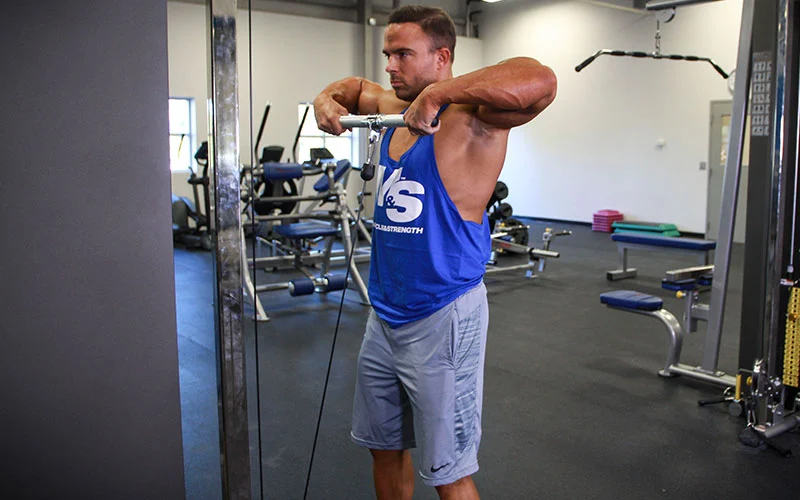
An upright row deliberately bends the elbows and raises the hands toward the upper torso. A shrug keeps the arms relatively long while the shoulder girdle moves. The cable upright-row photograph makes the difference visible: high elbows and a raised bar describe another exercise, not a larger or more advanced shrug. If your shrug gradually turns into that pattern as the set continues, the repetitions are changing character.
Watch the relationship between hand height and elbow angle rather than judging a repetition only by how far the attachment travels. A cable can move because you lifted the shoulders, bent the elbows, leaned backward or combined all three. The stack cannot tell you which happened. A short video from a clear angle can help you compare the first repetition with the last, provided filming is allowed and other gym users are kept out of view.
Shoulder circles are another change to avoid adding automatically. A large forward-and-back roll is not necessary to perform the basic shrug. Keep the movement comfortable and repeatable instead of searching for a dramatic finish. Likewise, do not force your neck into extension to chase a stronger sensation. If the exercise causes pain, stop and reassess the load and setup; persistent or concerning symptoms deserve appropriate professional guidance.
Define a useful stopping rule before the set. For example, finish when you can no longer raise and lower the shoulders without an obvious arm pull or body bounce. That rule keeps your training record honest: ten comparable repetitions are easier to build on than twelve repetitions where the last few became a different movement. It also makes a later load increase a real progression rather than a reward for relaxing your own technique standard.
Choose the attachment for your grip and clearance
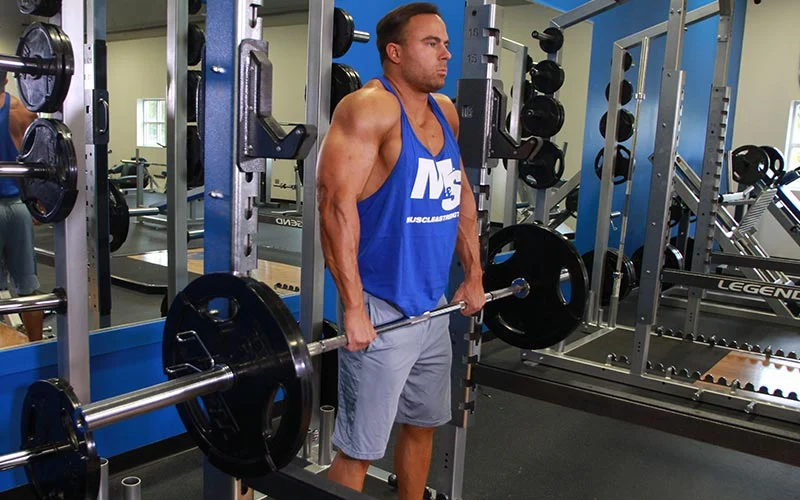
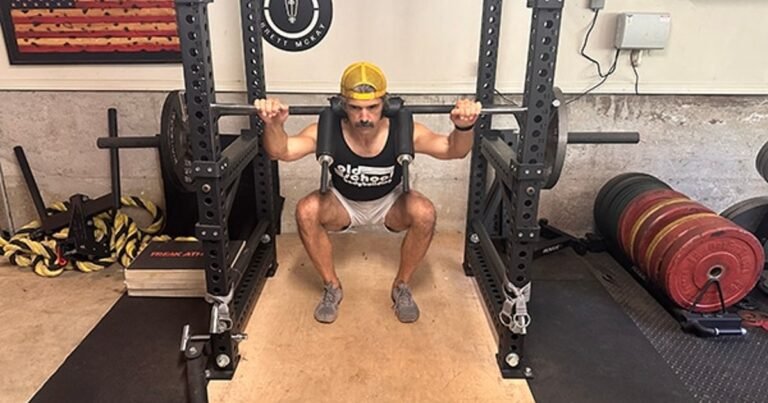
Independent handles allow each hand to find its own position. A single low-pulley bar places both hands on one attachment in front of the thighs. The barbell-shrug photograph shows that shared-bar arrangement with free weights, helping explain the clearance question; it does not depict a cable attachment. With either implement, check that your hands and the bar can move without being forced around your clothing or pressed awkwardly into the body.
Choose a grip you can maintain with reasonably straight wrists. A wider grip is not automatically better, and a narrow attachment is not automatically more precise. Handle diameter, hand spacing and the point where the cable attaches can change the feel of the setup. When comparing options, keep the load modest and ask whether you can perform the intended action comfortably. Do not treat the most elaborate attachment in the rack as the default choice.
If your grip gives out before the intended shoulder work, identify that limitation clearly. You might use a load you can hold securely, choose a more suitable handle, or consider straps when appropriate and when you understand how to release them. Straps can assist the hold; they cannot correct an unstable stance or a movement that has become a curl. Practice any unfamiliar attachment with light resistance before relying on it during a demanding set.
Cable-stack numbers are useful within a consistent setup, but they are poor trophies for comparing unrelated machines. Pulley arrangements, attachment choices and the path of the cable can differ. Record which station and handle you used rather than assuming that a given stack label equals the same experience everywhere. When moving to another machine, establish a new working load through controlled practice rather than transferring the old number without checking it.

Equipment Worth Exploring
Explore equipment, accessories and gear from our carefully selected range.

GymPin Ergo Handles
Pair of ergonomic cable handles shaped for comfortable triceps and pulling exercises.

GymPin D Handle Bar
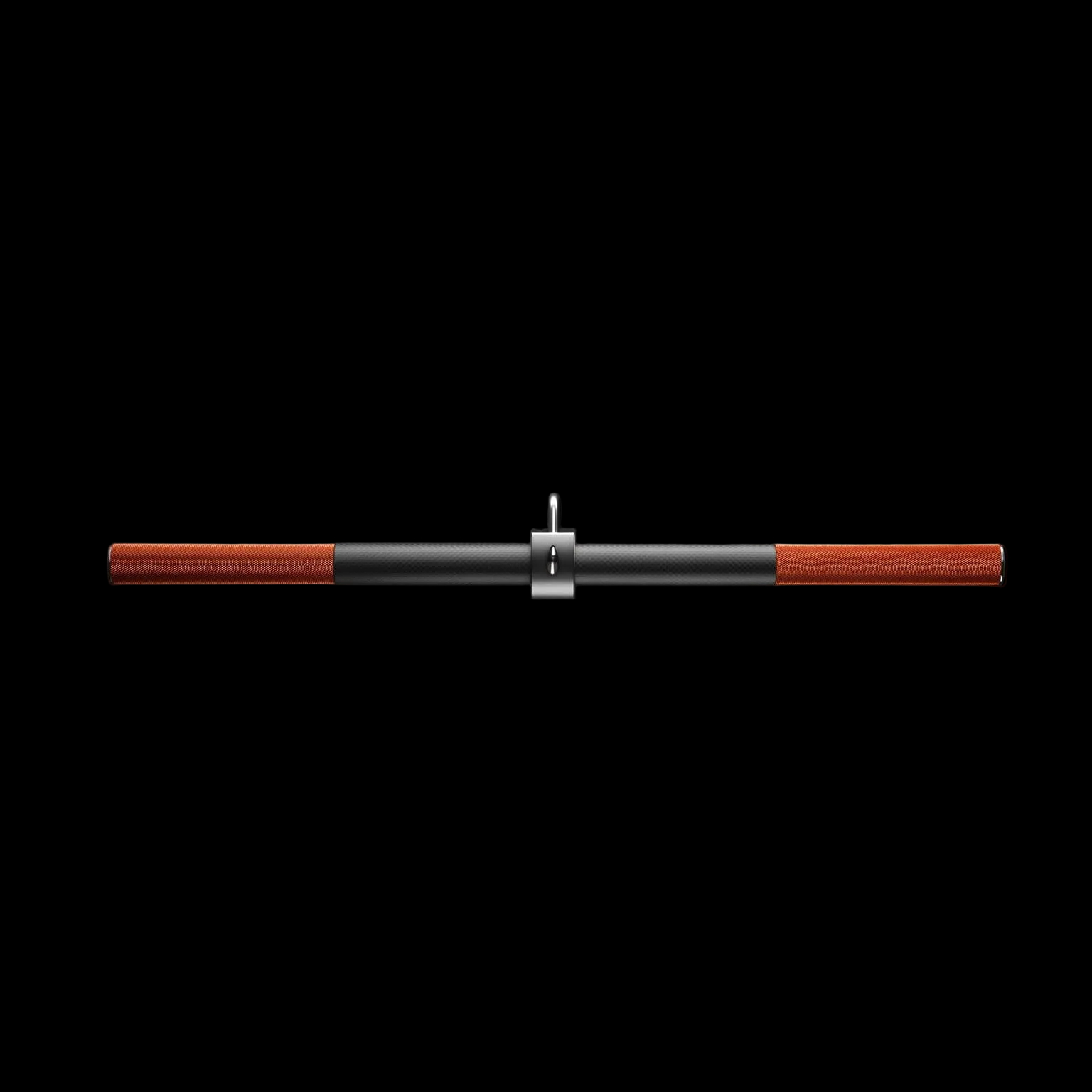
Multi-use steel D-handle bar for cable rows, pulldowns and other cable exercises.


Leather Lifting Straps
Padded leather straps support grip during heavy rows, deadlifts and pulling exercises.


Rubber Hex Dumbbells
Rubber-coated hex dumbbell pairs with a stable shape for home and commercial strength training.
VOLTRA
Compact digital cable trainer with smooth, adjustable resistance.

44in Dual Hook Bar
44-inch aluminum dual-hook straight bar for cable rows, pulldowns, and curls.
Treat seated cable work as its own setup
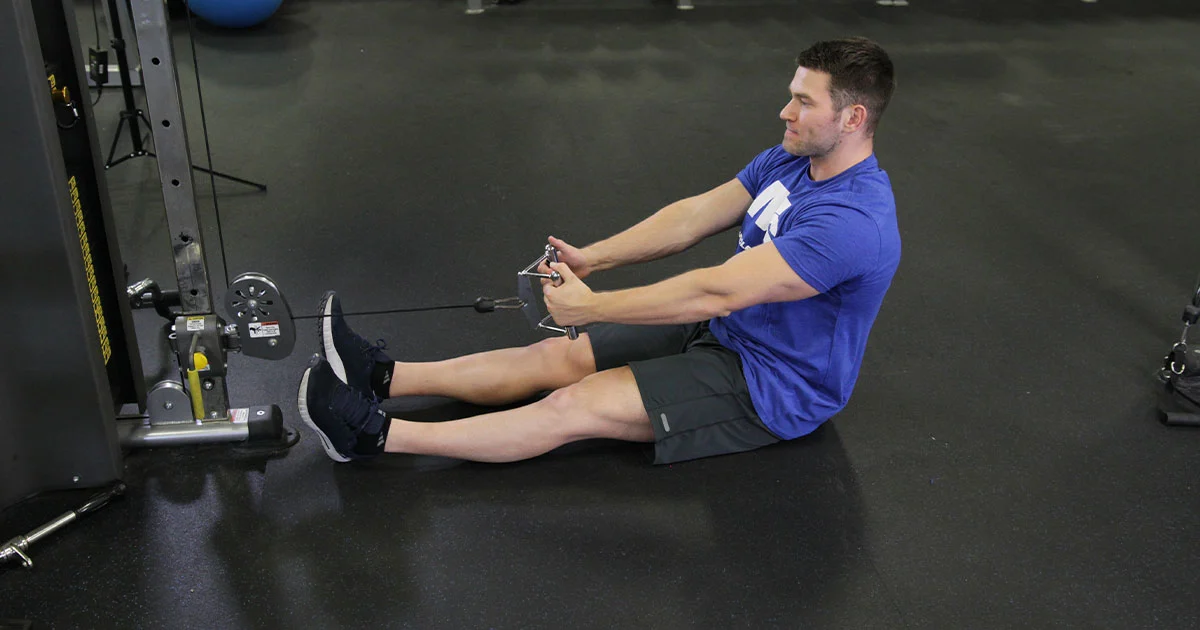
A seated cable shrug changes the relationship between the body and the pulley. With the arms reaching toward a low cable, the exercise is not simply the standing version performed lower to the floor. The seated photograph shows a lifter facing the machine with a close-grip attachment held in front. Use it as a reminder to inspect the actual line of pull and shoulder action instead of assuming that every exercise with the same name is identical.
Set yourself on a stable surface, keep a comfortable torso position and select a light starting resistance. If the machine provides suitable foot supports, use them as intended. Do not improvise a brace against a moving or unstable part of the equipment. You should be able to hold your position without turning each repetition into a backward lean. If that is difficult, reduce the resistance or choose a simpler variation rather than forcing the seated setup.
Keep the distinction between a shoulder movement and a seated row visible. Pulling the attachment into your abdomen by bending the elbows changes the task. Let the arms transmit the resistance while you explore the intended shoulder motion under control. Avoid chasing an exaggerated stretch by collapsing the torso or letting the load drag you forward. A useful range is one you can control and repeat, not the longest distance the cable can possibly travel.
Compare variations by the purpose they serve in your program. The standing version might fit a session because the station is available and setup is quick. A seated version might be worth practicing when you want to examine a different body position. Neither deserves a claim of universal superiority merely because it feels unfamiliar. Give a variation enough consistent practice to understand it, then keep the one that fits the goal and can be performed reliably.
Progress one defined variation instead of collecting stack numbers
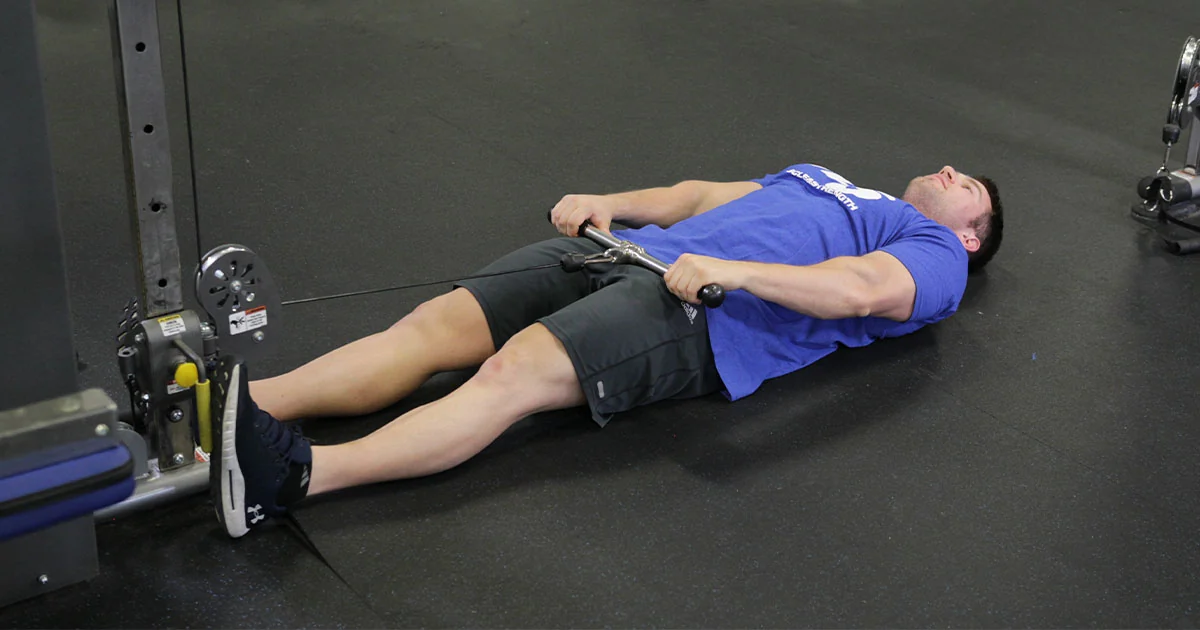
A lying cable shrug introduces another position again. The photograph shows a lifter on his back with a straight bar and feet directed toward the cable station; it is not a chest-supported prone shrug. If you try it, first establish a safe way to take the attachment, lie down and return the load. A variation that creates an awkward entry or exit is not automatically worth using just because its working repetitions look simple.
Choose one well-understood version for your training log. Write down the station, attachment, body position, working load, repetitions and any deliberate pause. Include a brief note if grip, balance or an altered range ended the set. You do not need a complicated spreadsheet to make the next session more informative. The point is to preserve enough context that you can tell whether you repeated the same task with more capability.
As an illustrative starting approach, use a small number of manageable sets in a repetition range where you can maintain the intended movement. Leave room to learn the setup rather than testing a maximum immediately. Add repetitions within your chosen range while preserving the same standard; consider a small load increase once the work becomes consistently manageable. That is a practical example of progression, not a uniquely validated cable-shrug prescription or a promise of a particular result.
Place the accessory alongside the rest of your pulling and upper-body work, allowing recovery rather than adding more sets simply because the movement is short. Review whether the exercise is contributing useful work without disrupting the rest of the program. Better control, a more secure hold and comparable repetitions can all make the log more meaningful. The useful target is a shoulder movement you can execute and evaluate consistently, not the largest number you can briefly make the stack display.

Bodybuilding Shirts & Workout Gear
Bodybuilding shirts, tanks and gym gear for lifters chasing muscle, size, symmetry and the pump.

Shirt Pull Day – Back & Biceps Meme Top T-Shirt
Heavy lifts, good laughs, and a little “Pull Day Graphic” energy.

Control Your Gains Stoic Greek God Marble Sculpture T-Shirt
Make gym days more fun with “Control Your Gains Stoic Greek God Marble” style.


Progressive Overload Milo Tee
Bring “Progressive Overload Milo Bull” humor to your next gym day.

Mind Muscle Perfection Brain and Biceps Gym for Science T-Shirt
Show some gym-day personality with “Mind Muscle Perfection Brain and Biceps”.


OnlyGains Meme Vest Bros Athletic Top & Tank Top
Bring “OnlyGains Gym Meme” humor to your next lifting session.

The Only Difference Between Good And Great Is One T-Shirt
Bring “The Only Difference Between Good And Great” humor to your next gym day.

Installing Muscles Meme – Vest Tank Top
Show some personality between sets with “Installing Muscles Gym Meme”.

Lift Heavy Be Happy Meme Bros & Gains Top T-Shirt
Show some powerlifting attitude with a playful “Lift Heavy Be Happy” tee.