Advertising disclosure: This page includes affiliate product links that may earn us a commission, as well as products from our own store.
Cable Upright Rows: Choose Your Grip, Control the Height and Keep the Reps Honest
A cable upright row can be a useful shoulder and upper-back accessory, but the handle reaching your chin is not a universal definition of a good repetition. Your attachment, stance and chosen endpoint all affect the exercise. Start with a manageable load and a movement you can repeat comfortably, then judge progress against that standard rather than how far you can drag the stack upward.
Set the low pulley and establish a repeatable stance
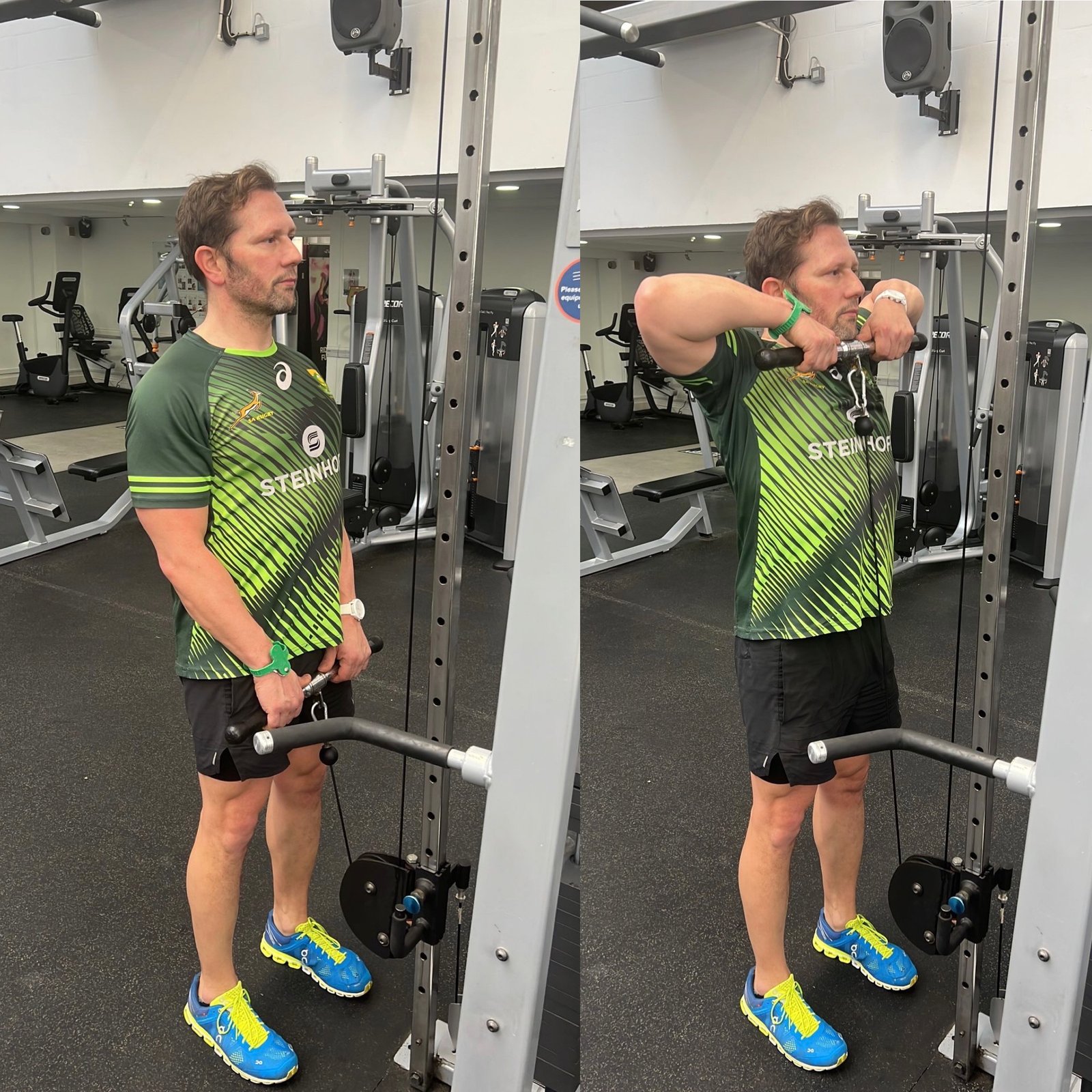
The usual cable setup uses a low pulley with a bar or rope attached. Stand facing it, take a secure grip and settle into an upright position. You want enough space for the attachment to move without needing to swing around your legs. Keep your base stable and the knees relaxed. The cable should provide resistance without pulling you into a constantly changing posture.
Stand close enough to keep the upward path near your body, while leaving clearance for the handle and connection hardware. Moving far away changes the cable’s angle and turns the movement into a different pulling task. There is no universal distance measured in shoe lengths: pulley height, attachment length and your proportions all matter. Use a light rehearsal set to find a practical position.
Record that position in a way you can reproduce. A floor tile, a modest reference point on the machine or a note about where your toes sit can be more useful than “stood normally.” Check that the pulley adjustment is secured and the attachment connector is fully closed before beginning. Keep clothing, hands and loose items away from moving parts.
The stack is not a universal strength scale. Two cable stations can feel different even when their selected numbers match. If you change machines, treat the first session as a fresh comparison rather than forcing last week’s pin setting. Equipment consistency matters more than claiming a heavier upright row on a machine with a different pulley arrangement.
Choose an attachment that lets you control your hands
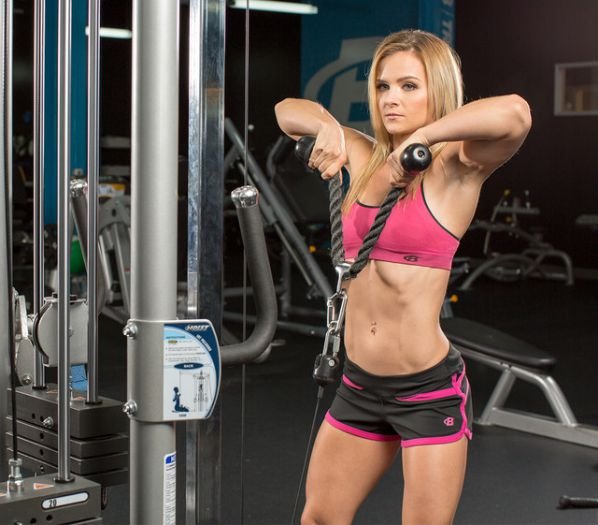
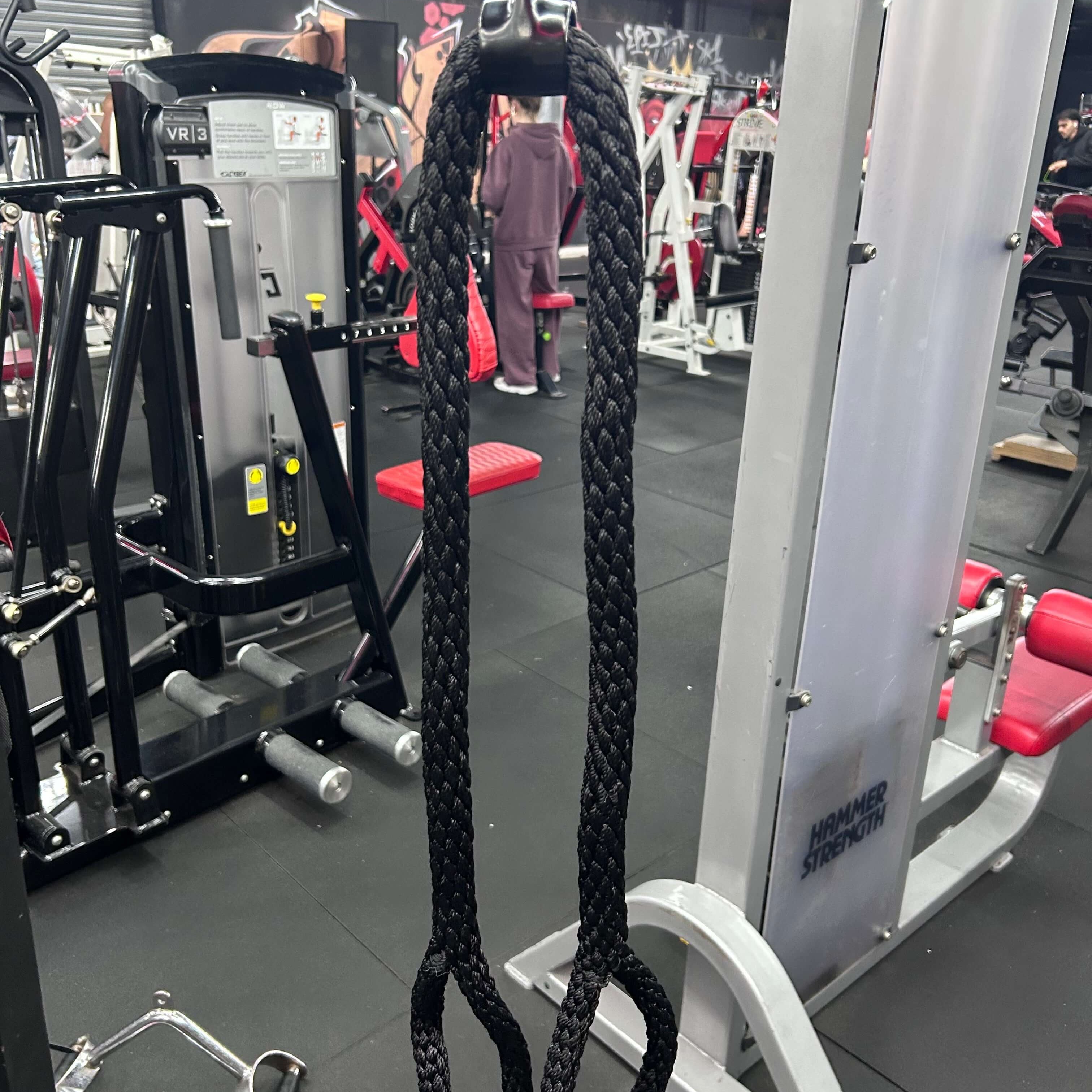
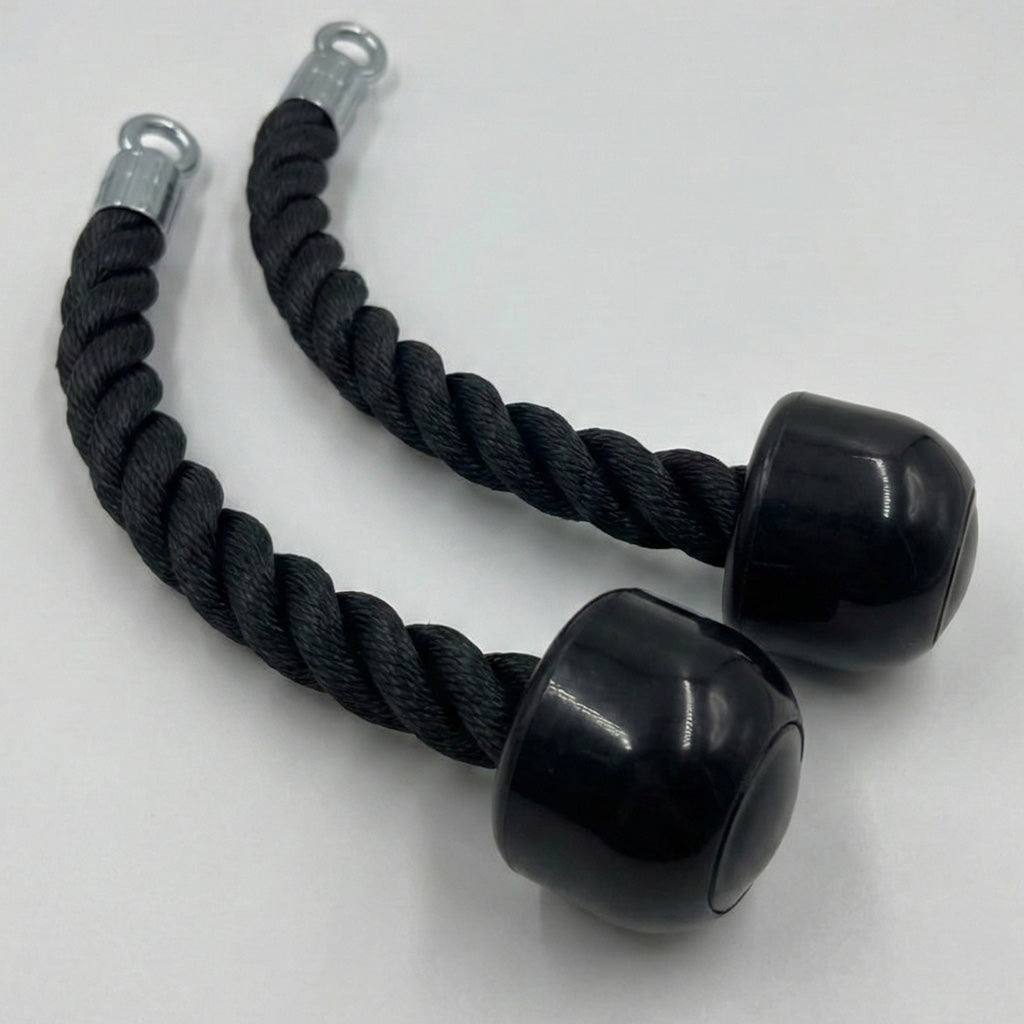
A straight bar connects your hands at a fixed spacing and orientation. A rope allows more independent positioning, although its length and end stops still affect your grip. An angled bar provides another set of fixed hand positions. These are practical differences, not a ranking in which one attachment is automatically comfortable or appropriate for every lifter.
With a bar, begin around shoulder width rather than squeezing the hands together simply because a photograph shows a narrow grip. Keep the grip secure and avoid folding the wrists excessively to gain extra height. With a rope, establish a hand position you can retain throughout the repetition. Do not let the ends slip through your fingers as the load rises.
Change the attachment deliberately. For example, compare a light straight-bar set with a light rope set while keeping your stance and intended endpoint similar. Note whether one lets you maintain a more controlled path. That is a useful observation about your own session; it is not evidence that the rope has fixed a shoulder problem or that a particular bar is inherently dangerous.
Choose equipment for fit and function. Check connector clearance, usable grip space and the manufacturer’s load guidance. A long rope or an unusually wide handle changes the setup, so it may need a different working load. More attachment options are only useful when you can explain what you are changing and why.

Equipment Worth Exploring
Explore equipment, accessories and gear from our carefully selected range.
VOLTRA
Compact digital cable trainer with smooth, adjustable resistance.

Go-Tone Pro
Portable digital cable trainer with up to 66 lb (30 kg) of adjustable resistance.

VForce Wall Trainer
Space-saving wall-mounted functional trainer with pivoting cable arms and variable resistance ratios.

VForce 2IN1
Half rack and pivot-arm functional trainer with switchable 1:1 and 2:1 pulley ratios.

44in Dual Hook Bar
44-inch aluminum dual-hook straight bar for cable rows, pulldowns, and curls.

Dual Hook EZ Curl Bar
Angled aluminum dual-hook cable bar for biceps curls and pulldown variations.

Long Tricep ERGO Ropes
Extended triceps ropes with ergonomic grips for cable pressdowns and overhead extensions.
Super Long Tricep Rope
Extra-long looped cable rope for triceps pressdowns and overhead extensions.
Individual Tricep Ropes
Pair of individual cable ropes for triceps pressdowns and cable hammer curls.

Multi-Length Tricep Strap
Adjustable-length cable strap for triceps, biceps and upper-body cable exercises.
Use a controlled lift height instead of chasing the chin
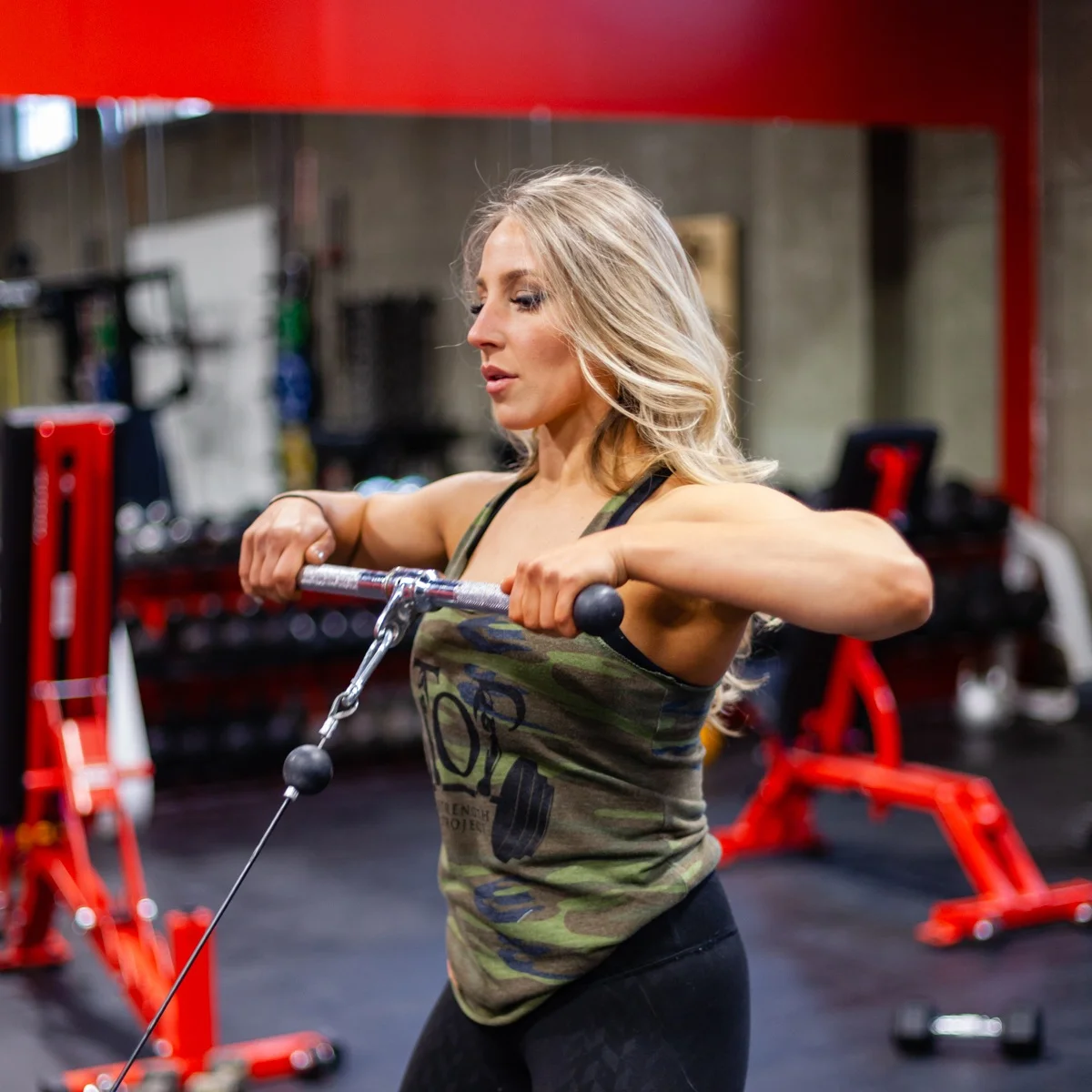
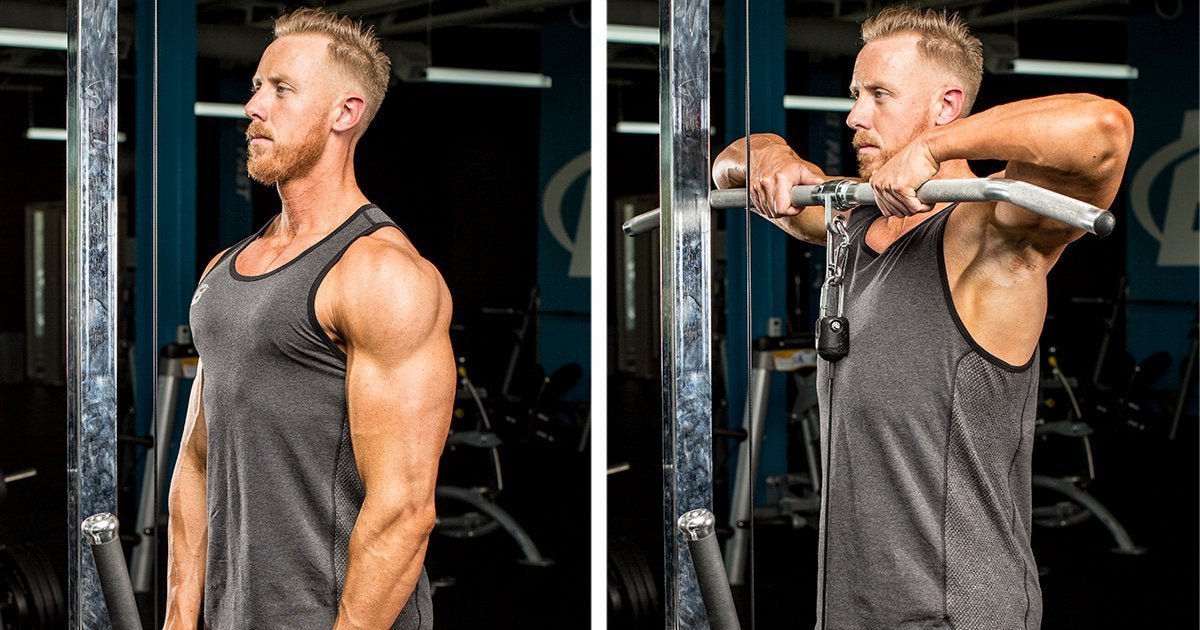
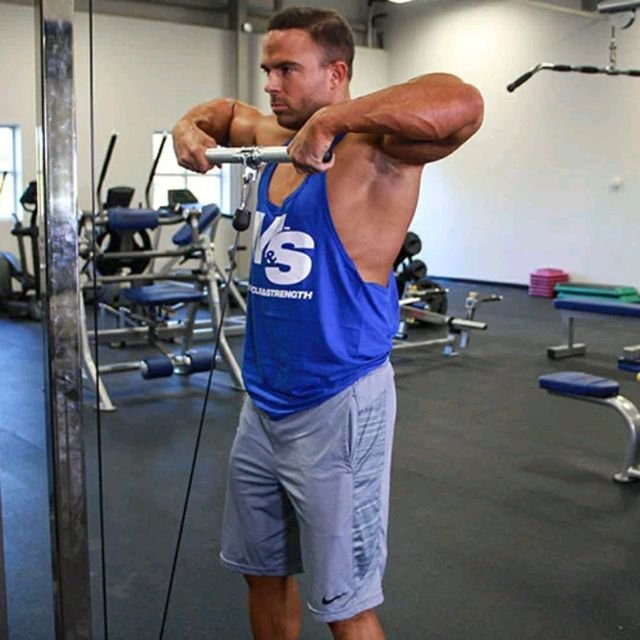
Raise the attachment as your elbows move outward, keeping the torso quiet. Begin with a conservative endpoint and keep your upper arms at or below shoulder height. You do not have to pull the handle to the chin. Arm length, handle shape and the chosen range make that landmark an unreliable target across different people and setups.
Think about the upper arms as well as the handle. A short bar can arrive at a familiar point on your shirt while your wrists and elbows take a very different route from a rope. Use the range you can control comfortably, and make a note of it. A side or front video can help a coach see whether later repetitions are being finished with a backward lean or an extra heave.
Lower the attachment deliberately to the start. Do not bounce it off your thighs or allow the stack to crash between repetitions. If you need to straighten the knees sharply, rise onto the toes or throw the torso backward to finish, reduce the load. Those actions make the exercise harder to compare and move it away from the controlled accessory lift you intended.
Pain is not a cue to pull harder or experiment repeatedly within the same tiring set. Stop the movement if it hurts. Persistent or recurring symptoms warrant assessment by a qualified clinician rather than a collection of grip hacks. You can choose another shoulder exercise; the upright row is an option in a program, not a movement everyone must master.
Keep cable rows, dumbbell variations and high pulls distinct
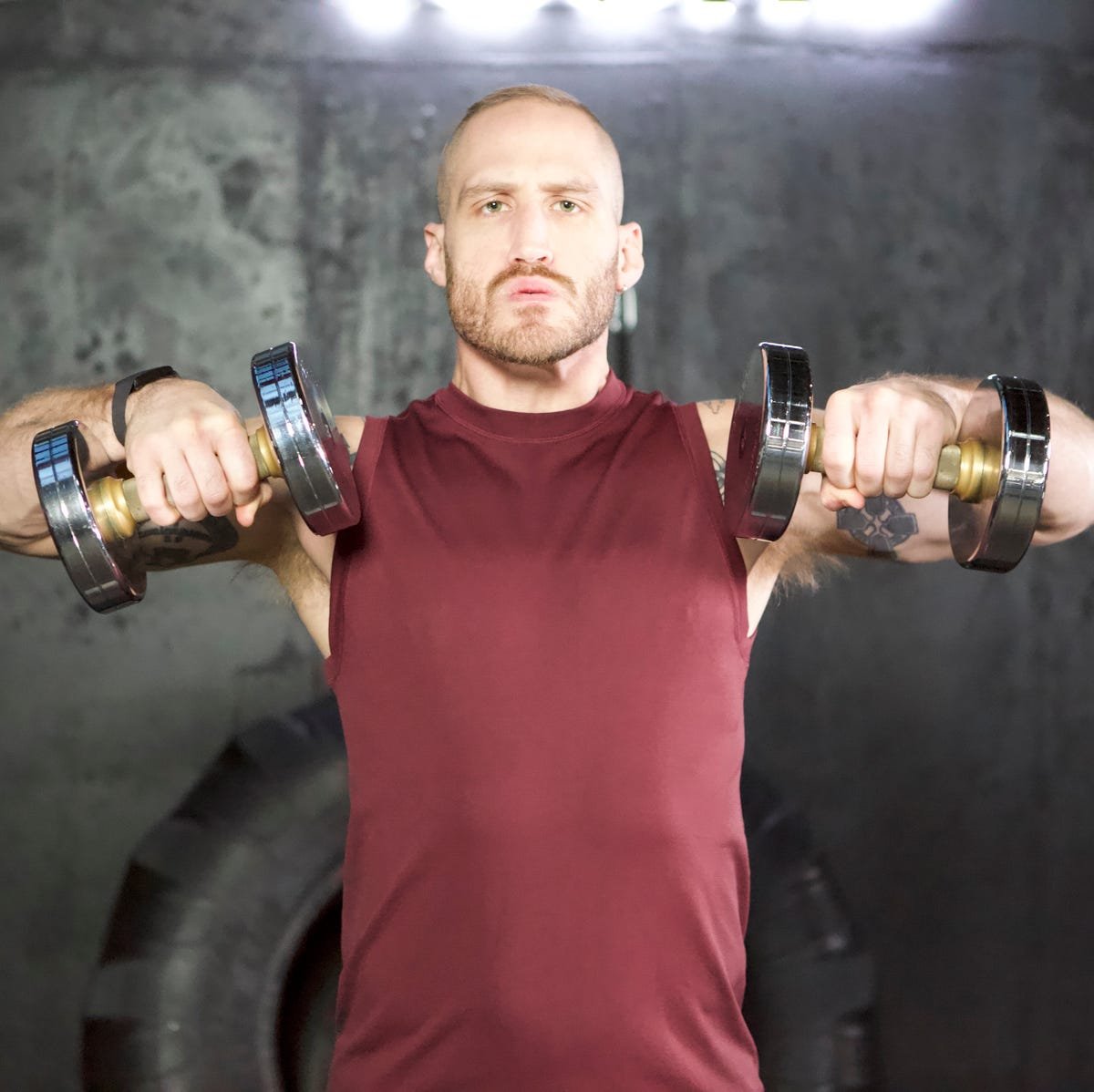
A cable pulls toward its pulley, while dumbbells and a barbell are resisted by gravity. That difference changes how your position relates to the resistance. It does not establish that one tool always produces more muscle growth. Use the equipment that suits the task and lets you perform consistent work rather than treating the cable stack as a shortcut to a better result.
Dumbbells let the hands move independently; a barbell keeps them connected. If you explore a free-weight variation, learn its setup on its own terms. Do not compare a heavier barbell row with a lighter cable row as though the numbers describe identical conditions. The attachment, resistance direction and movement endpoint belong in the comparison alongside the load.
An explosive high pull is another separate task. Its deliberate lower-body drive should not appear accidentally as fatigue builds in a controlled upright-row set. If your goal is an accessory shoulder movement, keep the legs and torso from turning the final repetitions into a different exercise. If your goal is to learn a power exercise, give that movement its own instruction and appropriate place in the session.
Lateral raises offer a different way to train the shoulders, with much less elbow bending than an upright row. Shrugs emphasize a different action again. None is a perfect copy of the others. You do not need to collect every variation in the same workout: choose movements that serve a clear purpose and leave enough attention to perform them well.
Progress the same movement before adding more variables
Begin by establishing a baseline you can describe: machine, pulley setting, attachment, grip, stance, endpoint and load. Then add sets and repetitions to the log. A brief note such as “last two reps leaned backward” is more useful than recording a higher total and forgetting how it happened. Quality notes make the next decision easier.
As an illustrative starting point for an experienced lifter learning this variation, two manageable sets of 10–12 controlled repetitions can be enough to assess the setup. This is a coaching example, not a special research-tested dose. Keep room to stop before technique changes. Someone already doing substantial shoulder work may need less additional work, while a complete beginner may benefit more from supervised practice than another exercise in the plan.
At the next exposure, repeat the same setup. If the repetitions remain comfortable and consistent, you might add a repetition while keeping the load unchanged. Once the chosen range is repeatable, consider the next sensible load step and reassess. If the increase requires a much shorter range or more body movement, return to the previous setting rather than counting it as an automatic improvement.
Change one meaningful variable at a time. Moving to a new handle, standing farther away and increasing the stack together may create a hard set, but it gives you little information about which change mattered. Compare one adjustment across similar sessions instead. There is no requirement to make something harder every time you approach the machine.
The useful standard is a stable setup, secure hands, a controlled path and a comfortable endpoint. Keep those recognizable as the work develops. If the upright row remains awkward or unpleasant, choose an alternative and continue training. A flexible program built from movements you can perform well is more valuable than forcing one accessory exercise to stay on the list.

Funny Gym Shirts & Workout Gear
Funny gym shirts, tanks, hoodies and workout gear for lifters who like training hard.

Control Your Gains & Your Mind Stoic Sigma T-Shirt
Bring “Control Your Gains & Your Mind Stoic Sigma” humor to your next gym day.

Safety Practice Safe Sets Sweater Jumper T-Shirt
Show some gym-day personality with “Gym Safety”.

Mind Muscle Perfection Brain and Biceps Gym for Science Hoodie
Show off your lifting humor in a laid-back “Mind Muscle Perfection Brain and Biceps” hoodie.

Gymhead Meme Mind Muscle Connection Decal Water Sticker
A fun “Gymhead” touch for bottles, laptops, and lockers.

Lift Eat Repeat Sweater & Meme Fans T-Shirt
For laid-back days and lifting humor: “Lift Eat Repeat”.

Dumbbell Heartbeat Muscle Shirt Athletic Vest Fitness F Tank Top
Your gym-day look, with a playful “Dumbbell Heartbeat” twist.

Lift Together Grow Stronger Buddies Friendship Workout T-Shirt
Make gym days more fun with “Lift Together Grow Stronger” style.

Bending Bars Meme – Barbell Squat Bench Deadlift, & T-Shirt
Heavy lifts, good laughs, and a little “Bending Bars Gym Meme” energy.

Meme – You May Delay Time Will Not Next Cult Brand T-Shirt
Heavy lifts, good laughs, and a little “You May Delay Time Will Not” energy.

One More Rep Shirt: Motivational & T-Shirt
Make gym days more fun with “One More Rep” style.