Advertising disclosure: This page includes affiliate product links that may earn us a commission, as well as products from our own store.
ATX BPR-790 Leg Press and Hack Squat: Check the Sled Weight Before You Buy
A leg press and hack squat combination can save you from buying two large machines. The ATX BPR-790 adds two calf-training configurations to that idea, using one angled carriage for four movements. For a dedicated leg room, serious home gym or training studio, the attraction is clear: supported lower-body work without four separate stations.
The important buying questions are less dramatic than its maximum load rating. Can you comfortably move the empty carriage? Does the machine fit with room to load plates? Can every intended user reach the catches and find a useful range of motion? This is a specification-based buying guide and practical inspection checklist, rather than a claim of hands-on MMP testing. Treat a demonstration on the actual machine as the final test of personal fit.
Start with the space you need to use it
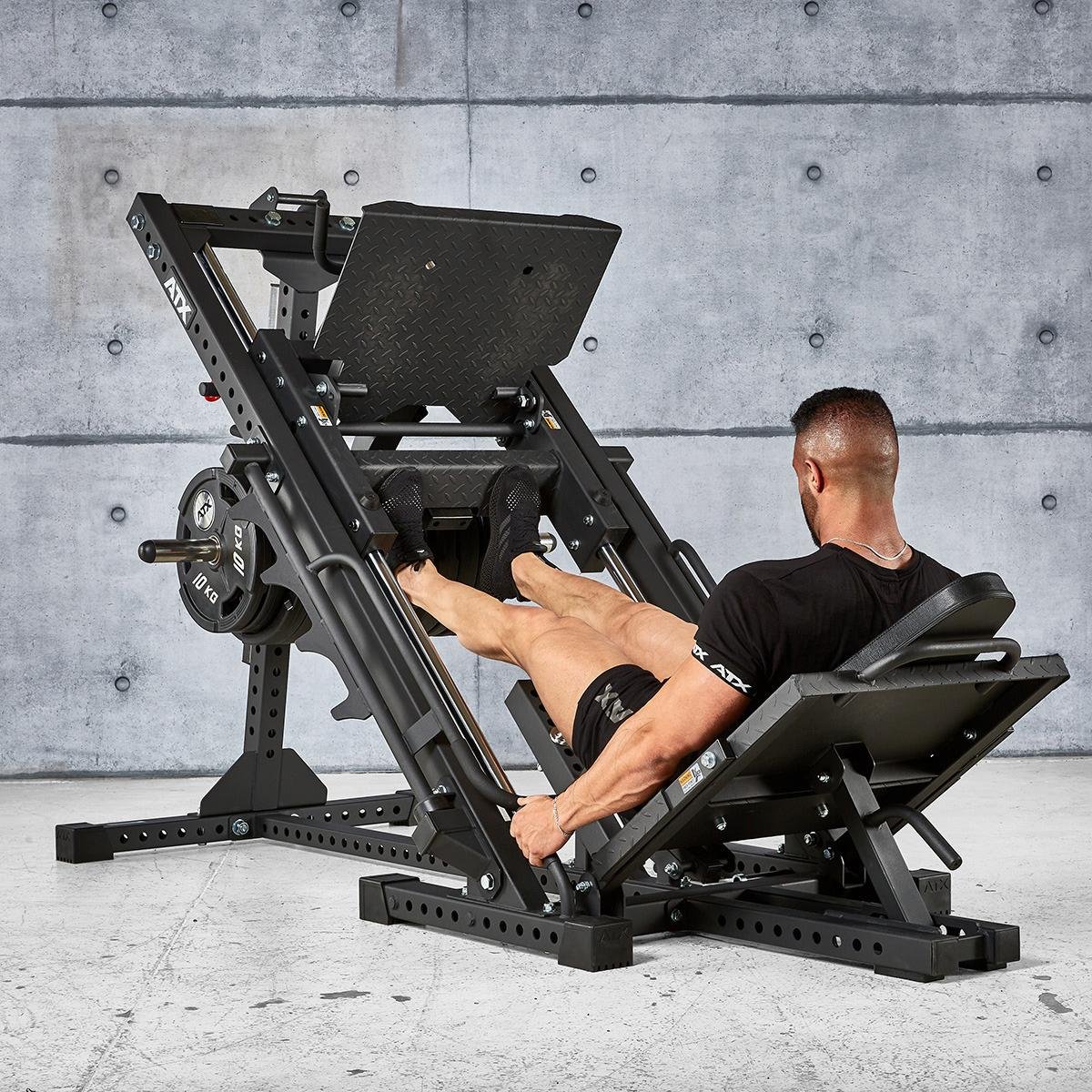
The BPR-790 is approximately 241 cm long, 110 cm wide and 154 cm high. That gives a nominal floor rectangle of about 2.65 square metres, before you allow for movement around it. Its stated machine weight is 265 kg. Those figures describe a substantial fixed station, even though combining exercises can use less space than installing separate machines.
Mark the frame outline on the floor, then add the activities that happen outside it. You need to approach the seat, get under the shoulder pads, reach the locking handles and put plates on both sides. A wall that leaves just enough space for an unloaded sleeve may make changing a large plate awkward. Keep the loading route clear rather than treating the published width as a complete room-planning measurement.
Delivery deserves the same attention. Measure doorways, turns, stairs and the route from the unloading point to the final location. Ask how the crate arrives and whether the delivery service includes moving it inside. Assembly and installation are separate jobs from getting a pallet to the property. Plan help for heavy components instead of expecting to move the assembled machine alone.
For an upstairs room or a floor with uncertain capacity, obtain a suitable assessment before ordering. Rubber feet can help protect a surface, but they do not establish the structural capacity of the building. Also leave enough space to inspect moving parts and remove plates when necessary. A machine that technically fits but cannot be maintained comfortably is an expensive room-planning mistake.
The empty sled matters more than the headline capacity
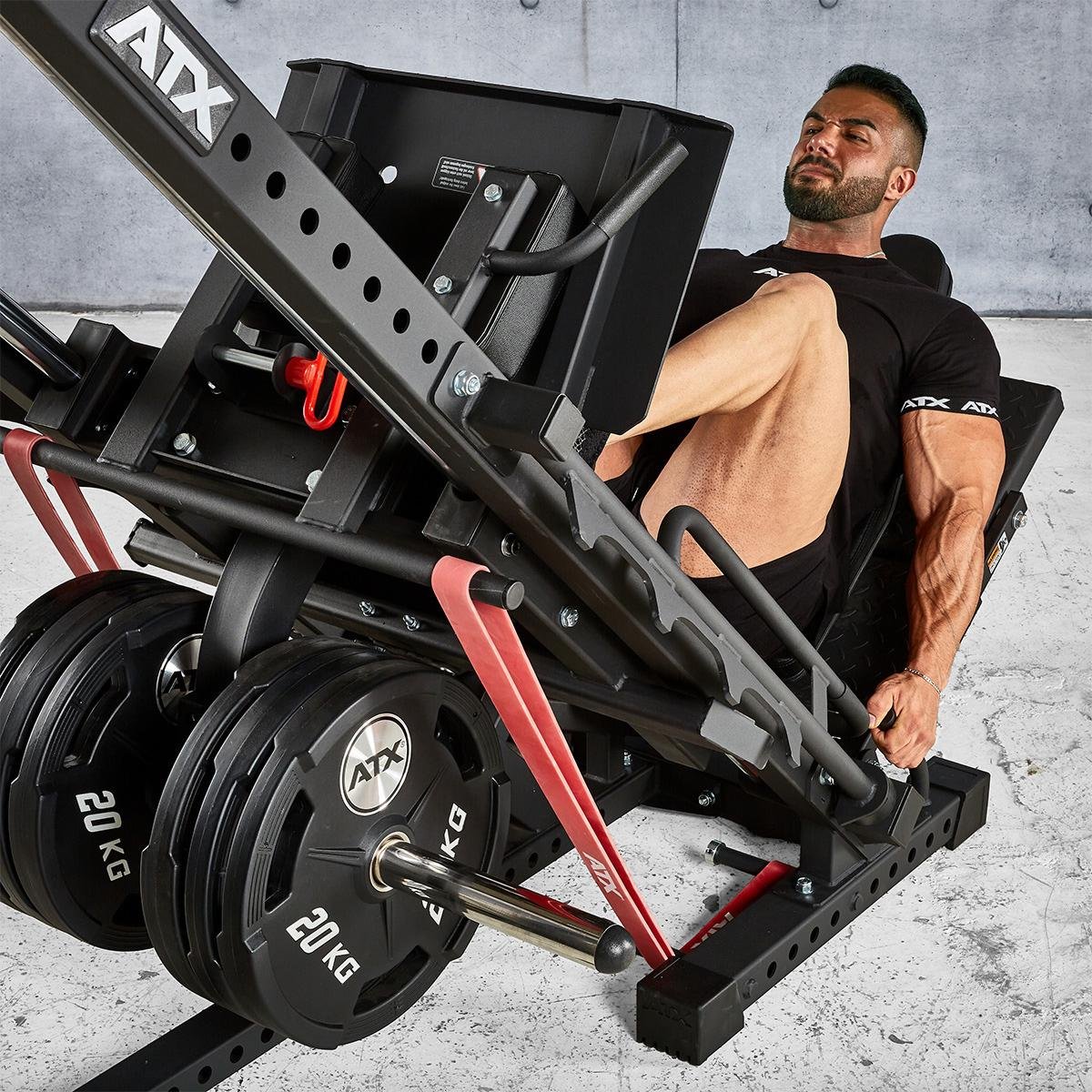
The listed carriage mass is about 68 kg, while the advertised loading capacity is 700 kg. These numbers answer different questions. Carriage mass affects your starting point before adding plates; the upper capacity describes a stated equipment limit. Neither figure tells you the exact force at your feet throughout a repetition, and neither should become a personal training target.
Do not read a 68 kg carriage as a 68 kg free-weight squat. An angled guide changes the gravitational component acting along the rails, and friction, the moving assembly and any bands affect the experience. Comparisons between different leg presses become especially misleading when people log only the added plates. Record the machine, exercise configuration, plate load and band setup so your own sessions remain comparable.
The practical test is simple: after a proper equipment introduction and safety setup, can you control the unladen carriage through the range you intend to train? Check this separately for leg pressing and hack squatting. A load that feels manageable in one configuration may be too demanding in the other. A strong upper-body lifter is not automatically ready for every machine’s starting resistance.
Band assistance is one of the BPR-790’s useful features, but it requires the correct routing and appropriate bands. It is not a promise that everyone can use the machine comfortably. Ask for a demonstration of the approved assistance arrangement and how it changes through the movement. If several people share the gym, assess the lightest or least experienced user’s needs as carefully as the strongest user’s ambitions.
Four exercise configurations still need individual checks
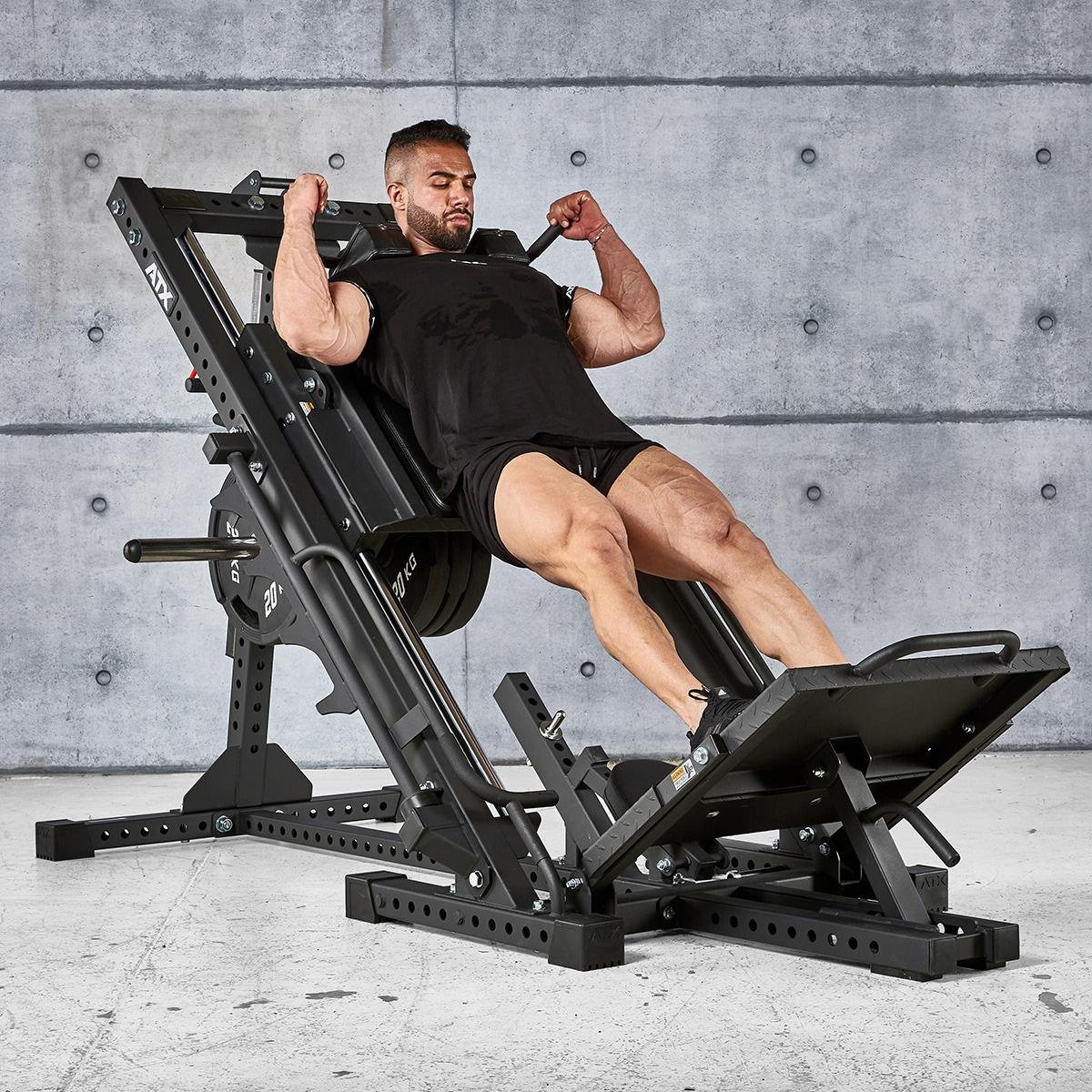
The four advertised movements are the leg press, hack squat, calf press and standing calf raise. They share the frame and carriage, but changing the exercise also changes your support points, starting position and useful travel. The adjustable lower platform and convertible padding help make that possible. Learn the conversion sequence before treating the machine as a quick exercise circuit.
For the leg press, look for a position where your back and pelvis remain supported through a controlled range. For the hack squat, check shoulder-pad contact, footplate position and whether you can reach and operate the catches without shifting awkwardly. Avoid choosing a depth simply because the carriage can travel farther. Your repeatable position and control matter more than the maximum mechanical travel.
For calf work, ask to see the exact foot support and locking arrangement for each configuration. A calf press performed from the seated leg-press position differs from a standing calf raise under the shoulder pads. Start conservatively and establish a controlled ankle movement rather than bouncing between end positions. The ability to perform four exercises does not mean you need all four in every session.
Consider what your current leg training actually lacks. A dedicated leg-extension/curl station, compact leg press, V-squat, compatible bench leg developer, glute-drive station or posterior-chain trainer solves a different problem. A hyperextension is not a replacement for a hack squat, and a leg curl is not a leg press. Compare those categories by the movement you need, available room and total setup cost, rather than counting the largest number of advertised functions.

Equipment Worth Exploring
Explore equipment, accessories and gear from our carefully selected range.

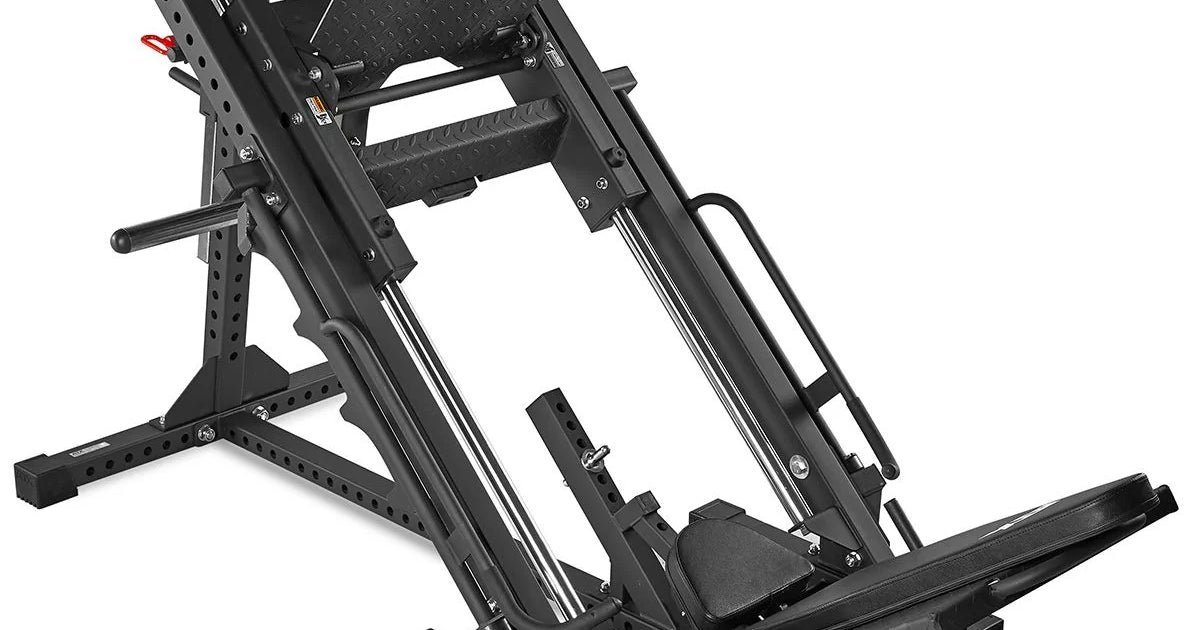
Leg Press/Hack Squat BPR-790
Convertible 45-degree leg press and hack squat machine with a broad footplate and band pegs.

Compact Leg Press CLP-700
Compact reverse-style leg press with a moving seat carriage and an adjustable footplate.

Leg Extension/Curl BCO-780
Leg extension and lying leg curl combo with plate loading, band pegs and a cable-loading option.

Seated Leg Combo BCO-680
Adjustable seated leg extension and leg curl machine with band pegs for added resistance.

Studio V-Squat
Plate-loaded V-squat machine for supported lower-body strength training.

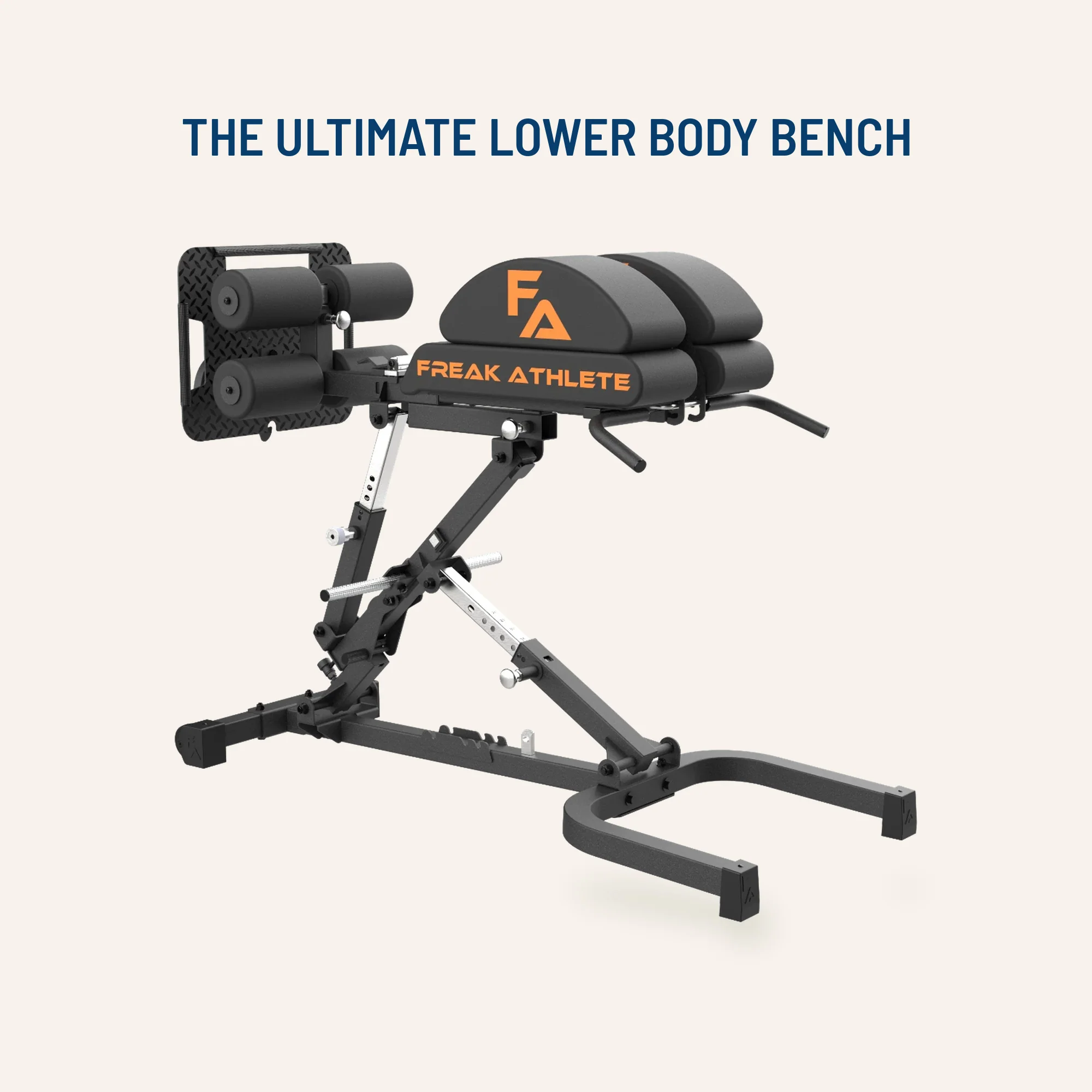

HUSLA Leg Extension Pad
Pad attachment designed to increase usable range of motion on compatible leg-extension machines.

45° Hyperextension HPX-650
Angled back-extension trainer with split padding, a ribbed footplate and resistance-band pegs.

Studio Glute Drive
Plate-loaded hip-thrust machine with supported back pad and adjustable foot platform.
Inspect the catches, conversion points and band routing
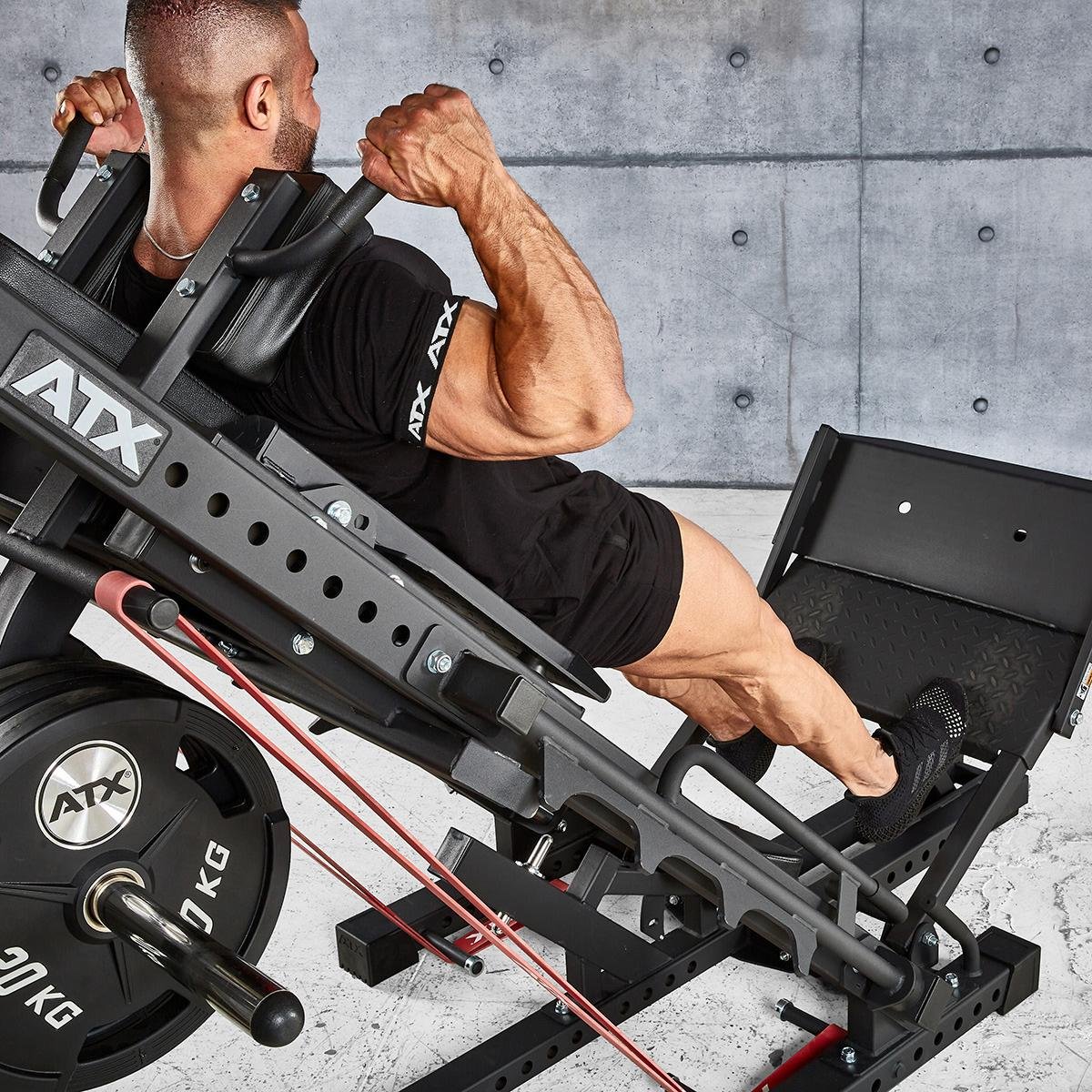
Before adding training load, learn how to secure the carriage and how the exercise-specific adjustments lock in place. A visible pin is not proof that it has engaged correctly. Have the seller demonstrate the approved setup, then repeat the process yourself with supervision. Check whether the intended user can reach the controls from the working position, including when setting up to finish a set.
The operating instructions require the seat to be folded down before hack squats, the safety bolt to be used during exercise, and collars to secure the plates. They also direct you to hold the footrest while folding it and release band tension before changing bands. These are model-specific operating points; use the current supplied manual rather than improvising a conversion from a short clip.
Band pegs can change the resistance profile in different ways. Adding resistance and providing assistance are different arrangements. Do not assume that any available peg is suitable for either task, or that the same band tension creates the same challenge across the entire movement. Check bands for damage, use the prescribed attachment points and keep clear of the moving carriage and pinch points.
Include maintenance in the ownership decision. Ask which checks and cleaning procedures the current manual specifies, how replacement pads or rollers are sourced, and who handles service locally. An unusually rough movement or damaged component deserves investigation before further loading. Smooth travel and safety features are things to verify on the installed machine, rather than guarantees that eliminate the need for sensible use.
Make the buying decision with a short trial session
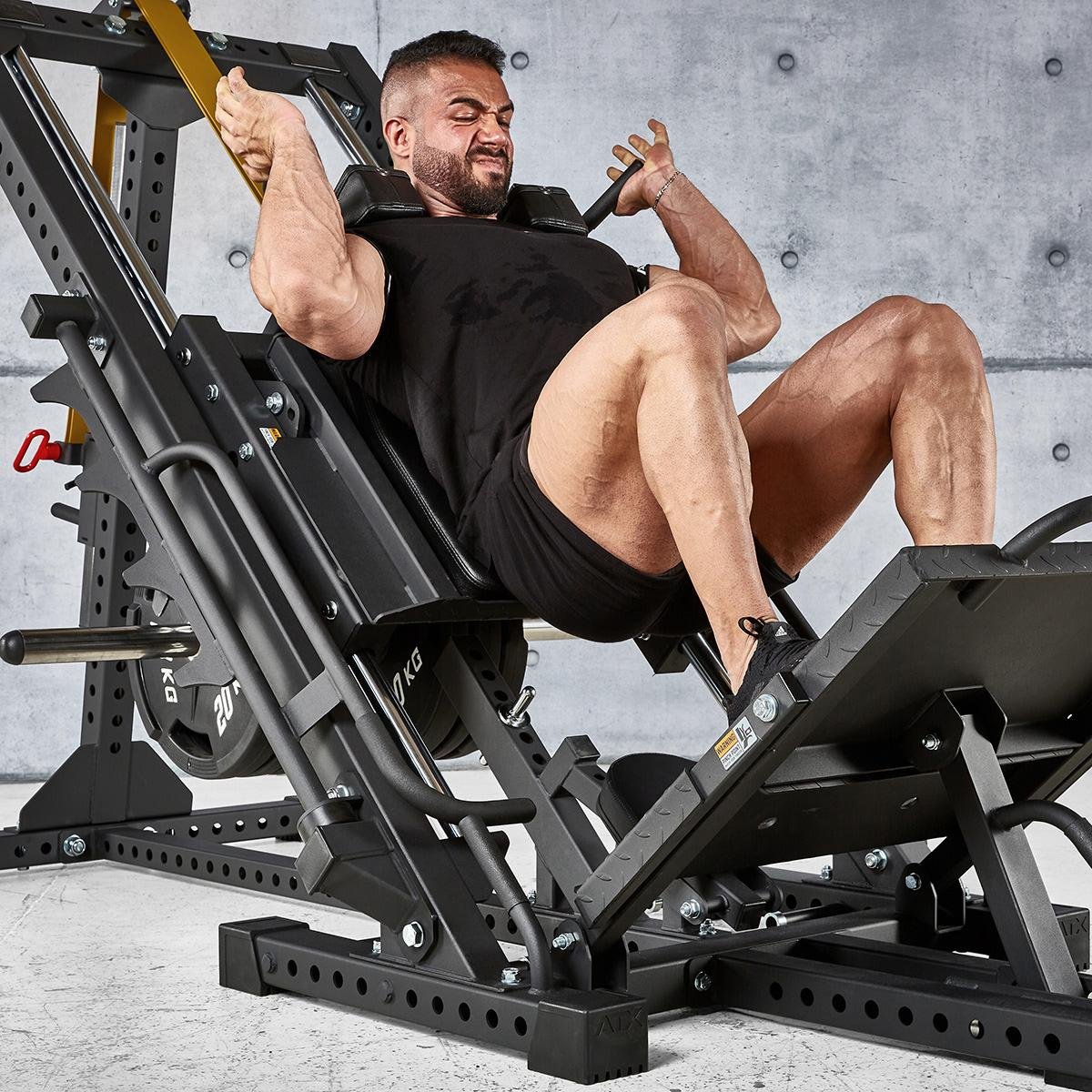
A useful demonstration does not need a personal record. Arrive with a small checklist: your usual shoes, the intended exercises, any mobility constraints, and the people who will share the machine. Ask to try the starting setup and a few controlled repetitions with an appropriate load. Record the pad, platform and catch positions that worked instead of relying on a general impression that the machine felt substantial.
Next, rehearse the tasks between sets. Change a plate, secure the collars, convert from leg press to hack squat and return to the original setup. Check that the process remains practical in your room layout. If you usually train alone, being able to reach everything comfortably and follow the operating sequence matters more than how quickly an experienced salesperson performs the conversion.
Build the complete budget around the station: delivery, installation, suitable plates and collars, any approved bands, and the space those accessories need. Confirm what the actual regional package includes. Photographs can show plates and bands that are sold separately. Warranty and service arrangements may also differ by seller, so get the terms for your purchase rather than assuming every international listing offers identical coverage.
The BPR-790 makes most sense when you want substantial guided leg work, have room to operate it properly and can use its starting resistance comfortably. If that combination does not fit, a smaller station or a simpler free-weight setup may serve you better. Buy the machine whose usable positions and everyday workflow suit your training, not the one whose capacity figure looks best on paper.

Leg Day Shirts & Workout Gear
Leg-day gym shirts and workout gear for lifters who never skip squats, lunges and lower-body punishment.

Leg Press Dost Thou Even Press Medieval Knight Crewneck T-Shirt
Show some gym-day personality with “Leg Press”.


Dont Skip Leg Day Hooded Pullover Deadpool Fans Hoodie
Keep it laid-back with a little “Dont Skip Leg Day” attitude.

Never Skip Leg Day Flamingo – Fitness Meme Vest Muscle Tank Top
Train hard, laugh a little, and rep “Never Skip Leg Day Flamingo”.

Heavy Squatter Gym Wizards | Funny Harry Potter Workout T-Shirt
Bring “Heavy Squatter Gym Wizards” humor to your everyday gym style.

I Love Squats | Valentine's Leg Day Hooded Hoodie
Keep it laid-back with a little “I Love Squats” attitude.

Squat You Must Star Wars Leg Day Meme Decal Water Sticker
Give your everyday gear a playful “Squat You Must” twist.


Leg Day Is Calling You Squats & Deadlifts Meme Vest Tank Top
Your gym-day look, with a playful “Leg Day Is Calling You” twist.