Advertising disclosure: This page includes affiliate product links that may earn us a commission, as well as products from our own store.
Loaded carries ask a deceptively demanding question: can you move a heavy object while keeping the rest of your body under control? Farmer walks, suitcase carries, trap-bar walks and kettlebell variations all challenge grip, trunk control and breathing, but the position of the weight changes what the movement trains.
You do not need a competition-sized runway to benefit. A pair of dumbbells, a short clear lane and a reliable training log can provide plenty of productive work. This guide compares carry styles, explains form and loading, and gives you a two-day, eight-week progression that also works when space is limited.
Why carries challenge your grip, core and conditioning
Picking up a weight is only the first task. Once you start walking, your hands have to keep the handles closed, your shoulder girdle has to support the load, and your trunk must control the tiny rotations and side-to-side shifts that accompany each step. Unlike a deadlift, a carry keeps asking for force while you move through space. Unlike a static plank, it adds the demands of gait, breathing and navigating the environment.
A farmer carry with equal loads in both hands spreads the demand relatively symmetrically. A suitcase carry with a weight on one side tries to pull the torso toward that side. An overhead carry places the load at a height where shoulder stability and balance become much more important. Those variations share a family resemblance, but treating them as interchangeable makes progress harder to measure.
The hands are often the first limiting factor. That can be useful if grip endurance is the goal, but it does not prove that the forearms, abs, back and legs all received the perfect hypertrophy stimulus. Carries are effective accessories for lifters who also perform full-range presses, rows, squats and hinges. They are less convincing as complete substitutes for those exercises.
Start by defining the outcome you want: holding strength, asymmetric trunk control, the ability to move a moderate load for longer, or the convenience of a short finisher. Choose one or two variations that answer that question. The rest can stay on the shelf until you have a reason to use them.
Farmer walks, suitcase carries and trap-bar walks compared
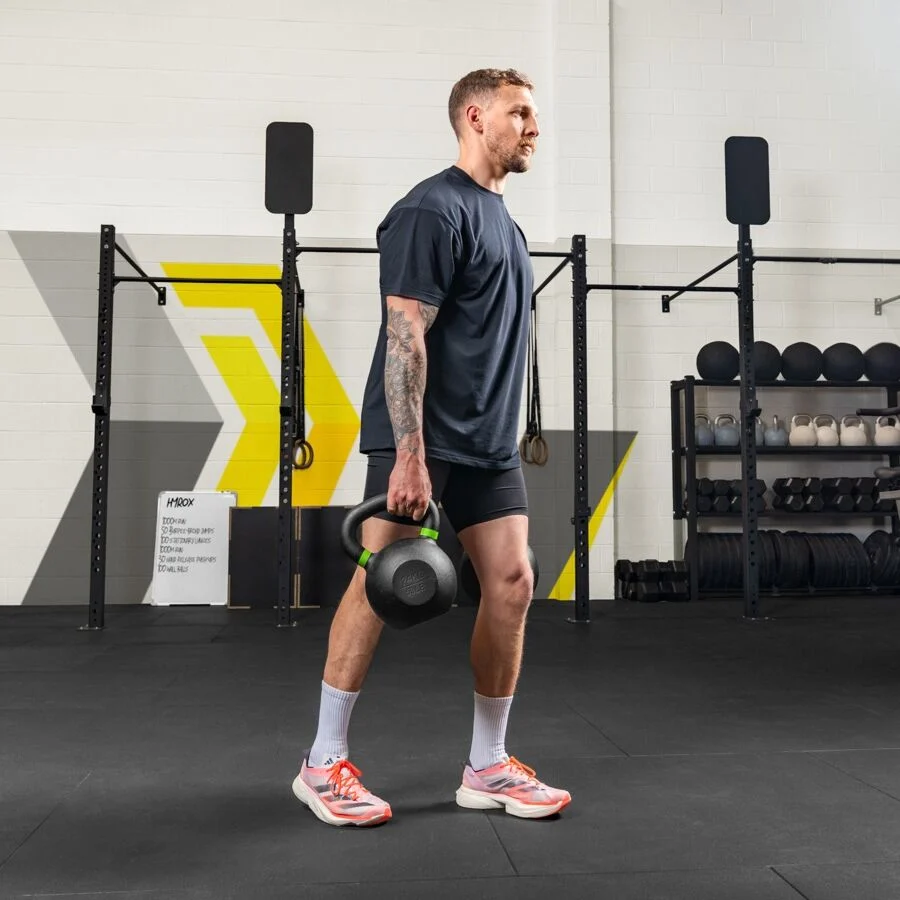
Farmer walk: hold one dumbbell or kettlebell in each hand, stand tall and take controlled steps. Equal loads minimize the deliberate side-to-side imbalance and make this the simplest walking carry for most beginners. Keep the weights beside your thighs, shoulders settled and eyes on your route. Three sets of roughly 20–30 metres, or 20–40 seconds, offer an easy starting structure.
Suitcase carry: hold one weight at your side and leave the other hand free. The load tries to pull you sideways, so your job is to keep shoulders and hips as level as possible without leaning dramatically the other way. Begin substantially lighter than you would with two weights. Walk the same distance on both sides and avoid letting the free arm swing into the implement.
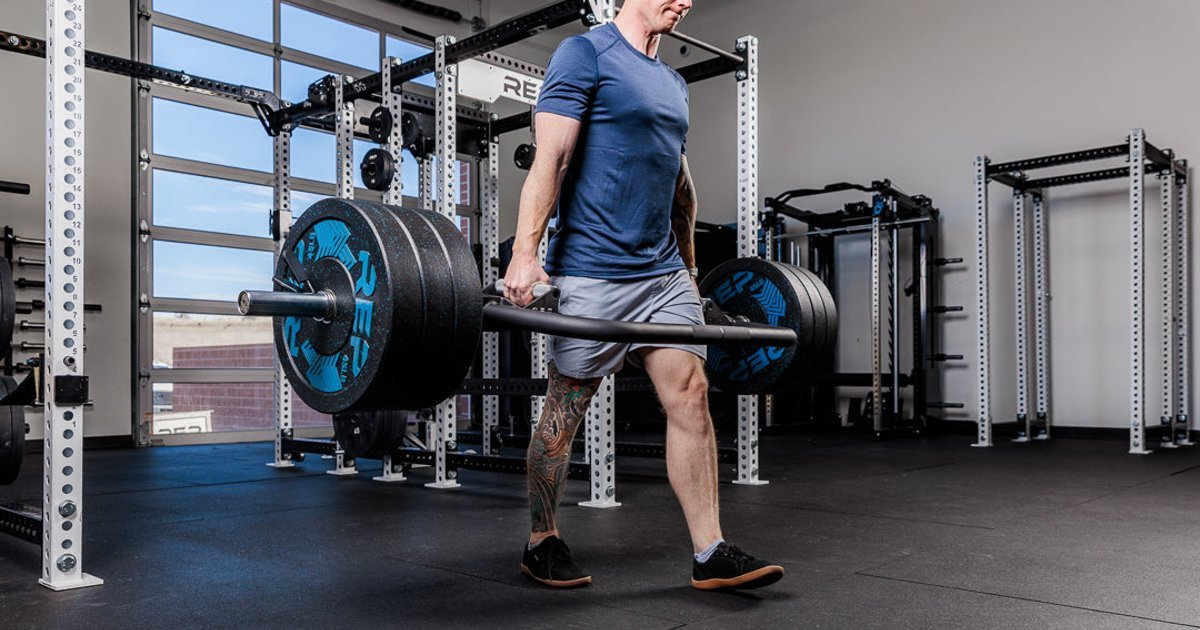
Trap-bar carry: lift an appropriately loaded hex or open trap bar and walk on an unobstructed route. A bar may allow more total load than your available dumbbells, but the wider frame needs more floor space. Verify that the handles are secure, both sides are loaded evenly and the plates will clear any uneven flooring. A heavy trap bar is a poor choice when turning forces you to step around furniture.
Log weight, duration or distance, number of turns, rest intervals and which hand carried the load. One 24-kilogram suitcase carry is not the same workload as a farmer walk with two 24-kilogram bells. Even a repeated distance changes character when you add sharp turns, uneven surfaces or a faster walking pace.
Use the most repeatable variation first. A moderate carry finished with upright posture has more training value than a maximal attempt that ends in a stumble or a scrambled drop. Strength is not only the number on the plates; it is the ability to control the task you selected.

Equipment Worth Exploring
Explore equipment, accessories and gear from our carefully selected range.


Open Hex Bar
Open-frame trap bar with multiple handles for deadlifts, carries, and lower-body training.

Rubber Hex Dumbbells
Rubber-coated hex dumbbell pairs with a stable shape for home and commercial strength training.


Cast Iron Kettlebells
Textured cast-iron kettlebells for swings, squats, carries, and full-body training.


Leather Wrist Grips
Padded leather lifting grips help support the hands and wrists on heavy pulling exercises.

Leather Lifting Straps
Padded leather straps support grip during heavy rows, deadlifts and pulling exercises.
Front-rack carries build a different kind of control
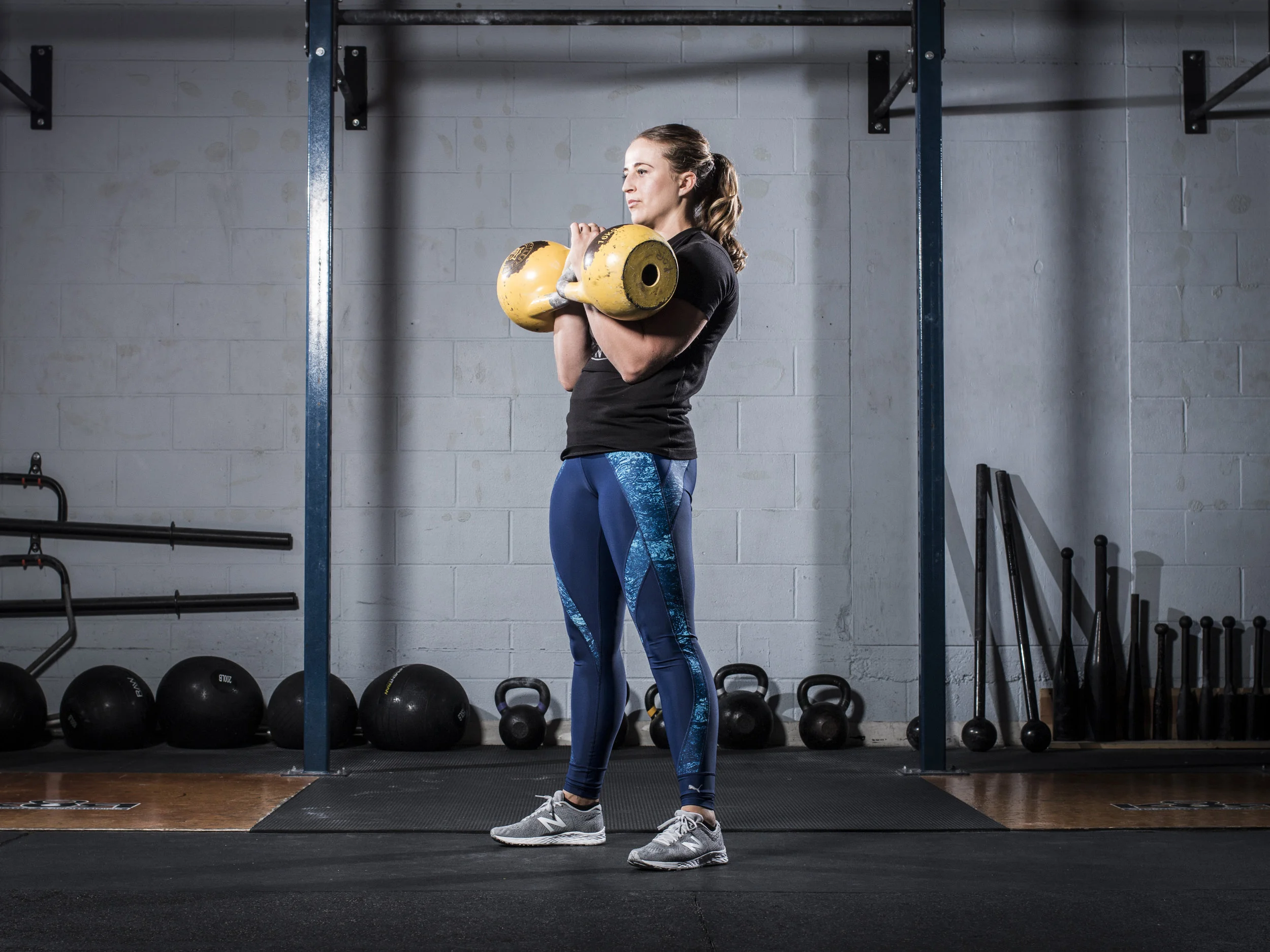
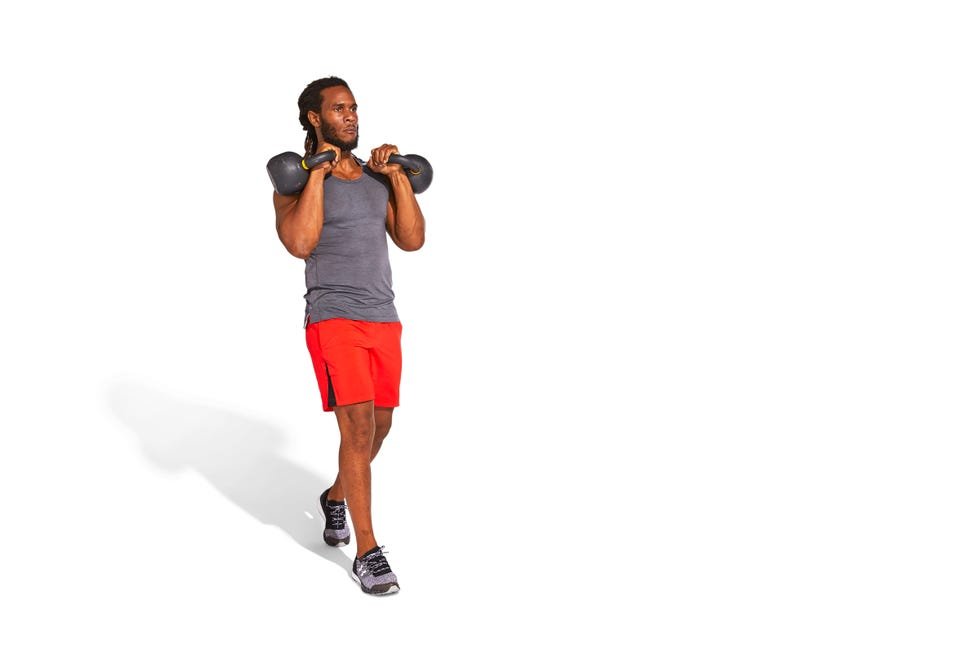
In a front-rack carry, the load rests higher on the body, typically with one or two kettlebells close to the shoulders. You still walk under tension, but the higher placement changes breathing, arm position and the way the torso counters the weight. A double front-rack carry can be surprisingly demanding even when the bells are much lighter than those used for a conventional farmer walk.
Bring the bells into a comfortable rack rather than curling them awkwardly from the floor. Keep wrists in a tolerable position and allow the elbows to settle without flaring violently. Think of keeping the rib cage over the pelvis, then take short, smooth steps. You should be able to breathe throughout the effort; a prolonged breath hold can make a moderate carry feel far harder than it needs to.
A single-arm rack carry provides another asymmetric option. Compared with a suitcase carry, the load sits closer to shoulder height, so the balance and posture demands feel different. Start with three trips of 10–20 metres per side, or 15–25 seconds when the lane is short. If the bell strikes the forearm, your elbow loses position or you arch your back to support the load, reduce the weight.
Do not force the rack position because a video makes it look effortless. Wrist mobility, arm length and the shape of the kettlebell can affect comfort. A stable suitcase carry remains a fully respectable alternative. Progress is the ability to repeat quality sets, not the number of unusual kettlebell positions you can display.

Functional Fitness Shirts & Workout Gear
Functional-fitness shirts, tanks and workout gear for athletes who train strength, conditioning and everything in between.


Break the Stereotype Tee
Show some gym-girl attitude with a playful “Break The Stereotype Gym Girl” tee.


Shirt – Watermelon Kettlebell , Gymbros & Meme Lovers T-Shirt
Rep “Watermelon Kettlebell” humor in and out of the gym.

Shirt – Strawberry Kettlebell Meme Top Gymbros & T-Shirt
Heavy lifts, good laughs, and a little “Strawberry Kettlebell Meme” energy.


Shirt – Blue Macaroon Kettlebell , Gymbros & Meme T-Shirt
Rep “Blue Macaroon Kettlebell” humor in and out of the gym.

Lift Together Grow Stronger Buddies Friendship Workout T-Shirt
Make gym days more fun with “Lift Together Grow Stronger” style.
Bottoms-up, overhead, sandbag and plate-pinch options
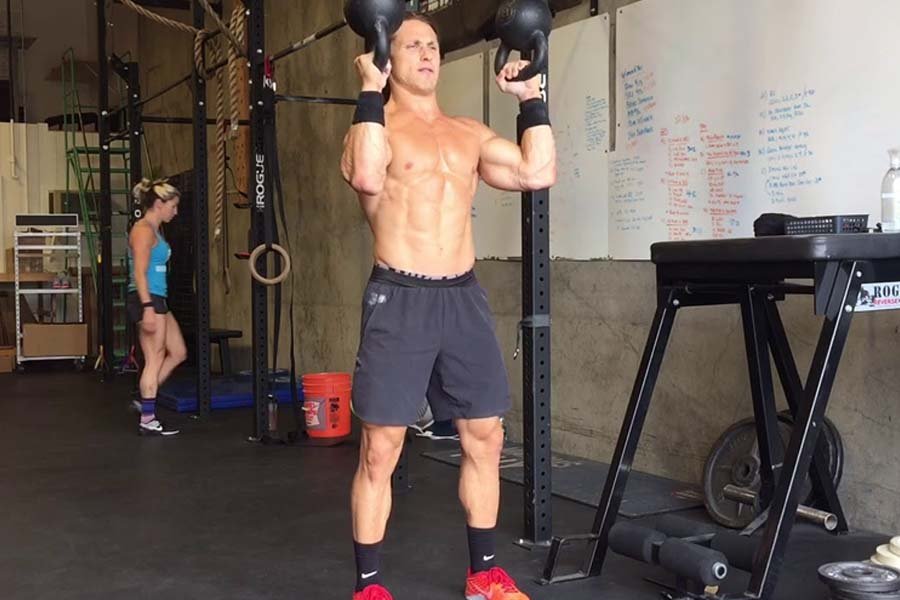
A bottoms-up carry places a kettlebell upside down, with the bell above the handle. Because a small wrist movement can tip the weight, it emphasizes fine control and a steady grip. Practice a short stationary hold with a light kettlebell before taking steps. If the bell repeatedly flips or the wrist folds, lower the difficulty rather than using your other hand to rescue a heavy load.
With an overhead carry, the shoulder has to support an extended arm while you move. It is a more advanced option that requires a stable overhead position, clear ceiling and safe walking path. A lifter who cannot comfortably hold a light weight overhead while standing still should not begin with heavy overhead walks. You can use shorter, lighter sets to assess control before increasing the distance.
A sandbag bear-hug carry changes the challenge by removing convenient handles. Keep the bag close to the chest without blocking your view or crushing your breathing. Because the object shifts and its bulk changes your gait, relatively modest weights may be demanding. This is useful strongman-style accessory work, provided you have a secure bag and a safe place to set it down.
A plate-pinch carry emphasizes pressure between the thumb and fingers rather than a normal closed grip on a bar. Use plates that can be held securely and keep the route short. Protect your feet and stop before a smooth plate slips from your hand. A heavy plate is not worth a dropped-weight injury. If you lack appropriate plates, simple dumbbell farmer holds accomplish more with less risk.
Every variation adds a cost as well as a benefit: more balance, setup complexity or local fatigue. Reserve the complicated options for specific goals. Heavy, repeatable basic carries should remain the foundation for most trainees, especially when you also have a full strength program to recover from.
Carries in a home gym with almost no walking space
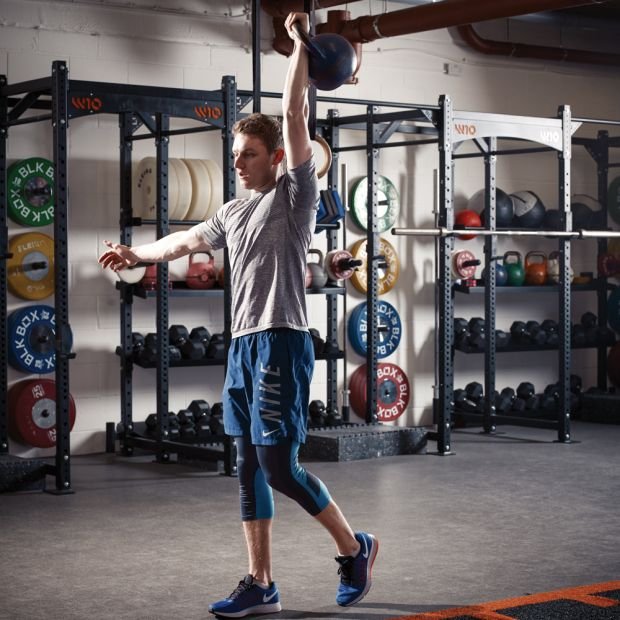
Many training rooms do not have 20 straight metres of usable floor. That does not mean you have to abandon carries. It means you should choose an honest substitute and label it correctly in your training log. A static farmer hold trains the hands and supporting muscles without walking. A suitcase march adds alternating single-leg support while the load pulls sideways. Both can be demanding in an area only a few steps wide.
For a suitcase march, pick up a manageable kettlebell or dumbbell on one side, stand tall and slowly lift the opposite knee before switching legs. Keep the pelvis level instead of hiking the hip to create the appearance of height. Try 20 seconds, swap hands and repeat. If you wobble or twist, practice a stationary hold first. You can progress from a hold to a controlled march before adding a short walk.
Clear the entire route, not merely the first step. Move shoes, cables, boxes, pets and children away from the training area. Be especially careful with trap bars and farmer handles because their footprint can extend beyond your body. Protect the floor and identify where the weight will be lowered at the end of each set. Avoid using unstable furniture or improvised handles as carry equipment.
Adjustable dumbbells and kettlebells can serve both your regular lifting and carries, which may make them better investments than a specialized implement used only for walking. A trap bar is an excellent tool when you already want one for hinges and have a safe lane; it makes little sense as a carry-only purchase in a cramped room. Thick-grip add-ons can create a harder grip challenge but might reduce carrying time so much that a planned conditioning set turns into a short hold.
If you must make sharp turns every two steps, consider stationary variations rather than pretending the result is equivalent to a long carry. The valuable skill is controlling weight under a repeatable demand, not squeezing in an impressive-looking route at the expense of safety.
Equipment Worth Exploring
Explore equipment, accessories and gear from our carefully selected range.


Grip Plates
Rubber-coated weight plates with handholds for loading barbells and machines.

Competition Plates
Competition-style bumper plates for Olympic lifts and loaded strength training.


Foldable Wall Rack
Wall-mounted folding squat rack designed to save floor space between workouts.

VForce Wall Trainer
Space-saving wall-mounted functional trainer with pivoting cable arms and variable resistance ratios.

A practical eight-week, two-day loaded-carry plan
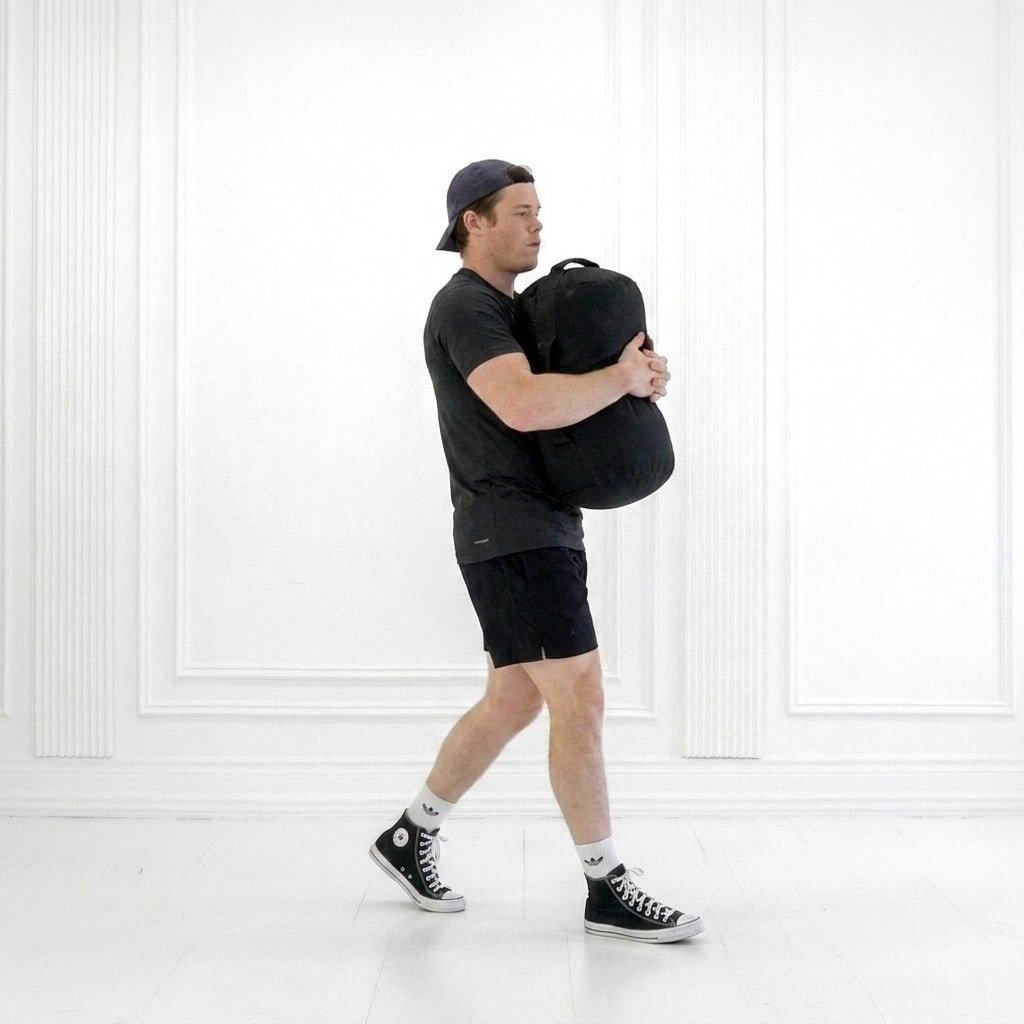
Use this template twice per week after the main strength lifts, with at least one easier day between. Session A is the heavier, more controlled carry. Session B uses a one-sided or front-rack position for trunk control and moderate conditioning. Choose a first-week load that allows every set to finish without a shoulder hike, sideways lean or last-second grip rescue.
| Weeks | Session A | Session B |
|---|---|---|
| 1–2 | 3 farmer carries × 20 sec; 90 sec rest | 3 suitcase carries per side × 15 sec; 60 sec rest |
| 3–4 | 4 farmer carries × 20–25 sec; 90 sec rest | 3 suitcase carries per side × 20 sec; 60 sec rest |
| 5–6 | 4 farmer carries × 25 sec; add slight weight only if clean | 3 rack or suitcase carries per side × 15–25 sec |
| 7–8 | 4 farmer or trap-bar carries × 25–30 sec | 3 rounds of suitcase or rack carries with full recovery |
Use distance instead of time if your walking route is safe and consistent. In a tiny gym, substitute stationary farmer holds or controlled suitcase marches, but record the change; distance and duration are not interchangeable measurements. Do not simultaneously increase weight, set count, pace and distance. Progress one variable, watch what happens to technique, and only then make another adjustment.
For a grip-strength emphasis, keep the heavier efforts short enough to finish with the implements still controlled. For conditioning, use a lighter load that permits longer movement without turning the session into a maximum hand-strength test. If carries follow hard deadlifts or rows, reduce the volume when they start interfering with recovery or the quality of your priority lifts.
After week eight, repeat a first-week benchmark with the same implement, weight, surface and turning pattern. Longer clean holding time, steadier steps or improved control at that same task are clearer signs of progress than a random faster carry under completely different conditions. You can then repeat the block with a slightly heavier starting load or a new carry position.
Strongman Shirts & Strength Gear
Strongman gym shirts and strength gear for lifters who train stones, carries, presses and brutally heavy objects.


The Original Atlas Stone Shirt – Greek Mythology T-Shirt
Heavy lifts, good laughs, and a little “The Original Atlas Stone” energy.

Atlas Gains Meme – Marble Sculpture T-Shirt
Make gym days more fun with “Atlas Gym Gains Funny Meme Graphic” style.

Atlas Gains Ancient Greece Strongman : Meme Shirt T-Shirt
Rep “Atlas Gains Ancient Greece Strongman” humor in and out of the gym.


Atlas Greek Mythology The Power Within Top & Gymbros T-Shirt
Show some bodybuilding attitude with a playful “Atlas Greek Mythology” tee.


Mount Liftmore Strongman Brian Shaw & Eddie Hall T-Shirt
Rep “Mount Liftmore Strongman” humor in and out of the gym.

Atlas Lifting The Earth Meme – Greek God Bodybuilder T-Shirt
Heavy lifts, good laughs, and a little “Atlas Lifting The Earth” energy.

Sisyphus Gains Tee
Show some lifting attitude with a playful “Sisyphus Gains Eternal Struggle Greek” tee.
Form mistakes, red flags and how to keep progressing
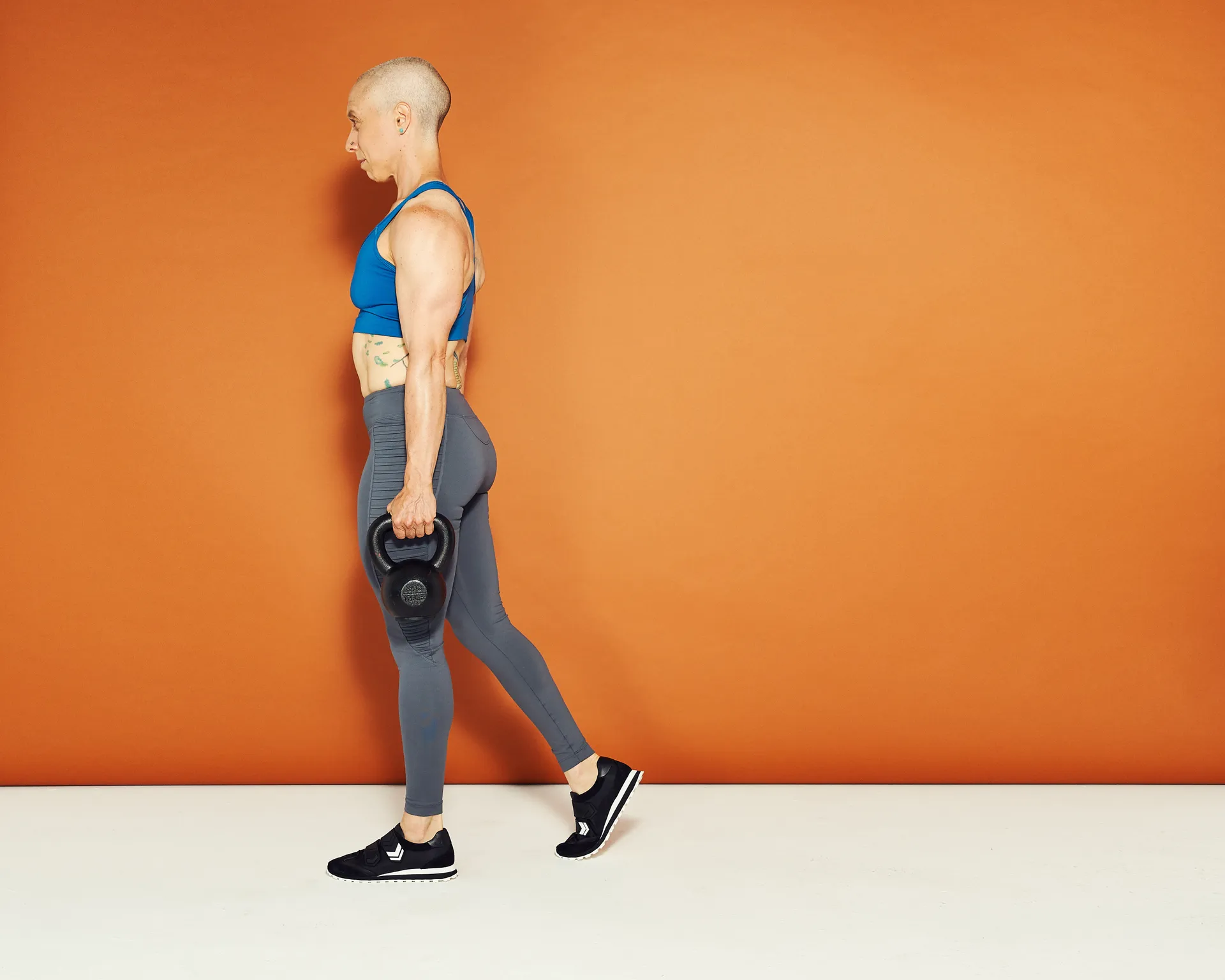
The first mistake often happens before walking: yanking the load from the floor with an unstable back or loose stance. Set your feet, hinge or squat to the handles, brace and stand up deliberately. Do not walk until you have established balance. The first step should be a continuation of a secure pickup, not a desperate lunge to keep the weight from pulling you over.
Short, steady steps typically control swinging better than exaggerated strides. Keep the head comfortably neutral and the eyes pointed along the route. Avoid forcibly shrugging the shoulders for the entire set, and do not spend the walk trying to squeeze the shoulder blades together as hard as possible. Your arms should support the weights while the rest of the body remains organized.
In a suitcase carry, watch for a persistent sideways lean, hip hike or shoulder dip. In a rack carry, notice whether the wrists lose their position and the rib cage rises to compensate. In a heavy farmer walk, watch for uncontrolled bouncing or bumping of the weights against the legs. These are signs to reduce load, shorten the set or return to an easier variation.
Put the weights down if your grip opens unpredictably, a path becomes obstructed, your balance fails, or pain changes the movement. Dizziness, sharp pain and unstable joints are reasons to stop, not opportunities to demonstrate toughness. Anyone working around a recent injury or significant medical limitation should seek individualized guidance before loading a challenging carry.
Finally, do not confuse variety with progressive overload. A farmer walk, a suitcase march and a bottoms-up hold are different tests. Pick one or two staples, log them for several weeks and let improved execution guide the next step. Carries are valuable precisely because they are simple to set up and unforgiving of sloppy technique. Make that simplicity work for you.