The squat is often treated as the undisputed king of leg training. Leg extensions, meanwhile, get dismissed as a finishing exercise. But if the goal is bigger quadriceps rather than simply moving more weight, that hierarchy is too simple. Different movements can challenge different parts of the same muscle group, and an exercise that feels less impressive may provide a useful growth stimulus.
An eight-week comparison of squat training and leg extensions found that the answer depends on which quadriceps muscle you measure. Knee extensions produced more growth in the rectus femoris, while squats had an advantage at one region of the vastus lateralis. Strength results also differed depending on the test. Rather than crowning a single winner, the findings help explain how to build a leg program that covers more than one adaptation.
What the squat-versus-leg-extension comparison actually tested
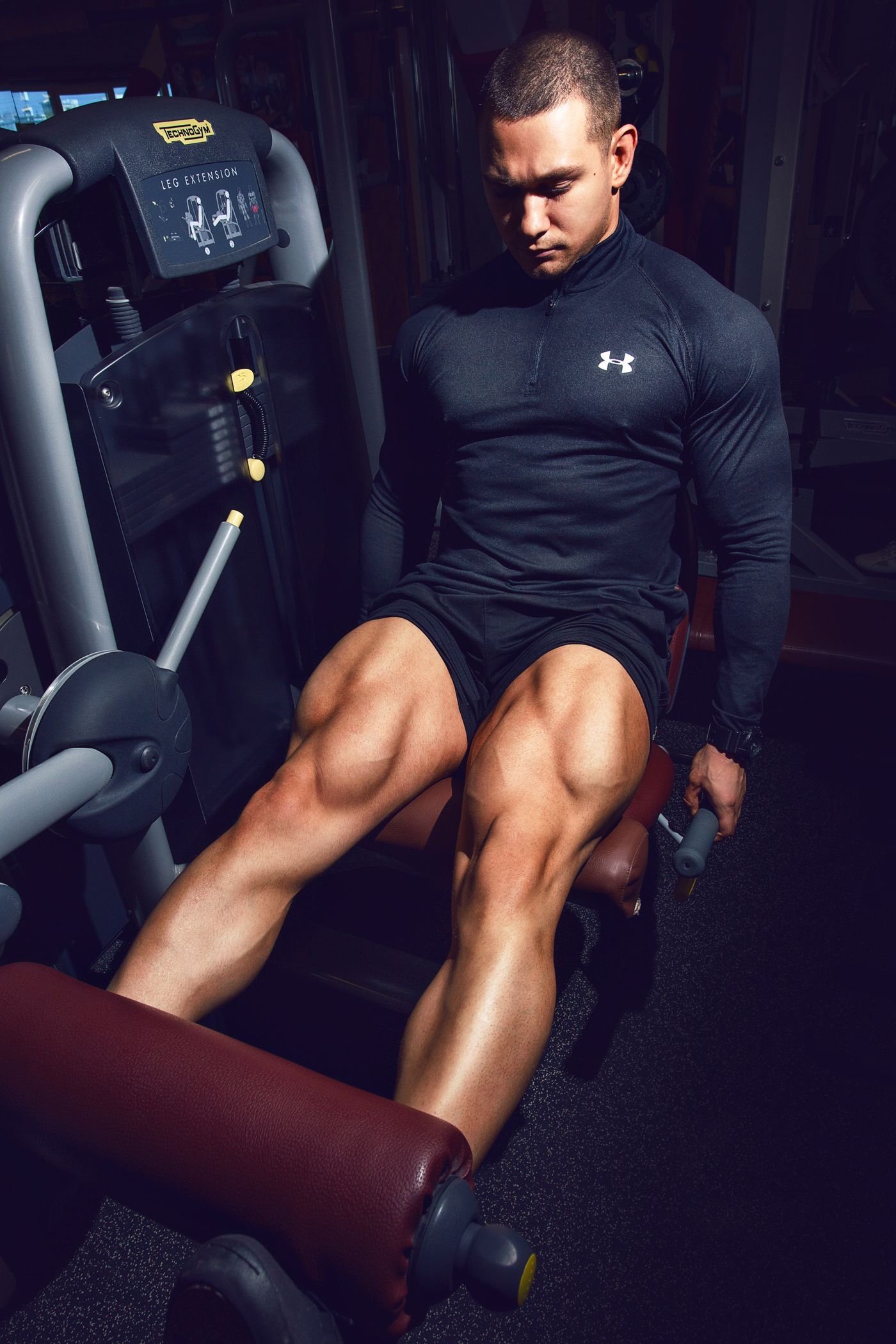
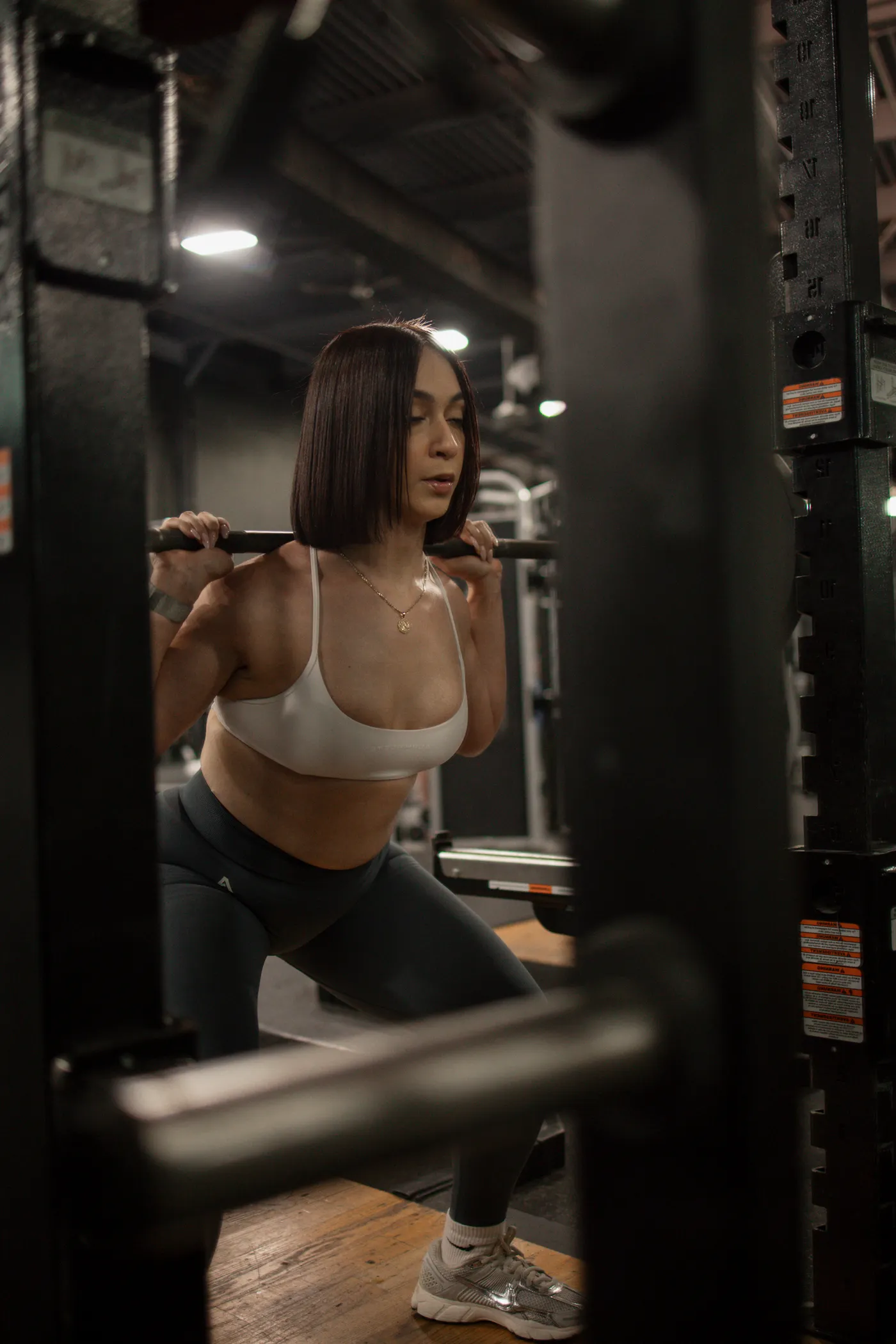
Sixty-three young women without previous resistance-training experience were assigned to one of two exercise programs. Thirty performed Smith-machine back squats; thirty-three performed seated leg extensions. Both groups trained twice weekly for eight weeks, performing three sets of eight to twelve repetitions per session with progressively challenging loads. That makes this a useful comparison of two common ways to train knee extension, although it was not a test of every squat or leg-extension variation.
Before and after training, muscle thickness was assessed at three locations along the rectus femoris and vastus lateralis. Researchers also tested three-repetition-maximum strength in both exercises, allowing them to distinguish gaining strength in the movement you practiced from improving a different movement. Those distinctions matter: a quadriceps muscle can grow differently near the hip and near the knee, and a higher squat maximum does not automatically mean every head of the quadriceps grew more.
The comparison was reasonably practical for a beginner: two leg sessions a week, straightforward rep targets and recognizable equipment. However, it deliberately separated the movements into different groups. It did not test a combined squat-plus-extension program, and it did not measure the long-term results of experienced lifters. The most useful reading is therefore about relative exercise effects under these specific conditions, not a universal verdict for all training plans.
Leg extensions gave the rectus femoris a clearer growth signal
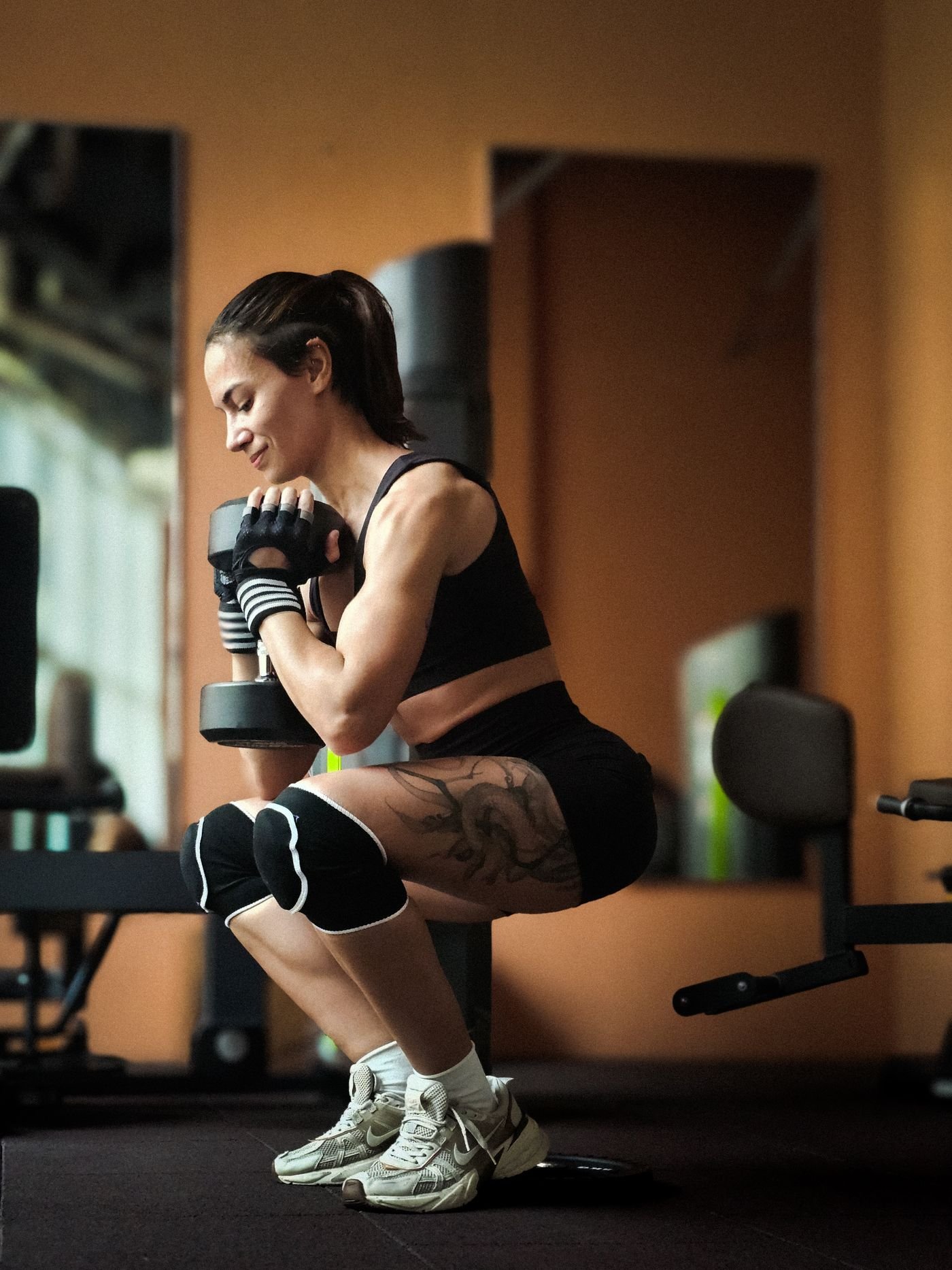
The rectus femoris is the quadriceps muscle that crosses both the hip and knee. It straightens the knee but also helps flex the hip. That two-joint role makes it behave differently from the three vasti muscles, which primarily extend the knee. During a squat, the hip and knee change angles together; during a seated leg extension, the hip is relatively fixed while the knee moves against resistance.
In the eight-week comparison, the leg-extension group increased rectus femoris thickness by 11.4% at the proximal measurement site, 12.3% in the middle and 17.5% distally. The squat group’s corresponding changes were 2.0%, 5.7% and 7.9%. The between-group differences favored leg extensions at all three locations. These are changes in ultrasound-measured thickness, not promises that every lifter will gain a particular percentage of visible thigh size.
A separate twelve-week comparison, in which seventeen untrained adults trained one leg with knee extensions and the other with leg presses, supports the importance of movement selection. Rectus femoris volume increased 13.2% with knee extensions versus 1.1% with leg presses, while growth in the vasti muscles was broadly comparable. That does not prove squats are ineffective; it suggests that relying only on multi-joint knee-dominant exercises can leave some rectus femoris growth on the table.
For a lifter whose front thigh development is lagging, leg extensions are therefore more than a decorative burnout set. They let you load knee extension without needing to coordinate a heavy hip-and-trunk movement. A controlled lowering phase, a stable seated position and a repeatable range of motion make progress easier to track. You still need enough hard work over time; the machine itself is not a shortcut.

Equipment Worth Exploring
Explore equipment, accessories and gear from our carefully selected range.

HUSLA Leg Extension Pad
Pad attachment designed to increase usable range of motion on compatible leg-extension machines.

GymPin D Cuffs
Adjustable wrist cuffs with textured grips for supported cable-machine exercises.
VOLTRA
Compact digital cable trainer with smooth, adjustable resistance.

Go-Tone Pro
Portable digital cable trainer with up to 66 lb (30 kg) of adjustable resistance.


Original GymPin
Adds Olympic plates to compatible cable-machine weight stacks for extra resistance.

GymPin MiniPin
Compact Olympic-plate loading pin for compatible cable stacks with limited clearance.

Squat Harness
Wearable harness for hands-free cable squats, sled work, and lower-body training.

Squats had an advantage for part of the vastus lateralis
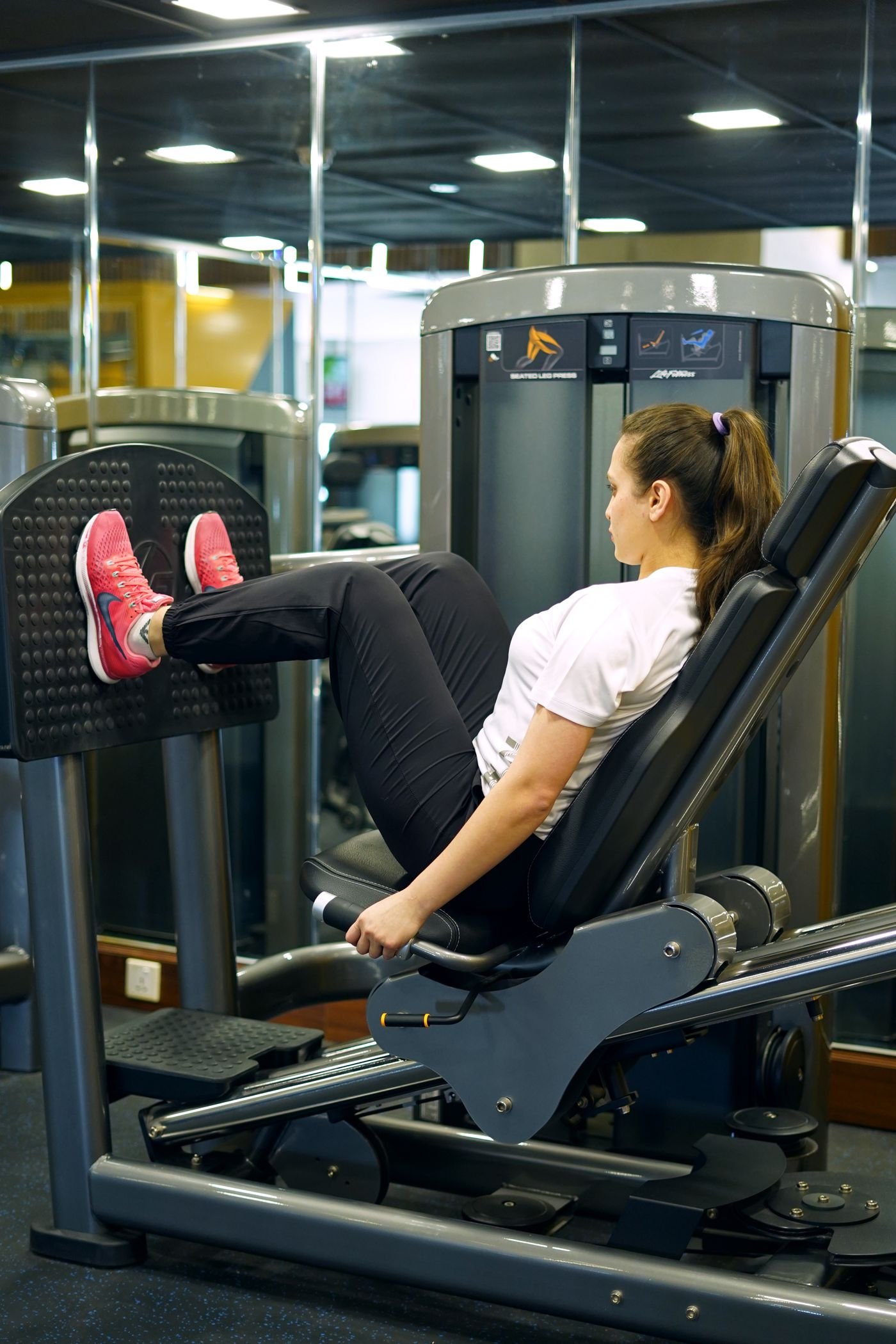
The vastus lateralis runs along the outer thigh and contributes substantially to knee extension. Its regional response was not identical to the rectus femoris response. In the comparison, squats produced greater growth at the distal vastus lateralis site: 18.2% versus 11.2% with leg extensions. At the proximal and middle vastus lateralis sites, the groups did not show a clear difference in growth.
This is a narrower result than saying squats build the entire outer quad better. A measurement near the knee is not interchangeable with total muscle volume, and other quadriceps heads were not comprehensively assessed in this experiment. The likely training stimulus also depends on squat depth, load, technique and the specific resistance profile of the machine used for knee extensions.
Why might the squat favor a different region? A loaded squat typically places high external demands on the knee extensors during the bottom and early rising portions of the movement. A seated extension changes the knee’s resistance demands in another way, depending on the machine’s cam and the angle of the lower leg. Those mechanical differences are plausible explanations for regional growth, but the experiment did not directly establish which mechanism caused the result.
For practical programming, the squat remains a valuable foundational leg exercise. It involves multiple joints and lets you progressively challenge the thighs while coordinating hips and trunk. If you enjoy squatting and tolerate it well, there is no reason to abandon it because one head of the quadriceps grew more with isolation work. The more useful conclusion is that the two exercises cover overlapping but not identical demands.

Leg Day Shirts & Workout Gear
Leg-day gym shirts and workout gear for lifters who never skip squats, lunges and lower-body punishment.

Quadzilla Massive Quads Sweater Leg Day Squatting T-Shirt
Keep things casual with a little “Quadzilla” attitude.

Squatzilla Meme Leg Day Vest Tank Top
Bring “Squatzilla” humor to your next lifting session.

Thick Thighs Crush Guys Shirt – Leg Day Meme & T-Shirt
Bring “Thick Thighs Crush Guys” humor to your next gym day.

Legendary Leg Day – Squat Meme Hooded Pullover Hoodie
Keep it laid-back with a little “Legendary Leg Day” attitude.

I Love Squats | Valentine's Leg Day Decal & Bodybuildin Sticker
Put “I Love Squats” gym humor on your laptop, bottle, or gym gear.

Viking Squats – Norse Workout Meme Hooded Pullover Hoodie
Make your off-duty look more fun with “Viking Squats”.

Heavy Metal Skeleton Squat for Powerlifting, Bodybuildi T-Shirt
Show some gym-day personality with “Heavy Metal Skeleton Squat”.

Leg Press Dost Thou Even Press Medieval Knight Muscle S Tank Top
Bring “Leg Press” humor to your next lifting session.

Never Skip Leg Day – NSLD Meme Fried Chicken Jumper Pul T-Shirt
Add a playful “Never Skip Leg Day” touch to your casual rotation.

3 Plates Squat Club : Essential Meme & Leg Day T-Shirt
Make gym days more fun with “3 Plates Squat Club” style.
Strength results depended on what was being tested
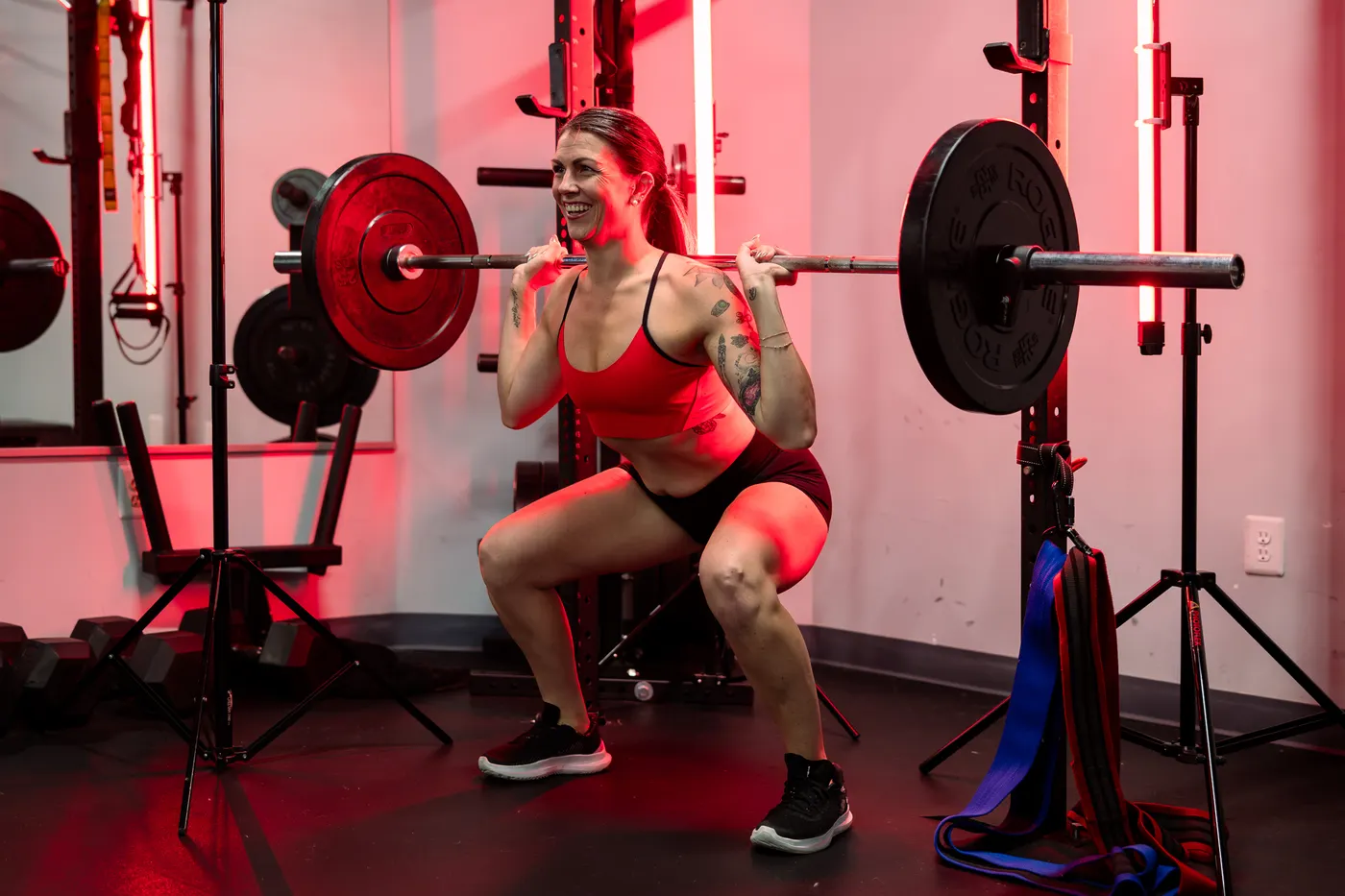
When the outcome was a heavy squat, practicing squats won convincingly. Squat three-repetition-maximum strength rose 46.7% in the squat group, compared with 21.3% in the leg-extension group. That makes intuitive sense: a squat is not simply a knee-extension strength test. It also requires coordination, bracing, balance, hip extension and familiarity with the movement pattern.
Leg-extension strength told a different story. The squat group improved its three-repetition maximum on the extension machine by 19.8%, while the leg-extension group improved by 23.4%. The difference between groups was not statistically clear. For beginners, gaining general knee-extensor strength from squatting can carry over to a simpler isolated movement, even without practicing it as the main exercise.
This is an example of the specificity principle, but it is not a perfectly symmetrical transfer. Knee-extension training can strengthen the quadriceps, yet it does not automatically train the many skills needed to squat well under a heavy load. Conversely, squatting may improve both the skill of squatting and some general knee-extension capacity. Neither finding means a lifter must constantly test heavy triples; the three-rep tests were a way to quantify adaptation.
If your priority is powerlifting, athletic squat strength or confidence under a bar, you need some form of progressive squat practice. If your priority is quad size with minimal technical complexity, a knee-extension machine deserves a more prominent place. If both matter, make room for both rather than asking one movement to do every job. A larger number on the bar is meaningful, but it is not a complete map of where muscle growth occurred.
Why two quad exercises can build muscle in different places
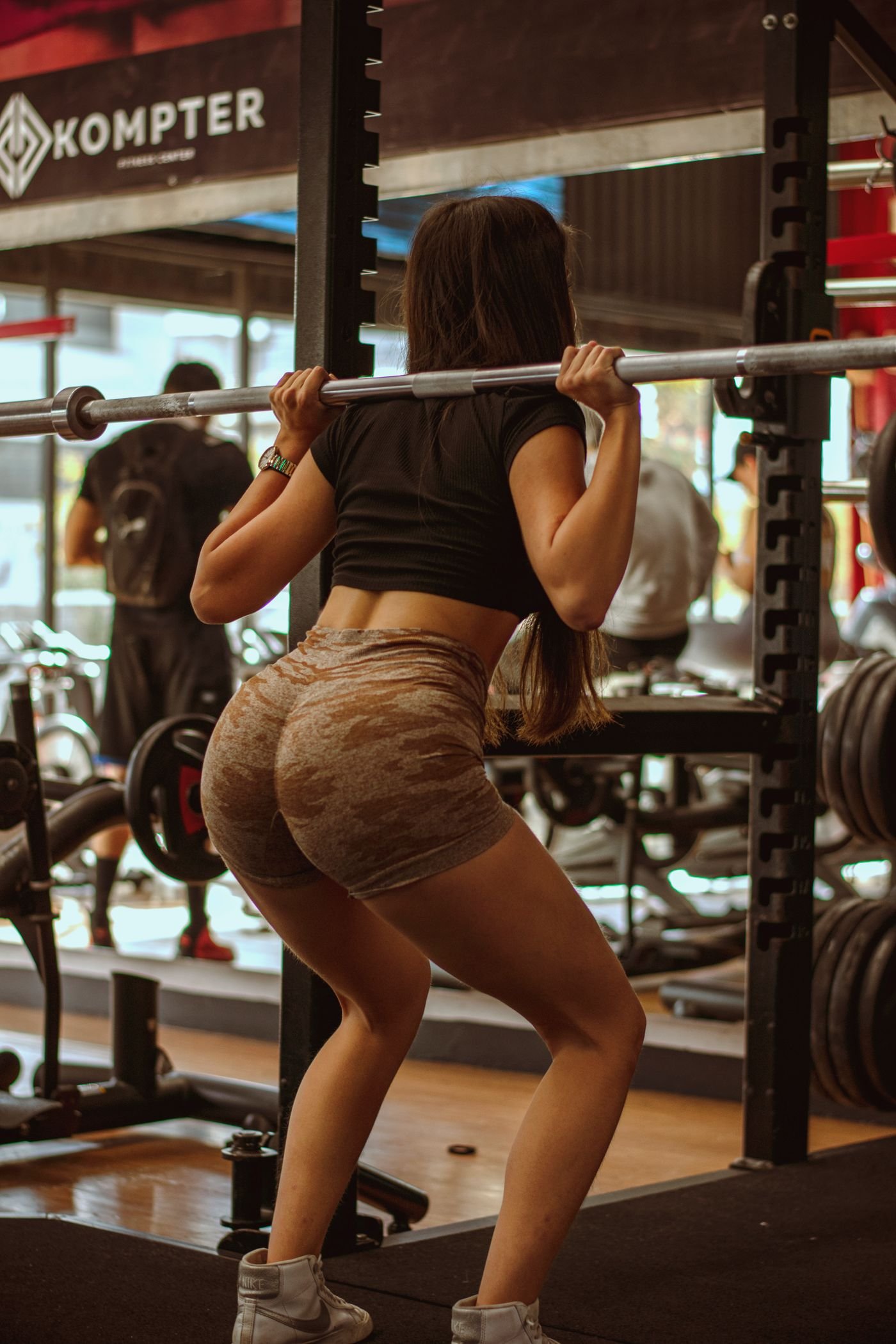
Muscle names can make the quadriceps sound like one unit, but they are four muscles with different attachments and mechanical roles. The rectus femoris spans the hip and knee. The vastus lateralis, medialis and intermedius act across the knee. Changing hip position, knee angle, stability requirements or where an exercise is hardest can change how each muscle is challenged across a repetition.
A seated leg extension makes knee extension the obvious task. You can keep your torso stable, control the lowering phase and progress in small load increments. A squat asks the quadriceps to work alongside the glutes and other muscles while the torso and hips move. This makes the squat efficient for training multiple regions at once, but it also means no single muscle is guaranteed to receive the strongest possible stimulus.
Other comparisons reinforce that exercise choice matters. A study comparing front and back squats over twelve weeks in recreationally trained women found similar lateral-thigh growth despite some strength differences. Another lower-body exercise comparison found that single-joint and multi-joint movements can produce different regional development patterns. Neither result justifies an exact ranking for every person, but both challenge the idea that exercises with similar names or target muscles are fully interchangeable.
Machine design matters too. Two leg-extension machines can feel different because the cam, seat angle and pad position alter leverage through the range of motion. A Smith squat is not identical to a free-bar squat, and a heel-elevated squat changes the experience again. Choose variations you can repeat consistently and progress safely; do not assume that a particular machine brand or stance recreates the exact research protocol.
Equipment Worth Exploring
Explore equipment, accessories and gear from our carefully selected range.

GymPin Squat Wedges
Non-slip 15-degree squat wedges help elevate the heels for deeper quad-focused squats.

Safety Squat Handles
Barbell squat handles that reduce shoulder positioning demands during high-bar squats.

Belt Squat Collar
Heavy-duty collar adapter for compatible belt-squat and landmine bar setups.


How to program squats and leg extensions together
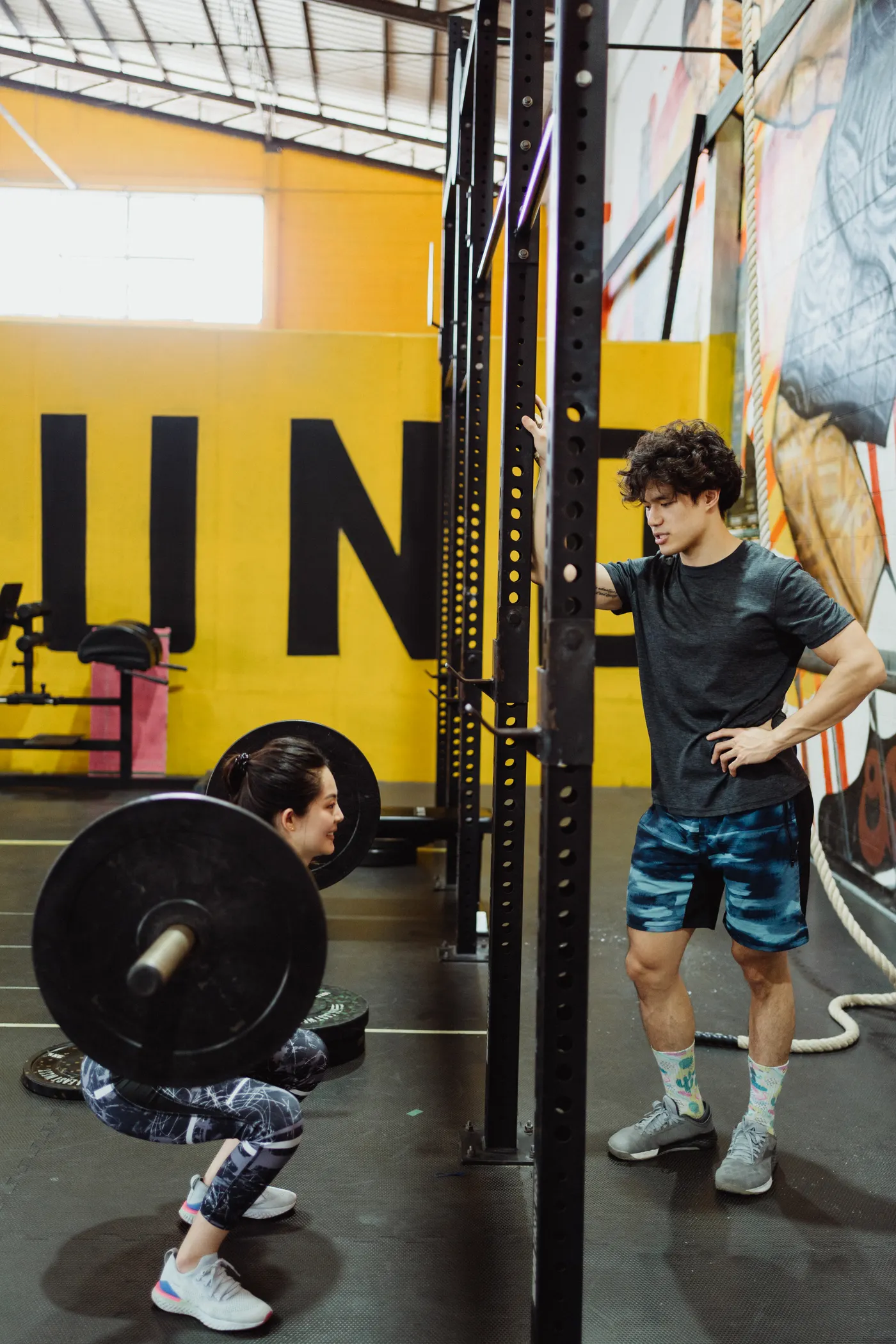
A practical quad-focused session can start with a squat pattern while coordination and bracing are fresh, then use leg extensions for more direct knee-extensor work. For example, perform three challenging sets of squats in a six-to-ten-rep range, leaving roughly one to three good repetitions in reserve. Follow with two or three sets of seated leg extensions for ten to fifteen controlled repetitions. This is an illustrative starting point, not a protocol tested head-to-head in the eight-week comparison.
If your knees or back make squatting uncomfortable, do not force a specific depth or load to imitate a study. A leg press, supported squat variation or different foot position may be easier to manage, and the extension machine can remain useful when tolerated. Pain is not evidence that a muscle is receiving a better growth stimulus. Conversely, if you are preparing for a squat competition, prioritize your competition-relevant movement before adding accessories.
Progression matters more than a complicated exercise rotation. Keep the movement setup consistent, record loads and repetitions, and add a little weight or another clean repetition when performance permits. On extensions, avoid swinging your torso or snapping the knee straight to finish the set. On squats, choose a stable range you can control and use a load that allows repeatable technique. Both exercises can be demanding without turning every set into a maximal test.
Across a week, you might repeat a squat-and-extension pairing twice, or split the emphasis: one day heavier squats followed by lighter extensions, another day moderate squats and harder extension work. Adjust the number of sets based on your recovery and other lower-body exercises. Someone also doing lunges, leg presses and hard sports sessions may need fewer sets than someone training legs only twice weekly.
The equipment decision is simple: if you have access to a leg-extension machine, use it when rectus femoris development is a priority. If you do not, a squat pattern still offers substantial value, and alternative knee-extension setups can be explored cautiously. What matters is matching the movement to the adaptation you want rather than assuming the biggest-looking exercise must always be best.
Powerlifting Shirts & Lifting Gear
Powerlifting shirts and gym gear for squat, bench and deadlift lifters who live for heavy numbers.

Girl – Bootybuilder Leg Day- Squats & Meme – T-Shirt
Rep “Gym Girl” humor in and out of the gym.

I Can’t Get No Squat-isfaction Rolling Stones Leg Day — T-Shirt
For laid-back days and rock-and-lifting humor: “I Can’t Get No Squat-isfaction Rolling”.

Thunder Squat AC/DC Thunderstruck Parody Heavy Metal Cr T-Shirt
Add a playful “Thunder Squat” touch to your casual rotation.

Coffee Shots & Heavy Squats for Leg Day, Lifting and Fi Tank Top
Add some leg-day attitude to training with “Coffee Shots & Heavy Squats”.

Rack Panther Black Panther Workout Squat Rack Bodybuild T-Shirt
Show some gym-day personality with “Rack Panther Black Panther”.

Medieval Gym – Dost Thou Even Hoist Knight & Dragon Squ T-Shirt
Make gym days more fun with “Medieval” style.

Deadlift Snake Skull – Hardcore Powerlifting Muscle Shi Tank Top
Bring “Deadlift Snake Skull” humor to your next lifting session.


Strong Woman Leg Day Squats Decal Water Bottles Sticker
A fun “Strong Woman” touch for bottles, laptops, and lockers.

Let It Grow Booty Building Sweater Squats & Leg Day T-Shirt
Show some gym-day personality with “Let It Grow”.
What the evidence cannot tell us yet
There are several reasons not to overstate the comparison. The participants were untrained young women, and the intervention lasted eight weeks. Beginners often gain strength quickly as they learn movements, while experienced lifters may respond differently to the same number of sets. The study also compared one Smith-machine squat protocol with one leg-extension setup, not every possible free-weight squat, leg press or knee-extension device.
Muscle thickness was measured at specific sites rather than through complete three-dimensional scans of all quadriceps heads. A difference of a few millimeters can be statistically detectable without being dramatic in a mirror. The investigators also noted that daily physical activity was not measured, and the study did not test whether combining both exercises outperforms either exercise alone over months or years.
Related experiments do not all agree on which movement produces the most growth in every region. A small unilateral squat comparison reported a different pattern from the bilateral Smith-squat trial, and another study found that leg presses and knee extensions built the vasti similarly while favoring different muscles elsewhere. These differences are not a reason to ignore research. They are a reminder that training status, exercise execution, measurement method and program design all influence what a result means.
Bottom line: for bigger, stronger quads, squats and leg extensions are complementary rather than interchangeable. Squats are especially valuable for improving squat performance and challenging the lower body as a coordinated movement. Leg extensions can provide a more direct stimulus for the rectus femoris. If your goal includes complete thigh development, use the strengths of both, track your own progress and let recovery and joint comfort guide the amount of work you perform.