Advertising disclosure: This page includes affiliate links that may earn us a commission at no additional cost to you.
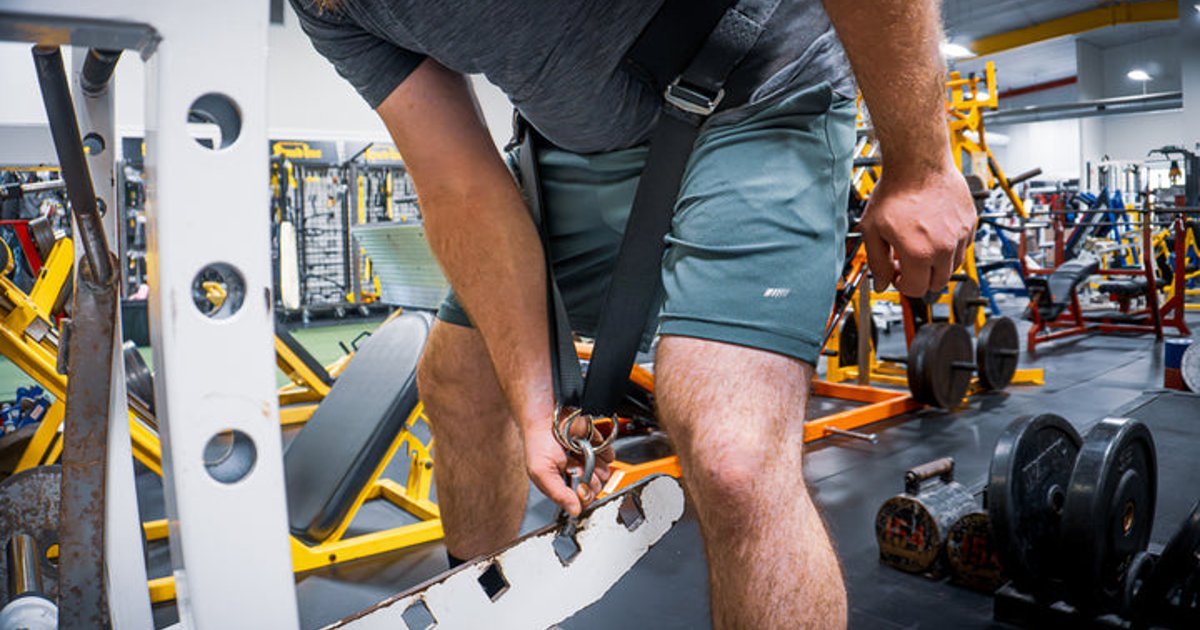
A belt squat can let you work your legs without balancing a bar across your shoulders. But the belt that connects you to the machine can determine whether the movement feels stable or whether every set becomes an exercise in adjusting hardware. A padded belt that is too loose may slip; one that sits badly may press into the hips. Even an otherwise comfortable belt can be a poor match for a machine if its connection length prevents you from reaching your preferred squat depth.
The Spud Inc Adjustable Pillow Belt Squat Belt is designed to address some of those fit problems with a substantial pad and adjustable strap. It is an accessory rather than a complete squat machine. The practical question is whether it fits your body and your existing loading system, not simply whether it looks more comfortable than a narrow belt.
What the adjustable pillow belt changes
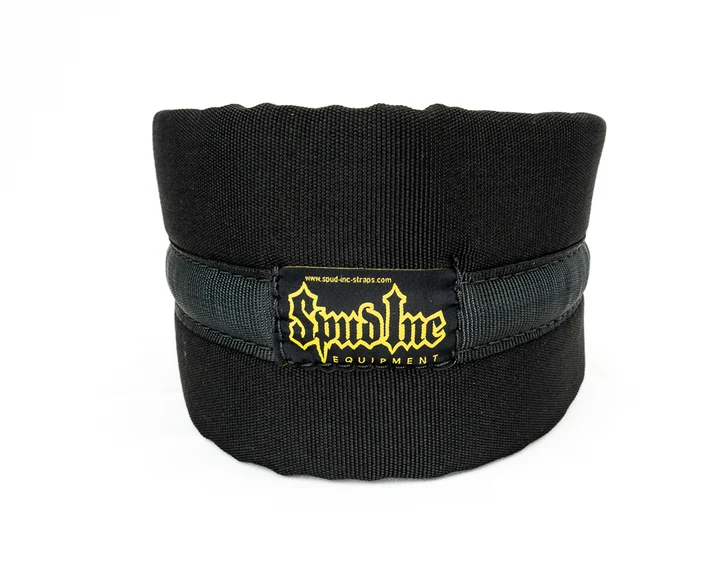
The adjustable model uses a padded section listed at 36 inches long, 6.5 inches wide and 1.5 inches thick. In metric terms that is approximately 91 by 16.5 by 3.8 centimetres. Those are pad dimensions, not a direct statement of the circumference of the assembled belt. The pad spreads contact across a larger area than a thin strap, while a sliding buckle lets the strap be adjusted for different users.
The manufacturer describes the adjustable version as a one-size option intended for users weighing roughly 120 to 275 pounds, or 54 to 125 kilograms. Body weight is only a rough buying reference. Two people weighing 90 kilograms can have substantially different hip measurements, and the position of a belt on the pelvis may change when they squat. Treat this range as guidance, not proof of a guaranteed fit.
It is also important to understand what comes with the accessory. The belt itself supplies the padded contact surface and connection rings, but the listed product does not include a carabiner. Do not assume the purchase replaces all of the connecting hardware on your station. If the machine already includes a belt and connector, check the compatibility of each component before ordering.
The benefit of the design is convenience: a shared gym can potentially adjust one belt between users rather than relying on a fixed loop length. Whether that advantage matters to you depends on your current belt, your body dimensions and how much adjustment is possible on the machine itself.
Check the fit around your hips
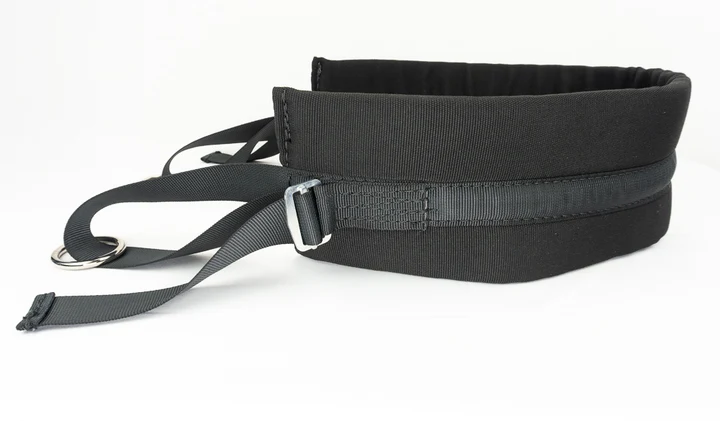
Measure around the area where the belt will actually sit, over the clothes you typically train in. A trouser size taken at the waist is not the same measurement. If your existing belt is comfortable, measure its usable circumference and the distance from the belt to its connection point as a reference. Ask the seller to confirm usable adjustment for your measurements if you are close to either end of the listed range.
Once fitted, the pad should sit evenly and the strap should remain flat rather than folding into a narrow edge. The connector should remain centered in the direction specified by the machine. Work through an unloaded squat and check the bottom position as well as standing upright. A belt that seems secure while standing may shift when your hip angle changes.
Comfort does not mean cinching the pad as tightly as possible. You want it to remain in the intended position under the resistance without cutting into the body. Different hip shapes, clothing thickness and squat stances can change how a given belt feels. Persistent pinching, numbness or pain is a reason to stop and adjust the setup rather than endure it.
If several people use the same station, note the setting that works for each person. A repeatable starting adjustment makes the first warm-up set more useful. It is still worth checking the strap and connection before every session, particularly if the previous user changed the position.
Match the connection to your machine
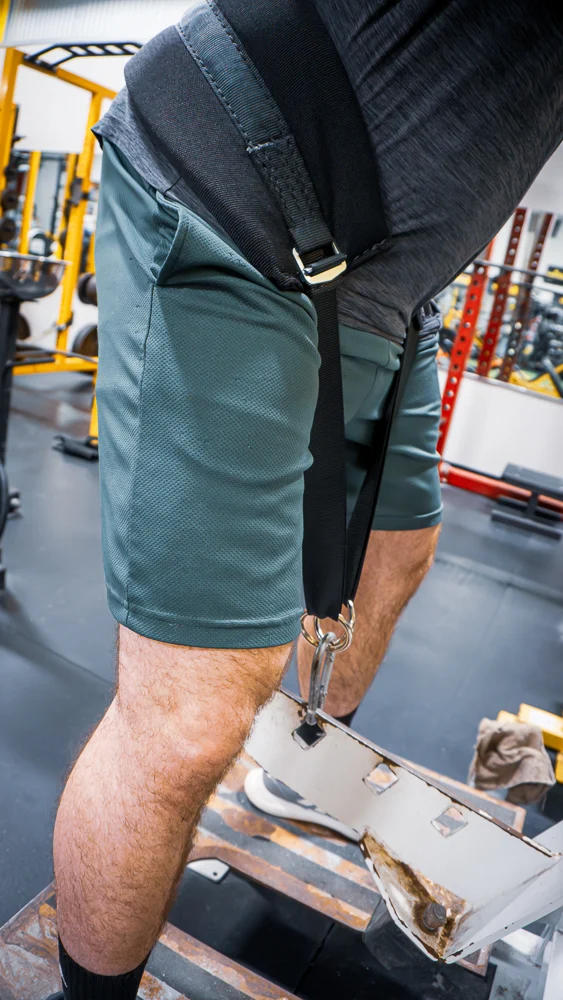
A cable-based belt squat and a lever-based machine can both attach a load near the hips, but their movement paths and starting arrangements are not identical. A lever travels through an arc. A guided cable system has its own range of cable travel, release mechanism and working platform. The same belt can therefore feel different on two machines even when the plates carry the same markings.
Compare the length of the attachment arrangement with the belt originally supplied for your equipment. A connection that hangs too low may leave insufficient clearance at the bottom of the squat; one that is too short may make it difficult to attach the belt or release the machine from its resting position. The specific Rhino belt squat setup illustrates why the trolley, platform and release mechanism matter as much as the accessory.
Use only connectors approved for the loading arrangement and check that they close fully, seat properly and do not become twisted or loaded against an edge. Follow the equipment maker’s instructions for connecting and releasing the weight. Do not assume an arbitrary clip, strap or improvised extension has an appropriate rating because it physically fits a ring. If compatibility is unclear, ask the equipment manufacturer.
Before attaching a challenging weight, verify that you can reach the starting position, descend and return to the designated resting position without contacting the machine’s hardware or losing balance. A generous pad cannot compensate for a poor loading geometry. Keep the machine’s prescribed safety procedure and access to its supports intact.
When the original pillow belt makes sense
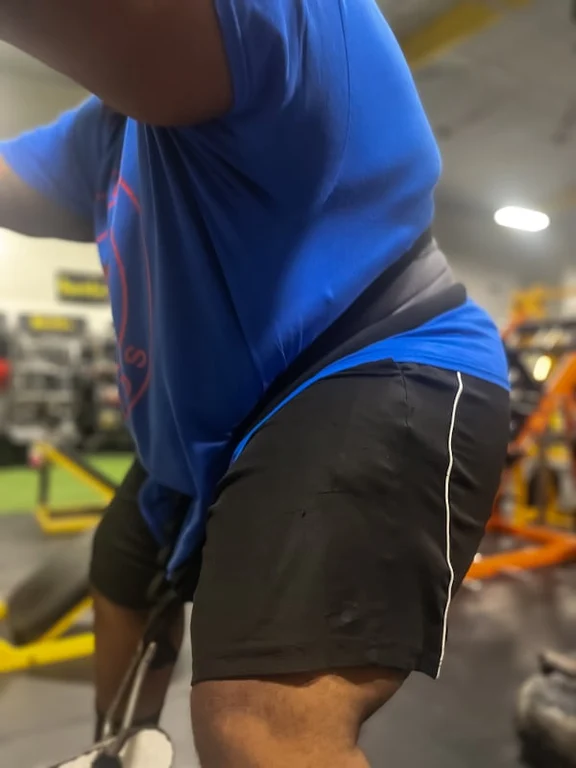
Spud Inc also sells the original Pillow Belt Squat Belt, including differently sized versions. The original model is worth comparing if you already know the size and attachment arrangement that works for you. An adjustable model can be convenient for shared use, but extra adjustment is not automatically an upgrade for a single user who is satisfied with a simpler belt.
Consider the thickness of the pad in relation to the available space. A thick pad can distribute contact over a wider area, but it also adds bulk around the hips. A narrow belt or alternative harness may suit a particular body or movement better. Compare the usable range and attachment layout rather than choosing from a product photograph alone.
If you have not yet purchased a squat station, take a broader view. Dedicated belt squat attachments and belt squat collars can be practical for a compatible rack or landmine; cable squat harnesses are another option where expressly supported by the equipment. A V-squat, leg press or hack squat offers a different way to train the legs without requiring this type of hip connection. Safety squat bars, squat wedges and other squat accessories address different limitations and are not interchangeable belt squat components. Choose the movement and the equipment together.
Accessories and machines also have different space requirements. A compact belt can be stored easily, but it does not create the necessary working clearance, rated attachment point or stable stance area. That is why a belt purchase should follow, rather than precede, a check of your planned station.

Equipment Worth Exploring
Explore equipment, accessories and gear from our carefully selected range.


Belt Squat Collar
Heavy-duty collar adapter for compatible belt-squat and landmine bar setups.
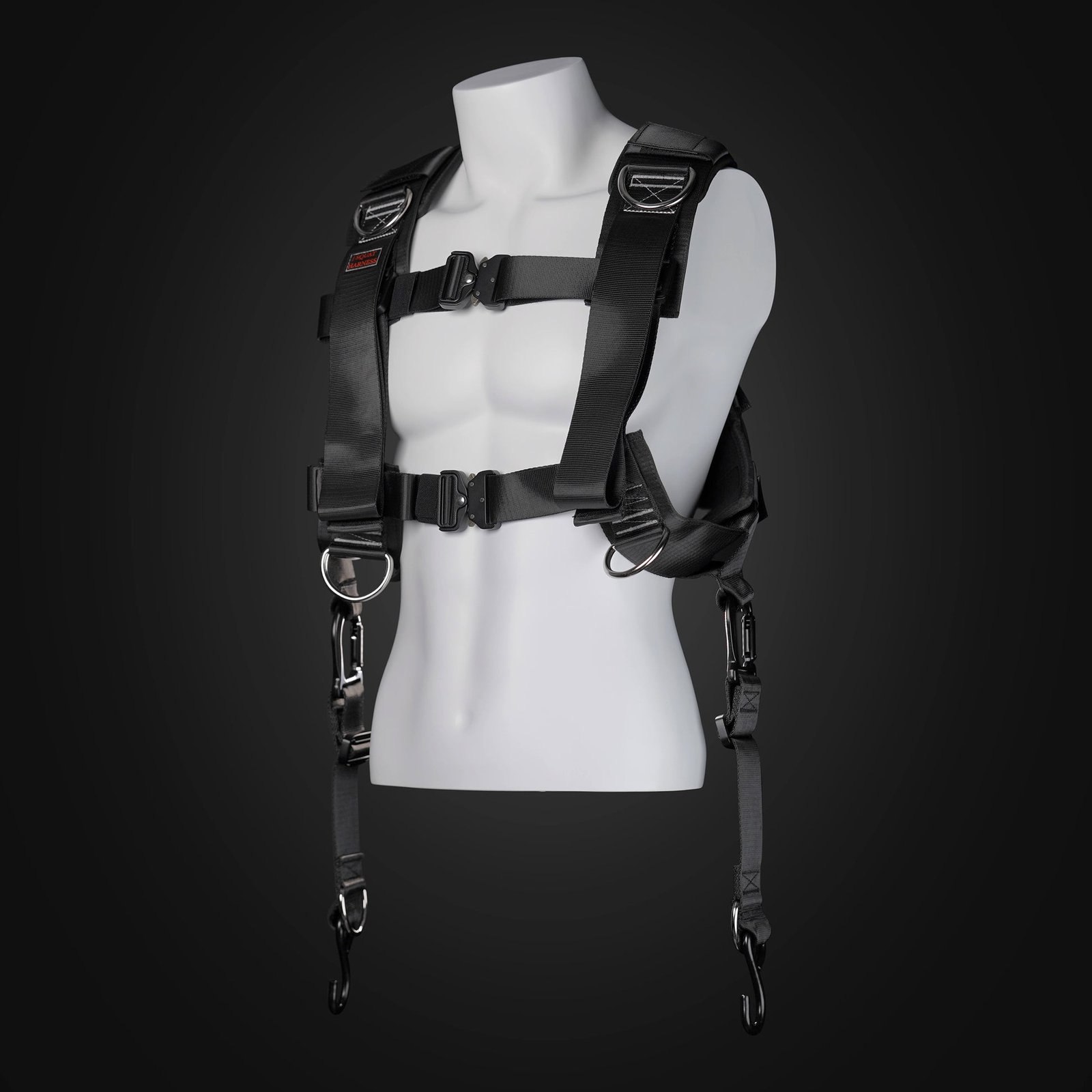
Squat Harness
Wearable harness for hands-free cable squats, sled work, and lower-body training.


Studio V-Squat
Plate-loaded V-squat machine for supported lower-body strength training.

Leg Press/Hack Squat BPR-790
Convertible 45-degree leg press and hack squat machine with a broad footplate and band pegs.

Compact Leg Press CLP-700
Compact reverse-style leg press with a moving seat carriage and an adjustable footplate.

Test the setup before progressing the load
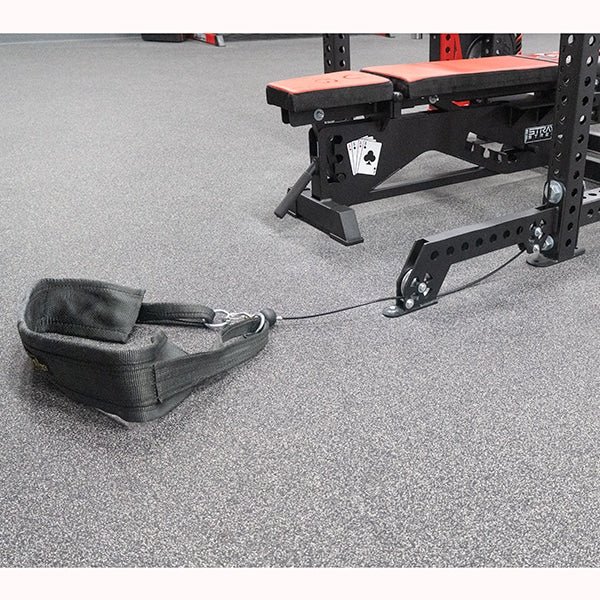
Once the belt and machine are confirmed compatible, make the first session a fit and movement test. Start with the minimum resistance permitted by your equipment, then perform a few controlled repetitions. Check whether the pad stays in place, the attachment moves as intended and the machine returns safely to rest. If the answer is no, change the fit or seek guidance before adding weight.
Belt squats can provide a useful knee-dominant exercise for the quadriceps and other lower-body muscles. Small laboratory comparisons have investigated muscle activity during belt squats and back squats, but an acute measurement cannot establish that a specific padded belt produces better muscle growth or prevents injury. Moving the primary external load away from the shoulders changes how the exercise is performed; it does not eliminate the need to control the trunk or make it suitable for everyone.
For a lifter who already tolerates the exercise, a practical example is two or three sets of eight to twelve repetitions with two or three repetitions left in reserve. Keep the belt setting, stance, depth and rest intervals comparable across sessions. Progress the resistance only when you can repeat the movement comfortably and under control. Machine geometry means plate weight should not be compared directly with barbell squat weight or with another belt squat machine.
The most useful result is a setup that you can reproduce from one leg day to the next. If the adjustable pillow belt provides that repeatability, it has done its job. If it does not fit your dimensions or equipment, another belt or a different lower-body exercise may be the better investment.

Leg Day Shirts & Workout Gear
Leg-day gym shirts and workout gear for lifters who never skip squats, lunges and lower-body punishment.

Medieval Gym – Dost Thou Even Hoist Knight & Dragon Squ T-Shirt
Make gym days more fun with “Medieval” style.

Swolebob Squatpants Gym | Funny SpongeBob Meme Workout Sticker
Bring “Swolebob Squatpants” attitude to your water bottle or laptop.

Heavy Metal Skeleton Squat for Powerlifters, Bodybuilde Sticker
Give your everyday gear a playful “Heavy Metal Skeleton Squat” twist.

Coffee Shots & Heavy Squats for Caffeine Fueled Lifting T-Shirt
For laid-back days and leg-day humor: “Coffee Shots & Heavy Squats”.

Quadzilla Massive Quads Decal Leg Day Squat Meme Sticker
Stick a little “Quadzilla” humor on your favorite gear.

Squatzilla Meme Leg Day & Squat Fans Hooded Hoodie
Show off your leg-day humor in a laid-back “Squatzilla” hoodie.

My Leg Hurts Leg Day & Squat Meme Fans Vest Tank Top
Train hard, laugh a little, and rep “My Leg Hurts”.

Squats R Us Shirt – Leg Day Gains & T-Shirt
Heavy lifts, good laughs, and a little “Squats R Us” energy.