Advertising disclosure: This page includes affiliate product links that may earn us a commission, as well as products from our own store.
Zottman Curls: Curl Palms Up, Lower Palms Down and Train Your Forearms
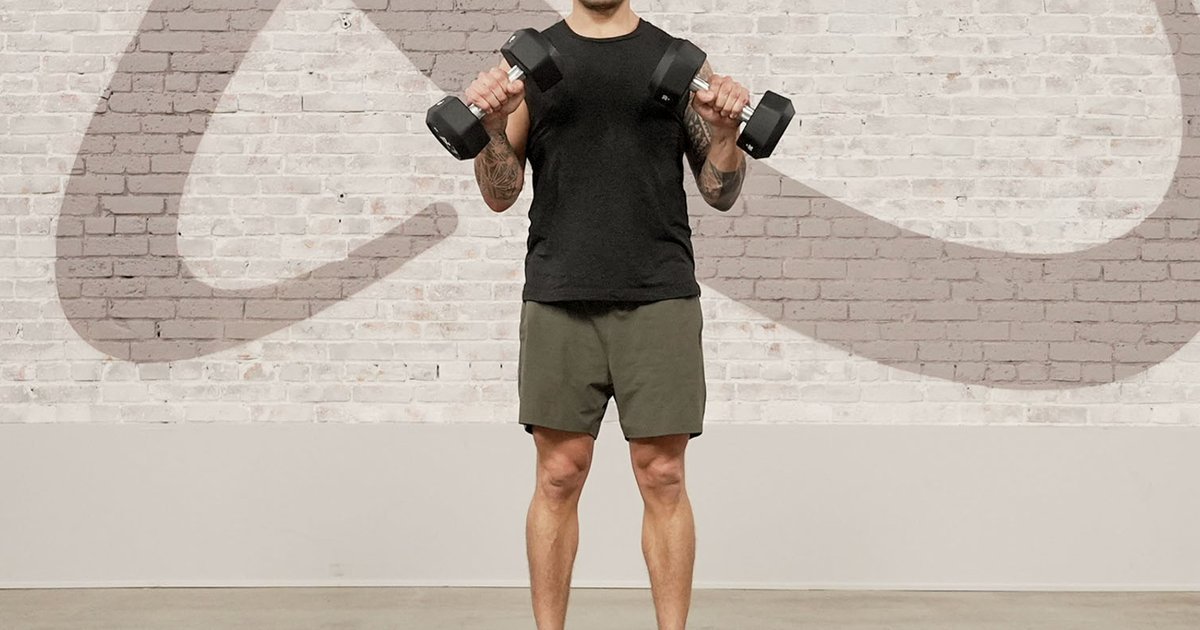
The Zottman curl changes the challenge halfway through a repetition. You lift dumbbells with your palms up, rotate them at shoulder height, then lower with your palms down. That sequence combines a familiar biceps curl with an overhand descent that often feels surprisingly difficult through the forearms. It also makes the lift easy to get wrong: if the wrists spin early, the torso swings or the lowering phase collapses, you have lost the point of the exercise.
There is no need to turn the move into a mystery or a test of your heaviest dumbbells. Below are clear grip checkpoints, a way to judge whether the load is appropriate, useful comparisons with other curls and a four-week progression you can adapt to your own arm training.
What the grip switch changes—and what it does not
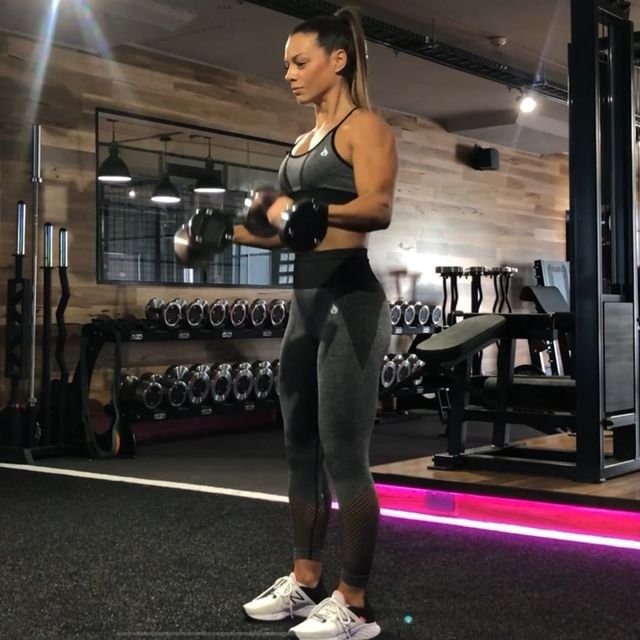
Elbow flexion involves several muscles working together. The biceps brachii contributes strongly when you curl with an underhand, or supinated, grip. The brachialis assists elbow flexion regardless of which way the palm faces, while the brachioradialis also contributes, especially when the forearm is nearer neutral. The muscles around the wrist and forearm must hold the dumbbell steady while you turn your hands. A Zottman curl does not somehow switch the biceps completely off when you pronate: the muscles cooperate across the movement.
The most important change is the task, not a magic muscle-isolation trick. During the upward portion you use the mechanically convenient palms-up position. At the top, you turn both hands toward a palms-down position. Now the descent demands careful control in an overhand grip, usually with less load than you would use for a plain supinated curl. Because lowering a load and lifting it create different demands, the mixed-grip rep makes moderate dumbbells challenging without requiring big body movement.
Expect the biceps, brachialis and forearms to contribute, but do not interpret a strong forearm burn as proof of greater growth than every other curl. Training results also depend on effort, total work, consistency and the range you can repeat. If your goal is maximum loading on the biceps alone, a conventional curl can still be useful. If you want a controlled curl that asks more of your grip and forearm control within the same set, this variation earns its place.
Set your stance, elbows and palms before the first rep
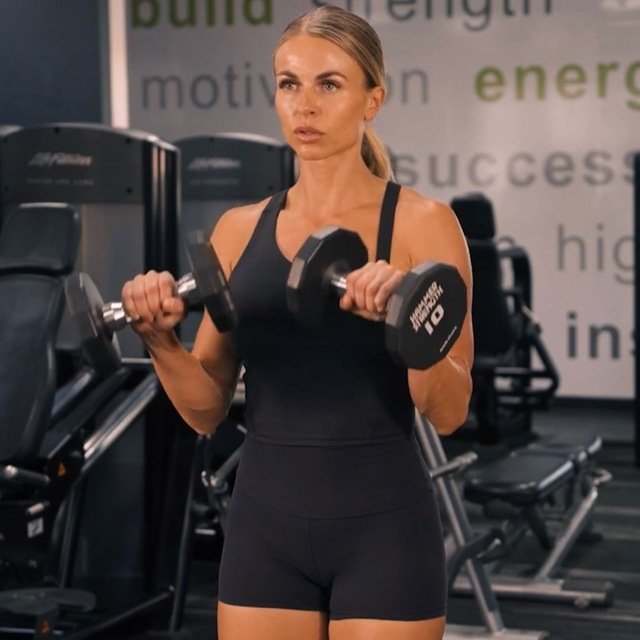
Stand where there is enough room to let both dumbbells descend beside your thighs without striking a bench or rack. Place your feet roughly hip to shoulder width apart, keep the knees unlocked, and lightly brace your abdomen. Let your shoulders sit naturally rather than shrugging them toward your ears. Start with your arms by your sides and palms facing forward; if you prefer to pick up the weights with palms facing your thighs, turn them outward before you begin the upward curl.
Choose a pair of dumbbells you can lower smoothly in a palms-down position. That may be substantially lighter than your usual dumbbell curl. Your wrists should remain aligned with the forearms, not folded backward under the handle. Keep each elbow near the side of the torso without rigidly jamming it into your ribs. The upper arms can move slightly as part of natural shoulder motion, but they should not swing forward to rescue the rep.
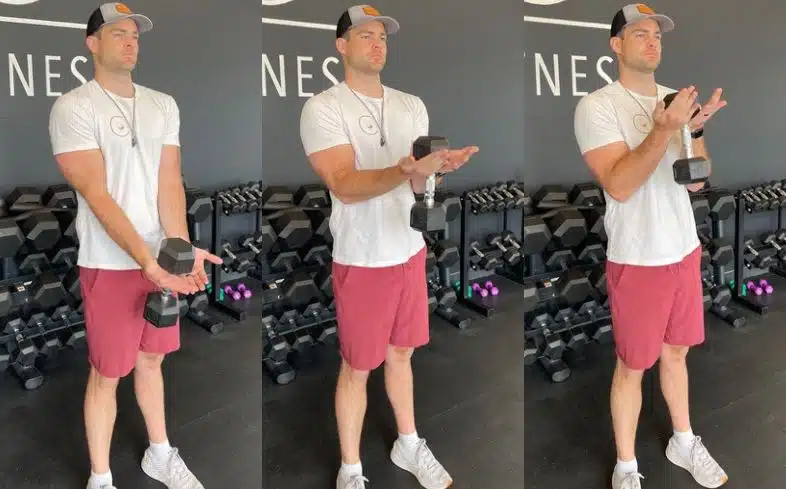
For a clean first repetition, curl the weights toward shoulder level with palms up. Watch the dumbbells, not the mirror: both handles should rise at a similar pace without the hips driving the movement. Keep your feet quiet, avoid leaning back, and stop the upward phase when you can still control the transition at the top. If you can barely arrive there, you have already chosen too much weight for the more demanding second half.
A seated version can be useful if you find yourself driving through your legs, but standing is not automatically worse. The central test is whether you can perform every phase with the same deliberate grip path.
Rotate only at the top and lower without dropping
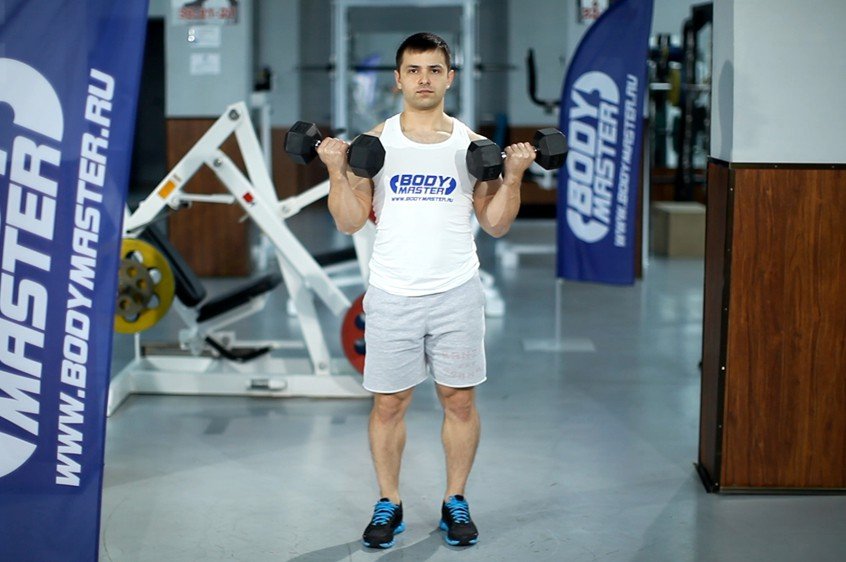
Once the dumbbells reach the top, briefly hold the position. Turn the forearms so the palms rotate from facing you toward facing away, or slightly downward, while the elbows remain bent. This is a forearm rotation rather than a dramatic shoulder twist. You do not need to force a perfectly flat palm orientation if that strains the wrist; use the comfortable controlled range and keep the handles level.
With the overhand position established, lower the dumbbells for roughly two to three steady seconds. You should feel as though you are resisting their descent, not just opening your elbows and watching them fall. Avoid locking your wrists backward or letting the handles roll in your fingers. As the weights approach thigh height, complete the lowering with arms nearly straight but without forcefully snapping the elbows into lockout. Only then turn the palms upward again and start another repetition.
The sequence is up palms-up → turn at the top → down palms-down → reset at the bottom. A useful check is whether you can pause the downward movement at any point without the weights accelerating. If you cannot, reduce the load. If the last two repetitions need a quick drop, the set is over even if the number written on your program has not been reached.
You can also perform one arm at a time. That gives you room to observe wrist alignment, but it does not remove the need to brace the torso against twisting. Treat the lowering tempo as a quality target, not a contest to make each repetition interminably slow.

Equipment Worth Exploring
Explore equipment, accessories and gear from our carefully selected range.


Rubber Hex Dumbbells
Rubber-coated hex dumbbell pairs with a stable shape for home and commercial strength training.


Multi Bench MBX-650 2.0
Adjustable multi-bench with roller adjustment, 15 backrest positions and accessory mounts.


EZ Curl Barbell
Olympic EZ curl bar with angled grips for curls and triceps exercises.
VOLTRA
Compact digital cable trainer with smooth, adjustable resistance.

VForce Wall Trainer
Space-saving wall-mounted functional trainer with pivoting cable arms and variable resistance ratios.
Correct the five mistakes that hide inside a hard set
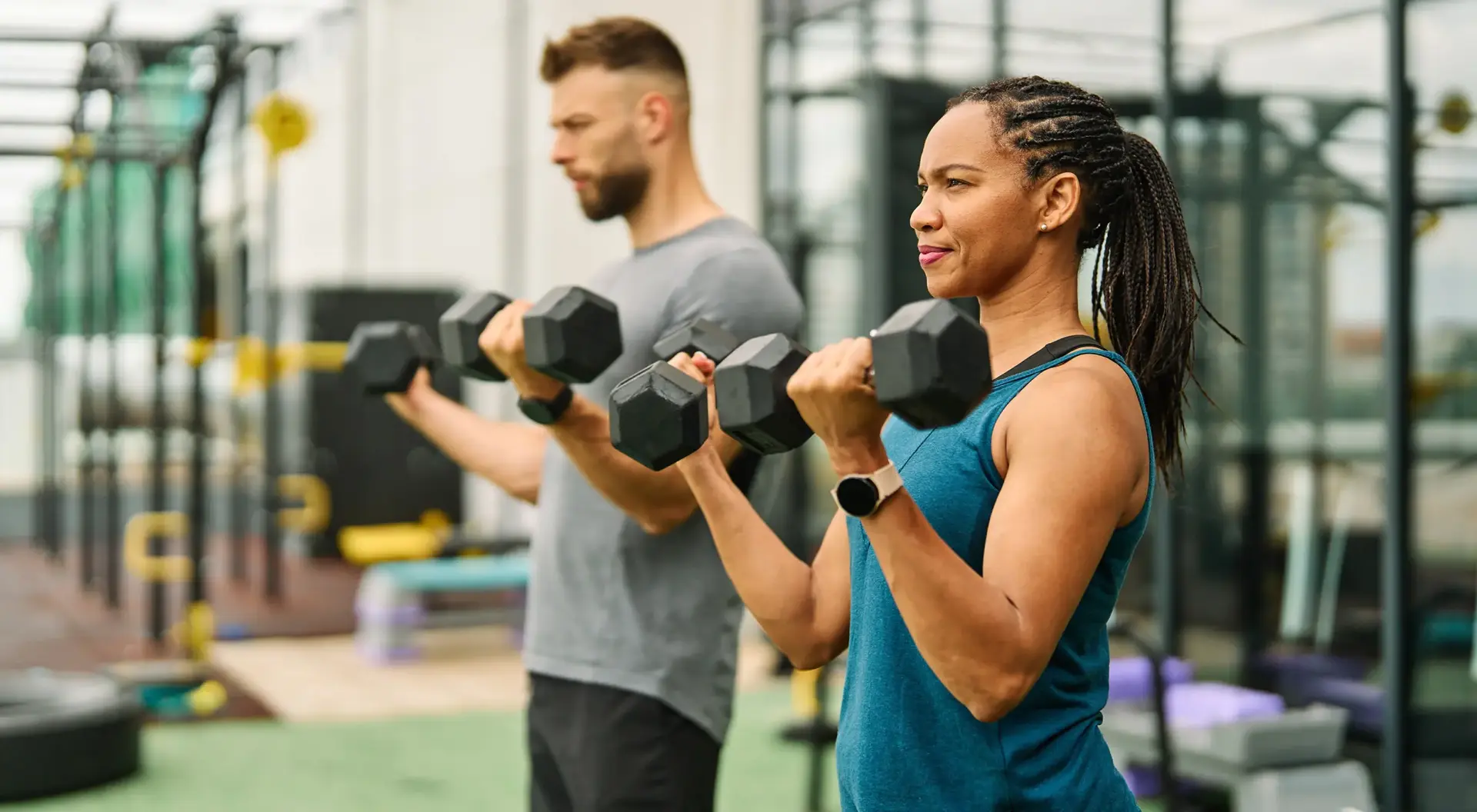
1. Turning the palms halfway up. If the handles gradually rotate during the ascent, you may arrive at the top already in the weaker overhand position. Finish the palms-up curl first, then rotate deliberately.
2. Throwing the weights down. A quick descent is tempting when the forearms begin to tire, but it removes the most distinctive part of the repetition. Keep a steady two- to three-second count and lower the load when that count disappears.
3. Moving the shoulders instead of the elbows. Swinging the dumbbells in a forward arc turns an elbow-flexion exercise into a whole-body heave. Keep the torso quiet and let the upper arms remain approximately alongside the ribs.
4. Letting the wrists collapse. When the hands are pronated, the dumbbells can pull the wrists out of line. Keep the knuckles and forearms nearly aligned. If rotation feels sharp, restricted or painful, do not force through it; shorten the comfortable rotation or pick an alternative curl.
5. Using your normal-curl weight by habit. A dumbbell that is manageable palms-up may be much harder to lower under control palms-down. Test a light set first, and judge the load by the weakest phase rather than the easiest one.
Film a set from slightly in front if you are unsure which fault is occurring. Look for uneven handle angles, elbows moving far forward, shoulders rising and dumbbells dropping faster near the bottom. Fix one visible pattern at a time rather than trying to change every cue between repetitions.
Zottman vs hammer, reverse and standard curls
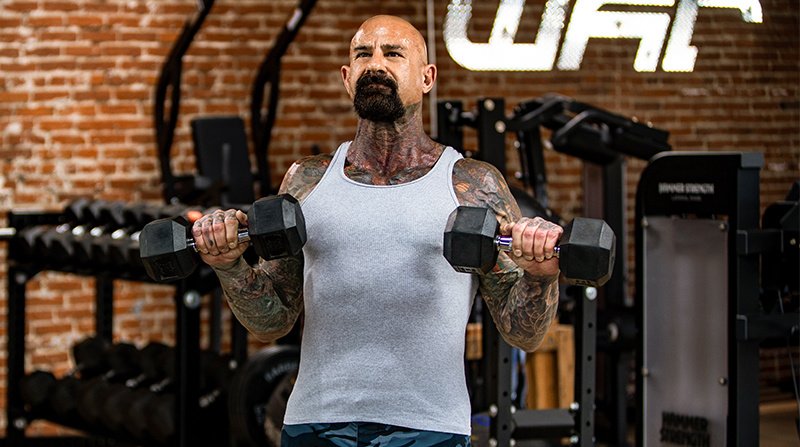
Standard supinated curl: palms face up on both the lift and lowering phase. It is a straightforward choice for direct biceps work and typically lets you use a more familiar load. It does not incorporate the pronated lowering task that defines a Zottman curl.
Hammer curl: a neutral grip is maintained through the repetition. It is simple to learn and useful when a lifter likes the feel of a thumbs-up hand position. It is not a failed Zottman curl; it is a distinct elbow-flexion variation with a different grip constraint.
Reverse curl: the palms face down for both directions. The overhand ascent often limits the weight, so it trains a different challenge than using a supinated ascent followed by a pronated descent. An EZ curl bar can make this variation easier to organize, but the wrist angle may differ from a free-moving dumbbell.
Zottman curl: the grip intentionally changes between the two phases. It is best when you value an exact sequence, grip control and the ability to keep each repetition honest at a moderate load. It is not demonstrably superior to all other curls for muscle size; there is no need to replace every curl in your program.
For an efficient arm workout, choose one primary elbow-flexion movement that you can progress consistently and add a second pattern only if it serves a clear purpose. For example, a heavier hammer or standard curl can pair with lighter Zottman sets. Conversely, if your wrists dislike repeated pronation, substitute a pain-free neutral-grip or cable curl instead of forcing the exercise.
A four-week progression that rewards repeatable reps
The following is an illustrative accessory plan for someone already doing regular pulling or upper-body training. Perform the movement after heavy rows or pull-ups, or as a small part of a dedicated arm session. Leave at least one or two clean repetitions in reserve at first. Rest about 60–120 seconds between sets, longer if your grip or forearms have not recovered sufficiently to control the descent.
Week 1 — establish the pattern. Perform two sets of eight repetitions with a light pair of dumbbells. Make every top rotation visible, then lower for approximately three seconds. Record whether the last rep still matched the first.
Week 2 — accumulate clean repetitions. Use the same load for two or three sets of nine or ten reps if technique remains stable. If the wrist begins folding or the descent accelerates, stay with the lower rep count instead of pushing the logbook number.
Week 3 — add a small challenge. Aim for three sets of eight to ten smooth reps. Increase the dumbbells by the smallest practical increment only if the entire previous week felt repeatable, including both wrists and the slow negative. A heavier pair is not progress when it makes you swing or throw the weights down.
Week 4 — confirm the improvement. Repeat the week-three load and compare the final repetitions with the first week. Seek more total clean reps, better timing or steadier wrist positions. If the pattern is already near its limit, keep the load and stop with good form rather than forcing another increase.
Log the weight per hand, sets, successful repetitions, descent control and any joint discomfort. Treat the four weeks as a practice example, not a guarantee of measurable hypertrophy in a month. Complement it with enough overall pulling and pressing work for your goals, and adapt the weekly curl volume to what your elbows and forearms recover from. Pain that persists or changes your movement deserves individual assessment rather than a harder warm-up.

Bodybuilding Shirts & Workout Gear
Bodybuilding shirts, tanks and gym gear for lifters chasing muscle, size, symmetry and the pump.


Every Day Is Arm Day
Make gym days more fun with “Every Day is Arm Day Octopus Gym Meme” style.


Big Guns Rock Gym Funny Lifting Crewneck Who Love Rock T-Shirt
Show some gym-day personality with “Big Guns Rock”.

Biceps of the Caribbean Gym | Funny Pirate Workout Deca Sticker
A fun “Biceps of the Caribbean” touch for bottles, laptops, and lockers.

Bicep Heart I Love Gym | Lover Valentine's Day Hooded Hoodie
Bring “Bicep Heart” gym humor to lazy days and post-workout plans.

Right to Bare Arms George Washington Patriotic Gym Deca Sticker
Give your everyday gear a playful “Right to Bare Arms” twist.
Some product links may be affiliate links, supporting Mind Muscle Perfection without an additional cost to you.